

The DOI matches its Crossref record; 90 of the 90 references it cites were found in a registry or an index.
Data Organisation for Efficient Pattern Retrieval: Indexing, Storage, and Access Structures
Open accessAbstract
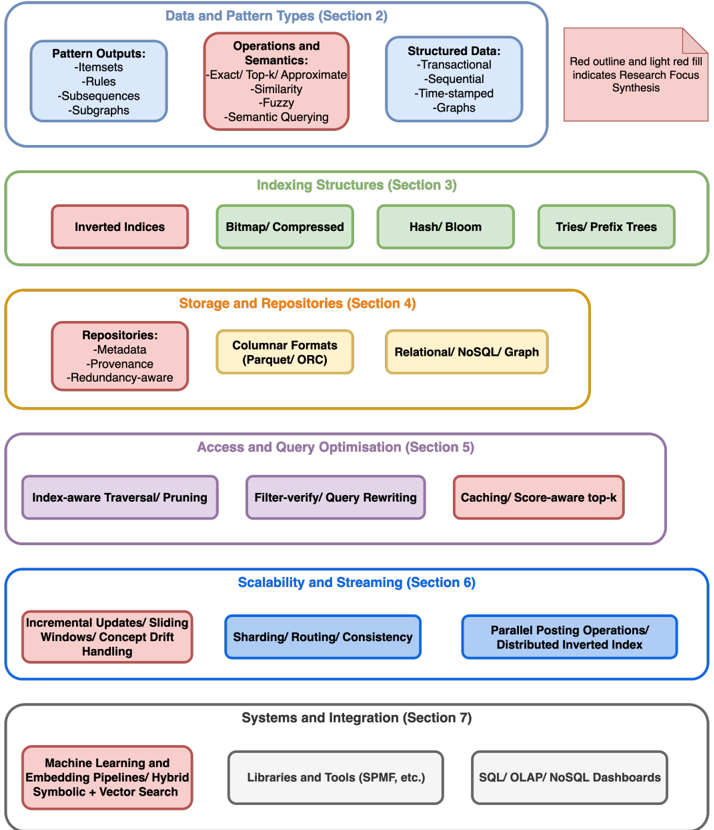
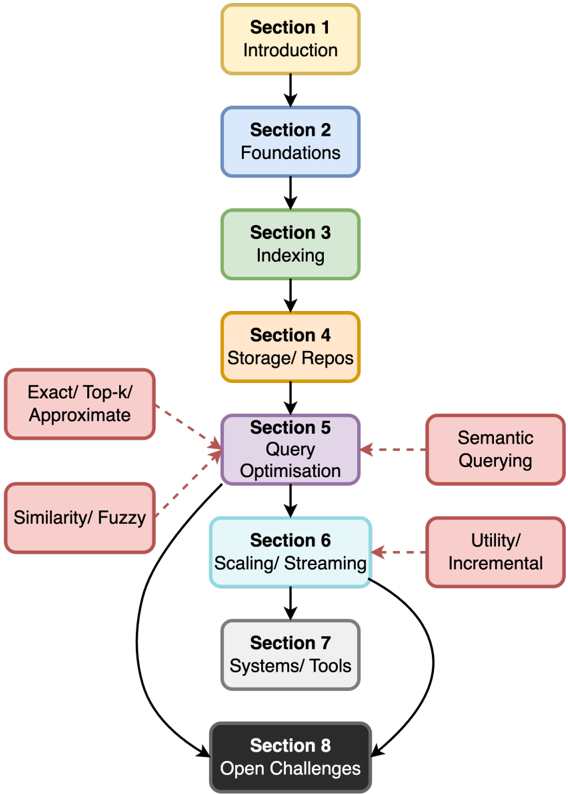
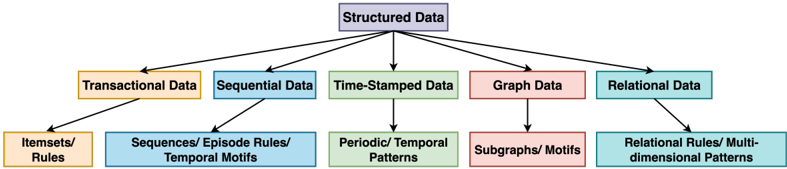
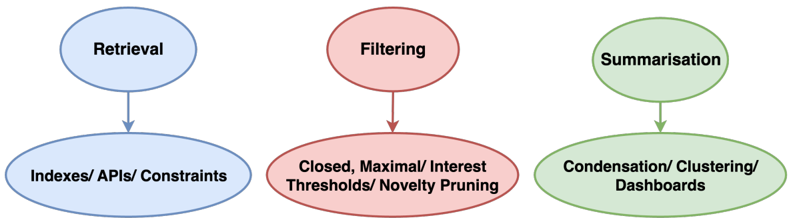
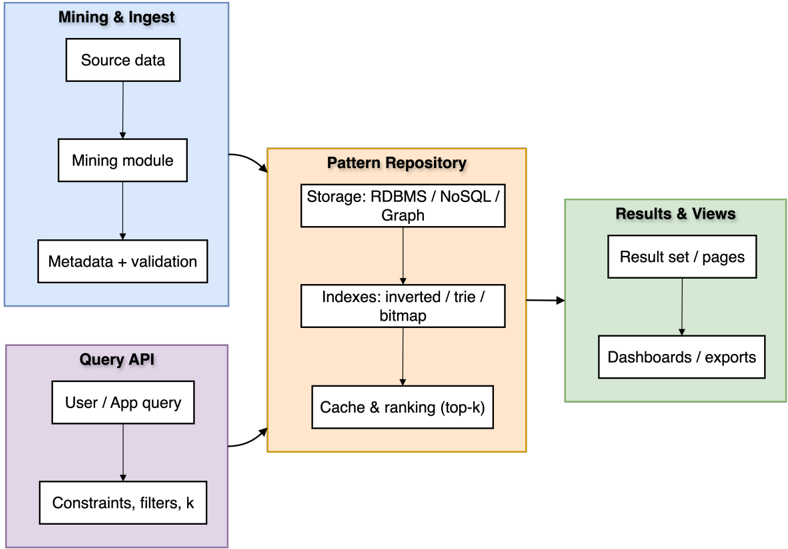
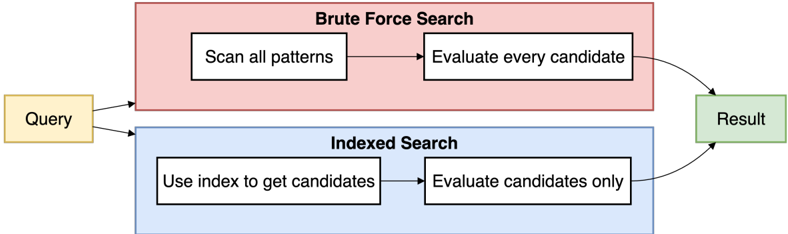
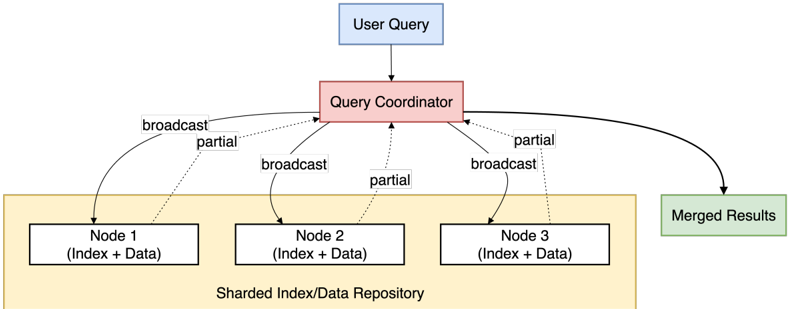
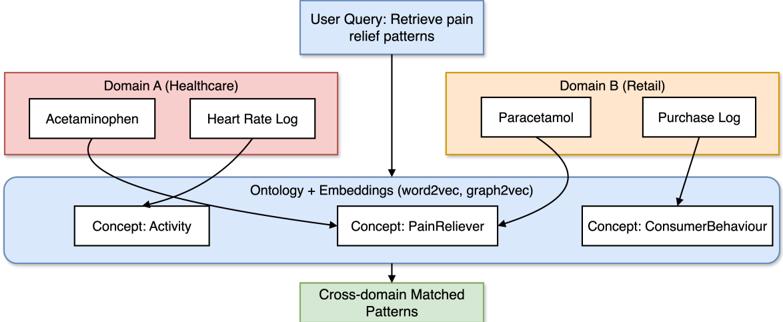
The increasing scale and complexity of data mining outputs, such as frequent itemsets, association rules, sequences, and subgraphs have made efficient pattern retrieval a critical, yet underexplored challenge. This review addresses the organisation, indexing, and access strategies, which enable scalable and responsive retrieval of structured patterns. We examine the underlying types of data and pattern outputs, common retrieval operations, and the variety of query types encountered in practice. Key indexing structures are surveyed, including prefix trees, inverted indices, hash-based approaches, and bitmap-based methods, each suited to different pattern representations and workloads. Storage designs are discussed with attention to metadata annotation, format choices, and redundancy mitigation. Query optimisation strategies are reviewed, emphasising index-aware traversal, caching, and ranking mechanisms. This paper also explores scalability through parallel, distributed, and streaming architectures, and surveys current systems and tools, which integrate mining and retrieval capabilities. Finally, we outline pressing challenges and emerging directions, such as supporting real-time and uncertainty-aware retrieval, and enabling semantic, cross-domain pattern access. Additional frontiers include privacy-preserving indexing and secure query execution, along with integration of repositories into machine learning pipelines for hybrid symbolic–statistical workflows. We further highlight the need for dynamic repositories, probabilistic semantics, and community benchmarks to ensure that progress is measurable and reproducible across domains. This review provides a comprehensive foundation for designing next-generation pattern retrieval systems, which are scalable, flexible, and tightly integrated into analytic workflows. The analysis and roadmap offered are relevant across application areas including finance, healthcare, cybersecurity, and retail, where robust and interpretable retrieval is essential.
Overview
The claims and statistics of this paper haven’t been checked yet.
Free: it reads the open-access text and checks the first 5 claims that cite a source we can check. Create a free account to check every claim.
Integrity signals
Registry
Cites
Statistics
Figures
Verification
Claims the paper makes
The claims and statistics of this paper haven’t been checked yet.
Free: it reads the open-access text and checks the first 5 claims that cite a source we can check. Create a free account to check every claim.
Self-check
Percentages, sums and reported differences re-computed from the paper’s own numbers.
The self-check needs the paper’s full text.
Citations
Cites
node2vec: Scalable Feature Learning for Networks
Grover, A., & Leskovec, J. (2016) · Proceedings of the 22nd ACM SIGKDD International Conference on Knowledge Discovery and Data Mining · doi:10.1145/2939672.2939754 · Cited by 10,926
Mining frequent patterns without candidate generation
Han, J., Pei, J., & Yin, Y. (2000) · ACM SIGMOD Record · doi:10.1145/335191.335372 · Cited by 6,402
The unified medical language system (UMLS): integrating biomedical terminology
Bodenreider, O. (2004) · Nucleic Acids Research · doi:10.1093/nar/gkh061 · Cited by 4,356
A survey on concept drift adaptation
Gama, J., Žliobaitė, I., Bifet, A., Pechenizkiy, M., & Bouchachia, A. (2014) · ACM Computing Surveys · doi:10.1145/2523813 · Cited by 3,735 · cited 1×
“This feature becomes crucial in concept drift situations or analysis across different temporal contexts, where outdated patterns need to be removed or down-ranked [67].”
Wu, X., Zhu, X., Wu, G.-Q., & Ding, W. (2014) · IEEE Transactions on Knowledge and Data Engineering · doi:10.1109/tkde.2013.109 · Cited by 2,410
Network Applications of Bloom Filters: A Survey
Broder, A., & Mitzenmacher, M. (2004) · Internet Mathematics · doi:10.1080/15427951.2004.10129096 · Cited by 1,991
Hogan, A., Blomqvist, E., Cochez, M., D’amato, C., Melo, G. D., Gutierrez, C., Kirrane, S., Gayo, J. E. L., Navigli, R., Neumaier, S., et al. (2022) · ACM Computing Surveys · doi:10.1145/3447772 · Cited by 1,904
Learning from Time-Changing Data with Adaptive Windowing
Bifet, A., & Gavaldà, R. (2007) · Proceedings of the 2007 SIAM International Conference on Data Mining · doi:10.1137/1.9781611972771.42 · Cited by 1,789
Orange: data mining toolbox in python
Demšar, J., Curk, T., Erjavec, A., Gorup, Č., Hočevar, T., Milutinovič, M., Možina, M., Polajnar, M., Toplak, M., Starič, A., et al. (2013) · Journal of Machine Learning Research · Cited by 1,655
Learning under Concept Drift: A Review
Lu, J., Liu, A., Dong, F., Gu, F., Gama, J., & Zhang, G. (2018) · IEEE Transactions on Knowledge and Data Engineering · doi:10.1109/tkde.2018.2876857 · Cited by 1,603
Research works printed but not linked: 12
- Christian, M.A., Nathanael, N., Mauliani, A., Indrawati, A., Manik, L.P., and Akbar, Z. (2011, January 5–6). Real Market Basket Analysis using Apriori and Frequent Pattern Tree Algorithm. Proceedings of the 2021 International Conference on Computer, Control, Informatics and Its Applications, Virtual. IC3INA’21.
- Boulicaut, J.F., De Raedt, L., and Mannila, H. (2004, January 11–13). A Survey on Condensed Representations for Frequent Sets. Proceedings of the Constraint-Based Mining and Inductive Databases, Hinterzarten, Germany.
- Han, W.S., Lee, J., and Lee, J.H. (2013, January 22–27). Turboiso: Towards ultrafast and robust subgraph isomorphism search in large graph databases. Proceedings of the 2013 ACM SIGMOD International Conference on Management of Data, New York, NY, USA. SIGMOD’13.
- Abdelhamid, E., Abdelaziz, I., Khayyat, Z., and Kalnis, P. (2019, January 26). Pivoted Subgraph Isomorphism: The Optimist, the Pessimist and the Realist. Proceedings of the 22nd International Conference on Extending Database Technology (EDBT), Lisbon, Portugal. EDBT 2019.
- Hosseininasab, 2024, Memory-efficient sequential pattern mining with hybrid tries, J. Mach. Learn. Res., 25, 227
- Chen, D., Lai, C., Hu, W., Chen, W., Zhang, Y., and Zheng, W. (2006, January 25–29). Tree partition based parallel frequent pattern mining on shared memory systems. Proceedings of the 20th IEEE International Parallel & Distributed Processing Symposium, Rhodes Island, Greece.
- Trotman, A. (2014, January 27–28). Compression, SIMD, and Postings Lists. Proceedings of the 19th Australasian Document Computing Symposium, Melbourne, VIC, Australia. ADCS’14.
- Pratima, 2023, Comprehensive Analysis and Comparative Evaluation of Bitmap Indexing Methods for Efficient Data Management, Int. J. Intell. Syst. Appl. Eng., 11, 563
- Shim, J., Scheuermann, P., and Vingralek, R. (1999, January 30). Dynamic caching of query results for decision support systems. Proceedings of the Eleventh International Conference on Scientific and Statistical Database Management, Cleveland, OH, USA.
- Guo, S., and Gao, H. (2017, January 2–4). An efficient algorithm for incremental and interactive high utility itemset mining. Proceedings of the 2017 2nd International Conference on Image, Vision and Computing (ICIVC), Chengdu, China.
- Cahill, M.J., Röhm, U., and Fekete, A.D. (2008, January 9–12). Serializable Snapshot Isolation in PostgreSQL. Proceedings of the 2008 ACM SIGMOD International Conference on Management of Data, Vancouver, BC, Canada.
- Thankachan, S.V., Patil, M., Shah, R., and Biswas, S. (2016, January 15–18). Probabilistic Threshold Indexing for Uncertain Strings. Proceedings of the 19th International Conference on Extending Database Technology (EDBT), Bordeaux, France.
Cited by
Prioritizing interoperable AI-driven solutions for sustainable circular economy in the public sector
Alshibani, S. M., Singhal, A. B., Gupta, B., Papa, A., & Giudice, M. D. (2026) · Technological Forecasting and Social Change · doi:10.1016/j.techfore.2025.124513 · Cited by 11
Yang, C., & Kim, M. (2026) · Applied Sciences · doi:10.3390/app16073391
A Survey of Data Storage, Retrieval, and Optimization Methods in Modern Databases
Upadhyay, D. N. (2026) · International Journal of Advanced Research in Science Communication and Technology · doi:10.48175/ijarsct-35242
Logical Scalability in Big Data Architectures: Impact of Data Modeling on the Database Layer
Napoli, R. M. A., Gambito, M. A., Celesti, A., & Fazio, M. C. (2026) · IEEE International Symposium on Cluster, Cloud and Internet Computing Workshops (CCGridW) · doi:10.1109/ccgridw69005.2026.00023
Metadata
- Authors
- Koukaras, P., & Tjortjis, C.
- Affiliations
- International Hellenic University (GR)
- Corresponding author
- Tjortjis, Christos
- Venue
- Big Data and Cognitive Computing
- Publisher
- MDPI AG
- Published
- 2025-10-13
- Volume
- 9
- Issue
- 10
- Pages
- 258
- ISSN
- 2504-2289 (ISSN-L)
- OpenAlex
- W4415138927
- Cited by
- 3
- References
- 88
- Citations by year
- 2026: 3
- FWCI
- 3.15
- Type
- journal article
- Language
- en
- Open access
- gold
- doi.org
- Licence
- Locations
- Big Data and Cognitive Computing (publishedVersion, cc-by)
- DOAJ (DOAJ: Directory of Open Access Journals) (submittedVersion, cc-by-sa)
- Topics
- Physical Sciences › Computer Science › Information Systems › Data Mining Algorithms and Applications
- Physical Sciences › Computer Science › Information Systems › Advanced Database Systems and Queries
- Physical Sciences › Mathematics › Theoretical Computer Science › Algorithms and Data Compression
- Keywords
- pattern retrieval, pattern repository, index structures, prefix tree, hash-based indexing, bitmap indexing, query optimization, caching, frequent itemsets, association rule mining, sequences, subgraph retrieval, metadata annotation, scalability, benchmarking
About these checks
Registry, retraction, Cites and statistics results are computed, not judged, with one exception: a printed reference that no index lists is read once by a model before it counts as a citation error. Claims are extracted by a model and kept only when their quote appears verbatim in the text; each cited source is then checked, with a model’s help, for whether it says what the claim relies on. Those verdicts can be wrong — read the claim’s quote and the cited source before relying on one.
Statistics and arithmetic are recomputed, not judged.
Confidence bands are shown only for fields calibrated on our annotated test set. None is calibrated yet, so no band is shown.
What counts as a claim ›How we measure confidence ›How we check this ›
Are you an author, or do you see a problem with this page? Request a review
How to cite
Cite CoChat for the checks on this page, and the paper for its own findings.
- This page
- CoChat. (2026). Citation check: Data Organisation for Efficient Pattern Retrieval: Indexing, Storage, and Access Structures. https://app.cochat.ai/papers/10.3390/bdcc9100258
- The paper
- Koukaras, P., & Tjortjis, C. (2025). Data Organisation for Efficient Pattern Retrieval: Indexing, Storage, and Access Structures. Big Data and Cognitive Computing. https://doi.org/10.3390/bdcc9100258
Data sources
Bibliographic data: Semantic Scholar, OpenAlex, Crossref.
Contains information from the Semantic Scholar Academic Graph Datasets, made available under the ODC Attribution License (ODC-BY 1.0).
Semantic Scholar’s data is described in: Kinney, R., et al. (2023). The Semantic Scholar Open Data Platform. arXiv:2301.10140.
