

The DOI matches its Crossref record; the references it cites are not checked yet.
A New Generative Model for Textual Descriptions of Medical Images Using Transformers Enhanced with Convolutional Neural Networks
Open accessAbstract
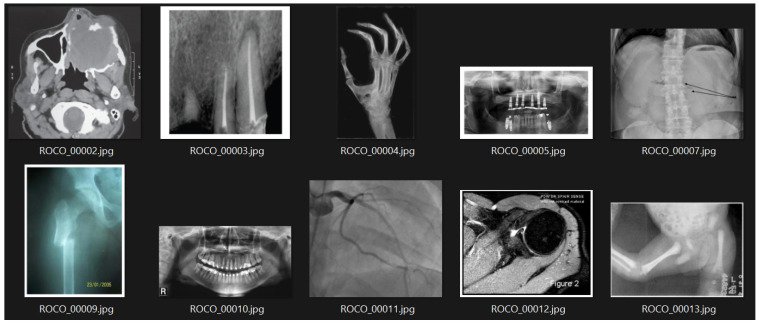
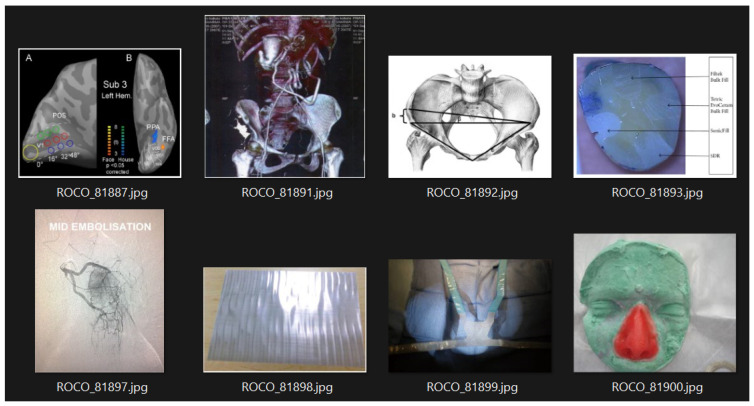
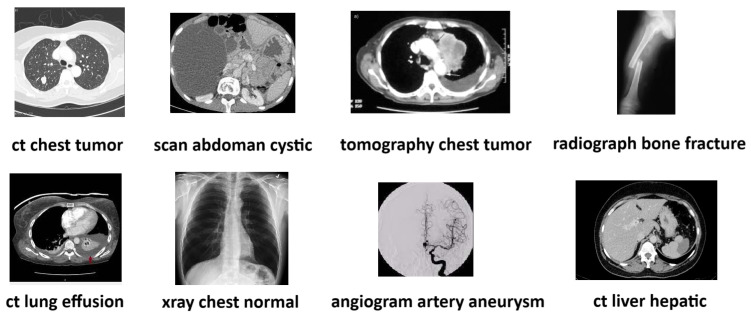
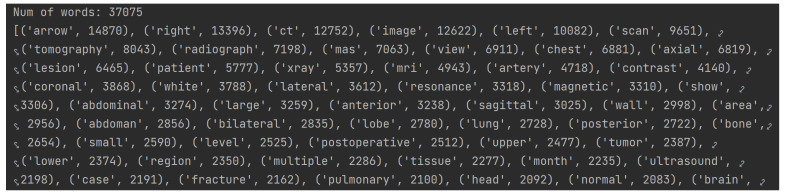
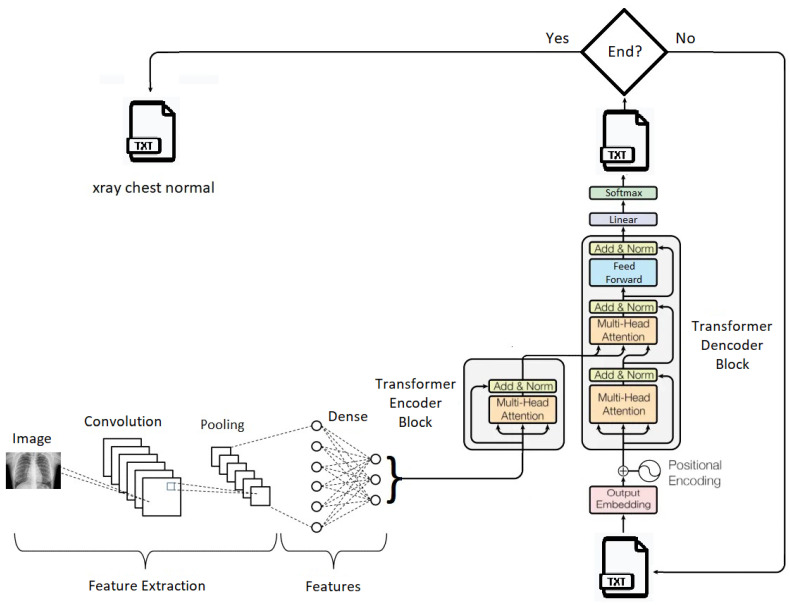
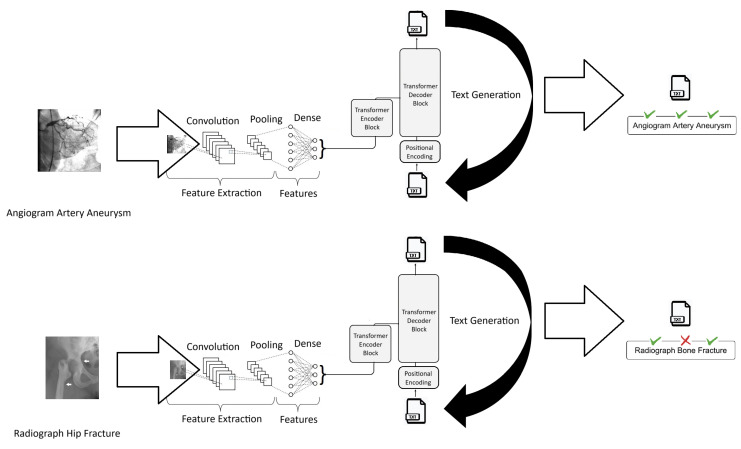
The automatic generation of descriptions for medical images has sparked increasing interest in the healthcare field due to its potential to assist professionals in the interpretation and analysis of clinical exams. This study explores the development and evaluation of a generalist generative model for medical images. Gaps were identified in the literature, such as the lack of studies that explore the performance of specific models for medical description generation and the need for objective evaluation of the quality of generated descriptions. Additionally, there is a lack of model generalization to different image modalities and medical conditions. To address these issues, a methodological strategy was adopted, combining natural language processing and features extraction from medical images and feeding them into a generative model based on neural networks. The goal was to achieve model generalization across various image modalities and medical conditions. The results showed promising outcomes in the generation of descriptions, with an accuracy of 0.7628 and a BLEU-1 score of 0.5387. However, the quality of the generated descriptions may still be limited, exhibiting semantic errors or lacking relevant details. These limitations could be attributed to the availability and representativeness of the data, as well as the techniques used.
Overview
The claims and statistics of this paper haven’t been checked yet.
Run the check — free, no account needed. It reads the open-access text and checks the sources it cites.
Integrity signals
Registry
Cites
Statistics
Figures
Verification
Claims the paper makes
The claims and statistics of this paper haven’t been checked yet.
Run the check — free, no account needed. It reads the open-access text and checks the sources it cites.
Claims other papers make about this one
Each is checked against this paper’s own text: does it say what the citing paper says it does?
The source backs part of the claim, not all of it — or backs it for a different population, condition or comparison.
In the citing paper
“Synthetic data generation using generative models can create realistic, diverse data sets that mimic real-world multimodal medical scenarios, thus expanding the training data set without compromising privacy or ethical standards [149-151].”
From Multimodal Large Language Models in Health Care: Applications, Challenges, and Future Outlook. (2024) · cites this paper as [151]
Experimental — accuracy not yet measured
Self-check
Percentages, sums and reported differences re-computed from the paper’s own numbers.
The self-check needs the paper’s full text.
Citations
The citation lists haven’t been fetched yet
References 17 · Cited by 8
Research works printed but not linked: 1
- Pelka, O., Koitka, S., Rückert, J., Nensa, F., and Friedrich, C.M. (2018). Intravascular Imaging and Computer Assisted Stenting and Large-Scale Annotation of Biomedical Data and Expert Label Synthesis, Springer International Publishing.
Metadata
- Authors
- Barreto, A. G., de Oliveira, J. M., Gois, F. N. B., Cortez, P. C., & de Albuquerque, V. H. C.
- Affiliations
- Universidade Federal do Ceará (BR)
- Graduate Program in Teleinformatics Engineering, Federal University of Ceará, Fortaleza 60455-970, Brazil
- Controladoria e Ouvidoria Geral do Estado, Governo do Estado do Ceará, Fortaleza 60822-325, Brazil
- Department of Teleinformatics Engineering, Federal University of Ceará, Fortaleza 60455-970, Brazil
- ORCID
- Venue
- Bioengineering
- Publisher
- MDPI AG
- Published
- 2023-09-19
- Volume
- 10
- Issue
- 9
- Pages
- 1098
- ISSN
- 2306-5354 (ISSN-L)
- PMC
- PMC10525548
- OpenAlex
- W4386893702
- Cited by
- 8
- References
- 17
- Citations by year
- 2026: 2 · 2025: 4 · 2024: 2
- FWCI
- 0.72
- Type
- journal article
- Language
- en
- Open access
- gold
- doi.org
- Licence
- Locations
- Bioengineering (publishedVersion, cc-by)
- PubMed Central (publishedVersion, cc-by)
- PubMed (publishedVersion)
- DOAJ (DOAJ: Directory of Open Access Journals) (submittedVersion, cc-by-sa)
- Funders
- CNPq (313599/2019-0, 305517/2022-8)
- Topics
- Physical Sciences › Computer Science › Computer Vision and Pattern Recognition › Multimodal Machine Learning Applications
- Health Sciences › Medicine › Health Informatics › Artificial Intelligence in Healthcare and Education
- Physical Sciences › Computer Science › Computer Vision and Pattern Recognition › Image Retrieval and Classification Techniques
- Keywords
- generative models, transformer models, convolutional neural networks, medical image feature extraction, medical report generation
About these checks
Registry, retraction, Cites and statistics results are computed, not judged, with one exception: a printed reference that no index lists is read once by a model before it counts as a citation error. Claims are extracted by a model and kept only when their quote appears verbatim in the text; each cited source is then checked, with a model’s help, for whether it says what the claim relies on. Those verdicts can be wrong — read the claim’s quote and the cited source before relying on one.
Statistics and arithmetic are recomputed, not judged.
Confidence bands are shown only for fields calibrated on our annotated test set. None is calibrated yet, so no band is shown.
What counts as a claim ›How we measure confidence ›How we check this ›
Are you an author, or do you see a problem with this page? Request a review
How to cite
Cite CoChat for the checks on this page, and the paper for its own findings.
- This page
- CoChat. (2026). Citation check: A New Generative Model for Textual Descriptions of Medical Images Using Transformers Enhanced with Convolutional Neural Networks. https://app.cochat.ai/papers/10.3390/bioengineering10091098
- The paper
- Barreto, A. G., de Oliveira, J. M., Gois, F. N. B., Cortez, P. C., & de Albuquerque, V. H. C. (2023). A New Generative Model for Textual Descriptions of Medical Images Using Transformers Enhanced with Convolutional Neural Networks. Bioengineering. https://doi.org/10.3390/bioengineering10091098
