

The DOI matches its Crossref record; 1 of the 1 references it cites were found in a registry or an index.
The Role of a Lung Vascular Endothelium Enriched Gene TMEM100
Open accessPublished version of a preprint
Abstract
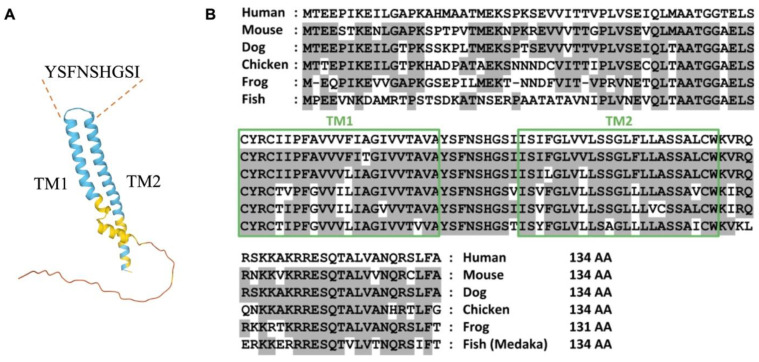
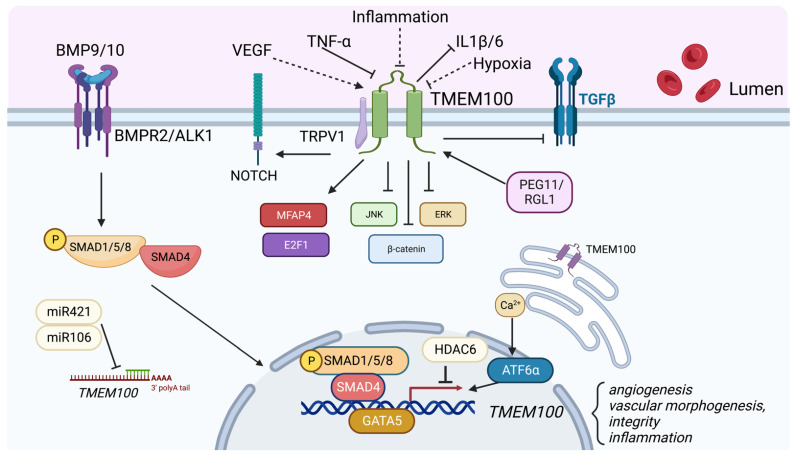
Transmembrane protein 100 (TMEM100) is a crucial factor in the development and maintenance of the vascular system. The protein is involved in several processes such as angiogenesis, vascular morphogenesis, and integrity. Furthermore, TMEM100 is a downstream target of the BMP9/10 and BMPR2/ALK1 signaling pathways, which are key regulators of vascular development. Our recent studies have shown that TMEM100 is a lung endothelium enriched gene and plays a significant role in lung vascular repair and regeneration. The importance of TMEM100 in endothelial cells’ regeneration was demonstrated when Tmem100 was specifically deleted in endothelial cells, causing an impairment in their regenerative ability. However, the role of TMEM100 in various conditions and diseases is still largely unknown, making it an interesting area of research. This review summarizes the current knowledge of TMEM100, including its expression pattern, function, molecular signaling, and clinical implications, which could be valuable in the development of novel therapies for the treatment of cardiovascular and pulmonary diseases.
Overview
The claims and statistics of this paper haven’t been checked yet.
Run the check — free, no account needed. It reads the open-access text and checks the sources it cites.
Integrity signals
Registry
Cites
Statistics
Figures
Verification
Claims the paper makes
The claims and statistics of this paper haven’t been checked yet.
Run the check — free, no account needed. It reads the open-access text and checks the sources it cites.
Self-check
Percentages, sums and reported differences re-computed from the paper’s own numbers.
The self-check needs the paper’s full text.
Citations
Cites
Highly accurate protein structure prediction with AlphaFold
Jumper, J., Evans, R., Pritzel, A., Green, T., Figurnov, M., Ronneberger, O., Tunyasuvunakool, K., Bates, R., Žídek, A., Potapenko, A., et al. (2021) · Nature · doi:10.1038/s41586-021-03819-2 · Cited by 43,764
Research works printed but not linked: 49
- Rafii, 2016, Angiocrine functions of organ-specific endothelial cells, Nature, 529, 316, 10.1038/nature17040 · DOI
- Garlanda, 1997, Brief Reviews Heterogeneity of Endothelial Cells, Arter. Thromb. Vasc. Biol., 17, 1193, 10.1161/01.ATV.17.7.1193 · DOI
- Pasut, 2021, Endothelial cell plasticity at the single-cell level, Angiogenesis, 24, 311, 10.1007/s10456-021-09797-3 · DOI
- Jambusaria, 2020, Endothelial heterogeneity across distinct vascular beds during homeostasis and inflammation, eLife, 9, 1, 10.7554/eLife.51413 · DOI
- Aird, 2007, Phenotypic heterogeneity of the endothelium: I. Structure, function, and mechanisms, Circ. Res., 100, 158, 10.1161/01.RES.0000255691.76142.4a · DOI
- Chen, 2021, A cell-centric view of lung alveologenesis, Dev. Dyn., 250, 482, 10.1002/dvdy.271 · DOI
- Liu, 2022, Endothelial PHD2 deficiency induces nitrative stress via suppression of caveolin-1 in pulmonary hypertension, Eur. Respir. J., 60, 2102643, 10.1183/13993003.02643-2021 · DOI
- Yi, D., Liu, B., Wang, T., Liao, Q., Zhu, M.M., Zhao, Y.Y., and Dai, Z. (2021). Endothelial autocrine signaling through cxcl12/cxcr4/foxm1 axis contributes to severe pulmonary arterial hypertension. Int. J. Mol. Sci., 22. · DOI
- Moon, 2010, Generation of mice with a conditional and reporter allele for Tmem100, Genesis, 48, 673, 10.1002/dvg.20674 · DOI
- Somekawa, 2012, Tmem100, an ALK1 receptor signaling-dependent gene essential for arterial endothelium differentiation and vascular morphogenesis, Proc. Natl. Acad. Sci. USA, 109, 12064, 10.1073/pnas.1207210109 · DOI
- Eisenman, 2013, Distribution of TMEM100 in the mouse and human gastrointestinal tract—A novel marker of enteric nerves, Neuroscience, 240, 117, 10.1016/j.neuroscience.2013.02.034 · DOI
- Kalucka, 2020, Single-Cell Transcriptome Atlas of Murine Endothelial Cells, Cell, 180, 764, 10.1016/j.cell.2020.01.015 · DOI
- Liu, 2022, TMEM100, a Lung-Specific Endothelium Gene, Arterioscler. Thromb. Vasc. Biol., 42, 1495, 10.1161/ATVBAHA.122.317683 · DOI
- Watanabe, 2021, Tmem100 -BAC-EGFP mice to selectively mark and purify embryonic endothelial cells of large caliber arteries in mid- gestational vascular formation, Genesis, 59, 1
- Vesprey, 2021, Tmem100- and Acta2-Lineage Cells Contribute to Implant Osseointegration in a Mouse Model, J. Bone Miner. Res., 36, 1000, 10.1002/jbmr.4264 · DOI
- Li, 1999, Defective angiogenesis in mice lacking endoglin, Science, 284, 1534, 10.1126/science.284.5419.1534 · DOI
- Urness, 2000, Arteriovenous malformations in mice lacking activin receptor-like kinase-1, Nat. Genet., 26, 328, 10.1038/81634 · DOI
- Moon, 2015, Essential role for TMEM100 in vascular integrity but limited contributions to the pathogenesis of hereditary haemorrhagic telangiectasia, Cardiovasc. Res., 105, 353, 10.1093/cvr/cvu260 · DOI
- Moon, 2020, TMEM100 is a key factor for specification of lymphatic endothelial progenitors, Angiogenesis, 23, 339, 10.1007/s10456-020-09713-1 · DOI
- Karolak, 2022, Transcriptome and Immunohistochemical Analyses in TBX4- and FGF10-Deficient Lungs Imply TMEM100 as a Mediator of Human Lung Development, Am. J. Respir. Cell Mol. Biol., 66, 694, 10.1165/rcmb.2021-0470LE · DOI
- Karolak, 2021, Perturbation of semaphorin and VEGF signaling in ACDMPV lungs due to FOXF1 deficiency, Respir. Res., 22, 1, 10.1186/s12931-021-01797-7 · DOI
- Dai, 2016, Prolyl-4 Hydroxylase 2 (PHD2) deficiency in endothelial cells and hematopoietic cells induces obliterative vascular remodeling and severe pulmonary arterial hypertension in mice and humans through hypoxia-inducible factor-2α, Circulation, 133, 2447, 10.1161/CIRCULATIONAHA.116.021494 · DOI
- Dai, 2020, Single-Cell Transcriptomes Identify Endothelial TMEM100 Playing a Pathogenic Role in Pulmonary Arterial Hypertension, Am. J. Respir. Crit. Care Med., 201, A7863
- Tada, 2007, Molecular effects of loss of BMPR2 signaling in smooth muscle in a transgenic mouse model of PAH, Am. J. Physiol. -Lung Cell. Mol. Physiol., 292, 1556, 10.1152/ajplung.00305.2006 · DOI
- Kim, 2022, USP15 negatively regulates lung cancer progression through the TRAF6-BECN1 signaling axis for autophagy induction, Cell Death Dis., 13, 1, 10.1038/s41419-022-04808-7 · DOI
- Frullanti, 2012, Association of lung adenocarcinoma clinical stage with gene expression pattern in noninvolved lung tissue, Int. J. Cancer, 131, E643, 10.1002/ijc.27426 · DOI
- Pan, 2019, TMEM100 mediates inflammatory cytokines secretion in hepatic stellate cells and its mechanism research, Toxicol. Lett., 317, 82, 10.1016/j.toxlet.2018.12.010 · DOI
- Li, 2021, TMEM100 Modulates TGF- β Signaling Pathway to Inhibit Colorectal Cancer Progression, Gastroenterol. Res. Pract., 2021, 5552324, 10.1155/2021/5552324 · DOI
- Han, 2017, Low-expression of TMEM100 is associated with poor prognosis in non-small-cell lung cancer, Am. J. Transl. Res., 9, 2567
- Wang, 2022, Histone deacetylase 6-mediated downregulation of TMEM100 expedites the development and progression of non-small cell lung cancer, Hum. Cell, 35, 271, 10.1007/s13577-021-00635-8 · DOI
- Liu, 2022, GATA binding protein 5-mediated transcriptional activation of transmembrane protein 100 suppresses cell proliferation, migration and epithelial-to-mesenchymal transition in prostate cancer DU145 cells, Bioengineered, 13, 7972, 10.1080/21655979.2021.2018979 · DOI
- Ye, 2023, Effect of transmembrane protein 100 on prostate cancer progression by regulating SCNN1D through the FAK/PI3K/AKT pathway, Transl. Oncol., 27, 101578, 10.1016/j.tranon.2022.101578 · DOI
- Xie, 2023, Identification of the diagnostic genes and immune cell infiltration characteristics of gastric cancer using bioinformatics analysis and machine learning, Front. Genet., 13, 1067524, 10.3389/fgene.2022.1067524 · DOI
- Zhuang, 2020, TMEM100 expression suppresses metastasis and enhances sensitivity to chemotherapy in gastric cancer, Biol. Chem., 401, 285, 10.1515/hsz-2019-0161 · DOI
- Park, 2019, Transcriptome profiling-based identification of prognostic subtypes and multi-omics signatures of glioblastoma, Sci. Rep., 9, 10555, 10.1038/s41598-019-47066-y · DOI
- Yu, 2018, Transmembrane protein 100 is expressed in neurons and glia of dorsal root ganglia and is reduced after painful nerve injury, Pain Rep., 4, e703, 10.1097/PR9.0000000000000703 · DOI
- Weng, 2015, Tmem100 Is a Regulator of TRPA1-TRPV1 Complex and Contributes to Persistent Pain, Neuron, 85, 833, 10.1016/j.neuron.2014.12.065 · DOI
- Pan, 2022, Upregulation of DRG protein TMEM100 facilitates dry-skin-induced pruritus by enhancing TRPA1 channel function, Acta Biochim. Biophys. Sin., 55, 1
- Muley, 2022, Unique functions for Notch4 in murine embryonic lymphangiogenesis, Angiogenesis, 25, 205, 10.1007/s10456-021-09822-5 · DOI
- Ren, 2018, BMP7 plays a critical role in TMEM100-inhibited cell proliferation and apoptosis in mouse metanephric mesenchymal cells in vitro, In Vitro Cell. Dev. Biol. -Anim., 54, 111, 10.1007/s11626-017-0211-9 · DOI
- Zheng, 2022, Transmembrane Protein 100 Inhibits the Progression of Colorectal Cancer by Promoting the Ubiquitin/Proteasome Degradation of HIF-1α, Front. Oncol., 12, 899385, 10.3389/fonc.2022.899385 · DOI
- Chen, 2017, Bone morphogenetic protein 9 protects against neonatal hyperoxia-induced impairment of alveolarization and pulmonary inflammation, Front. Physiol., 8, 1, 10.3389/fphys.2017.00486 · DOI
- Kitazawa, 2017, Severe damage to the placental fetal capillary network causes mid- to late fetal lethality and reduction in placental size in Peg11/Rtl1 KO mice, Genes Cells, 22, 174, 10.1111/gtc.12465 · DOI
- Li, T., Conroy, K.L., Kim, A.M., Halmai, J., Gao, K., Moreno, E., Wang, A., Passerini, A.G., Nolta, J.A., and Zhou, P. (2023). Role of MEF2C in the Endothelial Cells Derived from Human Induced Pluripotent Stem Cells. Stem Cells, sxad005. · DOI
- Li, 2020, Statistical and Functional Studies Identify Epistasis of Cardiovascular Risk Genomic Variants From Genome-Wide Association Studies, J. Am. Heart Assoc., 9, e014146, 10.1161/JAHA.119.014146 · DOI
- Kadonaga, 2022, Gene expression profiling using targeted RNA-sequencing to elucidate the progression from histologically normal lung tissues to non-invasive lesions in invasive lung adenocarcinoma, Virchows Arch., 480, 831, 10.1007/s00428-021-03250-y · DOI
- Hong, 2022, circ_0000567/miR-421/TMEM100 Axis Promotes the Migration and Invasion of Lung Adenocarcinoma and Is Associated with Prognosis, J. Cancer, 13, 1540, 10.7150/jca.60124 · DOI
- Ma, 2021, TMEM100 negatively regulated by microRNA-106b facilitates cellular apoptosis by suppressing survivin expression in NSCLC, Oncol. Rep., 46, 1, 10.3892/or.2021.8136 · DOI
- Kuboyama, 2018, The expression of Transmembrane Protein 100 is regulated by alterations in calcium signaling rather than endoplasmic reticulum stress, Biosci. Biotechnol. Biochem., 82, 1377, 10.1080/09168451.2018.1464899 · DOI
Metadata
- Authors
- Pan, J., Liu, B., & Dai, Z.
- Affiliations
- University of Arizona (US)
- Corresponding author
- Dai, Zhiyu
- ORCID
- Venue
- Biomedicines
- Publisher
- MDPI AG
- Published
- 2023-03-17
- Volume
- 11
- Issue
- 3
- Pages
- 937
- ISSN
- 2227-9059 (ISSN-L)
- PMC
- PMC10045937
- OpenAlex
- W4327944883
- Cited by
- 14
- References
- 1
- Citations by year
- 2026: 2 · 2025: 4 · 2024: 5 · 2023: 3
- FWCI
- 0.37
- Type
- journal article
- Language
- en
- Open access
- gold
- doi.org
- Licence
- Locations
- Biomedicines (publishedVersion, cc-by)
- Preprints.org (acceptedVersion, cc-by)
- PubMed Central (publishedVersion, cc-by)
- PubMed (publishedVersion)
- DOAJ (DOAJ: Directory of Open Access Journals) (submittedVersion, cc-by-sa)
- Funders
- NIH (R00HL138278, R01HL158596, 20CDA35310084, RFGA2022-010-06)
- AHA Career Development Award (R00HL138278, R01HL158596, 20CDA35310084, RFGA2022-010-06)
- The Cardiovascular Medical and Education Fund (R00HL138278, R01HL158596, 20CDA35310084, RFGA2022-010-06)
- University of Arizona Startup (R00HL138278, R01HL158596, 20CDA35310084, RFGA2022-010-06)
- Topics
- Life Sciences › Biochemistry, Genetics and Molecular Biology › Molecular Biology › Angiogenesis and VEGF in Cancer
- Health Sciences › Medicine › Pulmonary and Respiratory Medicine › Pulmonary Hypertension Research and Treatments
- Life Sciences › Biochemistry, Genetics and Molecular Biology › Molecular Biology › TGF-β signaling in diseases
- Keywords
- TMEM100, lung endothelium, re-endothelialization, vascular development, lung disease, cardiovascular disease
About these checks
Registry, retraction, Cites and statistics results are computed, not judged, with one exception: a printed reference that no index lists is read once by a model before it counts as a citation error. Claims are extracted by a model and kept only when their quote appears verbatim in the text; each cited source is then checked, with a model’s help, for whether it says what the claim relies on. Those verdicts can be wrong — read the claim’s quote and the cited source before relying on one.
Statistics and arithmetic are recomputed, not judged.
Confidence bands are shown only for fields calibrated on our annotated test set. None is calibrated yet, so no band is shown.
What counts as a claim ›How we measure confidence ›How we check this ›
Are you an author, or do you see a problem with this page? Request a review
