

Toxicity of Synthetic Cannabinoids in K2/Spice: A Systematic Review
Open accessThe DOI matches its Crossref record; 99 of the 99 references it cites were found in a registry or an index.
Abstract
(1) Background: Synthetic cannabinoids (SCs) are emerging drugs of abuse sold as ‘K2’, ‘K9’ or ‘Spice’. Evidence shows that using SCs products leads to greater health risks than cannabis. They have been associated with greater toxicity and higher addiction potential unrelated to the primary psychoactive component of marijuana, Δ9-tetrahydrocannabinol (Δ9-THC). Moreover, early cases of intoxication and death related to SCs highlight the inherent danger that may accompany the use of these substances. However, there is limited knowledge of the toxicology of Spice ingredients. This systematic review intends to analyze the toxicity of SCs compounds in Spice/K2 drugs. (2) Methods: Studies analyzing synthetic cannabinoid toxicity and dependence were included in the present review. We searched the PubMed database of the US National Library of Medicine, Google Scholar, CompTox Chemicals, and Web of Science up to May 2022. (3) Results: Sixty-four articles reporting the effects of synthetic cannabinoids in humans were included in our review. Ten original papers and fifty-four case studies were also included. Fourteen studies reported death associated with synthetic cannabinoid use, with AB-CHMINACA and MDMB-CHMICA being the main reported SCs. Tachycardia and seizures were the most common toxicity symptoms. The prevalence of neuropsychiatric symptoms was higher in third-generation SCs. (4) Conclusion: SCs may exhibit higher toxicity than THC and longer-lasting effects. Their use may be harmful, especially in people with epilepsy and schizophrenia, because of the increased risk of the precipitation of psychiatric and neurologic disorders. Compared to other drugs, SCs have a higher potential to trigger a convulsive crisis, a decline in consciousness, and hemodynamic changes. Therefore, it is crucial to clarify their potential harms and increase the availability of toxicology data in both clinical and research settings.
Overview
The claims and statistics of this paper haven’t been checked yet.
Free: it reads the open-access text and checks the first 5 claims that cite a source we can check. Create a free account to check every claim.
Integrity signals
Registry
Cites
Statistics
Figures
Verification
Claims the paper makes
The claims and statistics of this paper haven’t been checked yet.
Free: it reads the open-access text and checks the first 5 claims that cite a source we can check. Create a free account to check every claim.
Claims other papers make about this one
Each is checked against this paper’s own text: does it say what the citing paper says it does?
The source backs part of the claim, not all of it — or backs it for a different population, condition or comparison.
In the citing paper
“The presence of synthetic cannabinoids and synthetic opioids like fentanyl indicates a global trend of increasing synthetic substance use [60].”
From Prevalence and patterns of substance use in West Africa: A systematic review and meta-analysis (2024) · cites this paper as [60]
Experimental — accuracy not yet measured
Self-check
Percentages, sums and reported differences re-computed from the paper’s own numbers.
The self-check needs the paper’s full text.
Citations
Cites
Diagnostic and Statistical Manual of Mental Disorders
American Psychiatric Association (2013) · doi:10.1176/appi.books.9780890425596 · Cited by 116,369
Reprint—Preferred Reporting Items for Systematic Reviews and Meta-Analyses: The PRISMA Statement
Moher, D., Liberati, A., Tetzlaff, J., Altman, D. G., & and the PRISMA Group (2009) · Physical Therapy · doi:10.1093/ptj/89.9.873 · Cited by 2,486 · cited 1×
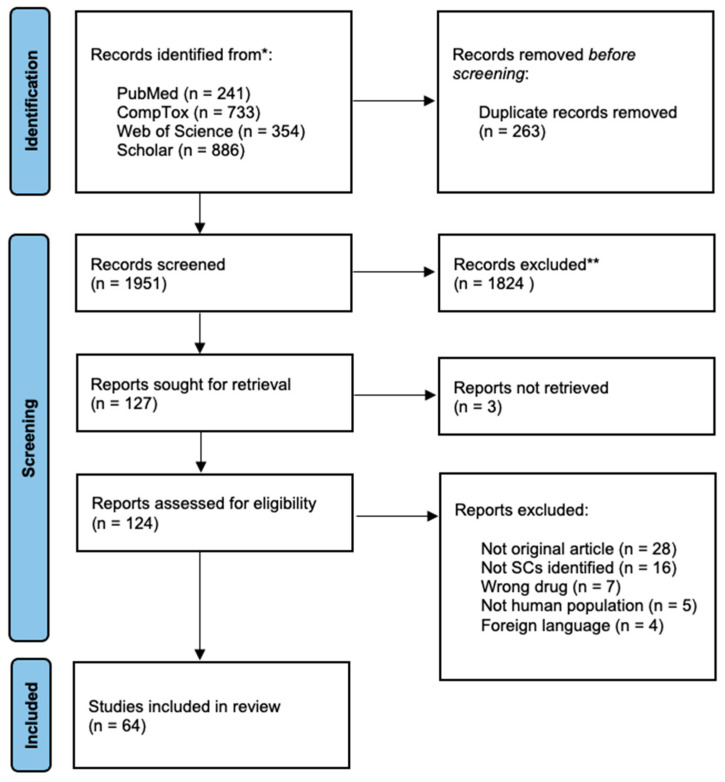
“The present review followed the PRISMA statement for transparent reporting of systematic reviews and meta-analyses [22], as presented in Figure 1.”
MethodSynthetic cannabinoids: Epidemiology, pharmacodynamics, and clinical implications
Castaneto, M. S., Gorelick, D. A., Desrosiers, N. A., Hartman, R. L., Pirard, S., & Huestis, M. A. (2014) · Drug and Alcohol Dependence · doi:10.1016/j.drugalcdep.2014.08.005 · Cited by 709 · cited 6×
“Respectively, compounds JWH-018, JWH-122, and JWH-210 are 5, 60, and 82 times stronger than receiver ∆9-tetrahydrocannabinol (∆9-THC) [10,11].”
BackgroundInfluentialHermanns‐Clausen, M., Kneisel, S., Szabo, B., & Auwärter, V. (2013) · Addiction · doi:10.1111/j.1360-0443.2012.04078.x · Cited by 479
Beyond THC: The New Generation of Cannabinoid Designer Drugs
Fattore, L., & Fratta, W. (2011) · Frontiers in Behavioral Neuroscience · doi:10.3389/fnbeh.2011.00060 · Cited by 443
Cardiovascular effects of marijuana and synthetic cannabinoids: the good, the bad, and the ugly
Pacher, P., Steffens, S., Haskó, G., Schindler, T. H., & Kunos, G. (2018) · Nature Reviews Cardiology · doi:10.1038/nrcardio.2017.130 · Cited by 439
Tait, R. J., Caldicott, D., Mountain, D., Hill, S. L., & Lenton, S. (2016) · Clinical Toxicology · doi:10.3109/15563650.2015.1110590 · Cited by 378
Synthetic Cannabinoid–Related Illnesses and Deaths
Trecki, J., Gerona, R. R., & Schwartz, M. D. (2015) · New England Journal of Medicine · doi:10.1056/nejmp1505328 · Cited by 331 · cited 1×
“The main objectives are safeguarding the airway, avoiding rhabdomyolysis, and monitoring for either cardiac or cerebral ischemia, in addition to administering intravenous fluids for dehydration [102,103].”
BackgroundSynthetic cannabinoid JWH-018 and psychosis: An explorative study
Every-Palmer, S. (2011) · Drug and Alcohol Dependence · doi:10.1016/j.drugalcdep.2011.01.012 · Cited by 299
Spicing things up: synthetic cannabinoids
Spaderna, M., Addy, P. H., & D’Souza, D. C. (2013) · Psychopharmacology · doi:10.1007/s00213-013-3188-4 · Cited by 296 · cited 2×
“Respectively, compounds JWH-018, JWH-122, and JWH-210 are 5, 60, and 82 times stronger than receiver ∆9-tetrahydrocannabinol (∆9-THC) [10,11].”
Background
Research works printed but not linked: 1
- Roberts J.R. Synthetic cannabinoids: Treating toxicity Emerg. Med. News 2015 37 12 14
Cited by
New Psychoactive Substances: Health and Legal Challenges
Santos, I. C. S., Maia, D., Dinis‐Oliveira, R. J., & Barbosa, D. J. (2024) · Psychoactives · doi:10.3390/psychoactives3020018 · Cited by 64
“However, the However, the long-term e ff ects of repeated use are poorly understood [39]. long-term effects of repeated use are poorly understood [39 Fatalities associated Fatalities associated with synthetic cannabinoids have been reported [40,41]. with synthetic cannabinoids have been reported…”
BackgroundNew Psychoactive Substances Toxicity: A Systematic Review of Acute and Chronic Psychiatric Effects
Taflaj, B., Maida, N. L., Tittarelli, R., Trana, A. D., & D’Acquarica, I. (2024) · International Journal of Molecular Sciences · doi:10.3390/ijms25179484 · Cited by 42
“Similarly, stimulant NPSs were reported in only three cases, in which subjects with diagnosed schizophrenia showed increased aggressiveness and bizarre behavior [19,24].”
BackgroundSimon, G., Kuzma, M., Mayer, M., Petrus, K., & Tóth, D. (2023) · Toxics · doi:10.3390/toxics11080673 · Cited by 28
Prevalence and patterns of substance use in West Africa: A systematic review and meta-analysis
Emmanuel, G. O., Akinsolu, F. T., Abodunrin, O. R., & Ezechi, O. C. (2024) · PLOS Global Public Health · doi:10.1371/journal.pgph.0004019 · Cited by 24
Helander, A., Johansson, M., Villén, T., & Andersson, A. K. (2024) · Scandinavian Journal of Clinical and Laboratory Investigation · doi:10.1080/00365513.2024.2340039 · Cited by 16
Cannabis Use Variations and Myocardial Infarction: A Systematic Review
van Amsterdam, J., & van den Brink, W. (2024) · Journal of Clinical Medicine · doi:10.3390/jcm13185620 · Cited by 18
“…contrast to the partial agonist THC (i.e., cannabis) at the CB1 and CB2 receptors, SC are full agonists with a 5–80 times higher potency, which may account for their greater toxicities [85] and the relatively high number of serious incidents, including fatal incidents compared to cannabis [86–88].”
BackgroundGuterstam, J., Tavic, C., Barosso, M., & Beck, O. (2024) · Journal of Pharmaceutical and Biomedical Analysis · doi:10.1016/j.jpba.2024.116075 · Cited by 12
Inman, A., & Cservenka, A. (2024) · Journal of Addictive Diseases · doi:10.1080/10550887.2024.2418225 · Cited by 18
Kalak, P., Kupczyk, P., Szumny, A. J., Gębarowski, T., Jasiak, M., Niedźwiedź, А., Niżański, W., & Dzięcioł, M. (2025) · International Journal of Molecular Sciences · doi:10.3390/ijms26157095 · Cited by 12
Jones, A. T., Taha, A. M. A., & Miller, G. P. (2025) · Neuroscience & Biobehavioral Reviews · doi:10.1016/j.neubiorev.2025.106043 · Cited by 9
Corli, G., Luca, F. D., Bilel, S., Bassi, M., Roda, E., Rossi, P., Fattore, L., Locatelli, C., & Marti, M. (2025) · European Journal of Pharmacology · doi:10.1016/j.ejphar.2025.177633 · Cited by 8
Gould, A., Dargan, P. I., & Wood, D. M. (2024) · Journal of Medical Toxicology · doi:10.1007/s13181-024-01013-0 · Cited by 7
Luo, X., Kuai, L., Shi, X., Qiao, Y., Li, K., Xu, D., Di, B., Yan, F., & Xu, P. (2025) · European Journal of Pharmacology · doi:10.1016/j.ejphar.2025.177586 · Cited by 8
Bombana, H. S., Meirelles, G. D. P., de Oliveira, R. A., Leyton, V., & Yonamine, M. (2025) · Journal of Analytical Toxicology · doi:10.1093/jat/bkaf027 · Cited by 6
Self-citationWu, Y., Fan, F., Zhou, L., Shen, Y., Wang, A., Qin, Y., Wang, J., & Yao, W. (2025) · Environmental Research · doi:10.1016/j.envres.2025.121517 · Cited by 6
Thomsen, L. R., Rosengren, R. J., & Glass, M. (2024) · Psychoactives · doi:10.3390/psychoactives3030023 · Cited by 6
Neurological aspects of drug misuse
Howard, R. S., Holmes, P., & Dargan, P. (2025) · Practical Neurology · doi:10.1136/pn-2023-003796 · Cited by 5
Almeida, A. S., de Pinho, P. G., Remião, F., & Fernandes, C. (2025) · Molecules · doi:10.3390/molecules30020290 · Cited by 9
Doerr, A. A., Nordmeier, F., Walle, N., Laschke, M. W., Menger, M. D., Meyer, M. R., Schmidt, P. H., & Schaefer, N. (2024) · Archives of Toxicology · doi:10.1007/s00204-024-03815-1 · Cited by 5
“Highly potent synthetic cannabinoids are still leading to serious and even fatal intoxications (Bo et al. 2024; Alzu’bi et al. 2024; de Oliveira et al. 2023) after smoking/inhaling, which is the common route of administration (Xu et al. 2024).”
BackgroundCronin, S., Cruz, J., Cameron, E., Azemar, S., Dudley, S., Largent‐Milnes, T. M., Brady, B. R., Wallace, J. S., Arnett, M. R., Dahmer, S., et al. (2025) · Journal of Cannabis Research · doi:10.1186/s42238-025-00321-8 · Cited by 4
“( Commissioner 2024, de Oliveira et al., 2023, Lozier et al., 2019, Kelkar et al., 2018).”
Dong, J., Zhao, C., Ning, J., Liu, Y., & Dou, X. (2025) · ACS Omega · doi:10.1021/acsomega.5c00540 · Cited by 4
Synthetic cannabinoids in hair: a review of recent findings and analytical methods by LC-MS/MS
Pereira, R. S., Moreira, O. B. O., de Oliveira, M. S., Canuto, C. C., Lemos, D. O. D. C., Duarte, L. M., & Rodrigues, S. V. (2026) · Analytica Chimica Acta · doi:10.1016/j.aca.2026.345078 · Cited by 5
Janssens, L. K., Sommer, M. J., Grafinger, K. E., Hermanns‐Clausen, M., Auwärter, V., & Stove, C. P. (2024) · Archives of Toxicology · doi:10.1007/s00204-024-03830-2 · Cited by 4
“(De Oliveira et al. 2023).”
InfluentialIzquierdo-Luengo, C., Ponce-Renilla, M., Ten-Blanco, M., Arnanz, M. A., Tolón, R. M., Pereda-Pérez, I., & Berrendero, F. (2025) · iScience · doi:10.1016/j.isci.2025.111857 · Cited by 5
Blavier, C. A. K., Villet, M. H., Zschiesche, A., Auwärter, V., Graw, M., Geffert, C., & Groth, O. C. (2026) · International Journal of Legal Medicine · doi:10.1007/s00414-025-03688-8 · Cited by 3
Detecting the Undetectable: Analytical Strategies for Novel Psychoactive Substances
Jousselin, E., Griffeuille, P., Petit, I., Saint‐Marcoux, F., Balkhi, S. E., & Védrenne, N. (2026) · Therapeutic Drug Monitoring · doi:10.1097/ftd.0000000000001431 · Cited by 5
Silva, L. S. F., Abreu, L. S., Spinelli, E., Ferreira, G. B., & Duarte, L. M. (2025) · Analytica Chimica Acta · doi:10.1016/j.aca.2025.343975 · Cited by 4
Ураков, А. Л., & Shabanov, P. D. (2023) · Психофармакология и биологическая наркология · doi:10.17816/phbn568586 · Cited by 3
Shetty, R. A., Hill, R. D., McDonald, J., Sumien, N., Forster, M. J., & Gatch, M. B. (2026) · Journal of Cannabis Research · doi:10.1186/s42238-026-00390-3 · Cited by 2
de Araújo, K. R. G., Meirelles, G. D. P., Demarque, D. P., Dörr, F., Júnior, L. F. N., Soares, A. L., Guedes, C. D., Costa, J. L., & Yonamine, M. (2025) · Forensic Chemistry · doi:10.1016/j.forc.2025.100678 · Cited by 2
Peyrière, H., Batisse, A., Sam‐Laï, N. F., Daveluy, A., Fournier-Choma, C., Deheul, S., Chevalier, C., Lacroix, C., Gibaja, V., Aquizerate, A., et al. (2025) · British Journal of Clinical Pharmacology · doi:10.1002/bcp.70133 · Cited by 1
The stability of novel synthetic cannabinoids in blood samples in different storage conditions
Akbaba, M., ÖZDEMİR, O., & Isır, A. B. (2025) · Legal Medicine · doi:10.1016/j.legalmed.2025.102762 · Cited by 2
Zhao, S., García, J. C. P., Li, R., Kikura‐Hanajiri, R., Demizu, Y., Tanaka, Y., & Ishii, Y. (2025) · Forensic Toxicology · doi:10.1007/s11419-025-00719-2 · Cited by 2
“Excessive consumption can result in severe outcomes such as coma, shock, suffocation, or even sudden death [11, 12].”
Analysis of cognitive profiles in schizophrenia and NSAID-induced psychosis
Alekseev, I. A., Tkhostov, A. S., & Шустов, А. Д. (2025) · Психология и Психотехника · doi:10.7256/2454-0722.2025.2.74811 · Cited by 1
The future of addiction psychiatry
Arruda, F. S., & Castaldelli-Maia, J. M. (2025) · International Review of Psychiatry · doi:10.1080/09540261.2025.2566211 · Cited by 2
“Synthetic cannabinoids (SCs) such as JWH-018, AB-CHMINACA and 5 F-ADB exhibit CB1 agonism far exceeding Δ9-THC, with erratic composition, absent CBD buffering and rapid market evolution across ‘generations’ of compounds (De Oliveira et al., 2023; Malaca et al., 2022).”
Self-citationKURZEJA, W., Kuczer, M., Matysiak, J., & Klupczyńska-Gabryszak, A. (2026) · Molecules · doi:10.3390/molecules31020337 · Cited by 2
“The toxicity and high abuse potential of SCs could pose serious health risks to their users, so it is necessary to monitor trends in SCs usage [2,8].”
Detection of drugs of abuse: evolving analytical strategies and emerging challenges
Eliw, N., Alhefeiti, M. A. H. S., Shamroukh, A. A., & Shah, I. (2026) · Frontiers in Chemistry · doi:10.3389/fchem.2026.1739599 · Cited by 1
“SCs may be 30–100 times more potent than THC, according to in vivo and clinical data, and even at low dosages, they can cause serious toxic and psychiatric side effects (Alipour et al., 2019; Breivogel et al., 2020; Castaneto M. S. et al., 2014; de Oliveira et al., 2023).”
Ahmad, M. A., Ghaleb, S. S., Hassan, D. A. E., Sharkawi, S. M. Z., Abdelghany, A. K., Mostafa, A. M., Hassan, R. M., & Abdalla, A. G. S. (2024) · Beni-Suef University Journal of Basic and Applied Sciences · doi:10.1186/s43088-024-00479-9 · Cited by 1
Immunotoxicology of Drugs of Abuse
Kaplan, B. L. F. (2024) · Elsevier eBooks · doi:10.1016/b978-0-323-95488-4.00051-6 · Cited by 1
Cannabinoidkonsum und psychotische Störungen
Gahr, M. (2024) · NeuroTransmitter · doi:10.1007/s15016-024-3754-5
Advances in Neuropsychology: Top Papers Published in Brain Sciences in 2022–2023
Zoccolotti, P. (2024) · Brain Sciences · doi:10.3390/brainsci14060588
“The systematic review by de Oliveira et al. [7] focuses on synthetic cannabinoids.”
BackgroundKoenig, H. G. (2024) · The International Journal of Psychiatry in Medicine · doi:10.1177/00912174241297503
Walle, N., Dings, C., Zaher, O., Doerr, A. A., Peters, B., Laschke, M. W., Lehr, T., Menger, M. D., Schmidt, P. H., Meyer, M. R., et al. (2024) · Archives of Toxicology · doi:10.1007/s00204-024-03906-z · Cited by 1
NPS – Drugs to circumvent laws
Santana, R. C. L. A., Wurzler, G. T., Antonio, A. D. S., Vanini, G., & Neto, F. R. D. A. (2024) · Comprehensive analytical chemistry · doi:10.1016/bs.coac.2024.11.013
New psychoactive substances as abuse drugs
de la Guárdia, M., & Gallart-Mateu, D. (2024) · Comprehensive analytical chemistry · doi:10.1016/bs.coac.2024.11.011
Qin, W. A., Seo, D., Lee, S. H., & Elam, K. K. (2025) · International Journal of Mental Health and Addiction · doi:10.1007/s11469-024-01430-w
“Existing studies of SC use focus on pharmacological and toxicological effects (Alzu’bi et al., 2024; Bukke et al., 2021; de Oliveira et al., 2023; Dvorácskó et al., 2023; Houston et al., 2024; Roque-Bravo et al., 2023) or emergency room case reports (Acharya et al., 2023; Giorgetti et al., 2024;…”
Ziane, S. N. E. H., Dib, M. E. A., Bensaid, O., & Muselli, A. (2025) · Current Bioactive Compounds · doi:10.2174/0115734072356174241228013353
Expérimentations d’usage de substances psychoactives et pratiques addictives chez les jeunes adultes
Bezo, A., Benyamina, A., Coscas, S., & Karila, L. (2025) · Neuropsychiatrie de l Enfance et de l Adolescence · doi:10.1016/j.neurenf.2025.01.008
Medication Treatment of Substance Use Disorders
Hatcher, S., Frye, L., & Herk, K. V. (2025) · Springer eBooks · doi:10.1007/978-3-032-00663-9_6
Chemical Composition, Classification, and Metabolism of Cannabinoids
Azam, S., Loureiro, L., Vicente, A. A., & Vardanega, R. (2026) · Springer briefs in molecular science · doi:10.1007/978-3-032-11546-1_2 · Cited by 2
Neurologic Complications of Drug and Alcohol Use
Goss, A. (2026) · CONTINUUM Lifelong Learning in Neurology · doi:10.1212/cont.0000000000001676
Acute kidney injury induced by synthetic cannabinoids
Zvárová, E., & Václavík, J. (2026) · Vnitřní lékařství · doi:10.36290/vnl.2026.007
NOVEL PSYCHOACTIVE SUBSTANCES: EPIDEMIOLOGY AND MEDICAL AND SOCIAL IMPLICATIONS. LITERATURE REVIEW.
Akkuzinova, K., Inoue, K., Moldagaliyev, T., Toleuov, E., Seksenbayev, N., & Ospanova, N. (2026) · Ġylym men densaulyķ saķtau. · doi:10.34689/sh.2026.28.1.016
Rodríguez‐Borillo, O., Corli, G., & Marti, M. (2026) · Springer eBooks · doi:10.1007/978-3-032-12239-1_9
Kratom Use, Synthetic Cannabinoids (K2), and Trends in the Drug Supply
Kolosionek, T. J., & Amaducci, A. M. (2026) · Primary Care Clinics in Office Practice · doi:10.1016/j.pop.2026.03.004
Insights from the first synthetic cannabinoid clandestine lab dismantled in Brazil
Meirelles, G. D. P., de Araújo, K. R. G., Godoi, A. B., Menezes, M. R., Júnior, L. F. N., Costa, J. L., & Yonamine, M. (2026) · Forensic Science International · doi:10.1016/j.forsciint.2026.113058
69Cannabis overdose: the myth of limitless safety
Burnett, M. E., Greene, S. D., & Peterson, A. M. (2026) · De Gruyter eBooks · doi:10.1515/9783111476162-004
One Health water-based epidemiology: The chemical perspective
Byrnes, N. A., Beaney, J., Ceolotto, N., Elabbadi, D., Elliss, H., Faill, B., Hawkins, E., Ranathunge, B., & Kasprzyk‐Hordern, B. (2026) · TrAC Trends in Analytical Chemistry · doi:10.1016/j.trac.2026.119051
den Bempt, S. V. (2026) · Case Reports in Clinical Medicine · doi:10.4236/crcm.2026.158045
Said, M., Thomsen, R., Palmqvist, D. F., Rasmussen, B. S., & Reiter, N. (2026) · Medical Reports · doi:10.1016/j.hmedic.2026.100494
Gomes, T. M., de Pinho, P. G., Nunes, I., & Câmara, J. S. (2026) · Toxics · doi:10.3390/toxics14100898
Metadata
- Authors
- de Oliveira, M. C., Vides, M. C., Lassi, D. L. S., Torales, J., Ventriglio, A., Bombana, H. S., Leyton, V., Périco, C. D. A.-M., Negrão, A. B., Malbergier, A., & Castaldelli-Maia, J. M.
- Affiliations
- Interdisciplinary Group of Alcohol and Drug Studies (GREA), Institute Perdizes, Department of Psychiatry Medical School, São Paulo University, São Paulo 05403-903, SP, Brazil
- Universidade de São Paulo (BR)
- Universidad Nacional de Asunción (PY)
- University of Foggia (IT)
- Department of Neuroscience, Medical School, FMABC University Center, Santo André 09060-870, SP, Brazil
- ORCID
- Venue
- Brain Sciences
- Publisher
- MDPI AG
- Published
- 2023-06-24
- Volume
- 13
- Issue
- 7
- Pages
- 990
- ISSN
- 2076-3425 (ISSN-L)
- PMC
- PMC10377539
- OpenAlex
- W4382134818
- Semantic Scholar
- 26821b45771686aaf120d2ae692c64bed142c4e5
- Cited by
- 61
- References
- 99
- Citations by year
- 2026: 18 · 2025: 22 · 2024: 19 · 2023: 2
- FWCI
- 2.36
- Type
- journal article
- Language
- en
- Open access
- gold
- doi.org
- Licence
- Locations
- Brain Sciences (publishedVersion, cc-by)
- PubMed Central (publishedVersion, cc-by)
- PubMed (publishedVersion)
- DOAJ (DOAJ: Directory of Open Access Journals) (submittedVersion, cc-by-sa)
- Topics
- Life Sciences › Pharmacology, Toxicology and Pharmaceutics › Toxicology › Forensic Toxicology and Drug Analysis
- Health Sciences › Medicine › Pharmacology (medical) › Cannabis and Cannabinoid Research
- Health Sciences › Medicine › Emergency Medicine › Poisoning and overdose treatments
- Keywords
- synthetic cannabinoids, drug toxicity, drug addiction, seizures, tachycardia, neuropsychiatric symptoms, convulsive crisis, drug-related deaths, epilepsy, schizophrenia, drugs of abuse
About these checks
Registry, retraction, Cites and statistics results are computed, not judged, with one exception: a printed reference that no index lists is read once by a model before it counts as a citation error. Claims are extracted by a model and kept only when their quote appears verbatim in the text; each cited source is then checked, with a model’s help, for whether it says what the claim relies on. Those verdicts can be wrong — read the claim’s quote and the cited source before relying on one.
Statistics and arithmetic are recomputed, not judged.
Confidence bands are shown only for fields calibrated on our annotated test set. None is calibrated yet, so no band is shown.
What counts as a claim ›How we measure confidence ›How we check this ›
Are you an author, or do you see a problem with this page? Request a review
Data sources
Bibliographic data: Semantic Scholar, OpenAlex, Crossref.
Contains information from the Semantic Scholar Academic Graph Datasets, made available under the ODC Attribution License (ODC-BY 1.0).
Semantic Scholar’s data is described in: Kinney, R., et al. (2023). The Semantic Scholar Open Data Platform. arXiv:2301.10140.
