

Targeting the DNA Damage Response Pathway as a Novel Therapeutic Strategy in Colorectal Cancer
Open accessThe DOI matches its Crossref record; 117 of the 117 references it cites were found in a registry or an index.
Abstract
Major advances have been made in CRC treatment in recent years, especially in molecularly driven therapies and immunotherapy. Despite this, a large number of advanced colorectal cancer patients do not benefit from these treatments and their prognosis remains poor. The landscape of DNA damage response (DDR) alterations is emerging as a novel target for treatment in different cancer types. PARP inhibitors have been approved for the treatment of ovarian, breast, pancreatic, and prostate cancers carrying deleterious BRCA1/2 pathogenic variants or homologous recombination repair (HRR) deficiency (HRD). Recent research reported on the emerging role of HRD in CRC and showed that alterations in these genes, either germline or somatic, are carried by up to 15–20% of CRCs. However, the role of HRD is still widely unknown, and few data about their clinical impact are available, especially in CRC patients. In this review, we report preclinical and clinical data currently available on DDR inhibitors in CRC. We also emphasize the predictive role of DDR mutations in response to platinum-based chemotherapy and the potential clinical role of DDR inhibitors. More preclinical and clinical trials are required to better understand the impact of DDR alterations in CRC patients and the therapeutic opportunities with novel DDR inhibitors.
Overview
The claims and statistics of this paper haven’t been checked yet.
Free: it reads the open-access text and checks the first 5 claims that cite a source we can check. Create a free account to check every claim.
Integrity signals
Registry
Cites
Statistics
Figures
Verification
Claims the paper makes
The claims and statistics of this paper haven’t been checked yet.
Free: it reads the open-access text and checks the first 5 claims that cite a source we can check. Create a free account to check every claim.
Claims other papers make about this one
Each is checked against this paper’s own text: does it say what the citing paper says it does?
The cited source says what the claim attributes to it.
In the citing paper
“Various preclinical studies have demonstrated PARP inhibitors to also be effective in CRC cells; however, the sensitivity may depend on the status of certain genes involved in DDR [132].”
From Mechanisms and Strategies to Overcome Drug Resistance in Colorectal Cancer (2025) · cites this paper as [132]
The cited source says what the claim attributes to it.
In the citing paper
“WEE1 is a tyrosine kinase that regulates the G2/M checkpoint of the cell cycle by preventing cells with DNA damage from entering mitosis, and so inhibiting WEE1 could sensitize tumors to DNA-damaging therapies [132].”
From Mechanisms and Strategies to Overcome Drug Resistance in Colorectal Cancer (2025) · cites this paper as [132]
Self-check
Percentages, sums and reported differences re-computed from the paper’s own numbers.
The self-check needs the paper’s full text.
Citations
Cites
Signatures of mutational processes in human cancer
Initiative, A. P. C. G., Alexandrov, L. B., ICGC Breast Cancer Consortium, ICGC MMML-Seq Consortium, PedBrain, I., Nik-Zainal, S., Wedge, D. C., Aparicio, S. A. J. R., Behjati, S., Biankin, A. V., et al. (2013) · Nature · doi:10.1038/nature12477 · Cited by 9,660 · cited 2×
“Efforts to develop molecular biomarkers of HRD have included transcriptomic signatures [66], mutational signatures [67], BRCA1 and RAD51 promoter hypermethylation [68], and functional biomarkers.”
BackgroundComprehensive molecular characterization of human colon and rectal cancer
The Cancer Genome Atlas Network (2012) · Nature · doi:10.1038/nature11252 · Cited by 8,499
The DNA Damage Response: Making It Safe to Play with Knives
Ciccia, A., & Elledge, S. J. (2010) · Molecular Cell · doi:10.1016/j.molcel.2010.09.019 · Cited by 4,368 · cited 2×
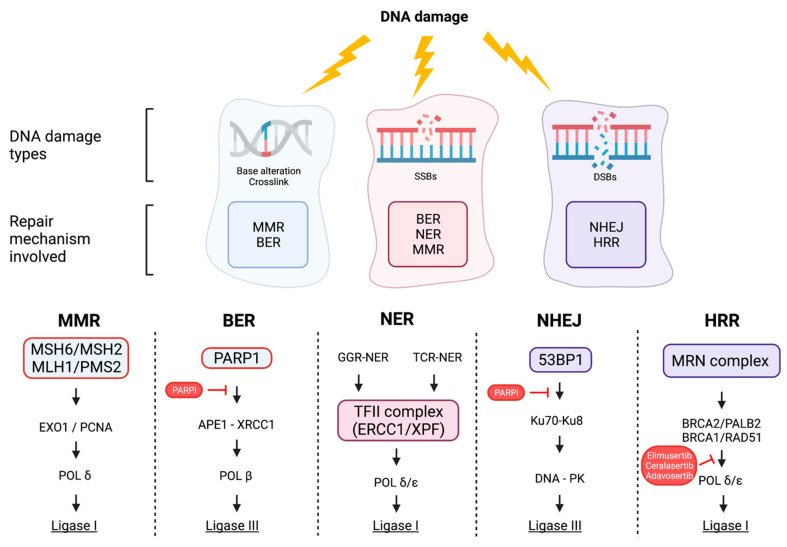
“The last mediator involved is DNA-PK, which, after its recruitment and activation by the complex Ku70/Ku80 DSBs, provides access to end processing enzymes, such as ARTEMIS [110], and phosphorylates XRCC4/LIG4, which promotes the re-ligation of the broken ends with the help of the stimulatory factor XLF [111].”
BackgroundESMO consensus guidelines for the management of patients with metastatic colorectal cancer
Van Cutsem, E., Cervantes, A., Adam, R., Sobrero, A., Van Krieken, J. H., Aderka, D., Aranda Aguilar, E., Bardelli, A., Benson, A., Bodoky, G., et al. (2016) · Annals of Oncology · doi:10.1093/annonc/mdw235 · Cited by 3,421 · cited 1×
“Currently, the most common treatment used in metastatic colorectal cancer (mCRC) is represented by chemotherapy regimens constituting oxaliplatin, 5-fluorouracil, and/or irinotecan in combination with targeted agents including bevacizumab or aflibercept (antiangiogenic agents) and, according to the RAS/BRAF status, ce…”
BackgroundPembrolizumab in Microsatellite-Instability-High Advanced Colorectal Cancer
André, T., Shiu, K.-K., Kim, T. W., Jensen, B. V., Jensen, L. H., Punt, C., Smith, D., Garcia-Carbonero, R., Benavides, M., Gibbs, P., et al. (2020) · New England Journal of Medicine · doi:10.1056/nejmoa2017699 · Cited by 3,099 · cited 1×
“After the publication of the results of the phase 3 KEYNOTE-177 trial, for mismatch repair-deficient (MMR-deficient)/MSI-high mCRC, a first-line regiment with pembrolizumab has become the new standard of care [15].”
BackgroundOverman, M. J., McDermott, R., Leach, J. L., Lonardi, S., Lenz, H.-J., Morse, M. A., Desai, J., Hill, A., Axelson, M., Moss, R. A., et al. (2017) · The Lancet Oncology · doi:10.1016/s1470-2045(17)30422-9 · Cited by 2,836 · cited 1×
“Moreover, the combination of anti-PD1 (nivolumab) plus anti-CTLA4 (ipilimumab) has been tested in a first-line setting, with promising results in terms of PFS and OS in a phase 2 study [16,17].”
BackgroundNiraparib Maintenance Therapy in Platinum-Sensitive, Recurrent Ovarian Cancer
Mirza, M. R., Monk, B. J., Herrstedt, J., Oza, A. M., Mahner, S., Redondo, A., Fabbro, M., Ledermann, J. A., Lorusso, D., Vergote, I., et al. (2016) · New England Journal of Medicine · doi:10.1056/nejmoa1611310 · Cited by 2,451
Epidemiology of colorectal cancer: incidence, mortality, survival, and risk factors
Rawla, P., Sunkara, T., & Barsouk, A. (2019) · Gastroenterology Review · doi:10.5114/pg.2018.81072 · Cited by 2,323
Maintenance Olaparib for Germline BRCA -Mutated Metastatic Pancreatic Cancer
Golan, T., Hammel, P., Reni, M., Van Cutsem, E., Macarulla, T., Hall, M. J., Park, J.-O., Hochhauser, D., Arnold, D., Oh, D.-Y., et al. (2019) · New England Journal of Medicine · doi:10.1056/nejmoa1903387 · Cited by 2,302 · cited 1×
“Regarding gastrointestinal (GI) tract tumors, promising results have been reported with olaparib as maintenance therapy after platinum-based chemotherapy in patients with BRCA1/2-mutated pancreatic cancer (POLO trial) [22,54].”
BackgroundDNA-Repair Defects and Olaparib in Metastatic Prostate Cancer
Mateo, J., Carreira, S., Sandhu, S., Miranda, S., Mossop, H., Perez-Lopez, R., Nava Rodrigues, D., Robinson, D., Omlin, A., Tunariu, N., et al. (2015) · New England Journal of Medicine · doi:10.1056/nejmoa1506859 · Cited by 2,185
Cited by
Mechanisms and Strategies to Overcome Drug Resistance in Colorectal Cancer
Haynes, J., & Manogaran, P. (2025) · International Journal of Molecular Sciences · doi:10.3390/ijms26051988 · Cited by 82
“Various preclinical studies have demonstrated PARP inhibitors to also be effective in CRC cells; however, the sensitivity may depend on the status of certain genes involved in DDR [132].”
InfluentialPuccini, A., Poorman, K. A., Catalano, F., Seeber, A., Goldberg, R. M., Salem, M. E., Shields, A. F., Berger, M. D., Battaglin, F., Tokunaga, R., et al. (2022) · Oncogene · doi:10.1038/s41388-022-02350-6 · Cited by 60
Self-citationUpdate on Emerging Therapies for Advanced Colorectal Cancer
Alese, O. B., Wu, C. S.-Y., Chapin, W. J., Ulanja, M. B., Zheng-Lin, B., Amankwah, M., & Eads, J. R. (2023) · American Society of Clinical Oncology Educational Book · doi:10.1200/edbk_389574 · Cited by 55
Kumar, K., Kumar, S., Datta, K., Fornace, A. J., & Suman, S. (2023) · Current Oncology · doi:10.3390/curroncol30060416 · Cited by 45
Ma, W., & Zhou, S. (2025) · Biomolecules · doi:10.3390/biom15020168 · Cited by 37
Reitsam, N. G., Märkl, B., Dintner, S., Waidhauser, J., Vlasenko, D., & Grosser, B. (2022) · Frontiers in Oncology · doi:10.3389/fonc.2022.1019798 · Cited by 36
DNA repair-dependent immunogenic liabilities in colorectal cancer: opportunities from errors
Amodio, V., Vitiello, P. P., Bardelli, A., & Germano, G. (2024) · British Journal of Cancer · doi:10.1038/s41416-024-02848-8 · Cited by 35
Dalmasso, B., Puccini, A., Catalano, F., Borea, R., Iaia, M. L., Bruno, W., Fornarini, G., Sciallero, S., Rebuzzi, S. E., & Ghiorzo, P. (2022) · International Journal of Molecular Sciences · doi:10.3390/ijms23094709 · Cited by 28
Self-citationXie, T., Dickson, K.-A., Yee, C., Ma, Y., Ford, C. E., Bowden, N. A., & Marsh, D. J. (2022) · Cancers · doi:10.3390/cancers14194621 · Cited by 28
FLASH Radiotherapy: Benefits, Mechanisms, and Obstacles to Its Clinical Application
Alhaddad, L., Osipov, A. N., & Leonov, S. V. (2024) · International Journal of Molecular Sciences · doi:10.3390/ijms252312506 · Cited by 27
Shao, C.-Y., Han, Y., Huang, Y., Zhang, Z., Gong, T., Zhang, Y., Tian, X., Fang, M., Han, X., & Li, M. (2023) · International Journal of Oncology · doi:10.3892/ijo.2023.5605 · Cited by 26
Lynch Syndrome: From Multidisciplinary Management to Precision Prevention
Buono, A. D., Puccini, A., Franchellucci, G., Airoldi, M., Bartolini, M., Bianchi, P. P., Santoro, A., Repici, A., & Hassan, C. (2024) · Cancers · doi:10.3390/cancers16050849 · Cited by 25
Self-citationLai, J., Yang, S., Lin, Z., Huang, W., Li, X., Li, R., Tan, J., & Wang, W. (2023) · American Journal of Clinical Oncology · doi:10.1097/coc.0000000000000989 · Cited by 18
Fanale, D., Corsini, L. R., Pedone, E., Randazzo, U., Fiorino, A., Piazza, M. D., Brando, C., Magrin, L., Contino, S., Piraino, P., et al. (2023) · Critical Reviews in Oncology/Hematology · doi:10.1016/j.critrevonc.2023.104086 · Cited by 15
Wan, X., Tou, F., Zeng, J., Chen, X., Li, S., Chen, L., Zheng, Z. G., & Rao, J. (2022) · Frontiers in Pharmacology · doi:10.3389/fphar.2022.1090599 · Cited by 15
Jiang, B., Shang, Y., Zhang, X., He, W., Hua, H., Ye, F., Zhou, X., Li, Y., Zhong, W., Jiang, W., et al. (2025) · The Oncologist · doi:10.1093/oncolo/oyaf141 · Cited by 13
Ouranos, K., Gardikioti, A., Bakaloudi, D. R., Mylona, E. K., Shehadeh, F., & Mylonakis, E. E. (2023) · Open Forum Infectious Diseases · doi:10.1093/ofid/ofad547 · Cited by 12
Li, A., Wang, Z., Lv, Q., & Yan, L. (2022) · Journal of Oncology · doi:10.1155/2022/6107997 · Cited by 11
Drugging the DNA damage response in the clinic: going beyond PARP
Torrado, C., González-Ortiz, Á., Xavier, C. B., Tan, H. N., Ngoi, N. Y. L., & Yap, T. A. (2025) · Expert Review of Anticancer Therapy · doi:10.1080/14737140.2025.2575825 · Cited by 10
Lin, Y., Luo, S., Luo, M., Lu, X., Li, Q., Xie, M., Huang, Y., Liao, X., Zhang, Y., Li, Y., et al. (2023) · Molecular Carcinogenesis · doi:10.1002/mc.23562 · Cited by 10
Ding, L. J., Xu, Y., Xu, L., Zhao, C., Zhang, Z., Zhang, J., Liao, K., Chen, Y., Li, J., Mei, X.-Y., et al. (2023) · Oncogenesis · doi:10.1038/s41389-023-00501-2 · Cited by 10
Li, S., Ye, J., Yang, K., Xu, C., Qin, Z., Xue, Y., Yu, L., Zhou, T., Yin, Z., Sun, B., et al. (2025) · Frontiers in Bioscience-Landmark · doi:10.31083/fbl26532 · Cited by 9
Notch-3 affects chemoresistance in colorectal cancer via DNA base excision repair enzymes
George, D. C., Bertrand, F. E., & Sigounas, G. (2024) · Advances in Biological Regulation · doi:10.1016/j.jbior.2024.101013 · Cited by 8
Therapeutic potential of targeting ubiquitin-specific proteases in colorectal cancer
Oon, C. E., Anbazhagan, P., & Tan, C. T. (2025) · Drug Discovery Today · doi:10.1016/j.drudis.2025.104356 · Cited by 8
Kwon, A. J., Morales, L., Chatagnier, L., Quigley, J. A., Pascua, J., Pinkowski, N. J., Brasser, S. M., & Hong, M. Y. (2024) · Alcohol · doi:10.1016/j.alcohol.2024.03.010 · Cited by 7
Targeted therapy for liver cancer: Current status and future directions
Wang, Q. (2025) · Bioimpacts · doi:10.34172/bi.32630 · Cited by 7
Kallio, P., Bessone, C., Seyednasrollah, F., Brodkin, J., Lassila, M., Högström, J., González‐Loyola, A., Petrova, T. V., Haglund, C. H., & Alitalo, K. K. (2025) · Cancer Research · doi:10.1158/0008-5472.can-23-1851 · Cited by 6
Li, X., Sharen, G., Zhang, M., Zhang, L., Liu, K., Wang, Y., Cheng, H., & Hou, M. (2024) · Heliyon · doi:10.1016/j.heliyon.2024.e35002 · Cited by 5
FLASH Radiation Therapy — Key physical irradiation parameters and beam characteristics
Malidarre, R. B., & Zakaly, H. M. H. (2024) · Journal of Instrumentation · doi:10.1088/1748-0221/19/02/p02035 · Cited by 5
Liu, H., Huang, R., Shan, J., Xie, X., Wang, C., Hu, P., & Sun, X. (2024) · Current Oncology · doi:10.3390/curroncol31010037 · Cited by 4
Mechanisms of treatment resistance in colorectal cancer
Mosoane, B., Lolas, G., & Dlamini, Z. (2024) · Elsevier eBooks · doi:10.1016/b978-0-443-33475-7.00014-7 · Cited by 3
Viswanathan, S., Raha, M., Mishra, S., & Patnaik, S. (2026) · Biochimica et Biophysica Acta (BBA) - Reviews on Cancer · doi:10.1016/j.bbcan.2026.189559 · Cited by 3
Zhang, B., & Matsumoto, Y. (2025) · Cancer Reports · doi:10.1002/cnr2.70233 · Cited by 2
Clinically approved and under trial drugs for precision oncology
Naqvi, S. T. Q., & Khalid, S. (2025) · Elsevier eBooks · doi:10.1016/b978-0-443-34671-2.00012-8 · Cited by 2
Ye, H., Wu, X., & Liang, G. (2025) · Frontiers in Pharmacology · doi:10.3389/fphar.2025.1515552 · Cited by 2
Pandey, S. K., Paliwal, S., & Mall, B. B. (2026) · Current Cancer Therapy Reviews · doi:10.2174/0115733947394022250929081154 · Cited by 1
Updates on DNA Repair Gene Deficiency in Colorectal Cancer (dMMR)
Sevá‐Pereira, G., Coy, C. S. R., & Martinez, C. A. R. (2025) · Journal of Coloproctology · doi:10.1055/s-0045-1805009 · Cited by 1
Bublitz, N.-A. (2024) · edoc Publication server (Humboldt University of Berlin) · doi:10.18452/29059 · Cited by 1
Editorial: New therapeutic approaches in microsatellite stable colorectal cancer patients
Bartolini, M., Seeber, A., & Puccini, A. (2023) · Frontiers in Oncology · doi:10.3389/fonc.2023.1240963 · Cited by 1
Self-citationChen, C., Chuang, F.-C., Li, H.-J., Chen, Y., Chen, H., Liu, K.-W., Su, Y., Chen, J., & Lee, H.-M. (2022) · Medicine · doi:10.1097/md.0000000000029863 · Cited by 1
DNA damage response dysregulation in colorectal cancer
Veerabhadrappa, B., Roy, S., Kozhiparambath, A., Lachaud, A., & Dyavaiah, M. (2026) · Elsevier eBooks · doi:10.1016/b978-0-443-43976-6.00016-8
Shao, C., Zhou, H., Chen, C., Dettman, E. J., Ren, Y., Cristescu, R., Gozman, A., & Jin, F. (2025) · Cancers · doi:10.3390/cancers17040577
Targeting DNA damage response pathways in cancer
Torrado, C., Tan, H. N., & Yap, T. A. (2026) · Elsevier eBooks · doi:10.1016/b978-0-443-29808-0.00075-3
Drug Delivery System for Aflibercept Delivery in Metastatic Colorectal Cancer (MCRC)
Mousavi, S. M., Jalilvand, H., Mosaed, R., & Tabesh, H. (2024) · doi:10.61440/jge.2024.v2.21
Alhamaky, S. M., Hassan, M. S. A., Ahmed, E. M., Ibrahim, S. G., Galal, E. R., & Gohar, N. A. (2026) · Bioorganic Chemistry · doi:10.1016/j.bioorg.2026.110502
Phytochemical modulation of DNA repair: Mechanisms, epigenetics, and therapeutic potential
Andhare, P., Verma, K., Sonavane, B., Kikani, B. A., Singh, N. K., & Madamwar, D. (2026) · Elsevier eBooks · doi:10.1016/b978-0-443-42857-9.00023-2
Radiotherapy for Rectal Cancer: How Much is Enough?
Chapman, W. C., Hunt, S. R., & Henke, L. E. (2023) · Clinics in Colon and Rectal Surgery · doi:10.1055/s-0043-1770709
Uba, A. İ., Çetiz, M. V., Ak, G., Saka, E., Alzebair, A., Eldahshan, O. A., Singab, A. N. B., AbdelRazek, M. M. M., Kotb, S. S., Ismail, K., et al. (2026) · RSC Advances · doi:10.1039/d6ra09569k
Nazari, M., Khaleghi, S., Farjam, T. B., & Hajrasouliha, S. (2026) · Scientific Reports · doi:10.1038/s41598-026-65782-0
PARP inhibitzaileak obarioko minbizian
Viteri Garrido, M. (2022) · Academica-e (Universidad Pública de Navarra)
Kciuk, M., Wanke, K., Mojzych, M., Płuciennik, E., & Kontek, R. (2026) · Scientific Reports · doi:10.1038/s41598-026-64876-z
Wan, X., Tou, F., Zeng, J., Chen, X., Li, S., Chen, L., Zheng, Z., & Rao, J. (2022) · doi:10.3389/fphar.2022.1090599.s002
Liang, H., Zhao, H., Xia, R., Liu, J., Guo, Y., Yang, M., & Liu, Q. (2026) · Frontiers in Pharmacology · doi:10.3389/fphar.2026.1885118
Metadata
- Authors
- Catalano, F., Borea, R., Puglisi, S., Boutros, A., Gandini, A., Cremante, M., Martelli, V., Sciallero, S., & Puccini, A.
- Affiliations
- Ospedale Policlinico San Martino (IT)
- Corresponding author
- Puccini, Alberto
- ORCID
- Venue
- Cancers
- Publisher
- MDPI AG
- Published
- 2022-03-09
- Volume
- 14
- Issue
- 6
- Pages
- 1388
- ISSN
- 2072-6694 (ISSN-L)
- PMC
- PMC8946235
- OpenAlex
- W4220744860
- Cited by
- 44
- References
- 117
- Citations by year
- 2026: 6 · 2025: 11 · 2024: 10 · 2023: 10 · 2022: 7
- FWCI
- 1.16
- Type
- journal article
- Language
- en
- Open access
- gold
- doi.org
- Licence
- Locations
- Cancers (publishedVersion, cc-by)
- PubMed Central (publishedVersion, cc-by)
- PubMed (publishedVersion)
- CINECA IRIS Institutial Research Information System (University of Genoa) (submittedVersion)
- Topics
- Health Sciences › Medicine › Oncology › PARP inhibition in cancer therapy
- Health Sciences › Medicine › Pathology and Forensic Medicine › Genetic factors in colorectal cancer
- Life Sciences › Biochemistry, Genetics and Molecular Biology › Molecular Biology › DNA Repair Mechanisms
- Keywords
- DNA damage response, colorectal cancer, DDR inhibitors, homologous recombination deficiency, PARP inhibitors, platinum-based chemotherapy, predictive biomarkers, targeted therapy
About these checks
Registry, retraction, Cites and statistics results are computed, not judged, with one exception: a printed reference that no index lists is read once by a model before it counts as a citation error. Claims are extracted by a model and kept only when their quote appears verbatim in the text; each cited source is then checked, with a model’s help, for whether it says what the claim relies on. Those verdicts can be wrong — read the claim’s quote and the cited source before relying on one.
Statistics and arithmetic are recomputed, not judged.
Confidence bands are shown only for fields calibrated on our annotated test set. None is calibrated yet, so no band is shown.
What counts as a claim ›How we measure confidence ›How we check this ›
Are you an author, or do you see a problem with this page? Request a review
Data sources
Bibliographic data: Semantic Scholar, OpenAlex, Crossref.
Contains information from the Semantic Scholar Academic Graph Datasets, made available under the ODC Attribution License (ODC-BY 1.0).
Semantic Scholar’s data is described in: Kinney, R., et al. (2023). The Semantic Scholar Open Data Platform. arXiv:2301.10140.
