

Acral Melanoma in Skin of Color: Current Insights and Future Directions: A Narrative Review
Open accessThe DOI matches its Crossref record; 87 of the 88 references it cites were found in a registry or an index.
Abstract
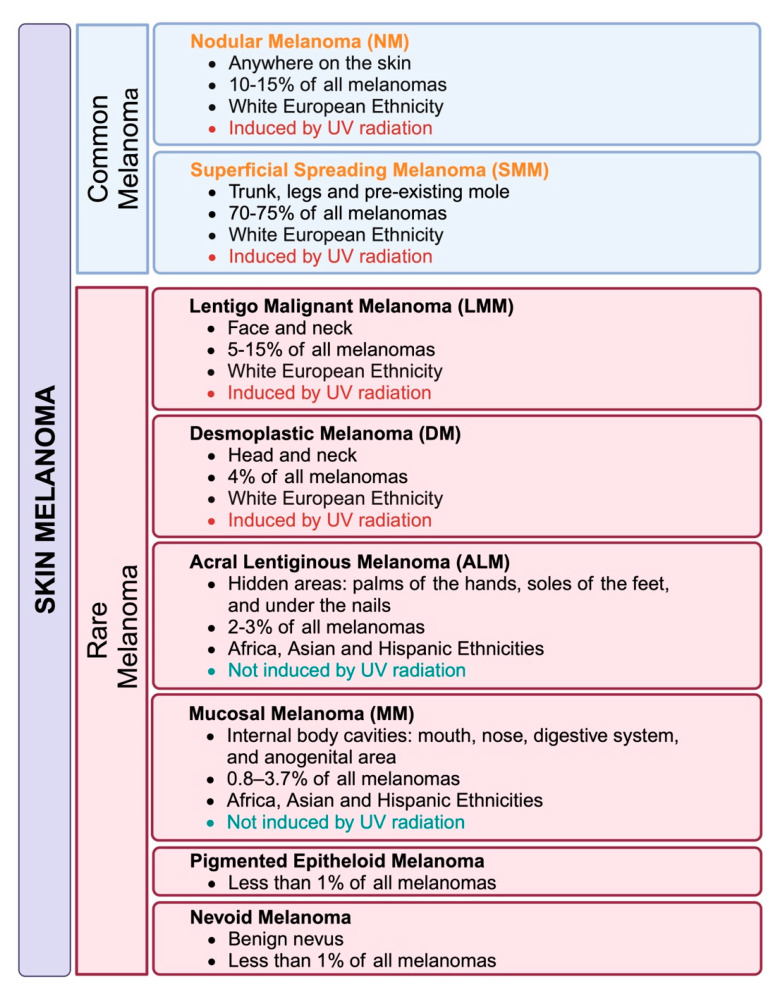
Introduction: Acral lentiginous melanoma (ALM), a rare subtype, accounts for 2–3% of melanoma cases, primarily affecting the palms, soles, and nail beds and disproportionately affects people of color. This review focuses on clinical insights into ALM and its management, with a focus on race and ethnicity. Methods: A comprehensive literature search was conducted in public databases using the search term “acral melanoma,” and studies focusing on epidemiology, clinical presentation, and treatment outcomes of ALM in various racial and ethnic groups were reviewed. Results: Significant disparities in ALM outcomes exist across racial and ethnic groups, with African, Hispanic, and Asian individuals presenting with thicker, more advanced tumors at diagnosis. These populations encounter unique challenges, including limited access to dermatologic care, under-recognition of melanoma presentation in darker skin types, and socioeconomic barriers leading to delayed diagnosis and treatment. Surgical management may require specialized approaches, such as partial amputation for subungual melanomas. Additionally, there is uncertainty regarding the tumor immune microenvironment (TME) in ALM, with some studies suggesting that it might be less favorable, resulting in a lower response to immunotherapy. Conclusions: ALM affects diverse populations, and the impact of ethnic and racial origin on ALM biology is largely unknown. Addressing disparities in ALM outcomes among racial and ethnic groups is critical for improving patient care. Increased awareness of melanoma risk in individuals with darker skin can significantly impact early detection and treatment. Future research should focus on the genetic and biological factors contributing to morbidity and mortality in ALM patients.
Overview
The claims and statistics of this paper haven’t been checked yet.
Free: it reads the open-access text and checks the first 5 claims that cite a source we can check. Create a free account to check every claim.
Integrity signals
Registry
Cites
Statistics
Figures
Verification
Claims the paper makes
The claims and statistics of this paper haven’t been checked yet.
Free: it reads the open-access text and checks the first 5 claims that cite a source we can check. Create a free account to check every claim.
Self-check
Percentages, sums and reported differences re-computed from the paper’s own numbers.
The self-check needs the paper’s full text.
Citations
Cites
PD-1 and PD-L1 Immune Checkpoint Blockade to Treat Breast Cancer
Hartkopf, A. D., Taran, F.-A., Wallwiener, M., Walter, C. B., Krämer, B., Grischke, E.-M., & Brucker, S. Y. (2016) · Breast Care · doi:10.1159/000453569 · Cited by 30,845
Adverse Renal Effects of Immune Checkpoint Inhibitors: A Narrative Review
Wanchoo, R., Karam, S., Uppal, N. N., Barta, V. S., Deray, G., Devoe, C., Launay-Vacher, V., Jhaveri, K. D., & on behalf of Cancer and Kidney International Network Workgroup on Immune Checkpoint Inhibitors (2017) · American Journal of Nephrology · doi:10.1159/000455014 · Cited by 15,256
Combined Nivolumab and Ipilimumab or Monotherapy in Untreated Melanoma
Larkin, J., Chiarion-Sileni, V., Gonzalez, R., Grob, J. J., Cowey, C. L., Lao, C. D., Schadendorf, D., Dummer, R., Smylie, M., Rutkowski, P., et al. (2015) · New England Journal of Medicine · doi:10.1056/nejmoa1504030 · Cited by 8,157 · cited 1×
“The additive effect of socioeconomic status on survival in ethnic minorities with ALM was highlighted by a Brazilian study showing correlation of income with survival [10].”
Pembrolizumab versus Ipilimumab in Advanced Melanoma
Robert, C., Schachter, J., Long, G. V., Arance, A., Grob, J. J., Mortier, L., Daud, A., Carlino, M. S., McNeil, C., Lotem, M., et al. (2015) · New England Journal of Medicine · doi:10.1056/nejmoa1503093 · Cited by 5,887
Nivolumab in Previously Untreated Melanoma without BRAF Mutation
Robert, C., Long, G. V., Brady, B., Dutriaux, C., Maio, M., Mortier, L., Hassel, J. C., Rutkowski, P., McNeil, C., Kalinka-Warzocha, E., et al. (2015) · New England Journal of Medicine · doi:10.1056/nejmoa1412082 · Cited by 5,519 · cited 1×
“The additive effect of socioeconomic status on survival in ethnic minorities with ALM was highlighted by a Brazilian study showing correlation of income with survival [10].”
Distinct Sets of Genetic Alterations in Melanoma
Curtin, J. A., Fridlyand, J., Kageshita, T., Patel, H. N., Busam, K. J., Kutzner, H., Cho, K.-H., Aiba, S., Bröcker, E.-B., LeBoit, P. E., et al. (2005) · New England Journal of Medicine · doi:10.1056/nejmoa050092 · Cited by 2,747 · cited 1×
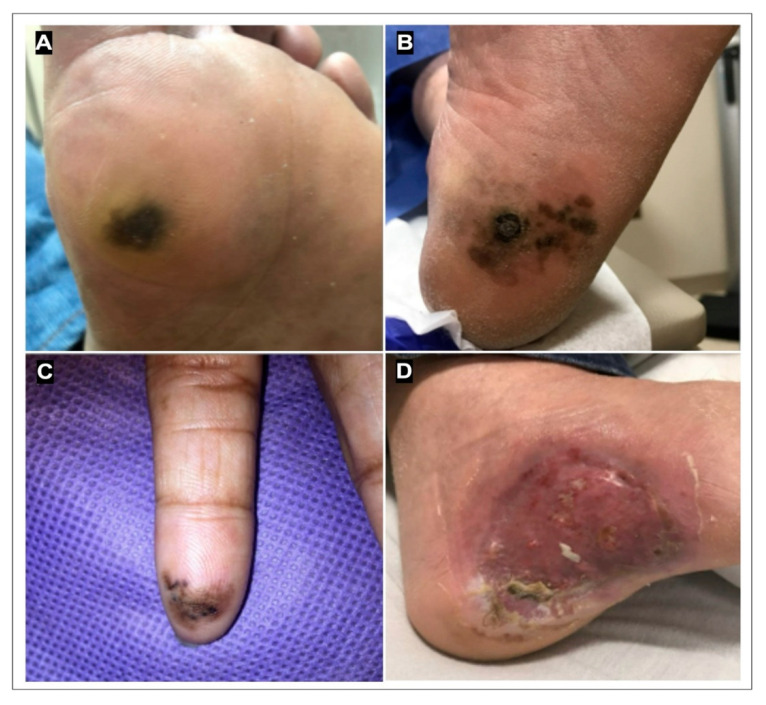
“Lesions underneath nail beds are normally long pigmented streaks, extending to the nail fold, that can cause spli tt ing of the nail (Figure 2) [37 The uncommon presentation of ALM makes the standard ABCDE criteria less useful for characterizing and diagnosing ALM, and the acronym CUBED (colored,…”
Adjuvant nivolumab versus ipilimumab in resected stage III or IV melanoma
Weber, J., Mandala, M., Del Vecchio, M., Gogas, H. J., Arance, A. M., Cowey, C. L., Dalle, S., Schenker, M., Chiarion-Sileni, V., Marquez-Rodas, I., et al. (2017) · New England Journal of Medicine · doi:10.1056/nejmoa1709030 · Cited by 2,246 · cited 1×
“The additive effect of socioeconomic status on survival in ethnic minorities with ALM was highlighted by a Brazilian study showing correlation of income with survival [10].”
Adjuvant pembrolizumab versus placebo in resected stage III melanoma
Eggermont, A. M. M., Blank, C. U., Mandala, M., Long, G. V., Atkinson, V., Dalle, S., Haydon, A., Lichinitser, M., Khattak, A., Carlino, M. S., et al. (2018) · New England Journal of Medicine · doi:10.1056/nejmoa1802357 · Cited by 1,906 · cited 1×
“The additive effect of socioeconomic status on survival in ethnic minorities with ALM was highlighted by a Brazilian study showing correlation of income with survival [10].”
Somatic Activation of KIT in Distinct Subtypes of Melanoma
Curtin, J. A., Busam, K., Pinkel, D., & Bastian, B. C. (2006) · Journal of Clinical Oncology · doi:10.1200/jco.2006.06.2984 · Cited by 1,616 · cited 1×
“ALM has been commonly reported following Cancers 2025 , 17 , x FOR PEER”
Neoadjuvant-adjuvant or adjuvant-only pembrolizumab in advanced melanoma
Patel, S. P., Othus, M., Chen, Y., Wright, G. P., Yost, K. J., Hyngstrom, J. R., Hu-Lieskovan, S., Lao, C. D., Fecher, L. A., Truong, T.-G., et al. (2023) · New England Journal of Medicine · doi:10.1056/nejmoa2211437 · Cited by 919 · cited 1×
“The additive effect of socioeconomic status on survival in ethnic minorities with ALM was highlighted by a Brazilian study showing correlation of income with survival [10].”
Cited by
Brar, G., Dhaliwal, A., Brar, A. S., Sreedevi, M., Ahmadi, Y., Irfan, M., Golbari, R., Zumárraga, D., Yateem, D., Lysak, Y., et al. (2025) · Cureus · doi:10.7759/cureus.81109 · Cited by 22
Histopathological Subtypes of Cutaneous Melanoma: Prognostic and Molecular Implications
Qasim, H., Shugaer, M. A., Khattab, K., Leoni, M. L. G., & Varrassi, G. (2025) · Cureus · doi:10.7759/cureus.90670 · Cited by 10
“As a result, ALM tends to have a poorer prognosis, compounded by diagnostic delays and a higher prevalence of chromosomal instability and therapy-resistant mutations [56].”
Fernández-Coto, D. L., Ayala, M., Alonso-Bastida, R., Palmqvist, A., García, M. F., Balderas-López, S. F., Oskolás, H., Christersson, L., Fülöp, L., Szigeti, B., et al. (2026) · Molecular & Cellular Proteomics · doi:10.1016/j.mcpro.2026.101620 · Cited by 2
Nadelmann, E. R., Singh, A. K., Abbruzzese, M., Adeuyan, O. O., Kenchappa, D., Kovrizhkin, K., Lightman, M., Samouha, A., Tao, K. L., Yun, J., et al. (2025) · Cancers · doi:10.3390/cancers17152458 · Cited by 2
Self-citationTaylor, M. A., Beach, L., McGrath, J., Shelton, E. M., Sharma, D., & Wysong, A. S. (2025) · Journal of the American Academy of Dermatology · doi:10.1016/j.jaad.2025.12.033 · Cited by 1
PRAME Immunostaining in Acral Melanocytic Proliferations: A Meta-Analysis
Toussaint, A. L., Cárdenas, C. D. S., Fuentes–García, R., Charli-Joseph, Y. V., & Toussaint‐Caire, S. (2026) · American Journal of Dermatopathology · doi:10.1097/dad.0000000000003299 · Cited by 1
Haneke, E. (2025) · Journal of Onychology and Nail Surgery · doi:10.25259/jons_26_2025 · Cited by 1
Collie, C. J., Jean-Marie, S. L., Thompson, R. K., Williams, N. P., & Ho, J. D. (2025) · JAAD International · doi:10.1016/j.jdin.2025.06.005
Photoprotection Strategies for Outdoor Athletes: Sunscreens, Clothing, and Behavioral Interventions
Islam, R. K., & Islam, K. N. (2025) · Premier Journal of Sports Science · doi:10.70389/pjsps.100011
Inoue, S., Koizumi, S., Yamazaki, N., Ichigozaki, Y., Kitagawa, H., Kiniwa, Y., Sato, S., Takai, T., Doi, R., Ito, T., et al. (2025) · International Journal of Clinical Oncology · doi:10.1007/s10147-025-02936-6
“Meanwhile, the incidence of AM in Caucasians is only 1–9% [1, 6, 11].”
Adult-onset melanonychia in Indian patients: A comprehensive narrative review
Mathur, D., Gaurav, V., & Grover, C. (2025) · Journal of Onychology and Nail Surgery · doi:10.25259/jons_29_2025
Epidemiological Patterns of Melanoma in a Multi-ethnic Cohort in the United Arab Emirates: 2017-2025Preprint
Mokhtar, J., Alsuwaidi, N., Hassane, N., Aljanaahi, H., AlDhamin, D., Rahbari, T., Saeed, G. T., Darwish, Z. A. A., Almalik, S., Lakshmanan, J., et al. (2025) · medRxiv · doi:10.64898/2025.12.29.25343157
Nikookam, Y., Searle, T., Malik, N., & Ho, B. (2026) · Clinical and Experimental Dermatology · doi:10.1093/ced/llag049
Singh, S. J., Arora, C. J., Khan, A. R., Mitchell, J., Irfanullah, I., & Kour, P. (2026) · Journal of Pakistan Association of Dermatologists · doi:10.66344/jpad.v36i1.3200
Shanshal, M. (2026) · Skin Health and Disease · doi:10.1093/skinhd/vzag035
“60,61 It arises on palms, soles and nail units, sites often underexamined and underappreciated during routine checks.”
Immune microenvironment and strategy of immunotherapy in acral melanoma
Minowa, T., Murata, K., Watowich, S. S., Gubin, M. M., & Hirohashi, Y. (2026) · Immunological Medicine · doi:10.1080/25785826.2026.2670041
Lu, C., Burke, O. M., Thang, C. J., Khattab, S., Nguyen, N., Beagles, E., Chang, C. T., Xu, S., Hwang, J. C., Huhmann, L., et al. (2026) · JAAD International · doi:10.1016/j.jdin.2026.04.021
Mokhtar, J., Alsuwaidi, N., Hassane, N., Eapen, R. M., Aljanaahi, H., AlDhamin, D., Rahbari, T., Saeed, G. T., Darwish, Z. A. A., Almalik, S., et al. (2026) · PLoS ONE · doi:10.1371/journal.pone.0340749
“It is often misdiagnosed or missed as trauma or Tinea, treated for years before a biopsy reveals an invasive ALM [18,19].”
Hu, B., Block, B. R., Rabinowitz, G., Verma, H., Lambert, R. A., Adalsteinsson, B., Jonasson, J. G., Sigurgeirsson, B., Meehan, S. A., Ungar, J. P., et al. (2026) · Skin Health and Disease · doi:10.1093/skinhd/vzag067
Clinical pearls for recognising acral melanoma in general practice
Awadalla, R., Davies, D., Hadeed, N., & Rossiter, R. C. (2026) · British Journal of General Practice · doi:10.3399/bjgp.2026.0104
Farber, O. N., Chen, Y.-J., Bennaceur, A. Y., Karneris, A., Carr, C., Lilley, E. J., Boland, G. M., & Molina, G. (2026) · Journal of Surgical Research · doi:10.1016/j.jss.2026.08.055
Farias, A. B. S., Gomes, A. K. M. S. T. D. O., & Lima, J. D. A. (2026) · Revista Tópicos. · doi:10.70773/revistatopicos/793415550
Metadata
- Authors
- Nadelmann, E., Singh, A., Abbruzzese, M., Adeuyan, O., Kenchappa, D., Kovrizhkin, K., Lightman, M., Samouha, A., Tao, K., Yun, J., Zhu, T., McLellan, B., & Saenger, Y.
- Affiliations
- Albert Einstein College of Medicine (US)
- Corresponding author
- Saenger, Yvonne
- ORCID
- Venue
- Cancers
- Publisher
- MDPI AG
- Published
- 2025-01-30
- Volume
- 17
- Issue
- 3
- Pages
- 468
- ISSN
- 2072-6694 (ISSN-L)
- PMC
- PMC11816340
- OpenAlex
- W4406968808
- Cited by
- 20
- References
- 88
- Citations by year
- 2026: 10 · 2025: 10
- FWCI
- 2.34
- Type
- journal article
- Language
- en
- Update notices
- correction (2025-01-30)
- Open access
- gold
- doi.org
- Licence
- Locations
- Cancers (publishedVersion, cc-by)
- PubMed Central (publishedVersion, cc-by)
- PubMed (publishedVersion)
- Funders
- National Institutes of Health (R01 CA260375)
- Topics
- Health Sciences › Medicine › Oncology › Cutaneous Melanoma Detection and Management
- Life Sciences › Biochemistry, Genetics and Molecular Biology › Molecular Biology › Melanoma and MAPK Pathways
- Life Sciences › Biochemistry, Genetics and Molecular Biology › Cell Biology › melanin and skin pigmentation
- Keywords
- acral lentiginous melanoma, skin of color, racial and ethnic disparities, subungual melanoma, delayed diagnosis, tumor immune microenvironment, immunotherapy response, partial amputation, melanoma epidemiology
About these checks
Registry, retraction, Cites and statistics results are computed, not judged, with one exception: a printed reference that no index lists is read once by a model before it counts as a citation error. Claims are extracted by a model and kept only when their quote appears verbatim in the text; each cited source is then checked, with a model’s help, for whether it says what the claim relies on. Those verdicts can be wrong — read the claim’s quote and the cited source before relying on one.
Statistics and arithmetic are recomputed, not judged.
Confidence bands are shown only for fields calibrated on our annotated test set. None is calibrated yet, so no band is shown.
What counts as a claim ›How we measure confidence ›How we check this ›
Are you an author, or do you see a problem with this page? Request a review
Data sources
Bibliographic data: Semantic Scholar, OpenAlex, Crossref.
Contains information from the Semantic Scholar Academic Graph Datasets, made available under the ODC Attribution License (ODC-BY 1.0).
Semantic Scholar’s data is described in: Kinney, R., et al. (2023). The Semantic Scholar Open Data Platform. arXiv:2301.10140.
