

The DOI matches its Crossref record.
Bioinspired Green Synthesis of Bimetallic Iron and Zinc Oxide Nanoparticles Using Mushroom Extract and Use against Aspergillus niger; The Most Devastating Fungi of the Green World
Abstract
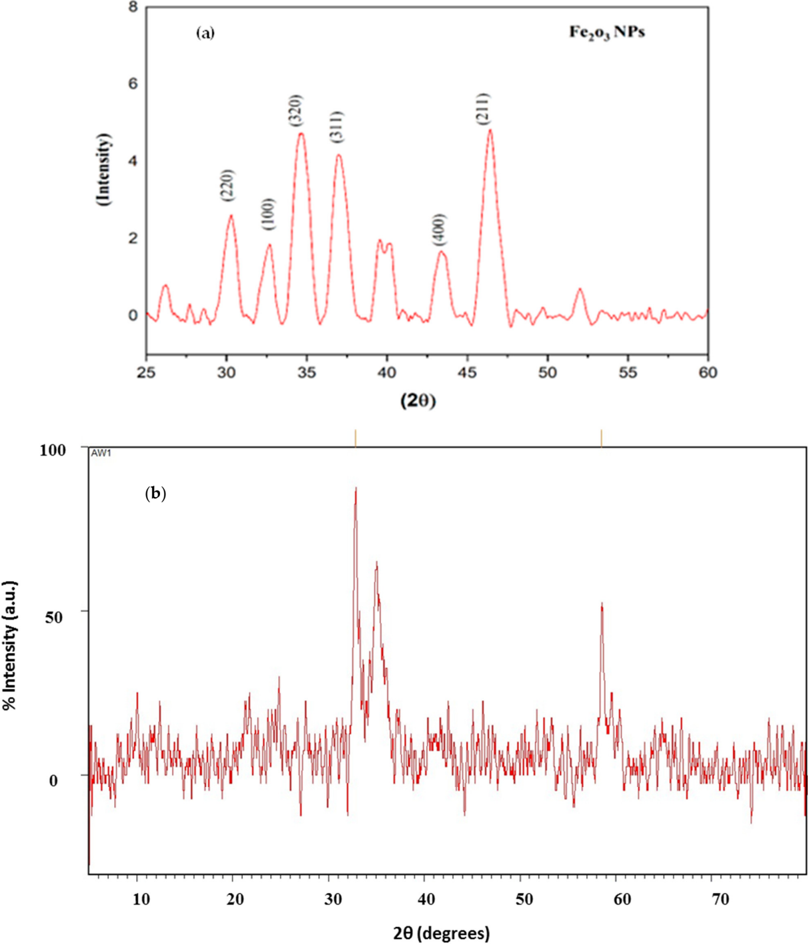
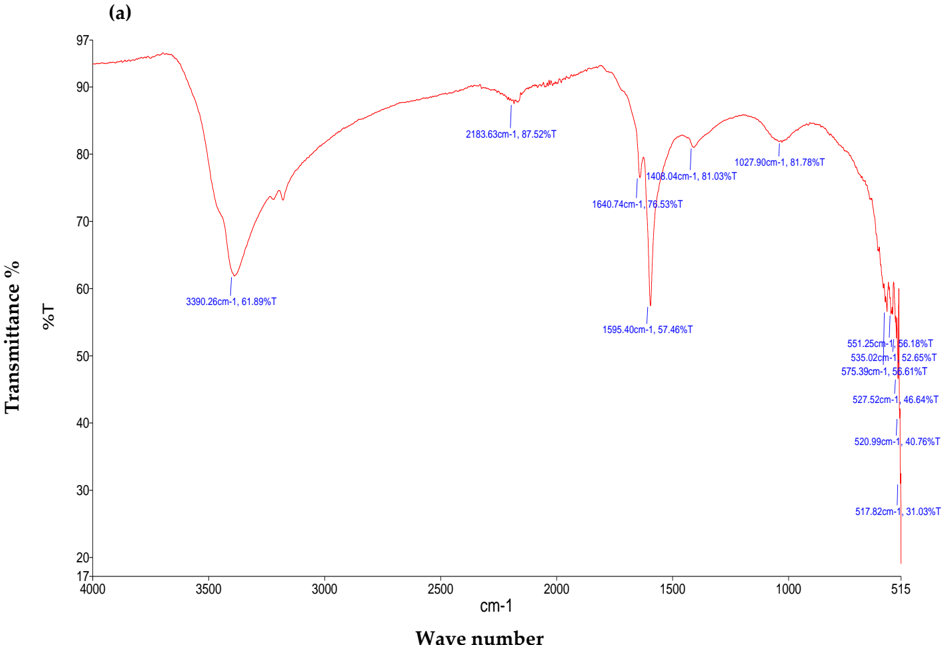
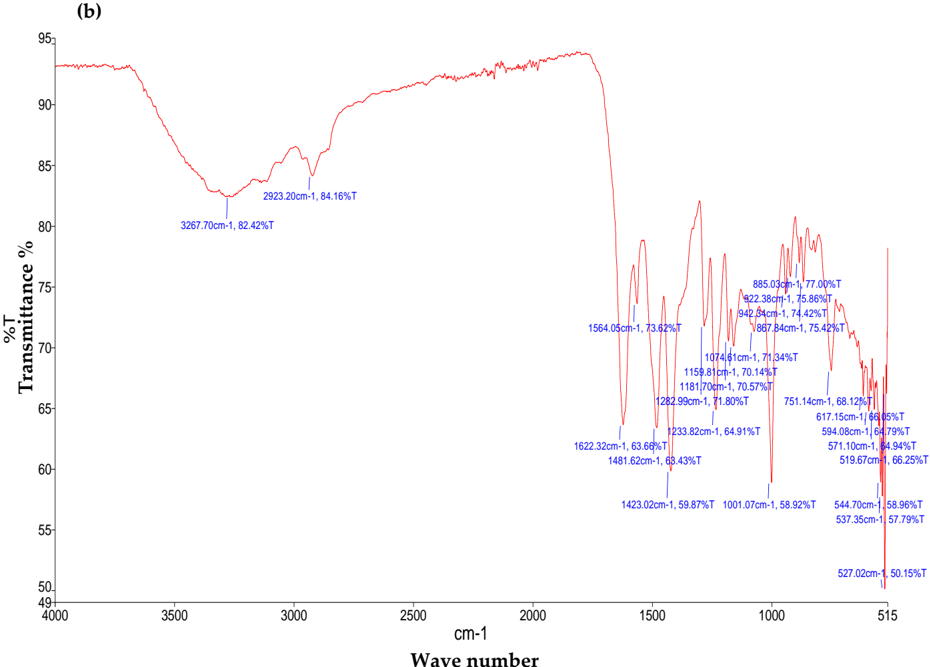
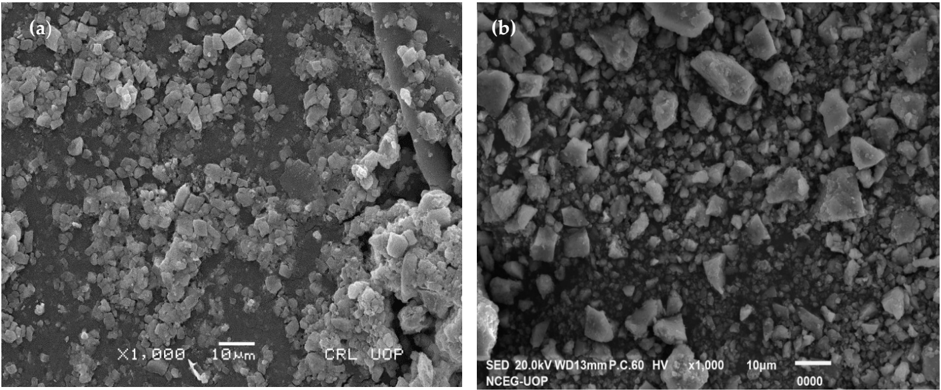
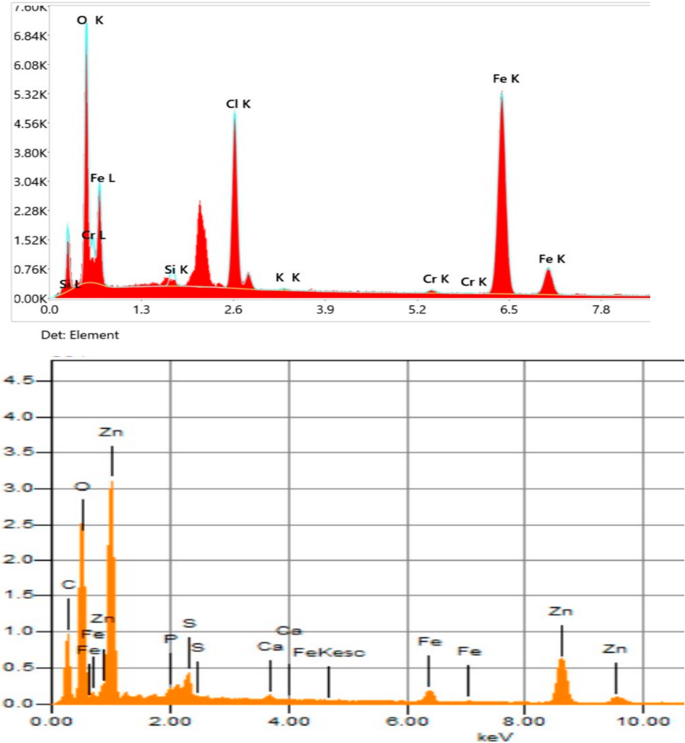
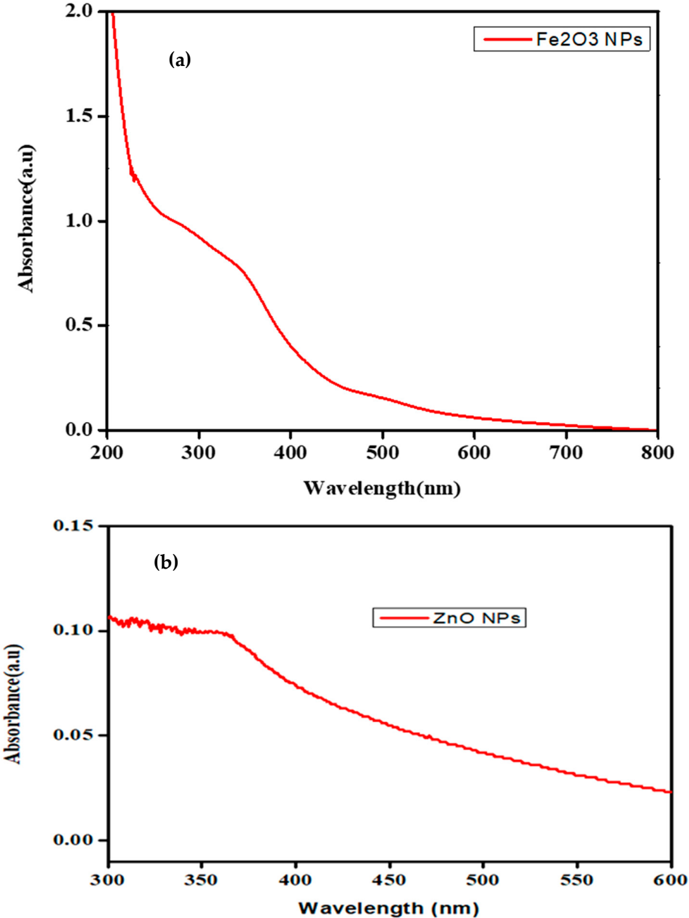
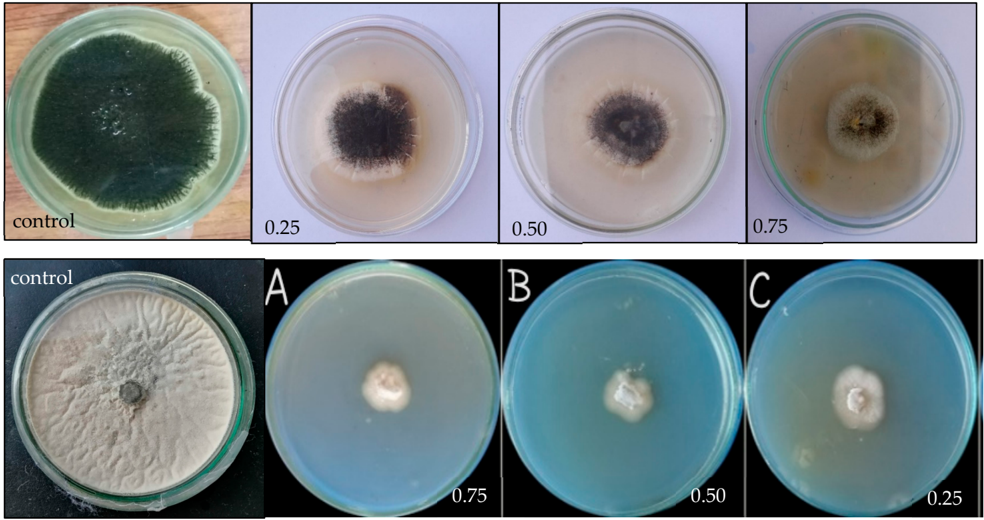
In the current study, a macro fungus was collected and identified by using morphological and molecular tools to study the ITS region, which has been described as a universal barcode marker during molecular investigation for the identification of fungi. Based on morphology and molecular evidence, the collected fungus was identified as Daedalea Mushroom. The identified fungus was used for the synthesis of Iron and ZnO nanoparticles as an eco-friendly agent for nanoparticle synthesis. The synthesized nanoparticles were confirmed by, Fourier transfer infrared spectroscopy analysis (FTIR), X-ray diffraction analysis (XRD), energy dispersive X-ray analysis (EDX), and scanning electron microscopy analysis (SEM). All these characterizations revealed the synthesis of Iron and ZnO NPs with an irregular shape and a size of 16.8 nm. The zinc oxide nanoparticles had a size in the range of 18.53 nm. Daedalea Mushroom was used for the first time to synthesize Iron and zinc nanoparticles. The mycosynthesized Iron and ZnO NPs were assessed as control agents at various dosage rates against the pathogenic fungus Aspergillus niger, which was isolated from an apple and identified using its morphology. At higher concentrations (0.75 mg/mL), the iron nanoparticles inhibited fungal growth by 72%, whereas at lower concentrations (0.25 mg/mL), they inhibited fungal growth by 60%. ZnO NPs showed good antifungal activity at different concentrations including growth inhibition at 0.25 mg/mL (88%), 1.0 mg/mL (68%), 0.75 mg/mL (75%), and 0.5 mg/mL (70%) concentrations of ZnO NPs. However, the maximum growth inhibition of ZnO NPs was observed at 0.25 mg/mL (88%) concentration and minimum growth inhibition at 0.1 mg/mL (22%). The current study concludes that Daedalea Mushroom works as a novel and eco-friendly source for the synthesis of Iron and ZnO NPs with prominent antifungal activities that can be further applied in different fields.
Overview
The claims and statistics of this paper haven’t been checked yet.
Run the check — free, no account needed. It reads the open-access text and checks the sources it cites.
Integrity signals
Registry
Cites
Statistics
Figures
Verification
Claims the paper makes
The claims and statistics of this paper haven’t been checked yet.
Run the check — free, no account needed. It reads the open-access text and checks the sources it cites.
Claims other papers make about this one
Each is checked against this paper’s own text: does it say what the citing paper says it does?
In the citing paper
“For example, the Bacillus subtilis and Aspergillus niger have been used with success to biosynthesized iron-oxide NPs [48, 49].”
From Advances in green-synthesized magnetic nanoparticles for targeted cancer therapy: mechanisms, applications, and future perspectives (2026) · cites this paper as [49]
Self-check
Percentages, sums and reported differences re-computed from the paper’s own numbers.
The self-check needs the paper’s full text.
Citations
Cites
No references could be resolved yet.
Research works printed but not linked: 39
- Hajeb, 2019, A comprehensive review on food applications of terahertz spectroscopy and imaging, CRFSFS, 18, 1563
- Carmina, 1992, The ratio of androstenedione: 11β-hydroxyandrostenedione is an important marker of adrenal androgen excess in women, Int. J. Fertil Steril., 58, 148, 10.1016/S0015-0282(16)55152-8 · DOI
- Feynman, 1960, An invitation to enter a new field of physics, Int. J. Eng. Sci., 23, 8
- Fischer, 2010, Why mushrooms form gills: Efficiency of the lamellate morphology, Fungal. Genet. Biol., 114, 57, 10.1016/j.mycres.2009.10.006 · DOI
- Gianola, 2015, Do molecular markers inform about pleiotropy?, J. Genet., 201, 23, 10.1534/genetics.115.179978 · DOI
- Rani, 2016, Recent advances in the synthesis and stabilization of nickel and nickel oxide nanoparticles: A green adeptness, Int. J. Anal. Chem., 28, 33
- Kamal, 2022, Biocompatible formulations based on mycosynthesized iron oxide nanoparticles: Fabrication, characterization, and biological investigation, J. Basic Microbiol., 11, 34
- Kumar, 2017, ZnO/Ni(OH)2 core-shell nanoparticles: Synthesis, optical, electrical and photoacoustic property analysis, J. Alloys Compd., 12, 33
- Bahadoran, 2022, Quick and sensitive colorimetric detection of amino acid with functionalized-silver/copper nanoparticles in the presence of cross linker, and bacteria detection by using DNA-template nanoparticles as peroxidase activity, Spectrochim. Acta Part A Mol. Biomol. Spectrosc., 268, 120636, 10.1016/j.saa.2021.120636 · DOI
- Lai, 2022, Synergistic activities of silver indium sulfide/nickel molybdenum sulfide nanostructures anchored on clay mineral for light-driven bactericidal performance, and detection of uric acid from gout patient serum, J. Photochem. Photobiol. B Biol., 234, 112526, 10.1016/j.jphotobiol.2022.112526 · DOI
- Marchiol, 2012, Synthesis of metal nanoparticles in living plants, Ital. J. Agron., 7, e37, 10.4081/ija.2012.e37 · DOI
- Mueller, 2017, Fungal biodiversity: What do we know? What can we predict, Anim. Biodivers. Conserv., 16, 1
- 2018, Ecology and nutraceutical value of edible indigenous mushrooms. A case study of Kyebe Subcounty in Rakai District, Uganda, M.R.T., 15, 184
- Hu, 2022, Fabrication of novel rational Ti-Sn doped Cu-ferrite nanoparticles for robust photocatalysis reaction, magnetic resonance imaging, and chemo-magneto-photo-thermal therapy, Surf. Interfaces, 33, 102226, 10.1016/j.surfin.2022.102226 · DOI
- Padmavathy, 2008, Enhanced bioactivity of ZnO nanoparticles—An antimicrobial study, STAM, 9, 035004
- Patra, 2014, Green nanobiotechnology: Factors affecting synthesis and characterization techniques, J. Nanomater., 18, 71
- Rajabi, 2018, Micro-morphological adaptations of the wing nodus to flight behaviour in four dragonfly species from the family Libellulidae (Odonata: Anisoptera), Arthropod Struct. Dev., 47, 442, 10.1016/j.asd.2018.01.003 · DOI
- Sharmila, 2017, Green synthesis, characterization and antibacterial efficacy of palladium nanoparticles synthesized using Filicium decipiens leaf extract, J. Mol. Struct., 1138, 35, 10.1016/j.molstruc.2017.02.097 · DOI
- Souto, E.B., Dias-Ferreira, J., Craveiro, S.A., Severino, P., Sanchez-Lopez, E., Garcia, M.L., and Mahant, S. (2019). Therapeutic interventions for countering leishmaniasis and Chagas’s disease: From traditional sources to nanotechnological systems. J. Pathog., 8. · DOI
- Khalil, 2017, Biosynthesis of iron oxide (Fe2O3) nanoparticles via aqueous extracts of Sageretia thea (Osbeck.) and their pharmacognostic properties, Green Chem. Lett. Rev., 10, 186, 10.1080/17518253.2017.1339831 · DOI
- He, 2021, Antifungal activity of zinc oxide nanoparticles against Botrytis cinerea and Penicillium expansum, Microbiol. Res., 166, 207, 10.1016/j.micres.2010.03.003 · DOI
- Tuskan, 2006, The genome of black cottonwood, Populus trichocarpa (Torr. & Gray), Science, 313, 1596, 10.1126/science.1128691 · DOI
- Kamal, A., Haroon, U., Manghwar, H., Alamer, K.H., Alsudays, I.M., Althobaiti, A.T., Iqbal, A., Akbar, M., and Anar, M. (2022). Biological Applications of Ball-Milled Synthesized Biochar-Zinc Oxide Nanocomposite Using Zea mays L.. Molecules, 27. · DOI
- Zubair, M.S., Munis, M.F.H., Alsudays, I.M., Alamer, K.H., Haroon, U., Kamal, A., Ali, M., Ahmed, J., Ahmad, Z., and Attia, H. (2022). First Report of Fruit Rot of Cherry and Its Control Using Fe2O3 Nanoparticles Synthesized in Calotropis procera. Molecules, 27. · DOI
- Saqib, 2019, Synthesis, characterization and use of iron oxide nano particles for antibacterial activity, Microsc. Res. Tech., 82, 415, 10.1002/jemt.23182 · DOI
- Ali, 2022, Antifungal activity of Zinc nitrate derived nano Zno fungicide synthesized from Trachyspermum ammi to control fruit rot disease of grapefruit, Ecotoxicol. Environ. Saf., 233, 113311, 10.1016/j.ecoenv.2022.113311 · DOI
- Kamal, A., Saba, M., Ullah, K., Almutairi, S.M., AlMunqedhi, B.M., and Ragab abdelGawwad, M. (2023). Mycosynthesis, Characterization of Zinc Oxide Nanoparticles, and Its Assessment in Various Biological Activities. Crystals, 13. · DOI
- Sandhya, 2020, Biogenic synthesis of magnetic iron oxide nanoparticles using inedible borassus flabellifer seed coat: Characterization, antimicrobial, antioxidant activity and in vitro cytotoxicity analysis, Mater. Res. Express, 7, 015045, 10.1088/2053-1591/ab6642 · DOI
- Umar, 2019, Biosensor signal improvement using current mirror topology for dissolved oxygen measurement, Meas. Sci. Technol., 30, 065102, 10.1088/1361-6501/ab0675 · DOI
- Vanathi, 2014, Biosynthesis and characterization of phyto mediated zinc oxide nanoparticles: A green chemistry approach, Mater. Lett., 134, 13, 10.1016/j.matlet.2014.07.029 · DOI
- Sumanth, 2020, Mycogenic synthesis of extracellular zinc oxide nanoparticles from Xylaria acuta and its nanoantibiotic potential, Int. J. Nanomed., 15, 8519, 10.2147/IJN.S271743 · DOI
- Oussou-Azo, A.F., Nakama, T., Nakamura, M., Futagami, T., and Vestergaard, M.C.M. (2020). Antifungal potential of nanostructured crystalline copper and its oxide forms. Nanomater, 10. · DOI
- Devi, 2019, Green synthesis of iron oxide nanoparticles using Platanus orientalis leaf extract for antifungal activity, Green Process. Synth., 8, 38, 10.1515/gps-2017-0145 · DOI
- Baskar, 2014, Biological response of cancer cells to radiation treatment, Front. Mol. Biosci., 1, 24, 10.3389/fmolb.2014.00024 · DOI
- Devi, 2015, Ultrastructures of silver nanoparticles biosynthesized using endophytic fungi, J. Microsc. Ultrastruct., 3, 29, 10.1016/j.jmau.2014.10.004 · DOI
- Laurent, 2008, Magnetic iron oxide nanoparticles: Synthesis, stabilization, vectorization, physicochemical characterizations, and biological applications, Chem. Rev., 108, 2064, 10.1021/cr068445e · DOI · Paper page
- Moremedi, 2018, Green synthesis of iron nanoparticles using Moringa oleifera extracts and their applications: Removal of nitrate from water and antibacterial activity against Escherichia coli, J. Mol. Liq., 256, 296, 10.1016/j.molliq.2017.11.093 · DOI
- Anthony, 2014, Synthesis of silver nanoparticles using pine mushroom extract: A potential antimicrobial agent against E. coli and B. subtilis, J. Ind. Eng. Chem., 20, 2325, 10.1016/j.jiec.2013.10.008 · DOI
- Ganesan, 2020, A review on prospective production of biofuel from microalgae, Biotechnol. Rep., 27, e00509, 10.1016/j.btre.2020.e00509 · DOI
Cited by
Sorted by citations
El-khawaga, A. M., Youssef, O. I., El-dydamoni, O. A., Ragab, W. M., & Mohammed, R. A. E. (2026) · European Journal of Medical Research · doi:10.1186/s40001-025-03804-9 · Cited by 14
Metadata
- Authors
- Kamal, A., Saba, M., Kamal, A., Batool, M., Asif, M., Al-Mohaimeed, A. M., Al Farraj, D. A., Habib, D., & Ahmad, S.
- Venue
- Catalysts
- Publisher
- MDPI AG
- Published
- 2023-02-13
- Volume
- 13
- Issue
- 2
- Pages
- 400
- ISSN
- 2073-4344
- Cited by
- 63
- References
- 0
- Language
- en
- Funders
- Researchers Supporting Project, King Saud University (RSP2023R247)
About these checks
Registry, retraction, Cites and statistics results are computed, not judged, with one exception: a printed reference that no index lists is read once by a model before it counts as a citation error. Claims are extracted by a model and kept only when their quote appears verbatim in the text; each cited source is then checked, with a model’s help, for whether it says what the claim relies on. Those verdicts can be wrong — read the claim’s quote and the cited source before relying on one.
Statistics and arithmetic are recomputed, not judged.
Confidence bands are shown only for fields calibrated on our annotated test set. None is calibrated yet, so no band is shown.
What counts as a claim ›How we measure confidence ›How we check this ›
Are you an author, or do you see a problem with this page? Request a review
How to cite
Cite CoChat for the checks on this page, and the paper for its own findings.
- This page
- CoChat. (2026). Citation check: Bioinspired Green Synthesis of Bimetallic Iron and Zinc Oxide Nanoparticles Using Mushroom Extract and Use against Aspergillus niger; The Most Devastating Fungi of the Green World. https://app.cochat.ai/papers/10.3390/catal13020400
- The paper
- Kamal, A., Saba, M., Kamal, A., Batool, M., Asif, M., Al-Mohaimeed, A. M., Al Farraj, D. A., Habib, D., & Ahmad, S. (2023). Bioinspired Green Synthesis of Bimetallic Iron and Zinc Oxide Nanoparticles Using Mushroom Extract and Use against Aspergillus niger; The Most Devastating Fungi of the Green World. Catalysts. https://doi.org/10.3390/catal13020400
