

Regulation of IKs Potassium Current by Isoproterenol in Adult Cardiomyocytes Requires Type 9 Adenylyl Cyclase
Open accessThe DOI matches its Crossref record; 42 of the 43 references it cites were found in a registry or an index.
Abstract
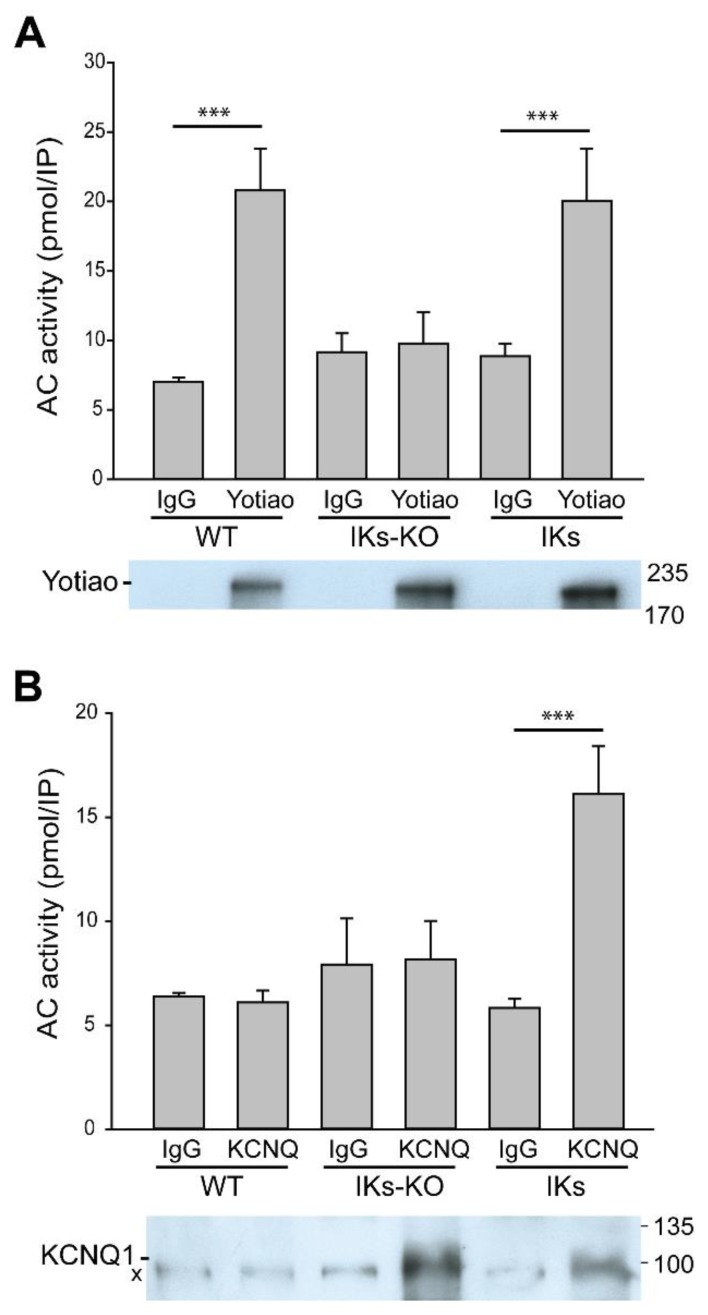
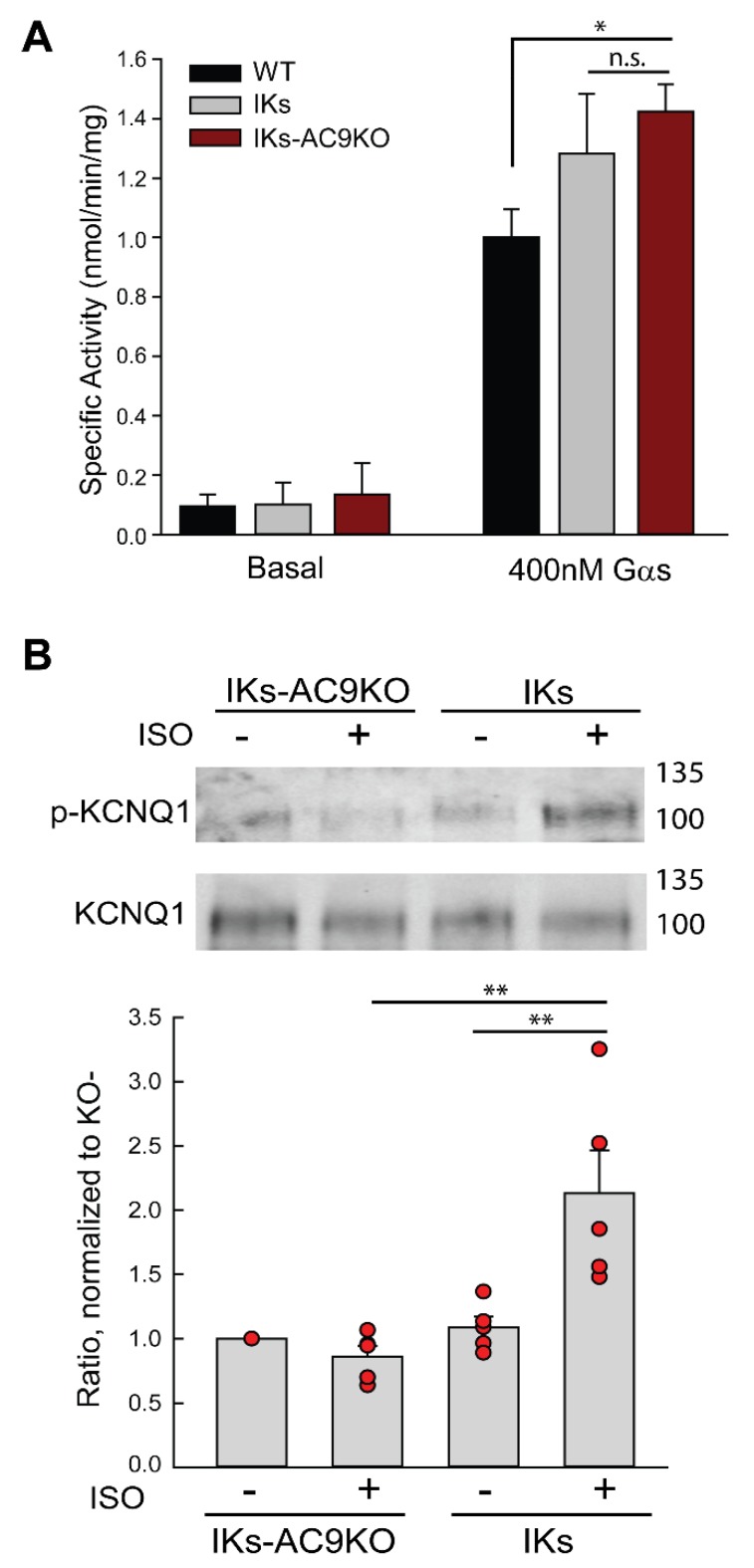
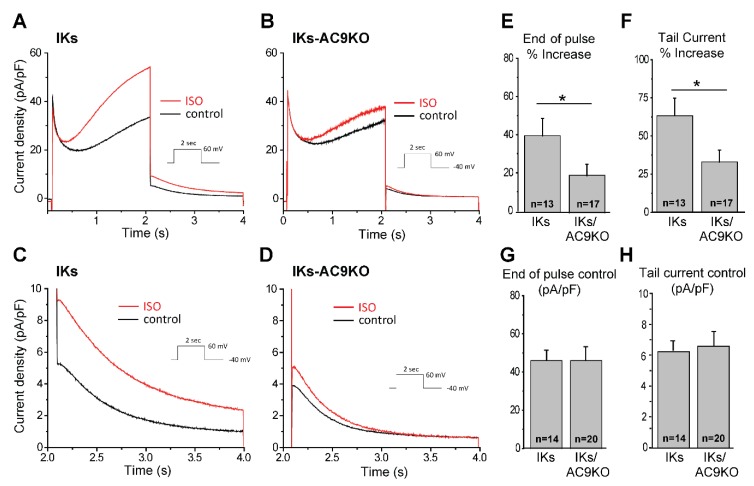
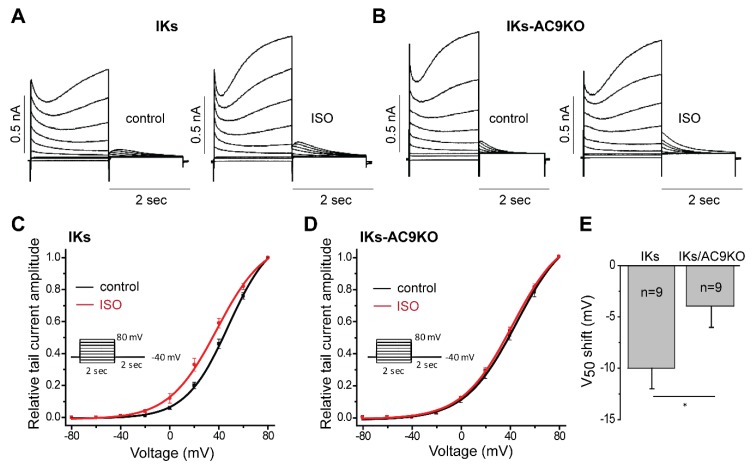
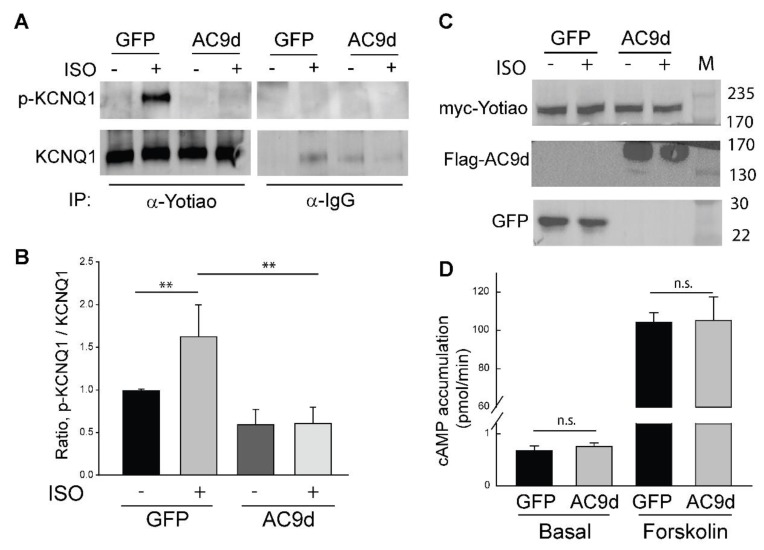
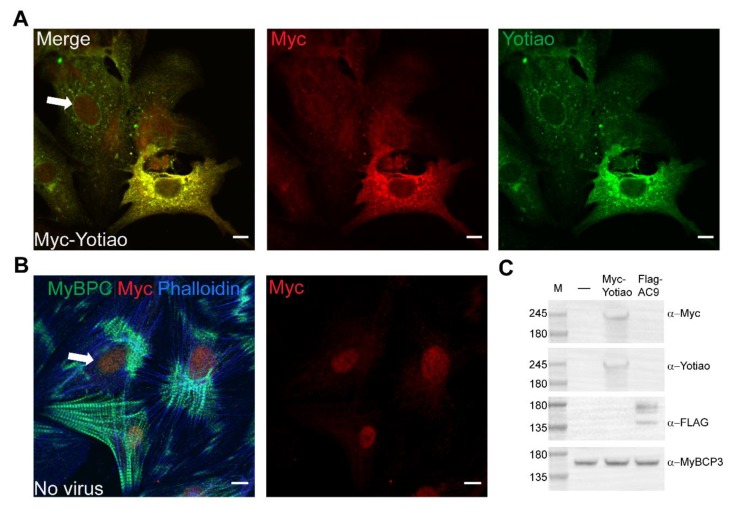
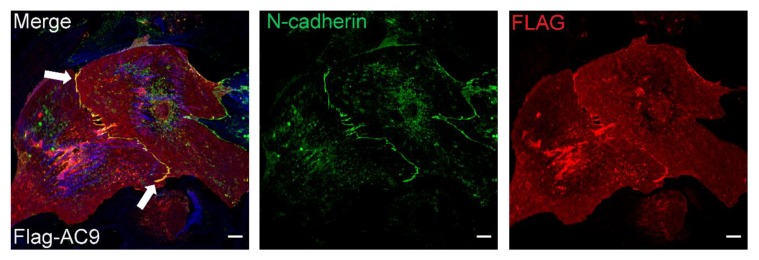
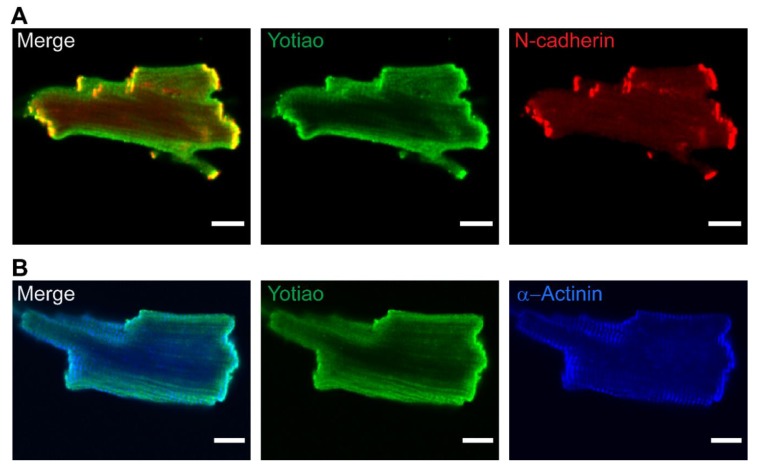
The subunits KCNQ1 and KCNE1 generate the slowly activating, delayed rectifier potassium current, IKs, that responds to sympathetic stimulation and is critical for human cardiac repolarization. The A-kinase anchoring protein Yotiao facilitates macromolecular complex formation between IKs and protein kinase A (PKA) to regulate phosphorylation of KCNQ1 and IKs currents following beta-adrenergic stimulation. We have previously shown that adenylyl cyclase Type 9 (AC9) is associated with a KCNQ1-Yotiao-PKA complex and facilitates isoproterenol-stimulated phosphorylation of KCNQ1 in an immortalized cell line. However, requirement for AC9 in sympathetic control of IKs in the heart was unknown. Using a transgenic mouse strain expressing the KCNQ1-KCNE1 subunits of IKs, we show that AC9 is the only adenylyl cyclase (AC) isoform associated with the KCNQ1-KCNE1-Yotiao complex in the heart. Deletion of AC9 resulted in the loss of isoproterenol-stimulated KCNQ1 phosphorylation in vivo, even though AC9 represents less than 3% of total cardiac AC activity. Importantly, a significant reduction of isoproterenol-stimulated IKs currents was also observed in adult cardiomyocytes from IKs-expressing AC9KO mice. AC9 and Yotiao co-localize with N-cadherin, a marker of intercalated disks and cell–cell junctions, in neonatal and adult cardiomyocytes, respectively. In conclusion, AC9 is necessary for sympathetic regulation of PKA phosphorylation of KCNQ1 in vivo and for functional regulation of IKs in adult cardiomyocytes.
Overview
The claims and statistics of this paper haven’t been checked yet.
Free: it reads the open-access text and checks the first 5 claims that cite a source we can check. Create a free account to check every claim.
Integrity signals
Registry
Cites
Statistics
Figures
Verification
Claims the paper makes
The claims and statistics of this paper haven’t been checked yet.
Free: it reads the open-access text and checks the first 5 claims that cite a source we can check. Create a free account to check every claim.
Claims other papers make about this one
Each is checked against this paper’s own text: does it say what the citing paper says it does?
In the citing paper
“suggesting that AC9 is necessary for the regulation of the IKs potassium current”
From Physiological roles of mammalian transmembrane adenylyl cyclase isoforms (2022) · cites this paper as [452]
Self-check
Percentages, sums and reported differences re-computed from the paper’s own numbers.
The self-check needs the paper’s full text.
Citations
Cites
Coassembly of KVLQT1 and minK (IsK) proteins to form cardiac IKS potassium channel
Sanguinetti, M. C., Curran, M. E., Zou, A., Shen, J., Specter, P. S., Atkinson, D. L., & Keating, M. T. (1996) · Nature · doi:10.1038/384080a0 · Cited by 1,764
Positional cloning of a novel potassium channel gene: KVLQT1 mutations cause cardiac arrhythmias
Wang, Q., Curran, M. E., Splawski, I., Burn, T. C., Millholland, J. M., VanRaay, T. J., Shen, J., Timothy, K. W., Vincent, G. M., de Jager, T., et al. (1996) · Nature Genetics · doi:10.1038/ng0196-17 · Cited by 1,759
KvLQT1 and IsK (minK) proteins associate to form the IKS cardiac potassium current
Barhanin, J., Lesage, F., Guillemare, E., Fink, M., Lazdunski, M., & Romey, G. (1996) · Nature · doi:10.1038/384078a0 · Cited by 1,614 · cited 1×
“1) α-subunits along with the accessory KCNE1 (MinK) β-subunits [1,2].”
BackgroundSpectrum of Mutations in Long-QT Syndrome Genes: KVLQT1 , HERG , SCN5A , KCNE1 , and KCNE2
Splawski, I., Shen, J., Timothy, K. W., Lehmann, M. H., Priori, S., Robinson, J. L., Moss, A. J., Schwartz, P. J., Towbin, J. A., Vincent, G. M., et al. (2000) · Circulation · doi:10.1161/01.cir.102.10.1178 · Cited by 1,231
Marx, S. O., Kurokawa, J., Reiken, S., Motoike, H., D'Armiento, J., Marks, A. R., & Kass, R. S. (2002) · Science · doi:10.1126/science.1066843 · Cited by 710
Self-citationSadana, R., & Dessauer, C. W. (2009) · Neurosignals · doi:10.1159/000166277 · Cited by 361 · cited 1×
“Multiple isoforms of adenylyl cyclase (AC) are expressed in the heart that respond to beta-adrenergic stimulation [15,16].”
BackgroundSelf-citationIsolation and Culture of Adult Mouse Cardiac Myocytes
O'Connell, T. D., Rodrigo, M. C., & Simpson, P. C. (2006) · Cardiovascular Proteomics · doi:10.1385/1-59745-214-9:271 · Cited by 342 · cited 1×
“After digestion was complete for adult CMs [29], cells were collected via centrifugation, reintroduced to calcium stepwise, fixed with 100% ice cold ethanol, and stored at −20 ◦C until used for immunocytochemistry.”
MethodMutation of an A-kinase-anchoring protein causes long-QT syndrome
Chen, L., Marquardt, M. L., Tester, D. J., Sampson, K. J., Ackerman, M. J., & Kass, R. S. (2007) · Proceedings of the National Academy of Sciences · doi:10.1073/pnas.0710527105 · Cited by 336 · cited 2×
“CHO cell line that stably expresses hKCNQ1-hKCNE1 was described previously [13].”
BackgroundSelf-citationDynamic Regulation of cAMP Synthesis through Anchored PKA-Adenylyl Cyclase V/VI Complexes
Bauman, A. L., Soughayer, J., Nguyen, B. T., Willoughby, D., Carnegie, G. K., Wong, W., Hoshi, N., Langeberg, L. K., Cooper, D. M. F., Dessauer, C. W., et al. (2006) · Molecular Cell · doi:10.1016/j.molcel.2006.07.025 · Cited by 218
Self-citationCreating Order from Chaos: Cellular Regulation by Kinase Anchoring
Scott, J. D., Dessauer, C. W., & Taskén, K. (2013) · Annual Review of Pharmacology and Toxicology · doi:10.1146/annurev-pharmtox-011112-140204 · Cited by 206 · cited 1×
“These longer forms are often found within the cytoplasm, at the Golgi apparatus and on microtubules and centrosomes [37], making co-localization studies of endogenous Yotiao and AC9 difficult.”
BackgroundSelf-citation
Cited by
Physiological roles of mammalian transmembrane adenylyl cyclase isoforms
Ostrom, K. F., LaVigne, J. E., Brust, T. F., Seifert, R., Dessauer, C. W., Watts, V. J., & Ostrom, R. S. (2022) · Physiological Reviews · doi:10.1152/physrev.00013.2021 · Cited by 131
Self-citationAKAP Signaling Islands: Venues for Precision Pharmacology
Omar, M. H., & Scott, J. D. (2020) · Trends in Pharmacological Sciences · doi:10.1016/j.tips.2020.09.007 · Cited by 127
Cardiac cAMP-PKA Signaling Compartmentalization in Myocardial Infarction
Colombe, A., & Pidoux, G. (2021) · Cells · doi:10.3390/cells10040922 · Cited by 68
Structural basis of adenylyl cyclase 9 activation
Qi, C., Lavriha, P., Mehta, V., Khanppnavar, B., Mohammed, I., Li, Y., Lazaratos, M., Schaefer, J. V., Dreier, B., Plückthun, A., et al. (2022) · Nature Communications · doi:10.1038/s41467-022-28685-y · Cited by 39
“In the heart, AC9 is involved in the slow delayed rec-ti fi er (I Ks ) current through its interaction with the A-kinase anchoring protein, Yotiao and KCNQ1/KCNE1 channels 19 .”
BackgroundSelf-citationZaccolo, M., & Kovanich, D. (2024) · Physiological Reviews · doi:10.1152/physrev.00013.2024 · Cited by 39
Metadata
- Authors
- Li, Y., Hof, T., Baldwin, T. A., Chen, L., Kass, R. S., & Dessauer, C. W.
- Affiliations
- The University of Texas Health Science Center at Houston (US)
- Columbia University Irving Medical Center (US)
- Corresponding author
- Dessauer, Carmen W.
- Venue
- Cells
- Publisher
- MDPI AG
- Published
- 2019-08-27
- Volume
- 8
- Issue
- 9
- Pages
- 981
- ISSN
- 2073-4409 (ISSN-L)
- PMC
- PMC6770663
- OpenAlex
- W2970772407
- Cited by
- 27
- References
- 43
- Citations by year
- 2026: 3 · 2025: 3 · 2024: 3 · 2023: 1 · 2022: 3 · 2021: 8 · 2020: 5 · 2019: 1
- FWCI
- 3.07
- Type
- journal article
- Language
- en
- Open access
- gold
- dx.doi.org
- Licence
- Locations
- Cells (publishedVersion, cc-by)
- Europe PMC (PubMed Central) (publishedVersion, cc-by)
- PubMed Central (publishedVersion, cc-by)
- PubMed (publishedVersion)
- DOAJ (DOAJ: Directory of Open Access Journals) (submittedVersion, cc-by-sa)
- Funders
- National Institutes of Health (GM60419)
- Topics
- Health Sciences › Medicine › Cardiology and Cardiovascular Medicine › Cardiac electrophysiology and arrhythmias
- Life Sciences › Biochemistry, Genetics and Molecular Biology › Molecular Biology › Ion channel regulation and function
- Life Sciences › Biochemistry, Genetics and Molecular Biology › Molecular Biology › Ion Transport and Channel Regulation
- Keywords
- KCNQ1, KCNE1, protein kinase A, beta-adrenergic stimulation, cardiomyocytes, cardiac repolarization, intercalated discs, N-cadherin
- MeSH terms
- Adenylyl Cyclases, Animals, Isoproterenol, Mice, Inbred C57BL, Mice, Transgenic, Phosphorylation, Mice, Knockout, Myocytes, Cardiac, Mice, KCNQ1 Potassium Channel
About these checks
Registry, retraction, Cites and statistics results are computed, not judged, with one exception: a printed reference that no index lists is read once by a model before it counts as a citation error. Claims are extracted by a model and kept only when their quote appears verbatim in the text; each cited source is then checked, with a model’s help, for whether it says what the claim relies on. Those verdicts can be wrong — read the claim’s quote and the cited source before relying on one.
Statistics and arithmetic are recomputed, not judged.
Confidence bands are shown only for fields calibrated on our annotated test set. None is calibrated yet, so no band is shown.
What counts as a claim ›How we measure confidence ›How we check this ›
Are you an author, or do you see a problem with this page? Request a review
Data sources
Bibliographic data: Semantic Scholar, OpenAlex, Crossref.
Contains information from the Semantic Scholar Academic Graph Datasets, made available under the ODC Attribution License (ODC-BY 1.0).
Semantic Scholar’s data is described in: Kinney, R., et al. (2023). The Semantic Scholar Open Data Platform. arXiv:2301.10140.
