

Packaging Evaluation Approach to Improve Cosmetic Product Safety
Open accessThe DOI matches its Crossref record; 12 of the 16 references it cites were found in a registry or an index.
Abstract
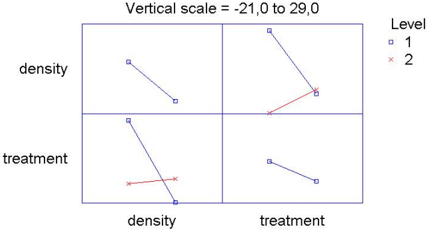
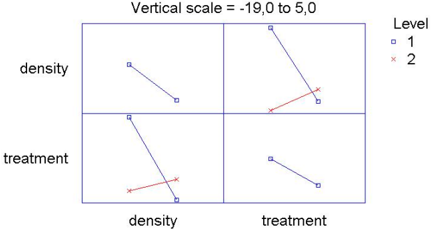
In the Regulation 1223/2009, evaluation of packaging has become mandatory to assure cosmetic product safety. In fact, the safety assessment of a cosmetic product can be successfully carried out only if the hazard deriving from the use of the designed packaging for the specific product is correctly evaluated. Despite the law requirement, there is too little information about the chemical-physical characteristics of finished packaging and the possible interactions between formulation and packaging; furthermore, different from food packaging, the cosmetic packaging is not regulated and, to date, appropriate guidelines are still missing. The aim of this work was to propose a practical approach to investigate commercial polymeric containers used in cosmetic field, especially through mechanical properties’ evaluation, from a safety point of view. First of all, it is essential to obtain complete information about raw materials. Subsequently, using an appropriate full factorial experimental design, it is possible to investigate the variables, like polymeric density, treatment, or type of formulation involved in changes to packaging properties or in formulation-packaging interaction. The variation of these properties can greatly affect cosmetic safety. In particular, mechanical properties can be used as an indicator of pack performances and safety. As an example, containers made of two types of polyethylene with different density, low-density polyethylene (LDPE) and high-density polyethylene (HDPE), are investigated. Regarding the substances potentially extractable from the packaging, in this work the headspace solid-phase microextraction method (HSSPME) was used because this technique was reported in the literature as suitable to detect extractables from the polymeric material here employed.
Overview
The claims and statistics of this paper haven’t been checked yet.
Free: it reads the open-access text and checks the first 5 claims that cite a source we can check. Create a free account to check every claim.
Integrity signals
Registry
Cites
Statistics
Figures

Verification
Claims the paper makes
The claims and statistics of this paper haven’t been checked yet.
Free: it reads the open-access text and checks the first 5 claims that cite a source we can check. Create a free account to check every claim.
Claims other papers make about this one
Each is checked against this paper’s own text: does it say what the citing paper says it does?
The source backs part of the claim, not all of it — or backs it for a different population, condition or comparison.
In the citing paper
“Plastic materials such as poly(ethylene terephthalate) (PET) retain volatile compounds impacting the aroma of products, while other sources of plastic materials such as ethylenevinyl alcohol copolymers retain water-impacting mechanical properties. Those incompatibilities with plastics must be addressed by packaging design substituting for aluminum or glass containers (which are more recyclable”
From Innovative Approaches to an Eco-Friendly Cosmetic Industry: A Review of Sustainable Ingredients (2024) · cites this paper as [118]
Experimental — accuracy not yet measured
Self-check
Percentages, sums and reported differences re-computed from the paper’s own numbers.
The self-check needs the paper’s full text.
Citations
Cites
Food Packaging Permeability Behaviour: A Report
Siracusa, V. (2012) · International Journal of Polymer Science · doi:10.1155/2012/302029 · Cited by 583
Migration of phthalates, alkylphenols, bisphenol A and di(2-ethylhexyl)adipate from food packaging
Fasano, E., Bono-Blay, F., Cirillo, T., Montuori, P., & Lacorte, S. (2012) · Food Control · doi:10.1016/j.foodcont.2012.03.005 · Cited by 377 · cited 1×
“Like in the food field, the presence of plastic components or additives in cosmetics, if not properly controlled, can affect the organoleptic properties of the product, or its safety, if the levels exceed the legislated or toxicological values [7].”
BackgroundEvaluation of degradability of biodegradable polyethylene (PE)
Jakubowicz, I. (2003) · Polymer Degradation and Stability · doi:10.1016/s0141-3910(02)00380-4 · Cited by 278 · cited 2×
“They cause initiation and propagation of free radical chain reactions taking place in the presence of atmospheric oxygen, which leads a polymer to gradually reduce its molecular weight [26,27].”
BackgroundPlastic Packaging: Interactions with Food and Pharmaceuticals
(2008) · Wiley eBooks · doi:10.1002/9783527621422 · Cited by 182
Jenke, D. R. (2007) · Journal of Pharmaceutical Sciences · doi:10.1002/jps.20984 · Cited by 130 · cited 1×
“In particular, next to analysis of the extractables, of which a lot of methods and protocols are present in literature [14–16], this work focuses on the mechanical analysis step since, as said before, changes in mechanical properties could provoke alterations of packaging performance, like barrier properties, with a c…”
MethodJenke, D. R., Castner, J., Egert, T., Feinberg, T., Hendricker, A. D., Houston, C. T., Hunt, D. G., Lynch, M., Shaw, A., Nicholas, K. M., et al. (2013) · PDA Journal of Pharmaceutical Science and Technology · doi:10.5731/pdajpst.2013.00933 · Cited by 65 · cited 1×
“In particular, next to analysis of the extractables, of which a lot of methods and protocols are present in literature [14–16], this work focuses on the mechanical analysis step since, as said before, changes in mechanical properties could provoke alterations of packaging performance, like barrier properties, with a c…”
MethodDuddu, M. K., Kalyani, L. T., Girijasankar, G., & Dandu, S. D. (2015) · AFRICAN JOURNAL OF BIOTECHNOLOGY · doi:10.5897/ajb2014.14224 · Cited by 54 · cited 1×
“In fact, it is well known that PE polymers are quite stable to degradation depending of their molecular weight, but it is also known that UV irradiation and thermal exposure can increase surface hydrophilicity of these polymer [25].”
BackgroundLópez‐Carballo, G., Cava, D., Lagaron, J. M., Catalá, R., & Gavara, R. (2005) · Journal of Agricultural and Food Chemistry · doi:10.1021/jf051041n · Cited by 50 · cited 1×
“, ethylene-vinyl alcohol copolymer, EVOH) are medium to poor water barrier plastics and their hydrophilic nature promotes the sorption of large amounts of water, which results in plasticization of the polymers and the subsequent loss of mechanical and barrier properties [9].”
BackgroundMrkić, S., Galić, K., & Ivanković, M. (2007) · Journal of Plastic Film & Sheeting · doi:10.1177/8756087907086102 · Cited by 43
Recent Trends in Pharmaceutical Packaging: A Review
Mehta Kunal, C., Akhilesh, D., Kumar, B. S., & Devi, S. (2012) · Cited by 20
Research works printed but not linked: 10
- Selke, S. Plastics recycling and biodegradable plastics. In Handbook of Plastics Technologies; Mc Graw-Hill: New York, NY, USA, 2006; Volume 8, pp. 80-109.
- Vasile, C.; Pascu, M. Basic types. In Practical Guide to Polyethylene; Rapra Technology Ltd.: Shawbury, UK, 2005; pp. 15-39.
- Ashby, M.; Johnson, K. Material Profiles: Polyethylene (PE). In Material and Design, 2nd ed.; Elsevier: Amsterdam, The Netherlands, 2010; p. 206.
- Kumar, S. Pharmaceutical Packaging Technology-A Review. Int. J. Res. Pharm. Biomed. Sci. 2013, 4, 1400-1414.
- Sommavilla, A. Packaging. In Manuale del Cosmetologo; Tecniche Nuove: Milan, Italy, 2007; pp. 567-612. (In Italian)
- Kauffman, J.S. Identification and risk-assessment of extractables and leachables. Pharm. Technol. Anal. Methods 2006, 30, S14, S16-S18, S20-S22.
- Deming, S.N.; Morgan, S.L. Experimental Design: A Chemometric. Approach; Elsevier: Amsterdam, The Netherlands, 1993; Volume 14, pp. 317-352.
- Capra, P.; Musitelli, G.; Faccioli, M.; Briasco, B.; Perugini, P. Protocol and specimen set up for mechanical evaluation of cosmetic packaging. World J. Pharm. Res. 2016, 5, 217-233.
- European Union. Regulation (EC) No 1935/2004 of 27/10/2004 on Materials and Articles Intended to Come into Contact with Food and Repealing Directives 80/590/EEC and 89/109/EEC; European Union: Brussels, Belgium, 2004; pp. 14-17.
- Pasieczna-Patkowska, S.; Lesiuk, A. Evaluation of the commercial polyethylene packaging decomposition in the soil by FT-IR/PAS. Chemik 2013, 10, 868-872.
Cited by
Overview of Cosmetic Regulatory Frameworks around the World
Ferreira, M., Matos, A., Couras, A., Marto, J. M., & Ribeiro, H. M. (2022) · Cosmetics · doi:10.3390/cosmetics9040072 · Cited by 142
Innovative Approaches to an Eco-Friendly Cosmetic Industry: A Review of Sustainable Ingredients
Sasounian, R., Martinez, R. M., Lopes, A. M., Giarolla, J., Rosado, C., Magalhães, W. V., Velasco, M. V. R., & Baby, A. R. (2024) · Clean Technologies · doi:10.3390/cleantechnol6010011 · Cited by 96
“Those incompati-bilities with plastics must be addressed by packaging design substituting for aluminum or glass containers (which are more recyclable than plastics) [118].”
BackgroundPackage Development of Pharmaceutical Products
Amarji, B., Kulkarni, A., Deb, P. K., Deepika, D., Maheshwari, R., & Tekade, R. K. (2018) · Elsevier eBooks · doi:10.1016/b978-0-12-814421-3.00015-4 · Cited by 34
Stability Study of Sunscreens with Free and Encapsulated UV Filters Contained in Plastic Packaging
Briasco, B., Capra, P., Mannucci, B., & Perugini, P. (2017) · Pharmaceutics · doi:10.3390/pharmaceutics9020019 · Cited by 24
“The organic extractable profile of the packaging material investigated (LDPE/HDPE mixture containers) was established via the HS-SPME extraction processes, following a method set up in a previous work on polyethylene, because it provided a complete insight of all of the predominant organic extractables for the analyze…”
MethodSelf-citationCozzi, A. C., Briasco, B., Salvarani, E., Mannucci, B., Fangarezzi, F., & Perugini, P. (2018) · Pharmaceutics · doi:10.3390/pharmaceutics10030113 · Cited by 11
Self-citationSolarte, S., Porras, A., Pradilla, D., & Álvarez, Ó. (2025) · ACS Omega · doi:10.1021/acsomega.5c03316 · Cited by 9
the members of the Cosmetic Valley EPMP commission, Catovic, C., Martin, S., Desaint, S., Borges, C., Lesouhaitier, H., Roullet, F., Bresciani, N., Jouault, A.-M., Poulet, V., et al. (2020) · AMB Express · doi:10.1186/s13568-020-01016-4 · Cited by 10
Physical, chemical, and microbiological stability of nanocosmetics
Das, P., & Das, M. K. (2022) · Elsevier eBooks · doi:10.1016/b978-0-323-91077-4.00005-3 · Cited by 8
Inventive Applications of Marine Resources in Cosmetic Production: A Review
Ram, K. H., & Balasubramanian, T. S. (2024) · Springer eBooks · doi:10.1007/978-981-97-5057-3_19 · Cited by 7
Influence of Formulation, Application, and Environment on Sunscreen Effectiveness
Romanhole, R. C., dos Santos, É. M., Fava, A. L. M., Pagani, L. D. S., de Carvalho, N. F., Lima, G. C., Godoi, C. L. S., Toti, T. R. B., Silvério, L. A. L., Santinon, C., et al. (2026) · Cosmetics · doi:10.3390/cosmetics13030122 · Cited by 4
Innovation Strategy of Cosmetic Packaging Design Made of Bamboo
Anggalih, N. N. (2021) · Advances in Social Science, Education and Humanities Research/Advances in social science, education and humanities research · doi:10.2991/assehr.k.211223.009 · Cited by 3
Zheng, Y., Zheng, Z., Huang, X., Kurboniyon, M. S., Peng, R., Liu, J., Zhang, S., Shen, L., Zhang, X., & Pan, J. (2025) · Journal of Chromatography A · doi:10.1016/j.chroma.2025.466047 · Cited by 2
Quality Control of Ink Bottles in Efforts to Control Defect Products in Candi Plastik Home Industry
Sari, T. I., & Singgih, M. L. (2021) · IPTEK Journal of Proceedings Series · doi:10.12962/j23546026.y2020i1.10860 · Cited by 1
“When viewed from the consumer's point of view, consumers want the plastic bottles to be safe, where the plastic bottles do not interact with the filling material, making them safe as food containers, medicines, and so on [9]–[11].”
BackgroundAntari, A. D., Ghaissani, S. S., Prawitasari, S., Haryono, E., & Adityani, R. (2023) · International Journal of Cell and Biomedical Science · doi:10.59278/cbs.v2i4.27 · Cited by 1
“The ROS can cause various modifications to the IL-10 protein structure, including the formation of cross-links, the introduction of oxidation products, and the breakage of peptide bonds 22,23 .”
Hakalin, M. (2019) · Theseus (Ammattikorkeakoulujen)
Role of Flowcytometry in the Safety/Toxicity Analysis of Cosmetics and Personal Care Products
Khan, I. B., Verma, N., Poojan, S., Dwivedi, A., Dwivedi, S., Singh, N. T., & Mishra, B. N. (2025) · Springer eBooks · doi:10.1007/978-981-97-9758-5_9
Pemanfaatan Ekstrak Minyak Atsiri Bunga Honje (Etlingera elatior) sebagai Deodoran Roll-on : Kajian
Padya, I. R., & Martiana, A. (2024) · ULIL ALBAB Jurnal Ilmiah Multidisiplin · doi:10.56799/jim.v4i1.6624
CURRENT TRENDS AND CHALLENGES IN THE PHARMACEUTICAL AND COSMETIC PACKAGING INDUSTRIES
Gupta, R., Rajoriya, V., Vengurlekar, S., & Jain, S. (2025) · Iterative International Publishers eBooks · doi:10.58532/nbennurecrs2
Sustentabilidade e desafios regulamentares das futuras embalagens de cosméticos
Silvério, V. D. S. (2023) · Portuguese National Funding Agency for Science, Research and Technology (RCAAP Project by FCT) · Cited by 1
1994, J. S. Ó. (2018) · Skemman
Brahma, D., Sengupta, S., Banerjee, A., Nandi, U., Hazra, S., Subash chandra bose, J., Ramachandran, D., Acharya, S., Basu, D., & Bandyopadhyay, A. (2026) · Composites Part C Open Access · doi:10.1016/j.jcomc.2026.100720 · Cited by 1
Xin, H., Shen, Z., Dan, Z., Wang, X., Hu, M., Wang, D., Yu, E., Zhou, L., & Kuang, Y. (2026) · Processes · doi:10.3390/pr14121969
Біотехнологічні аспекти одержання ароматизаторів
Захаров, А. М. (2025) · Institutional Repository of National University of Food Technologies
Characteristics of Biodegradable Car Shampoos in Terms of Performance and Environmental Properties
Woźniak, B., Marzec, M., Kempiǹski, M., Wawrzyńczak, A., & Nowak, I. (2026) · International Journal of Molecular Sciences · doi:10.3390/ijms27188050
“Factors such as formulation composition, water activity and storage conditions may contribute to the overall microbiological stability of cosmetic and related formulations [14,38].”
Metadata
- Authors
- Briasco, B., Capra, P., Cozzi, A., Mannucci, B., & Perugini, P.
- Affiliations
- University of Pavia (IT)
- Corresponding author
- Perugini, Paola
- Venue
- Cosmetics
- Publisher
- MDPI AG
- Published
- 2016-09-05
- Volume
- 3
- Issue
- 3
- Pages
- 32
- ISSN
- 2079-9284 (ISSN-L)
- OpenAlex
- W2508724931
- Cited by
- 20
- References
- 16
- Citations by year
- 2026: 4 · 2025: 4 · 2024: 3 · 2022: 2 · 2021: 2 · 2020: 1 · 2018: 3 · 2017: 1
- FWCI
- 1.05
- Type
- journal article
- Language
- en
- Open access
- gold
- doi.org
- Licence
- Locations
- Cosmetics (publishedVersion, cc-by)
- DOAJ (DOAJ: Directory of Open Access Journals) (submittedVersion, cc-by-sa)
- INFM-OAR (INFN Catania) (submittedVersion, cc-by)
- Topics
- Physical Sciences › Chemistry › Analytical Chemistry › Analytical Methods in Pharmaceuticals
- Health Sciences › Medicine › Dermatology › Contact Dermatitis and Allergies
- Physical Sciences › Chemical Engineering › Chemical Health and Safety › Chemical Safety and Risk Management
- Keywords
- cosmetic packaging, packaging safety, polyethylene containers, low-density polyethylene, high-density polyethylene, mechanical properties, extractables, headspace solid-phase microextraction
About these checks
Registry, retraction, Cites and statistics results are computed, not judged, with one exception: a printed reference that no index lists is read once by a model before it counts as a citation error. Claims are extracted by a model and kept only when their quote appears verbatim in the text; each cited source is then checked, with a model’s help, for whether it says what the claim relies on. Those verdicts can be wrong — read the claim’s quote and the cited source before relying on one.
Statistics and arithmetic are recomputed, not judged.
Confidence bands are shown only for fields calibrated on our annotated test set. None is calibrated yet, so no band is shown.
What counts as a claim ›How we measure confidence ›How we check this ›
Are you an author, or do you see a problem with this page? Request a review
Data sources
Bibliographic data: Semantic Scholar, OpenAlex, Crossref.
Contains information from the Semantic Scholar Academic Graph Datasets, made available under the ODC Attribution License (ODC-BY 1.0).
Semantic Scholar’s data is described in: Kinney, R., et al. (2023). The Semantic Scholar Open Data Platform. arXiv:2301.10140.
