

Zooceuticals and Cosmetic Ingredients Derived from Animals
Open accessThe DOI matches its Crossref record; 39 of the 39 references it cites were found in a registry or an index.
Abstract
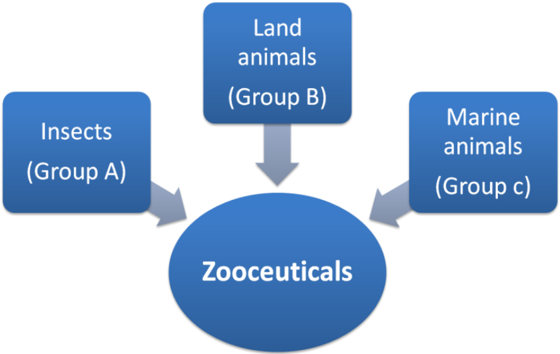
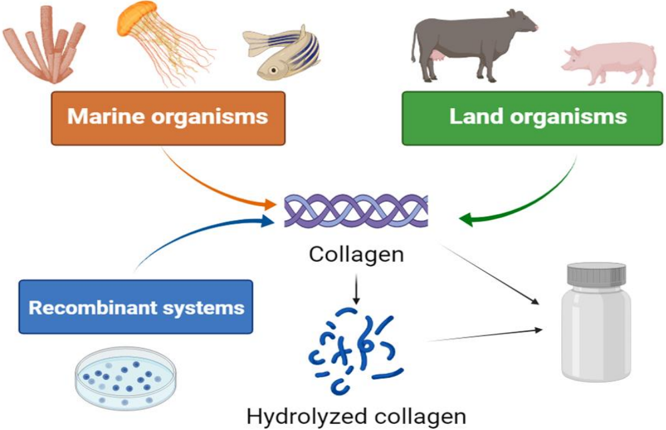
Many substances derived from animals are used as ingredients in the cosmetic industry and constitute a particular type of product: zooceuticals. The main ingredients used can come from insects, such as snail slime; land animals, such as lanolin; and marine animals, such as marine collagen. Today, they are used less than in the past for hygienic–sanitary, ethical, and ecological reasons. Moreover, some can give rise to irritative or allergic dermatitis. However, they still represent a fraction of the common ingredients in certain types of cosmetic products today.
Overview
The claims and statistics of this paper haven’t been checked yet.
Free: it reads the open-access text and checks the first 5 claims that cite a source we can check. Create a free account to check every claim.
Integrity signals
Registry
Cites
Statistics
Figures
Verification
Claims the paper makes
The claims and statistics of this paper haven’t been checked yet.
Free: it reads the open-access text and checks the first 5 claims that cite a source we can check. Create a free account to check every claim.
Claims other papers make about this one
Each is checked against this paper’s own text: does it say what the citing paper says it does?
The cited source doesn’t support the claim as written.
In the citing paper
“Similarly, marine products are in disuse [61].”
From Innovative Approaches to an Eco-Friendly Cosmetic Industry: A Review of Sustainable Ingredients (2024) · cites this paper as [61]
Checked by a reasoning model — may be wrong.
Experimental — accuracy not yet measuredThe source backs part of the claim, not all of it — or backs it for a different population, condition or comparison.
In the citing paper
“Despite what has just been said concerning the classification, snail mucus is among the ingredients obtained without causing suffering or harm to snails using the non-lethal Muller method (acid stimulation) or electrical stimulation at low voltage; therefore, there are no ethical concerns with the industrial manufacture of snail mucus using these methods [17,24,28].”
From Chemical Variability and Biological Potential of Cornu aspersum Mucus as a Source for the Development of New Cosmetic and Pharmaceutical Products (2025) · cites this paper as [24]
Experimental — accuracy not yet measuredThe cited source says what the claim attributes to it.
In the citing paper
“Snail secretion consists of a diluted network of polymers and low molecular substances [5,8,22,24,25,29].”
From Chemical Variability and Biological Potential of Cornu aspersum Mucus as a Source for the Development of New Cosmetic and Pharmaceutical Products (2025) · cites this paper as [24]
Self-check
Percentages, sums and reported differences re-computed from the paper’s own numbers.
The self-check needs the paper’s full text.
Citations
Cites
Collagen: A review on its sources and potential cosmetic applications
Avila Rodríguez, M. I., Rodríguez Barroso, L. G., & Sánchez, M. L. (2018) · Journal of Cosmetic Dermatology · doi:10.1111/jocd.12450 · Cited by 584
Cosmetics and Cosmeceutical Applications of Chitin, Chitosan and Their Derivatives
Aranaz, I., Acosta, N., Civera, C., Elorza, B., Mingo, J., Castro, C., Gandía, M., & Heras Caballero, A. (2018) · Polymers · doi:10.3390/polym10020213 · Cited by 400
Sources of Collagen for Biomaterials in Skin Wound Healing
Davison-Kotler, E., Marshall, W. S., & García-Gareta, E. (2019) · Bioengineering · doi:10.3390/bioengineering6030056 · Cited by 333
The Chemical Composition of Honey
Ball, D. W. (2007) · Journal of Chemical Education · doi:10.1021/ed084p1643 · Cited by 315
Collagen from Marine Biological Sources and Medical Applications
Felician, F. F., Xia, C., Qi, W., & Xu, H. (2018) · Chemistry & Biodiversity · doi:10.1002/cbdv.201700557 · Cited by 293
Bee Products in Dermatology and Skin Care
Kurek-Górecka, A., Górecki, M., Rzepecka-Stojko, A., Balwierz, R., & Stojko, J. (2020) · Molecules · doi:10.3390/molecules25030556 · Cited by 261
Extraction and application of keratin from natural resources: a review
Chilakamarry, C. R., Mahmood, S., Saffe, S. N. B. M., Arifin, M. A. B., Gupta, A., Sikkandar, M. Y., Begum, S. S., & Narasaiah, B. (2021) · 3 Biotech · doi:10.1007/s13205-021-02734-7 · Cited by 241
Essendoubi, M., Gobinet, C., Reynaud, R., Angiboust, J. F., Manfait, M., & Piot, O. (2016) · Skin Research and Technology · doi:10.1111/srt.12228 · Cited by 220
Biotransformation of Waste Biomass into High Value Biochemicals
(2014) · Springer eBooks · doi:10.1007/978-1-4614-8005-1 · Cited by 196
Honey in dermatology and skin care: a review
Burlando, B., & Cornara, L. (2013) · Journal of Cosmetic Dermatology · doi:10.1111/jocd.12058 · Cited by 180
Research works printed but not linked: 12
- 1. Adhikari, D.; Ray, S. Marine zooceuticals-Synergy of zoology & pharmaceuticals. Pharmawave 2016 , 9 , 1-14.
- 2. Adhikari, D.; Mukherjee, S.; Ghosh, T. Zooceuticals-Promising Bio-molecules for Synthetic Simulation. Manan 2014 , 1 , 11-18.
- 4. EG Smith Collective. Chapter 4: Ingredients derived from animals. In Animal Ingredients A to Z , 3rd ed.; AK Press: Oakland, CA, USA, 2004; pp. 51-63.
- 6. Abedin, N.; Bashar, R.; Jimmy, A.N.; Khan, N.A. Unraveling Consumer Decisions towards Animal Ingredients in Personal-care Items: The Case of Dhaka City Dwellers. Am. J. Mark. Res. 2020 , 6 , 19-27.
- 9. Hunter, M. The Emerging Halal Cosmetic and Personal Care market. Pers. Care Mag. 2012 , 3 , 37-41.
- 13. Proserpio, G.; Passerini, E. Capitolo 6: La zoocosmesi. In Le Altre Cosmesi , 1st ed.; Tecniche Nuove: Milano, Italy, 2002; pp. 99-113.
- 16. Sabalingam, S.; Jayasuriya, W.B.N. Pharmaceutical excipients of marine and animal origin: A Review. Bio. Chem. Res. 2019 , 6 , 184-196.
- 21. De Castro, S.L. Propolis: Biological and pharmacological activities. Therapeutic uses of this bee-product. ARBS Ann. Rev. Biomed. Sci. 2001 , 3 , 49-83. [CrossRef]
- 22. Sawicka, D.; Borawska, M.H. The use of propolis in skin diseases. Derm. Estet. 2013 , 1 , 13-17.
- 29. Kopczy´ nska, D.; Klasik-Ciszewska, S.; Duda-Grychtoł, K. Bee products in skin care. Med. Rodz. 2018 , 21 , 48-52. [CrossRef]
- 50. Rice, D.W. Ambergris. In Encyclopedia of Marine Mammals , 2nd ed.; Perrin, W.F., Würsig, B., Thewissen, J.G.M., Eds.; Academic Press: London, UK, 2009; pp. 28-29. [CrossRef]
- 51. Gilmore, R.M. The whaling industry: Whales, dolphins, and porpoises. In Marine Products of Commerce , 1st ed.; Tressler, D.K., Lemon, J.M., Eds.; Reinhold Publishing Corporation: New York, NY, USA, 1951; pp. 680-715.
Cited by
Chitosan: A Promising Multifunctional Cosmetic Ingredient for Skin and Hair Care
Guzmán, E., Ortega, F., & Rubio, R. G. (2022) · Cosmetics · doi:10.3390/cosmetics9050099 · Cited by 149
Innovative Approaches to an Eco-Friendly Cosmetic Industry: A Review of Sustainable Ingredients
Sasounian, R., Martinez, R. M., Lopes, A. M., Giarolla, J., Rosado, C., Magalhães, W. V., Velasco, M. V. R., & Baby, A. R. (2024) · Clean Technologies · doi:10.3390/cleantechnol6010011 · Cited by 96
Potential Cosmetic Active Ingredients Derived from Marine By-Products
Siahaan, E. A., Agusman, A., Pangestuti, R., Shin, K., & Kim, S. (2022) · Marine Drugs · doi:10.3390/md20120734 · Cited by 78
Luengo, G. S., Léonforte, F., Greaves, A. J., Rubio, R. G., & Guzmán, E. (2023) · Green Chemistry · doi:10.1039/d3gc02763e · Cited by 66
Nhani, G. B. B., di Filippo, L. D., de Paula, G. D., Mantovanelli, V., da Fonseca, P. P., Tashiro, F. M., Monteiro, D. C., Fonseca-Santos, B., Duarte, J., & Chorilli, M. (2024) · Cosmetics · doi:10.3390/cosmetics11040112 · Cited by 45
Metadata
- Authors
- Cristiano, L., & Guagni, M.
- Affiliations
- Research and Development Division, Prestige, 52024 Loro Ciuffenna, Italy
- New Line Academy, 50131 Firenze, Italy
- Corresponding author
- Cristiano, Luigi
- ORCID
- Cristiano, Luigi
- Venue
- Cosmetics
- Publisher
- MDPI AG
- Published
- 2022-01-19
- Volume
- 9
- Issue
- 1
- Pages
- 13
- ISSN
- 2079-9284 (ISSN-L)
- OpenAlex
- W4206363271
- Cited by
- 40
- References
- 39
- Citations by year
- 2026: 8 · 2025: 12 · 2024: 11 · 2023: 5 · 2022: 4
- FWCI
- 7.85
- Type
- journal article
- Language
- en
- Open access
- gold
- doi.org
- Licence
- Locations
- Cosmetics (publishedVersion, cc-by)
- DOAJ (DOAJ: Directory of Open Access Journals) (submittedVersion, cc-by-sa)
- Topics
- Health Sciences › Medicine › Dermatology › Contact Dermatitis and Allergies
- Health Sciences › Medicine › Dermatology › Skin Protection and Aging
- Physical Sciences › Materials Science › Biomaterials › Collagen: Extraction and Characterization
- Keywords
- snail slime, lanolin, marine collagen, allergic dermatitis, irritant contact dermatitis, animal welfare
About these checks
Registry, retraction, Cites and statistics results are computed, not judged, with one exception: a printed reference that no index lists is read once by a model before it counts as a citation error. Claims are extracted by a model and kept only when their quote appears verbatim in the text; each cited source is then checked, with a model’s help, for whether it says what the claim relies on. Those verdicts can be wrong — read the claim’s quote and the cited source before relying on one.
Statistics and arithmetic are recomputed, not judged.
Confidence bands are shown only for fields calibrated on our annotated test set. None is calibrated yet, so no band is shown.
What counts as a claim ›How we measure confidence ›How we check this ›
Are you an author, or do you see a problem with this page? Request a review
Data sources
Bibliographic data: Semantic Scholar, OpenAlex, Crossref.
Contains information from the Semantic Scholar Academic Graph Datasets, made available under the ODC Attribution License (ODC-BY 1.0).
Semantic Scholar’s data is described in: Kinney, R., et al. (2023). The Semantic Scholar Open Data Platform. arXiv:2301.10140.
