

The DOI matches its Crossref record.
Encrusted Uretero-Pyelitis Caused by Corynebacterium urealyticum: Case Report and Literature Review
Abstract
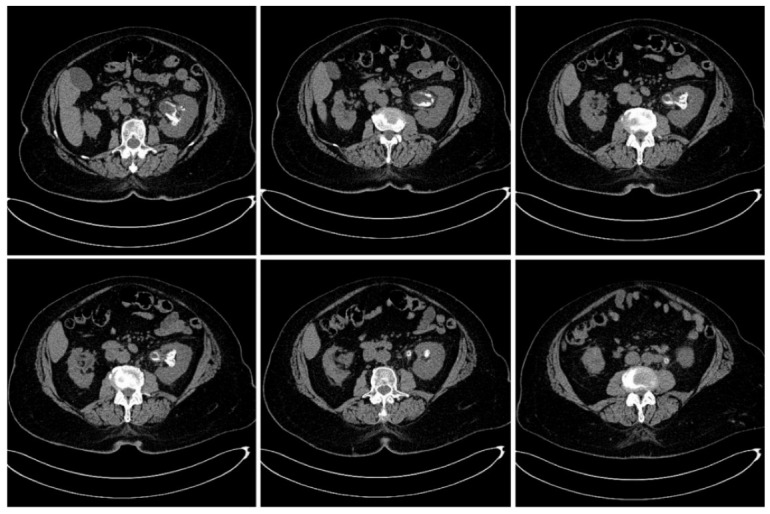
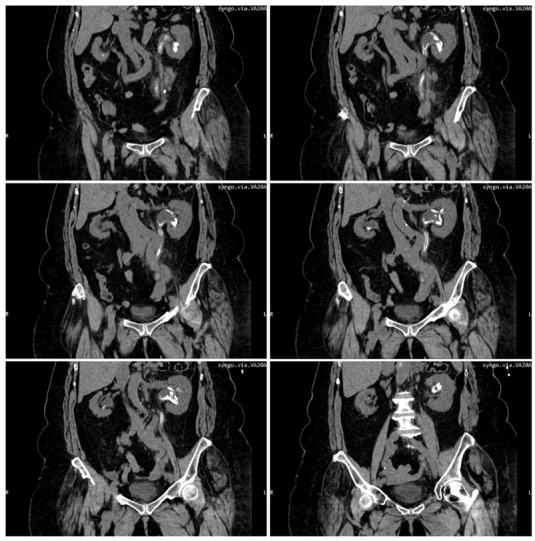
We report the case of a 70-year-old female patient with solitary functioning left kidney and encrusted uretero-pyelitis caused by Corynebacterium urealyticum, which was treated by antibiotic therapy and oral acidification with L-methionine. We review the literature for similarly reported cases.
Overview
The claims and statistics of this paper haven’t been checked yet.
Run the check — free, no account needed. It reads the open-access text and checks the sources it cites.
Integrity signals
Registry
Cites
Statistics
Figures
Verification
Claims the paper makes
The claims and statistics of this paper haven’t been checked yet.
Run the check — free, no account needed. It reads the open-access text and checks the sources it cites.
Claims other papers make about this one
Each is checked against this paper’s own text: does it say what the citing paper says it does?
In the citing paper
“Among these taxa, Corynebacterium matruchotii is a calcifying bacterium that has been associated with urinary tract infections [40] and bacteremia [41], and in rare cases, fluoride-related bone pathology such as tibial osteomyelitis [42].”
From Severity-dependent alterations in oral microbiota and antibiotic resistance in children with dental fluorosis (2026) · cites this paper as [40]
Self-check
Percentages, sums and reported differences re-computed from the paper’s own numbers.
The self-check needs the paper’s full text.
Citations
Cites
No references could be resolved yet.
Research works printed but not linked: 30
- Morales, 1992, Alkaline-encrusted pyelitis/cystitis and urinary tract infection due to corynebacterium urealyticum: A new severe complication after renal transplantation, Transplant. Proc., 24, 81
- Bluth, 2015, Corynebacterium urealyticum: A comprehensive review of an understated organism, Infect. Drug Resist., 8, 129, 10.2147/IDR.S74795 · DOI
- Tauch, 2008, The lifestyle of Corynebacterium urealyticum derived from its complete genome sequence established by pyrosequencing, J. Biotechnol., 136, 11, 10.1016/j.jbiotec.2008.02.009 · DOI
- Bernard, 2005, Corynebacterium species and coryneforms: An update on taxonomy and diseases attributed to these taxa, Clin. Microbiol. Newsl., 27, 9, 10.1016/j.clinmicnews.2005.01.002 · DOI
- Marty, 1991, Adherence and hemagglutination ofCorynebacterium group D2, Eur. J. Clin. Microbiol., 10, 20, 10.1007/BF01967092 · DOI
- Meria, 1998, Encrusted cystitis and pyelitis, J. Urol., 160, 3, 10.1016/S0022-5347(01)63009-X · DOI
- Eschwege, 1995, Imaging analysis of encrusted cystitis and pyelitis in renal transplantation, Transplant. Proc., 27, 2444
- Thoumas, 2002, Imaging Characteristics of Alkaline-Encrusted Cystitis and Pyelitis, Am. J. Roentgenol., 178, 389, 10.2214/ajr.178.2.1780389 · DOI
- Cappuccino, 2014, Nephrolithiasis by Corynebacterium urealyticum infection: Literature review and case report, J. Nephrol., 27, 117, 10.1007/s40620-014-0064-1 · DOI
- Savelkoul, 2000, Chronic cystitis caused by Corynebacterium urealyticum detected by polymerase chain reaction, Eur. J. Clin. Microbiol. Infect. Dis., 19, 949, 10.1007/s100960000407 · DOI
- Aguado, 1993, Encrusted Pyelitis And Cystitis by Corynebacterium Urealyticum (CDC GROUP D2): A New and Threatening Complication Following Renal Transplant, Transplantation, 56, 617, 10.1097/00007890-199309000-00023 · DOI
- Khallouk, 2006, Conservative management of Corynebacterium urealyticum encrusted cystitis, Prog. Urol., 16, 496
- Meria, 1999, The conservative management of Corynebacterium group D2 encrusted pyelitis, BJU Int., 84, 270, 10.1046/j.1464-410x.1999.00156.x · DOI
- Herrero, 1999, Ureteral stenosis secondary to encrustation by urea-splitting Corynebacterium urealyticum in a kidney transplant patient, Nephrol. Dial. Transplant., 14, 977, 10.1093/ndt/14.4.977 · DOI
- Hertig, 2000, Encrusted pyelitis of native kidneys, J. Am. Soc. Nephrol., 11, 1138, 10.1681/ASN.V1161138 · DOI
- Giannakopoulos, 2001, Encrusted Cystitis and Pyelitis, Eur. Urol., 39, 446, 10.1159/000052483 · DOI
- Llorente, 2004, Corynebacterium Urealyticum in Renal Trasplantation. CT and Ultrasonography Imaging Characteristics of Encrusted Cystitis and Pyelitis, Nefrologia, 24, 288
- Meria, 2004, Encrusted cystitis and pyelitis in children: An unusual condition with potentially severe consequences, Urology, 64, 569, 10.1016/j.urology.2004.04.013 · DOI
- Lee, 2004, Successful treatment of encrusted cystis and pyelitis with preservation of renal graft, Transplantation, 78, 302, 10.1097/01.TP.0000135140.12454.F4 · DOI
- Vandooren, 2005, Alkaline encrusted pyelitis, Acta Clin. Belg., 60, 369, 10.1179/acb.2005.055 · DOI
- Lieten, 2011, Alkaline-encrusted pyelitis and cystitis: An easily missed and life-threatening urinary infection, BMJ Case Rep., 2011, bcr1220103613, 10.1136/bcr.12.2010.3613 · DOI
- Anagnostou, 2012, Encrusted cystitis and pyelitis, Intern. Med. J., 42, 596, 10.1111/j.1445-5994.2012.02773.x · DOI
- Saljoghi, 2016, Encrusted Uretero-pyelitis: Case Report, Urol. Case Rep., 7, 58, 10.1016/j.eucr.2016.04.014 · DOI
- Moncada, 2016, Corynebacterium urealyticum: Increased incidence of infection and encrusted uropathy, Actas Urol. Esp., 40, 102, 10.1016/j.acuro.2015.09.007 · DOI
- Vergura, 2018, Encrusted Pyelitis during a case of Thrombotic Thrombocytopenic Purpura, Ital. Nefrol. Organo Uff. Della Soc. Ital. Nefrol., 5, 35
- Sakhi, 2020, Encrusted Urinary Tract Infections Due to Corynebacteria Species, Kidney Int. Rep., 6, 179, 10.1016/j.ekir.2020.10.034 · DOI
- Sabiote, 2020, Oral Acidification with l-Methionine as a Noninvasive Treatment for Encrusted Uropathy, J. Endourol. Case Rep., 6, 143, 10.1089/cren.2019.0164 · DOI
- Johnson, 2020, Alkaline Encrusted Pyelitis Causing Renal Failure in a Transplant Kidney: Treatment with Percutaneous Nephrolithotomy and Urinary Acidification, J. Endourol. Case Rep., 6, 435, 10.1089/cren.2020.0183 · DOI
- Loghmari, 2020, The importance of surgical treatment in encrusted cystitis and pyelitis: A case report, Int. J. Surg. Case Rep., 77, 392, 10.1016/j.ijscr.2020.11.003 · DOI
- Kotait, 2021, Ureaplasma urealyticum –encrusted pyelitis in a kidney graft patient: A case report and narrative review on encrusted pyelitis, Transpl. Infect. Dis., 24, e13755, 10.1111/tid.13755 · DOI
Cited by
Sorted by citations
Xia, Y., Peng, S., Yu, J., Wang, Y., Ye, Y., Liu, M., Shang, L., Cui, X., Wang, P., & Ding, Z. (2026) · Journal of Oral Microbiology · doi:10.1080/20002297.2026.2714622
Metadata
- Authors
- Rusmir, A. V., Paunescu, I. A., Martis, S., Latcu, S., Novacescu, D., Bardan, C. R., Bob, F., Licker, M., Botoca, M., Cumpanas, A., & Bardan, R.
- Affiliations
- Department of Urology, “Pius Brinzeu” Clinical Emergency County Hospital, 300736 Timisoara, Romania
- Department of Hematology, Clinical Emergency City Hospital, 300723 Timisoara, Romania
- Department of Nephrology, “Pius Brinzeu” Clinical Emergency County Hospital, 300736 Timisoara, Romania
- Clinical Laboratory, “Pius Brinzeu” Clinical Emergency County Hospital, 300736 Timisoara, Romania
- Venue
- Diagnostics
- Publisher
- MDPI AG
- Published
- 2022-09-16
- Volume
- 12
- Issue
- 9
- Pages
- 2239
- ISSN
- 2075-4418
- PMC
- PMC9497590
- Cited by
- 9
- References
- 0
- Language
- en
- Funders
- Victor Babes University of Medicine and Pharmacy, Timisoara, Romania
About these checks
Registry, retraction, Cites and statistics results are computed, not judged, with one exception: a printed reference that no index lists is read once by a model before it counts as a citation error. Claims are extracted by a model and kept only when their quote appears verbatim in the text; each cited source is then checked, with a model’s help, for whether it says what the claim relies on. Those verdicts can be wrong — read the claim’s quote and the cited source before relying on one.
Statistics and arithmetic are recomputed, not judged.
Confidence bands are shown only for fields calibrated on our annotated test set. None is calibrated yet, so no band is shown.
What counts as a claim ›How we measure confidence ›How we check this ›
Are you an author, or do you see a problem with this page? Request a review
How to cite
Cite CoChat for the checks on this page, and the paper for its own findings.
- This page
- CoChat. (2026). Citation check: Encrusted Uretero-Pyelitis Caused by Corynebacterium urealyticum: Case Report and Literature Review. https://app.cochat.ai/papers/10.3390/diagnostics12092239
- The paper
- Rusmir, A. V., Paunescu, I. A., Martis, S., Latcu, S., Novacescu, D., Bardan, C. R., Bob, F., Licker, M., Botoca, M., Cumpanas, A., & Bardan, R. (2022). Encrusted Uretero-Pyelitis Caused by Corynebacterium urealyticum: Case Report and Literature Review. Diagnostics. https://doi.org/10.3390/diagnostics12092239
