

Interpretable Machine Learning for Personalized Medical Recommendations: A LIME-Based Approach
Open accessThe DOI matches its Crossref record; 45 of the 47 references it cites were found in a registry or an index.
Abstract
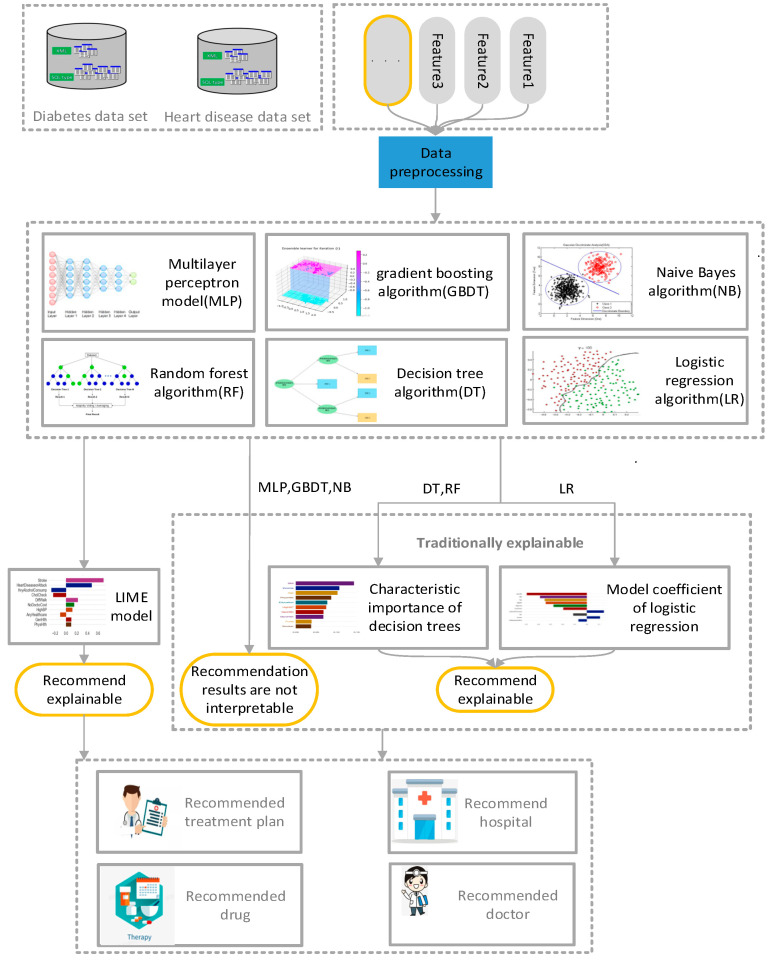
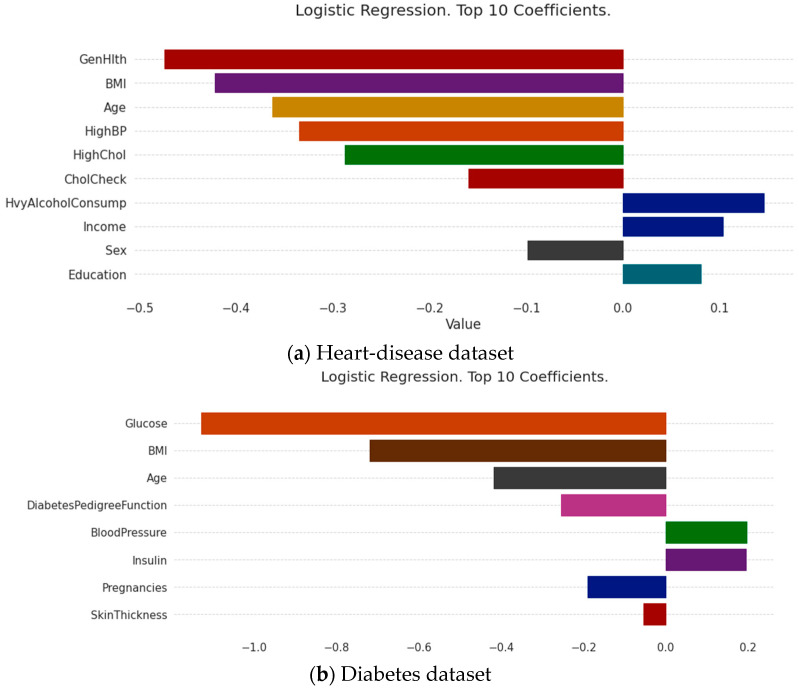
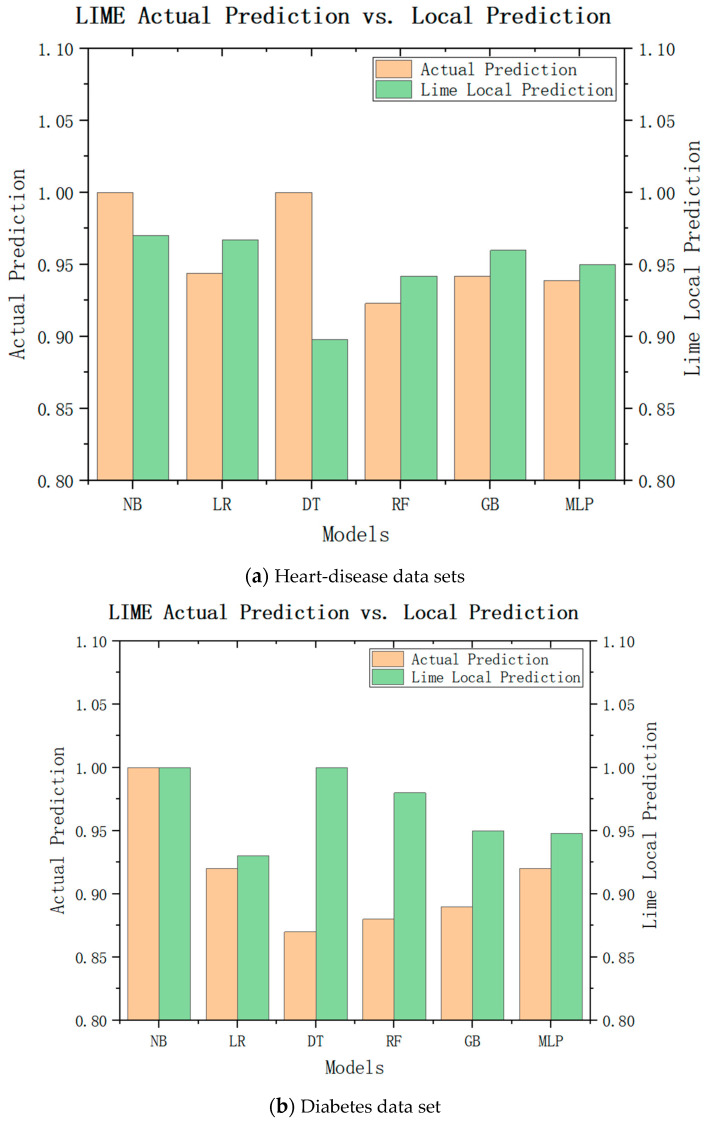
Chronic diseases are increasingly major threats to older persons, seriously affecting their physical health and well-being. Hospitals have accumulated a wealth of health-related data, including patients’ test reports, treatment histories, and diagnostic records, to better understand patients’ health, safety, and disease progression. Extracting relevant information from this data enables physicians to provide personalized patient-treatment recommendations. While collaborative filtering techniques and classical algorithms such as naive Bayes, logistic regression, and decision trees have had notable success in health-recommendation systems, most current systems primarily inform users of their likely preferences without providing explanations. This paper proposes an approach of deep learning with a local interpretable model–agnostic explanations (LIME)-based interpretable recommendation system to solve this problem. Specifically, we apply the proposed approach to two chronic diseases common in older adults: heart disease and diabetes. After data preprocessing, we use six deep-learning algorithms to form interpretations. In the heart-disease data set, the actual model recommendation of multi-layer perceptron and gradient-boosting algorithm differs from the local model’s recommendation of LIME, which can be used as its approximate prediction. From the feature importance of these two algorithms, it can be seen that the CholCheck, GenHith, and HighBP features are the most important for predicting heart disease. In the diabetes data set, the actual model predictions of the multi-layer perceptron and logistic-regression algorithm were little different from the local model’s prediction of LIME, which can be used as its approximate recommendation. Moreover, from the feature importance of the two algorithms, it can be seen that the three features of glucose, BMI, and age were the most important for predicting heart disease. Next, LIME is used to determine the importance of each feature that affected the results of the calculated model. Subsequently, we present the contribution coefficients of these features to the final recommendation. By analyzing the impact of different patient characteristics on the recommendations, our proposed system elucidates the underlying reasons behind these recommendations and enhances patient trust. This approach has important implications for medical recommendation systems and encourages informed decision-making in healthcare.
Overview
The claims and statistics of this paper haven’t been checked yet.
Free: it reads the open-access text and checks the first 5 claims that cite a source we can check. Create a free account to check every claim.
Integrity signals
Registry
Cites
Statistics
Figures



Verification
Claims the paper makes
The claims and statistics of this paper haven’t been checked yet.
Free: it reads the open-access text and checks the first 5 claims that cite a source we can check. Create a free account to check every claim.
Claims other papers make about this one
Each is checked against this paper’s own text: does it say what the citing paper says it does?
The source backs part of the claim, not all of it — or backs it for a different population, condition or comparison.
In the citing paper
“Concurrently, it can also anticipate the goods and services that consumers are likely to favor or be interested in as well as the potential for future shopping [56].”
From The Impact of AI-Personalized Recommendations on Clicking Intentions: Evidence from Chinese E-Commerce (2025) · cites this paper as [56]
Experimental — accuracy not yet measuredThe check wasn’t confident either way, so it gives no verdict — never disputed.
In the citing paper
“Compared with traditional personalized recommendation, AI-personalized recommendations are not limited to what has happened in the past but are used for accurate speculation and prediction of future shopping trends [56].”
From The Impact of AI-Personalized Recommendations on Clicking Intentions: Evidence from Chinese E-Commerce (2025) · cites this paper as [56]
Experimental — accuracy not yet measured
Self-check
Percentages, sums and reported differences re-computed from the paper’s own numbers.
The self-check needs the paper’s full text.
Citations
Cites
Prediction of coronary heart disease using risk factor categories
Wilson, P. W. F., D’Agostino, R. B., Levy, D., Belanger, A. M., Silbershatz, H., & Kannel, W. B. (1998) · Circulation · doi:10.1161/01.cir.97.18.1837 · Cited by 9,581 · cited 1×
“The authors of [18] presented a simple algorithm that uses classification algorithms to help physicians predict a patient’s multivariate heart-disease risk.”
MethodA comparison of event models for naive bayes text classification
McCallum, A., & Nigam, K. (1998) · Cited by 3,289
Data mining applications in healthcare
Ogwueleka, F. (2010) · International Journal of Natural and Applied Sciences · doi:10.4314/ijonas.v5i1.49926 · Cited by 553
Personalized Recommendation System Based on Collaborative Filtering for IoT Scenarios
Cui, Z., Xu, X., Xue, F., Cai, X., Cao, Y., Zhang, W., & Chen, J. (2020) · IEEE Transactions on Services Computing · doi:10.1109/tsc.2020.2964552 · Cited by 543
On the Tractability of SHAP Explanations
Van den Broeck, G., Lykov, A., Schleich, M., & Suciu, D. (2022) · Journal of Artificial Intelligence Research · doi:10.1613/jair.1.13283 · Cited by 469
Bhatti, U. A., Tang, H., Wu, G., Marjan, S., & Hussain, A. (2023) · International Journal of Intelligent Systems · doi:10.1155/2023/8342104 · Cited by 462
Self-citationThe BellKor Solution to the Netflix Grand Prize
Koren, Y. (2009) · Cited by 342
Data mining applications in healthcare.
Koh, H. C., & Tan, G. J. S. (2005) · PubMed · Cited by 256
Chen, L., Reeve, J., Zhang, L., Huang, S., Wang, X., & Chen, J. (2018) · PeerJ · doi:10.7717/peerj.4600 · Cited by 223
Self-citationMFFCG – Multi feature fusion for hyperspectral image classification using graph attention network
Bhatti, U. A., Huang, M., Neira-Molina, H., Marjan, S., Baryalai, M., Tang, H., Wu, G., & Bazai, S. U. (2023) · Expert Systems with Applications · doi:10.1016/j.eswa.2023.120496 · Cited by 191
Self-citation
Research works printed but not linked: 1
- Ming Y. Shuxu G. Jun W. Generating decision trees method based on improved ID3 algorithm China Commun. 2011 8 151 156
Cited by
Hassan, S. U., Abdulkadir, S. J., Zahid, M. S. M., & Al-Selwi, S. M. (2025) · Computers in Biology and Medicine · doi:10.1016/j.compbiomed.2024.109569 · Cited by 108
Nizamani, A. H., Chen, Z., Nizamani, A. A., & Bhatti, U. A. (2023) · Journal of King Saud University - Computer and Information Sciences · doi:10.1016/j.jksuci.2023.101793 · Cited by 126
Self-citationYin, J., Qiu, X., & Wang, Y. (2025) · Journal of Theoretical and Applied Electronic Commerce Research · doi:10.3390/jtaer20010021 · Cited by 103
“The statistical characteristics of the samples can be found in Table A4.”
Huang, M., Zhang, X. S., Bhatti, U. A., Wu, Y., Zhang, Y., & Ghadi, Y. Y. (2024) · Biomedical Signal Processing and Control · doi:10.1016/j.bspc.2023.105913 · Cited by 74
Self-citationAI with agency: a vision for adaptive, efficient, and ethical healthcare
Fuentes, V. G. H., Karim, H. B. A., Tan, M. J. T., & AlDahoul, N. (2025) · Frontiers in Digital Health · doi:10.3389/fdgth.2025.1600216 · Cited by 77
Transparency of medical artificial intelligence systems
Kim, C., Gadgil, S. U., & Lee, S. (2025) · Nature Reviews Bioengineering · doi:10.1038/s44222-025-00363-w · Cited by 83
Explainable AI-driven intelligent system for precision forecasting in cardiovascular disease
Bilal, A., Alzahrani, A., Almohammadi, K., Saleem, M., Farooq, M. S., & Sarwar, R. (2025) · Frontiers in Medicine · doi:10.3389/fmed.2025.1596335 · Cited by 66
Li, Y., Gao, F., Yu, J., & Teng, F. (2025) · Energy and Buildings · doi:10.1016/j.enbuild.2024.115267 · Cited by 51
Towards explainability for AI-based edge wireless signal automatic modulation classification
Xu, B., Bhatti, U. A., Tang, H., Yan, J., Wu, S., Sarhan, N. M., Awwad, E. M., Syam, M. S., & Ghadi, Y. Y. (2024) · Journal of Cloud Computing Advances Systems and Applications · doi:10.1186/s13677-024-00590-3 · Cited by 33
Self-citationFeature-enhanced fusion of U-NET-based improved brain tumor images segmentation
Nizamani, A. H., Chen, Z., Nizamani, A. A., & Shaheed, K. (2023) · Journal of Cloud Computing Advances Systems and Applications · doi:10.1186/s13677-023-00554-z · Cited by 33
Explainable deepfake detection across different modalities: An overview of methods and challenges
Momin, M. S., Sufian, A., Barman, D., Leo, M., Distante, C., & Damer, N. (2025) · Image and Vision Computing · doi:10.1016/j.imavis.2025.105738 · Cited by 37
Chen, Q., Mao, P., Zhu, S., Xu, X., & Feng, H. (2024) · Building and Environment · doi:10.1016/j.buildenv.2024.111292 · Cited by 26
An Effective Methodology for Diabetes Prediction in the Case of Class Imbalance
Toleva, B., Atanasov, I., Ivanov, I. G., & Hooper, V. J. (2025) · Bioengineering · doi:10.3390/bioengineering12010035 · Cited by 22
Tukhtaev, A., Turimov, D., Kim, J., & Kim, W. (2024) · Mathematics · doi:10.3390/math13010098 · Cited by 19
Alblooshi, M., Alhajeri, H., Almatrooshi, M., & Alaraj, M. (2024) · International Conference on Artificial Intelligence, Computer, Data Sciences and Applications (ACDSA) · doi:10.1109/acdsa59508.2024.10467573 · Cited by 13
Recommendations for Healthcare: An Interpretable Approach Using Deep Learning
Bhatti, U. A., Yang, Y., Mamyrbayev, O. J., Aitkazina, A., Tang, H., & Zhumazhan, N. (2024) · International Conference on Pattern Recognition and Artificial Intelligence (PRAI) · doi:10.1109/prai62207.2024.10827288 · Cited by 13
Self-citationYu, Z., & Dang, J. (2025) · Scientific Reports · doi:10.1038/s41598-025-93553-w · Cited by 12
AI Powered Personalized Healthcare Recommender
Hirushit, S., Raja, S., Suwetha., S., & Yazhini, J. (2024) · International Conference on Artificial Intelligence and Machine Learning Applications Theme: Healthcare and Internet of Things (AIMLA) · doi:10.1109/aimla59606.2024.10531601 · Cited by 11
Zhang, Y., Li, E., Gu, J., Du, K., & Zhou, J. (2025) · Applied Thermal Engineering · doi:10.1016/j.applthermaleng.2025.126421 · Cited by 10
Salmanpour, M. R., Amiri, S., Gharibi, S., Shariftabrizi, A., Xu, Y., Weeks, W. B., Rahmim, A., & Hacihaliloglu, I. (2025) · Journal of Imaging Informatics in Medicine · doi:10.1007/s10278-025-01585-5 · Cited by 14
Aamir, M., Yu, Y. K., Choudhry, N., & Bhatti, U. A. (2026) · Scientific Reports · doi:10.1038/s41598-025-34065-5 · Cited by 9
Self-citationSinghal, N., Vardhan, H., Jain, R., Gupta, P., Pandey, A., Wagri, N. K., & Gaur, A. (2025) · Current Research in Biotechnology · doi:10.1016/j.crbiot.2025.100351 · Cited by 10
New AI explained and validated deep learning approaches to accurately predict diabetes
Shaheen, I., Javaid, N., Alrajeh, N. A., Asim, Y., & Akber, S. M. A. (2025) · Medical & Biological Engineering & Computing · doi:10.1007/s11517-025-03338-6 · Cited by 7
Model-Manipulation Attacks Against Black-Box Explanations
Hegde, A., Noppel, M., & Wressnegger, C. (2024) · Annual Computer Security Applications Conference · doi:10.1109/acsac63791.2024.00081 · Cited by 8
FF-UNET: An Enhanced Framework for Improved Segmentation of Brain Tumors in MRI Images
Liu, J., Bhatti, U. A., Huang, M., Tang, H., Wu, Y., Feng, S., & Zhang, Y. (2024) · International Conference on Pattern Recognition and Artificial Intelligence (PRAI) · doi:10.1109/prai62207.2024.10827496 · Cited by 7
Self-citationPetrović, I., Njegovan, S., Tomašević, O., Vlahović, D., Rajic, S. L., Živanović, Ž., Milosavljević, I., Balenović, A., & Jorgovanović, N. (2025) · Stroke Research and Treatment · doi:10.1155/srat/3561616 · Cited by 5
Attai, K. F., Amannah, C., Ekpenyong, M. E., Baadel, S., Obot, O. U., Asuquo, D. E., Attai, E., Uzoka, F.-V., Dan, E., Akwaowo, C., et al. (2025) · Information · doi:10.3390/info16070520 · Cited by 5
Henge, S. K., Mehta, D., Chintala, S., Nandan, D., Suneetha, K., & Hinge, C. K. (2026) · Archives of Computational Methods in Engineering · doi:10.1007/s11831-026-10562-2 · Cited by 5
Wang, H. J., Shi, G., Liu, X., Zhang, J., Chen, S., Shi, J., Li, Y., Yue, G., & Wu, Y. (2026) · Expert Systems · doi:10.1111/exsy.70259 · Cited by 8
Self-citationSadhukhan, B., Gupta, P., Narayan, A., Mourya, A. K., & Kumar, S. (2025) · Multimedia Tools and Applications · doi:10.1007/s11042-025-20974-0 · Cited by 5
Salmanpour, M. R., Piri, S. M., Mehrnia, S. S., Shariftabrizi, A., Allahmoradi, M., Manem, V. S., Rahmim, A., & Hacihaliloglu, I. (2026) · Journal of Imaging Informatics in Medicine · doi:10.1007/s10278-025-01817-8 · Cited by 5
Unravelling the Enigma of Machine Learning Model Interpretability in Enhancing Disease Prediction
Tripathi, R. K. P., & Tiwari, S. (2023) · Advances in systems analysis, software engineering, and high performance computing book series · doi:10.4018/978-1-6684-8531-6.ch007 · Cited by 3
Angara, D., & Yellapu, J. (2025) · Lecture notes in networks and systems · doi:10.1007/978-981-96-2700-4_8 · Cited by 2
Ai-Driven Personalization Cues: Unraveling Consumer Impulsive Buying in E-Commerce
Nimisha, S. S., & Pandey, A. C. (2025) · Economic Sciences. · doi:10.69889/arkq5j81 · Cited by 2
António, J., Malheiro, R., & Jardim, S. (2024) · Technologies · doi:10.3390/technologies12080127 · Cited by 3
Machine Learning in Medical Diagnosis and Treatment Planning
Sharma, M., Singh, D., Tripathi, A., Ramajayam, N., Rawat, P., & Malarvizhi, S. (2024) · International Conference on Advances in Computing, Communication and Networking (ICAC2N) · doi:10.1109/icac2n63387.2024.10894906 · Cited by 2
Remote sensing image fusion based on deep learning and convolutional neural network technique
Alhatami, E., Huang, M., & Bhatti, U. A. (2025) · Elsevier eBooks · doi:10.1016/b978-0-443-24712-5.00016-6 · Cited by 2
Self-citationPanchawagh, S. (2024) · IEEE Region 10 Symposium (TENSYMP) · doi:10.1109/tensymp61132.2024.10752226 · Cited by 1
Tang, J., & Zhang, Y. (2025) · International Journal of High Speed Electronics and Systems · doi:10.1142/s0129156425402682 · Cited by 1
ERS: An Explainable Research Paper Recommendation System for User-Centric Discovery with LIME
Nair, P. P., Sudhan, S., & Thushara, M. G. (2024) · IEEE Global Conference for Advancement in Technology (GCAT) · doi:10.1109/gcat62922.2024.10923860 · Cited by 1
Wan, L., Gao, W., Xi, P., Xu, K., Li, T., Wu, J., & Wu, D. (2025) · Disability and Rehabilitation Assistive Technology · doi:10.1080/17483107.2025.2561248 · Cited by 1
RetractedGunjan, A., & Bhattacharyya, S. (2025) · Quantum Machine Intelligence · doi:10.1007/s42484-025-00338-5 · Cited by 1
Visualization methods for explainable medical imaging diagnosis: A survey
Yang, L., Liu, Y., He, L., & Hu, D. (2026) · Computer Science Review · doi:10.1016/j.cosrev.2026.100930 · Cited by 1
Determinants of LV Myocardial Dyssynchrony in CHF: Impact of Mechanical and Electrical Dyssynchrony
Kong, D., Su, X., Chen, Y., Wei, H., Ma, Y., Maimaitiaili, X., Li, Z., Guan, L., & Mu, Y. (2026) · The American Journal of Cardiology · doi:10.1016/j.amjcard.2026.03.036 · Cited by 1
Sulthan, S. T., & Ajina, A. (2026) · Journal of Electrical Systems and Information Technology · doi:10.1186/s43067-026-00373-7 · Cited by 1
Matyszczak, G. (2026) · International Journal of Molecular Sciences · doi:10.3390/ijms27156839 · Cited by 1
Barbosa, G. P., Carvalho, E., Oliveira, D. A., Moura, A. R., Guerra, A., Pinheiro, F., Correia, R., Santos, A. M. D., Ramião, N., & Mascarenhas, M. (2026) · Diagnostics · doi:10.3390/diagnostics16193107 · Cited by 1
Schedl, M., Anelli, V. W., & Lex, E. (2024) · The information retrieval series · doi:10.1007/978-3-031-69978-8_2 · Cited by 1
Investigating AI Explanations in Medical Diagnosis
Garg, N., Joshi, M., Handa, P., & Goel, N. (2025) · Communications in computer and information science · doi:10.1007/978-3-031-91340-2_10 · Cited by 1
Applications of Remote Sensing in Coastal Zone Land Cover Mapping
Huang, M., Bhatti, M. A., Asif, M., Peng, G., & Yao, Y. (2025) · Advances in geospatial technologies book series · doi:10.4018/979-8-3373-3501-8.ch004 · Cited by 1
Self-citationAn Ensemble-based ML Model to Predict Cardiac Disease
Hema, N. E. J., Zeest, N. S., Mahjabin, M. R., & Islam, M. N. (2024) · International Conference on Inventive Computation Technologies (ICICT) · doi:10.1109/icict60155.2024.10544816
Conclusions and Open Challenges
Schedl, M., Anelli, V. W., & Lex, E. (2024) · The information retrieval series · doi:10.1007/978-3-031-69978-8_6
Schedl, M., Anelli, V. W., & Lex, E. (2024) · The information retrieval series · doi:10.1007/978-3-031-69978-8_5
Biases, Fairness, and Non-discrimination
Schedl, M., Anelli, V. W., & Lex, E. (2024) · The information retrieval series · doi:10.1007/978-3-031-69978-8_3 · Cited by 1
Schedl, M., Anelli, V. W., & Lex, E. (2024) · The information retrieval series · doi:10.1007/978-3-031-69978-8_1
Schedl, M., Anelli, V. W., & Lex, E. (2024) · The information retrieval series · doi:10.1007/978-3-031-69978-8_4 · Cited by 1
A 3D Swin Transformer Fusion Network for Brain Tumor Segmentation
Yao, H.-Y., Zhou, D., Luo, H., & Xiao, L. (2024) · IEEE International Conference on Computer and Communications (ICCC) · doi:10.1109/iccc62609.2024.10942290
Advancements and Emerging Trends in Deep Learning-Based Transformers for Medical Image Processing
Bhatti, U. A., Aamir, M., Rahman, Z.-U., Bhutto, J. A., Bhatti, M. A., Nizamani, A. A., & Nizamani, A. H. (2025) · Advances in medical diagnosis, treatment, and care (AMDTC) book series · doi:10.4018/979-8-3693-9816-6.ch004
Self-citationMakrut Attacks Against Black-Box Explanations
Hegde, A., Noppel, M., & Wressnegger, C. (2025) · Lecture notes in computer science · doi:10.1007/978-3-032-02813-6_24
Deep Learning Algorithms and Techniques
Syed, M., Chauhan, V., Mathur, B., Goyal, S., Narad, P., & Sengupta, A. (2025) · Medical virology · doi:10.1007/978-981-96-8919-4_3
Personalized Disease Prediction and Medical Recommendation System
Sujatha, E., Daniel, K., Reddy, A., Kumar, B., & Wasim, D. (2025) · International Conference on Information Technology, Civil Innovation, Science, and Management (ICITSM) · doi:10.4108/eai.28-4-2025.2358031
VahigoNet : Leveraging Deep Learning for Transparent and High‐Performance Hypertension Prediction
Hasnain, M. A., Javaid, N., Ahmed, I., & Alrajeh, N. A. (2025) · Concurrency and Computation Practice and Experience · doi:10.1002/cpe.70420
Explainable AI in Healthcare for Diabetes Diagnosis and Management - An Experimental study
Kumar, D., & Patel, A. (2025) · INTERANTIONAL JOURNAL OF SCIENTIFIC RESEARCH IN ENGINEERING AND MANAGEMENT · doi:10.55041/ijsrem54806
Jämförande analys av förklarande modeller för kliniska beslutsstödsystem
Ahmed, S. S. (2025) · Doria (University of Helsinki)
Caesarean Section Prediction Using Machine Learning with LIME Explainability
Mondal, S., Ghosh, S., Ghosh, J., Manna, S., & Si, T. (2025) · International Conference on Information Systems and Computer Networks (ISCON) · doi:10.1109/iscon65210.2025.11341214
Explainable Machine Learning Models for Type-2 Diabetes Prediction
Aslam, S., & Raza, U. A. (2026) · International Conference on Ubiquitous Information Management and Communication (IMCOM) · doi:10.1109/imcom69009.2026.11360888
Rafique, N., Bazai, S. U., Imran, M., Umidjon, A., Bakhrom, Y., Rakhimov, R. R., Bhatti, U. A., & Aamir, M. (2025) · International Conference on Computer, Vision and Intelligent Technology (ICCVIT) · doi:10.1109/iccvit67848.2025.11391452
Self-citationConstruction of improved LIME predictive model for the multiple healthcare data sources
Sonawane, V. R., Mishra, V. P., Musmade, B. B., Dwaramwar, P. A., & Dabhade, R. G. (2026) · Systems and Soft Computing · doi:10.1016/j.sasc.2026.200479 · Cited by 1
A Recommendation Framework Based on Three Stages for Social Network
Khan, M. S., Bhatti, M. A., Turaev, D., Matchanova, B., Kenesbaevich, S. K., Bhatti, U. A., Samanova, S. B., & Sultanov, S. X. (2025) · International Conference on Big Data and Data Mining (BDDM) · doi:10.1109/bddm68348.2025.11442063
Self-citationRathod, V. N., Goudar, R. H., & Hukkeri, G. S. (2026) · Discover Artificial Intelligence · doi:10.1007/s44163-026-01187-2
UAV-Based LiDAR Sensing for 3D Reconstruction of Mangrove Canopies and Carbon Stock Estimation
Bhatti, M. A., Bobamuratov, U., Allaberganova, M. R., Turdiyeva, Y., Baxtiyorovich, M. N., & Ghadi, Y. Y. (2026) · IGI Global eBooks · doi:10.4018/979-8-3373-8872-4.ch011
Rationalisation of steel grades and specifications using machine learning techniques
Jalalian, S. (2025) · Brunel University Research Archive (BURA) (Brunel University London)
Risk prediction and preventive care using explainable artificial intelligence in clinical practice
Padmanabhan, S., Selvarathinam, A. L. X. R. A., Ramamoorthy, L., & Nair, V. A. (2026) · Elsevier eBooks · doi:10.1016/b978-0-443-44111-0.00018-4
Hatoum, M. B. (2025) · theses.fr (ABES) · doi:10.70675/5e2ca3adzc4a6z4005zad85zc46090f4d0e0
Aswini, J. P., & Rose, S. G. H. (2026) · International Journal of Diabetes in Developing Countries · doi:10.1007/s13410-026-01655-6
Smart Healthcare Framework: An ML Approach
Subrahmanyam, C. S., Chilakarao, M., Prasad, K. B. V. V., Jayanth, L., Naik, L. O., & Yuvaraj, K. (2026) · Smart innovation, systems and technologies · doi:10.1007/978-3-032-20121-8_35
Heart failure risk prediction based on machine learning and interpretability analysis
Li, H. (2026) · Frontiers in Medicine · doi:10.3389/fmed.2026.1801693 · Cited by 2
Thantrige, M., Arachchi, S., Erkudov, V. O., Rozumbetov, K. U., & Rathnayake, U. (2026) · Intelligence-Based Medicine · doi:10.1016/j.ibmed.2026.100407
A Systematic Review of Artificial Intelligence Techniques for Diabetic Neuropathy Detection
Chordiya, S., Dhole, A., Deshmukh, P. B., & Singh, M. (2026) · International Journal of Computational Intelligence Systems · doi:10.1007/s44196-026-01434-5
Madhuri, J., & Bhargavi, M. S. (2026) · Springer eBooks · doi:10.1007/978-981-95-3811-9_4
Machine learning–driven innovation in transdermal drug development
Tang, R., Cao, Y., Liu, P., Dong, L., Shen, Z., Lu, X., Hao, D., Wu, J., & Liu, M. (2026) · Journal of Industrial Information Integration · doi:10.1016/j.jii.2026.101167
Prediction of Cardiovascular Disease Using Random Forest and K-Nearest Neighbours
Awotunde, J. B., Imoize, A. L., Farhaoui, Y., Imam-Fulani, M., & Agrawal, A. (2026) · Lecture notes in networks and systems · doi:10.1007/978-3-032-28097-8_70
Ahmed, F. S., Ahmad, M. I., Begum, M., Rao, D., & Sequeira, S. (2026) · Clinics · doi:10.1016/j.clinsp.2026.101068
Red, G. V. (2024) · International Journal of Intelligent Systems and Applications in Engineering
Devi, C. M., Vignesh, G., & Ammar Ali, A. (2026) · doi:10.1109/icosics70095.2026.11746557
Metadata
- Authors
- Wu, Y., Zhang, L., Bhatti, U. A., & Huang, M.
- Affiliations
- Hainan University (CN)
- Corresponding author
- Bhatti, Uzair Aslam
- Huang, Mengxing
- Venue
- Diagnostics
- Publisher
- MDPI AG
- Published
- 2023-08-15
- Volume
- 13
- Issue
- 16
- Pages
- 2681
- ISSN
- 2075-4418 (ISSN-L)
- PMC
- PMC10453635
- OpenAlex
- W4385840386
- Cited by
- 74
- References
- 47
- Citations by year
- 2026: 21 · 2025: 28 · 2024: 22 · 2023: 3
- FWCI
- 6.97
- Type
- journal article
- Language
- en
- Open access
- gold
- doi.org
- Licence
- Locations
- Diagnostics (publishedVersion, cc-by)
- PubMed Central (publishedVersion, cc-by)
- PubMed (publishedVersion)
- DOAJ (DOAJ: Directory of Open Access Journals) (submittedVersion, cc-by-sa)
- Funders
- National Key R&D Program of China (2021ZD0111000, 82260362, XTCX2022XXC05, XTCX2022XXC08)
- National Natural Science Foundation of China (2021ZD0111000, 82260362, XTCX2022XXC05, XTCX2022XXC08)
- Collaborative Innovation Center Research project of Hainan University (2021ZD0111000, 82260362, XTCX2022XXC05, XTCX2022XXC08)
- Topics
- Physical Sciences › Computer Science › Artificial Intelligence › Explainable Artificial Intelligence (XAI)
- Health Sciences › Health Professions › Health Information Management › Artificial Intelligence in Healthcare
- Physical Sciences › Computer Science › Artificial Intelligence › Machine Learning in Healthcare
- Keywords
- model interpretability, lime, health recommendation system, chronic disease, heart disease, diabetes mellitus, older adults, explainable AI, feature importance, patient trust, deep learning
About these checks
Registry, retraction, Cites and statistics results are computed, not judged, with one exception: a printed reference that no index lists is read once by a model before it counts as a citation error. Claims are extracted by a model and kept only when their quote appears verbatim in the text; each cited source is then checked, with a model’s help, for whether it says what the claim relies on. Those verdicts can be wrong — read the claim’s quote and the cited source before relying on one.
Statistics and arithmetic are recomputed, not judged.
Confidence bands are shown only for fields calibrated on our annotated test set. None is calibrated yet, so no band is shown.
What counts as a claim ›How we measure confidence ›How we check this ›
Are you an author, or do you see a problem with this page? Request a review
Data sources
Bibliographic data: Semantic Scholar, OpenAlex, Crossref.
Contains information from the Semantic Scholar Academic Graph Datasets, made available under the ODC Attribution License (ODC-BY 1.0).
Semantic Scholar’s data is described in: Kinney, R., et al. (2023). The Semantic Scholar Open Data Platform. arXiv:2301.10140.
