

The DOI matches its Crossref record; 35 of the 35 references it cites were found in a registry or an index.
A Lightweight Image Encryption Algorithm Based on Chaotic Map and Random Substitution
Open accessAbstract
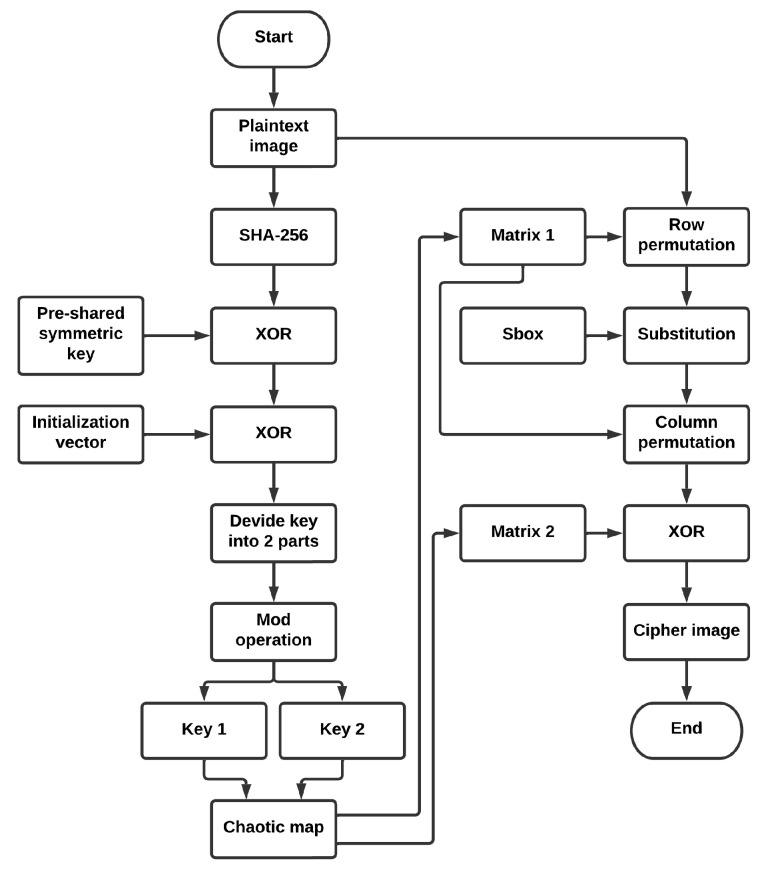
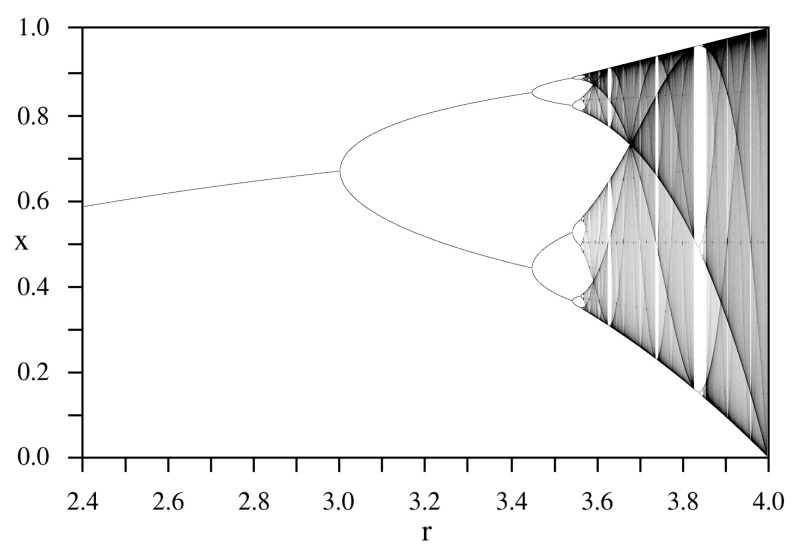
Chaotic-maps-based image encryption methods have been a topic of research interest for a decade. However, most of the proposed methods suffer from slow encryption time or compromise on the security of the encryption to achieve faster encryption. This paper proposes a lightweight, secure, and efficient image encryption algorithm based on logistic map, permutations, and AES S-box. In the proposed algorithm, SHA-2 based on the plaintext image, a pre-shared key, and an initialization vector (IV) are used to generate the initial parameters for the logistic map. The logistic map chaotically generates random numbers, which are then used for the permutations and substitutions. The security, quality, and efficiency of the proposed algorithm are tested and analyzed using a number of metrics, such as correlation coefficient, chi-square, entropy, mean square error, mean absolute error, peak signal-to-noise ratio, maximum deviation, irregular deviation, deviation from uniform histogram, number of pixel change rate, unified average changing intensity, resistance to noise and data loss attacks, homogeneity, contrast, energy, and key space and key sensitivity analysis. Experimental results reveal that the proposed algorithm is up to 15.33× faster compared to other contemporary encryption methods.
Overview
The claims and statistics of this paper haven’t been checked yet.
Free: it reads the open-access text and checks the first 5 claims that cite a source we can check. Create a free account to check every claim.
Integrity signals
Registry
Cites
Statistics
Figures

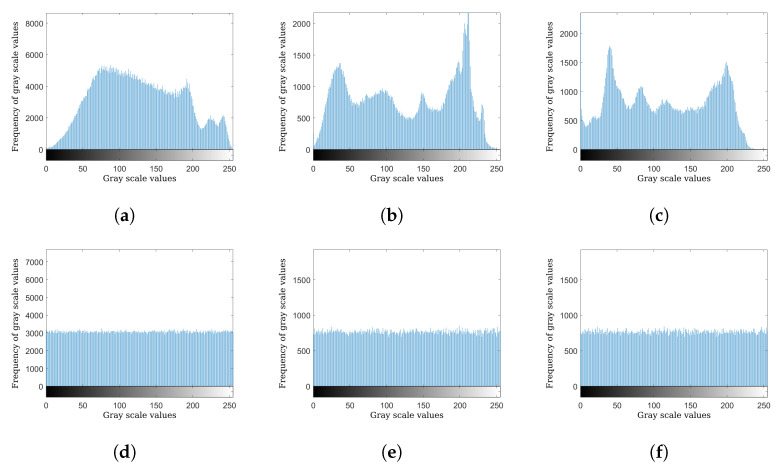
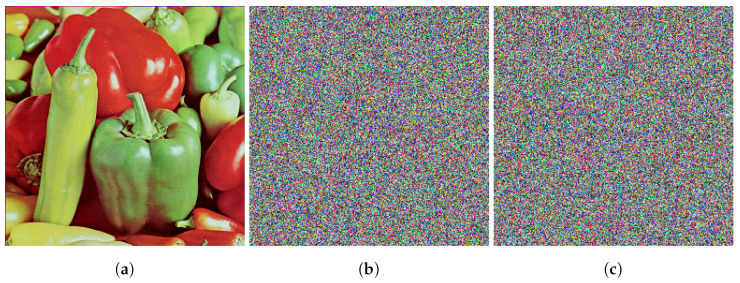
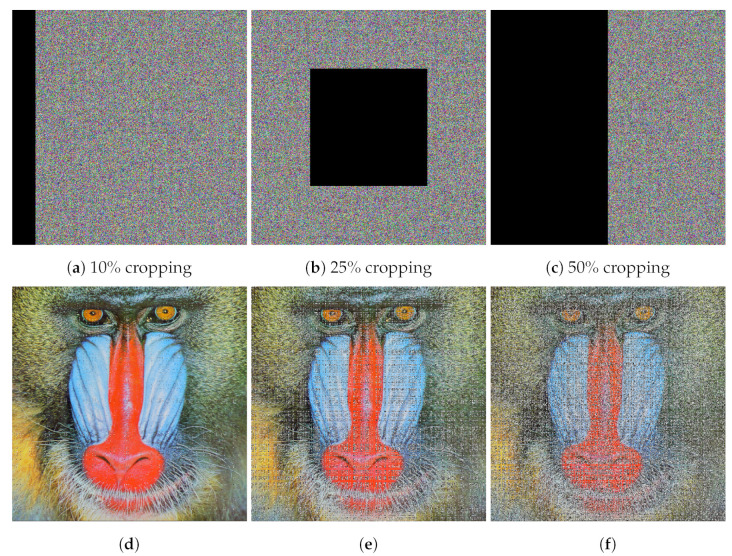
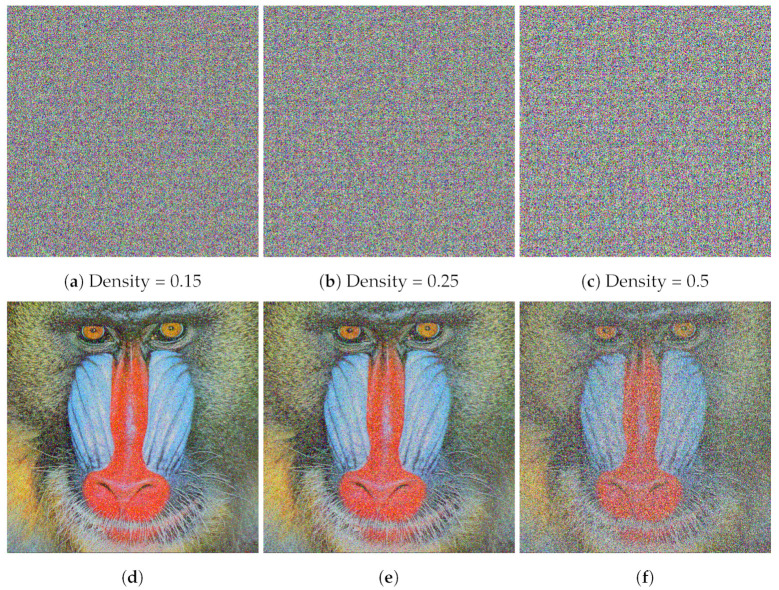
Verification
Claims the paper makes
The claims and statistics of this paper haven’t been checked yet.
Free: it reads the open-access text and checks the first 5 claims that cite a source we can check. Create a free account to check every claim.
Claims other papers make about this one
Each is checked against this paper’s own text: does it say what the citing paper says it does?
The cited source says what the claim attributes to it.
In the citing paper
“In chaos-based algorithms, the pseudorandom chaotic sequences that are generated by the chaotic system are used to permute and diffuse a plaintext image [8].”
From Image Encryption Algorithms: A Survey of Design and Evaluation Metrics (2024) · cites this paper as [8]
Self-check
Percentages, sums and reported differences re-computed from the paper’s own numbers.
The self-check needs the paper’s full text.
Citations
Cites
1 retracted
Khan, M., & Shah, T. (2014) · Neural Computing and Applications · doi:10.1007/s00521-014-1663-4 · Cited by 72 · cited 1×
“The GLCM calculates the frequency of a pixel with gray-level value i occurring horizontally adjacent to a pixel with the gray-level value j [33].”
MethodRetractedA Mathematical Theory of Communication
Shannon, C. E. (1948) · Bell System Technical Journal · doi:10.1002/j.1538-7305.1948.tb01338.x · Cited by 88,486
SOME BASIC CRYPTOGRAPHIC REQUIREMENTS FOR CHAOS-BASED CRYPTOSYSTEMS
ALVAREZ, G., & LI, S. (2006) · International Journal of Bifurcation and Chaos · doi:10.1142/s0218127406015970 · Cited by 2,119 · cited 1×
“To provide sufficient security against brute force attacks, key space for an encryption algorithm should be larger than 2 100 [39].”
BackgroundA symmetric image encryption scheme based on 3D chaotic cat maps
Chen, G., Mao, Y., & Chui, C. K. (2004) · Chaos, Solitons & Fractals · doi:10.1016/j.chaos.2003.12.022 · Cited by 2,092
(2011) · Cited by 904
2D Sine Logistic modulation map for image encryption
Hua, Z., Zhou, Y., Pun, C.-M., & Chen, C. L. P. (2015) · Information Sciences · doi:10.1016/j.ins.2014.11.018 · Cited by 777 · cited 3×
“Most of the prior works on image encryption [5–8] do not consider encryption speed in their design.”
BackgroundMethodInfluentialLocal Shannon entropy measure with statistical tests for image randomness
Wu, Y., Zhou, Y., Saveriades, G., Agaian, S., Noonan, J. P., & Natarajan, P. (2013) · Information Sciences · doi:10.1016/j.ins.2012.07.049 · Cited by 722
Advanced Encryption Standard (AES)
National Institute of Standards and Technology (US) (2001) · doi:10.6028/nist.fips.197 · Cited by 642
A novel image encryption scheme based on substitution-permutation network and chaos
Belazi, A., Abd El-Latif, A. A., & Belghith, S. (2016) · Signal Processing · doi:10.1016/j.sigpro.2016.03.021 · Cited by 486 · cited 1×
“However, the performance of Belazi et al. [28] is better than the proposed algorithm for the image Peppers and on average.”
National Institute of Standards and Technology (US) (2015) · doi:10.6028/nist.fips.180-4 · Cited by 350
A new substitution–diffusion based image cipher using chaotic standard and logistic maps
Patidar, V., Pareek, N. K., & Sud, K. K. (2009) · Communications in Nonlinear Science and Numerical Simulation · doi:10.1016/j.cnsns.2008.11.005 · Cited by 343 · cited 1×
“In image encryption, confusion is controlled by using a key to obscure the plaintext image values [3].”
An Efficient Image Encryption Scheme Based on the LSS Chaotic Map and Single S-Box
Lu, Q., Zhu, C., & Deng, X. (2020) · IEEE Access · doi:10.1109/access.2020.2970806 · Cited by 281 · cited 2×
“[9] is based on Logistic-Sine maps, and uses a single S-Box.”
MethodImage encryption for secure Internet multimedia applications
Dang, P. P., & Chau, P. M. (2000) · IEEE Transactions on Consumer Electronics · doi:10.1109/30.883383 · Cited by 218 · cited 1×
“Digital images are one form of sensitive data that need to be stored and transmitted securely [1].”
BackgroundAn Image Encryption Algorithm Based on Josephus Traversing and Mixed Chaotic Map
Wang, X., Zhu, X., & Zhang, Y. (2018) · IEEE Access · doi:10.1109/access.2018.2805847 · Cited by 199 · cited 1×
“[8] have used Josephus traversing and a mix of four chaotic maps.”
MethodRGB Image Encryption through Cellular Automata, S-Box and the Lorenz System
Alexan, W., ElBeltagy, M., & Aboshousha, A. (2022) · Symmetry · doi:10.3390/sym14030443 · Cited by 187
A Lightweight Chaos-Based Medical Image Encryption Scheme Using Random Shuffling and XOR Operations
Masood, F., Driss, M., Boulila, W., Ahmad, J., Rehman, S. U., Jan, S. U., Qayyum, A., & Buchanan, W. J. (2022) · Wireless Personal Communications · doi:10.1007/s11277-021-08584-z · Cited by 175
Self-citationArif, J., Khan, M. A., Ghaleb, B., Ahmad, J. E., Munir, A., Rashid, U., & Al‐Dubai, A. (2022) · IEEE Access · doi:10.1109/access.2022.3146792 · Cited by 145 · cited 2×
“[7] is better than the proposed algorithm for some encrypted images, the average of the proposed method is still generally better.”
BackgroundSelf-citationChaotic substitution for highly autocorrelated data in encryption algorithm
Anees, A., Siddiqui, A. M., & Ahmed, F. (2014) · Communications in Nonlinear Science and Numerical Simulation · doi:10.1016/j.cnsns.2014.02.011 · Cited by 141
Double image encryption algorithm based on compressive sensing and elliptic curve
Ye, G., Liu, M., & Ming-fa, W. (2021) · Alexandria Engineering Journal · doi:10.1016/j.aej.2021.12.023 · Cited by 128 · cited 1×
“[11] have proposed a new chaotic system that has a hyperchaotic behavior.”
BackgroundChaos-Based Confusion and Diffusion of Image Pixels Using Dynamic Substitution
Qayyum, A., Ahmad, J., Boulila, W., Rubaiee, S., Arshad, Masood, F., Khan, F., & Buchanan, W. J. (2020) · IEEE Access · doi:10.1109/access.2020.3012912 · Cited by 111 · cited 1×
“The proposed algorithm has a speed increase of 2.36 × compared to [6], 15.30 × compared to [9], and up of 2.29 × when compared to [17].”
ResultInfluentialSelf-citationA new compound mode of confusion and diffusion for block encryption of image based on chaos
Wang, X.-Y., Chen, F., & Wang, T. (2010) · Communications in Nonlinear Science and Numerical Simulation · doi:10.1016/j.cnsns.2009.10.001 · Cited by 105 · cited 1×
“Image encryption relies on two techniques to create cipher images and reduce the correlation between neighboring pixels: confusion and diffusion [2].”
MethodAn Image Encryption Scheme Based on DNA Computing and Multiple Chaotic Systems
Samiullah, M., Aslam, W., Nazir, H., Lali, M. I., Shahzad, B., Mufti, M. R., & Afzal, H. (2020) · IEEE Access · doi:10.1109/access.2020.2970981 · Cited by 81 · cited 1×
“Algorithm Proposed [5] [6] [7] [9] [24] [17]”
Alanezi, A., Abd-El-Atty, B., Kolivand, H., El‐Latif, A. A. A., El-Rahiem, B. A., Sankar, S., & Khalifa, H. S. (2021) · Security and Communication Networks · doi:10.1155/2021/6615512 · Cited by 78 · cited 5×
“[6] is slightly better than the proposed algorithm with respect to the NPCR metric.”
MethodResultInfluentialAn efficient image encryption scheme based on: Henon map, skew tent map and S-Box
Khan, J. S., Ahmad, J. E., & Hwang, S. O. (2015) · International Conference on Modeling, Simulation, and Applied Optimization · doi:10.1109/icmsao.2015.7152261 · Cited by 77
Self-citationHopfield attractor-trusted neural network: an attack-resistant image encryption
Lakshmi, C., Thenmozhi, K., Rayappan, J. B. B., & Amirtharajan, R. (2019) · Neural Computing and Applications · doi:10.1007/s00521-019-04637-4 · Cited by 73
An Effective Framework for Chaotic Image Encryption Based on 3D Logistic Map
Ye, G., Jiao, K., Pan, C., & Huang, X. (2018) · Security and Communication Networks · doi:10.1155/2018/8402578 · Cited by 66 · cited 1×
“Proposed 99.6153 33.4718 [5] 99.5893 33.3730 [6] 99.6239 33.5615 [7] 99.6059 33.4375 [9] 99.5743 33.3941 [32] 99.6146 33.4501 4.6.3.”
InfluentialA novel image encryption based on Lorenz equation, Gingerbreadman chaotic map and S 8 permutation
Khan, F. A., Ahmed, J., Khan, J. S., Ahmad, J. E., & Khan, M. A. (2017) · Journal of Intelligent & Fuzzy Systems · doi:10.3233/jifs-17656 · Cited by 64
Self-citationSecure Image Encryption Algorithms: A Review
Abraham, L., & Daniel, N. (2013) · Cited by 46
Sanap, S. D., & More, V. (2021) · 2021 3rd International Conference on Signal Processing and Communication (ICPSC) · doi:10.1109/icspc51351.2021.9451784 · Cited by 27 · cited 1×
“If a 1-bit change in the plaintext image causes a change of more than 50% in the cipher image, then the algorithm is safe against differential attacks [30].”
Texture Recognition with combined GLCM,Wavelet and Rotated Wavelet Features
Hazra, D. (2011) · International Journal of Computer and Electrical Engineering · doi:10.7763/ijcee.2011.v3.305 · Cited by 25 · cited 1×
“Homogeneous parts of an image reveal repetitive structures and compromise the image encryption [34].”
BackgroundImage encryption scheme for multi-focus images for visual sensors network
Khan, M., Khan, L. S., Hazzazi, M. M., Jamal, S. S., & Hussain, I. (2022) · Multimedia Tools and Applications · doi:10.1007/s11042-022-12441-x · Cited by 15
Munir, A., Gordon, R., Lysecky, S., & Lysecky, R. (2013) · Sustainable Computing Informatics and Systems · doi:10.1016/j.suscom.2013.01.003 · Cited by 12 · cited 1×
“Even though scaling does not provide 100% accuracy for processor runtime because of different instruction set architectures and memory subsystems, scaling provides reasonable estimates and facilitates relative comparisons [16].”
BackgroundSelf-citationEncryption Quality Analysis of the RCBC Block Cipher Compared with RC6 and RC5 Algorithms.Preprint
Ragab, A. H. M., Allah, O. S. F., & Noaman, A. Y. M. (2014) · IACR Cryptology ePrint Archive · Cited by 12
Meaningful color image encryption algorithm based on compressive sensing and chaotic map
Liu, M., Ye, G., & Lin, Q. (2021) · IEEE International Symposium on Software Reliability Engineering Workshops (ISSREW) · doi:10.1109/issrew53611.2021.00073 · Cited by 5 · cited 1×
“Compressive sensing is helpful in reducing the time and size of encrypted images by sampling, compressing, and encrypting the image at the same time [10].”
Background
Research works printed but not linked: 2
- Mali, 2015, A study on statistical analysis and security evaluation parameters in image encryption, Entropy, 34, 36
- Ahmad, 2010, Efficiency analysis and security evaluation of image encryption schemes, Computing, 23, 25
Cited by
Image Encryption Algorithms: A Survey of Design and Evaluation Metrics
Alghamdi, Y., & Munir, A. (2024) · Journal of Cybersecurity and Privacy · doi:10.3390/jcp4010007 · Cited by 98
“In chaos-based algorithms, the pseudorandom chaotic sequences that are generated by the chaotic system are used to permute and diffuse a plaintext image [8].”
MethodSelf-citationHuman Activity Recognition Using Cascaded Dual Attention CNN and Bi-Directional GRU Framework
Ullah, H., & Munir, A. (2023) · Journal of Imaging · doi:10.3390/jimaging9070130 · Cited by 69
Self-citationImage encryption based on 2DNA encoding and chaotic 2D logistic map
Alrubaie, A. H., Khodher, M. A. A., & Abdulameer, A. T. (2023) · Journal of Engineering and Applied Science · doi:10.1186/s44147-023-00228-2 · Cited by 56
“Image name Proposed [37] [31] [30] [32]”
MethodAn image encryption scheme based on a seven-dimensional hyperchaotic system and Pascal's matrix
Neamah, A. A. (2023) · Journal of King Saud University - Computer and Information Sciences · doi:10.1016/j.jksuci.2023.02.014 · Cited by 64
Novel image encryption algorithm using hybrid 3D-ICPCM and hessenberg decomposition
Verma, V., Kumar, S., & Rani, N. (2024) · Nonlinear Dynamics · doi:10.1007/s11071-024-09620-w · Cited by 33
Metadata
- Authors
- Alghamdi, Y., Munir, A., & Ahmad, J.
- Affiliations
- Kansas State University (US)
- Edinburgh Napier University (GB)
- Corresponding author
- Munir, Arslan
- Venue
- Entropy
- Publisher
- MDPI AG
- Published
- 2022-09-23
- Volume
- 24
- Issue
- 10
- Pages
- 1344
- ISSN
- 1099-4300 (ISSN-L)
- PMC
- PMC9600900
- OpenAlex
- W4297235651
- Cited by
- 97
- References
- 35
- Citations by year
- 2026: 21 · 2025: 33 · 2024: 22 · 2023: 21
- FWCI
- 6.21
- Type
- journal article
- Language
- en
- Open access
- gold
- doi.org
- Licence
- Locations
- Entropy (publishedVersion, cc-by)
- PubMed Central (publishedVersion, cc-by)
- PubMed (publishedVersion)
- DOAJ (DOAJ: Directory of Open Access Journals) (submittedVersion, cc-by-sa)
- Edinburgh Napier Research Repository (Edinburgh Napier University) (submittedVersion, cc-by)
- Topics
- Physical Sciences › Computer Science › Computer Vision and Pattern Recognition › Chaos-based Image/Signal Encryption
- Physical Sciences › Computer Science › Artificial Intelligence › Computer Science and Engineering
- Physical Sciences › Computer Science › Computer Vision and Pattern Recognition › Advanced Steganography and Watermarking Techniques
- Keywords
- image encryption, logistic map, chaotic maps, random replacement, permutations, AES S-box, SHA-2, lightweight encryption, encryption speed, key sensitivity analysis, key space analysis
About these checks
Registry, retraction, Cites and statistics results are computed, not judged, with one exception: a printed reference that no index lists is read once by a model before it counts as a citation error. Claims are extracted by a model and kept only when their quote appears verbatim in the text; each cited source is then checked, with a model’s help, for whether it says what the claim relies on. Those verdicts can be wrong — read the claim’s quote and the cited source before relying on one.
Statistics and arithmetic are recomputed, not judged.
Confidence bands are shown only for fields calibrated on our annotated test set. None is calibrated yet, so no band is shown.
What counts as a claim ›How we measure confidence ›How we check this ›
Are you an author, or do you see a problem with this page? Request a review
Data sources
Bibliographic data: Semantic Scholar, OpenAlex, Crossref.
Contains information from the Semantic Scholar Academic Graph Datasets, made available under the ODC Attribution License (ODC-BY 1.0).
Semantic Scholar’s data is described in: Kinney, R., et al. (2023). The Semantic Scholar Open Data Platform. arXiv:2301.10140.
