

The DOI matches its Crossref record; 76 of the 76 references it cites were found in a registry or an index.
The k-means Algorithm: A Comprehensive Survey and Performance Evaluation
Open accessAbstract
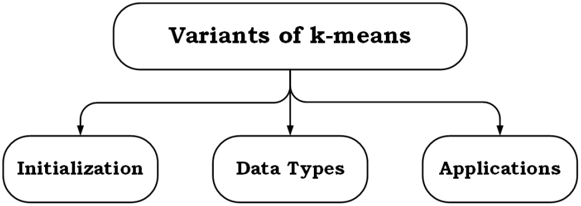
The k-means clustering algorithm is considered one of the most powerful and popular data mining algorithms in the research community. However, despite its popularity, the algorithm has certain limitations, including problems associated with random initialization of the centroids which leads to unexpected convergence. Additionally, such a clustering algorithm requires the number of clusters to be defined beforehand, which is responsible for different cluster shapes and outlier effects. A fundamental problem of the k-means algorithm is its inability to handle various data types. This paper provides a structured and synoptic overview of research conducted on the k-means algorithm to overcome such shortcomings. Variants of the k-means algorithms including their recent developments are discussed, where their effectiveness is investigated based on the experimental analysis of a variety of datasets. The detailed experimental analysis along with a thorough comparison among different k-means clustering algorithms differentiates our work compared to other existing survey papers. Furthermore, it outlines a clear and thorough understanding of the k-means algorithm along with its different research directions.
Overview
The claims and statistics of this paper haven’t been checked yet.
Free: it reads the open-access text and checks the first 5 claims that cite a source we can check. Create a free account to check every claim.
Integrity signals
Registry
Cites
Statistics
Figures
Verification
Claims the paper makes
The claims and statistics of this paper haven’t been checked yet.
Free: it reads the open-access text and checks the first 5 claims that cite a source we can check. Create a free account to check every claim.
Claims other papers make about this one
Each is checked against this paper’s own text: does it say what the citing paper says it does?
The check wasn’t confident either way, so it gives no verdict — never disputed.
In the citing paper
“First, k-means does not account for uncertainty associated with yield environment classifications [1, 19].”
From A Bayesian framework to model variance of grain yield response to plant density (2025) · cites this paper as [1]
Experimental — accuracy not yet measured
Self-check
Percentages, sums and reported differences re-computed from the paper’s own numbers.
The self-check needs the paper’s full text.
Citations
Cites
Estimating the Dimension of a Model
Schwarz, G. (1978) · The Annals of Statistics · doi:10.1214/aos/1176344136 · Cited by 47,033 · cited 1×
“In x-means clustering [49], the BIC (Bayesian information criterion) or “Schwarz criterion” [50,51] is utilised to find the number of k clusters.”
UCI Machine Learning Repository
Asuncion, A. (2007) · Medical Entomology and Zoology · Cited by 25,411
(1967) · Cited by 23,719
Neural networks for pattern recognition
(1994) · Choice Reviews Online · doi:10.5860/choice.31-5500 · Cited by 18,538
Jain, A. K., Murty, M. N., & Flynn, P. J. (1999) · ACM Computing Surveys · doi:10.1145/331499.331504 · Cited by 13,199
Neural Networks for Pattern Recognition
Bishop, C. M. (1995) · doi:10.1093/oso/9780198538493.001.0001 · Cited by 12,287
Finding groups in data: an introduction to cluster analysis
(1991) · Choice Reviews Online · doi:10.5860/choice.28-4558 · Cited by 10,474
Top 10 algorithms in data mining
Wu, X., Kumar, V., Ross Quinlan, J., Ghosh, J., Yang, Q., Motoda, H., McLachlan, G. J., Ng, A., Liu, B., Yu, P. S., et al. (2008) · Knowledge and Information Systems · doi:10.1007/s10115-007-0114-2 · Cited by 5,667 · cited 1×
“This survey studies the problems of and solutions to partition-based clustering, and more specifically the widely used k-means algorithm [9], which has been listed among the top 10 clustering algorithms for data analysis [35].”
An efficient k-means clustering algorithm: analysis and implementation
Kanungo, T., Mount, D. M., Netanyahu, N. S., Piatko, C. D., Silverman, R., & Wu, A. Y. (2002) · IEEE Transactions on Pattern Analysis and Machine Intelligence · doi:10.1109/tpami.2002.1017616 · Cited by 5,660
Bozdogan, H. (1987) · Psychometrika · doi:10.1007/bf02294361 · Cited by 4,468 · cited 1×
“In x-means clustering [49], the BIC (Bayesian information criterion) or “Schwarz criterion” [50,51] is utilised to find the number of k clusters.”
Research works printed but not linked: 1
- Mohri, M., Rostamizadeh, A., and Talwalkar, A. (2012). Foundations of Machine Learning, MIT Press.
Cited by
Ikotun, A. M., Ezugwu, A. E., Abualigah, L., Abuhaija, B., & Heming, J. (2023) · Information Sciences · doi:10.1016/j.ins.2022.11.139 · Cited by 2,272
Hussain, M. (2023) · Machines · doi:10.3390/machines11070677 · Cited by 1,217
“…automated hot-spot detection within PV cells based a modi fi ed version of the YOLO-v5 architecture. precision at varying scales, k-means clustering [48] is deployed for clustering the The fi rst improvement comes in the form of enhanced anchors and detection heads for the respective architecture.…”
MethodA Review on Autonomous Vehicles: Progress, Methods and Challenges
Parekh, D., Poddar, N., Rajpurkar, A., Chahal, M., Kumar, N., Joshi, G. P., & Cho, W. (2022) · Electronics · doi:10.3390/electronics11142162 · Cited by 517
“It associates every cluster with a centroid and aims to minimize the total sum of distances between cluster centroids and their data points iteratively [14].”
BackgroundK-Means and Alternative Clustering Methods in Modern Power Systems
Miraftabzadeh, S. M., Colombo, C. G., Longo, M., & Foiadelli, F. (2023) · IEEE Access · doi:10.1109/access.2023.3327640 · Cited by 245
“The K-means algorithm is a popular choice for clustering analysis in power systems due to its simplicity, efficiency, scalability, and ease of implementation [11], [12].”
BackgroundMethodInfluentialNetwork Abnormal Traffic Detection Model Based on Semi-Supervised Deep Reinforcement Learning
Dong, S., Xia, Y., & Peng, T. (2021) · IEEE Transactions on Network and Service Management · doi:10.1109/tnsm.2021.3120804 · Cited by 193
Metadata
- Authors
- Ahmed, M., Seraj, R., & Islam, S. M. S.
- Affiliations
- Edith Cowan University (AU)
- McGill University (CA)
- Corresponding author
- Ahmed, Mohiuddin
- Venue
- Electronics
- Publisher
- MDPI AG
- Published
- 2020-08-12
- Volume
- 9
- Issue
- 8
- Pages
- 1295
- ISSN
- 2079-9292 (ISSN-L)
- OpenAlex
- W3048804154
- Cited by
- 1,717
- References
- 76
- Citations by year
- 2026: 311 · 2025: 471 · 2024: 484 · 2023: 302 · 2022: 109 · 2021: 35 · 2020: 5
- FWCI
- 44.33
- Type
- journal article
- Language
- en
- Open access
- gold
- doi.org
- Licence
- Locations
- Electronics (publishedVersion, cc-by)
- UWA Profiles and Research Repository (UWA) (submittedVersion, cc-by)
- Australasian Journal of Paramedicine (submittedVersion, cc-by)
- DOAJ (DOAJ: Directory of Open Access Journals) (submittedVersion, cc-by-sa)
- Topics
- Physical Sciences › Computer Science › Artificial Intelligence › Advanced Clustering Algorithms Research
- Physical Sciences › Computer Science › Information Systems › Data Mining and Machine Learning Applications
- Physical Sciences › Computer Science › Artificial Intelligence › Bayesian Methods and Mixture Models
- Keywords
- K-means clustering, centroid initialization, optimal number of clusters, cluster shape, outliers, algorithm comparison, convergence
About these checks
Registry, retraction, Cites and statistics results are computed, not judged, with one exception: a printed reference that no index lists is read once by a model before it counts as a citation error. Claims are extracted by a model and kept only when their quote appears verbatim in the text; each cited source is then checked, with a model’s help, for whether it says what the claim relies on. Those verdicts can be wrong — read the claim’s quote and the cited source before relying on one.
Statistics and arithmetic are recomputed, not judged.
Confidence bands are shown only for fields calibrated on our annotated test set. None is calibrated yet, so no band is shown.
What counts as a claim ›How we measure confidence ›How we check this ›
Are you an author, or do you see a problem with this page? Request a review
How to cite
Cite CoChat for the checks on this page, and the paper for its own findings.
- This page
- CoChat. (2026). Citation check: The k-means Algorithm: A Comprehensive Survey and Performance Evaluation. https://app.cochat.ai/papers/10.3390/electronics9081295
- The paper
- Ahmed, M., Seraj, R., & Islam, S. M. S. (2020). The k-means Algorithm: A Comprehensive Survey and Performance Evaluation. Electronics. https://doi.org/10.3390/electronics9081295
Data sources
Bibliographic data: Semantic Scholar, OpenAlex, Crossref.
Contains information from the Semantic Scholar Academic Graph Datasets, made available under the ODC Attribution License (ODC-BY 1.0).
Semantic Scholar’s data is described in: Kinney, R., et al. (2023). The Semantic Scholar Open Data Platform. arXiv:2301.10140.
