

Water Cycle Algorithm Optimized Type II Fuzzy Controller for Load Frequency Control of a Multi-Area, Multi-Fuel System with Communication Time Delays
Open accessThe DOI matches its Crossref record; 27 of the 28 references it cites were found in a registry or an index.
Abstract
This paper puts forward the implementation of an intelligent type II fuzzy PID (T2-FPID) controller tweaked with a water cycle algorithm (WCA), subjected to an error multiplied with time area over integral (ITAE) objective index for regularizing the variations in frequency and interline power flow of an interconnected power system during load disturbances. The WCA-based T2-FPID is tested on a multi-area (MA) system comprising thermal-hydro-nuclear (THN) (MATHN) plants in each area. The dynamical behavior of the system is analyzed upon penetrating area 1 with a step load perturbation (SLP) of 10%. However, power system practicality constraints, such as generation rate constraints (GRCs) and time delays in communication (CTDs), are examined. Afterward, a territorial control scheme of a superconducting magnetic energy storage system (SMES) and a unified power flow controller (UPFC) is installed to further enhance the system performance. The dominancy of the presented WCA-tuned T2-FPID is revealed by testing it on a widely used dual-area hydro-thermal (DAHT) power system model named test system 1 in this paper. Analysis reveals the efficacy of the presented controller with other approaches reported in the recent literature. Finally, secondary and territorial regulation schemes are subjected to sensitivity analysis to deliberate the robustness.
Overview
The claims and statistics of this paper haven’t been checked yet.
Free: it reads the open-access text and checks the first 5 claims that cite a source we can check. Create a free account to check every claim.
Integrity signals
Registry
Cites
Statistics
Figures
Verification
Claims the paper makes
The claims and statistics of this paper haven’t been checked yet.
Free: it reads the open-access text and checks the first 5 claims that cite a source we can check. Create a free account to check every claim.
Claims other papers make about this one
Each is checked against this paper’s own text: does it say what the citing paper says it does?
The cited source says what the claim attributes to it.
In the citing paper
“Additionally, there are some hybrid approaches such as PSO-BFA [20], hybrid crow search (hCA) combined with PSO [21], and others [22][23][24].”
From A Comprehensive Review on the Role of Artificial Intelligence in Power System Stability, Control, and Protection: Insights and Future Directions (2024) · cites this paper as [21]
Self-check
Percentages, sums and reported differences re-computed from the paper’s own numbers.
The self-check needs the paper’s full text.
Citations
Cites
Eskandar, H., Sadollah, A., Bahreininejad, A., & Hamdi, M. (2012) · Computers & Structures · doi:10.1016/j.compstruc.2012.07.010 · Cited by 1,660 · cited 1×
“[27] in the year 2012 proposed this WCA strategy inspired from the continuous water movement.”
MethodOptimum Megawatt-Frequency Control of Multiarea Electric Energy Systems
Elgerd, O., & Fosha, C. (1970) · IEEE Transactions on Power Apparatus and Systems · doi:10.1109/tpas.1970.292602 · Cited by 810 · cited 1×
“[2] initiated the visualization of isolated thermal plant behavior under load disturbances.”
BackgroundNanda, J., Mishra, S., & Saikia, L. C. (2009) · IEEE Transactions on Power Systems · doi:10.1109/tpwrs.2009.2016588 · Cited by 411
Sahu, R. K., Panda, S., & Padhan, S. (2015) · International Journal of Electrical Power & Energy Systems · doi:10.1016/j.ijepes.2014.07.013 · Cited by 327 · cited 4×
“However, controlling strategies reported in the early and recent literature, such as PI, a PID tuned with the respective GA [4], and hFA-PS [8] algorithms along with a fuzzy PID optimized with hPSO-PS [22], are implemented to demonstrate WCA-based T2-FPID control efficacy.”
MethodInfluentialSahu, R. K., Panda, S., & Chandra Sekhar, G. T. (2015) · International Journal of Electrical Power & Energy Systems · doi:10.1016/j.ijepes.2014.08.021 · Cited by 319 · cited 7×
“Algorithm WCA: T2-FPID hPSO-PS: Fuzzy PID [22] hFA-PS: PID [8] GA: PI [4] Optimal gain Area 1 K1 = 0.0759 K2 = 0.0377 KP = 1.1288 KI = 0.1584 KD = 0.5725 KP = 1.0366 KI = 0.2098 KD = 0.4317 KP = 1.1231 KI = 0.3665 KD = 0.3821 KP = 0.7308 KI = 0.1844 Area 2 K1 = 0.1890 K2 = 0.0908 KP = 1.1056 KI = 0.1712 KD = 0.4070 KP…”
MethodInfluentialRaju, M., Saikia, L. C., & Sinha, N. (2016) · International Journal of Electrical Power & Energy Systems · doi:10.1016/j.ijepes.2016.01.037 · Cited by 282 · cited 1×
“Several conventional PI/PID/PIDN/PIDD [8,9], modified PID [10], higher-order degree-of-freedom (DOF) 2DOFPID/3DOFPID [11], intelligent fuzzy (F) PID (FPID) [12], fractional-order (FO) FOPI/FOPID [13], and other FO and fuzzy-based cascade controllers [14] are reported in the literature.”
Pradhan, P. C., Sahu, R. K., & Panda, S. (2016) · Engineering Science and Technology, an International Journal · doi:10.1016/j.jestch.2015.08.007 · Cited by 196 · cited 2×
“Several conventional PI/PID/PIDN/PIDD [8,9], modified PID [10], higher-order degree-of-freedom (DOF) 2DOFPID/3DOFPID [11], intelligent fuzzy (F) PID (FPID) [12], fractional-order (FO) FOPI/FOPID [13], and other FO and fuzzy-based cascade controllers [14] are reported in the literature.”
MethodArya, Y. (2019) · Journal of the Franklin Institute · doi:10.1016/j.jfranklin.2019.02.034 · Cited by 181 · cited 2×
“Several conventional PI/PID/PIDN/PIDD [8,9], modified PID [10], higher-order degree-of-freedom (DOF) 2DOFPID/3DOFPID [11], intelligent fuzzy (F) PID (FPID) [12], fractional-order (FO) FOPI/FOPID [13], and other FO and fuzzy-based cascade controllers [14] are reported in the literature.”
MethodShankar, R., Chatterjee, K., & Bhushan, R. (2016) · International Journal of Electrical Power & Energy Systems · doi:10.1016/j.ijepes.2015.12.029 · Cited by 179 · cited 1×
“[5] investigated the traditional dual-area system incorporated with traditional generating sources of thermal-hydro-gas units in each area.”
BackgroundSahu, R. K., Panda, S., & Padhan, S. (2015) · Applied Soft Computing · doi:10.1016/j.asoc.2015.01.020 · Cited by 160
Guha, D., Roy, P. K., & Banerjee, S. (2016) · Engineering Science and Technology an International Journal · doi:10.1016/j.jestch.2016.07.004 · Cited by 155 · cited 1×
“Authors in [6] analyzed DAHT system behavior without and with a generation limiter of a GRC in order to demonstrate its impact on system performance.”
BackgroundLoad frequency controllers considering renewable energy integration in power system
Tungadio, D. H., & Sun, Y. (2019) · Energy Reports · doi:10.1016/j.egyr.2019.04.003 · Cited by 147 · cited 1×
“[1] reported various power system models that have been deliberated by researchers in LFC study.”
BackgroundChandrakala, K. R. M. V., Balamurugan, S., & Sankaranarayanan, K. (2013) · International Journal of Electrical Power & Energy Systems · doi:10.1016/j.ijepes.2013.05.009 · Cited by 137 · cited 5×
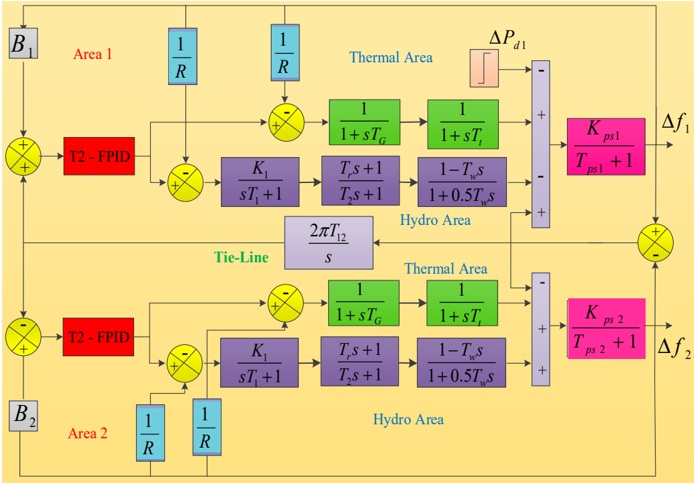
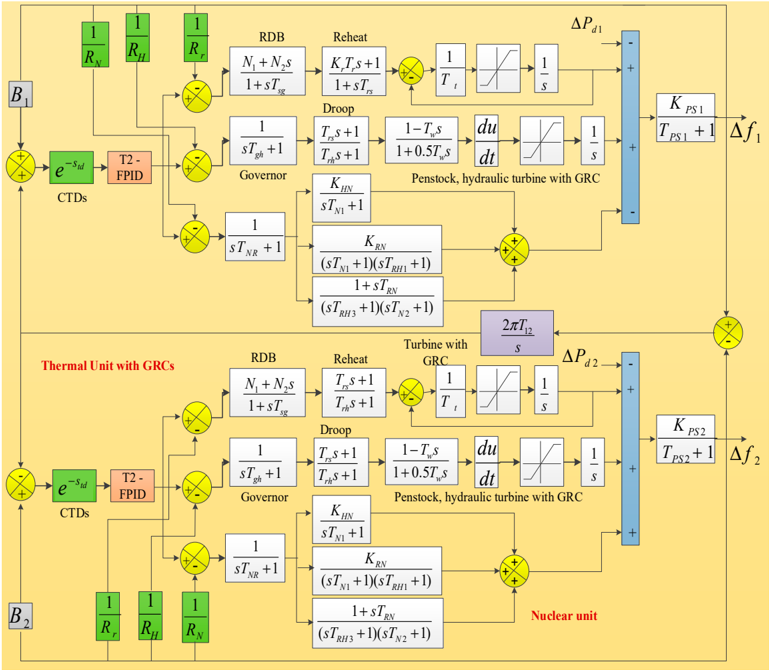
“The test system models 1 and 2 are depicted in Figure 1 [4] and Figure 2 [21], respectively.”
BackgroundMethodInfluentialKalyan, C. N. S., & Rao, S. (2020) · International Journal of Sustainable Energy · doi:10.1080/14786451.2020.1797740 · Cited by 126 · cited 3×
“Different soft computing approaches that have been extensively implemented by researchers in the domain of LFC study are particle swarm optimization (PSO) [16], grasshopper optimization algorithm (GOA) [10], pattern search (PS) [17], sine-cosine algorithm (SCA) [13], lightning search algorithm (LSA), bacterial foragin…”
BackgroundMethodSelf-citationNosratabadi, S. M., Bornapour, M., & Gharaei, M. A. (2019) · Control Engineering Practice · doi:10.1016/j.conengprac.2019.06.002 · Cited by 109 · cited 2×
“Several conventional PI/PID/PIDN/PIDD [8,9], modified PID [10], higher-order degree-of-freedom (DOF) 2DOFPID/3DOFPID [11], intelligent fuzzy (F) PID (FPID) [12], fractional-order (FO) FOPI/FOPID [13], and other FO and fuzzy-based cascade controllers [14] are reported in the literature.”
MethodKalyan, C. N. S., & Rao, S. (2021) · Protection and Control of Modern Power Systems · doi:10.1186/s41601-021-00185-z · Cited by 109 · cited 2×
“In this work, CTDs are carried out to investigate their impact on the power system and are modeled as [24] given in Equation (1), and the parameter τd indicates the time delay constant.”
MethodSelf-citationSahu, P. C., Prusty, R. C., & Panda, S. (2019) · Journal of King Saud University - Engineering Sciences · doi:10.1016/j.jksues.2019.01.004 · Cited by 101 · cited 1×
“The MFs used in the type II fuzzy systems are three-dimensional and are created with an upper MF and lower MF combination like that in a type 1 fuzzy system [25].”
MethodTasnin, W., & Saikia, L. C. (2018) · Journal of Renewable and Sustainable Energy · doi:10.1063/1.5016596 · Cited by 100 · cited 3×
“Several conventional PI/PID/PIDN/PIDD [8,9], modified PID [10], higher-order degree-of-freedom (DOF) 2DOFPID/3DOFPID [11], intelligent fuzzy (F) PID (FPID) [12], fractional-order (FO) FOPI/FOPID [13], and other FO and fuzzy-based cascade controllers [14] are reported in the literature.”
MethodGupta, D. K., Jha, A. V., Appasani, B., Srinivasulu, A., Bizon, N., & Thounthong, P. (2021) · Energies · doi:10.3390/en14061581 · Cited by 94 · cited 1×
“Different soft computing approaches that have been extensively implemented by researchers in the domain of LFC study are particle swarm optimization (PSO) [16], grasshopper optimization algorithm (GOA) [10], pattern search (PS) [17], sine-cosine algorithm (SCA) [13], lightning search algorithm (LSA), bacterial foragin…”
MethodNayak, J. R., Shaw, B., & Sahu, B. K. (2018) · Engineering Science and Technology an International Journal · doi:10.1016/j.jestch.2018.03.010 · Cited by 82 · cited 3×
“Different soft computing approaches that have been extensively implemented by researchers in the domain of LFC study are particle swarm optimization (PSO) [16], grasshopper optimization algorithm (GOA) [10], pattern search (PS) [17], sine-cosine algorithm (SCA) [13], lightning search algorithm (LSA), bacterial foragin…”
BackgroundMethodSaha, A., & Saikia, L. C. (2018) · International Transactions on Electrical Energy Systems · doi:10.1002/etep.2646 · Cited by 66 · cited 2×
“Though the aforementioned optimizations are widely used by researchers, most of them get trapped into local minima and are unable to use proper search space [19].”
BackgroundMethodKalyan, C. N. S., & Rao, S. (2020) · International Journal of Ambient Energy · doi:10.1080/01430750.2020.1860130 · Cited by 61 · cited 3×
“Abbreviations CTD Communication time delay DAHT Dual-area hydro-thermal DOF Degree of freedom ESDs Energy storage devices FLC Fuzzy logic controller GSA Gravitational search algorithm GRC Generation rate constraint GWO Gray wolf optimizer HAEFA Hybrid artificial field algorithm ITAE Integral time area error LFC Load f…”
MethodSelf-citationRahman, A., Saikia, L. C., & Sinha, N. (2016) · IET Generation Transmission & Distribution · doi:10.1049/iet-gtd.2016.0528 · Cited by 52 · cited 1×
“Several conventional PI/PID/PIDN/PIDD [8,9], modified PID [10], higher-order degree-of-freedom (DOF) 2DOFPID/3DOFPID [11], intelligent fuzzy (F) PID (FPID) [12], fractional-order (FO) FOPI/FOPID [13], and other FO and fuzzy-based cascade controllers [14] are reported in the literature.”
Kalyan, C. N. S., & Rao, S. (2020) · International Journal on Electrical Engineering and Informatics · doi:10.15676/ijeei.2020.12.4.4 · Cited by 52 · cited 7×
“Algorithm WCA: T2-FPID hPSO-PS: Fuzzy PID [22] hFA-PS: PID [8] GA: PI [4] Optimal gain Area 1 K1 = 0.0759 K2 = 0.0377 KP = 1.1288 KI = 0.1584 KD = 0.5725 KP = 1.0366 KI = 0.2098 KD = 0.4317 KP = 1.1231 KI = 0.3665 KD = 0.3821 KP = 0.7308 KI = 0.1844 Area 2 K1 = 0.1890 K2 = 0.0908 KP = 1.1056 KI = 0.1712 KD = 0.4070 KP…”
MethodSelf-citationKalyan, C. N. S. (2021) · International Conference on Power Electronics and Energy (ICPEE) · doi:10.1109/icpee50452.2021.9358576 · Cited by 39 · cited 6×
“The test system models 1 and 2 are depicted in Figure 1 [4] and Figure 2 [21], respectively.”
BackgroundMethodSelf-citation(2020) · International Journal of Renewable Energy Research · doi:10.20508/ijrer.v10i2.10835.g7972 · Cited by 19
Kalyan, C. N. S., & Suresh, C. V. (2021) · International Conference on Computing, Communication, and Intelligent Systems (ICCCIS) · doi:10.1109/icccis51004.2021.9397112 · Cited by 10 · cited 1×
“Different soft computing approaches that have been extensively implemented by researchers in the domain of LFC study are particle swarm optimization (PSO) [16], grasshopper optimization algorithm (GOA) [10], pattern search (PS) [17], sine-cosine algorithm (SCA) [13], lightning search algorithm (LSA), bacterial foragin…”
MethodSelf-citation
Cited by
Alhamrouni, I., Abdul Kahar, N. H., Salem, M., Swadi, M., Zahroui, Y., Kadhim, D. J., Mohamed, F. A., & Alhuyi Nazari, M. (2024) · Applied Sciences · doi:10.3390/app14146214 · Cited by 217
“On the other hand, Kalyan et al. [21] proposed a fuzzy controller based on a water cycle algorithm (WCA) for LFCs in multi-area systems.”
BackgroundMethodKhan, I. A., Mokhlis, H., Mansor, N. N., Illias, H. A., Awalin, L. J., & Wang, L. (2023) · Alexandria Engineering Journal · doi:10.1016/j.aej.2023.03.040 · Cited by 158
El-Sehiemy, R. A., Shaheen, A. M., Ginidi, A. R., & Al‐Gahtani, S. F. (2023) · Fractal and Fractional · doi:10.3390/fractalfract7010097 · Cited by 79
Kalyan, C. N. S., Goud, B. S., Reddy, C. R., Bajaj, M., Sharma, N. K., Alhelou, H. H., Siano, P., & Kamel, S. (2022) · Energies · doi:10.3390/en15020629 · Cited by 78
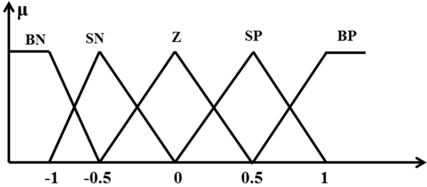
“Five fuzzy linguistic variables that were considered for the FLC system were zero (Z), small negative (SN), big negative (BN), small positive (SP) and big positive (BP), as displayed in Figure 4 [32], and the rules are noted in Table 1.”
BackgroundSelf-citationAli, T., Malik, S. A., Hameed, I. A., Daraz, A., Mujlid, H. M., & Azar, A. T. (2022) · Sustainability · doi:10.3390/su141912162 · Cited by 63
Metadata
- Authors
- Kalyan, C., Goud, B., Reddy, C., Ramadan, H., Bajaj, M., & Ali, Z.
- Affiliations
- Vasireddy Venkatadri International Technological University (IN)
- Department of Electrical Engineering, Anurag College of Engineering Ghatkesar, Telangana 501301, India
- Department of Electrical Engineering, Malla Reddy Engineering College (A) Maisammaguda, Telangana 500100, India
- Zagazig University (EG)
- National Institute of Technology Delhi (IN)
- Prince Sattam Bin Abdulaziz University (SA)
- Corresponding author
- Ali, Ziad
- Venue
- Energies
- Publisher
- MDPI AG
- Published
- 2021-08-30
- Volume
- 14
- Issue
- 17
- Pages
- 5387
- ISSN
- 1996-1073 (ISSN-L)
- OpenAlex
- W3197065771
- Cited by
- 61
- References
- 28
- Citations by year
- 2026: 7 · 2025: 17 · 2024: 8 · 2023: 14 · 2022: 13 · 2021: 2
- FWCI
- 2.72
- Type
- journal article
- Language
- en
- Open access
- gold
- doi.org
- Licence
- Locations
- Energies (publishedVersion, cc-by)
- RePEc: Research Papers in Economics (submittedVersion)
- DOAJ (DOAJ: Directory of Open Access Journals) (submittedVersion, cc-by-sa)
- Topics
- Physical Sciences › Engineering › Electrical and Electronic Engineering › Frequency Control in Power Systems
- Physical Sciences › Engineering › Control and Systems Engineering › Advanced Control Systems Design
- Physical Sciences › Engineering › Electrical and Electronic Engineering › Power System Optimization and Stability
- Keywords
- load frequency control, water cycle algorithm, interconnected power systems, communication delay, generation rate constraint, superconducting magnetic energy storage, unified power flow controller, ITAE index, step load disturbance, hydrothermal power systems, secondary frequency control, controller robustness
About these checks
Registry, retraction, Cites and statistics results are computed, not judged, with one exception: a printed reference that no index lists is read once by a model before it counts as a citation error. Claims are extracted by a model and kept only when their quote appears verbatim in the text; each cited source is then checked, with a model’s help, for whether it says what the claim relies on. Those verdicts can be wrong — read the claim’s quote and the cited source before relying on one.
Statistics and arithmetic are recomputed, not judged.
Confidence bands are shown only for fields calibrated on our annotated test set. None is calibrated yet, so no band is shown.
What counts as a claim ›How we measure confidence ›How we check this ›
Are you an author, or do you see a problem with this page? Request a review
Data sources
Bibliographic data: Semantic Scholar, OpenAlex, Crossref.
Contains information from the Semantic Scholar Academic Graph Datasets, made available under the ODC Attribution License (ODC-BY 1.0).
Semantic Scholar’s data is described in: Kinney, R., et al. (2023). The Semantic Scholar Open Data Platform. arXiv:2301.10140.
