

Energy Modeling and Model Predictive Control for HVAC in Buildings: A Review of Current Research Trends
Open accessThe DOI matches its Crossref record; 169 of the 169 references it cites were found in a registry or an index.
Abstract
Buildings use up to 40% of the global primary energy and 30% of global greenhouse gas emissions, which may significantly impact climate change. Heating, ventilation, and air-conditioning (HVAC) systems are among the most significant contributors to global primary energy consumption and carbon gas emissions. Furthermore, HVAC energy demand is expected to rise in the future. Therefore, advancements in HVAC systems’ performance and design would be critical for mitigating worldwide energy and environmental concerns. To make such advancements, energy modeling and model predictive control (MPC) play an imperative role in designing and operating HVAC systems effectively. Building energy simulations and analysis techniques effectively implement HVAC control schemes in the building system design and operation phases, and thus provide quantitative insights into the behaviors of the HVAC energy flow for architects and engineers. Extensive research and advanced HVAC modeling/control techniques have emerged to provide better solutions in response to the issues. This study reviews building energy modeling techniques and state-of-the-art updates of MPC in HVAC applications based on the most recent research articles (e.g., from MDPI’s and Elsevier’s databases). For the review process, the investigation of relevant keywords and context-based collected data is first carried out to overview their frequency and distribution comprehensively. Then, this review study narrows the topic selection and search scopes to focus on relevant research papers and extract relevant information and outcomes. Finally, a systematic review approach is adopted based on the collected review and research papers to overview the advancements in building system modeling and MPC technologies. This study reveals that advanced building energy modeling is crucial in implementing the MPC-based control and operation design to reduce building energy consumption and cost. This paper presents the details of major modeling techniques, including white-box, grey-box, and black-box modeling approaches. This paper also provides future insights into the advanced HVAC control and operation design for researchers in relevant research and practical fields.
Overview
The claims and statistics of this paper haven’t been checked yet.
Free: it reads the open-access text and checks the first 5 claims that cite a source we can check. Create a free account to check every claim.
Integrity signals
Registry
Cites
Statistics
Figures
Verification
Claims the paper makes
The claims and statistics of this paper haven’t been checked yet.
Free: it reads the open-access text and checks the first 5 claims that cite a source we can check. Create a free account to check every claim.
Claims other papers make about this one
Each is checked against this paper’s own text: does it say what the citing paper says it does?
The source backs part of the claim, not all of it — or backs it for a different population, condition or comparison.
In the citing paper
“Model predictive control (MPC) is widely used in the field of commercial building energy efficiency due to its advantages of good control effect, strong robustness, and fast response speed [2][3][4].”
From Energy-Saving Control Method for Factory Mushroom Room Air Conditioning Based on MPC (2023) · cites this paper as [4]
Experimental — accuracy not yet measured
Self-check
Percentages, sums and reported differences re-computed from the paper’s own numbers.
The self-check needs the paper’s full text.
Citations
Cites
EnergyPlus: creating a new-generation building energy simulation program
Crawley, D. B., Lawrie, L. K., Winkelmann, F. C., Buhl, W. F., Huang, Y. J., Pedersen, C. O., Strand, R. K., Liesen, R. J., Fisher, D. E., Witte, M. J., et al. (2001) · Energy and Buildings · doi:10.1016/s0378-7788(00)00114-6 · Cited by 2,822 · cited 1×
“EnergyPlus is a widely used new-generated program developed by the U.S. Department Of Energy (DOE) [75].”
MethodA review on the prediction of building energy consumption
Zhao, H.-X., & Magoulès, F. (2012) · Renewable and Sustainable Energy Reviews · doi:10.1016/j.rser.2012.02.049 · Cited by 1,937 · cited 2×
“meth-ods) use physical principles to solve the calculation of thermal and energy behaviors on the whole-building level or for sublevel systems in buildings [24].”
BackgroundMethodContrasting the capabilities of building energy performance simulation programs
Crawley, D. B., Hand, J. W., Kummert, M., & Griffith, B. T. (2008) · Building and Environment · doi:10.1016/j.buildenv.2006.10.027 · Cited by 1,858 · cited 2×
“In addition, many whole-building energy simulation tools and applicable prediction methods exist to determine energy analysis indicators for different design scenarios to minimize energy costs and peak energy consumption [12,13].”
BackgroundAll you need to know about model predictive control for buildings
Drgoňa, J., Arroyo, J., Cupeiro Figueroa, I., Blum, D., Arendt, K., Kim, D., Ollé, E. P., Oravec, J., Wetter, M., Vrabie, D. L., et al. (2020) · Annual Reviews in Control · doi:10.1016/j.arcontrol.2020.09.001 · Cited by 1,020
Self-citationState of the art in building modelling and energy performances prediction: A review
Foucquier, A., Robert, S., Suard, F., Stéphan, L., & Jay, A. (2013) · Renewable and Sustainable Energy Reviews · doi:10.1016/j.rser.2013.03.004 · Cited by 832 · cited 1×
“…involving the prediction, management, and optimization of the building energy systems design and control, can be grouped into three categories [11], physics-based modeling (i.e., white-box models), data-driven modeling (i.e., black-box models), and hybrid modeling (i.e., grey-box models), by…”
BackgroundModeling and forecasting building energy consumption: A review of data-driven techniques
Bourdeau, M., Zhai, X. Q., Nefzaoui, E., Guo, X., & Chatellier, P. (2019) · Sustainable Cities and Society · doi:10.1016/j.scs.2019.101533 · Cited by 792 · cited 1×
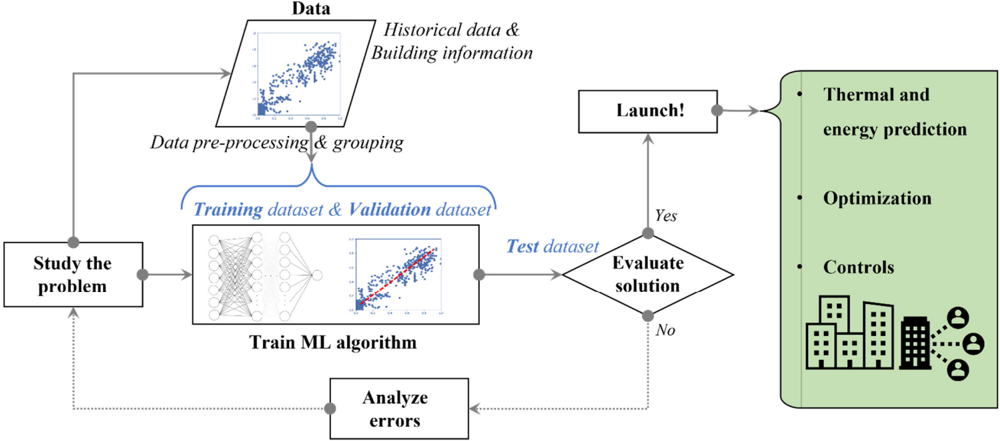
“Most projects for building HVAC applications focus on analyzing time-series datasets with training, validation, and testing steps [120]. each modeling algorithm can be found in the study [4,117].”
BackgroundSerale, G., Fiorentini, M., Capozzoli, A., Bernardini, D., & Bemporad, A. (2018) · Energies · doi:10.3390/en11030631 · Cited by 637
Reinforcement learning for building controls: The opportunities and challenges
Wang, Z., & Hong, T. (2020) · Applied Energy · doi:10.1016/j.apenergy.2020.115036 · Cited by 577
Fan, C., Xiao, F., & Wang, S. (2014) · Applied Energy · doi:10.1016/j.apenergy.2014.04.016 · Cited by 565 · cited 1×
“Year The Focus of Article (Objectives) Modeling Techniques and Features Fan et al. [126] 2014 A data mining-based approach for developing an ensemble model for • Data mining algorithm: Source Year The Focus of Article (Objectives) Ma and Cheng [115] 2016 Development of an integrated data mining…”
MethodReview of modeling methods for HVAC systems
Afram, A., & Janabi-Sharifi, F. (2014) · Applied Thermal Engineering · doi:10.1016/j.applthermaleng.2014.03.055 · Cited by 479 · cited 2×
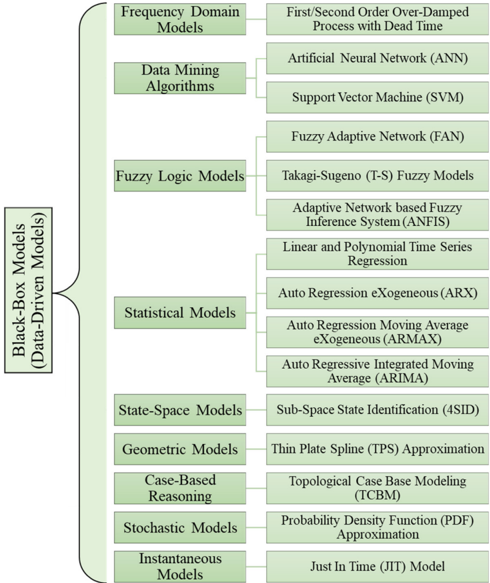
“With such developments, the black-box modeling approach (i.e., the data-driven model) has recently gained much attention as one of the biggest, most promising building energy modeling techniques because of its simplicity and flexibility [116,117].”
BackgroundMethod
Research works printed but not linked: 4
- ASHRAE (2015). ASHRAE Handbook 2015—Hvac Applications: SI Edition, ASHRAE.
- MDPI (2020, December 19). Open Access Journals A–Z. Available online: https://www.mdpi.com/about/journals.
- (2020, December 19). Elsevier ScienceDirect. Available online: https://www.sciencedirect.com/.
- Crwaley, D.B. (1997, January 8–10). Building energy tools directory. Proceedings of the Building Simulation’97, Prague, Czech Republic.
Cited by
Um-e-Habiba, Ahmed, I., Asif, M., Alhelou, H. H., & Khalid, M. (2024) · Journal of Building Engineering · doi:10.1016/j.jobe.2024.109354 · Cited by 162
Model-Free HVAC Control in Buildings: A Review
Michailidis, P., Michailidis, I., Vamvakas, D. G., & Kosmatopoulos, E. B. (2023) · Energies · doi:10.3390/en16207124 · Cited by 64
“…the efficient operation of HVAC systems and paved the way for the development of algorithm-inspired control strategies, such as intelligent model-based or model-free methodologies, which can adequately handle the inherent complexity and nonlinearity of the thermal dynamics in buildings [2,7,10,11].”
BackgroundKim, D., Seomun, G., Lee, Y., Cho, H., Chin, K., & Kim, M. (2024) · Applied Energy · doi:10.1016/j.apenergy.2024.123500 · Cited by 56
Self-citationSaloux, É., Candanedo, J. A., Vallianos, C., Morovat, N., & Zhang, K. (2025) · Applied Energy · doi:10.1016/j.apenergy.2025.126091 · Cited by 64
Tariq, R., Ali, M., Sheikh, N. A., Shahzad, M. W., & Xu, B. B. (2022) · International Communications in Heat and Mass Transfer · doi:10.1016/j.icheatmasstransfer.2022.106538 · Cited by 39
Jin, R., Xu, P., Gu, J., Xiao, T., Li, C., & Wang, H. (2025) · Building and Environment · doi:10.1016/j.buildenv.2025.113045 · Cited by 52
Eze, V. H. U. (2025) · Frontiers in Thermal Engineering · doi:10.3389/fther.2025.1654815 · Cited by 45
Prospects and challenges of reinforcement learning- based HVAC control
Iyanu, A., Chang, H., Lee, C., & Chang, S. (2024) · Journal of Building Engineering · doi:10.1016/j.jobe.2024.111080 · Cited by 37
Park, J., Kim, T., Kim, D., Alghimlas, F., Al-Ragom, F. A., Choi, H., & Cho, H. (2024) · Energy Reports · doi:10.1016/j.egyr.2024.05.040 · Cited by 26
Self-citationThin-Film Technologies for Sustainable Building-Integrated Photovoltaics
Smith, A. R., Ghamari, M., Velusamy, S., & Sundaram, S. (2024) · Energies · doi:10.3390/en17246363 · Cited by 31
“MPC algorithms predict and adjust energy needs, reducing consumption and lowering greenhouse gas emissions [100].”
Lee, R., Kim, D., Yoon, J.-H., Kang, E., Cho, H., & Kim, J. (2024) · Renewable and Sustainable Energy Reviews · doi:10.1016/j.rser.2024.114874 · Cited by 23
Self-citationNi, H.-P., Liu, C., Li, Y., Chong, W. O., & Chou, J. (2025) · Building and Environment · doi:10.1016/j.buildenv.2025.112589 · Cited by 19
Oh, J.-H., Сфарра, С., & Kim, E.-J. (2024) · Energy and Buildings · doi:10.1016/j.enbuild.2024.114898 · Cited by 21
Data-Driven Modeling of HVAC Systems for Operation of Virtual Power Plants Using a Digital Twin
Park, H.-A., Byeon, G., Son, W., Kim, J.-Y., & Kim, S. (2023) · Energies · doi:10.3390/en16207032 · Cited by 20
Particle Swarm Optimization for multi-chiller system: Capacity configuration and load distribution
Cha, J. H., Park, J., Yeon, S. H., Yoon, Y., & Lee, K. H. (2024) · Journal of Building Engineering · doi:10.1016/j.jobe.2024.110953 · Cited by 17
Self-citationOh, K., & Kim, E.-J. (2023) · Energy and Buildings · doi:10.1016/j.enbuild.2023.113798 · Cited by 16
Azzi, A., Abid, M., Hanif, A., Bensag, H., Tabaa, M., Hachimi, H., & Youssfi, M. (2025) · Energies · doi:10.3390/en18174783 · Cited by 16
Alizadeh, M., Dhale, S., & Emadi, A. (2023) · IEEE Transactions on Transportation Electrification · doi:10.1109/tte.2023.3345895 · Cited by 18
“The white-box models are effective for control system design applications and detailed replication of the subprocesses in an HVAC system [11].”
BackgroundMethodInfluentialLiu, W., Zhuang, Z., Li, Y., & Ding, Z. (2025) · Construction and Building Materials · doi:10.1016/j.conbuildmat.2025.139911 · Cited by 13
Hygrothermal modeling in mass timber constructions: Recent advances and machine learning prospects
Shams, S. A., Ge, H., & Wang, L. (2024) · Journal of Building Engineering · doi:10.1016/j.jobe.2024.110500 · Cited by 15
Yoon, Y., Amasyali, K., Li, Y., Im, P., Bae, Y., Liu, Y., & Zandi, H. (2024) · Energy and Buildings · doi:10.1016/j.enbuild.2024.115005 · Cited by 16
Moveh, S., Merchán-Cruz, E. A., Ibrahim, A. O., Elhassan, Z. A. M., Abdelhai, N. M. R., & Abdelrazig, M. D. (2025) · Sustainability · doi:10.3390/su17051955 · Cited by 16
Henkel, P., Roß, S., Rätz, M., & Müller, D. (2025) · Building and Environment · doi:10.1016/j.buildenv.2025.113640 · Cited by 13
Maier, L., Brillert, J., Zanetti, E., & Müller, D. (2023) · Journal of Building Performance Simulation · doi:10.1080/19401493.2023.2280577 · Cited by 13
“The use case is part of BOPTEST 1 and has first been presented by Zanetti, Kim et al. (2022).”
BackgroundMethodResultInfluentialConverso, S., Civiero, P., Ciprigno, S., Veselinova, I., & Riffat, S. (2023) · Energies · doi:10.3390/en16093930 · Cited by 11
Rasku, T., Lastusilta, T., Hasan, A., Ramesh, R., & Kiviluoma, J. (2023) · Buildings · doi:10.3390/buildings13123089 · Cited by 13
Optimizing Heat Pump Control in an NZEB via Model Predictive Control and Building Simulation
Baumann, C., Wohlgenannt, P., Streicher, W., & Kepplinger, P. (2024) · Energies · doi:10.3390/en18010100 · Cited by 9
Efficient Energy Management: Practical Tips for Household Electricity Conservation
Mrudul, G. V., Rohit, G., Harshavardhan, G., Dhanush, K., & Anudeep, B. (2024) · Journal of Modern Technology · doi:10.71426/jmt.v1.i1.pp1-8 · Cited by 9
Energy-Saving Control Method for Factory Mushroom Room Air Conditioning Based on MPC
Wang, M., Zheng, W., Zhao, C., Chen, Y., Chen, C., & Zhang, X. (2023) · Energies · doi:10.3390/en16227623 · Cited by 8
Benzzine, H., Labrim, H., Aouni, I. E., Bajit, A., Saad, A., Zejli, D., & Bouayadi, R. E. (2025) · Energies · doi:10.3390/en18236219 · Cited by 8
Skała, A., Grela, J., Latoń, D., Bańczyk, K., Markiewicz, M., & Ożadowicz, A. (2023) · Energies · doi:10.3390/en16196830 · Cited by 8
Zhang, W., Fang, H., Yang, F., Wang, C., Wu, T., Xu, L., Bu, J., Zhong, Q., & Yu, Y. (2025) · Energy and Buildings · doi:10.1016/j.enbuild.2025.116493 · Cited by 8
Liu, Q., Li, X., Tan, K. H., & Hwee, A. K. (2026) · Applied Energy · doi:10.1016/j.apenergy.2026.127482 · Cited by 12
Rasku, T., Simson, R., & Kiviluoma, J. (2024) · Buildings · doi:10.3390/buildings14061614 · Cited by 9
Deep Reinforcement Learning‐Based Real‐Time Controller for Energy‐Efficient Buildings
Seyfi, M., Levikari, S., Nykyri, M., Mohammadi‐Ivatloo, B., & Honkapuro, S. (2025) · IET Generation Transmission & Distribution · doi:10.1049/gtd2.70103 · Cited by 7
A review of research on intelligent technology in building air conditioning system optimisation
Li, B., Yong, J. C. E., Yu, L. J., Olugu, E. U., Xiao-qing, Y., Zhang, Z., & Muhieldeen, M. W. (2025) · International Journal of Refrigeration · doi:10.1016/j.ijrefrig.2025.04.027 · Cited by 6
Oh, J.-H., Park, S.-H., & Kim, E.-J. (2023) · Journal of Building Engineering · doi:10.1016/j.jobe.2023.107376 · Cited by 7
Wang, X., Zhou, S., Gong, Y., Liu, Y., & Liu, J. (2025) · Energies · doi:10.3390/en18236266 · Cited by 5
Using IoT in Double Skin Facades toward Thermal Comfort: A Review
Khorasgani, A. M., Zarearsanjani, N., & Rodriguez, A. (2023) · Urban Planning and Construction · doi:10.55121/upc.v2i1.131 · Cited by 5
“Recent research has focused on integrating IoT technology into DSFs to enhance their thermal comfort capabilities [6] .”
BackgroundOptimizing rural building design with an intelligent framework integrating BES ANN and MCDM
Duan, Z., Zhang, R., Zhao, Y., Xie, C., & Ma, Q. (2025) · Scientific Reports · doi:10.1038/s41598-025-17605-x · Cited by 4
“Heating, Ventilation, and Air Conditioning (HVAC) systems are among the most significant contributors to global energy consumption 45 .”
Radiative thermal management material for net-zero buildings
Wang, Y., Liang, Z., Shi, S., Guowei, T., & Peng, Y. (2025) · Cell Reports Physical Science · doi:10.1016/j.xcrp.2025.102903 · Cited by 9
Aghbalou, N., Charki, A., Errousso, H., Filali, Y., & Alaoui, E. A. A. (2025) · Journal of Engineering · doi:10.1155/je/4764874 · Cited by 4
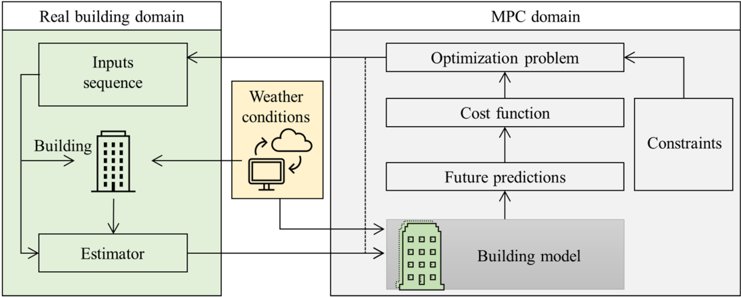
“To enhance HVAC system performance and design, energy modeling and model predictive control (MPC) play an imperative role in the e ffi cient design and operation of HVAC systems at every decision step [10].”
Bernardello, F., Astolfi, G., Alessio, G., Bari, S., Andreoli, M., & Lovato, R. (2025) · Science and Technology for the Built Environment · doi:10.1080/23744731.2024.2446001 · Cited by 4
An Integrated Bond Graph Methodology for Building Performance Simulation
Merabtine, A. (2025) · Energies · doi:10.3390/en18154168 · Cited by 4
Zakaria, N. F., Sulaiman, M. H., & Mustaffa, Z. (2025) · Journal of Building Engineering · doi:10.1016/j.jobe.2025.112561 · Cited by 5
A dialectical system framework for building occupant energy behavior
Yang, M., Yu, H., & Xu, X. (2025) · Energy and Buildings · doi:10.1016/j.enbuild.2025.115649 · Cited by 4
Shakir, A., Rashed, G. I., He, Y., & Wang, X. (2025) · Processes · doi:10.3390/pr13071985 · Cited by 3
Data-Driven Fault Detection for HVAC Control Systems in Pharmaceutical Manufacturing Workshops
Huang, D., & Yan, W. (2025) · Processes · doi:10.3390/pr13072015 · Cited by 3
Bhattacharya, S., Naqvi, S. A. R., Liu, M., Adetola, V., Munns, S. A., Phalak, K., O’Neill, Z. D., Calfa, C., & Guo, Z. (2025) · Energy and Buildings · doi:10.1016/j.enbuild.2025.116668 · Cited by 3
Edgar, B., Eze, V. H. U., Adam, S. A., Yinka, S., & Erheyovwe, B. P. (2025) · Frontiers in Mechanical Engineering · doi:10.3389/fmech.2025.1696957 · Cited by 4
Liu, Q., Yu, D., Xue, Y., Sun, H., Yang, S., & Han, F. (2026) · Energy and Buildings · doi:10.1016/j.enbuild.2026.117530 · Cited by 6
Cui, D., Mo, Y., Yuan, X., Ye, L., Wang, K., Shen, F., Wang, Y., Yang, C., & Gui, W. (2025) · Journal of Process Control · doi:10.1016/j.jprocont.2025.103542 · Cited by 3
Sabir, S., Rueda, L., Fournier, M., Nagarsheth, S. H., Agbossou, K., Henao, N., & Kélouwani, S. (2024) · IEEE Conference on Technologies for Sustainability · doi:10.1109/sustech60925.2024.10553460 · Cited by 3
“The WBM generally uses physical principles to calculate the energy demand and indoor temperature in a thermal zone [5].”
BackgroundMethodInfluentialHong, S. H., Seo, B., Jeon, H. J., Choi, J. M., Lee, K. H., & Rim, D. (2024) · Journal of Mechanical Science and Technology · doi:10.1007/s12206-024-0739-z · Cited by 3
“Recurrent neural network (RNN) has long-term dependency issues [37], but LSTM solves them relatively easily.”
Self-citationAmoo, C., Eckman, B., & New, J. (2025) · Energy Efficiency · doi:10.1007/s12053-025-10295-4 · Cited by 5
“…and controls and sensors) and combines them with local weather data, fuel type and cost, and runs them through physical/mathematical models that could be based on thermodynamics, or mass and energy balance in order to determine thermal loads, system responses and energy use (Kim et al., 2022).”
Iglesias, F., Massana, J., Burgas, L., Planellas, N., & Colomer, J. (2025) · Applied Sciences · doi:10.3390/app15084291 · Cited by 4
An Advanced Fractional Order Method for Temperature Control
Cajo, R., Zhao, S., Birs, I., Espinoza, V., Fernández, E. J., Plaza, D. A., & Salcan-Reyes, G. (2023) · Fractal and Fractional · doi:10.3390/fractalfract7020172 · Cited by 4
Soni, P., & Subhashini, J. (2023) · Intelligent Automation & Soft Computing · doi:10.32604/iasc.2023.038155 · Cited by 3
Ma, H., Zhang, X., Tong, Y., Hung, Y. M., & Wang, X. (2025) · Carbon Capture Science & Technology · doi:10.1016/j.ccst.2025.100537 · Cited by 2
Tarvainen, S., Hirvijoki, E., & Laukkanen, T. (2026) · Journal of Energy Storage · doi:10.1016/j.est.2026.120509 · Cited by 2
Said, M. A., Abed, A. M., Safarova, L. U., Jumanazarov, D., Khudoynazarov, E., Yadav, B. K., & Khedher, N. B. (2026) · International Journal of Energy Research · doi:10.1155/er/7007403 · Cited by 2
Alotaibi, B. S. (2026) · Energy and Buildings · doi:10.1016/j.enbuild.2026.117268 · Cited by 2
Park, J. K., Yeon, S. H., Kim, C., Yoon, Y., Moon, J. W., & Lee, K. H. (2024) · Energy and Buildings · doi:10.1016/j.enbuild.2024.114958 · Cited by 2
Self-citationLee, J. M., Lee, K. H., Moon, J. W., Lee, S. H., & Hong, T. (2024) · International Journal of Thermophysics · doi:10.1007/s10765-024-03474-5 · Cited by 2
“Building upon the foundation of energy modeling and model predictive control, Kim et al. presented a comprehensive review of current research trends in HVAC systems [10].”
Self-citationMPC-Based HVAC Control System for Energy Efficiency and User Comfort
Woo, H., Park, S., Joo, Y., & Kwon, K. (2024) · International Conference on Information and Communication Technology Convergence (ICTC) · doi:10.1109/ictc62082.2024.10827079 · Cited by 1
“Buildings use up to 40% of global energy consumption and 30% of greenhouse gas emissions, significantly impacting environmental problems[1].”
Simulation-Based Design of Industry-Size Control Systems With Formal Quality Guarantees
Esposito, M., Leva, A., Mancini, T., Picchiami, L., & Tronci, E. (2025) · IEEE Transactions on Industrial Informatics · doi:10.1109/tii.2025.3528556 · Cited by 1
“MPC forecasts the future behavior of the system by means of a model of the controlled plant [18], [19], [20], be this based on first principles [21], [22], on learning techniques [23], [24], or hybrid [25].”
Power-constrained VRF system optimization using symbolic regression for multiple zones environment
Thu, T. T., Kato, K., Zhao, D., Nishikawa, H., Taniguchi, I., & Onoye, T. (2025) · Energy and Buildings · doi:10.1016/j.enbuild.2025.116264 · Cited by 2
Integrated optimization of load and heat exchanger models for improved building energy prediction
Oh, J.-H., Kim, S.-I., & Kim, E.-J. (2025) · Applied Thermal Engineering · doi:10.1016/j.applthermaleng.2025.128686 · Cited by 2
Sharma, S., Nayak, R., Nammi, S., & Prabhakar, A. (2025) · IEEE International Conference on Sustainable Energy and Future Electric Transportation (SEFET) · doi:10.1109/sefet65155.2025.11255611 · Cited by 2
“Ad-ditionally, they achieve faster computations and greater robustness to changing environmental conditions, making them ideal for Internet of Things (IoT) applications and predictive control scenarios [6].”
Hasan, M. M., Dharmasena, P., & Nassif, N. (2025) · Energies · doi:10.3390/en19010082 · Cited by 1
Appau, W. M., Nubi, T., & Muraina, O. A. (2026) · International Journal of Building Pathology and Adaptation · doi:10.1108/ijbpa-10-2025-0284 · Cited by 1
Li, B., Yong, J. C. E., Yu, L. J., Chan, J. Y., Olugu, E. U., & Muhieldeen, M. W. (2026) · Cleaner Engineering and Technology · doi:10.1016/j.clet.2026.101181 · Cited by 2
Xie, L., Shan, K., Tang, H., Li, H., & Wang, S. (2026) · Energy · doi:10.1016/j.energy.2026.141622 · Cited by 1
Gharbi, A., Alshammari, A., Halima, N. B., Mrabet, M., & Noureddine, D. B. (2026) · Energies · doi:10.3390/en19132960 · Cited by 1
Physics-informed RC–MLP modelling for building thermal prediction
Shrestha, S., Kattel, G., Yeom, S., Kim, J., Hong, T., & Choi, J. (2026) · Energy and Buildings · doi:10.1016/j.enbuild.2026.118134 · Cited by 1
HVAC energy consumption prediction based on RJITL deep neural network model
Li, X., Du, L., Yu, X., Wang, K., & Hu, Y. (2024) · Journal of Intelligent & Fuzzy Systems · doi:10.3233/jifs-233544 · Cited by 1
Arpogaus, M., Kempf, R., Baur, T., & Schubert, G. (2025) · Energy and Buildings · doi:10.1016/j.enbuild.2025.115527 · Cited by 2
Mengru, L., Yingjun, R., Qian, F., Hua, M., & Jiacheng, M. (2023) · Building Simulation Conference proceedings · doi:10.26868/25222708.2023.1729 · Cited by 1
“Heating, ventilation, and air conditioning (HVAC) systems play a significant role in building operational energy consumption (Kim, 2022), with refrigeration units alone accounting for around 40% of the total HVAC energy consumption (Saidur, 2011), underscoring the necessity for energy-saving policy…”
BackgroundUrrutia, L. Z., Liventsev, V., Febres, J., & Sterling, R. (2023) · Research Square · doi:10.21203/rs.3.rs-3735947/v1
A qLPV-MPC Control Strategy for Fast Nonlinear Systems with Stability and Feasibility Conditions
Rodriguez-Guevara, D., Favela‐Contreras, A., Beltrán-Carbajal, F., Lozoya, C., Sotelo, D., & Sotelo, C. (2025) · Arabian Journal for Science and Engineering · doi:10.1007/s13369-024-09931-5
“Applica-tionsinchemical,petrochemical,andsmartbuildingsystems, among others, have shown the effectiveness of MPC in these domains [3–12].”
Data-driven Predictive Control of Office Temperatures Based on Multiple Linear Regression Model
Jakšić, M., & Lešić, V. (2024) · Annual Conference of the IEEE Industrial Electronics Society (IECON) · doi:10.1109/iecon55916.2024.10905655
“Numerous case studies have shown significant energy savings while maintaining the thermal comfort for the end user [1].”
An End-to-End Relearning Framework for Building Energy Optimization
Naug, A., Quiñones-Grueiro, M., & Biswas, G. (2025) · Energies · doi:10.3390/en18061408
Hosseini, M. R., Taghikhah, F. R., Elghaish, F., Yiğitcanlar, T., & Oraee, M. (2025) · Elsevier eBooks · doi:10.1016/b978-0-443-29861-5.00006-8
Draou, A., Alrwishdi, E., Alahmadi, S. O., & Ouzzane, M. (2025) · SSRN Electronic Journal · doi:10.2139/ssrn.5247723
Qiu, X., Zhai, Y., Liu, M., & Li, Z. (2025) · Indoor and Built Environment · doi:10.1177/1420326x251371326
“53 Therefore, the data of the short-term operation ( 5 min) was cleaned to ensure the reliability and accuracy of the modelling.”
Igugu, H. O., Laubscher, J., & Gaum, T. (2025) · Buildings · doi:10.3390/buildings15203789
Simulation of HVAC Systems in Commercial Buildings- A Theoretical Approach
Mishra, N., Hati, A. S., & Khadkikar, V. (2025) · IEEE International Conference on Sustainable Energy and Future Electric Transportation (SEFET) · doi:10.1109/sefet65155.2025.11255472
Active and passive solar energy technologies
Jagtap, H. P., Kumar, R., Bewoor, A. K., Sharma, J. P., Gupta, N., Najser, J., & Frantík, J. (2025) · Elsevier eBooks · doi:10.1016/b978-0-443-33771-0.00005-8
Identification of Energy Storage in Distribution Channels
DYCZKOWSKA, J. A., Panek, A., & Chamier-Gliszczyński, N. (2025) · Energies · doi:10.3390/en18184981
Santolamazza, A., & Introna, V. (2025) · IFAC-PapersOnLine · doi:10.1016/j.ifacol.2025.09.340
Puiu, I.-L., Zaharie, D., & Fortiş, T.-F. (2025) · IEEE/ACM International Conference on Big Data Computing, Applications and Technologies (BDCAT) · doi:10.1145/3773276.3774290
“There may be multiple influences on these data, such as external weather conditions, the occupancy level of the building, or even the ventilation schedules [21].”
Hamayat, F., Ahmad, R. F., Ghaban, W., Saeed, F., Ahmad, J. E., Anwar, S. M., & Zubair, S. W. H. (2026) · Building Research & Information · doi:10.1080/09613218.2026.2621314
“The increase in energy demand is predicted to continue at a Compound Annual Growth Rate (CAGR) of 1.0% between 2016 and 2040, according to the IEA World Energy Outlook (WEO) report of 2017 (Elantary, 2025; International Energy Agency, 2017; Kim et al., 2022).”
InfluentialZabadi, H. R. Y., Zemedkun, F. A., Hosamo, H., & Kraniotis, D. (2026) · Frontiers in Built Environment · doi:10.3389/fbuil.2025.1734945
Mudondo, O., Yuan, C., Chengyu, Z., Xueyuan, S., & Wang, Y. (2026) · Buildings · doi:10.3390/buildings16061130
A Digital Twin Workflow for Occupant-Centric Operation in Electrified Buildings
Gómez, N. V., Quant, L., Macías, O., & Romero-Amorrortu, A. (2026) · Lecture notes in civil engineering · doi:10.1007/978-3-032-10546-2_80
Exploring the Integration of Occupants’ Behaviour Data in Digital Twins
Guerra-Santin, O., & Xu, L. (2026) · Lecture notes in civil engineering · doi:10.1007/978-3-032-10546-2_155
Enhancing Building Energy Efficiency and Comfort with AI-Driven Predictive Control for HVAC Systems
Cocchioni, F., Bari, S., Alessio, G., Lovato, R., & Astolfi, G. (2026) · Lecture notes in civil engineering · doi:10.1007/978-3-032-10546-2_73
Seong, N., & 김대웅 (2026) · KIEAE Journal · doi:10.12813/kieae.2026.26.2.093
Design-operation-performance coupling in contemporary HVAC systems: A system-level review
Yilmaz, Y. N., Alvur, E., Cuce, P. M., & Cüce, E. (2026) · Green Technology & Innovation · doi:10.65582/gti.2026.013
Smart Facility Management of Sustainable Buildings Using AI and IoT Technologies
Alawag, A. M., Alaghbari, M. A., El-Kassrawy, Y. A., Mutahar, A. Y., Al-Azazi, S. A., & Baarimah, A. O. (2026) · ASU International Conference in Emerging Technologies for Sustainability and Intelligent Systems (ICETSIS) · doi:10.1109/icetsis68266.2026.11548974
Metadata
- Authors
- Kim, D., Lee, J., Do, S., Mago, P. J., Lee, K. H., & Cho, H.
- Affiliations
- Hanbat National University (KR)
- Korea University (KR)
- Department of Building and Plant Engineering, Hanbat National University, Daejeon 34158, Korea
- West Virginia University (US)
- Mississippi State University (US)
- Corresponding author
- Lee, Kwang Ho
- Cho, Heejin
- Venue
- Energies
- Publisher
- MDPI AG
- Published
- 2022-10-01
- Volume
- 15
- Issue
- 19
- Pages
- 7231
- ISSN
- 1996-1073 (ISSN-L)
- OpenAlex
- W4303700081
- Cited by
- 111
- References
- 169
- Citations by year
- 2026: 30 · 2025: 45 · 2024: 20 · 2023: 15 · 2022: 1
- FWCI
- 8.85
- Type
- journal article
- Language
- en
- Open access
- gold
- doi.org
- Licence
- Locations
- Energies (publishedVersion, cc-by)
- RePEc: Research Papers in Economics (submittedVersion)
- DOAJ (DOAJ: Directory of Open Access Journals) (submittedVersion, cc-by-sa)
- Funders
- National Research Foundation of Korea (NRF) grant funded by the Korean Government (MSIT) (NRF-2021R1F1A1064258, 2019271010015B)
- Korea Institute of Energy Technology Evaluation and Planning (KETEP) grant funded by the Korean Government (MOTIE) (NRF-2021R1F1A1064258, 2019271010015B)
- Topics
- Physical Sciences › Engineering › Building and Construction › Building Energy and Comfort Optimization
- Physical Sciences › Engineering › Electrical and Electronic Engineering › Integrated Energy Systems Optimization
- Physical Sciences › Engineering › Building and Construction › Building energy efficiency and sustainability
- Keywords
- HVAC systems, building energy simulation, model predictive control, HVAC control strategies, building energy consumption, white-box modeling, grey-box modeling, black-box models, carbon emission reduction
About these checks
Registry, retraction, Cites and statistics results are computed, not judged, with one exception: a printed reference that no index lists is read once by a model before it counts as a citation error. Claims are extracted by a model and kept only when their quote appears verbatim in the text; each cited source is then checked, with a model’s help, for whether it says what the claim relies on. Those verdicts can be wrong — read the claim’s quote and the cited source before relying on one.
Statistics and arithmetic are recomputed, not judged.
Confidence bands are shown only for fields calibrated on our annotated test set. None is calibrated yet, so no band is shown.
What counts as a claim ›How we measure confidence ›How we check this ›
Are you an author, or do you see a problem with this page? Request a review
Data sources
Bibliographic data: Semantic Scholar, OpenAlex, Crossref.
Contains information from the Semantic Scholar Academic Graph Datasets, made available under the ODC Attribution License (ODC-BY 1.0).
Semantic Scholar’s data is described in: Kinney, R., et al. (2023). The Semantic Scholar Open Data Platform. arXiv:2301.10140.
