

The DOI matches its Crossref record; 25 of the 26 references it cites were found in a registry or an index, and 1 are not checked yet.
Utilization of Lemon Peel for the Production of Vinegar by a Combination of Alcoholic and Acetic Fermentations
Open accessAbstract
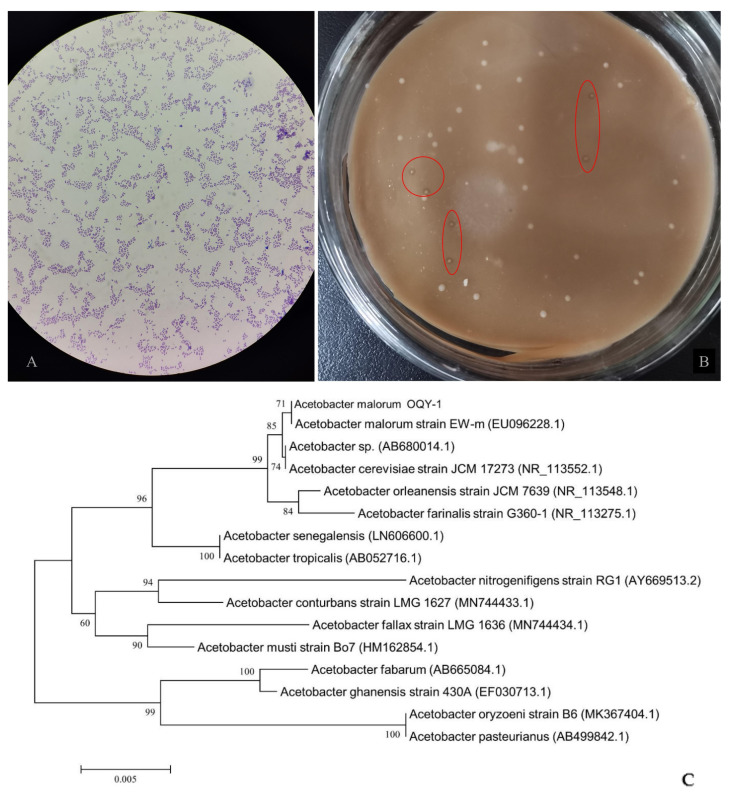
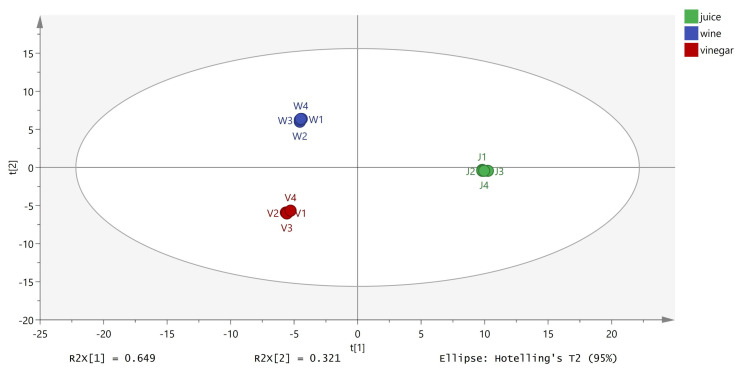
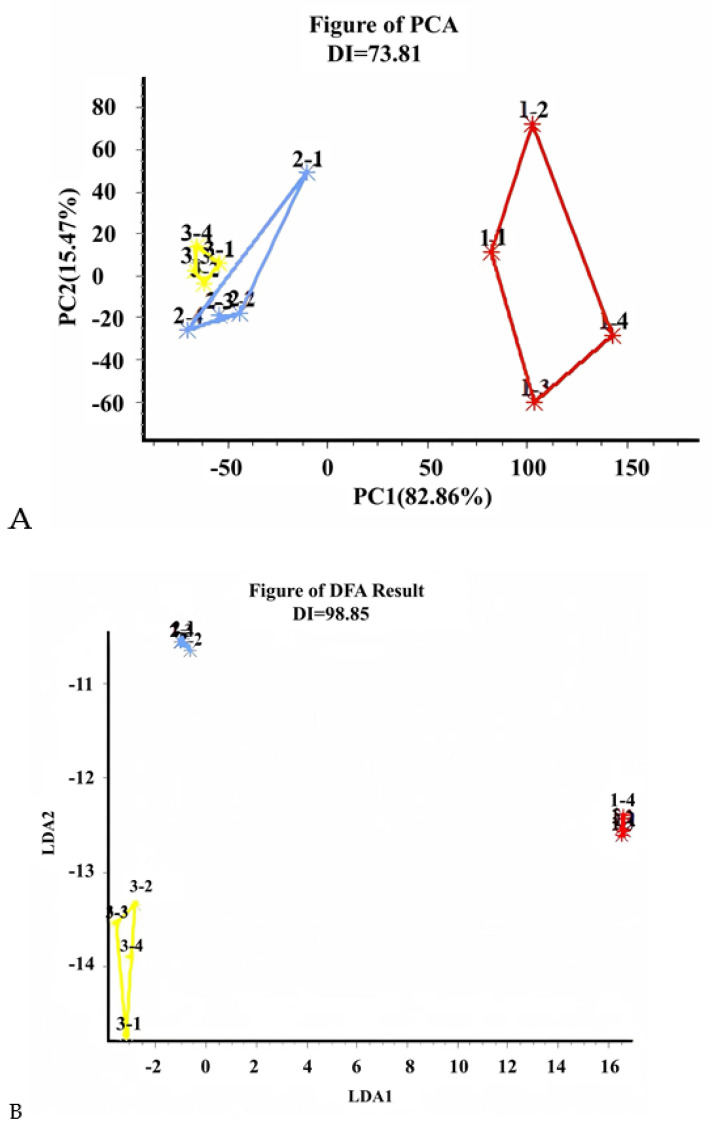
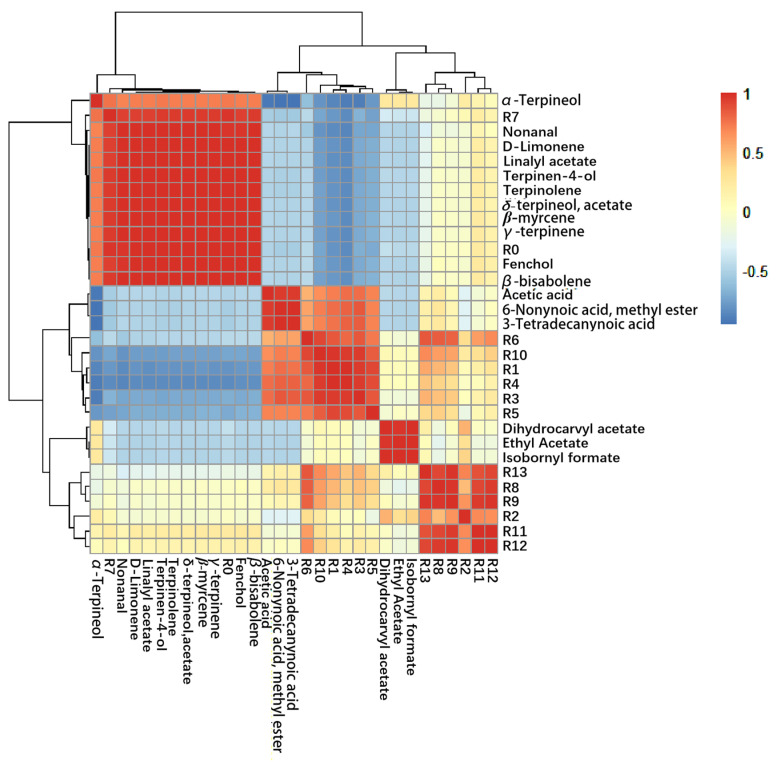
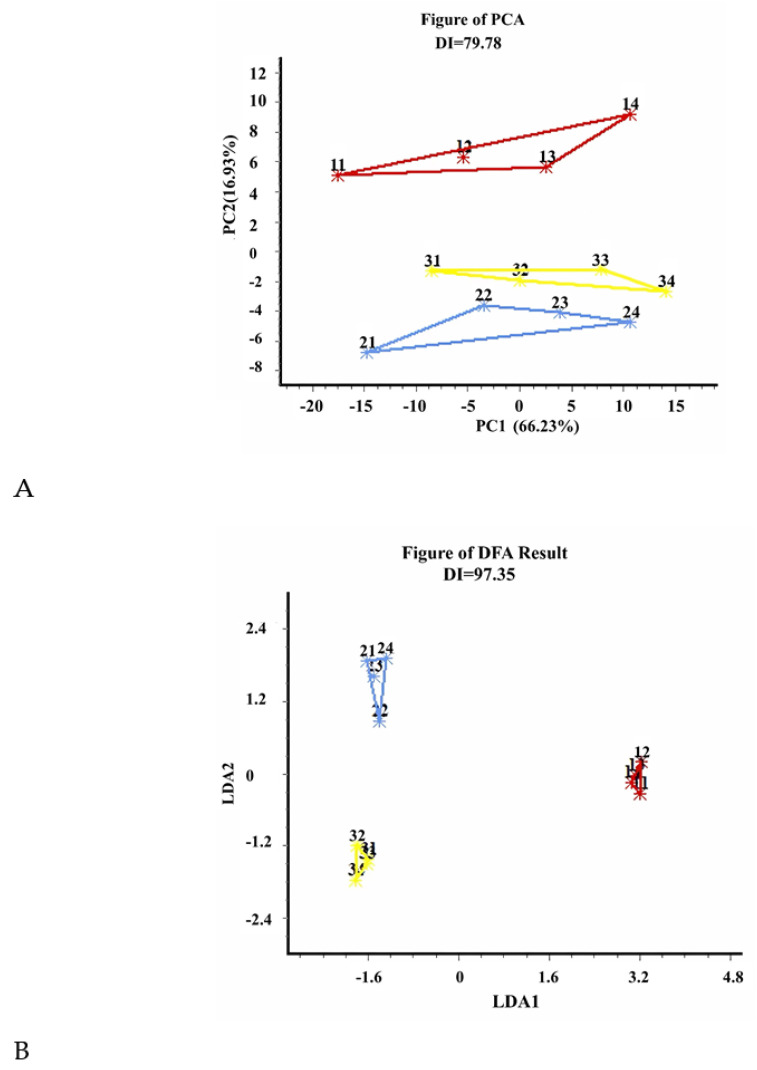
Lemon peel is the major by-product of lemon juice processing and is currently underutilized. In this study, we explored the feasibility of using lemon peel as a raw material for making vinegar. Lemon peel was homogenized, treated with pectinase (30,000 U/g, 0.1%) at 50 °C for 4 h, and then filtered. The obtained lemon peel juice was first subjected to alcoholic fermentation by Saccharomyces cerevisiae var. FX10, and then acetic fermentation by an acid tolerant Acetobacter malorum, OQY-1, which was isolated from the lemon peels. The juice yield of the lemon peel was 62.5%. The alcoholic fermentation yielded a lemon peel wine with an alcoholic content of 5.16%, and the acetic acid fermentation produced a vinegar with a total acid content of 5.04 g/100 mL. A total of 36 volatile compounds were identified from the lemon vinegar, with some compounds such as esters and some alcohols that increased significantly during alcoholic fermentation while alcohols, terpenoids, and some esters decreased significantly during the fermentations. E-nose and E-tongue analyses coupled with principal component and discriminant factor analyses (PCA and DFA) were able to discriminate the samples at different fermentation stages. Overall, this work demonstrates the potential to transform lemon peel into a valuable product, thus reducing the waste of lemon processing and adding value to the industry.
Overview
The claims and statistics of this paper haven’t been checked yet.
Run the check — free, no account needed. It reads the open-access text and checks the sources it cites.
Integrity signals
Registry
Cites
Statistics
Figures
Verification
Claims the paper makes
The claims and statistics of this paper haven’t been checked yet.
Run the check — free, no account needed. It reads the open-access text and checks the sources it cites.
Claims other papers make about this one
Each is checked against this paper’s own text: does it say what the citing paper says it does?
The source backs part of the claim, not all of it — or backs it for a different population, condition or comparison.
In the citing paper
“Researchers have compared the changes in major flavor components during lemon peel vinegar fermentation and found that yeast fermentation produces para-menth-3-en-1-ol and 1-methyl-4-(1-methylethenyl)cyclohexanol, while acetobacter fermentation yields phenylethyl alcohol [33].”
From The Metabolic Pathways of Yeast and Acetic Acid Bacteria During Fruit Vinegar Fermentation and Their Influence on Flavor Development (2025) · cites this paper as [33]
Experimental — accuracy not yet measuredThe source backs part of the claim, not all of it — or backs it for a different population, condition or comparison.
In the citing paper
“These compounds impart unique orange, pine, and lemon aromas but tend to volatilize progressively during fermentation, leading to a reduction in their concentration [25,33].”
From The Metabolic Pathways of Yeast and Acetic Acid Bacteria During Fruit Vinegar Fermentation and Their Influence on Flavor Development (2025) · cites this paper as [33]
Experimental — accuracy not yet measured
Self-check
Percentages, sums and reported differences re-computed from the paper’s own numbers.
The self-check needs the paper’s full text.
Citations
Cites
Acetic Acid Bacteria: Physiology and Carbon Sources Oxidation
Mamlouk, D., & Gullo, M. (2013) · Indian Journal of Microbiology · doi:10.1007/s12088-013-0414-z · Cited by 296
Scherer, R., Rybka, A. C. P., Ballus, C. A., Meinhart, A. D., Filho, J. T., & Godoy, H. T. (2012) · Food Chemistry · doi:10.1016/j.foodchem.2012.03.111 · Cited by 278
Nutrients and Bioactive Components from Vinegar: A Fermented and Functional Food
Xia, T., Zhang, B., Duan, W., Zhang, J., & Wang, M. (2020) · Journal of Functional Foods · doi:10.1016/j.jff.2019.103681 · Cited by 220
Self-citationFresh Squeezed Orange Juice Odor: A Review
Pérez‐Cacho, P. R., & Rouseff, R. L. (2008) · Critical Reviews in Food Science and Nutrition · doi:10.1080/10408390701638902 · Cited by 187
Citrus limon: a source of flavonoids of pharmaceutical interest
del Rı́o, J. A., Fuster, M. D., Gómez, P., Porras, I., Garcı́a-Lidón, A., & Ortuño, A. (2003) · Food Chemistry · doi:10.1016/s0308-8146(03)00272-3 · Cited by 164
Microbial citric acid: Production, properties, application, and future perspectives
Behera, B. C., Mishra, R., & Mohapatra, S. (2021) · Food Frontiers · doi:10.1002/fft2.66 · Cited by 163
Metabolite profiling and volatiles of pineapple wine and vinegar obtained from pineapple waste
Roda, A., Lucini, L., Torchio, F., Dordoni, R., De Faveri, D. M., & Lambri, M. (2017) · Food Chemistry · doi:10.1016/j.foodchem.2017.02.111 · Cited by 146
Cai, W., Tang, F., Guo, Z., Guo, X., Zhang, Q., Zhao, X., Ning, M., & Shan, C. (2020) · Food Chemistry · doi:10.1016/j.foodchem.2020.127330 · Cited by 129
Chou, C., Liu, C., Yang, D., Wu, Y. S., & Chen, Y. (2014) · Food Chemistry · doi:10.1016/j.foodchem.2014.07.035 · Cited by 125
Gil‐Izquierdo, Á., Riquelme, M. T., Porras, I., & Ferreres, F. (2003) · Journal of Agricultural and Food Chemistry · doi:10.1021/jf0304775 · Cited by 118
Chen, L., Ning, F., Zhao, L., Ming, H., Zhang, J., Yu, W., Yi, S., & Luo, L. (2022) · Food Chemistry · doi:10.1016/j.foodchem.2022.134392 · Cited by 102
Gómez, B., Gullón, B., Yáñez, R., Parajó, J. C., & Alonsó, J. L. (2013) · Journal of Agricultural and Food Chemistry · doi:10.1021/jf402559p · Cited by 91
Jiang, H., Zhang, W., Xü, Y., Chen, L., Cao, J., & Jiang, W. (2022) · Trends in Food Science & Technology · doi:10.1016/j.tifs.2022.04.019 · Cited by 88
Li, X., Yang, Y., Zhu, Y., Ben, A., & Qi, J. (2022) · Food Chemistry · doi:10.1016/j.foodchem.2022.132519 · Cited by 86
Cuevas, F. J., Pereira‐Caro, G., Moreno‐Rojas, J. M., Muñoz–Redondo, J. M., & Ruiz‐Moreno, M. J. (2017) · Food Control · doi:10.1016/j.foodcont.2017.06.031 · Cited by 82
Dietary bioactives and essential oils of lemon and lime fruits
Liu, S., Li, S., & Ho, C. (2022) · Food Science and Human Wellness · doi:10.1016/j.fshw.2022.03.001 · Cited by 78
Zhao, R., Xiao, H., Liu, C., Wang, H., Wu, Y., Ben, A., & Wang, Y. (2023) · LWT · doi:10.1016/j.lwt.2023.114510 · Cited by 57
Matteo, A. D., Simeone, G. D. R., Cirillo, A., Rao, M. A., & Vaio, C. D. (2020) · Scientia Horticulturae · doi:10.1016/j.scienta.2020.109741 · Cited by 52
Li, M., Zhang, W., Zhang, M., Yin, Y., Liu, Z., Hu, X., & Yi, J. (2021) · Food Chemistry · doi:10.1016/j.foodchem.2021.131705 · Cited by 43
Lemon juice as an alternative therapy in hypertension in Turkey
Adıbelli, Z., Dilek, M., & Akpolat, T. (2008) · International Journal of Cardiology · doi:10.1016/j.ijcard.2008.03.085 · Cited by 41
Wang, L., Huang, X., Wang, C., Aheto, J. H., Chang, X., Yu, S., Zhang, X., & Wang, Y. (2021) · Journal of Food Process Engineering · doi:10.1111/jfpe.13806 · Cited by 39
Sun, R., Xing, R., Zhang, J., Wei, L., Ge, Y., Deng, T., Zhang, W., & Chen, Y. (2022) · LWT · doi:10.1016/j.lwt.2022.113504 · Cited by 32
Chemical and sensory characteristics of orange based vinegar
Bastante, C. C., Castro, R., Marı́n, R. N., Barroso, C. G., & Durán, E. (2016) · Journal of Food Science and Technology · doi:10.1007/s13197-016-2288-7 · Cited by 32
Jo, Y., Chung, N., Park, S. W., Noh, B. S., Jeong, Y., & Kwon, J. (2016) · Food Science and Biotechnology · doi:10.1007/s10068-016-0206-4 · Cited by 24
Headspace volatolome of peel flours from citrus fruits grown in Brazil
de Lima, Â. G., Cunha, S. C., Martins, Z. E., Soares, A. G., Ferreira, I. M. P. L. V. O., & Farah, A. (2021) · Food Research International · doi:10.1016/j.foodres.2021.110801 · Cited by 21
Metabolic Products of Mixed Culture Fermentation
Pandey, S., Singh, N. K., Yadav, T. C., Bansal, A. K., Thanki, A. A., Yadav, M. K., & Nayak, J. (2020) · Springer eBooks · doi:10.1007/978-981-15-2604-6_5 · Cited by 2
Research works printed but not linked: 1
- Pandey, S., Singh, N.K., Yadav, T.C., Bansal, A.K., Thanki, A., Yadav, M., and Nayak, J. (2020). Engineering of Microbial Biosynthetic Pathways, Springer.
Cited by
Sorted by citations
Salas-Millán, J. Á., & Aguayo, E. (2024) · Foods · doi:10.3390/foods13223680 · Cited by 56
Ge, Y., Wu, Y., Aihaiti, A., Wang, L., Wang, Y., Xing, J., Zhu, M., & Hong, J. (2025) · Microorganisms · doi:10.3390/microorganisms13030477 · Cited by 49
Liu, Z., Wang, P., Liu, C., & Tang, X. (2024) · Molecules · doi:10.3390/molecules29153464 · Cited by 16
Wang, Y., & Qi, H. (2024) · Current Opinion in Food Science · doi:10.1016/j.cofs.2024.101215 · Cited by 15
Cao, L., Sun, H., Wang, Y., Wei, Z., Zhang, J., Wang, Y., Yan, J., Zhu, Y., Cheng, N., He, S., et al. (2025) · BMC Genomics · doi:10.1186/s12864-025-12045-3 · Cited by 11
Metadata
- Authors
- Ou, Q., Zhao, J., Sun, Y., Zhao, Y., & Zhang, B.
- Affiliations
- Shaanxi Normal University (CN)
- Corresponding author
- Zhang, Baoshan
- Venue
- Foods
- Publisher
- MDPI AG
- Published
- 2023-06-26
- Volume
- 12
- Issue
- 13
- Pages
- 2488
- ISSN
- 2304-8158 (ISSN-L)
- PMC
- PMC10340509
- OpenAlex
- W4382278764
- Cited by
- 11
- References
- 25
- Citations by year
- 2026: 4 · 2025: 3 · 2024: 4
- FWCI
- 1.59
- Type
- journal article
- Language
- en
- Open access
- gold
- doi.org
- Licence
- Locations
- Foods (publishedVersion, cc-by)
- PubMed Central (publishedVersion, cc-by)
- PubMed (publishedVersion)
- UNSWorks (University of New South Wales, Sydney, Australia) (submittedVersion, cc-by-nc-nd)
- DOAJ (DOAJ: Directory of Open Access Journals) (submittedVersion, cc-by-sa)
- Funders
- National Key R&D Projects (2019YFC1606702, 2023-ZDLNY-42, 2023-YBNY-195)
- Key R&D Program Projects in Shaanxi Province (2019YFC1606702, 2023-ZDLNY-42, 2023-YBNY-195)
- Topics
- Life Sciences › Agricultural and Biological Sciences › Food Science › Fermentation and Sensory Analysis
- Life Sciences › Biochemistry, Genetics and Molecular Biology › Biotechnology › Biochemical and biochemical processes
- Life Sciences › Biochemistry, Genetics and Molecular Biology › Molecular Biology › Microbial metabolism and enzyme function
- Keywords
- lemon peel, vinegar production, alcoholic fermentation, acetic acid fermentation, Saccharomyces cerevisiae, Acetobacter malorum, pectinase treatment, volatile compounds, terpenoids, esters, food waste valorization, electronic nose, electronic tongue
About these checks
Registry, retraction, Cites and statistics results are computed, not judged, with one exception: a printed reference that no index lists is read once by a model before it counts as a citation error. Claims are extracted by a model and kept only when their quote appears verbatim in the text; each cited source is then checked, with a model’s help, for whether it says what the claim relies on. Those verdicts can be wrong — read the claim’s quote and the cited source before relying on one.
Statistics and arithmetic are recomputed, not judged.
Confidence bands are shown only for fields calibrated on our annotated test set. None is calibrated yet, so no band is shown.
What counts as a claim ›How we measure confidence ›How we check this ›
Are you an author, or do you see a problem with this page? Request a review
