

The DOI matches its Crossref record; 90 of the 91 references it cites were found in a registry or an index.
Food Retail Resilience Pre-, during, and Post-COVID-19: A Bibliometric Analysis and Research Agenda
Open accessAbstract
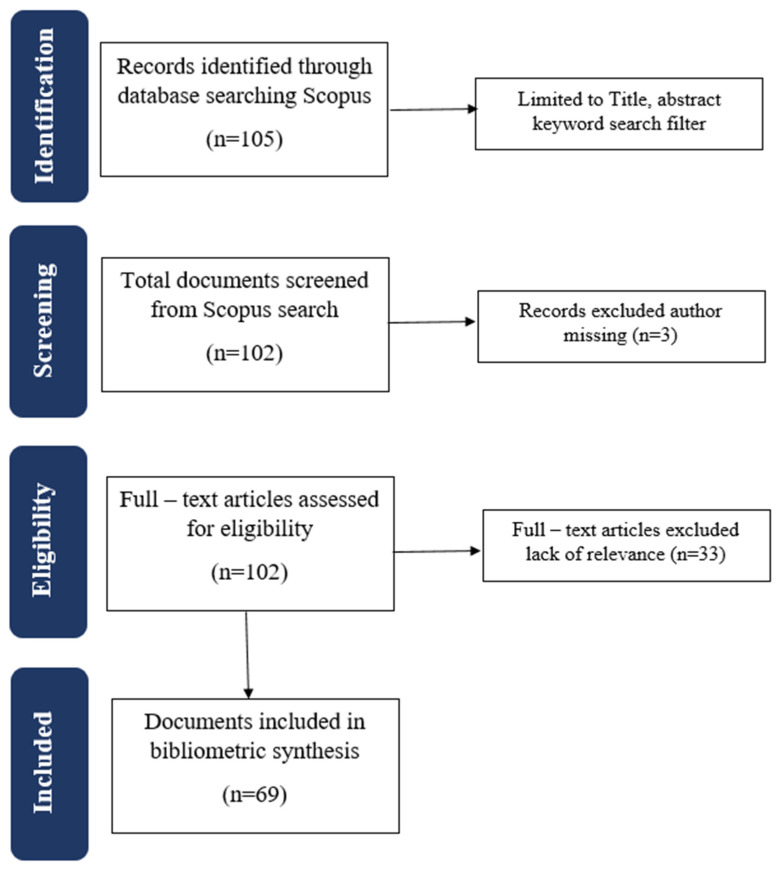
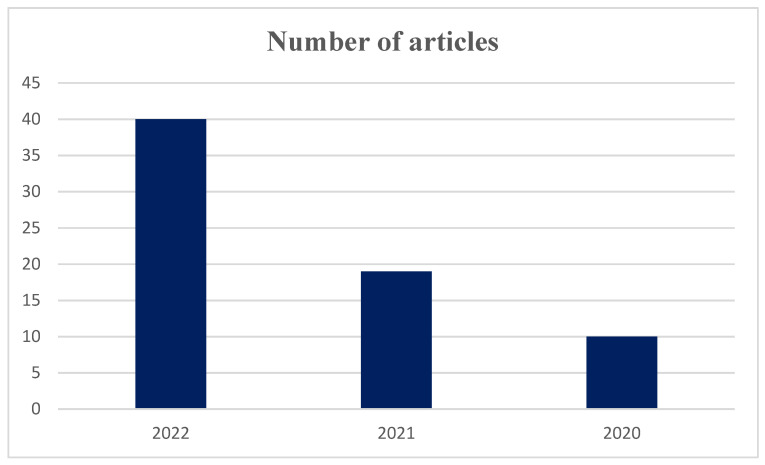
This paper aims to conduct a bibliometric mapping and systematic review of the food retail industry's resilience strategy in the context of COVID-19. Specifically, we aim to identify relevant research gaps in the industry during the pre-, during, and post-pandemic periods and highlight the differences between B2B and B2C sectors. We analyzed articles in the Scopus database from 2019 to 2022 using the PRISMA method for article selection, resulting in a total of 69 articles. We employed a VOS viewer for bibliometric mapping. Our analysis revealed that most studies focused on the impact of COVID-19, with only a few examining the pre- and post-pandemic periods critically. In the B2C context, we identified two major topics: changes in purchasing and consumption behavior, and food waste and safety. In the B2B sector, the two most recurrent subjects were retailers' strategies and supply chain management. This study provides valuable insights for policymakers by exploring industry trends and for scholars by highlighting future research agendas based on the identified topics.
Overview
The claims and statistics of this paper haven’t been checked yet.
Run the check — free, no account needed. It reads the open-access text and checks the sources it cites.
Integrity signals
Registry
Cites
Statistics
Figures
Verification
Claims the paper makes
The claims and statistics of this paper haven’t been checked yet.
Run the check — free, no account needed. It reads the open-access text and checks the sources it cites.
Claims other papers make about this one
Each is checked against this paper’s own text: does it say what the citing paper says it does?
The source backs part of the claim, not all of it — or backs it for a different population, condition or comparison.
In the citing paper
“with heightened health consciousness emerging as a key driver of purchase decisions [1,2,3,4,5,6]”
From Psychological Determinants of Healthy Food Purchase Intention: An Integrative Model Based on Health Consciousness (2025) · cites this paper as [5]
Experimental — accuracy not yet measured
Self-check
Percentages, sums and reported differences re-computed from the paper’s own numbers.
The self-check needs the paper’s full text.
Citations
Cites
Perceived usefulness, perceived ease of use, and user acceptance of information technology
Davis, F. D. (1989) · MIS Quarterly · doi:10.2307/249008 · Cited by 68,483 · cited 1×
“Additionally, the Technology Acceptance Model [20], can serve as a valuable tool for analyzing changes in consumer behaviors.”
MethodFirm Resources and Sustained Competitive Advantage
Barney, J. (1991) · Journal of Management · doi:10.1177/014920639101700108 · Cited by 48,334 · cited 1×
“This theory posits that a firm’s resources and capabilities are key determinants of its performance and competitive advantage [19].”
BackgroundSoftware survey: VOSviewer, a computer program for bibliometric mapping
van Eck, N. J., & Waltman, L. (2010) · Scientometrics · doi:10.1007/s11192-009-0146-3 · Cited by 21,484
Preferred reporting items for systematic reviews and meta-analyses: The PRISMA statement
Moher, D., Liberati, A., Tetzlaff, J., & Altman, D. G. (2010) · International Journal of Surgery · doi:10.1016/j.ijsu.2010.02.007 · Cited by 12,156 · cited 1×
“To achieve this goal, we followed the PRISMA guidelines introduced by Moher et al. [7].”
MethodBurgos, D., & Ivanov, D. (2021) · Transportation Research Part E Logistics and Transportation Review · doi:10.1016/j.tre.2021.102412 · Cited by 490 · cited 2×
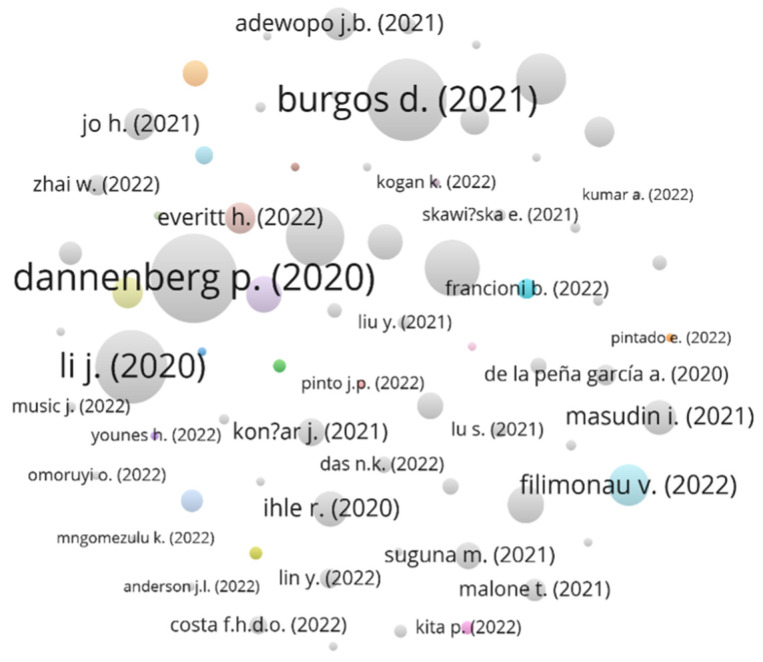
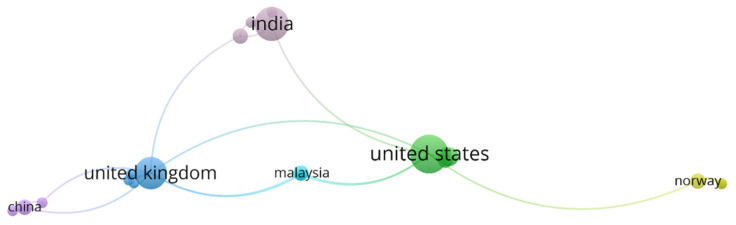
“The German behind is the article by Burgos and Ivanov [11], entitled ‘Food retail supply chain resilience Food Online Retail’ by Dannenberg [10] has received the highest number of citations, with a total of 138 according to SCOPUS data, yet no reciprocal links were found.”
How Technology is Changing Retail
Shankar, V., Kalyanam, K., Setia, P., Golmohammadi, A., Tirunillai, S., Douglass, T., Hennessey, J., Bull, J. S., & Waddoups, R. (2021) · Journal of Retailing · doi:10.1016/j.jretai.2020.10.006 · Cited by 438 · cited 1×
“Studies on purchasing behavior have explored the adoption and usage of new technologies, particularly delivery services, that were necessitated by the pandemic [15,16,53,83–85], as well as identifying factors that have influenced changing consumer behavior [62,68,70,73,86,87].”
BackgroundLăzăroiu, G., Neguriţă, O., Grecu, I., Grecu, G., & Mitran, P. C. (2020) · Frontiers in Psychology · doi:10.3389/fpsyg.2020.00890 · Cited by 432
Agarwal, P., Swami, S., & Malhotra, S. K. (2022) · Journal of Science and Technology Policy Management · doi:10.1108/jstpm-08-2021-0122 · Cited by 328
Digital Transition by COVID‐19 Pandemic? The German Food Online Retail
Dannenberg, P., Fuchs, M., Riedler, T., & Wiedemann, C. (2020) · Tijdschrift voor economische en sociale geografie = Journal of economic and social geography = Revue de geographie economique et humaine = Zeitschrift fur okonomische und soziale Geographie = Revista de geografia economica y social · doi:10.1111/tesg.12453 · Cited by 260 · cited 3×
“Pre-COVID-19 [21–27] During COVID-19 [10–12,14, 16– 18, 21– 24, 27– 77] Post-COVID-19 Post-COVID-19”
BackgroundLăzăroiu, G., Andronie, M., Uţă, C., & Hurloiu, I. (2019) · Frontiers in Public Health · doi:10.3389/fpubh.2019.00340 · Cited by 216
Research works printed but not linked: 1
- (2023, April 19). Scopus Scopus. Available online: https://service.elsevier.com/app/answers/detail/a_id/15534/supporthub/scopus/#tips.
Cited by
Escobar-Farfán, M., García-Salirrosas, E. E., Guerra-Velásquez, M., Veas-González, I., Gómez-Bayona, L., & Gallardo-Canales, R. (2025) · Nutrients · doi:10.3390/nu17071140 · Cited by 36
Adaptation and resilience in retail: Exploring consumer clusters in the new normal
Stanca, L. M., Dabija, D., & Câmpian, V. (2024) · Journal of Retailing and Consumer Services · doi:10.1016/j.jretconser.2024.104112 · Cited by 31
Self-citationThe Use of Digital Channels in Omni-Channel Retail—An Empirical Study
Nagy, I. D., Dabija, D., Cramarenco, R. E., & Burcă-Voicu, M. I. (2024) · Journal of theoretical and applied electronic commerce research · doi:10.3390/jtaer19020042 · Cited by 31
Self-citationJi, C., Sheng, R., Wu, H., Zhou, Z., Yan, X., Dong, L., & Li, C.-H. (2024) · The International Journal of Advanced Manufacturing Technology · doi:10.1007/s00170-024-14793-0 · Cited by 17
Mohamad, A. (2024) · Journal of Islamic Accounting and Business Research · doi:10.1108/jiabr-11-2023-0373 · Cited by 11
Pilvere, A., Pilvere, I., Proškina, L., Ceriņa, S., & Nipers, A. (2025) · Emerging Science Journal · doi:10.28991/esj-2025-09-01-05 · Cited by 6
“…begun to increasingly use online delivery services and the leading retail players have been able to deliver goods through their delivery services or third-party on-demand courier companies, consumers’ buying power has decreased and they have tried to save and plan their daily purchases [4, 18-20].”
Unveiling the Impacts of Food Security on Community Health: A Scoping Review
Tohit, N. F. M., Ya, R. M., & Haque, M. (2025) · Bangladesh Journal of Medical Science · doi:10.3329/bjms.v24i2.81524 · Cited by 3
“The COVID-19 pandemic has further highlighted the importance of having robust and flexible food systems to ensure food availability and prevent price inflation around the globe, including in Malaysia 80-83 .”
Fathy, E. A., Elgammal, I., Fayyad, S., & Fouad, A. M. (2026) · Journal of Hospitality and Tourism Insights · doi:10.1108/jhti-03-2025-0354 · Cited by 1
Becheș, P.-D., Mititean, P., Anghel, L., & Catrina, M. (2025) · Proceedings of the International Conference on Business Excellence · doi:10.2478/picbe-2025-0238 · Cited by 1
“The approach enables thorough investigation into literature, giving a complete assessment of bibliographic data (Pop et al. 2024, Catrina and Ghigiu, 2024).”
Creţu, R. F., Banta, V.-C., Negescu, M. D. O., Anica-Popa, A., & Crecana, C. D. (2025) · Amfiteatru Economic · doi:10.24818/ea/2025/69/486 · Cited by 1
“Topics such as organic food, food waste, sustainable development and food security, purchasing or consumption conduct (Pop et al., 2024), organic products, the effect of a sustainable diet on the food chain, carbon footprint then greenhouse gas emissions from food production and consumption,…”
Kaddouri, M., Chaji, S., Alia, O. A. E., Mrabet, A. E., Melloul, A. A., Al-Zharani, M., Nasr, F. A., & Boutoial, K. (2026) · Frontiers in Sustainable Food Systems · doi:10.3389/fsufs.2026.1761089
Raj, G., Jum'ah, K., Reddy, Y. V. B., Gupta, G., Kannamma, R., & Siri, D. (2026) · 2026 International Conference on Electronic Systems and Intelligent Computing (ICESIC) · doi:10.1109/icesic67389.2026.11496500
“Even more advanced techniques, such as reinforcement learning (RL), typically are applied in solitary applications, such as inventory optimization or dynamic pricing and are seldom combined within a unified framework [9].”
Modeling supply chain risks in Iran’s e-retailing industry in the post-COVID pandemic
Tabaeeian, R. A., Ziaeian, M., & Hajrahimi, B. (2026) · Supply Chain Forum: an International Journal · doi:10.1080/16258312.2026.2635333
Technology-based marketing strategies for retail growth and competitive positioning
Fronda, J. G. (2025) · International Journal of ADVANCED AND APPLIED SCIENCES · doi:10.21833/ijaas.2025.11.024
Metadata
- Authors
- Pop, R.-A., Dabija, D.-C., & Pocol, C. B.
- Affiliations
- Babeș-Bolyai University (RO)
- University of Agricultural Sciences and Veterinary Medicine of Cluj-Napoca (RO)
- Corresponding author
- Dabija, Dan-Cristian
- Pocol, Cristina Bianca
- Venue
- Foods
- Publisher
- MDPI AG
- Published
- 2024-01-13
- Volume
- 13
- Issue
- 2
- Pages
- 257
- ISSN
- 2304-8158 (ISSN-L)
- PMC
- PMC10815137
- OpenAlex
- W4390879978
- Cited by
- 12
- References
- 91
- Citations by year
- 2026: 4 · 2025: 3 · 2024: 5
- FWCI
- 1.32
- Type
- journal article
- Language
- en
- Open access
- gold
- doi.org
- Licence
- Locations
- Foods (publishedVersion, cc-by)
- PubMed Central (publishedVersion, cc-by)
- PubMed (publishedVersion)
- DOAJ (DOAJ: Directory of Open Access Journals) (submittedVersion, cc-by-sa)
- Funders
- CNCS-UEFISCDI (PNIII-RU-TE-2021-0795)
- Topics
- Social Sciences › Economics, Econometrics and Finance › Economics and Econometrics › COVID-19 Pandemic Impacts
- Social Sciences › Business, Management and Accounting › Strategy and Management › Supply Chain Resilience and Risk Management
- Social Sciences › Business, Management and Accounting › Marketing › Consumer Retail Behavior Studies
- Keywords
- food retail, business resilience, COVID-19 pandemic, consumer purchasing behavior, food waste, food safety, supply chain management, retail strategy, research gaps
About these checks
Registry, retraction, Cites and statistics results are computed, not judged, with one exception: a printed reference that no index lists is read once by a model before it counts as a citation error. Claims are extracted by a model and kept only when their quote appears verbatim in the text; each cited source is then checked, with a model’s help, for whether it says what the claim relies on. Those verdicts can be wrong — read the claim’s quote and the cited source before relying on one.
Statistics and arithmetic are recomputed, not judged.
Confidence bands are shown only for fields calibrated on our annotated test set. None is calibrated yet, so no band is shown.
What counts as a claim ›How we measure confidence ›How we check this ›
Are you an author, or do you see a problem with this page? Request a review
Data sources
Bibliographic data: Semantic Scholar, OpenAlex, Crossref.
Contains information from the Semantic Scholar Academic Graph Datasets, made available under the ODC Attribution License (ODC-BY 1.0).
Semantic Scholar’s data is described in: Kinney, R., et al. (2023). The Semantic Scholar Open Data Platform. arXiv:2301.10140.
