

The DOI matches its Crossref record.
Effects of Dill (Anethum graveolens) Essential Oil and Lipid Extracts as Novel Antioxidants and Antimicrobial Agents on the Quality of Beef Burger
Abstract
Dill (Anethum graveolens L.) essential oil (DEO) obtained by hydrodistillation (HD) and lipid extracts (DSE1 and DSE2) obtained by supercritical CO2 extraction (SFE) were used as potential antioxidants and antimicrobial agents in beef burgers at two different concentrations (0.075 and 0.15 µL/g). The chemical profile of the lipid extracts and their in vitro antimicrobial activity against the common pathogens E. coli and L. monocytogenes (MIC and MBC) were determined. The quality and shelf life of the burgers were monitored through (lipid oxidation—TBARS test; protein oxidation—thiol group content and selected biogenic amine content) and microbiological quality (Enterobacteriaceae—EB, aerobic mesophilic bacteria—TAMB, lactic acid bacteria—LAB). Dill lipid extracts (DEO and DSE1) significantly (p < 0.05) reduced lipid oxidation and protein oxidation in beef burgers, while the lipid extract (DSE2) showed pro-oxidative effects. The strongest antimicrobial potential against EB was found in SFE1150 (1.15 log cfu/g). Putrescine, cadaverine, histamine, and tyramine were not detected in any of the analyzed samples during the storage period, while the total content of biogenic amines ranged from 21.4 mg/kg to 285 mg/kg. Generally, it can be concluded that dill essential oil (DEO) and extract DSE1 can be used as novel natural additives in minced-meat products.
Overview
The claims and statistics of this paper haven’t been checked yet.
Run the check — free, no account needed. It reads the open-access text and checks the sources it cites.
Integrity signals
Registry
Cites
Statistics
Figures
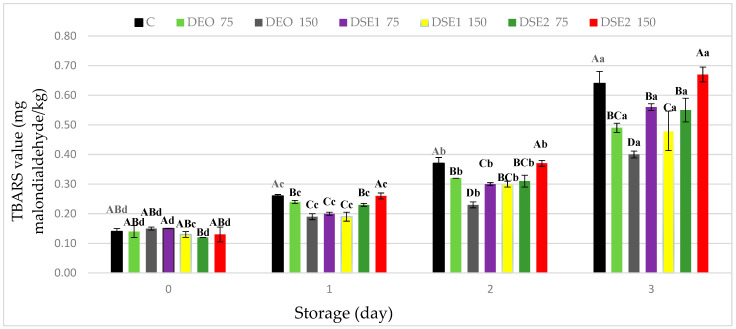
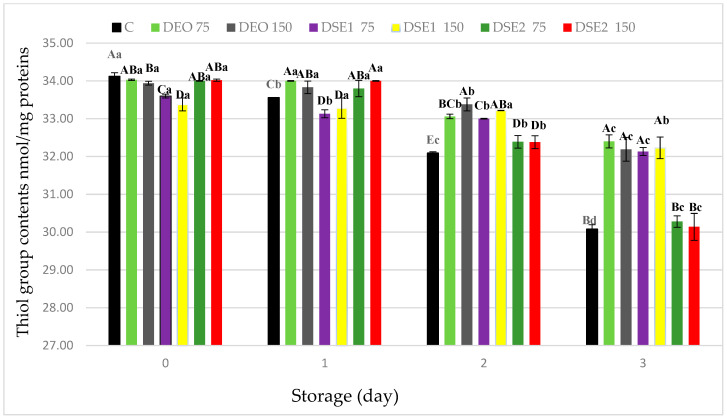
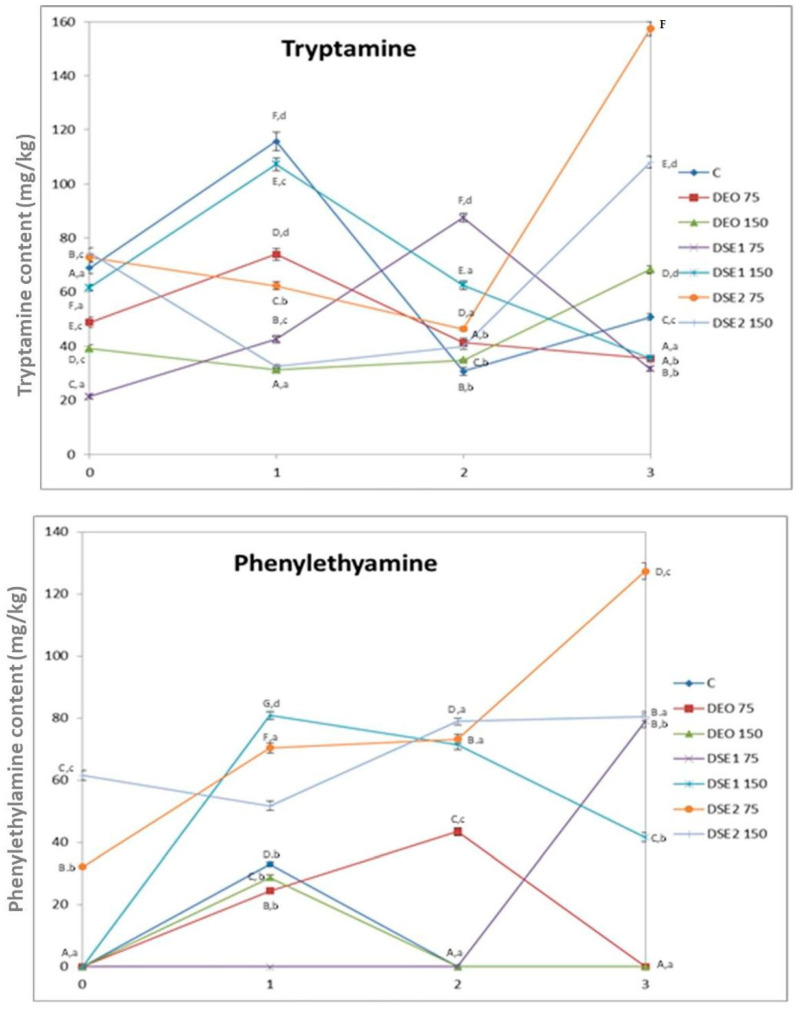
Verification
Claims the paper makes
The claims and statistics of this paper haven’t been checked yet.
Run the check — free, no account needed. It reads the open-access text and checks the sources it cites.
Claims other papers make about this one
Each is checked against this paper’s own text: does it say what the citing paper says it does?
In the citing paper
“The utilization of BHT is attributed to its potent antioxidant properties and antimicrobial effects [8].”
From Preservative Potential of Anethum graveolens Essential Oil on Fish Fillet Quality and Shelf Life During Refrigerated Storage (2025) · cites this paper as [8]
In the citing paper
“Nevertheless, it demonstrated a slightly higher antimicrobial potential on E. coli at 0.098 mg/mL than the value reported by Mujović et al. (2024) [8], who demonstrated that the MIC of DEO for E. coli was 28.41 µL/mL.”
From Preservative Potential of Anethum graveolens Essential Oil on Fish Fillet Quality and Shelf Life During Refrigerated Storage (2025) · cites this paper as Mujović et al. (2024) [8]
In the citing paper
“Previous research indicated that while DEO exhibits initial antimicrobial and antioxidant effects, its efficacy diminished with extended storage, leading to quality degradation of fish products [8].”
From Preservative Potential of Anethum graveolens Essential Oil on Fish Fillet Quality and Shelf Life During Refrigerated Storage (2025) · cites this paper as [8]
In the citing paper
“The current principal constituents of DEO are monoterpenes, notably limonene and carvone, which have potent antibacterial effects [8,61,62].”
From Preservative Potential of Anethum graveolens Essential Oil on Fish Fillet Quality and Shelf Life During Refrigerated Storage (2025) · cites this paper as [8]
In the citing paper
“The higher initial pH of DEO-3-treated fish may be attributed to the buffering capacity of certain bioactive compounds in DEO, such as terpenes and phenolic compounds, which can neutralize the acidic metabolites produced during post-mortem changes [8].”
From Preservative Potential of Anethum graveolens Essential Oil on Fish Fillet Quality and Shelf Life During Refrigerated Storage (2025) · cites this paper as [8]
10 more claims about this paper
Create a free account to see every claim other papers make about this one.
Self-check
Percentages, sums and reported differences re-computed from the paper’s own numbers.
The self-check needs the paper’s full text.
Citations
Cites
No references could be resolved yet.
Research works printed but not linked: 57
- Amaral, 2018, Lipid oxidation in meat: Mechanisms and protective factors—A review, Food Sci. Technol., 38, 1, 10.1590/fst.32518 · DOI
- Mujović, M., Šojić, B., Danilović, B., Kocić-Tanackov, S., Ikonić, P., Đurović, S., Milošević, S., Bulut, S., Đorđević, N., and Savanović, J. (2023). Fennel (Foeniculum vulgare) essential oil and supercritical fluid extracts as novel antioxidants and antimicrobial agents in beef burger processing. Food Biosci., 56. · DOI
- 2018, The effect of essential oil and extract from sage (Salvia officinalis L.) herbal dust (food industry by-product) on the oxidative and microbiological stability of fresh pork sausages, LWT, 89, 749, 10.1016/j.lwt.2017.11.055 · DOI
- Morsy, 2021, Quality parameters and oxidative stability of functional beef burgers fortified with microencapsulated cod liver oil, LWT, 142, 110959, 10.1016/j.lwt.2021.110959 · DOI
- Luna, 2022, Grape skin flour obtained from wine processing as an antioxidant in beef burgers, Meat Sci., 194, 108963, 10.1016/j.meatsci.2022.108963 · DOI · Paper page
- 2015, Oxidative damage to poultry: From farm to fork, Poult. Sci., 94, 1368, 10.3382/ps/pev094 · DOI
- Domínguez, R., Pateiro, M., Munekata, P.E.S., Zhang, W., Garcia-Oliveira, P., Carpena, M., Prieto, M.A., Bohrer, B., and Lorenzo, J.M. (2022). Protein Oxidation in Muscle Foods: A Comprehensive Review. Antioxidants, 11. · DOI
- Elhadef, 2020, Effects of Ephedra alata extract on the quality of minced beef meat during refrigerated storage: A chemometric approach, Meat Sci., 170, 108246, 10.1016/j.meatsci.2020.108246 · DOI
- Luciano, 2014, Chemical Composition and Antibacterial Activity of Laurus nobilis Essential Oil towards Foodborne Pathogens and Its Application in Fresh Tuscan Sausage Stored at 7 °C, LWT, 59, 86, 10.1016/j.lwt.2014.05.032 · DOI
- Sirocchi, 2017, Effect of Rosmarinus officinalis L. Essential Oil Combined with Different Packaging Conditions to Extend the Shelf Life of Refrigerated Beef Meat, Food Chem., 221, 1069, 10.1016/j.foodchem.2016.11.054 · DOI
- Schirone, M., Esposito, L., D’onofrio, F., Visciano, P., Martuscelli, M., Mastrocola, D., and Paparella, A. (2022). Biogenic Amines in Meat and Meat Products: A Review of the Science and Future Perspectives. Foods, 11. · DOI
- 2023, Effect of different ripening conditions on amino acids and biogenic amines evolution in Sjenički sudžuk, J. Food Compos. Anal., 115, 105009, 10.1016/j.jfca.2022.105009 · DOI
- 2021, Application of sage herbal dust essential oils and supercritical fluid extract for the growth control of Escherichia coli in minced pork during storage, LWT, 141, 110935, 10.1016/j.lwt.2021.110935 · DOI
- Šojić, B., Milošević, S., Savanović, D., Zeković, Z., Tomović, V., and Pavlić, B. (2023). Isolation, Bioactive Potential, and Application of Essential Oils and Terpenoid-Rich Extracts as Effective Antioxidant and Antimicrobial Agents in Meat and Meat Products. Molecules, 28. · DOI
- 2019, Coriander essential oil as natural food additive improves quality and safety of cooked pork sausages with different nitrite levels, Meat Sci., 157, 107879, 10.1016/j.meatsci.2019.107879 · DOI
- Torbica, 2020, Tomato pomace extract and organic peppermint essential oil as effective sodium nitrite replacement in cooked pork sausages, Food Chem., 330, 127202, 10.1016/j.foodchem.2020.127202 · DOI
- Najaran, Z.T., Hassanzadeh, M.K., Nasery, M., and Emami, S.A. (2015). Essential Oils in Food Preservation, Flavor and Safety, Elsevier.
- Hajji, 2020, A water-soluble polysaccharide from Anethum graveolens seeds: Structural characterization, antioxidant activity and potential use as meat preservative, Int. J. Biol. Macromol., 167, 516, 10.1016/j.ijbiomac.2020.12.006 · DOI
- Choi, 2021, Anethum Sowa Roxb. Ex Fleming: A Review on Traditional Uses, Phytochemistry, Pharmacological and Toxicological Activities, J. Ethnopharmacol., 280, 113967, 10.1016/j.jep.2021.113967 · DOI
- Behbahani, 2016, Use of Plantago major seed mucilage as a novel edible coating incorporated with Anethum graveolens essential oil on shelf life extension of beef in refrigerated storage, Int. J. Biol. Macromol., 94, 515, 10.1016/j.ijbiomac.2016.10.055 · DOI
- 2015, Isolation of coriander (Coriandrum sativum L.) essential oil by green extractions versus traditional techniques, J. Supercrit. Fluids, 99, 23, 10.1016/j.supflu.2015.01.029 · DOI
- Burger, P., Plainfossé, H., Brochet, X., Chemat, F., and Fernandez, X. (2019). Extraction of Natural Fragrance Ingredients: History Overview and Future Trends. Chem. Biodivers., 16. · DOI
- Novakovic, S., Djekic, I., Klaus, A., Vunduk, J., Djordjevic, V., Tomović, V., Šojić, B., Kocić-Tanackov, S., Lorenzo, J.M., and Barba, F.J. (2019). The Effect of Cantharellus cibarius Addition on Quality Characteristics of Frankfurter during Refrigerated Storage. Foods, 8. · DOI
- Essien, 2020, Recent advances in subcritical water and supercritical carbon dioxide extraction of bioactive compounds from plant materials, Trends Food Sci. Technol., 97, 156, 10.1016/j.tifs.2020.01.014 · DOI
- Gladikostić, N., Ikonić, B., Teslić, N., Zeković, Z., Božović, D., Putnik, P., Kovačević, D.B., and Pavlić, B. (2023). Essential Oils from Apiaceae, Asteraceae, Cupressaceae and Lamiaceae Families Grown in Serbia: Comparative Chemical Profiling with In Vitro Antioxidant Activity. Plants, 12. · DOI
- Šojić, B., Ikonić, P., Kocić-Tanackov, S., Peulić, T., Teslić, N., Županjac, M., Lončarević, I., Zeković, Z., Popović, M., and Vidaković, S. (2023). Antibacterial Activity of Selected Essential Oils against Foodborne Pathogens and Their Application in Fresh Turkey Sausages. Antibiotics, 12. · DOI
- Blagojev, 2017, Antibacterial Activity of Essential Oils against Escherichia coli, Salmonella enterica and Listeria monocytogenes, J. Food Saf. Food Qual., 68, 88
- 2020, Essential oil and supercritical extracts of winter savory (Satureja montana L.) as antioxidants in precooked pork chops during chilled storage, LWT, 134, 110260, 10.1016/j.lwt.2020.110260 · DOI
- Putnik, 2020, Supercritical extracts of wild thyme (Thymus serpyllum L.) by-product as natural antioxidants in ground pork patties, LWT, 130, 109661, 10.1016/j.lwt.2020.109661 · DOI
- Jongberg, 2011, Effect of white grape extract and modified atmosphere packaging on lipid and protein oxidation in chill stored beef patties, Food Chem., 128, 276, 10.1016/j.foodchem.2011.03.015 · DOI
- Eerola, 1993, Liquid Chromatographic Determination of Biogenic Amines in Dry Sausages, J. AOAC Int., 76, 575, 10.1093/jaoac/76.3.575 · DOI
- Yili, 2009, Chemical composition and antimicrobial activity of essential oil from seeds of Anethum graveolens growing in Uzbekistan, Chem. Nat. Compd., 45, 280, 10.1007/s10600-009-9275-4 · DOI
- Singh, 2005, Chemical Constituents Antimicrobial Investigation and Antioxidant Potential of Aethum graveolens Essential Oil and Acetone Extract, J. Food Sci., 70, 15, 10.1111/j.1365-2621.2005.tb07105.x · DOI
- Ma, B., Ban, X., Huang, B., He, J., Tian, J., Zeng, H., Chen, Y., and Wang, Y. (2015). Interference and Mechanism of Dill Seed Essential Oil and Contribution of Carvone and Limonene in Preventing Sclerotinia Rot of Rapeseed. PLoS ONE, 10. · DOI · Paper page
- Garcez, 2020, Evaluation of different extraction techniques in the processing of Anethum graveolens L. seeds for phytochemicals recovery, J. Appl. Res. Med. Aromat. Plants, 18, 100263
- Li, 2021, GC-MS analysis of essential oil from Anethum graveolens L (dill) seeds extracted by supercritical carbon dioxide, Trop. J. Pharm. Res., 18, 1291, 10.4314/tjpr.v18i6.21 · DOI
- Nautiyal, 2011, Extraction of Dill Seed Oil (Anethum sowa) Using Supercritical Carbon Dioxide and Comparison with Hydrodistillation, Ind. Eng. Chem. Res., 50, 5723, 10.1021/ie101852u · DOI
- Babri, 2012, Chemical composition and insecticidal activity of the essential oil of Anethum graveolens L., Sci. Int., 24, 453
- Radulescu, 2010, Chemical Composition of the Volatile Oil from Different Plant Parts of Anethum graveolens L. (Umbelliferae) Cultivated in Romania, Farmacia, 58, 594
- Marques, 2015, Antimicrobial activity of essential oils of Origanum vulgare L. and Origanum majorana L. against Staphylococcus aureus isolated from poultry meat, Ind. Crop. Prod., 77, 444, 10.1016/j.indcrop.2015.09.013 · DOI
- Sharopov, 2013, Composition and Bioactivity of the Essential Oil of Anethum graveolens L. from Tajikistan, Int. J. Med. Aromat. Plants, 3, 125
- Huang, L., Wang, Y., Li, R., Wang, Q., Dong, J., Wang, J., and Lu, S. (2021). Thyme essential oil and sausage diameter effects on biogenic amine formation and microbiological load in smoked horse meat sausage. Food Biosci., 40. · DOI · Paper page
- 2021, The Effects of Hierba Santa (Piper auritum Kunth) on the Inhibition of Lipid Oxidation in Beef Burgers, LWT, 146, 111428, 10.1016/j.lwt.2021.111428 · DOI
- Pogorzelska, 2017, Antioxidant Potential of Haematococcus pluvialis Extract Rich in Astaxanthin on Colour and Oxidative Stability of Raw Ground Pork Meat during Refrigerated Storage, Meat Sci., 135, 54, 10.1016/j.meatsci.2017.09.002 · DOI
- Rosset, 2019, Effect of adding Brosimum gaudichaudii and Pyrostegia venusta hydroalcoholic extracts on the oxidative stability of beef burgers, LWT, 108, 145, 10.1016/j.lwt.2019.03.041 · DOI
- Jin, 2018, Natural curing agents as nitrite alternatives and their effects on the physicochemical, microbiological properties and sensory evaluation of sausages during storage, Meat Sci., 146, 34, 10.1016/j.meatsci.2018.07.032 · DOI
- Sharma, H., Mendiratta, S.K., Agrawal, R.K., Gurunathan, K., Kumar, S., and Singh, T.P. (2017). Use of Various Essential Oils as Bio Preservatives and Their Effect on the Quality of Vacuum Packaged Fresh Chicken Sausages under Frozen Conditions, Elsevier Ltd. · DOI
- Snoussi, 2015, Mentha spicata Essential Oil: Chemical Composition, Antioxidant and Antibacterial Activities against Planktonic and Biofilm Cultures of Vibrio spp. Strains, Molecules, 20, 14402, 10.3390/molecules200814402 · DOI
- Dhifi, 2012, Chemical composition of the essential oil of Mentha spicata L. from tunisia and its biological activities, J. Food Biochem., 37, 362, 10.1111/j.1745-4514.2012.00656.x · DOI
- Liu, 2021, μ-Calpain oxidation and proteolytic changes on myofibrillar proteins from Coregonus peled in vitro, Food Chem., 361, 130100, 10.1016/j.foodchem.2021.130100 · DOI
- Hellwig, 2019, The Chemistry of Protein Oxidation in Food, Angew. Chem. Int. Ed., 58, 16742, 10.1002/anie.201814144 · DOI · Paper page
- Lund, 2011, Protein oxidation in muscle foods: A review, Mol. Nutr. Food Res., 55, 83, 10.1002/mnfr.201000453 · DOI · Paper page
- Rysman, 2016, Protein oxidation and proteolysis during storage and in vitro digestion of pork and beef patties, Food Chem., 209, 177, 10.1016/j.foodchem.2016.04.027 · DOI
- Pateiro, 2018, Essential oils as natural additives to prevent oxidation reactions in meat and meat products: A review, Food Res. Int., 113, 156, 10.1016/j.foodres.2018.07.014 · DOI
- Man, A., Santacroce, L., Jacob, R., Mare, A., and Man, L. (2019). Antimicrobial Activity of Six Essential Oils against a Group of Human Pathogens: A Comparative Study. Pathogens, 8. · DOI
- Bernardes, 2021, Chemical composition, extraction sources and action mechanisms of essential oils: Natural preservative and limitations of use in meat products, Meat Sci., 176, 108463, 10.1016/j.meatsci.2021.108463 · DOI
- Chrysargyris, 2017, Antioxidant and Antibacterial Activities, Mineral and Essential Oil Composition of Spearmint (Mentha spicata L.) Affected by the Potassium Levels, Ind. Crop. Prod., 103, 202, 10.1016/j.indcrop.2017.04.010 · DOI
Cited by
Tayel, A., Hassanin, F. S., Edris, S. N., Hamad, A., & Sabeq, I. I. (2025) · Foods · doi:10.3390/foods14091591 · Cited by 7
Metadata
- Authors
- Mujović, M., Šojić, B., Peulić, T., Kocić-Tanackov, S., Ikonić, P., Božović, D., Teslić, N., Županjac, M., Novaković, S., Jokanović, M., Škaljac, S., & Pavlić, B.
- Venue
- Foods
- Publisher
- MDPI AG
- Published
- 2024-03-15
- Volume
- 13
- Issue
- 6
- Pages
- 896
- ISSN
- 2304-8158
- PMC
- PMC10969687
- Cited by
- 18
- References
- 0
- Language
- en
- Funders
- Science Fund of the Republic of Serbia (7750168, 451-03-65/2024-03/200134)
- Ministry of Education, Science and Technological Development (7750168, 451-03-65/2024-03/200134)
About these checks
Registry, retraction, Cites and statistics results are computed, not judged, with one exception: a printed reference that no index lists is read once by a model before it counts as a citation error. Claims are extracted by a model and kept only when their quote appears verbatim in the text; each cited source is then checked, with a model’s help, for whether it says what the claim relies on. Those verdicts can be wrong — read the claim’s quote and the cited source before relying on one.
Statistics and arithmetic are recomputed, not judged.
Confidence bands are shown only for fields calibrated on our annotated test set. None is calibrated yet, so no band is shown.
What counts as a claim ›How we measure confidence ›How we check this ›
Are you an author, or do you see a problem with this page? Request a review
How to cite
Cite CoChat for the checks on this page, and the paper for its own findings.
- This page
- CoChat. (2026). Citation check: Effects of Dill (Anethum graveolens) Essential Oil and Lipid Extracts as Novel Antioxidants and Antimicrobial Agents on the Quality of Beef Burger. https://app.cochat.ai/papers/10.3390/foods13060896
- The paper
- Mujović, M., Šojić, B., Peulić, T., Kocić-Tanackov, S., Ikonić, P., Božović, D., Teslić, N., Županjac, M., Novaković, S., Jokanović, M., Škaljac, S., & Pavlić, B. (2024). Effects of Dill (Anethum graveolens) Essential Oil and Lipid Extracts as Novel Antioxidants and Antimicrobial Agents on the Quality of Beef Burger. Foods. https://doi.org/10.3390/foods13060896
Data sources
Bibliographic data: Semantic Scholar, OpenAlex, Crossref.
Contains information from the Semantic Scholar Academic Graph Datasets, made available under the ODC Attribution License (ODC-BY 1.0).
Semantic Scholar’s data is described in: Kinney, R., et al. (2023). The Semantic Scholar Open Data Platform. arXiv:2301.10140.
