

Reloading pupils' batteries: impact of green spaces on cognition and wellbeing
Open accessThe DOI matches its Crossref record; 44 of the 44 references it cites were found in a registry or an index.
Abstract
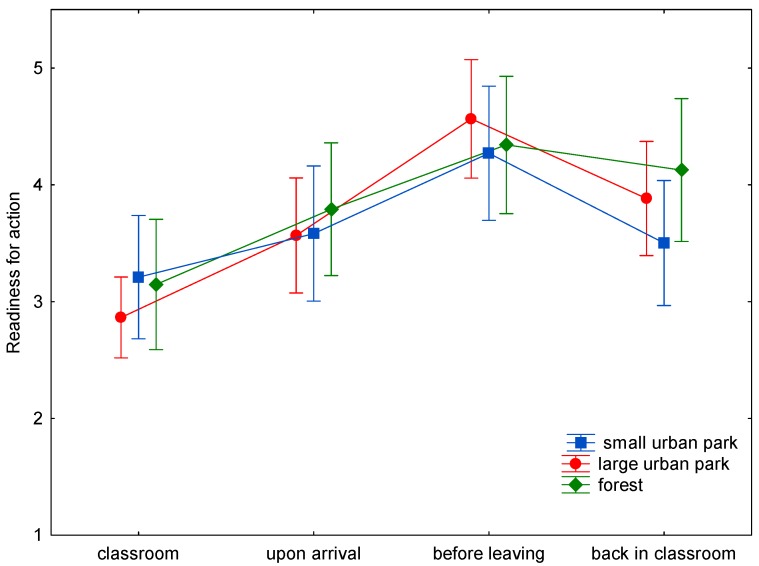
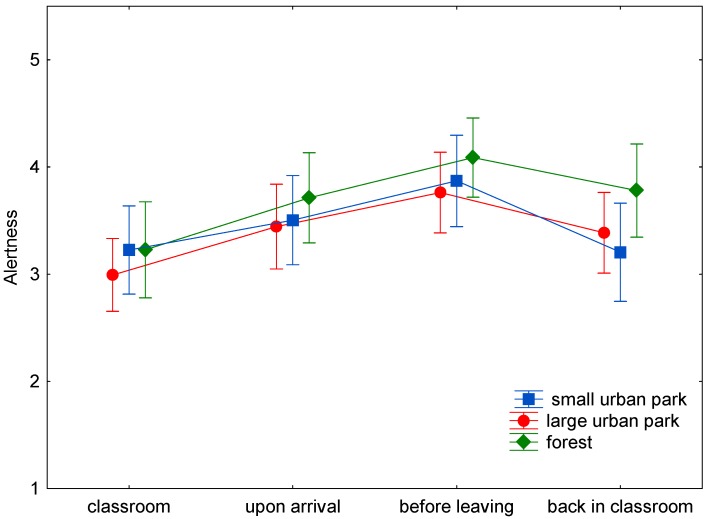
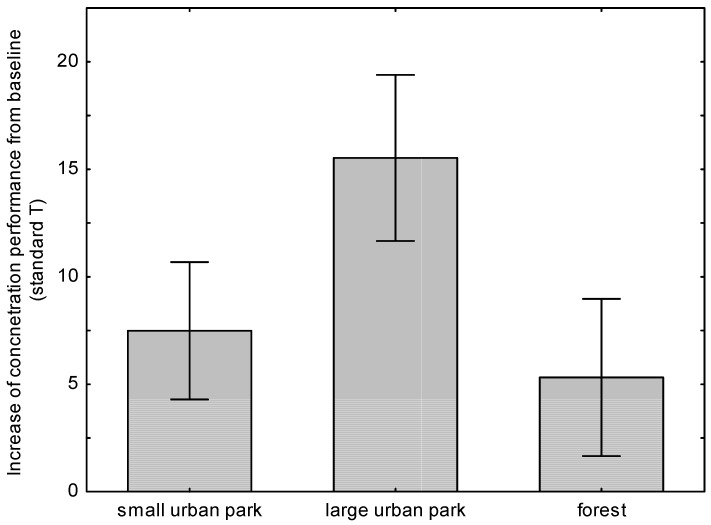
Cognitive functioning and academic performance of pupils depend on regular breaks from classroom work. However, it is unclear which settings during such breaks provide the best environment to restore cognitive performance and promote wellbeing of adolescent pupils. Therefore, we investigated the effects of staying in different urban green spaces during breaks. Sixty-four pupils (16–18 years old) participated in a cross-over experiment. They were placed into one of three settings (small park, larger park, forest) for one hour during a lunch break. Wellbeing was assessed four times (Nitsch scale), and a cognitive test (d2-R Test of Attention) was applied in the classrooms before and after the break. Wellbeing was almost always highest after the stay in the green spaces. However, a sustained effect was only found for the forest. Concentration performance values of the d2-R test were significantly higher after the pupils’ stay in green spaces for all sites. The highest increase of performance was found for the larger park type. In conclusion, this pilot study showed that study breaks in green spaces improved wellbeing and cognitive performance of adolescents. It also found that larger green spaces, either parks or forests, have stronger positive impacts on wellbeing and cognitive performance than small parks.
Overview
The claims and statistics of this paper haven’t been checked yet.
Free: it reads the open-access text and checks the first 5 claims that cite a source we can check. Create a free account to check every claim.
Integrity signals
Registry
Cites
Statistics
Figures
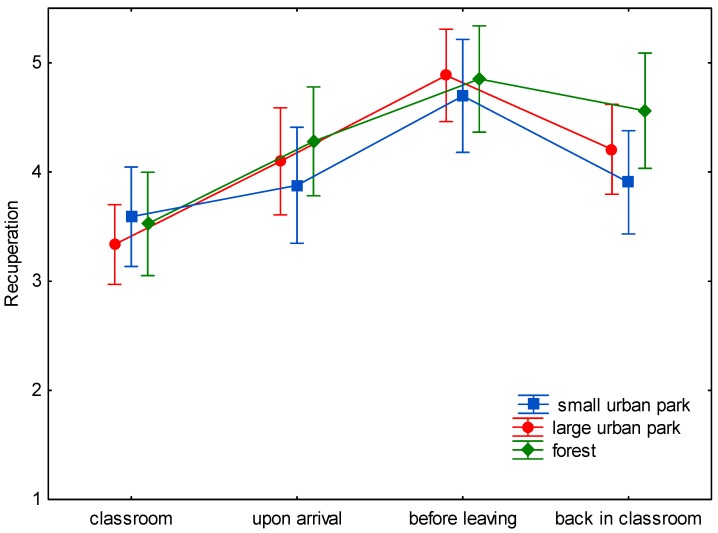
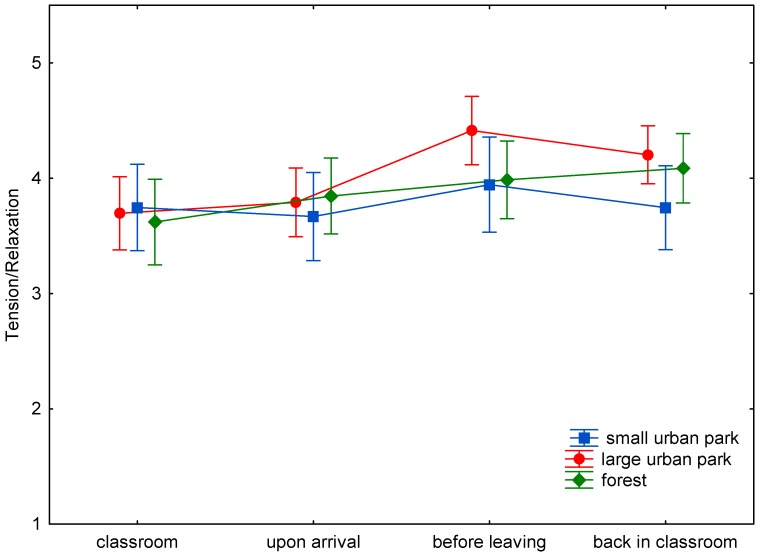
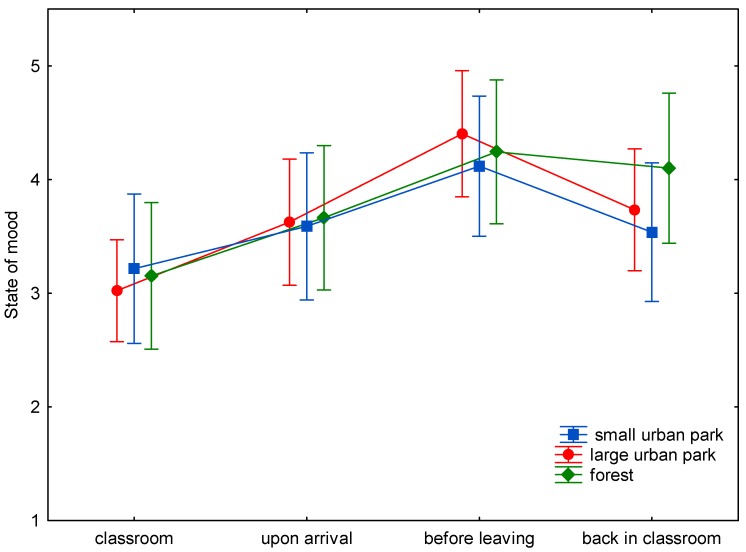
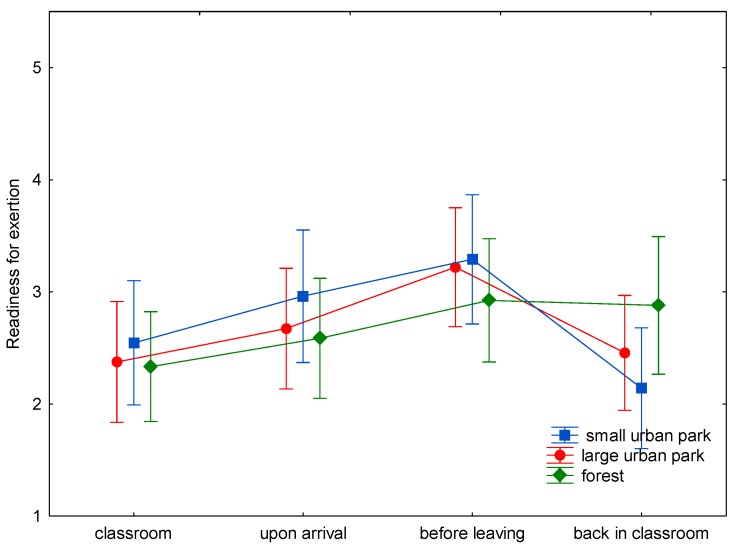
Verification
Claims the paper makes
The claims and statistics of this paper haven’t been checked yet.
Free: it reads the open-access text and checks the first 5 claims that cite a source we can check. Create a free account to check every claim.
Claims other papers make about this one
Each is checked against this paper’s own text: does it say what the citing paper says it does?
The source backs part of the claim, not all of it — or backs it for a different population, condition or comparison.
In the citing paper
“Significant differences between 3 green space types for dimensions recuperation, tension/relaxation, state of mood, readiness for action, and readiness for exertion.”
From Exploring the role of exposure to green and blue spaces in preventing anxiety and depression among young people aged 14–24 years living in urban settings: A systematic review and conceptual framework (2022) · cites this paper as Wallner et al., 2018
Experimental — accuracy not yet measuredThe cited source says what the claim attributes to it.
In the citing paper
“One study reported longer-lasting effects following exposure to a forest than a park (Wallner et al., 2018)”
From Exploring the role of exposure to green and blue spaces in preventing anxiety and depression among young people aged 14–24 years living in urban settings: A systematic review and conceptual framework (2022) · cites this paper as Wallner et al., 2018
Self-check
Percentages, sums and reported differences re-computed from the paper’s own numbers.
The self-check needs the paper’s full text.
Citations
Cites
The restorative benefits of nature: toward an integrative framework
Kaplan, S. (1995) · Journal of Environmental Psychology · doi:10.1016/0272-4944(95)90001-2 · Cited by 6,923 · cited 2×
“An explanation might be that after the stay in the forest and the feeling of “being away” [7] the pupils were not motivated or attuned to perform a monotonous task.”
BackgroundStress recovery during exposure to natural and urban environments
Ulrich, R. S., Simons, R. F., Losito, B. D., Fiorito, E., Miles, M. A., & Zelson, M. (1991) · Journal of Environmental Psychology · doi:10.1016/s0272-4944(05)80184-7 · Cited by 5,990 · cited 5×
“The findings regarding wellbeing at least partly confirm the Stress Reduction Theory, even if effects did not sustain for all sites.”
BackgroundMethodInfluentialThe cognitive benefits of interacting with nature.
Berman, M. G., Jonides, J., & Kaplan, S. (2008) · Psychological Science · doi:10.1111/j.1467-9280.2008.02225.x · Cited by 2,535 · cited 2×
“Positive effects on cognitive performance can also be found after short exposure times: the results of the backwards digit-span test even improved after 12 students had viewed pictures of nature for approximately 10 min [13].”
BackgroundResultTracking restoration in natural and urban field settings
Hartig, T., Evans, G. W., Jamner, L. D., Davis, D. S., & Gärling, T. (2003) · Journal of Environmental Psychology · doi:10.1016/s0272-4944(02)00109-3 · Cited by 2,118
Restorative Effects of Natural Environment Experiences
Hartig, T., Mang, M., & Evans, G. W. (1991) · Environment and Behavior · doi:10.1177/0013916591231001 · Cited by 1,591 · cited 1×
“Attention Restoration Theory proposes that contact with nature can restore people’s directed attention [3,7,8].”
Backgroundde Vries, S., Verheij, R. A., Groenewegen, P. P., & Spreeuwenberg, P. (2003) · Environment and Planning A: Economy and Space · doi:10.1068/a35111 · Cited by 1,258
Gascon, M., Triguero-Mas, M., Martínez, D., Dadvand, P., Forns, J., Plasència, A., & Nieuwenhuijsen, M. (2015) · International Journal of Environmental Research and Public Health · doi:10.3390/ijerph120404354 · Cited by 1,171 · cited 1×
“There is evidence for a causal relationship between surrounding greenness and mental health in adults, but results for children are inadequate [23].”
BackgroundEnvironmental preference and restoration: (How) are they related?
van den Berg, A. E., Koole, S. L., & van der Wulp, N. Y. (2003) · Journal of Environmental Psychology · doi:10.1016/s0272-4944(02)00111-1 · Cited by 882
Berto, R. (2014) · Behavioral Sciences · doi:10.3390/bs4040394 · Cited by 842
Health effects of viewing landscapes – Landscape types in environmental psychology
Velarde, M. D., Fry, G., & Tveit, M. (2007) · Urban Forestry & Urban Greening · doi:10.1016/j.ufug.2007.07.001 · Cited by 788
Research works printed but not linked: 3
- 3. Kaplan, R.; Kaplan, S. The Experience of Nature-A Psychological Perspective ; Cambridge University Press: Cambridge, UK, 1989; ISBN 978-0521341394.
- 26. Owens, P.E.; McKinnon, I. In pursuit of nature: The role of nature in adolescents' lives. J. Dev. Processes 2009 , 4 , 43-58.
- 27. Korpela, K.M. Children's environment. In Handbook of Environmental Psychology ; Bechtel, R.B., Churchman, A., Eds.; Wiley: New York, NY, USA, 2002; pp. 363-373, ISBN 978-0-471-40594-8.
Cited by
Linking public urban green spaces and human well-being: A systematic review
Reyes-Riveros, R., Altamirano, A., De La Barrera, F., Rozas-Vásquez, D., Vieli, L., & Meli, P. (2021) · Urban Forestry & Urban Greening · doi:10.1016/j.ufug.2021.127105 · Cited by 584
The association between green space and adolescents' mental well-being: a systematic review
Zhang, Y., Mavoa, S., Zhao, J., Raphael, D., & Smith, M. (2020) · International Journal of Environmental Research and Public Health · doi:10.3390/ijerph17186640 · Cited by 240
“Three studies explored the effects of different green spaces on adolescents’ mental well-being, including one study that compared a green space to a non-natural control to highlight the effects of green space [32,47,48].”
BackgroundMethodInfluentialVella-Brodrick, D. A., & Gilowska, K. (2022) · Educational Psychology Review · doi:10.1007/s10648-022-09658-5 · Cited by 175
“One study (Wallner et al., 2018) reported a significant positive effect after a 60-min break in a green park or forest relative to a small urban park in high school students in Vienna, but no effect was found in younger affluent Danish children 10–12 years old, after being exposed to a grassed area with trees compared…”
BackgroundNature and Children’s Health: A Systematic Review
Fyfe-Johnson, A. L., Hazlehurst, M. F., Perrins, S. P., Bratman, G. N., Thomas, R., Garrett, K. A., Hafferty, K. R., Cullaz, T. M., Marcuse, E. K., & Tandon, P. S. (2021) · Pediatrics · doi:10.1542/peds.2020-049155 · Cited by 181
Bikomeye, J. C., Balza, J. S., & Beyer, K. M. M. (2021) · International Journal of Environmental Research and Public Health · doi:10.3390/ijerph18020535 · Cited by 188
“Greening schoolyards can help in bridging that health equity gap by providing natural and safe spaces for play opportunities for school children living in urban, low-income neighborhoods, through access to environments that offer opportunities for PA [27,33], reducing stress [6,15,34–36], improving attention restorati…”
BackgroundShort-Term Exposure to Nature and Benefits for Students’ Cognitive Performance: a Review
Masón, L., Ronconi, A., Scrimin, S., & Pazzaglia, F. (2021) · Educational Psychology Review · doi:10.1007/s10648-021-09631-8 · Cited by 179
How do different types and characteristics of green space impact mental health? A scoping review
Beute, F., Marselle, M. R., Olszewska-Guizzo, A., Andreucci, M. B., Lammel, A., Davies, Z. G., Glanville, J., Keune, H., O’Brien, L., Remmen, R., et al. (2023) · People and Nature · doi:10.1002/pan3.10529 · Cited by 182
Lin, W. C., Chen, Q., Jiang, M., Zhang, X., Liu, Z., Tao, J., Wu, L., Xu, S., Kang, Y., & Zeng, Q. (2019) · Landscape and Urban Planning · doi:10.1016/j.landurbplan.2019.103637 · Cited by 144
Foellmer, J., Kistemann, T., & Anthonj, C. (2020) · Wellbeing Space and Society · doi:10.1016/j.wss.2020.100003 · Cited by 141
Bray, I., Reece, R., Sinnett, D., Martin, F., & Hayward, R. (2022) · Environmental Research · doi:10.1016/j.envres.2022.114081 · Cited by 124
“This has been complimented in more recent years by studies on urban parks (Franek, 2013; Wallner et al., 2018; Song et al., 2014, 2015).”
Ronen, T., & Kerret, D. (2020) · International Journal of Environmental Research and Public Health · doi:10.3390/ijerph17196968 · Cited by 124
Lin, W., Chen, Q., Jiang, M., Tao, J., Liu, Z., Zhang, X., Wu, L., Xu, S., Kang, Y., & Zeng, Q. (2020) · Journal of Urban Health · doi:10.1007/s11524-019-00407-8 · Cited by 112
“more physical andmental stress to urban residents [2, 3].”
BackgroundBikomeye, J. C., Rublee, C. S., & Beyer, K. M. M. (2021) · International Journal of Environmental Research and Public Health · doi:10.3390/ijerph18052481 · Cited by 117
“Urban greenspaces offer additional opportunities for students recess in greener and healthier schoolyards which have been associated with children’s positive physical health outcomes including reduced sedentary behaviors [214,215], improved wellbeing and cognitive performance [216], reduced physiological stress [217],…”
BackgroundMacháč, J., Brabec, J., & Arnberger, A. (2022) · Urban forestry & urban greening · doi:10.1016/j.ufug.2022.127695 · Cited by 105
Self-citationBikomeye, J. C., Namin, S., Anyanwu, C., Rublee, C. S., Ferschinger, J., Leinbach, K., Lindquist, P., Hoppe, A., Hoffman, L., Hegarty, J., et al. (2021) · International Journal of Environmental Research and Public Health · doi:10.3390/ijerph18168420 · Cited by 96
Ebenberger, M., & Arnberger, A. (2019) · Urban forestry & urban greening · doi:10.1016/j.ufug.2019.04.011 · Cited by 85
Self-citationSprague, N. L., Bancalari, P., Karim, W., & Siddiq, S. (2022) · Journal of Exposure Science & Environmental Epidemiology · doi:10.1038/s41370-022-00445-6 · Cited by 75
“7.5 Reloading Pupils’ Batteries: Impact of Green Spaces on Cognition and Wellbeing Wallner et al. (2018), Austria Cross-over experiment study 64 (16–18 years) N Inner urban small and heavily used park with a few trees and surrounded by heavily used streets and dense residential areas, a larger park with some tree clum…”
BackgroundMethodInfluentialNguyen, L., & Walters, J. (2024) · Journal of Environmental Psychology · doi:10.1016/j.jenvp.2024.102336 · Cited by 67
Exposure to greenspace and bluespace and cognitive functioning in children – A systematic review
Buczyłowska, D., Zhao, T., Singh, N., Jurczak, A., Siry, A. M., & Markevych, I. (2023) · Environmental Research · doi:10.1016/j.envres.2023.115340 · Cited by 60
A generalized relationship between dose of greenness and mental health response
Jiang, B., Li, J., Gong, P., Webster, C. J., Schumann, G., Liu, X., & Suppakittpaisarn, P. (2025) · Nature Cities · doi:10.1038/s44284-025-00285-z · Cited by 71
Higher surrounding green space is associated with better attention in Flemish adolescents
Bijnens, E. M., Vos, S., Verheyen, V. J., Bruckers, L. M., Covaci, A., Henauw, S. D., Hond, E. D., Loots, I., Nelen, V., Plusquin, M., et al. (2021) · Environment International · doi:10.1016/j.envint.2021.107016 · Cited by 54
“A study in 64 pupils aged 16–18 years shows that breaks in larger green space, either parks or forests, improved wellbeing and cognitive performance of adolescents (Wallner et al., 2018).”
BackgroundRathmann, J., Sacher, P., Volkmann, N., & Mayer, M. (2020) · European Journal of Forest Research · doi:10.1007/s10342-020-01260-0 · Cited by 48
“Forest visitors significantly increase their well-being by several factors (Wallner et al. 2018).”
BackgroundHussain, R. I., Walcher, R., Eder, R., Allex, B., Wallner, P., Hutter, H., Bauer, N., Arnberger, A., Zaller, J. G., & Frank, T. (2019) · Scientific Reports · doi:10.1038/s41598-019-51571-5 · Cited by 41
Self-citationArnberger, A., Eder, R., Allex, B., Ebenberger, M., Hutter, H., Wallner, P., Bauer, N., Zaller, J. G., & Frank, T. (2018) · International Journal of Environmental Research and Public Health · doi:10.3390/ijerph15122647 · Cited by 39
“[35] analysed the wellbeing and cognitive performance of pupils in different urban green spaces and found that this was almost always highest after the stay in the three green space types compared to the classroom situation.”
BackgroundSelf-citationAssessing accessibility and crowding in urban green spaces: A comparative study of approaches
Czesak, B., & Różycka-Czas, R. (2025) · Landscape and Urban Planning · doi:10.1016/j.landurbplan.2025.105301 · Cited by 34
Beneficial Health Outcomes of Natural Green Infrastructure in Cities
McKinney, M. L., & VerBerkmoes, A. (2020) · Current Landscape Ecology Reports · doi:10.1007/s40823-020-00051-y · Cited by 34
A systematic review on the relationship between the built environment and children’s quality of life
Kodali, H., Hitch, L., Dunlap, A. F., Starvaggi, M., Wyka, K., & Huang, T. T. ‐. (2023) · BMC Public Health · doi:10.1186/s12889-023-17388-8 · Cited by 33
“One study combined objectively and subjectively measures of the built environment, [30] and another single study utilized an intervention design exposing the participants to green space in the form of small urban parks, larger urban parks, and forest settings [43].”
BackgroundInfluentialPsychophysiological Responses of College Students to Audio-Visual Forest Trail Landscapes
Zeng, C., Lin, W. C., & Chen, Q. (2023) · Journal of Urban Health · doi:10.1007/s11524-023-00757-4 · Cited by 27
Shim, S. R., Chang, J., Lee, J. H., Byeon, W.-J., Lee, J., & Lee, K. J. (2022) · Forests · doi:10.3390/f13122029 · Cited by 26
“…activities performed in forests—have contributed to physiological and psychological recovery, as these interventions have been found to reduce the levels of depression, anxiety, fatigue, and stress; enhance social cooperation; induce a sense of well-being; and aid in recovering self-esteem [12–17].”
Masón, L., Manzione, L., Ronconi, A., & Pazzaglia, F. (2022) · International Journal of Environmental Research and Public Health · doi:10.3390/ijerph192416823 · Cited by 28
“Therefore, not only in lab attention tasks used in previous research [29,30], but also in usual school tasks, the positive cognitive impact emerges from a short and passive exposure to nature while listening to a teacher lesson.”
BackgroundInfluentialSULLIVAN, W. C., & Li, D. (2021) · Nebraska Symposium on Motivation/The Nebraska symposium on motivation · doi:10.1007/978-3-030-69020-5_2 · Cited by 30
Assessing challenges and opportunities for schools’ access to nature in England
Walker, E., Bormpoudakis, D., & Tzanopoulos, J. (2021) · Urban forestry & urban greening · doi:10.1016/j.ufug.2021.127097 · Cited by 26
Gramkow, M. C., Sidenius, U., Zhang, G., & Stigsdotter, U. K. (2021) · Sustainability · doi:10.3390/su13063249 · Cited by 24
“Increasing numbers of studies indicate the positive health impact of green spaces on various groups of people, for example elderly people [3], teenagers [4], war veterans [5], immigrants [6], and people with eating disorders [7].”
BackgroundLin, W. C., Zeng, C., Nie, W., Nan, X., Shen, S. C., Shi, Y. Y., Yan, H., Yang, F., Wu, R., & Bao, Z. (2022) · Forests · doi:10.3390/f13020335 · Cited by 24
Wu, L., Luo, S., Li, D., Chen, Q., Li, J., & Wen, J. (2023) · Forests · doi:10.3390/f14061099 · Cited by 24
Factors influencing teenagers’ recreational forest use in a densely-populated region in Switzerland
Oppliger, J., Lieberherr, E., & Hegetschweiler, K. T. (2019) · Journal of Outdoor Recreation and Tourism · doi:10.1016/j.jort.2019.100225 · Cited by 22
Masón, L., Zagni, B., Bacchin, F., Frison, C., & Scrimin, S. (2022) · International Journal of Environmental Research and Public Health · doi:10.3390/ijerph192013141 · Cited by 21
“, [14] after short-term contact with greenness during a school day as documented by a very recent systematic review [15].”
BackgroundJin, Z., Wang, J., & Liu, X. (2022) · Forests · doi:10.3390/f13122001 · Cited by 21
“Previous research has found that greenspace exposure may affect emotions [6], stress [7], learning ability [8–10], cognitive function [11,12], attention [13,14], and intelligence [15,16].”
BackgroundDziałek, J., Jarecka-Bidzińska, E., Staniewska, A., & Téoule, F. (2025) · Urban forestry & urban greening · doi:10.1016/j.ufug.2025.128692 · Cited by 19
Students’ Intention of Visiting Urban Green Spaces after the COVID-19 Lockdown in China
Liu, J., Peng, Z., Cai, X., Peng, Y., Li, J., & Feng, T. (2021) · International Journal of Environmental Research and Public Health · doi:10.3390/ijerph18168601 · Cited by 19
“A previous investigation showed that having study breaks in green areas, especially larger ones, improved the well-being and cognitive performance of adolescents [25].”
BackgroundArnberger, A., Schaper, S., Eder, R., & White, M. P. (2024) · Urban forestry & urban greening · doi:10.1016/j.ufug.2024.128312 · Cited by 18
Self-citationLuo, X. H., Tao, M., Lu, J., Lu, L., & He, X. (2023) · BMC Pediatrics · doi:10.1186/s12887-023-03868-8 · Cited by 15
Lan, Y., Liu, Q., & Zhu, Z. (2023) · Forests · doi:10.3390/f14081628 · Cited by 14
“Urban forests offer a wide range of benefits, such as the regulation of air, water, soil, and climate [4], reducing mental stress and depression [5,6], promoting psychological restoration [7,8], enhancing mood and self-esteem [9], and even fostering creativity [10].”
BackgroundGuan, J., Ismail, S. B., Salih, S. A., Mohamed, W. S. W., & Hussain, N. (2025) · Sustainability · doi:10.3390/su17083749 · Cited by 16
“However, most experiments have focused on specific populations, such as university students [83–85], with few addressing older adults.”
Du, Y., & Zhao, R. (2022) · International Journal of Environmental Research and Public Health · doi:10.3390/ijerph19095287 · Cited by 15
“Some studies focus on the impact of urban parks on specific populations such as adolescent and older populations [61,62].”
BackgroundBoddy, J., Slattery, M., Liang, J., Gallagher, H., Smith, A., & Agllias, K. (2020) · The British Journal of Social Work · doi:10.1093/bjsw/bcaa093 · Cited by 13
Urban green space and mental well-being of Aotearoa New Zealand adolescents: A path analysis
Zhang, Y., Zhao, J., Mavoa, S., Ikeda, E., Clark, T. C., Crengle, S. M., & Smith, M. (2022) · Wellbeing Space and Society · doi:10.1016/j.wss.2022.100085 · Cited by 13
“For example, in adults (Akpinar et al., 2016) and adolescents (Wallner et al., 2018), forests were associated with fewer days of mental health complaints and maintaining adolescent mood stability between school classes than other green space types.”
Chrysomalidou, A. S., Takos, I., Spiliotis, I., & Xofis, P. (2025) · Journal of Zoological and Botanical Gardens · doi:10.3390/jzbg7010003 · Cited by 11
Die Rolle von naturnaher Waldwirtschaft und Totholzmanagement für die Walderholung
Sacher, P., & Mayer, M. (2022) · RaumFragen: Stadt - Region - Landschaft · doi:10.1007/978-3-658-33705-6_11 · Cited by 8
Nurturing attention through nature
Singh, N., Baumbach, C., Compa, M. F., Buczyłowska, D., Bratkowski, J., Mysak, Y., Wierzba-Łukaszyk, M., Sitnik‐Warchulska, K., Skotak, K., Lipowska, M., et al. (2024) · Environmental Research · doi:10.1016/j.envres.2024.120024 · Cited by 11
Examining the learning benefits of school lessons in green spaces
Masón, L., Mastromatteo, L. Y., Rocchi, C., & Scrimin, S. (2025) · International Journal of Educational Research · doi:10.1016/j.ijer.2025.102770 · Cited by 8
Schellewald, V., Kleinert, J., & Ellegast, R. P. (2018) · International Journal of Environmental Research and Public Health · doi:10.3390/ijerph15112501 · Cited by 7
“Despite that, short versions of the EZ-scale are used to assess the concept of well-being in other repeated measures study designs [70,71].”
MethodRichmond, G., Hunter, R. H., Tal, T., & Tukurah, G. (2024) · Cultural Studies of Science Education · doi:10.1007/s11422-024-10221-7 · Cited by 8
“We know from research that time in the outdoors (e.g., Wallner, Kundi, Arnberger, Eder, Allex, Weitensfelder and Hutter 2018) and centering instruction on problems of relevance to learners (Hofstein and Kesner 2006; Shasha-Sharf and Tal 2023) can have powerful positive impacts on students’…”
Chrysomalidou, A. S., Takos, I., Spiliotis, I., & Xofis, P. (2024) · Education Sciences · doi:10.3390/educsci14080804 · Cited by 6
Effects of urban green space on human cognition: A systematic search and scoping review
Liu, S. K., Ho, H. C., & Wilson, J. P. (2025) · Urban Climate · doi:10.1016/j.uclim.2025.102372 · Cited by 8
Furnishing a Recreational Forest—Findings from the Hallerwald Case Study
Cervinka, R., Spletzer, M. S., & Haluza, D. (2023) · Forests · doi:10.3390/f14040836 · Cited by 5
School greenness: how does it impact students’ health and what do students expect from it?
Akpınar, A. (2024) · Journal of Environmental Planning and Management · doi:10.1080/09640568.2024.2317895 · Cited by 5
“As previous studies revealed, during class activities, students ’ stress levels increased (Li and Sullivan 2016) and their moods decreased (Wallner et al. 2018).”
Barriers to child wellbeing in Dhaka settlements: Stakeholder perspectives and geospatial analysis
Vostanis, P., Hey, J. V., Ur-Rashid, M., Villena, C. R., Panagi, M., Haffejee, S., & Jahan, F. (2021) · Wellbeing Space and Society · doi:10.1016/j.wss.2021.100043 · Cited by 4
Eling, J., & Cummins, S. (2025) · medRxiv · doi:10.1101/2025.01.09.25320287 · Cited by 6
Won, Y., Kim, J., Kim, Y., & Corley, E. A. (2025) · Environment and Behavior · doi:10.1177/00139165251371416 · Cited by 2
“…health benefits of green spaces are well documented (Bedimo-Rung et al., 2005; Grilli et al., 2020; Reyes-Riveros et al., 2021; Shanahan et al., 2016; van den Berg et al., 2016; Wallner et al., 2018), but green spaces are unevenly distributed across neighborhoods worldwide (Boulton et al., 2018).”
Inequalities in road traffic noise exposure levels in greenspaces in Greater London
Adams, K., Jephcote, C., Fenech, B., Hansell, A., Osborne, T., & Gulliver, J. (2025) · Health & Place · doi:10.1016/j.healthplace.2025.103536 · Cited by 2
Prugger, J., & Kühn, S. (2026) · Journal of Environmental Psychology · doi:10.1016/j.jenvp.2026.103114 · Cited by 3
BioCities as Promotors of Health and Well-being
Ubalde-López, M., Nieuwenhuijsen, M. J., Spano, G., Sanesi, G., Calfapietra, C., Meyer-Grandbastien, A., O’Brien, L., Aalmo, G. O., Salbitano, F., Wilkes‐Allemann, J., et al. (2023) · Future city · doi:10.1007/978-3-031-29466-2_6 · Cited by 2
Guiote, J. M., Vallejo, M. Á., & Más, B. (2023) · IntechOpen eBooks · doi:10.5772/intechopen.1003800 · Cited by 3
Genç, M., & Alkar, Ö. Y. (2025) · Journal of Environmental Psychology · doi:10.1016/j.jenvp.2025.102627 · Cited by 2
Kolodzienski, L., Versace, R., Gramaje, C., Chainay, H., & Plancher, G. (2025) · Applied Cognitive Psychology · doi:10.1002/acp.70102 · Cited by 1
Arnberger, A., Eder, R., Allex, B., Wallner, P., Weitensfelder, L., Kundi, M., & Hutter, H.-P. (2026) · Urban forestry & urban greening · doi:10.1016/j.ufug.2026.129302 · Cited by 1
Self-citationFortmann, L., & Rajbhandari, I. (2026) · PLoS ONE · doi:10.1371/journal.pone.0347301 · Cited by 1
Uma revisão sistemática sobre a relação entre a presença de vegetação e o desempenho acadêmico
da Costa, G. T., & Calixter, A. L. (2021) · Paranoá cadernos de arquitetura e urbanismo · doi:10.18830/issn.1679-0944.n30.2021.17 · Cited by 1
Managing Green Cover in Urban Area Using NoSQL Database
Ariff, S. A. M., Azri, S., Ujang, U., & Choon, T. L. (2024) · Advances in Science, Technology & Innovation/Advances in science, technology & innovation · doi:10.1007/978-3-031-43922-3_117 · Cited by 1
Nature Based Interventions for Human Health and Wellbeing
Moyers-Kinsella, S. I. (2023) · The Research Repository @ WVU (West Virginia University) · doi:10.33915/etd.11951 · Cited by 2
Frank, T., Zaller, J. G., Walcher, R., Hussain, R. I., Brandl, D., Jernej, I., Michel, K., Sachslehner, L., Arnberger, A., Eder, R., et al. (2019) · doi:10.1553/ess-healthy-alpss1 · Cited by 1
“Restoration research has shown that natural environments achieve higher outcomes concerning the improvement of the psychological and physiological state of humans than urban or built environments (e.g. Ulrich et al., 1991; Parsons et al., 1998; Staats et al., 2003; van den Hartig & Staats, 2006; Lee et al. 2009; Berg…”
BackgroundSelf-citationBohner, A., Arnberger, A., Allex, B., Brandl, D., Wanek, G., Hutter, H., Jernej, I., Zaller, J. G., Wessely, J., Michel, K., et al. (2019) · doi:10.1553/ess-healthy-alps
Self-citationParticipating in Tree Planting Improves Mood, Reduces Stress, and Alleviates Anxiety
Gungormus, D. B., & Pérez‐Mármol, J. M. (2025) · Ecopsychology · doi:10.1089/eco.2024.0038 · Cited by 1
“An experimental study examining the effects of green spaces on pupils ’ momentary mood states found a significant positive shift in the momentary mood state after exposure to urban green spaces during class breaks (Wallner et al., 2018).”
Impact on well-being and motivation to physical activity practice by ‘Moving Park’ project in Italy
Xu, Z., Marini, S., Mauro, M., Grigoletto, A., Barone, G., Pinelli, E., Zinno, R., Pilone, P. L., Arduini, S., Vitiello, M., et al. (2025) · Sport Sciences for Health · doi:10.1007/s11332-025-01447-1
“These benefits include maintaining physical well-being, reducing the level of depression and anxiety, increasing self-confidence, and promoting attention [20–23].”
Everyday and nearby natural environments
Wells, N. M., Rahai, R., & Phalen, K. B. (2025) · Elsevier eBooks · doi:10.1016/b978-0-443-23536-8.00009-5 · Cited by 1
Kunen, A., & Santos, G. D. (2025) · DRd - Desenvolvimento Regional em debate · doi:10.24302/drd.v15.5699
BROWN, R. M. A., Lennon, J., Donaldson, C., Anthony, R., Rowe, A., & Moore, G. (2025) · Wellbeing Space and Society · doi:10.1016/j.wss.2025.100333
“…et al. (2018) found no association between the greening of playgrounds and emotional wellbeing of pupils, research elsewhere has indicated that time spent in natural environments can improve pupil mood and feelings of distance from the stress of school (Bai et al., 2022; Wallner et al., 2018).”
Kodali, H., Hitch, L., Dunlap, A. F., Starvaggi, M., Wyka, K., & Huang, T. T. ‐. (2024) · Figshare · doi:10.6084/m9.figshare.24792429
Kodali, H., Hitch, L., Dunlap, A. F., Starvaggi, M., Wyka, K. E., & Huang, T. T. ‐. (2023) · Figshare · doi:10.6084/m9.figshare.24792246
Kodali, H., Hitch, L., Dunlap, A. F., Starvaggi, M., Wyka, K., & Huang, T. T. ‐. (2024) · Figshare · doi:10.6084/m9.figshare.26652210
Kodali, H., Hitch, L., Dunlap, A. F., Starvaggi, M., Wyka, K., & Huang, T. T. ‐. (2024) · Figshare · doi:10.6084/m9.figshare.26652207
Stephenson, H. (2024) · Open Research Exeter (University of Exeter) · Cited by 1
Associations between greenspace exposure and mental health and suicide: Evidence across the lifespan
Bolanis, D. (2024) · doi:10.82308/1480 · Cited by 1
Designing a Master Plan for the Bajo del Tigre Reserve
Nicolella, A. A., Rivera, P. M., Warren, S. B., & Dubuke, T. G. (2019) · Digital WPI
Greening Academic Success: The Impact of Residential and School Green Spaces on Academic Performance
Tamayo, J. M. A., García, G., & Patino, J. E. (2026) · Urban Education · doi:10.1177/00420859261445870
A decade of change: Urban green space users’ shifting perceptions and practices towards biodiversity
Gros, C., Cohen, M., Clauzel, C., Lalanne, C., & Grésillon, É. (2026) · Urban forestry & urban greening · doi:10.1016/j.ufug.2026.129572
The influence of traffic noise on restorative effects in green space
Tan, R., Ou, D., & Lian, Y. (2026) · The Journal of the Acoustical Society of America · doi:10.1121/10.0044531
Jaszczak, A., Pochodyła, E., & Kostecki, J. (2026) · Civil And Environmental Engineering Reports · doi:10.59440/ceer/237559
Metadata
- Authors
- Wallner, P., Kundi, M., Arnberger, A., Eder, R., Allex, B., Weitensfelder, L., & Hutter, H.-P.
- Affiliations
- Medical University of Vienna (AT)
- BOKU University (AT)
- Corresponding author
- Hutter, Hans-Peter
- Venue
- International Journal of Environmental Research and Public Health
- Publisher
- MDPI AG
- Published
- 2018-06-08
- Volume
- 15
- Issue
- 6
- Pages
- 1205
- ISSN
- 1660-4601 (ISSN-L)
- PMC
- PMC6025403
- OpenAlex
- W2805200728
- Cited by
- 85
- References
- 44
- Citations by year
- 2026: 6 · 2025: 16 · 2024: 10 · 2023: 12 · 2022: 12 · 2021: 14 · 2020: 7 · 2019: 6 · 2018: 2
- FWCI
- 3.58
- Type
- journal article
- Language
- en
- Open access
- gold
- dx.doi.org
- Licence
- Locations
- International Journal of Environmental Research and Public Health (publishedVersion, cc-by)
- Europe PMC (PubMed Central) (publishedVersion, cc-by)
- PubMed Central (publishedVersion, cc-by)
- PubMed (publishedVersion)
- RePEc: Research Papers in Economics (submittedVersion)
- Funders
- Federal Ministry of Science, Research and Economy, Austria (SPA 04/062)
- Topics
- Social Sciences › Urban Studies › Urban Green Space and Health
- Physical Sciences › Environmental Science › Management, Monitoring, Policy and Law › Urban Arborization and Environmental Studies
- Social Sciences › Education › Outdoor and Experiential Education
- Keywords
- urban green space, cognitive performance, student well-being, school holidays, attention, forest environment, parks, adolescents, nature exposure
- MeSH terms
- Adolescent Health, Parks, Recreational, Academic Performance, Adolescent, Cognition, Female, Humans, Male, Pilot Projects, Relaxation, Cross-Over Studies, Lunch, Forests
About these checks
Registry, retraction, Cites and statistics results are computed, not judged, with one exception: a printed reference that no index lists is read once by a model before it counts as a citation error. Claims are extracted by a model and kept only when their quote appears verbatim in the text; each cited source is then checked, with a model’s help, for whether it says what the claim relies on. Those verdicts can be wrong — read the claim’s quote and the cited source before relying on one.
Statistics and arithmetic are recomputed, not judged.
Confidence bands are shown only for fields calibrated on our annotated test set. None is calibrated yet, so no band is shown.
What counts as a claim ›How we measure confidence ›How we check this ›
Are you an author, or do you see a problem with this page? Request a review
Data sources
Bibliographic data: Semantic Scholar, OpenAlex, Crossref.
Contains information from the Semantic Scholar Academic Graph Datasets, made available under the ODC Attribution License (ODC-BY 1.0).
Semantic Scholar’s data is described in: Kinney, R., et al. (2023). The Semantic Scholar Open Data Platform. arXiv:2301.10140.
