

Effects of Walking in a Forest on Young Women
Open accessThe DOI matches its Crossref record; 48 of the 48 references it cites were found in a registry or an index.
Abstract
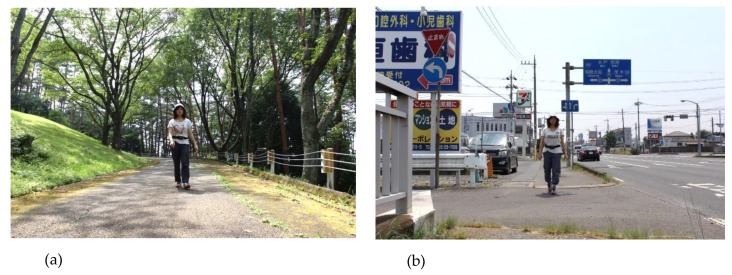
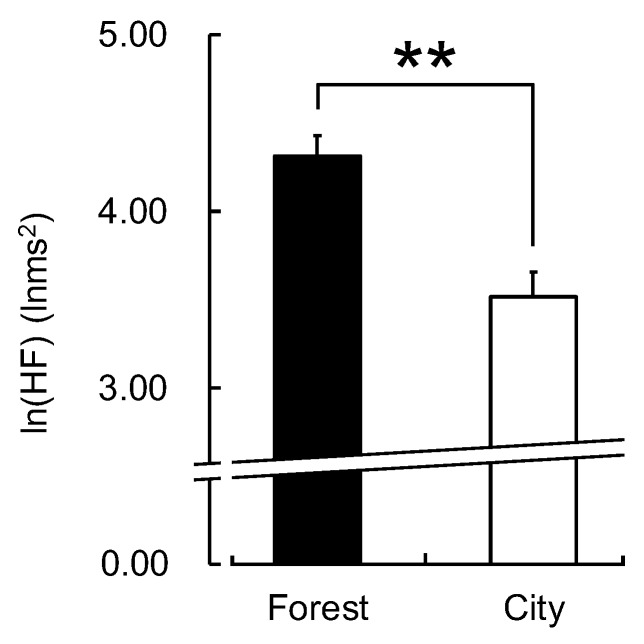
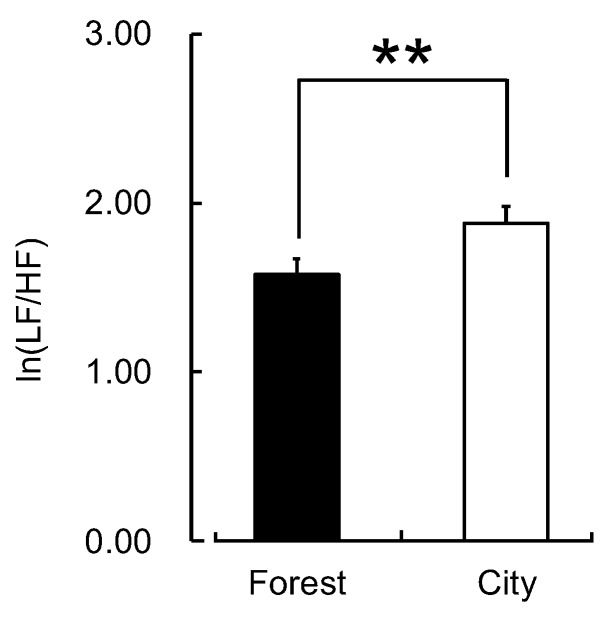
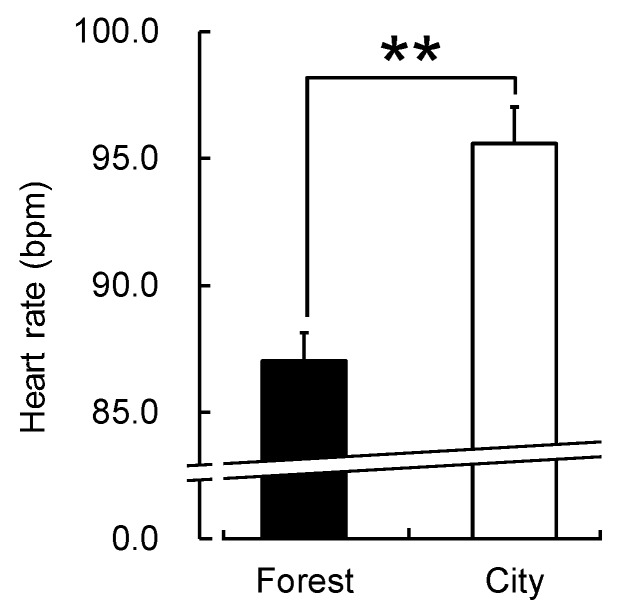
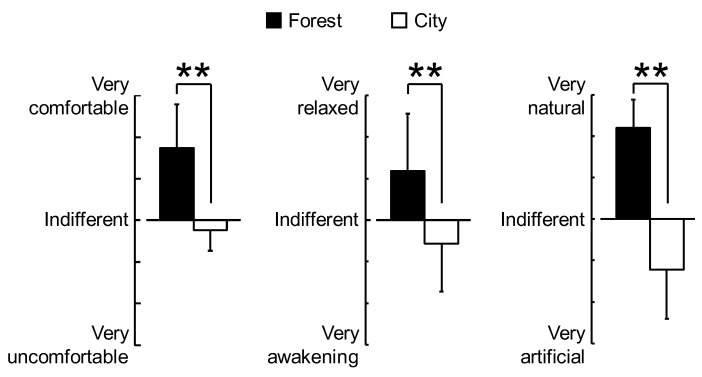
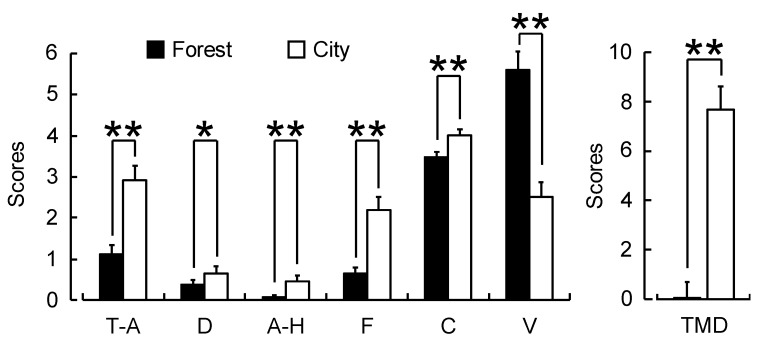
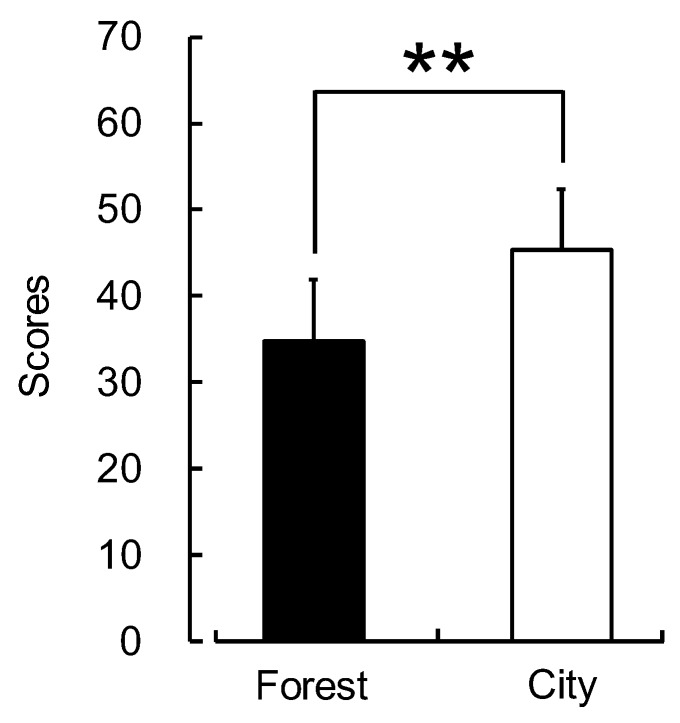
The effects of forest activities on health promotion have received increasing attention. The aim of this study was to evaluate the physiological and psychological effects of brief walks in forests on young women. The experiments were conducted in 6 forests (test) and 6 city areas (control). Overall, 12 participants in each area (60 participants in total, mean age: 21.0 ± 1.3 years) were instructed to walk in a forest and a city area for approximately 15 min; simultaneously, their heart rate variability, heart rate, blood pressure, and pulse rate were measured to quantify their physiological responses to walking. The modified semantic differential method, Profile of Mood States (POMS), and the State–Trait Anxiety Inventory (STAI) were used to determine their psychological responses. Walking in a forest was associated with significantly higher parasympathetic nervous activity and lower sympathetic nervous activity and heart rate. In addition, scores for the comfortable, relaxed, and natural parameters and vigor subscale of POMS were significantly higher, whereas scores for negative feelings, such as tension–anxiety, depression–dejection, anger–hostility, fatigue, and confusion, were significantly lower, as were the total mood disturbance of POMS and the anxiety dimension of the STAI. The subjective evaluations were generally in accordance with the physiological responses. A brief walk in a forest resulted in physiological and psychological relaxation effects in young women.
Overview
The claims and statistics of this paper haven’t been checked yet.
Free: it reads the open-access text and checks the first 5 claims that cite a source we can check. Create a free account to check every claim.
Integrity signals
Registry
Cites
Statistics
Figures
Verification
Claims the paper makes
The claims and statistics of this paper haven’t been checked yet.
Free: it reads the open-access text and checks the first 5 claims that cite a source we can check. Create a free account to check every claim.
Claims other papers make about this one
Each is checked against this paper’s own text: does it say what the citing paper says it does?
In the citing paper
“There is good evidence that a 15-min walk in a forest or park can improve mood and state anxiety compared to an urban environment (Song et al., 2018(Song et al., , 2019)).”
From Exploring the role of exposure to green and blue spaces in preventing anxiety and depression among young people aged 14–24 years living in urban settings: A systematic review and conceptual framework (2022) · cites this paper as Song et al., 2019
In the citing paper
“The one study that included only females reported similar results, suggesting that exposure to forests or parks have similar effects for males and females (Song et al., 2019).”
From Exploring the role of exposure to green and blue spaces in preventing anxiety and depression among young people aged 14–24 years living in urban settings: A systematic review and conceptual framework (2022) · cites this paper as Song et al., 2019
Self-check
Percentages, sums and reported differences re-computed from the paper’s own numbers.
The self-check needs the paper’s full text.
Citations
Cites
Heart Rate Variability: Standards of Measurement, Physiological Interpretation, and Clinical Use
Electrophysiology, T. F. O. T. E. S. O. C. T. N. A. (1996) · Circulation · doi:10.1161/01.cir.93.5.1043 · Cited by 17,159
Heart rate variability: Standards of measurement, physiological interpretation, and clinical use
Malik, M., Bigger, J. T., Camm, A. J., Kleiger, R. E., Malliani, A., Moss, A. J., & Schwartz, P. J. (1996) · European Heart Journal · doi:10.1093/oxfordjournals.eurheartj.a014868 · Cited by 15,289
Pagani, M., Lombardi, F., Guzzetti, S., Rimoldi, O., Furlan, R., Pizzinelli, P., Sandrone, G., Malfatto, G., Dell'Orto, S., & Piccaluga, E. (1986) · Circulation Research · doi:10.1161/01.res.59.2.178 · Cited by 4,130 · cited 1×
“The HF power is considered to be an indicator of parasympathetic nervous activity and the LF/HF power ratio an indicator of sympathetic nervous activity [36,37].”
BackgroundJulian, L. J. (2011) · Arthritis Care & Research · doi:10.1002/acr.20561 · Cited by 1,794
City living and urban upbringing affect neural social stress processing in humans
Lederbogen, F., Kirsch, P., Haddad, L., Streit, F., Tost, H., Schuch, P., Wüst, S., Pruessner, J. C., Rietschel, M., Deuschle, M., et al. (2011) · Nature · doi:10.1038/nature10190 · Cited by 1,584
Park, B. J., Tsunetsugu, Y., Kasetani, T., Kagawa, T., & Miyazaki, Y. (2010) · Environmental Health and Preventive Medicine · doi:10.1007/s12199-009-0086-9 · Cited by 1,116 · cited 4×
“In addition to many studies targeting healthy young men, studies including large sample sizes [9,16] and population-based studies, have also been reported [17–19].”
BackgroundResultInfluentialSelf-citationThe current status of urban‐rural differences in psychiatric disorders
Peen, J., Schoevers, R. A., Beekman, A. T., & Dekker, J. (2010) · Acta Psychiatrica Scandinavica · doi:10.1111/j.1600-0447.2009.01438.x · Cited by 1,063 · cited 2×
“disorders and a 21% higher risk for anxiety disorders than those living in rural areas [50], and they have higher rates of psychotropic medication prescriptions for anxiety, depression, and psychosis [52].”
BackgroundThe Japanese Society of Hypertension Guidelines for the Management of Hypertension (JSH 2014)
(2014) · Hypertension Research · doi:10.1038/hr.2014.20 · Cited by 1,049
An analysis of mood in neurotics.
McNair, D. M., & Lorr, M. (1964) · The Journal of Abnormal and Social Psychology · doi:10.1037/h0040902 · Cited by 556 · cited 2×
“The total mood disturbance score was calculated from the formula [(T–A) + (D) + (A–H) + (F) + (C) – (V)] [40].”
BackgroundMethodLee, J., Park, B.-J., Tsunetsugu, Y., Ohira, T., Kagawa, T., & Miyazaki, Y. (2011) · Public Health · doi:10.1016/j.puhe.2010.09.005 · Cited by 517 · cited 1×
“Studies on healthy young men have demonstrated that time spent in a forest environment, such as walking through a forest and/or viewing the scenery, can reduce levels of salivary cortisol, a stress hormone [4–11], blood pressure [5,8,9,12], and pulse rate [5,7,8,10,12], as well as increase parasympathetic nervous acti…”
BackgroundSelf-citation
Research works printed but not linked: 3
- Selhub, E.M., and Logan, A.C. (2012). Your Brain on Nature: The Science of Nature’s Influence on Your Health, Happiness and Vitality, Wiley.
- Osgood, C.E., Suci, G.J., and Tannenbaum, P. (1957). The Measurement of Meaning, University of Illinois Press.
- Spielberger, C.D., Gorsuch, R.L., and Lushene, R.E. (1970). Manual for the State–Trait Anxiety Inventory, Consulting Psychologists Press.
Cited by
Items 101–166 of 166
Tu, R., Xiao, Y., Huang, J., Zhou, J., Yin, S., & Song, S. (2025) · Journal of Transport & Health · doi:10.1016/j.jth.2025.102246 · Cited by 5
Zeng, C., Wang, K., Lin, W., & Chen, Q. (2026) · European Journal of Forest Research · doi:10.1007/s10342-025-01846-6 · Cited by 5
“This contrasts with Song’s findings, which shown that walking in the forest consider - ably lowered women’s heart rates in a study of female forest walkers (Kobayashi et al. 2021; Song et al. 2019).”
Bansal, K., Clark, D. J., Fox, E. J., & Rose, D. K. (2023) · Scientific Reports · doi:10.1038/s41598-023-47365-5 · Cited by 5
Wong, S. M. Y., So, M. M., Suen, Y. N., Hui, C. L. M., & Chen, E. Y. H. (2025) · International Journal of Environmental Health Research · doi:10.1080/09603123.2025.2455991 · Cited by 5
“Indeed, prior work has already demonstrated the benefits of walking in nature versus urbanised areas (e.g. Bratman et al. 2015; Song et al. 2019), including 30-minute nature walks (Stevenson et al. 2019).”
Tsokani, A., Dimopoulos, T., Vourazanis, E., Στριμπάκος, Ν., Billis, E. V., Pepera, G., & Kapreli, E. (2023) · Applied Sciences · doi:10.3390/app131810077 · Cited by 6
Lourenço, P. J. D. S., Bastos, T. C. L., Pizarro, A. I. N., & Corredeira, R. (2024) · Psychiatry Research · doi:10.1016/j.psychres.2024.116093 · Cited by 5
Carter, E., Douglas, C. C., & Saxton, J. (2025) · Health Psychology Review · doi:10.1080/17437199.2025.2597312 · Cited by 5
“…some evidence from systematic reviews and meta-analyses (Lahart et al., 2019; Li et al., 2022) and experimental studies (Olafsdottir et al., 2020; Song et al., 2019) that GE can elicit greater psychological and psychophysiological outcomes compared to exercise conducted indoors or in non-green…”
The effectiveness of nature‐based interventions on mental health: A systematic review
Heinen, D., Herbold, E., Hendricks, C. L., Zuch, N., Rapp, M. A., Birtel, M. D., & Tschorn, M. (2026) · Applied Psychology Health and Well-Being · doi:10.1111/aphw.70164 · Cited by 7
Zeng, W., Liu, H., Hou, S., Qiu, X., Chen, X., Liu, M., Wu, D., & Liu, L. (2022) · Atmosphere · doi:10.3390/atmos13071006 · Cited by 4
The Effects of Forest Healing Anti-aging Program on Physical Health of the Elderly: A Pilot Study
Baek, J., Shin, H., Kim, S., Kim, J. Y., Park, S., Sung, S.-Y., Cho, H.-Y., Hahm, S., & Lee, M.-G. (2021) · Journal of the Korean Society of Physical Medicine · doi:10.13066/kspm.2021.16.2.81 · Cited by 4
Xiang, Q., Yuan, Z., Furuya, K., & Kagawa, T. (2022) · International Journal of Environmental Research and Public Health · doi:10.3390/ijerph191710760 · Cited by 4
Self-citationGuo, Q., Li, S., Shen, J., & Lu, J. (2022) · Frontiers in Psychology · doi:10.3389/fpsyg.2022.911159 · Cited by 4
“This may be because that the comfort bring by forest (e.g., Ikei et al., 2017; Song et al., 2019) can further reduce disruptive interpersonal interactions.”
BackgroundStott, D., Sharma, C., Deutsch, J. M., & Milliron, B. (2024) · International Journal of Environmental Research and Public Health · doi:10.3390/ijerph21070899 · Cited by 3
“The authors of intervention studies have reported that after a nature-based interventions, mental and physical health improvements were observed [9–12].”
BackgroundYin, M., Xu, Z., Zheng, X., Jiao, R., & Li, K. (2025) · Frontiers in Psychology · doi:10.3389/fpsyg.2025.1648144 · Cited by 3
Stancil, M., Nicol, R., Little, N. R., Wu, Q., & Luo, H. (2026) · Wellbeing Space and Society · doi:10.1016/j.wss.2026.100354 · Cited by 4
Tekin, E., Ünver, F., & Yaylalı, Y. T. (2023) · Turkish Journal of Sports Medicine · doi:10.47447/tjsm.0717 · Cited by 3
Usługi ekosystemowe polskich lasów : ocena potencjału
Nauk, I. G. I. P. Z. P. A., Affek, A. N., Kołaczkowska, E., Kowalska, A., Regulska, E., Wolski, J., & Solon, J. (2023) · doi:10.7163/rap.0003 · Cited by 7
Pratiwi, P. I., Xiang, Q., & Xie, Z. (2024) · IOP Conference Series Earth and Environmental Science · doi:10.1088/1755-1315/1384/1/012014 · Cited by 6
“Forest bathing encourages connecting with nature and taking in the forest's environment to improve physical and mental wellbeing [16-17 , 26-27 26-27 ].”
Pratiwi, P. I., Sulistyantara, B., Budiarti, T., Nugraha, W. E., Utomo, S. S., Fahira, S. S., Darusalam, A., Urfa, N. A., & Arrahman, K. A. (2025) · Journal of people, plants, and environment · doi:10.11628/ksppe.2025.28.4.399 · Cited by 3
“…therapy, plant therapy, and horticultural therapy in Japan, America, China, Korea, Great Britain, Taiwan, Finland, and Canada has been carried out (Song et al., 2019, 2013, 2014, 2015; Tyrväinen et al., 2014; Goto et al., 2017; Mao et al., 2017; Hassan et al., 2018; An et al., 2019; Elsadek et…”
Jecmen, D., & LoTemplio, S. B. (2024) · Ecopsychology · doi:10.1089/eco.2023.0007 · Cited by 3
“…studies have found that both nature walks and sitting in nature improve HF-HRV compared with urban walks and sitting in urban environments (de Brito et al., 2020; Igarashi et al., 2015; Kobayashi, Song, Ikei, Kagawa, & Miyazaki, 2015; Kobayashi et al., 2018; Lanki et al., 2017; Song et al., 2019a).”
Berghmans, C. (2023) · L Évolution Psychiatrique · doi:10.1016/j.evopsy.2023.06.003 · Cited by 5
Rheinheimer, N., Vacaru, S. V., Kühn, S., & de Weerth, C. (2025) · Journal of Environmental Psychology · doi:10.1016/j.jenvp.2025.102527 · Cited by 3
Enter the Virtual Forest: Exploring the Benefits of Forest Therapy in a Digital World
Soutelo, A. P., Sousa, A. R., Monteiro, M. L., de Almeida, R. S., Simões-Silva, V., & Portugal, P. (2023) · Advances in medical technologies and clinical practice book series · doi:10.4018/978-1-6684-9251-2.ch005 · Cited by 2
The Impact of Nature Walks on Young Children Nature Connectedness: A Biophilia Hypothesis Analysis
Sauli, S. S., Kosnin, A. M., & Ernst, J. A. (2025) · International Journal of Academic Research in Progressive Education and Development · doi:10.6007/ijarped/v14-i2/25514 · Cited by 2
“These walks may vary in duration, from as short as 15 minutes (Song et al., 2019) to several hours (Lesser et al., 2020), and typically involve engagement with the ecosystem, including plants, animals, and landscapes, fostering observation, reflection, and discovery.”
Tao, R., Long, D., Zhang, J., Long, R., & Cao, Y. (2026) · Frontiers in Psychology · doi:10.3389/fpsyg.2026.1734650 · Cited by 2
“Recent studies indicate a single session of short-term forest bathing (15 min to 2 h) significantly improves cardiorespiratory function and induces physiological and psychological relaxation (Song et al., 2019; Vermeesch et al., 2024).”
Lee, S.-H., Kim, S.-J., & Lee, J. (2024) · Forests · doi:10.3390/f15122237 · Cited by 2
Önal, A., & Deliceoğlu, G. (2024) · Journal of Aging Research · doi:10.1155/jare/4578688 · Cited by 2
Gender specificities of cardiovascular risk factors in students
Bragina, A. E., Васильева, Л. В., Дружинина, Н. А., Akhmedova, Z. F., Bragina, G. I., & Podzolkov, V. I. (2020) · CARDIOVASCULAR THERAPY AND PREVENTION · doi:10.15829/1728-8800-2020-2520 · Cited by 2
Vaquero‐Solís, M., Tapia‐Serrano, M. Á., Herrero, D. C., Marques, A., Sarmento, H., Prieto, J. P., & Miguel, P. A. S. (2021) · Journal of Transport & Health · doi:10.1016/j.jth.2021.101076 · Cited by 3
An Evolving Structure of Nature Immersion: Roots in Nightingale's Vital Power
Nagata, M., & Liehr, P. R. (2024) · Creative Nursing · doi:10.1177/10784535241226494 · Cited by 2
“Researchers have indicated improvement in a range of health outcomes including cardiovascular indicators (Song et al., 2019; Zeng et al., 2020) and psycho-spiritual indicators like sense of self-growth (McCaffrey & Liehr, 2015, 2017).”
BackgroundEvaluating the Psychological Impact of Forest Bathing: A Meta-Analysis of Emotional State Outcomes
Brahmaiah, J., Kishore, A., Augustine, A. A., Ramakrishnan, R., Adiga, U. S., & Hoogar, P. (2024) · International Journal of Statistics in Medical Research · doi:10.6000/1929-6029.2024.13.27 · Cited by 1
Development of regulation from infancy to adolescence : The role of early caregiving
Rheinheimer, N. (2025) · Radboud University Press eBooks · doi:10.54195/9789465150000 · Cited by 1
Physiological and Psychological Effects of Virtual Park Therapy in Bogor City Parks on Young Adults
Pratiwi, P. I., Sulistyantara, B., Putri, T. N., Fitria, R., Sari, M., & Pamungkas, A. A. (2025) · Jurnal Pengelolaan Sumberdaya Alam dan Lingkungan (Journal of Natural Resources and Environmental Management) · doi:10.29244/jpsl.15.2.282 · Cited by 2
“The criteria for selecting the type of green open space are: 1) security, 2) parks or forest areas that are well maintained, and 3) control areas located near activity centers in Bogor City [12,13,21,22].”
Birdwatching vs. nature walks: a randomized trial to compare mental health outcomes in Iran
Ebrahimi, I., Kazemi, F., & Ebrahimi, M. A. A. (2025) · Human Dimensions of Wildlife · doi:10.1080/10871209.2025.2589874 · Cited by 1
“Forest walks, in particular, have been shown to significantly lower anxiety and stress compared to urban walks or sedentary activities (Marselle et al., 2019; Song et al., 2019).”
Biogenic volatile organic compounds as mediators of forest ecosystem services for human health
Zorić, M., Karaklić, V., Ilić, M., Novčić, Z., Vasić, S., Kalozi, O., & Kesić, L. (2025) · Topola · doi:10.5937/topola2516027z · Cited by 4
Tomova, T., & Popova-Dobreva, D. (2025) · Research Announcements "Heritage BG" · doi:10.58894/ar-hbg.2024.6.32-41 · Cited by 1
Effects of Forest Therapy on Depressive Symptoms: A Systematic Review and Meta-Analysis
Lu, K., Tang, A., Liu, Y., & Cao, F. (2026) · Psychology Research and Behavior Management · doi:10.2147/prbm.s627521 · Cited by 1
The role of blue spaces on health and well-being
Vert, C. (2020) · Dialnet (Universidad de la Rioja) · Cited by 1
Human-centered perspective on urban agriculture
Ikei, H. (2021) · Elsevier eBooks · doi:10.1016/b978-0-323-85152-7.00012-4 · Cited by 1
Self-citationEffectiveness of Physical Activity: Silent Walking on Cognitive Impairment in Young Adults
Surani, V., Pranata, L., Hardika, B. D., Daeli, N. E., Suryani, K., Rini, M. T., & Aprezia, T. K. (2025) · Journal of Health Science and Medical Therapy · doi:10.59653/jhsmt.v3i01.1423 · Cited by 1
“(Aguirre-Loaiza et al., 2019). a short walk in the forest causes physiological and psychological relaxation (Song et al., 2019).”
Liang, Y., Wang, J., Lang, Q., Zhang, J., He, J., Wang, L., Xiao, X., & Cao, Y. (2025) · Scientific Reports · doi:10.1038/s41598-025-10443-x · Cited by 1
Li, Q. (2026) · Environmental Health and Preventive Medicine · doi:10.1265/ehpm.26-00028 · Cited by 1
“Other researchers [19, 20, 35, 37, 53] using the State Trait Anxiety Inventory (STAI) questionnaire also con fi rmed the anti-anxiety e ff ect of forest bathing.”
Saadi, D., Hijazi, B., Tirosh, E., & Schnell, I. (2021) · Research Square · doi:10.21203/rs.3.rs-1055926/v1 · Cited by 1
Nature Based Interventions for Human Health and Wellbeing
Moyers-Kinsella, S. I. (2023) · The Research Repository @ WVU (West Virginia University) · doi:10.33915/etd.11951 · Cited by 2
Health and Urban Planning. Growing Convergence of Health and Spatial Planning Policies
Soeiro, D. (2021) · Sustainable urban futures · doi:10.1007/978-3-030-89348-4_5
Janáček, J., Minárik, P., & Šťastný, D. (2022) · Transactions on Transport Sciences · doi:10.5507/tots.2022.020
“This is supported by Song et al. (2019) who have shown that walking in nature has a positive effect on women.”
BackgroundForests and Human Health: A Symbiotic Relationship for Greener Pakistan
Amanullah, A., & Khan, U. (2024) · Jurnal Perencanaan Pembangunan The Indonesian Journal of Development Planning · doi:10.36574/jpp.v8i2.552
Almog, S., Perez, M. R., & Berry, M. S. (2025) · International Journal of Environmental Research and Public Health · doi:10.3390/ijerph22111708
Salman, D. (2024) · DiVA (Digitala Vetenskapliga Arkivet)
Tiscareno-Osorno, X., Beckmann, J., & München, T. U. (2023)
Áhrif meðferða í náttúrulegu umhverfi á kvíða. Fræðileg samantekt
Jónasdóttir, H. D., & Gísladóttir, K. D. (2021) · Skemman
The Role of blue spaces on health and well-being
Roca, C. V. (2020) · Tesis Doctorals en Xarxa (Consorci de Serveis Universitaris de Catalunya)
Lourenço, P. J. D. S. (2024) · Portuguese National Funding Agency for Science, Research and Technology (RCAAP Project by FCT) · doi:10.34626/aagx-9615
Aikaa luonnolle : luontoaltistus sosiaalisessa kuntoutuksessa
Levantin-Kuusilehto, M. (2025) · Theseus (Ammattikorkeakoulujen)
Ó’Reilly, D., Kokkinou, A., & Olszewska-Guizzo, A. (2026) · Research Square · doi:10.21203/rs.3.rs-8640407/v1
염동걸, Lee, B., Jaung, W., Park, B.-J., & Joung, D. (2026) · Forest Science and Technology · doi:10.1080/21580103.2026.2615907
“Considering the results of previous studies (Song et al. 2019; Park et al. 2020; Nam and Jean 2025), this effect can be attributed to the combined effect of forest spaces and exercise.”
Stott, D., Forde, D., Ippolito, R., Deutsch, J. M., Vitolins, M. Z., Bruneau, M. L., Nasser, J. A., & Milliron, B. (2026) · Journal of Nutrition · doi:10.1016/j.tjnut.2026.101434
Value pursuit paths of guided forest therapy tourism consumers under the means-end chain theory
Yuxin, L. I. U., & Wang, W. (2026) · Journal of Travel & Tourism Marketing · doi:10.1080/10548408.2026.2639329
“For self-guided forest therapy, research indicates that unstructured activities such as forest walking or forest viewing can reduce stress levels and induce psychological relaxation (Bielinis et al., 2019; Song et al., 2019).”
Şifa Alanı Olarak Antik Kentler: Doğa Yürüyüşleri Üzerinden Arkeoterapötik Bir Değerlendirme
YALÇIN, Y. (2026) · Özgür Yayınları eBooks · doi:10.58830/ozgur.pub1287.c5231
Environmental Degradation, a Growing Threat for People’s Health
Zaldo-Aubanell, Q., & Bach, A. (2026) · Springer eBooks · doi:10.1007/978-3-031-93377-6_14
Unequal distribution and accessibility of landscape features in Australia’s protected areas
Davis, A., & Chauvenet, A. L. M. (2026) · Landscape Ecology · doi:10.1007/s10980-026-02417-9
“Recreation and tourism are regarded as important cultural and economic benefits, but the wellbeing benefits of PAs are being increasingly recognised (Bang et al. 2018; Barrable et al. 2021; Buckley et al. 2019; Fuegen and Breitenbecher 2018; Hitzig et al. 2012; Maund et al. 2019; Song et al. 2019).”
Kaia, W.-M., Frederick, P., Fuoco, J., Loose, T., Chartrand, E., Alain, G., Bolanis, D., Pennestri, M., Khoury, B., Ouellet‐Morin, I., et al. (2026) · Journal of Environmental Psychology · doi:10.1016/j.jenvp.2026.103188
Guth, M., Bittendorf, C. A., Krug, C. K., Mühlbauer, E., Severus, W. E., Bauer, M., Reichert, M., Ludwig, V. M., & Ebner-Priemer, U. W. (2026) · npj Mental Health Research · doi:10.1038/s44184-026-00242-1
Jerez-Salas, F., Luksic-Cataldo, V., & Pavez-Álvarez, C. (2026) · Revista Brasileira de Terapia Comportamental e Cognitiva · doi:10.31505/rbtcc.v28i1.2294
Li, C., Zhang, Q., Chen, L., & Xue, Z. (2026) · Environmental Research · doi:10.1016/j.envres.2026.126055
Falzon, D., Masterton, W., Carver, H., Duncan, E., Park, K., Engstrom, S., Lovell, R., Torrance, M., Dumbrell, J., Gorley, T., et al. (2026) · Frontiers in Public Health · doi:10.3389/fpubh.2026.1965592
Metadata
- Authors
- Song, C., Ikei, H., Kagawa, T., & Miyazaki, Y.
- Affiliations
- Chiba University (JP)
- Forestry and Forest Products Research Institute (JP)
- Corresponding author
- Miyazaki, Yoshifumi
- Venue
- International Journal of Environmental Research and Public Health
- Publisher
- MDPI AG
- Published
- 2019-01-15
- Volume
- 16
- Issue
- 2
- Pages
- 229
- ISSN
- 1660-4601 (ISSN-L)
- PMC
- PMC6351942
- OpenAlex
- W2909725164
- Cited by
- 155
- References
- 47
- Citations by year
- 2026: 13 · 2025: 17 · 2024: 15 · 2023: 33 · 2022: 27 · 2021: 21 · 2020: 19 · 2019: 10
- FWCI
- 8.31
- Type
- journal article
- Language
- en
- Open access
- gold
- dx.doi.org
- Licence
- Locations
- International Journal of Environmental Research and Public Health (publishedVersion, cc-by)
- Europe PMC (PubMed Central) (publishedVersion, other-oa)
- PubMed Central (publishedVersion, cc-by)
- PubMed (publishedVersion)
- RePEc: Research Papers in Economics (submittedVersion)
- DOAJ (DOAJ: Directory of Open Access Journals) (submittedVersion, cc-by-sa)
- Topics
- Social Sciences › Urban Studies › Urban Green Space and Health
- Health Sciences › Medicine › Cardiology and Cardiovascular Medicine › Heart Rate Variability and Autonomic Control
- Social Sciences › Psychology › Social Psychology › Music Therapy and Health
- Keywords
- forest walking, forest therapy, young women, physiological responses, mental relaxation, mood disturbance, anxiety, heart rate variability, parasympathetic activity, sympathetic activity, blood pressure, health promotion
- MeSH terms
- Adult, Anxiety, Blood Pressure, Cities, Depression, Emotions, Fatigue, Female, Health Promotion, Heart Rate, Humans, Relaxation, Walking, Young Adult, Forests
About these checks
Registry, retraction, Cites and statistics results are computed, not judged, with one exception: a printed reference that no index lists is read once by a model before it counts as a citation error. Claims are extracted by a model and kept only when their quote appears verbatim in the text; each cited source is then checked, with a model’s help, for whether it says what the claim relies on. Those verdicts can be wrong — read the claim’s quote and the cited source before relying on one.
Statistics and arithmetic are recomputed, not judged.
Confidence bands are shown only for fields calibrated on our annotated test set. None is calibrated yet, so no band is shown.
What counts as a claim ›How we measure confidence ›How we check this ›
Are you an author, or do you see a problem with this page? Request a review
Data sources
Bibliographic data: Semantic Scholar, OpenAlex, Crossref.
Contains information from the Semantic Scholar Academic Graph Datasets, made available under the ODC Attribution License (ODC-BY 1.0).
Semantic Scholar’s data is described in: Kinney, R., et al. (2023). The Semantic Scholar Open Data Platform. arXiv:2301.10140.
