

Social Media Use and Depressive Symptoms-A Longitudinal Study from Early to Late Adolescence
Open accessThe DOI matches its Crossref record; 68 of the 69 references it cites were found in a registry or an index.
Abstract
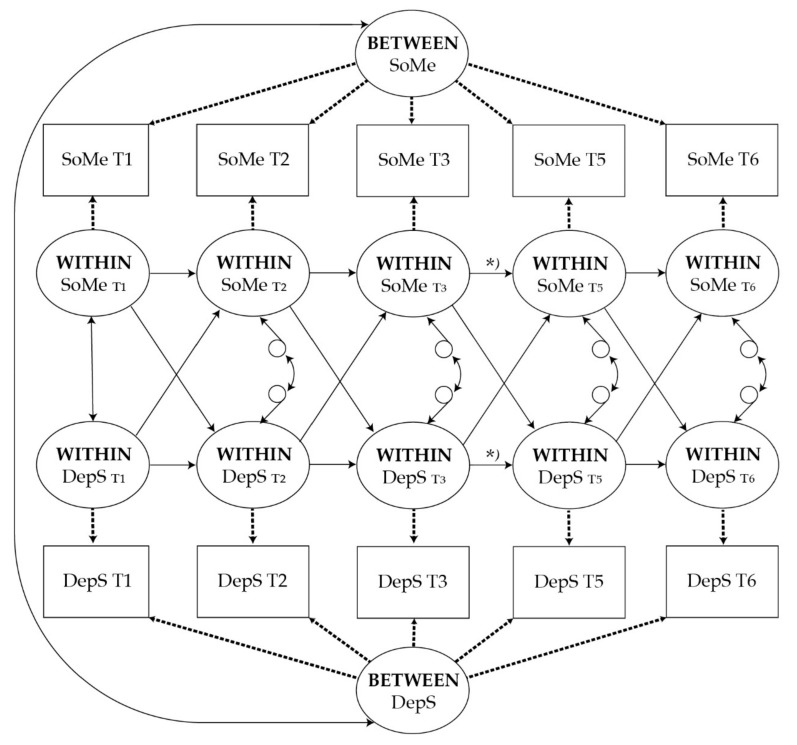
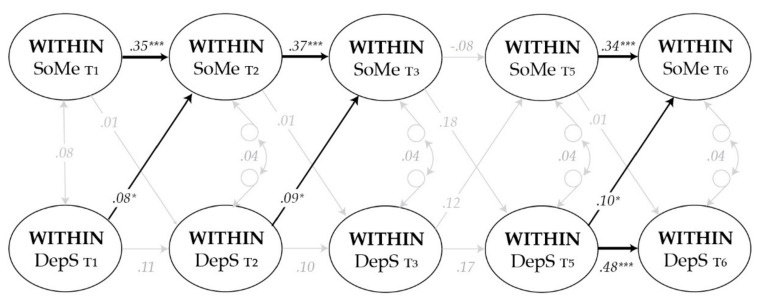
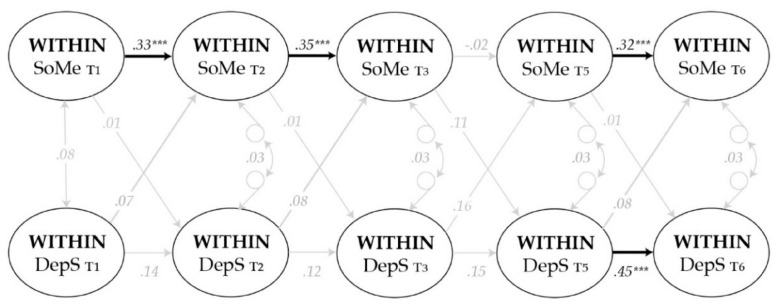
An increasing number of studies have addressed how adolescents’ social media use is associated with depressive symptoms. However, few studies have examined whether these links occur longitudinally across adolescence when examined at the individual level of development. This study investigated the within-person effects between active social media use and depressive symptoms using a five-wave longitudinal dataset gathered from 2891 Finnish adolescents (42.7% male, age range 13–19 years). Sensitivity analysis was conducted, adjusting for gender and family financial status. The results indicate that depressive symptoms predicted small increases in active social media use during both early and late adolescence, whereas no evidence of the reverse relationship was found. Yet, the associations were very small, statistically weak, and somewhat inconsistent over time. The results provide support for the growing notion that the previously reported direct links between social media use and depressive symptoms might be exaggerated. Based on these findings, we suggest that the impact of social media on adolescents’ well-being should be approached through methodological assumptions that focus on individual-level development.
Overview
The claims and statistics of this paper haven’t been checked yet.
Free: it reads the open-access text and checks the first 5 claims that cite a source we can check. Create a free account to check every claim.
Integrity signals
Registry
Cites
Statistics
Figures
Verification
Claims the paper makes
The claims and statistics of this paper haven’t been checked yet.
Free: it reads the open-access text and checks the first 5 claims that cite a source we can check. Create a free account to check every claim.
Claims other papers make about this one
Each is checked against this paper’s own text: does it say what the citing paper says it does?
The source backs part of the claim, not all of it — or backs it for a different population, condition or comparison.
In the citing paper
“Longitudinal studies testing bidirectional associations in teens found that depressive symptoms were likely to heighten social media use across adolescence105,106”
From Digital Ecosystems, Children, and Adolescents: Technical Report (2026) · cites this paper as [105]
Experimental — accuracy not yet measuredThe check wasn’t confident either way, so it gives no verdict — never disputed.
In the citing paper
“Excessive social media use is associated with increased emotional reactivity and decreased emotional recovery, indicating difficulties in regulating emotional responses (Puukko et al., 2020).”
From The impact of digital technology, social media, and artificial intelligence on cognitive functions: a review (2023) · cites this paper as Puukko et al., 2020
Experimental — accuracy not yet measuredIn the citing paper
“Examining the within-person effects of depressive symptoms on increased social media use over 6 years during early and late adolescence, Puukko et al. (36) found that depressive symptoms predicted increases in social media use for both boys and girls. Conversely, social media use was not found to predict depressive symptoms.”
From Does Social Media Use Increase Depressive Symptoms? A Reverse Causation Perspective (2021) · cites this paper as [36]
Self-check
Percentages, sums and reported differences re-computed from the paper’s own numbers.
The self-check needs the paper’s full text.
Citations
Cites
Diagnostic and Statistical Manual of Mental Disorders
American Psychiatric Association (2013) · doi:10.1176/appi.books.9780890425596 · Cited by 116,369
Hu, L.-T., & Bentler, P. M. (1998) · Psychological Methods · doi:10.1037/1082-989x.3.4.424 · Cited by 12,298
Missing data analysis: making it work in the real world
Graham, J. W. (2009) · Annual Review of Psychology · doi:10.1146/annurev.psych.58.110405.085530 · Cited by 6,163
Internet paradox: A social technology that reduces social involvement and psychological well-being?
Kraut, R., Patterson, M., Lundmark, V., Kiesler, S., Mukophadhyay, T., & Scherlis, W. (1998) · American Psychologist · doi:10.1037/0003-066x.53.9.1017 · Cited by 4,793 · cited 3×
“The first, the displacement approach, contends that time spent in online environments occurs at the expense of alternate activities linked to psychological well-being, such as exercise and spending time with family and friends [12].”
BackgroundA critique of the cross-lagged panel model
Hamaker, E. L., Kuiper, R. M., & Grasman, R. P. P. P. (2015) · Psychological Methods · doi:10.1037/a0038889 · Cited by 4,005 · cited 4×
“This may lead to different conclusions based on the same data [35].”
BackgroundInfluentialKraut, R., Kiesler, S., Boneva, B., Cummings, J., Helgeson, V., & Crawford, A. (2002) · Journal of Social Issues · doi:10.1111/1540-4560.00248 · Cited by 2,202 · cited 2×
“However, there are concerns that spending time online might lead psychologically vulnerable adolescents to reach pathological levels of internet or social media use, as they are trying to compensate for problems in their offline lives [59,60].”
BackgroundKeles, B., McCrae, N., & Grealish, A. (2020) · International Journal of Adolescence and Youth · doi:10.1080/02673843.2019.1590851 · Cited by 1,909
Twenge, J. M., Joiner, T. E., Rogers, M. L., & Martin, G. N. (2018) · Clinical Psychological Science · doi:10.1177/2167702617723376 · Cited by 1,705 · cited 3×
“adolescents found a positive correlation from social media use to later depressive symptoms [29].”
BackgroundResultFacebook Use Predicts Declines in Subjective Well-Being in Young Adults
Kross, E., Verduyn, P., Demiralp, E., Park, J., Lee, D. S., Lin, N., Shablack, H., Jonides, J., & Ybarra, O. (2013) · PLoS ONE · doi:10.1371/journal.pone.0069841 · Cited by 1,596 · cited 2×
“Some of these studies have suggested a possible causal link from social media use to higher levels of depressive symptoms over time [28,29].”
BackgroundResultGradations in digital inclusion: children, young people and the digital divide
Livingstone, S., & Helsper, E. (2007) · New Media & Society · doi:10.1177/1461444807080335 · Cited by 1,353 · cited 1×
“Moreover, adolescents’ access to social media are bound up with structural inequalities in family’s socioeconomic status with adolescents from wealthier families having better digital skills and access to SNSs than their peers with lower socioeconomic status [39].”
Background
Research works printed but not linked: 1
- Manago A.M. Identity Development in the digital age: The case of social networking sites The Oxford Handbook of Identity Development 2nd ed. Oxford University Press New York, NY, USA 2015 508 524
Cited by
The associations of active and passive social media use with well-being: A critical scoping review
Valkenburg, P. M., van Driel, I. I., & Beyens, I. (2022) · New Media & Society · doi:10.1177/14614448211065425 · Cited by 324
“In addition, new methods of analysis have been gaining prominence that are able to disentangle within-person effects of SMU from between-person associations, for example, as applied in random-intercept cross-lagged panel (Puukko et al., 2020) and multi-level models (Beyens et al.”
MethodShanmugasundaram, M., & Tamilarasu, A. (2023) · Frontiers in Cognition · doi:10.3389/fcogn.2023.1203077 · Cited by 291
Problematic Social Media Use and Its Relationship with Depression or Anxiety: A Systematic Review
Lopes, L. S., Valentini, J. P., Monteiro, T. H., Costacurta, M. C. D. F., Soares, L. O. N., Telfar-Barnard, L., & Nunes, P. V. (2022) · Cyberpsychology, Behavior, and Social Networking · doi:10.1089/cyber.2021.0300 · Cited by 197
“…genders 15,39,59,65,67,79,93,121,125–135 hypothesized that this was due to similar availability of and access to social media by both genders, 15,65,67,121,125,131 or to similarities in how females and males respond to both negative emotions (e.g., feeling frustrated about their lives, pressure…”
Chao, M., Lei, J., He, R., Jiang, Y., & Yang, H. (2023) · Psychiatry Research · doi:10.1016/j.psychres.2023.115247 · Cited by 166
Does Social Media Use Increase Depressive Symptoms? A Reverse Causation Perspective
Hartanto, A., Quek, F. Y. X., Tng, G. Y. Q., & Yong, J. C. (2021) · Frontiers in Psychiatry · doi:10.3389/fpsyt.2021.641934 · Cited by 107
“(36) found that depressive symptoms predicted increases in social media use for both boys and girls.”
BackgroundA systematic review on automated clinical depression diagnosis
Mao, K., Wu, Y., & Chen, J. (2023) · npj Mental Health Research · doi:10.1038/s44184-023-00040-z · Cited by 127
“Puukko et al. 161 Depressed individuals increasingly use active social media during early and late adolescence.”
Svensson, R., Johnson, B., & Olsson, A. (2022) · BMC Public Health · doi:10.1186/s12889-022-12670-7 · Cited by 79
“, depression, anxiety, hypersensitivity, headache, worry) [14–17], no association [18–20], or that depression predicts an increase in social media use [21, 22].”
BackgroundInfluentialScreen time in children and youth during the pandemic: A systematic review and meta-analysis
Choi, E. J., King, G. K. C., & Duerden, E. G. (2023) · Global Pediatrics · doi:10.1016/j.gpeds.2023.100080 · Cited by 106
Pagano, M., Bacaro, V., & Crocetti, E. (2023) · Computers in Human Behavior · doi:10.1016/j.chb.2023.107813 · Cited by 74
Dynamics of adolescents’ smartphone use and well-being are positive but ephemeral
Marciano, L., Driver, C. C., Schulz, P. J., & Camerini, A.-L. (2022) · Scientific Reports · doi:10.1038/s41598-022-05291-y · Cited by 70
Sewall, C. J. R., Goldstein, T. R., Wright, A. G. C., & Rosen, D. (2022) · Clinical Psychological Science · doi:10.1177/21677026221078309 · Cited by 64
“…distress (e.g., see Tang et al., 2021), only a handful of studies (Coyne et al., 2020; George et al., 2018; Houghton et al., 2018; Kross et al., 2013; Orben et al., 2019; Puukko et al., 2020; Schemer et al., 2021) have employed analyses that satisfy both of the objectives described above.”
McNamee, P., Mendolia, S., & Yerokhin, O. (2021) · Economics & Human Biology · doi:10.1016/j.ehb.2021.100992 · Cited by 62
The Associations of Active and Passive Social Media Use With Well-being: A Critical Scoping Review
Valkenburg, P. M., van Driel, I. I., & Beyens, I. (2021) · doi:10.31234/osf.io/j6xqz · Cited by 58
Steinsbekk, S., Nesi, J., & Wichstrøm, L. (2023) · Computers in Human Behavior · doi:10.1016/j.chb.2023.107859 · Cited by 50
“Two of these report no such relations (Beeres et al., 2021; Schemer, Masur, Geiss, Muller, & Schafer, 2021), whereas Puukko et al. (2020) found depressive symptoms to increase active social media use.”
BackgroundDepressive symptoms and upward social comparisons during Instagram use: A vicious circle
Aubry, R., Quiamzade, A., & Meier, L. L. (2023) · Personality and Individual Differences · doi:10.1016/j.paid.2023.112458 · Cited by 67
Xiao, W., Peng, J., & Liao, S. (2022) · International Journal of Environmental Research and Public Health · doi:10.3390/ijerph192013496 · Cited by 42
“For instance, a recent large-scale longitudinal study indicated that early mental health issues in young teenage girls predicted subsequent social media usage but not the other way around [23,24].”
BackgroundBlasi, M. D., Salerno, L., Albano, G., Caci, B., Esposito, G., Salcuni, S., Gelo, O. C. G., Mazzeschi, C., Merenda, A., Giordano, C., et al. (2022) · Addictive Behaviors · doi:10.1016/j.addbeh.2022.107430 · Cited by 55
Social Media, Quo Vadis? Prospective Development and Implications
Studen, L., & Tiberius, V. (2020) · Future Internet · doi:10.3390/fi12090146 · Cited by 52
“Even though time spent on social media has not been directly linked to an increase in depression and anxiety among adolescents [96,97], several studies confirm negative effects for individuals.”
van Duin, C., Heinz, A., & Willems, H. E. (2021) · International Journal of Environmental Research and Public Health · doi:10.3390/ijerph182211878 · Cited by 43
“Although not an important direct predictor of PSMU, gender nonetheless plays an important role in shaping social media behavior as boys and girls tend to have different motives and purposes for using social media, and display different types of internet use in general [12,52,53].”
BackgroundMaftei, A., Merlici, I.-A., & Dănilă, O. (2023) · Frontiers in Public Health · doi:10.3389/fpubh.2022.1062688 · Cited by 49
Social Media Use and Depression in Adolescents: A Scoping Review
Azem, L., Alwani, R. A., Lucas, A., Alsaadi, B., Muchori, G. N., Bibi, B., Alzubaidi, M. S., & Househ, M. S. (2023) · Behavioral Sciences · doi:10.3390/bs13060475 · Cited by 80
“Scales Study ID Social Media Related Depression/Mental HealthRelated Factors Ruminative Response Scale (RRS) [20] X The Finnish version of the Depression Scale [23] X Patient Health Questionnaire-9 depression screen (PHQ) [53] X Family Affluence Scale for Adolescents [17] X”
MethodInfluentialExamining the interlink of social media use, purchase behavior, and mental health
Hassan, H., Hsbollah, H. M., & Mohamad, R. (2022) · Procedia Computer Science · doi:10.1016/j.procs.2021.11.076 · Cited by 46
Marciano, L., Schulz, P. J., & Camerini, A.-L. (2022) · Computers in Human Behavior · doi:10.1016/j.chb.2022.107390 · Cited by 43
Gingras, M.-P., Brendgen, M. R., Beauchamp, M. H., Séguin, J. R., Tremblay, R. E., Côté, S. M., & Herba, C. M. (2023) · Research on Child and Adolescent Psychopathology · doi:10.1007/s10802-023-01084-7 · Cited by 46
“However, some longitudinal studies among adolescents and young adults revealed that high levels of depression symptoms predicted increased active use (e.g., Puukko et al., 2020 ), whereas others found no predictive association (e.g., Ver - duyn et al., 2015).”
BackgroundLai, L., Pan, Y., Xu, R., & Jiang, Y. (2025) · Frontiers in Public Health · doi:10.3389/fpubh.2025.1580826 · Cited by 34
Digital Engagement and Academic Functioning: A Developmental-Contextual Approach
Hietajärvi, L., Maksniemi, E., & Salmela-Aro, K. (2022) · European Psychologist · doi:10.1027/1016-9040/a000480 · Cited by 23
“Some recent longitudinal findings suggest that time spent on social media does not predict depressive symptoms (Coyne et al., 2020; Heffer et al., 2019; Puukko et al., 2020) and technology use is not associated with adolescents’ mental health symptoms (Jensen”
Self-citationMesce, M., Cerniglia, L., & Cimino, S. (2022) · Behavioral Sciences · doi:10.3390/bs12080255 · Cited by 30
Digital and computational demography
Kashyap, R., Rinderknecht, R. G., Akbaritabar, A., Alburez‐Gutierrez, D., Gil‐Clavel, S., Grow, A., Kim, J., Leasure, D. R., Lohmann, S., Negraia, D. V., et al. (2023) · Edward Elgar Publishing eBooks · doi:10.4337/9781789906769.00010 · Cited by 39
Arslan, N., Esin, K., & Ayyıldız, F. (2025) · BMC Public Health · doi:10.1186/s12889-025-22507-8 · Cited by 22
“Frequent exposure to emotionally stimulating content, such as social media posts or online news, can disrupt emotional regulation processes and contribute to increased stress, anxiety, and depressive symptoms [64].”
Gu, H., Zhang, P., & Li, J. (2024) · Humanities and Social Sciences Communications · doi:10.1057/s41599-024-03249-1 · Cited by 30
“…showed that gender was important predictive factor for adolescent depressive symptoms (Bai et al. 2020; Hards et al. 2020; Osborn et al. 2020; Puukko et al. 2020; Qi et al. 2020; Slavich et al. 2020; Zhai et al. 2020), an exploratory hypothesis was proposed that hope or anxiety may play…”
Dumas, T. M., Tremblay, P. F., Ellis, W. E., Millett, G., & Maxwell-Smith, M. A. (2022) · Computers in Human Behavior · doi:10.1016/j.chb.2022.107591 · Cited by 25
Maurya, C., Dhillon, P., Sharma, H., & Kumar, P. (2024) · BMC Public Health · doi:10.1186/s12889-023-17276-1 · Cited by 16
“Hence, the frequency of social media use revealing the whole truth is unlikely [31].”
BackgroundInfluentialAhmed, O., Dawel, A., Walsh, E., & Cherbuin, N. (2025) · Addictive Behaviors · doi:10.1016/j.addbeh.2025.108446 · Cited by 30
Brannigan, R., Gil-Hernández, C. J., McEvoy, O., Cronin, F. M., Stanistreet, D., & Layte, R. (2022) · Computers in Human Behavior · doi:10.1016/j.chb.2022.107290 · Cited by 23
Kruskopf, M., Hakkarainen, K., Li, S., & Lonka, K. (2020) · Journal of Computer Assisted Learning · doi:10.1111/jcal.12506 · Cited by 20
Digital Ecosystems, Children, and Adolescents: Technical Report
Munzer, T., Milkovich, L. M., Madigan, S., Tomopoulos, S., Parga-Belinkie, J., Ajumobi, T., Cross, C., Gerwin, R., Council on Communications and Media, Radesky, J., et al. (2026) · Pediatrics · doi:10.1542/peds.2025-075321 · Cited by 14
Bidirectional Associations of Adolescents’ Momentary Social Media Use and Negative Emotions
Colasante, T., Faulkner, K., Kharbotli, D., Malti, T., & Hollenstein, T. (2024) · Affective Science · doi:10.1007/s42761-024-00244-2 · Cited by 18
Engberg, E., Hietajärvi, L., Maksniemi, E., Lahti, J. M. T., Lonka, K., Salmela‐Aro, K., & Viljakainen, H. T. (2022) · Mental health and physical activity · doi:10.1016/j.mhpa.2022.100448 · Cited by 20
Self-citationFoubister, C., Jago, R., Sharp, S. J., & van Sluijs, E. M. F. (2023) · Pediatric Obesity · doi:10.1111/ijpo.13017 · Cited by 16
“behavioural norm for adolescents who are increasingly using social media as their primary method of communication with their peers.(35) Adolescent time spent on social media use is also potentially transient”
Youssef, E., Ali, S., Malek, M. A., & Riaz, S. (2025) · Frontiers in Communication · doi:10.3389/fcomm.2024.1521814 · Cited by 20
Saleem, S. M., & Jan, S. S. (2024) · Journal of Nature and Science of Medicine · doi:10.4103/jnsm.jnsm_37_24 · Cited by 22
Lohmann, S., & Zagheni, E. (2023) · PLOS Digital Health · doi:10.1371/journal.pdig.0000292 · Cited by 15
Pomponio, I. D., & Cerniglia, L. (2024) · Adolescents · doi:10.3390/adolescents4020016 · Cited by 11
“Victims of cyberbullying in the metaverse could suffer considerable emotional distress, potentially without adequate support mechanisms due to the nascent and unregulated nature of these virtual spaces [15].”
BackgroundDampak Penggunaan Media Sosial Terhadap Gangguan Psikososial Pada Remaja: A Narrative Review
Gunawan, I. A. N., Suryani, & Shalahuddin, I. (2022) · Jurnal Kesehatan · doi:10.23917/jk.v15i1.17426 · Cited by 61
Layte, R., Brannigan, R., & Stanistreet, D. (2023) · Computers in Human Behavior Reports · doi:10.1016/j.chbr.2023.100293 · Cited by 11
ERKEK, A., Pekel, A. Ö., Taşğın, Ö., & Uzun, A. (2022) · Türkiye Spor Bilimleri Dergisi · doi:10.32706/tusbid.1145097 · Cited by 9
Social Media and Mental Health: What We Know
Carboni-Jiménez, A., Vaillancourt, M., Zhu, P., & Seon, Q. (2021) · McGill Journal of Medicine · doi:10.26443/mjm.v19i1.852 · Cited by 7
Baes, A. M. M., Adoptante, A. J. M., Catilo, J. C. A., Lucero, P. K. L., Peralta, J. F., & Ocampo, A. L. P. D. (2022) · International Journal of Intelligent Systems and Applications in Engineering · doi:10.18201/ijisae.2022.274 · Cited by 6
Types of Adolescent Screen Use and Positive Wellbeing: Gender and Parental Education Influences
Chang, G. (2025) · Journal of Happiness Studies · doi:10.1007/s10902-025-00884-6 · Cited by 9
“In contrast, some studies find no significant, or weak associations between social media and mental wellbeing (Coyne et al., 2020 ; Leung, 2014 ; Puukko et al., 2020) or are very small (Orben, 2020 ).”
Vidal, C., Philippe, F. L., Geoffroy, M., & Paquin, V. (2024) · International Journal of Mental Health and Addiction · doi:10.1007/s11469-024-01313-0 · Cited by 13
“Yet, other studies show no (Beeres et al., 2021; Coyne et al., 2020; Orben & Przybylski, 2019) or weak longitudinal associations (Heffer et al., 2019; Puukko et al., 2020).”
Sursely, A. M., Baran, B., Bardhoshi, G., & Platt, J. (2025) · Journal of Adolescence · doi:10.1002/jad.70088 · Cited by 8
“…Thomas et al. 2023; Tian et al. 2018; Wang et al. 2018; Watson et al. 2022; Woods and Scott 2016; Xie et al. 2018; Yurdagül et al. 2021; Boer et al. 2021; Cheng et al. 2023; Fredrick et al. 2022; Gingras et al. 2023; Nesi et al. 2022; Puukko et al. 2020; Raudsepp and Kais 2019; Vernon et al. 2017).”
Davies, J., Cadwallader, S., Black, L., Dunne, J. H., & Panayiotou, M. (2025) · BMC Public Health · doi:10.1186/s12889-025-23897-5 · Cited by 10
“Some studies even suggest the reverse – that poor mental health may predict increased social media use – and/or that any predictive effects are limited to specific subgroups [11, 93, 98, 103].”
Haidt, J., & Rausch, Z. M. (2026) · SSRN Electronic Journal · doi:10.2139/ssrn.6069268 · Cited by 9
Vijayakumar, N., Dashti, S. G., Canterford, L. D., Ellul, S., Parissi, A. J. A., Goddings, A., Viner, R., Moran, P., Borschmann, R., Mundy, L. K., et al. (2026) · The Medical Journal of Australia · doi:10.5694/mja2.70220 · Cited by 3
“…several prior longitudinal studies have failed to identify age-related differences when considering social media effects across male and female adolescents [16–18, 25, 41], underscoring the need to consider how sex and age may jointly influence the potential benefits from social media regulations.”
Biscond, M., Revranche, M., & Husky, M. M. (2021) · L Encéphale · doi:10.1016/j.encep.2021.08.016 · Cited by 10
Göksu, M., Arman, A. R., Gündoğdu, Ü., & Gümüştaş, F. (2024) · Marmara medical journal · doi:10.5472/marumj.1379988 · Cited by 6
Wang, M., & Lee, Y. R. (2026) · Journal of Adolescent Health · doi:10.1016/j.jadohealth.2026.01.008 · Cited by 2
Social Media use is Associated with, but is not a Major Cause of Mental Disorder among Adolescents
Elhai, J. D., Demetrovics, Z., Casale, S., & Montag, C. (2026) · Current Addiction Reports · doi:10.1007/s40429-026-00769-5 · Cited by 3
“Some work has demonstrated that mental health problems, including prior alcohol use [40] and depression symptoms [41], influenced subsequent social media use levels; depression also influenced later PSMU levels [ 42, 43].”
The Relation Between Social Media, Cyberbullying and Depression
Chen, Y. (2023) · Lecture Notes in Education Psychology and Public Media · doi:10.54254/2753-7048/29/20231517 · Cited by 2
The seven deadly sins: measuring overvaluation of social media with the Plan-net 25 scale
Ciudad-Fernández, V., Zarco-Alpuente, A., Escrivá‐Martínez, T., Gomis-Vicent, E., Espejo, B., Lecuona, O. Z., Perales, J. C., López-Fernández, O., & Baños, R. (2025) · BMC Psychology · doi:10.1186/s40359-025-02801-1 · Cited by 4
Turkish Adaptation of the Media Parenting Scale for Parents of School-Age Children
Çamur, Z., & Erdoğan, Ç. (2023) · Journal of Academic Research in Nursing · doi:10.55646/jaren.2023.43926 · Cited by 1
Turkish adolescents' anonymous use of social networking sites (SNSs): A phenomenological study
Çimşir, E., Akdoğan, R., & Akbayrak, A. (2024) · Psychology in the Schools · doi:10.1002/pits.23200 · Cited by 1
Bibi, S., Ahmed, S., & Jahangir, M. (2024) · CARC Research in Social Sciences · doi:10.58329/criss.v3i1.110 · Cited by 5
Mulisa, F., Kejela, M., & Shuku, J. (2025) · Journal of Technology in Behavioral Science · doi:10.1007/s41347-025-00502-5 · Cited by 6
Holas, P., Roczon, P., Korczak, A., Styła, R., & Niemaszyk, J. (2024) · The American Journal of Psychology · doi:10.5406/19398298.137.4.04 · Cited by 2
Ahmed, O., Walsh, E., Dawel, A., & Cherbuin, N. (2025) · Human Behavior and Emerging Technologies · doi:10.1155/hbe2/6575876 · Cited by 3
Mental development of children and adolescents in the context of digitalization of society
Fedonkina, A. A. (2025) · Psychology and Law · doi:10.17759/psylaw.2025150302 · Cited by 3
Effects of problematic social media use on depressive symptoms
Blanquer-Cortés, M., Estévez, E., Estévez-García, J. F., & Irles, D. L. (2025) · Scientific Reports · doi:10.1038/s41598-025-29258-x · Cited by 4
Measures of Social Media Use Motives During Adolescence: A Systematic Review
Ketibian, C., Combes, C., & Potard, C. (2026) · Journal of Media Psychology Theories Methods and Applications · doi:10.1027/1864-1105/a000506 · Cited by 1
Yuan, C., Zhou, H., Wang, A., Jiang, H., & Xiao, N. (2026) · International Journal of Psychology · doi:10.1002/ijop.70210 · Cited by 1
Sitepu, J. N., Siringoringo, P. I. S., & Girsang, R. (2022) · Nommensen Journal of Medicine · doi:10.36655/njm.v7i2.613 · Cited by 3
“Karakteristik Responden Penelitian Variabel Frekuensi Rerata ± simpangan baku; median (min-max) Usia 19,50 ± 1,092; 20(17-22) Jenis Kelamin Perempuan Laki-laki 60 (59,4%) 41 (40,6%) Jumlah Akun 4,35 ± 1,729; 4(1-9)”
Social Media Affects Emotional and Cognitive Status
Siriwat Wittaya Cambridge Program, P. R., & Chaeycharoen, S. (2022) · International Journal of Current Science Research and Review · doi:10.47191/ijcsrr/v5-i7-47 · Cited by 3
Instagram a psychological tool for depressionPreprint
Amosun, D. (2022) · PsyArXiv (OSF Preprints) · doi:10.31234/osf.io/wapgu · Cited by 1
LITERATURE REVIEW : HUBUNGAN INTENSITAS PENGGUNAAAN MEDIA SOSIAL DENGAN KEJADIAN DEPRESI
Ginting, S. V. B., Arifin, S., & Marintan, H. (2021) · Jurnal Kedokteran Universitas Palangka Raya · doi:10.37304/jkupr.v9i2.3524
Yang, L., & Yuan, J. (2021) · Advances in Social Science, Education and Humanities Research/Advances in social science, education and humanities research · doi:10.2991/assehr.k.211220.018 · Cited by 2
“Studies also supported that people with younger age, lower education level, lower income, and being single are also at more risk of depression [24, 29].”
Resultسرميني, إ. (2023) · University of Sharjah (UoS) Journal of Humanities and Social Sciences · doi:10.36394/jhss/20/3/6
Maksniemi, E., Ketonen, E. E., Salonen, V., Lonka, K., & Salmela‐Aro, K. (2023) · PsyArXiv (OSF Preprints) · doi:10.31234/osf.io/skdf2 · Cited by 1
Self-citationAssessing and Enhancing Psychosocial Functioning
Coletti, D. J., & Kane, N. S. (2024) · Springer eBooks · doi:10.1007/978-3-031-54281-7_55
Godard, R., & Holtzman, S. (2024) · Affective Science · doi:10.1007/s42761-024-00268-8 · Cited by 1
“While past research testing the rich-get-richer and social compensation hypotheses has focused on how offline social wellbeing relates to SMU (Pouwels et al., 2022), mental health may also relate to patterns of SMU (Han et al., 2014; Puukko et al., 2020).”
Desai, T. (2025) · Preprints.org · doi:10.20944/preprints202505.0537.v1
Introduction to Behavioral Addictions and Digital Media
Semolini, F. F., da Silva, L. S., Vitta, A. S. L., Freires, É. M., & Andrade, A. L. M. (2025) · Springer eBooks · doi:10.1007/978-3-031-87986-9_1
Dong, F., & Marquis, W. (2025) · Journal of Strategic Innovation and Sustainability · doi:10.33423/jsis.v20i3.7756
Maurya, C., Dhillon, P., Sharma, H., & Kumar, P. (2024) · Figshare · doi:10.6084/m9.figshare.26673324
Enhanced Large Language Models (GPT-3.5 Turbo) for Depression Detection in Social Media Data
Tsike, E., & McGarry, K. (2026) · Advances in intelligent systems and computing · doi:10.1007/978-3-032-07938-1_25
Ercolanoni, S., Gui, M., & Respi, C. (2025) · Media Education · doi:10.36253/me-19294
“Gli studi che hanno indagato questa relazione con metodi causali mostrano anche l’esistenza di dinami-che contro-causali, dove un basso benessere psicologico indurrebbe ad un uso più intenso dei social (Puukko et al., 2020; Heffer et al., 2019; Kelly et al., 2022; Orben, 2020; Orben et al. 2022).”
Alghamdi, A. M., Alzahrani, M. A., Alomari, R. A., Alghamdi, S. A., Alzahrani, R. A., Alzahrani Faisal Lafi, B., Alghamdi, H. M., Osman, N. M., & Almawazini, A. M. (2026) · doi:10.2196/preprints.93736
Wang, S., Guo, C., Yu, T., Wang, K., Wei, Q., & Yi, H. E. (2026) · Journal of Behavioral Addictions · doi:10.1556/2006.2025.00306 · Cited by 1
Lissens, M., Vandenbosch, L., Beullens, K., Geusens, F., Eggermont, S., Fahr, A., Maes, C., Vanhoffelen, G., Vranken, I., & Schreurs, L. (2026) · Research Square · doi:10.21203/rs.3.rs-9428222/v1
Patterns of Short Video Use and Mental Health Among Adolescents: A Latent Profile Analysis
Chao, M., Wang, Y., & Gu, L. (2026) · Psychiatric Quarterly · doi:10.1007/s11126-026-10292-5 · Cited by 1
(Dis)Connected: Youth and Parental Expectations of Australia’s Social Media Ban
Horwood, S., Torjinski, M., Hemmings, S. A., & Jarman, H. K. (2026) · International Journal of Human-Computer Interaction · doi:10.1080/10447318.2026.2695938 · Cited by 3
Adolescents' perspectives on self-regulation and digital media use
Shutzman, B., & Gershy, N. (2026) · Frontiers in Developmental Psychology · doi:10.3389/fdpys.2026.1744398
Hu, J., Liu, L., & Zou, Y. (2026) · Frontiers in Public Health · doi:10.3389/fpubh.2026.1887437
Zhang, T., Wen, W., Alers‐Rojas, F., Lorenzo‐Blanco, E. I., Baines, K., Nevarez, M., & Kim, S. Y. (2026) · Journal of Youth and Adolescence · doi:10.1007/s10964-026-02417-7
AYNACI, C. (2026) · İstanbul Ticaret Üniversitesi Sosyal Bilimler Dergisi · doi:10.46928/iticusbe.1957632
Tang, A., Leung, C., Prasad, R., Busso, C., & Warren, S. L. (2026) · Journal of Adolescent Health · doi:10.1016/j.jadohealth.2026.07.025 · Cited by 2
Joy, R. B. (2026) · International Journal of Education Pedagogy and Psychology · doi:10.64823/ijepp.2601011
“This is not a hypothetical concern: two cohort studies in this review explicitly found evidence of the reverse pathway [8], [19].”
InfluentialPeachey, W., Piantella, S., Cotton, S., & Gleeson, J. (2026) · British Journal of Clinical Psychology · doi:10.1111/bjc.70100 · Cited by 1
Liu, J., He, R., Tie, B., 王雪扬, & Qiu, J. (2026) · Behavioral Sciences · doi:10.3390/bs16101895
“By age, participants were classified as early adolescents (N = 2994, 1587 male, mean age = 12.87 ± 0.78 years, age range: 12–14 years), middle adolescents (N = 2609, 1354 male, mean age = 15.83 ± 0.70 years, age range: 15–17 years), or late adolescents (N = 522, 240 male, mean age = 18.90 ± 0.74 years, age range: 18–2…”
Influential
Metadata
- Authors
- Puukko, K., Hietajärvi, L., Maksniemi, E., Alho, K., & Salmela-Aro, K.
- Affiliations
- University of Helsinki (FI)
- Faculty of Educational Sciences, University of Helsinki, 00014 Helsinki, Finland
- Corresponding author
- Puukko, Kati
- Venue
- International Journal of Environmental Research and Public Health
- Publisher
- MDPI AG
- Published
- 2020-08-14
- Volume
- 17
- Issue
- 16
- Pages
- 5921
- ISSN
- 1660-4601 (ISSN-L)
- PMC
- PMC7459880
- OpenAlex
- W3049599056
- Cited by
- 99
- References
- 69
- Citations by year
- 2026: 21 · 2025: 17 · 2024: 12 · 2023: 19 · 2022: 19 · 2021: 9 · 2020: 2
- FWCI
- 16.39
- Type
- journal article
- Language
- en
- Open access
- gold
- doi.org
- Licence
- Locations
- International Journal of Environmental Research and Public Health (publishedVersion, cc-by)
- PubMed Central (publishedVersion, cc-by)
- PubMed (publishedVersion)
- RePEc: Research Papers in Economics (submittedVersion)
- DOAJ (DOAJ: Directory of Open Access Journals) (submittedVersion)
- Työväentutkimus Vuosikirja (submittedVersion)
- Topics
- Social Sciences › Sociology and Political Science › Impact of Technology on Adolescents
- Social Sciences › Psychology › Clinical Psychology › Child and Adolescent Psychosocial and Emotional Development
- Social Sciences › Psychology › Social Psychology › Mental Health via Writing
- Keywords
- social media use, depressive symptoms, adolescents, within-person effects, longitudinal development, youth welfare, gender differences, family economic status, causal direction
- MeSH terms
- Adolescent, Adolescent Behavior, Adult, Depression, Female, Finland, Humans, Longitudinal Studies, Male, Young Adult, Social Media
About these checks
Registry, retraction, Cites and statistics results are computed, not judged, with one exception: a printed reference that no index lists is read once by a model before it counts as a citation error. Claims are extracted by a model and kept only when their quote appears verbatim in the text; each cited source is then checked, with a model’s help, for whether it says what the claim relies on. Those verdicts can be wrong — read the claim’s quote and the cited source before relying on one.
Statistics and arithmetic are recomputed, not judged.
Confidence bands are shown only for fields calibrated on our annotated test set. None is calibrated yet, so no band is shown.
What counts as a claim ›How we measure confidence ›How we check this ›
Are you an author, or do you see a problem with this page? Request a review
Data sources
Bibliographic data: Semantic Scholar, OpenAlex, Crossref.
Contains information from the Semantic Scholar Academic Graph Datasets, made available under the ODC Attribution License (ODC-BY 1.0).
Semantic Scholar’s data is described in: Kinney, R., et al. (2023). The Semantic Scholar Open Data Platform. arXiv:2301.10140.
