

The DOI matches its Crossref record.
Exposure to Particulate PAHs on Potential Genotoxicity and Cancer Risk among School Children Living Near the Petrochemical Industry
Open accessAbstract
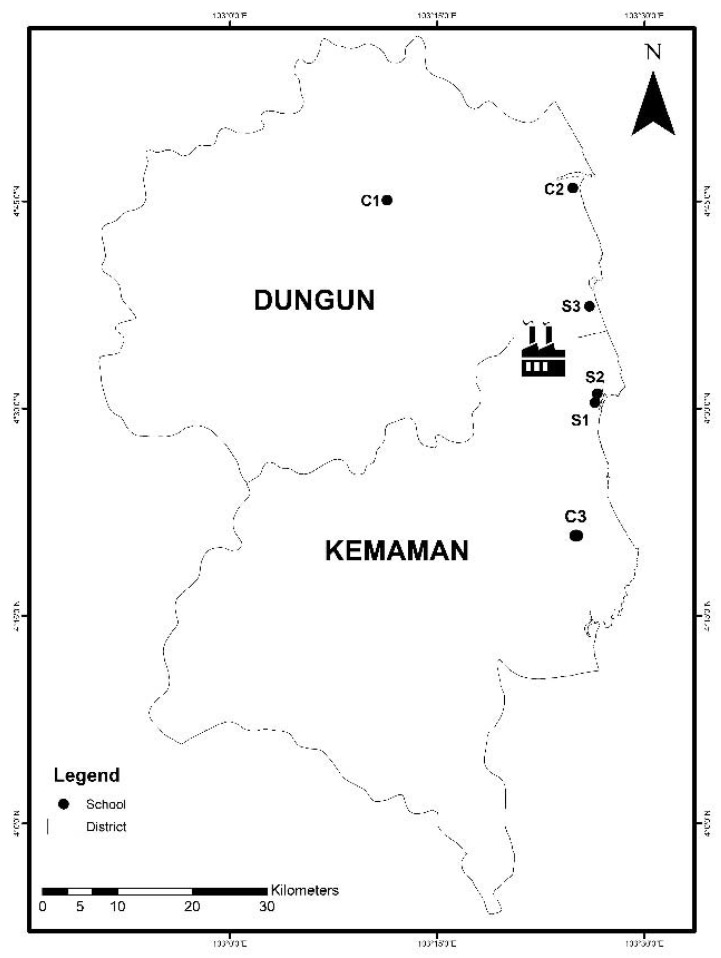
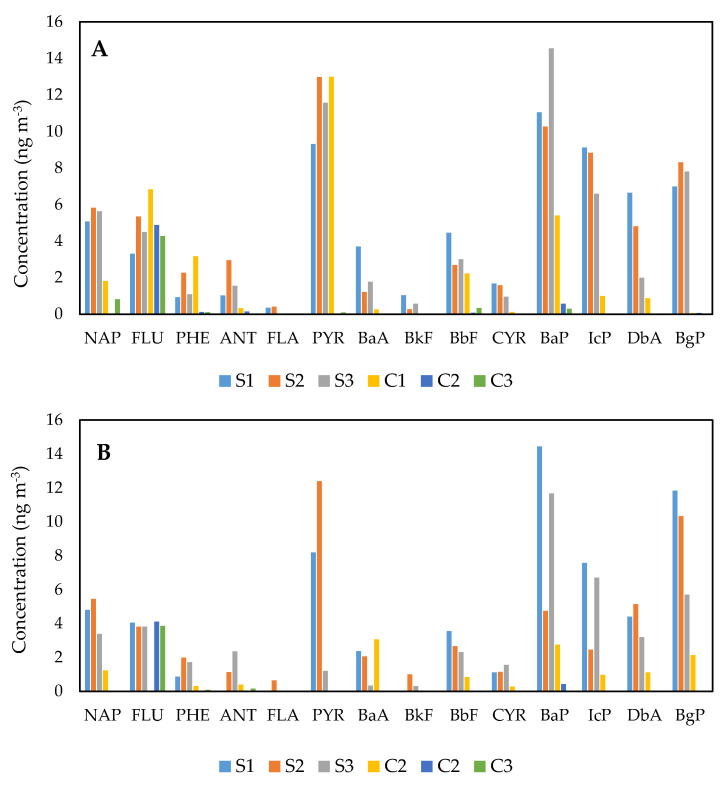
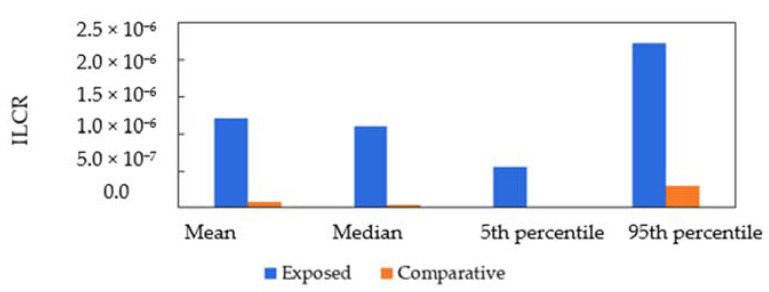
This study aimed to assess the association of exposure to particle-bound (PM2.5) polycyclic aromatic hydrocarbons (PAHs) with potential genotoxicity and cancer risk among children living near the petrochemical industry and comparative populations in Malaysia. PM2.5 samples were collected using a low-volume sampler for 24 h at three primary schools located within 5 km of the industrial area and three comparative schools more than 20 km away from any industrial activity. A gas chromatography–mass spectrometer was used to determine the analysis of 16 United States Environmental Protection Agency (USEPA) priority PAHs. A total of 205 children were randomly selected to assess the DNA damage in buccal cells, employing the comet assay. Total PAHs measured in exposed and comparative schools varied, respectively, from 61.60 to 64.64 ng m−3 and from 5.93 to 35.06 ng m−3. The PAH emission in exposed schools was contributed mainly by traffic and industrial emissions, dependent on the source apportionment. The 95th percentiles of the incremental lifetime cancer risk estimated using Monte Carlo simulation revealed that the inhalation risk for the exposed children and comparative populations was 2.22 × 10⁻⁶ and 2.95 × 10⁻⁷, respectively. The degree of DNA injury was substantially more severe among the exposed children relative to the comparative community. This study reveals that higher exposure to PAHs increases the risk of genotoxic effects and cancer among children.
Overview
The claims and statistics of this paper haven’t been checked yet.
Run the check — free, no account needed. It reads the open-access text and checks the sources it cites.
Integrity signals
Registry
Cites
Statistics
Figures
Verification
Claims the paper makes
The claims and statistics of this paper haven’t been checked yet.
Run the check — free, no account needed. It reads the open-access text and checks the sources it cites.
Claims other papers make about this one
Each is checked against this paper’s own text: does it say what the citing paper says it does?
The cited source says what the claim attributes to it.
In the citing paper
“Even more, PAHs adsorbed on PM can enhance these effects by promoting genotoxicity and mutagenesis [63].”
From The Environmental Determinants of Skin Health: Linking Climate Change, Air Pollution, and the Dermatologic Disease Burden (2025) · cites this paper as [63]
Self-check
Percentages, sums and reported differences re-computed from the paper’s own numbers.
The self-check needs the paper’s full text.
Citations
Cites
Still being checked.
Research works printed but not linked: 103
- Ali, 2019, Polycyclic Aromatic Hydrocarbons (PAHs) in Indoor Air and Dust Samples of Different Saudi Microenvironments; Health and Carcinogenic Risk Assessment for the General Population, Sci. Total Environ., 696, 133995, 10.1016/j.scitotenv.2019.133995 · DOI
- Dai, 2019, Alterations in Platelet Indices Link Polycyclic Aromatic Hydrocarbons Toxicity to Low-Grade Inflammation in Preschool Children, Environ. Int., 131, 105043, 10.1016/j.envint.2019.105043 · DOI
- Huang, 2019, Internal Exposure Levels of Polycyclic Aromatic Hydrocarbons in Children and Adolescents: A Systematic Review and Meta-Analysis, Environ. Health Prev. Med., 24, 50, 10.1186/s12199-019-0805-9 · DOI
- Iwegbue, 2019, Distribution, sources and risk of exposure to polycyclic aromatic hydrocarbons in indoor dusts from electronic repair workshops in southern Nigeria, Emerg. Contam., 5, 23, 10.1016/j.emcon.2018.12.003 · DOI
- Sulong, 2019, Distribution, sources and potential health risks of polycyclic aromatic hydrocarbons (PAHs) in PM2.5 collected during different monsoon seasons and haze episode in Kuala Lumpur, Chemosphere, 219, 1, 10.1016/j.chemosphere.2018.11.195 · DOI
- Oliveira, 2019, Children environmental exposure to particulate matter and polycyclic aromatic hydrocarbons and biomonitoring in school environments: A review on indoor and outdoor exposure levels, major sources and health impacts, Environ. Int., 124, 180, 10.1016/j.envint.2018.12.052 · DOI
- Mansour, 2016, A review on polycyclic aromatic hydrocarbons: Source, environmental impact, effect on human health and remediation, Egypt. J. Pet., 25, 107, 10.1016/j.ejpe.2015.03.011 · DOI
- Wang, 2021, A WRF-CMAQ modeling of atmospheric PAH cycling and health risks in the heavy petrochemical industrialised Lanzhou valley, Northwest China, J. Clean Prod., 291, 125989, 10.1016/j.jclepro.2021.125989 · DOI
- Yuan, 2015, Assessment of the levels of urinary 1-hydroxypyrene and air polycyclic aromatic hydrocarbon in PM2.5 for adult exposure to the petrochemical complex emissions, Environ. Res., 136, 219, 10.1016/j.envres.2014.10.007 · DOI
- Zhao, 2015, Characterisation and quantification of PAH atmospheric pollution from a large petrochemical complex in Guangzhou: GC–MS/MS analysis, Microchem. J., 119, 140, 10.1016/j.microc.2014.12.004 · DOI
- Dong, 2009, Characteristics, toxicity, and source apportionment of polycyclic aromatic hydrocarbons (PAHs) in road dust of Ulsan, Korea, Chemosphere, 74, 1245, 10.1016/j.chemosphere.2008.11.035 · DOI
- Bozlaker, 2008, Atmospheric concentrations, dry deposition and air-soil exchange of polycyclic aromatic hydrocarbons (PAHs) in an industrial region in Turkey, J. Hazard. Mater., 153, 1093, 10.1016/j.jhazmat.2007.09.064 · DOI
- Fan, 2012, Preliminary study of children’s exposure to PAHs and its association with 8-hydroxy-2′-deoxyguanosine in Guangzhou, China, Environ. Int., 42, 53, 10.1016/j.envint.2011.03.021 · DOI
- Murawski, 2020, Polycyclic Aromatic Hydrocarbons (PAH) in Urine of Children and Adolescents in Germany—Human Biomonitoring Results of the German Environmental Survey 2014–2017 (GerES V), Int. J. Hyg. Environ. Health, 226, 113491, 10.1016/j.ijheh.2020.113491 · DOI
- Tang, C.S., Lung, S.C.C., Chang, T.Y., Tu, H.H., and Chang, L.T. (2019). Investigation of Microenvironmental Exposures to Particle-Bound Polycyclic Aromatic Hydrocarbons for Elementary School Children. Int. J. Environ. Res. Public Health, 16. · DOI
- Sopian, 2017, The application of biomarker in determining genotoxic potential of polyaromatic hydrocarbon exposure among children, Ann. Trop. Med. Public Health, 10, 533
- 2015, DNA damage in Mexican children living in high-risk contaminated scenarios, Sci. Total Environ., 519, 38
- Busso, 2014, Exposure to polycyclic aromatic hydrocarbons in urban environments: Health risk assessment by age groups, Environ. Pol., 195, 157, 10.1016/j.envpol.2014.08.027 · DOI
- 2014, Genotoxic and Hematological Effects in Children Exposed to a Chemical Mixture in a Petrochemical Area in Mexico, Arch. Environ. Contam. Toxico., 67, 1, 10.1007/s00244-014-9999-4 · DOI
- Ruchirawat, 2007, Assessment of potential cancer risk in children exposed to urban air pollution in Bangkok, Thailand, Toxicol. Lett., 168, 200, 10.1016/j.toxlet.2006.09.013 · DOI
- Zeng, 2020, PM2.5-Bound PAHs Exposure Linked with Low Plasma Insulin-like Growth Factor 1 Levels and Reduced Child Height, Environ. Int., 138, 105660, 10.1016/j.envint.2020.105660 · DOI
- Chen, 2018, Association of PAHs and BTEX Exposure with Lung Function and Respiratory Symptoms among a Nonoccupational Population near the Coal Chemical Industry in Northern China, Environ. Int., 120, 480, 10.1016/j.envint.2018.08.004 · DOI
- Poursafa, 2018, Association of Polycyclic Aromatic Hydrocarbons with Cardiometabolic Risk Factors and Obesity in Children, Environ. Int., 118, 203, 10.1016/j.envint.2018.05.048 · DOI
- Ikenaka, 2017, Oxidative Stress and Respiratory Symptoms Due to Human Exposure to Polycyclic Aromatic Hydrocarbons (PAHs) in Kumasi, Ghana, Environ. Pollut., 228, 311, 10.1016/j.envpol.2017.05.036 · DOI
- Rossato, 2015, Characterisation of an area of reference for inhalable particulate matter (PM2.5) associated with genetic biomonitoring in children, Mutat. Res. Genet. Toxicol. Environ. Mutagen., 778, 44, 10.1016/j.mrgentox.2014.11.006 · DOI
- Ceretti, E., Feretti, D., Viola, G.C.V., Zerbini, I., Limina, R.M., Zani, C., Capelli, M., Lamera, R., Donato, F., and Gelatti, U. (2014). DNA Damage in Buccal Mucosa Cells of Pre-School Children Exposed to High Levels of Urban Air Pollutants. PLoS ONE, 9. · DOI
- Sopian, 2020, Increased Chromosomal Damage among Children in Proximity to Industrial Zone, Aerosol Air Qual. Res., 20, 944, 10.4209/aaqr.2019.12.0653 · DOI
- Rothenberg, 2012, Environmental polycyclic aromatic hydrocarbon (PAH) exposure and DNA damage in Mexican children, Mutat. Res. Genet. Toxicol. Environ. Mutagen., 742, 66, 10.1016/j.mrgentox.2011.12.006 · DOI
- Kyrtopoulos, 2001, Biomarkers of genotoxicity of urban air pollution: Overview and descriptive data from a molecular epidemiology study on populations exposed to moderate-to- low levels of polycyclic aromatic hydrocarbons: The AULIS project, Mutat. Res., 496, 207, 10.1016/S1383-5718(01)00222-4 · DOI
- Hrelia, 2004, A molecular epidemiological approach to health risk assessment of urban air pollution, Toxicol. Lett., 149, 261, 10.1016/j.toxlet.2003.12.037 · DOI
- Suhaimi, 2015, Biomarker as a Research Tool in Linking Exposure to Air Particles and Respiratory Health, BioMed Res. Int., 2015, 962853, 10.1155/2015/962853 · DOI
- Daud, 2018, Air pollutants exposure and frequency of micronuclei (MN) among primary school children nearby industrial Area, Malays. J. Med. Health Sci., 14, 56
- Kamaruddin, 2019, FeNO as a Biomarker for Airway Inflammation Due to Exposure to Air Pollutants among School Children Nearby Industrial Areas in Terengganu, Pertanika J. Sci. Technol., 27, 589
- Seifi, 2019, Exposure to ambient air pollution and risk of childhood cancers: A population-based study in Tehran, Iran, Sci. Total Environ., 646, 105, 10.1016/j.scitotenv.2018.07.219 · DOI
- Jalaludin, 2014, Tumor necrosis factor-alpha as biomarkers of exposure to indoor pollutants among primary school children in Klang Valley, Am. J. Appl. Sci., 11, 1616, 10.3844/ajassp.2014.1616.1630 · DOI
- Hisamuddin, 2019, Traffic Related Air Pollution and Its Impact on Respiratory Health among Children, Malays. J. Med. Health Sci., 15, 103
- Ceppi, 2010, Human population studies with the exfoliated buccal micronucleus assay: Statistical and epidemiological issues, Mutat. Res. Rev. Mutat. Res., 705, 11, 10.1016/j.mrrev.2009.11.001 · DOI
- Sinitsky, 2014, The application of the cytokinesis-block micronucleus assay on peripheral blood lymphocytes for the assessment of genome damage in long-term residents of areas with high radon concentration, J. Radiat. Res., 55, 61, 10.1093/jrr/rrt091 · DOI
- Khan, 2015, Seasonal effect and source apportionment of polycyclic aromatic hydrocarbons in PM2.5, Atmos. Environ., 106, 178, 10.1016/j.atmosenv.2015.01.077 · DOI
- Mirrezaei, 2020, Gas flares contribution in total health risk assessment of BTEX in Asalouyeh, Iran, Process Safety Environ. Prot., 137, 223, 10.1016/j.psep.2020.02.034 · DOI
- Nisbet, 1992, Toxic equivalency factors (TEFs) for polycyclic aromatic hydrocarbons (PAHs), Regul. Toxicol. Pharmacol., 16, 290, 10.1016/0273-2300(92)90009-X · DOI
- Nadali, 2021, Phase distribution and risk assessment of PAHs in ambient air of Hamadan, Iran, Ecotox. Environ. Saf., 209, 111807, 10.1016/j.ecoenv.2020.111807 · DOI
- Othman, 2021, Spatial distribution of fine and coarse particulate matter during a southwest monsoon in Peninsular Malaysia, Chemosphere, 262, 127767, 10.1016/j.chemosphere.2020.127767 · DOI
- Ouyang, R., Yang, S., and Xu, L. (2020). Analysis and risk assessment of PM2.5-bound PAHs in a comparison of indoor and outdoor environments in a middle school: A case study in Beijing, China. Atmosphere, 11. · DOI
- Peng, 2011, Polycyclic aromatic hydrocarbons in urban soils of Beijing: Status, sources, distribution and potential risk, Environ. Pol., 159, 802, 10.1016/j.envpol.2010.11.003 · DOI
- Liu, Y., Qin, N., Liang, W., Chen, X., Hou, R., Kang, Y., Guo, Q., Cao, S., and Duan, X. (2020). Polycycl. Aromatic hydrocarbon exposure of children in typical household coal combustion environments: Seasonal variations, sources, and carcinogenic risks. Int. J. Environ. Res. Public Health, 17. · DOI
- Tarafdar, 2020, Profiling and potential cancer risk assessment on children exposed to PAHs in playground dust/soil: A comparative study on poured rubber surfaced and classical soil playgrounds in Seoul, Environ. Geochem. Health, 42, 1691, 10.1007/s10653-019-00334-2 · DOI
- Gyori, 2014, OpenComet: An automated tool for comet assay image analysis, Redox Biol., 2, 457, 10.1016/j.redox.2013.12.020 · DOI
- Zhang, 2019, Characteristics of PM2.5-bound PAHs at an Urban Site and a Suburban Site in Jinan in North China Plain, Aerosol Air Qual. Res., 19, 871, 10.4209/aaqr.2018.09.0353 · DOI
- Mohamad, 2016, Source apportionment and health risk assessment of PM10 in a naturally ventilated school in a tropical environment, Ecotox. Environ. Saf., 124, 351, 10.1016/j.ecoenv.2015.11.002 · DOI
- Yabueng, 2020, Influence of zero-burning policy and climate phenomena on ambient PM2.5 patterns and PAHs inhalation cancer risk during episodes of smoke haze in Northern Thailand, Atmos. Environ., 232, 117485, 10.1016/j.atmosenv.2020.117485 · DOI
- Saganich, 2009, Associations of PM2.5 and black carbon concentrations with traffic, idling, background pollution, and meteorology during school dismissals, Sci. Total Environ., 407, 3357, 10.1016/j.scitotenv.2009.01.046 · DOI
- Xu, 2018, Source, health risk and composition impact of outdoor very fine particles (VFPs) to school indoor environment in Xi’an, North western China, Sci. Total Environ., 612, 238, 10.1016/j.scitotenv.2017.08.101 · DOI
- Farella, 2017, Indoor/Outdoor Air Quality Assessment at School near the Steel Plant in Taranto (Italy), Adv. Meteorol., 2017, 1526209
- Oliveira, 2017, Polycyclic aromatic hydrocarbons in primary school environments: Levels and potential risks, Sci. Total Environ., 575, 1156, 10.1016/j.scitotenv.2016.09.195 · DOI
- Hassanvand, 2015, Characterisation of PAHs and metals in indoor/outdoor PM10/PM2.5/PM1 in a retirement home and a school dormitory, Sci. Total Environ., 527–528, 100, 10.1016/j.scitotenv.2015.05.001 · DOI
- Gao, 2016, Potential threat of heavy metals and PAHs in PM2.5 in different urban functional areas of Beijing, Atmos. Res., 178–179, 6, 10.1016/j.atmosres.2016.03.015 · DOI
- Ana, 2012, Polycyclic aromatic hydrocarbon burden in ambient air in selected Niger Delta communities in Nigeria, J. Air Waste Manag. Assoc., 62, 18, 10.1080/10473289.2011.628900 · DOI
- Zhang, 2008, Source diagnostics of polycyclic aromatic hydrocarbons in urban road runoff, dust, rain and canopy throughfall, Environ. Pollut., 153, 594, 10.1016/j.envpol.2007.09.004 · DOI
- Bucheli, 2004, Polycyclic aromatic hydrocarbons, black carbon, and molecular markers in soils of Switzerland, Chemosphere, 56, 1061, 10.1016/j.chemosphere.2004.06.002 · DOI
- Akyuz, 2009, Meteorological variations of PM2.5/PM10 concentrations and particle-associated polycyclic aromatic hydrocarbons in the atmospheric environment of Zonguldak, Turkey, J. Hazard. Mater., 170, 13, 10.1016/j.jhazmat.2009.05.029 · DOI
- Yunker, 2002, PAHs in the Fraser River basin: A critical appraisal of PAH ratios as indicators of PAH source and composition, Org. Geochem., 33, 489, 10.1016/S0146-6380(02)00002-5 · DOI
- Fang, 2004, Polycyclic aromatic hydrocarbons study in Taichung, Taiwan, during 2002–2003, Atmos. Environ., 38, 3385, 10.1016/j.atmosenv.2004.03.036 · DOI
- Liu, 2015, Source apportionment of gaseous and particulate PAHs from traffic emission using tunnel measurements in Shanghai, China, Atmos. Environ., 107, 129, 10.1016/j.atmosenv.2015.02.041 · DOI
- Lin, 2019, Assessment of PM2.5 and PAH content in PM2.5 emitted from mobile source gasoline-fueled vehicles in concomitant with the vehicle model and mileages, Chemosphere, 226, 502, 10.1016/j.chemosphere.2019.03.137 · DOI
- Zhang, 2012, Potential source contributions and risk assessment of PAHs in sediments from Taihu Lake, China: Comparison of three receptor models, Water Res., 46, 3065, 10.1016/j.watres.2012.03.006 · DOI
- Kwon, 2014, Polycyclic aromatic hydrocarbons (PAHs) in soils from a multi-industrial city, South Korea, Sci. Total Environ., 470–471, 1494, 10.1016/j.scitotenv.2013.08.031 · DOI
- Yang, 2013, Source apportionment of polycyclic aromatic hydrocarbons in soils of Huanghuai Plain, China: Comparison of three receptor models, Sci. Total Environ., 443, 31, 10.1016/j.scitotenv.2012.10.094 · DOI
- Thang, 2019, Seasonal characteristics of particulate polycyclic aromatic hydrocarbons (PAHs) in a petrochemical and oil refinery industrial area on the west coast of South Korea, Atmos. Environ., 198, 398, 10.1016/j.atmosenv.2018.11.008 · DOI
- Freeman, 2019, Woodburning as a source of atmospheric polycyclic aromatic hydrocarbons, Environ. Sci. Tech., 24, 1581, 10.1021/es00080a019 · DOI
- Slezakova, 2017, Polycyclic aromatic hydrocarbons (PAH) in Portuguese educational settings: A comparison between preschools and elementary schools, J. Toxicol. Environ. Health A, 80, 630, 10.1080/15287394.2017.1286931 · DOI
- Jamhari, 2014, Concentration and source identification of polycyclic aromatic hydrocarbons (PAHs) in PM10 of urban, industrial and semi-urban areas in Malaysia, Atmos. Environ., 86, 16, 10.1016/j.atmosenv.2013.12.019 · DOI
- Byambaa, B., Yang, L., Matsuki, A., Nagato, E.G., Gankhuyag, K., Chuluunpurev, B., Banzragch, L., Chonokhuu, S., Tang, N., and Hayakawa, K. (2019). Sources and characteristics of polycyclic aromatic hydrocarbons in ambient total suspended particles in Ulaanbaatar City, Mongolia. Int. J. Environ. Res. Public Health, 16. · DOI
- Fandi, 2020, BTEX exposure assessment and inhalation health risks to traffic policemen in the Klang valley region, malaysia, Aerosol Air Qual. Res., 20, 1922, 10.4209/aaqr.2019.11.0574 · DOI
- Giri, 2020, Monte Carlo simulation-based probabilistic health risk assessment of metals in groundwater via ingestion pathway in the mining areas of Singhbhum copper belt, India, Int. J. Environ. Res. Public Health, 30, 447, 10.1080/09603123.2019.1599101 · DOI
- Coronas, 2009, Genetic biomonitoring of an urban population exposed to mutagenic airborne pollutants, Environ. Int., 35, 1023, 10.1016/j.envint.2009.05.001 · DOI
- Aksu, 2019, Assessment of DNA damage in welders using comet and micronucleus assays, Mutat. Res. Genet. Toxicol. Environ. Mutagen., 843, 40, 10.1016/j.mrgentox.2018.11.006 · DOI
- Zalata, 2007, Increased DNA damage in children caused by passive smoking as assessed by comet assay and oxidative stress, Mutat. Res., 629, 140, 10.1016/j.mrgentox.2007.02.001 · DOI
- Beyoglu, 2010, Assessment of DNA damage in children exposed to indoor tobacco smoke, Int. J. Hyg. Environ. Health, 213, 40, 10.1016/j.ijheh.2009.10.001 · DOI
- Gajski, 2013, Cytogenetic status of healthy children assessed with the alkaline comet assay and the cytokinesis-block micronucleus cytome assay, Mutat. Res. Genet. Toxicol. Environ. Mutagen., 750, 55, 10.1016/j.mrgentox.2012.09.011 · DOI
- Xu, 2019, Body burdens of heavy metals associated with epigenetic damage in children living in the vicinity of a municipal waste incinerator, Chemosphere, 229, 160, 10.1016/j.chemosphere.2019.05.016 · DOI
- Hofer, 2006, DNA oxidative damage and strand breaks in young healthy individuals: A gender difference and the role of lifestyle factors, Free Radic. Res., 40, 707, 10.1080/10715760500525807 · DOI
- Setayesh, 2018, Impact of obesity and overweight on DNA stability: Few facts and many hypotheses, Mutat. Res. Rev. Mutat. Res., 777, 64, 10.1016/j.mrrev.2018.07.001 · DOI · Paper page
- Alomirah, 2011, Concentrations and dietary exposure to polycyclic aromatic hydrocarbons (PAHs) from grilled and smoked foods, Food Control, 22, 2028, 10.1016/j.foodcont.2011.05.024 · DOI
- Schoket, 1999, DNA damage in humans exposed to environmental and dietary polycyclic aromatic hydrocarbons, Mutat. Res., 424, 143, 10.1016/S0027-5107(99)00015-9 · DOI
- Slyskova, 2014, Both genetic and dietary factors underlie individual differences in DNA damage levels and DNA repair capacity, DNA Repair, 16, 66, 10.1016/j.dnarep.2014.01.016 · DOI
- Caterina, R.D., Martinez, J.A., and Kohlmeier, M. (2020). Chapter 4—The Role of Nutrition in DNA Replication, DNA Damage Prevention and DNA Repair. Principles of Nutrigenetics and Nutrigenomics, Academic Press.
- Naz, 2019, Comparative study of sub-chronic toxicities of mosquito repellents (coils, mats and liquids) on vital organs in Swiss albino mice, Saudi Pharm. J., 27, 348, 10.1016/j.jsps.2018.12.002 · DOI
- Roy, 2017, The Insect repellents: A silent environmental chemical toxicant to the health, Environ. Toxicol. Pharmacol., 50, 91, 10.1016/j.etap.2017.01.019 · DOI
- Madhubabu, 2012, Effect of continuous inhalation of allethrin-based mosquito coil smoke in the male reproductive tract of rats, Inhal. Toxicol., 24, 143, 10.3109/08958378.2011.649189 · DOI
- Liu, 2003, Mosquito coil emissions and health implications, Environ. Health Perspect., 111, 1454, 10.1289/ehp.6286 · DOI
- Szeto, 2009, Effects of incense smoke on human lymphocyte DNA, J. Toxicol. Environ. Health A, 72, 369, 10.1080/15287390802647187 · DOI
- Chen, 2008, Exposure to Mosquito Coil Smoke Maybe a Risk Factor for Lung Cancer in Taiwan, J. Epidemiol., 18, 19, 10.2188/jea.18.19 · DOI
- Zhang, 2015, Mosquito coil exposure associated with small cell lung cancer: A report of three cases, Oncol. Lett., 9, 1667, 10.3892/ol.2015.2922 · DOI
- Gamboa, 2008, Genotoxicity in child populations exposed to Polycyclic Aromatic Hydrocarbons (PAHs) in the air from Tabasco, Mexico, Int. J. Environ. Res. Public Health, 5, 349, 10.3390/ijerph5050349 · DOI
- Ismail, 2019, Association of traffic-related air pollution (TRAP) with DNA damage and respiratory health symptoms among primary school children in Selangor, Asian J. Atmos. Environ., 13, 106, 10.5572/ajae.2019.13.2.106 · DOI
- Wilson, 2018, Uncontrolled burning of solid waste by households in Mexico is a significant contributor to climate change in the country, Environ. Res., 163, 280, 10.1016/j.envres.2018.01.042 · DOI
- Wiriya, 2013, PM10-bound polycyclic aromatic hydrocarbons in Chiang Mai (Thailand): Seasonal variations, source identification, health risk assessment and their relationship to air-mass movement, Atmos. Res., 124, 109, 10.1016/j.atmosres.2012.12.014 · DOI
- Courter, 2007, Diesel exhaust influences carcinogenic PAH-induced genotoxicity and gene expression in human breast epithelial cells in culture, Mutat. Res., 625, 72, 10.1016/j.mrfmmm.2007.05.005 · DOI
- Duan, 2009, Biomarkers measured by cytokinesis-block micronucleus cytome assay for evaluating genetic damages induced by polycyclic aromatic hydrocarbons, Mutat. Res. Gen. Toxicol. Environ. Mutag., 677, 93, 10.1016/j.mrgentox.2009.06.002 · DOI
- Felipe, 2020, Genotoxicity and DNA damage signalling in response to complex mixtures of PAHs in biomass burning particulate matter from cashew, Environ. Pol., 256, 113381, 10.1016/j.envpol.2019.113381 · DOI
- Muthusamy, 2018, Genotoxicity evaluation of multi-component mixtures of polycyclic aromatic hydrocarbons (PAHs), arsenic, cadmium, and lead using flow cytometry-based micronucleus test in HepG2 cells, Mutat. Res. Gen. Toxicol. Environ., 827, 9, 10.1016/j.mrgentox.2018.01.002 · DOI
- Liu, 2019, A novel computational solution to the health risk assessment of air pollution via joint toxicity prediction: A case study on selected PAH binary mixtures in particulate matters, Ecotox. Environ. Saf., 170, 427, 10.1016/j.ecoenv.2018.12.010 · DOI
Cited by
Sorted by citations
Zieneldien, T., Ma, S., Tan, I. J., Kim, J., Busot, D., & Cohen, B. A. (2025) · International Journal of Environmental Research and Public Health · doi:10.3390/ijerph22121820 · Cited by 7
“Even more, PAHs adsorbed on PM can enhance these effects by promoting genotoxicity and mutagenesis [63].”
Metadata
- Authors
- Sopian, N. A., Jalaludin, J., Abu Bakar, S., Hamedon, T. R., & Latif, M. T.
- Affiliations
- Universiti Putra Malaysia (MY)
- Department of Biomedical Sciences, Faculty of Medicine and Health Sciences, Universiti Putra Malaysia, UPM Serdang 43400, Selangor, Malaysia
- National University of Malaysia (MY)
- Corresponding author
- Jalaludin, Juliana
- ORCID
- Venue
- International Journal of Environmental Research and Public Health
- Publisher
- MDPI AG
- Published
- 2021-03-04
- Volume
- 18
- Issue
- 5
- Pages
- 2575
- ISSN
- 1660-4601 (ISSN-L)
- PMC
- PMC7967639
- OpenAlex
- W3135325204
- Cited by
- 50
- References
- 0
- Citations by year
- 2026: 9 · 2025: 8 · 2024: 14 · 2023: 7 · 2022: 7 · 2021: 5
- FWCI
- 3.26
- Type
- journal article
- Language
- en
- Open access
- gold
- doi.org
- Licence
- Locations
- International Journal of Environmental Research and Public Health (publishedVersion, cc-by)
- PubMed Central (publishedVersion, cc-by)
- PubMed (publishedVersion)
- Universiti Putra Malaysia Institutional Repository (Universiti Putra Malaysia) (acceptedVersion)
- RePEc: Research Papers in Economics (submittedVersion)
- DOAJ (DOAJ: Directory of Open Access Journals) (submittedVersion)
- Funders
- Universiti Putra Malaysia (GP-IPS/2016/9504000)
- Topics
- Physical Sciences › Environmental Science › Health, Toxicology and Mutagenesis › Toxic Organic Pollutants Impact
- Physical Sciences › Environmental Science › Health, Toxicology and Mutagenesis › Air Quality and Health Impacts
- Life Sciences › Biochemistry, Genetics and Molecular Biology › Cancer Research › Carcinogens and Genotoxicity Assessment
- Keywords
- polycyclic aromatic hydrocarbons, PM2.5, particulate matter, genotoxicity, DNA damage, cancer risk, children, petrochemical industry, industrial emissions, vehicle emissions, source apportionment, incremental lifetime cancer risk, buccal epithelial cells, air pollution exposure
- MeSH terms
- Air Pollutants, Child, DNA Damage, Environmental Monitoring, Humans, Malaysia, Mouth Mucosa, Neoplasms, Polycyclic Aromatic Hydrocarbons, Schools, Seasons, Risk Assessment, Particulate Matter
About these checks
Registry, retraction, Cites and statistics results are computed, not judged, with one exception: a printed reference that no index lists is read once by a model before it counts as a citation error. Claims are extracted by a model and kept only when their quote appears verbatim in the text; each cited source is then checked, with a model’s help, for whether it says what the claim relies on. Those verdicts can be wrong — read the claim’s quote and the cited source before relying on one.
Statistics and arithmetic are recomputed, not judged.
Confidence bands are shown only for fields calibrated on our annotated test set. None is calibrated yet, so no band is shown.
What counts as a claim ›How we measure confidence ›How we check this ›
Are you an author, or do you see a problem with this page? Request a review
How to cite
Cite CoChat for the checks on this page, and the paper for its own findings.
- This page
- CoChat. (2026). Citation check: Exposure to Particulate PAHs on Potential Genotoxicity and Cancer Risk among School Children Living Near the Petrochemical Industry. https://app.cochat.ai/papers/10.3390/ijerph18052575
- The paper
- Sopian, N. A., Jalaludin, J., Abu Bakar, S., Hamedon, T. R., & Latif, M. T. (2021). Exposure to Particulate PAHs on Potential Genotoxicity and Cancer Risk among School Children Living Near the Petrochemical Industry. International Journal of Environmental Research and Public Health. https://doi.org/10.3390/ijerph18052575
