

Have Deaths of Despair Risen during the COVID-19 Pandemic? A Systematic Review
Open accessPublished version of a preprint
The DOI matches its Crossref record; 98 of the 101 references it cites were found in a registry or an index.
Abstract
This systematic review synthesized literature on potential impacts of protracted isolation and other disruptions during the COVID-19 pandemic on deaths of despair (suicide, overdoses, and drug-related liver diseases). Five electronic databases were searched yielding 70 eligible articles. Extant evidence mostly from high-income countries indicates COVID-19-related disruption may not have influenced suicide rates so far, but there have been reports of increased drug-related and liver disease mortality. Minority groups and women were more vulnerable, indicating the need for stronger equity focus on pandemic recovery and resilience strategies. Further high-quality studies with longer-term follow-up, especially from low-income countries, will inform these strategies.
Overview
The claims and statistics of this paper haven’t been checked yet.
Free: it reads the open-access text and checks the first 5 claims that cite a source we can check. Create a free account to check every claim.
Integrity signals
Registry
Cites
Statistics
Figures
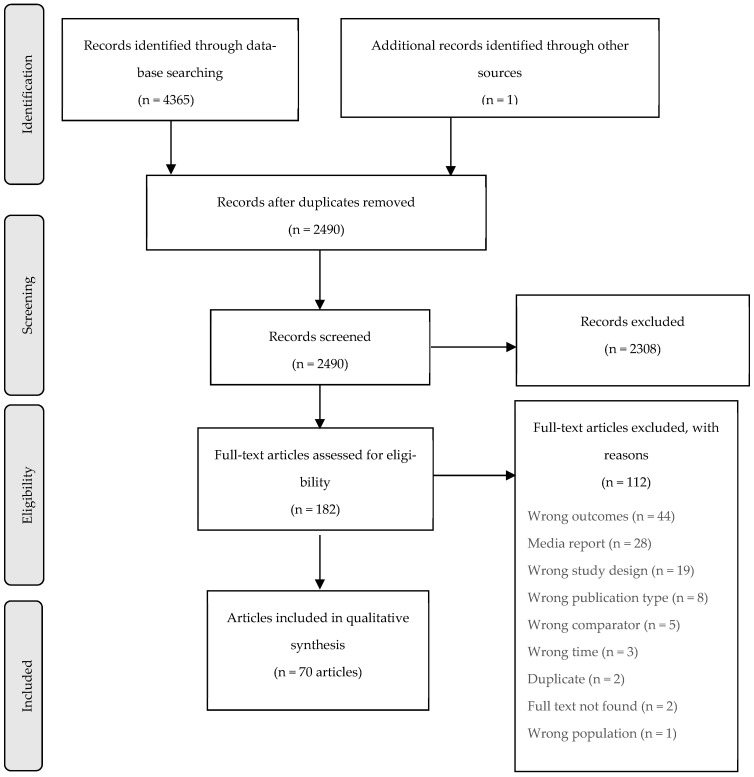
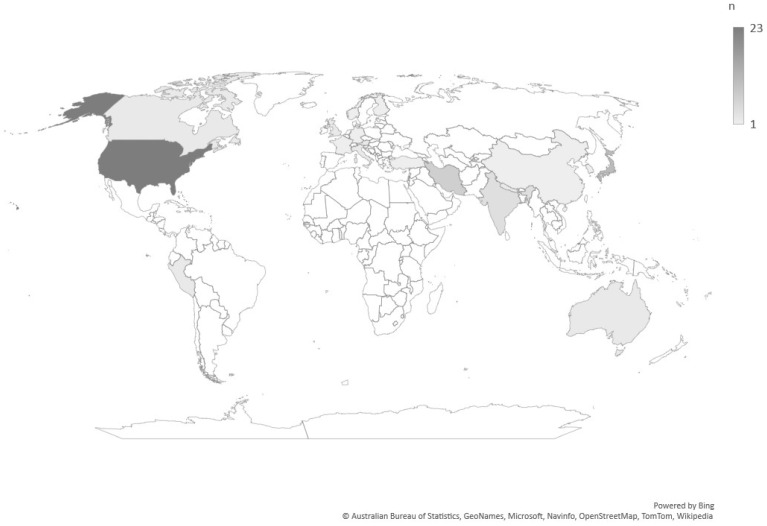
Verification
Claims the paper makes
The claims and statistics of this paper haven’t been checked yet.
Free: it reads the open-access text and checks the first 5 claims that cite a source we can check. Create a free account to check every claim.
Claims other papers make about this one
Each is checked against this paper’s own text: does it say what the citing paper says it does?
The source backs part of the claim, not all of it — or backs it for a different population, condition or comparison.
In the citing paper
“which reflect mortality patterns associated with increased drug and alcohol misuse and mental health disorders.43, 44”
From Global age-sex-specific mortality, life expectancy, and population estimates in 204 countries and territories and 811 subnational locations, 1950–2021, and the impact of the COVID-19 pandemic: a comprehensive demographic analysis for the Global Burden of Disease Study 2021 (2024) · cites this paper as [44]
Experimental — accuracy not yet measured
Self-check
Percentages, sums and reported differences re-computed from the paper’s own numbers.
The self-check needs the paper’s full text.
Citations
Cites
Santomauro, D. F., Mantilla Herrera, A. M., Shadid, J., Zheng, P., Ashbaugh, C., Pigott, D. M., Abbafati, C., Adolph, C., Amlag, J. O., Aravkin, A. Y., et al. (2021) · The Lancet · doi:10.1016/s0140-6736(21)02143-7 · Cited by 5,444
Updating guidance for reporting systematic reviews: development of the PRISMA 2020 statement
Page, M. J., McKenzie, J. E., Bossuyt, P. M., Boutron, I., Hoffmann, T. C., Mulrow, C. D., Shamseer, L., Tetzlaff, J. M., & Moher, D. (2021) · Journal of Clinical Epidemiology · doi:10.1016/j.jclinepi.2021.02.003 · Cited by 3,490
Rising morbidity and mortality in midlife among white non-Hispanic Americans in the 21st century
Case, A., & Deaton, A. (2015) · Proceedings of the National Academy of Sciences · doi:10.1073/pnas.1518393112 · Cited by 2,759 · cited 4×
“, alcoholism) and suicide for non-Hispanic middle-aged White people in the US in 2015 [11,12].”
BackgroundInfluentialThe rise of illicit fentanyls, stimulants and the fourth wave of the opioid overdose crisis
Ciccarone, D. (2021) · Current Opinion in Psychiatry · doi:10.1097/yco.0000000000000717 · Cited by 987 · cited 1×
“In addition, the current review also shows that this higher rise is mainly attributed to synthetic opioids, stimulants, and alcohol [82,94].”
BackgroundPirkis, J., John, A., Shin, S., DelPozo-Banos, M., Arya, V., Analuisa-Aguilar, P., Appleby, L., Arensman, E., Bantjes, J., Baran, A., et al. (2021) · The Lancet Psychiatry · doi:10.1016/s2215-0366(21)00091-2 · Cited by 734 · cited 4×
“Findings regarding suicide death rates during the pandemic are consistent with a study that analysed data from 21 countries showing either no changes or reductions in suicide [8].”
BackgroundResultInfluentialSuperordinate Goals in the Reduction of Intergroup Conflict
Sherif, M. (1958) · American Journal of Sociology · doi:10.1086/222258 · Cited by 643 · cited 1×
“Studies show superordinate goals, which refer to goals that require various social groups’ cooperation to accomplish, can create a sense of shared identity within communities and invert members’ perception of being from different groups into being from a single inclusive group [101,102].”
BackgroundIncrease in suicide following an initial decline during the COVID-19 pandemic in Japan
Tanaka, T., & Okamoto, S. (2021) · Nature Human Behaviour · doi:10.1038/s41562-020-01042-z · Cited by 610 · cited 11×
“Studies investigating suicide motives (Japan and Australia; n = 2) and suicide methods (Japan and US, n = 2) found no differences.”
BackgroundInfluentialContact with blue-green spaces during the COVID-19 pandemic lockdown beneficial for mental health.
Pouso, S., Borja, Á., Fleming, L. E., Gómez-Baggethun, E., White, M. P., & Uyarra, M. C. (2021) · Science of The Total Environment · doi:10.1016/j.scitotenv.2020.143984 · Cited by 604 · cited 1×
“, nature) that may alleviate pandemic-related stress [96,97] and impacts on deaths of despair.”
Association of urban green space with mental health and general health among adults in Australia
Astell-Burt, T., & Feng, X. (2019) · JAMA Network Open · doi:10.1001/jamanetworkopen.2019.8209 · Cited by 432
Self-citationSignal of increased opioid overdose during COVID-19 from emergency medical services data
Slavova, S., Rock, P., Bush, H. M., Quesinberry, D., & Walsh, S. L. (2020) · Drug and Alcohol Dependence · doi:10.1016/j.drugalcdep.2020.108176 · Cited by 401
Research works printed but not linked: 2
- UK National Statistical Bulletin Quarterly Alcohol-Specific Deaths in England and Wales: 2001 to 2019 Registrations and Quarter 1 (Jan to Mar) to Quarter 4 (Oct to Dec) 2020 Provisional Registrations UK National Statistical Bulletin Newport, UK 2021
- National Collaborating Centre for Methods and Tools Rapid Review Update 1: What is the Effect of the COVID-19 Pandemic on Opioid and Substance Use and Related Harms? National Collaborating Centre for Methods and Tools Hamilton, ON, Canada 2020
Cited by
Schumacher, A. E., Kyu, H. H., Aali, A., Abbafati, C., Abbas, J., Abbasgholizadeh, R., Abbasi, M. A., Abbasian, M., Abd ElHafeez, S., Abdelmasseh, M., et al. (2024) · The Lancet · doi:10.1016/s0140-6736(24)00476-8 · Cited by 1,045
Self-citationPandemic gardening: A narrative review, vignettes and implications for future research
Kingsley, J., Donati, K., Litt, J., Shimpo, N., Blythe, C., Vávra, J., Caputo, S., Milbourne, P., Diekmann, L. O., Rose, N., et al. (2023) · Urban forestry & urban greening · doi:10.1016/j.ufug.2023.128062 · Cited by 34
Self-citationIncome inequality and deaths of despair risk in Canada, identifying possible mechanisms
Loverock, A., Benny, C., Smith, B. T., Siddiqi, A., & Pabayo, R. (2024) · Social Science & Medicine · doi:10.1016/j.socscimed.2024.116623 · Cited by 24
Foster, T. B., Fernández, L., Porter, S. R., & Pharris-Ciurej, N. (2024) · Demography · doi:10.1215/00703370-11133943 · Cited by 17
Park, G. (2024) · Preventive Medicine · doi:10.1016/j.ypmed.2024.107920 · Cited by 15
The case for counting multiple causes of death in the COVID-19 era
Petit, M.-P., Ouellette, N., & Bourbeau, R. R. (2023) · International Journal of Epidemiology · doi:10.1093/ije/dyad149 · Cited by 13
Gómara, E. R., Palacios-Castaño, M.-I., Ochoa, E. M. M., & Rubio, C. Q. (2023) · Psychiatry Research · doi:10.1016/j.psychres.2023.115520 · Cited by 11
Effect of the COVID-19 Pandemic on Suicide Mortality in Brazil: An Interrupted Time Series Analysis
Meira, K. C., Guimarães, R. M., Jomar, R. T., da Silva, C. M. F. P., Braiti, F. S., & Dantas, E. S. O. (2025) · International Journal of Environmental Research and Public Health · doi:10.3390/ijerph22020138 · Cited by 11
“…aid policies during the second year of the pandemic likely exacerbated these economic vulnerabilities [11,22,23,27–29 The elderly population faced unique vulnerabilities during the pandemic, marked by a sharp increase in monthly suicide rates that persisted throughout the pandemic [75,77,78].”
Socio-economic vulnerability and deaths of despair in Brazilian counties
de Carvalho, W. R. G., Meira, K. C., de Medeiros, A. G. P., Neves, L. B. D. S., Vardiero, N. A., & Guimarães, R. M. (2024) · Preventive Medicine Reports · doi:10.1016/j.pmedr.2024.102623 · Cited by 6
“Not as Bad as the ‘90s”? Firearm Violence in Small, Mid-Size, and Large US Cities, 2015–2021
Wade, M. M. (2023) · Homicide Studies · doi:10.1177/10887679231163287 · Cited by 6
Yu, R. A., Goulter, N., Godwin, J. W., & McMahon, R. J. (2023) · Clinical Child and Family Psychology Review · doi:10.1007/s10567-023-00459-y · Cited by 6
“Early research examining the impact of the COVID-19 pandemic in the U.S. suggests that deaths related to alcohol and sub-stances increased while suicide followed a less consistent pattern, with the 2021 suicide rate similar to that in 2018 (Rahimi-Ardabili et al., 2022).”
ResultPeña, J. R. Z., Peña, J., Landaeta, A. P. V., Ferro, E., Marín, A. L., Bejarano, D. R. C., & López, J. E. B. (2023) · Revista Colombiana de Psiquiatría · doi:10.1016/j.rcp.2023.09.001 · Cited by 4
Marital Status and Deaths from Alcohol, Drug Overdose, and Suicide in the United States: 2000–2021
Ruan, H., Gao, G., Xiong, Y., & Cohen, P. N. (2024) · Socius Sociological Research for a Dynamic World · doi:10.1177/23780231241275429 · Cited by 4
“This is consistent with previous studies on trends in three types of deaths (Angus et al. 2023; Rahimi-Ardabili et al. 2022).”
Glancy, M., McAuley, A., Palmateer, N. E., Trayner, K. M. A., Yeung, A., Barnsdale, L. R., Priyadarshi, S., Horsburgh, K., Hickman, M., & Hutchinson, S. J. (2025) · International Journal of Drug Policy · doi:10.1016/j.drugpo.2025.104912 · Cited by 2
Deaths of despair in Mexico. Secondary analysis from the Global Burden of Disease Study, 1990–2021
Dávila-Cervantes, C. A. (2025) · Journal of Public Health · doi:10.1007/s10389-025-02497-y · Cited by 1
Born in the USA? A scoping review of deaths of despair research beyond the United States
Williams, E. H., & Saville, C. W. N. (2026) · Social Science & Medicine · doi:10.1016/j.socscimed.2026.118944 · Cited by 1
Cullip, M., Rosenthal, J. S., & Dmetrichuk, J. M. (2026) · Forensic Science International · doi:10.1016/j.forsciint.2026.113031 · Cited by 1
Alcohol-Induced & Drug-Induced Deaths in Hawai‘i During the COVID-19 Pandemic
Witten, N. A. K., & Caballero, C. G. (2024) · Hawai‘i Journal of Health & Social Welfare · doi:10.62547/iygw7064 · Cited by 1
Lebenbaum, M., & Fletcher, J. M. (2024) · American Journal of Epidemiology · doi:10.1093/aje/kwae289
Wyatt, S., Spencer, J., Seamer, P., Jones, A., Turner, A., Stafford, M., Marszalek, K., & Mohammed, M. (2024) · SSRN Electronic Journal · doi:10.2139/ssrn.5045047
Dice, A. L. E. (2024) · SSM - Mental Health · doi:10.1016/j.ssmmh.2024.100381
Understanding deaths of despair in US counties through Bourdieu's theory of capital
Kim, S. (2022) · Scholars Archive - University at Albany (University at Albany, State University of New York) · doi:10.54014/m9s7-kdvx
Reuben, A., Milne, B., Shah, D., Brennan, G. M., Pearson, A. L., Richmond‐Rakerd, L. S., Guiney, H., Harrington, H., Hobbs, M., Houts, R., et al. (2026) · Clinical Psychological Science · doi:10.1177/21677026261425570
“…States in 2015 (Case & Deaton, 2015), the trend has continued (with enhancement during the COVD-19 pandemic; Friedman & Hansen, 2024 Heuveline, 2022; Rahimi-Ardabili et al., 2022; Schöley et al., 2022) and contributed to recent declines in U.S. life expectancy (Gold, 2020; Harris et al., 2021).”
Introduction: Burdens of Despair
Respess, S., & Counted, V. (2026) · Springer eBooks · doi:10.1007/978-3-032-29101-1_1
Structural vulnerabilities? Trends in preventable deaths of despair in the Netherlands, 2013-2023
Marco, M. H. D., Vrinzen, S., Berkelmans, G., Schweren, L., Mérelle, S. Y. M., & Liem, M. C. A. (2026) · Public Health · doi:10.1016/j.puhe.2026.106447
Wyatt, S., Spencer, J., Seamer, P., Jones, A., Turner, A., Stafford, M., Marszalek, K., & Mohammed, M. A. (2026) · International Journal of Public Health · doi:10.3389/ijph.2026.1609841
“This pattern is consistent with evidence that the pandemic disproportionately affected socially and economically disadvantaged populations through healthcare disruption, financial insecurity, bereavement, and changes in the availability and use of alcohol and drugs [27–29].”
Metadata
- Authors
- Rahimi-Ardabili, H., Feng, X., Nguyen, P.-Y., & Astell-Burt, T.
- Affiliations
- Centre for Health Informatics, Australian Institute of Health Innovation, Macquarie University, Sydney 2109, Australia
- University of Wollongong (AU)
- UNSW Sydney (AU)
- Population Wellbeing and Environment Research Lab (PowerLab), Wollongong 2522, Australia
- Venue
- International Journal of Environmental Research and Public Health
- Publisher
- MDPI AG
- Published
- 2022-10-07
- Volume
- 19
- Issue
- 19
- Pages
- 12835
- ISSN
- 1660-4601 (ISSN-L)
- PMC
- PMC9564909
- OpenAlex
- W4303696596
- Cited by
- 26
- References
- 101
- Citations by year
- 2026: 6 · 2025: 3 · 2024: 10 · 2023: 6 · 2022: 1
- FWCI
- 0.84
- Type
- journal article
- Language
- en
- Open access
- gold
- doi.org
- Licence
- Locations
- International Journal of Environmental Research and Public Health (publishedVersion, cc-by)
- medRxiv (acceptedVersion, cc-by-nc-nd)
- PubMed Central (publishedVersion, cc-by)
- PubMed (publishedVersion)
- Research Online (University of Wollongong) (submittedVersion)
- DOAJ (DOAJ: Directory of Open Access Journals) (submittedVersion)
- Funders
- National Health and Medical Research Council Boosting Dementia Research Leader Fellowship (#1140317, #1148792)
- National Health and Medical Research Council Career Development Fellowship (#1140317, #1148792)
- Topics
- Social Sciences › Psychology › Clinical Psychology › COVID-19 and Mental Health
- Social Sciences › Psychology › Clinical Psychology › Suicide and Self-Harm Studies
- Health Sciences › Medicine › Public Health, Environmental and Occupational Health › Opioid Use Disorder Treatment
- Keywords
- deaths of despair, COVID-19 pandemic, suicide, drug overdose, social isolation, health equity, minority groups, women, post-pandemic recovery, resilience
- MeSH terms
- COVID-19, Female, Humans, Income, Suicide, Pandemics, Drug Overdose
About these checks
Registry, retraction, Cites and statistics results are computed, not judged, with one exception: a printed reference that no index lists is read once by a model before it counts as a citation error. Claims are extracted by a model and kept only when their quote appears verbatim in the text; each cited source is then checked, with a model’s help, for whether it says what the claim relies on. Those verdicts can be wrong — read the claim’s quote and the cited source before relying on one.
Statistics and arithmetic are recomputed, not judged.
Confidence bands are shown only for fields calibrated on our annotated test set. None is calibrated yet, so no band is shown.
What counts as a claim ›How we measure confidence ›How we check this ›
Are you an author, or do you see a problem with this page? Request a review
Data sources
Bibliographic data: Semantic Scholar, OpenAlex, Crossref.
Contains information from the Semantic Scholar Academic Graph Datasets, made available under the ODC Attribution License (ODC-BY 1.0).
Semantic Scholar’s data is described in: Kinney, R., et al. (2023). The Semantic Scholar Open Data Platform. arXiv:2301.10140.
