

The DOI matches its Crossref record; 28 of the 28 references it cites were found in a registry or an index.
The Effect of Family Fertility Support Policies on Fertility, Their Contribution, and Policy Pathways to Fertility Improvement in OECD Countries
Open accessAbstract
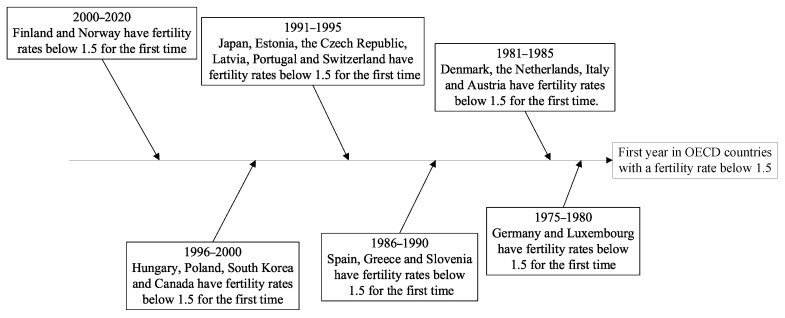
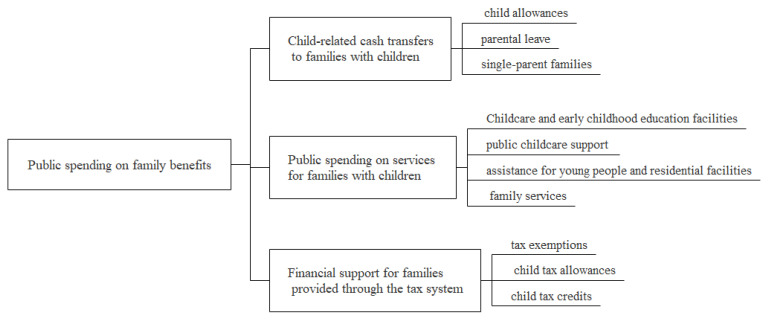
The cost of childbirth has been confirmed as a vital factor in families’ fertility decision-making, and family welfare policies are capable of compensating for the increase in household living expenses regarding childbirth, such that the country’s fertility situation can be optimized. In this study, the fertility promotion effects of family welfare policies in OECD(Organization for Economic Co-operation and Development) countries are investigated through regression analysis, grey correlation (GRA), and the fuzzy set qualitative comparative analysis fsQCA method. As indicated by the results: (1) Family welfare policies notably boost fertility, and the boosting effect is long-lasting. However, this boost will be weakened in countries where fertility rates remain below 1.5. (2) The contribution of welfare policy measures to the fertility-promotion effect varies by country. The contribution of cash benefits is highest in over half of the countries worldwide, the contribution of relevant services and in-kind expenditure is highest in 29% of the countries, and that of tax incentive expenditure is highest in 14% of the countries. (3) The policy mix to boost fertility also varies according to the social context, with three policy groups derived using the fsQCA method. To be specific, the core antecedent conditions comprise cash benefits, relevant services, and in-kind expenditure. On that basis, China should pay attention to the following three points when formulating family welfare policies to tackle their demographic challenges. First, a system of family welfare policies should be developed as early as possible in the context of increasingly severe demographic issues since the incentive effect of family welfare policies will be weakened in countries with chronically low fertility rates. Second, the effects of improvements vary by country, and China should comprehensively consider its national circumstances when formulating and dynamically adjusting the mix of government fertility support policies in accordance with its social development. Third, employment is the main means of securing family income and takes on critical significance to sustaining families. Unemployment exerts a significant disincentive effect, such that it is imperative to reduce youth unemployment and enhance the quality of youth employment. On that basis, the disincentive effect of unemployment on fertility can be reduced.
Overview
The claims and statistics of this paper haven’t been checked yet.
Run the check — free, no account needed. It reads the open-access text and checks the sources it cites.
Integrity signals
Registry
Cites
Statistics
Figures
Verification
Claims the paper makes
The claims and statistics of this paper haven’t been checked yet.
Run the check — free, no account needed. It reads the open-access text and checks the sources it cites.
Claims other papers make about this one
Each is checked against this paper’s own text: does it say what the citing paper says it does?
The cited source says what the claim attributes to it.
In the citing paper
“the recent crossnational analysis by Zhang et al. (2023) estimates that a one percentage point increase in public expenditures on family benefits (as a percentage of the GDP) would result in an increase in the TFR of 0.069 children per woman.”
From Family Policies in Low Fertility Countries: Evidence and Reflections (2025) · cites this paper as Zhang et al. (2023)
Self-check
Percentages, sums and reported differences re-computed from the paper’s own numbers.
The self-check needs the paper’s full text.
Citations
Cites
Europe's second demographic transition.
van de Kaa, D. J. (1987) · PubMed · Cited by 1,935
France: High and stable fertility
Toulemon, L., Pailhé, A., & Rossier, C. (2008) · Demographic Research · doi:10.4054/demres.2008.19.16 · Cited by 165 · cited 4×
“Toulemon, Pailhe and Rossier [14] 2008 A comparative analysis illustrates the reasons for the high and stable fertility rate in France.”
BackgroundInfluentialMatthews, S. A., Ribar, D. C., & Ottoni–Wilhelm, M. (1997) · Family Planning Perspectives · doi:10.2307/2953362 · Cited by 127
The effect of public policies on recent Swedish fertility behavior
Walker, J. R. (1995) · Journal of Population Economics · doi:10.1007/bf00185251 · Cited by 122
Welfare state policy determinants of fertility level: A comparative analysis
Rovny, A. E. (2011) · Journal of European Social Policy · doi:10.1177/0958928711412221 · Cited by 69 · cited 1×
“Rovny, AE (2011) [26] found that active labour market policies, generous work and family policies encourage higher fertility rates.”
BackgroundPourreza, A., Sadeghi, A., Rarani, M. A., Khodayari‐Zarnaq, R., & Jafari, H. (2021) · Journal of Health Population and Nutrition · doi:10.1186/s41043-021-00239-w · Cited by 54
Can a cash transfer to families change fertility behaviour?
Andersen, S. N., Drange, N., & Lappegård, T. (2018) · Demographic Research · doi:10.4054/demres.2018.38.33 · Cited by 21 · cited 1×
“; Lappegård, T (2018) [4] point out that the effect of family policy on fertility behaviour depends on the income effect of the policy and the opportunity cost of childcare to parents.”
BackgroundLeisure goods, education attainment and fertility choice
Galindev, R. (2011) · Journal of Economic Growth · doi:10.1007/s10887-011-9064-3 · Cited by 15
Capping Kids: The Family Cap and Nonmarital Childbearing
Horvath-Rose, A. E., Peters, H. E., & Sabia, J. J. (2008) · Population Research and Policy Review · doi:10.1007/s11113-008-9076-7 · Cited by 15
PUBLIC EDUCATION, FERTILITY INCENTIVES, NEOCLASSICAL ECONOMIC GROWTH AND WELFARE
Fanti, L., & Gori, L. (2010) · Bulletin of Economic Research · doi:10.1111/j.1467-8586.2009.00326.x · Cited by 10 · cited 1×
“Fanti, L; Gori, L (2010) [20] analysis shows that developed countries with below-replacement fertility and stagnant incomes can increase per capita income and fertility by increasing public spending on education rather than relying on child allowances.”
BackgroundWelfare Generosity, Abortion Access, and Abortion Rates: A Comparison of State Policy Tools
Hussey, L. S. (2010) · Social Science Quarterly · doi:10.1111/j.1540-6237.2010.00692.x · Cited by 9 · cited 1×
“For instance, Hussey, LS (2010) [6] notes that extensive family leave laws are associated with lower abortion rates.”
BackgroundA study on the influence of family values and birth policy on the wanted fertility rate
배광일, & KimKyeongshin (2012) · Korean Journal of Social Welfare Studies · doi:10.16999/kasws.2012.43.3.239 · Cited by 9
Economic Approaches to Understanding Families
Becker, G. S. (2004) · Annals of the New York Academy of Sciences · doi:10.1196/annals.1315.027 · Cited by 7 · cited 3×
“…and childcare expenses necessary for the growth of children; second, the indirect cost of childbearing, which is the loss of income from work and the loss of human capital due to parents leaving the workplace for childbearing and childcare (Gary S. Becker, 2004; James R. Walker, 1994) [29,30].”
BackgroundInfluentialSeo, J. (2017) · Journal of Comparative Policy Analysis Research and Practice · doi:10.1080/13876988.2017.1411012 · Cited by 3 · cited 1×
“The main measures taken by Korea to cope with low fertility are the provision of childcare and enhanced maternity protection (Seo, J (2019) [24]).”
BackgroundFamily Welfare Policies and Fertility Rate
Chai, G.-M. (2005) · Korean Journal of Social Welfare · Cited by 3
Jeon, S. B. (2020) · The Journal of the Korea Contents Association · doi:10.5392/jkca.2020.20.08.251 · Cited by 2 · cited 2×
“For instance, Bong, Jeon, and Seung (2021), Lin, and Kim (2016), and Yunkyu (2014) [17,28,32] qualitatively analyzed the effects of combinations of antecedent variables on fertility using fuzzy sets.”
BackgroundMethodGerman Low Fertility Issue and Recently Changing Correspondence
Lee, J. S., & Kim, T. W. (2014) · Journal of international area studies · doi:10.18327/jias.2014.04.18.1.3 · Cited by 2 · cited 1×
“For instance, the traditional cash subsidy method in Germany is not effective at this stage, and a more effective solution to the fertility problem in Germany at this stage is to strengthen work–family coordination (Lee, Jinsook; Kim, Taewon (2014) [21]).”
MethodJung, J. H., Kim, H., & Lim, J. (2019) · Korean Journal of Public Finance · Cited by 2
Examining Parental Expenditure on Children in Ghana
Asmah, E. E., Andoh, F. K., Sekyi, N. A. S. A., Mwinlaaru, P. Y., & Bukari, C. (2022) · Journal of Family and Economic Issues · doi:10.1007/s10834-022-09870-z · Cited by 2 · cited 1×
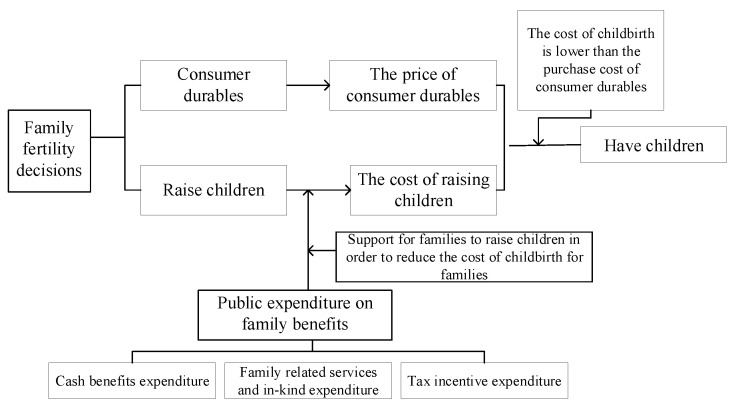
“The Effect of Family Welfare Policies on Fertility The cost of childbearing is an important factor in household decision-making, and the increase in household expenditure resulting from childbearing increases with the age of the children, with food and education expenditure accounting for the largest share of addition…”
BackgroundThe socio-economic context of the publicness of child care service in welfare states
류연규 (2013) · Korean Journal of Family Social Work · doi:10.16975/kjfsw.2013..39.006 · Cited by 1 · cited 2×
“Yunkyu and Ryoo (2014) [17] also suggested that improving childcare services can lower the risk of low fertility rates.”
Background[Relationship between fertility policy and family policy].
Kojima, H. (1985) · PubMed · Cited by 1
Kim, S.-N. (2016) · The Korean Society for Child Education · doi:10.17643/kjce.2016.25.4.08 · Cited by 1 · cited 1×
“environment that reconciles family and work, providing childcare services through public services and satisfying the need for the country to bear the necessary costs of childbirth (Kim Seon-nyeo (2016) [15]), so as to achieve the non-exclusion and equal distribution of public resources (Yan, W (2017) [16]).”
BackgroundFamily-based Policy in the Period of Low Fertility Rate
Wang, Y. (2017) · International Conference on Management, Education and Social Science (ICMESS) · doi:10.2991/icmess-17.2017.132 · Cited by 1 · cited 1×
“environment that reconciles family and work, providing childcare services through public services and satisfying the need for the country to bear the necessary costs of childbirth (Kim Seon-nyeo (2016) [15]), so as to achieve the non-exclusion and equal distribution of public resources (Yan, W (2017) [16]).”
BackgroundChoi, S. J., & Lee, M. S. (2013) · Korean Journal of Policy Analysis and Evaluation · Cited by 1
An Analysis of Women's Employment Rate, Fertility and Childcare Service Policy in OECD Countries
허아랑, Lin, K. Y., & Kim, K. S. (2015) · Korean Journal of Policy Analysis and Evaluation · Cited by 1
Yun, S. (2014) · Journal of the Korean society of child welfare · Cited by 1
Kim, Y. R. (2018) · The Korean Society For German History · doi:10.17995/kjgs.2018.2.37.163 · Cited by 1
Research works printed but not linked: 4
- Ellingsaeter, 2013, The Ffoundation of Fertility in the Norwegian Welfare State, Tidsskr. Samf., 54, 3
- Kim, 2012, A Reflective Discussion of Birth Encouragement Policy and Child Welfare in Korea, J. Child Welf. Dev., 10, 67
- Chen, 2021, Research progress on the theory and practice of fertility support abroad, Popul. J., 43, 54
- Ragin, C.C. (2000). Fuzzy-Set Social Science, University of Chicago Press.
Cited by
Family Policies in Low Fertility Countries: Evidence and Reflections
Gauthier, A. H., & Gietel‐Basten, S. (2025) · Population and Development Review · doi:10.1111/padr.12691 · Cited by 45
Zhao, J., Qi, W., Cheng, Y., Hao, R., Yuan, M., Jin, H., Wang, Y., Lv, H., Wu, Y., & Hu, J. (2024) · Reproductive Health · doi:10.1186/s12978-024-01855-5 · Cited by 35
“Previous studies have shown that some external stressors, such as labor pains, economic burdens [9], workplace competition [10], and conflicts between work and family [11], are also associated with one’s fertility intention.”
BackgroundDong, W., Wang, X., Yuan, F., Wang, L., Gu, T.-M., Zhu, B.-Q., & Shao, J. (2024) · Human Reproduction Open · doi:10.1093/hropen/hoae055 · Cited by 14
“…(i) the effect may be different due to disparities in unemployment status, child-rearing ratios in couples, and childcare burdens across countries (Zhang et al. , 2023); (ii) an extension of the policy to childless families could be a great burden to the government (in our estimation, it was 6.4…”
BackgroundInfluentialKobyakova, О. S., Шибалков, И. П., Алексеевич, С. И., Тимонин, С. А., Евгеньевич, Щ. А., Дмитриевич, Л. М., Тюфилин, Д. С., Деев, И. А., Nikitina, S. Y., & Federal State Statistics Service, 3. M. S. (2024) · Health Risk Analysis · doi:10.21668/health.risk/2024.2.01 · Cited by 9
Chenyun, Z., Zhou, Y., Ke, Y., Zhang, W., Qin, M., Alias, H., & Wong, L. P. (2025) · Frontiers in Public Health · doi:10.3389/fpubh.2025.1674687 · Cited by 6
Metadata
- Authors
- Zhang, T.-T., Cai, X.-Y., Shi, X.-H., Zhu, W., & Shan, S.-N.
- Affiliations
- School of Public Finance and Taxation, Capital University of Economics and Business, Beijing 100070, China
- Capital University of Economics and Business (CN)
- Shanxi Normal University (CN)
- Institute of Industrial and Economic Policy, Beijing Economic and Technological Development Zone (BDA), Beijing 100070, China
- School of Business, Shenyang University, Shenyang 110064, China
- Venue
- International Journal of Environmental Research and Public Health
- Publisher
- MDPI AG
- Published
- 2023-03-08
- Volume
- 20
- Issue
- 6
- Pages
- 4790
- ISSN
- 1660-4601 (ISSN-L)
- PMC
- PMC10049131
- OpenAlex
- W4323664921
- Cited by
- 37
- References
- 28
- Citations by year
- 2026: 16 · 2025: 12 · 2024: 8 · 2023: 1
- FWCI
- 15.90
- Type
- journal article
- Language
- en
- Open access
- gold
- doi.org
- Licence
- Locations
- International Journal of Environmental Research and Public Health (publishedVersion, cc-by)
- PubMed Central (publishedVersion, cc-by)
- PubMed (publishedVersion)
- RePEc: Research Papers in Economics (submittedVersion)
- Funders
- Social Science Fund Project of Liaoning Province (L20BZZ006)
- Topics
- Social Sciences › Sociology and Political Science › Social Policies and Family
- Social Sciences › Demography › Family Dynamics and Relationships
- Social Sciences › Gender Studies › Demographic Trends and Gender Preferences
- Keywords
- family welfare policy, fertility rate, low fertility, cash benefits, in-kind benefits, tax incentives, policy mix, youth unemployment, OECD countries
- MeSH terms
- Adolescent, Demography, Developing Countries, Economics, Fertility, Humans, Population Dynamics, Public Policy, Socioeconomic Factors, Organisation for Economic Co-Operation and Development
About these checks
Registry, retraction, Cites and statistics results are computed, not judged, with one exception: a printed reference that no index lists is read once by a model before it counts as a citation error. Claims are extracted by a model and kept only when their quote appears verbatim in the text; each cited source is then checked, with a model’s help, for whether it says what the claim relies on. Those verdicts can be wrong — read the claim’s quote and the cited source before relying on one.
Statistics and arithmetic are recomputed, not judged.
Confidence bands are shown only for fields calibrated on our annotated test set. None is calibrated yet, so no band is shown.
What counts as a claim ›How we measure confidence ›How we check this ›
Are you an author, or do you see a problem with this page? Request a review
