

The DOI matches its Crossref record; 6 of the 6 references it cites were found in a registry or an index.
Human health risk assessment due to global warming–a case study of the Gulf countries
Open accessAbstract
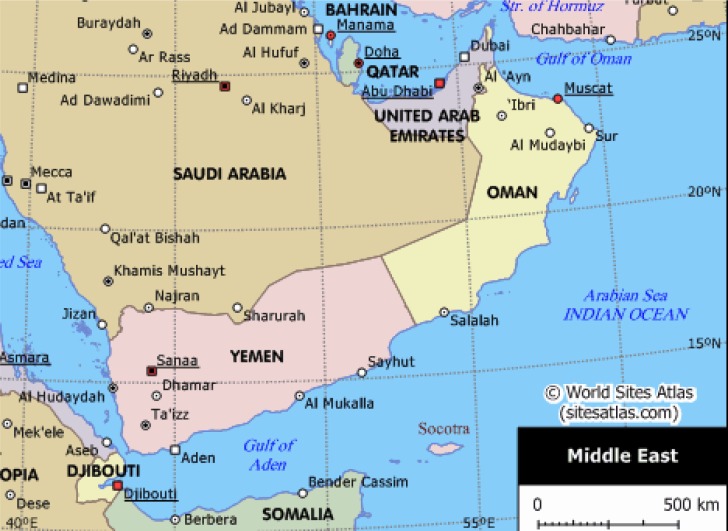
Accelerated global warming is predicted by the Intergovernmental Panel on Climatic Change (IPCC) due to increasing anthropogenic greenhouse gas emissions. The climate changes are anticipated to have a long-term impact on human health, marine and terrestrial ecosystems, water resources and vegetation. Due to rising sea levels, low lying coastal regions will be flooded, farmlands will be threatened and scarcity of fresh water resources will be aggravated. This will in turn cause increased human suffering in different parts of the world. Spread of disease vectors will contribute towards high mortality, along with the heat related deaths. Arid and hot climatic regions will face devastating effects risking survival of the fragile plant species, wild animals, and other desert ecosystems. The paper presents future changes in temperature, precipitation and humidity and their direct and indirect potential impacts on human health in the coastal regions of the Gulf countries including Yemen, Oman, United Arab Emirates, Qatar, and Bahrain. The analysis is based on the long-term changes in the values of temperature, precipitation and humidity as predicted by the global climatic simulation models under different scenarios of GHG emission levels. Monthly data on temperature, precipitation, and humidity were retrieved from IPCC databases for longitude 41.25°E to 61.875°E and latitude 9.278°N to 27.833°N. Using an average of 1970 to 2000 values as baseline, the changes in the humidity, temperature and precipitation were predicted for the period 2020 to 2050 and 2070 to 2099. Based on epidemiological studies on various diseases associated with the change in temperature, humidity and precipitation in arid and hot regions, empirical models were developed to assess human health risk in the Gulf region to predict elevated levels of diseases and mortality rates under different emission scenarios as developed by the IPCC.The preliminary assessment indicates increased mortality rates due to cardiovascular and respiratory illnesses, thermal stress, and increased frequency of infectious vector borne diseases in the region between 2070 and 2099.
Overview
The claims and statistics of this paper haven’t been checked yet.
Run the check — free, no account needed. It reads the open-access text and checks the sources it cites.
Integrity signals
Registry
Cites
Statistics
Figures
Verification
Claims the paper makes
The claims and statistics of this paper haven’t been checked yet.
Run the check — free, no account needed. It reads the open-access text and checks the sources it cites.
Claims other papers make about this one
Each is checked against this paper’s own text: does it say what the citing paper says it does?
The source backs part of the claim, not all of it — or backs it for a different population, condition or comparison.
In the citing paper
“Temperatures are projected to rise further, reaching levels incompatible with human habitation, particularly in the coastal areas along the Arabian Gulf (Husain and Chaudhary, 2008; Pal and Eltahir, 2016).”
From Assessment of Heat Stress Exposure among Construction Workers in the Hot Desert Climate of Saudi Arabia (2019) · cites this paper as Husain and Chaudhary, 2008
Experimental — accuracy not yet measured
Self-check
Percentages, sums and reported differences re-computed from the paper’s own numbers.
The self-check needs the paper’s full text.
Citations
Cites
Impact of regional climate change on human health
Patz, J. A., Campbell-Lendrum, D., Holloway, T., & Foley, J. A. (2005) · Nature · doi:10.1038/nature04188 · Cited by 3,103
Impact of hot temperatures on death in London: a time series approach
Hajat, S., Kovats, S. R., Atkinson, R. W., & Haines, A. (2002) · Journal of Epidemiology & Community Health · doi:10.1136/jech.56.5.367 · Cited by 404
The impact of climate change on human health: Some international implications
Kalkstein, L. S., & Smoyer, K. E. (1993) · Experientia · doi:10.1007/bf02125644 · Cited by 180
Dessai, S. (2003) · International Journal of Biometeorology · doi:10.1007/s00484-003-0180-4 · Cited by 154
(2003) · Springer eBooks · doi:10.1007/978-4-431-53985-8 · Cited by 110
Global Climate Change — the Latest Assessment: Does Global Warming Warrant a Health Warning?
Watson, R., & Aj, M. (2001) · Global Change and Human Health · doi:10.1023/a:1011914326191 · Cited by 24
Cited by
Sorted by citations
Managing the health effects of climate change
Costello, A., Abbas, M., Allen, A., Ball, S., Bell, S., Bellamy, R., Friel, S., Groce, N., Johnson, A., Kett, M., et al. (2009) · The Lancet · doi:10.1016/s0140-6736(09)60935-1 · Cited by 3,102
Kjellstrom, T., Butler, A. J., Lucas, R. M., & Bonita, R. (2010) · International Journal of Public Health · doi:10.1007/s00038-009-0090-2 · Cited by 159
Al-Bouwarthan, M., Quinn, M. M., Kriebel, D., & Wegman, D. H. (2019) · Annals of Work Exposures and Health · doi:10.1093/annweh/wxz033 · Cited by 158
Metadata
- Authors
- Husain, T., & Chaudhary, J. R.
- Affiliations
- Memorial University of Newfoundland (CA)
- Corresponding author
- Husain, Tahir
- ORCID
- Husain, Tahir
- Venue
- International Journal of Environmental Research and Public Health
- Publisher
- MDPI AG
- Published
- 2008-11-28
- Volume
- 5
- Issue
- 4
- Pages
- 204-212
- ISSN
- 1660-4601 (ISSN-L)
- PMC
- PMC2672314
- OpenAlex
- W2012213466
- Cited by
- 41
- References
- 6
- Citations by year
- 2026: 1 · 2025: 2 · 2024: 1 · 2023: 4 · 2022: 3 · 2021: 3 · 2020: 2 · 2019: 3 · 2018: 2 · 2016: 1 · 2015: 2 · 2014: 2 · 2013: 3 · 2012: 4
- FWCI
- 1.84
- Type
- journal article
- Language
- en
- Open access
- gold
- doi.org
- Licence
- Locations
- International Journal of Environmental Research and Public Health (publishedVersion, cc-by)
- PubMed Central (publishedVersion, cc-by)
- PubMed (publishedVersion)
- RePEc: Research Papers in Economics (submittedVersion)
- DOAJ (DOAJ: Directory of Open Access Journals) (submittedVersion)
- Funders
- Natural Sciences and Engineering Research Council of Canada
- Topics
- Physical Sciences › Environmental Science › Health, Toxicology and Mutagenesis › Climate Change and Health Impacts
- Physical Sciences › Environmental Science › Global and Planetary Change › Climate Change and Environmental Impact
- Physical Sciences › Environmental Science › Global and Planetary Change › Climate variability and models
- Keywords
- global warming, human health risk assessment, Gulf states, health impacts of climate change, temperature projections, precipitation projections, humidity, greenhouse gas emissions scenarios, cardiovascular mortality, respiratory mortality, heat-related mortality, vector-borne diseases, coastal flooding, water scarcity
- MeSH terms
- Computer Simulation, Conservation of Natural Resources, Disasters, Environmental Monitoring, Forecasting, Humans, Middle East, Models, Theoretical, Greenhouse Effect, Risk Assessment, Indian Ocean
About these checks
Registry, retraction, Cites and statistics results are computed, not judged, with one exception: a printed reference that no index lists is read once by a model before it counts as a citation error. Claims are extracted by a model and kept only when their quote appears verbatim in the text; each cited source is then checked, with a model’s help, for whether it says what the claim relies on. Those verdicts can be wrong — read the claim’s quote and the cited source before relying on one.
Statistics and arithmetic are recomputed, not judged.
Confidence bands are shown only for fields calibrated on our annotated test set. None is calibrated yet, so no band is shown.
What counts as a claim ›How we measure confidence ›How we check this ›
Are you an author, or do you see a problem with this page? Request a review
