

Adolescents’ Daily Activities and the Restorative Niches that Support Them
Open accessThe DOI matches its Crossref record; 24 of the 25 references it cites were found in a registry or an index.
Abstract
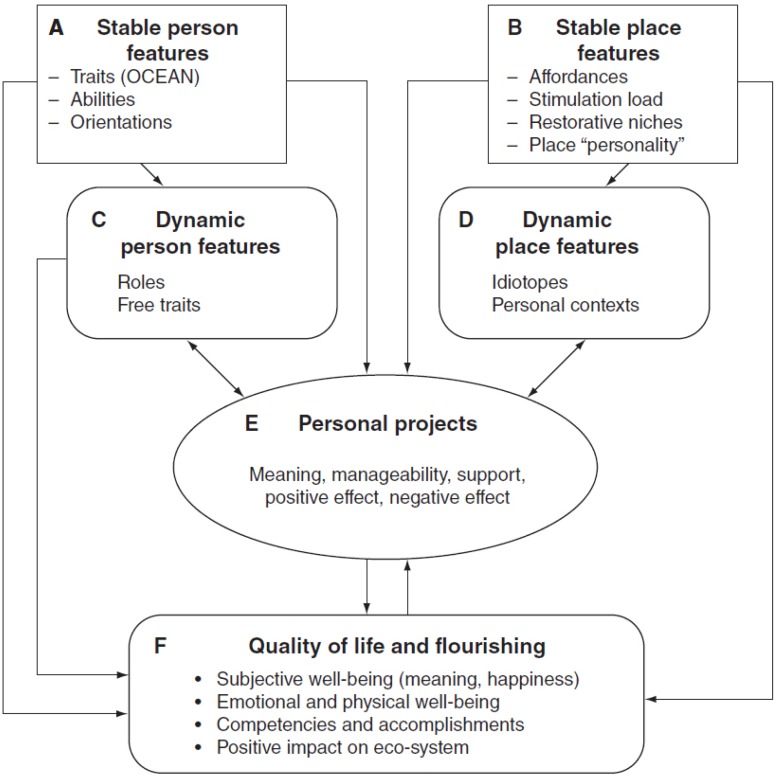
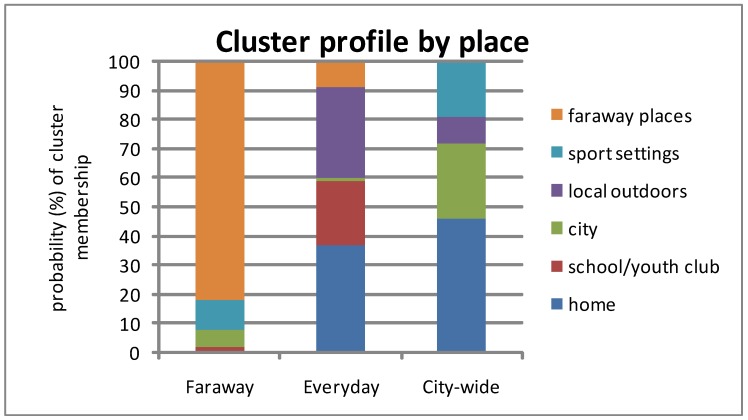
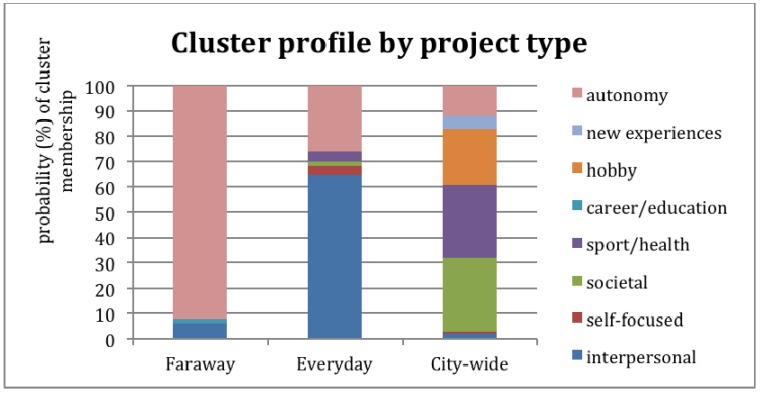
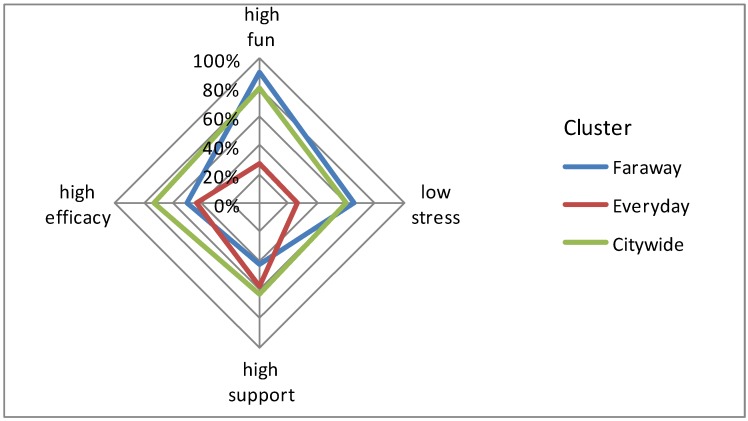
This paper explores wellbeing from the perspective of the psychological dynamics underlying adolescents’ relationship with place. It uses a dynamic model of wellbeing called personal project analysis (PPA) which captures the concept of ‘flourishing’, defined as functioning well in your activities, strivings and interactions with the world [1]. Using PPA methods we identified adolescents’ daily activities and the ‘restorative niches’ that best support them. A series of settings (including home, urban and natural outdoor places) were explored using PPA with 45 young people (aged 11–13) living in Edinburgh, Central Scotland. Participants were asked to think of eight projects of current importance to them, to say where the project took place and to rate each project against a series of core wellbeing dimensions measuring project meaning, manageability, support and affect (how much fun, stress etc.). Latent class analysis was carried out to explore clusters—or sub-groups—in the data and to identify the significant discriminators between clusters. A three-cluster model produced the best fit with project type, project place and wellbeing indicators (fun and stress) significantly discriminating between the three clusters. The three clusters were labeled by their dominant environmental context, ‘faraway’ (e.g., beach, national parks, hills), ‘everyday’ (e.g., home, school, local streets) and ‘citywide’ (e.g., sport settings, urban town context). ‘Faraway’ and ‘citywide’ clusters had a significantly higher wellbeing content, especially for fun and stress; the ‘everyday’ cluster indicated local environs remain a dominant project place for this age group, but are associated with greater stress. We compare findings with adults and suggest that outdoor settings further afield from home have greater significance within adolescent project systems, but that support is needed to facilitate access to these places.
Overview
The claims and statistics of this paper haven’t been checked yet.
Free: it reads the open-access text and checks the first 5 claims that cite a source we can check. Create a free account to check every claim.
Integrity signals
Registry
Cites
Statistics
Figures
Verification
Claims the paper makes
The claims and statistics of this paper haven’t been checked yet.
Free: it reads the open-access text and checks the first 5 claims that cite a source we can check. Create a free account to check every claim.
Claims other papers make about this one
Each is checked against this paper’s own text: does it say what the citing paper says it does?
The source backs part of the claim, not all of it — or backs it for a different population, condition or comparison.
In the citing paper
“Research has shown that blue spaces are the best option for rest and relaxation among people [47,48].”
From Blue and Green Spaces as Therapeutic Landscapes: Health Effects of Urban Water Canal Areas of Isfahan (2018) · cites this paper as [47]
Experimental — accuracy not yet measured
Self-check
Percentages, sums and reported differences re-computed from the paper’s own numbers.
The self-check needs the paper’s full text.
Citations
Cites
The "what" and "why" of goal pursuits: Human needs and the self-determination of behavior
Deci, E. L., & Ryan, R. M. (2000) · Psychological Inquiry · doi:10.1207/s15327965pli1104_01 · Cited by 34,210 · cited 1×
“being developed in the UK that build on self-determination theory [9], reflecting the three basic psychological needs of autonomy, relatedness and competence [33].”
BackgroundNylund, K. L., Asparouhov, T., & Muthén, B. O. (2007) · Structural Equation Modeling: A Multidisciplinary Journal · doi:10.1080/10705510701575396 · Cited by 11,415 · cited 1×
“The main one was the Bayesian Information Criterion (BIC) which rewards parsimonious models [30].”
BackgroundFlourish: A Visionary New Understanding of Happiness and Well-Being
(2011) · Choice Reviews Online · doi:10.5860/choice.48-7217 · Cited by 5,543 · cited 1×
“This definition of wellbeing reflects trends in positive psychology that wellbeing is more than simply life satisfaction or feeling happy; it also includes engagement (the feeling of being lost in a task or goal), relationships, meaning in life and accomplishments [10].”
BackgroundTracking restoration in natural and urban field settings
Hartig, T., Evans, G. W., Jamner, L. D., Davis, D. S., & Gärling, T. (2003) · Journal of Environmental Psychology · doi:10.1016/s0272-4944(02)00109-3 · Cited by 2,118 · cited 1×
“Restorative environments (typically natural environments) have been shown to have important psychological health benefits that include raising mood and aiding recovery from fatigue and stress [11].”
BackgroundPersonal strivings: An approach to personality and subjective well-being.
Emmons, R. A. (1986) · Journal of Personality and Social Psychology · doi:10.1037//0022-3514.51.5.1058 · Cited by 1,714 · cited 1×
“Other related goal concepts include future goals [3], life tasks [4] and personal strivings [5] which are similar to—but not synonymous—with personal projects.”
BackgroundDeprivation and Health in Scotland
Tunstall-Pedoe, H. (1993) · Postgraduate Medical Journal · doi:10.1136/pgmj.69.814.665-a · Cited by 1,167
Personal Projects: A Rationale and Method for Investigation
Little, B. R. (1983) · Environment and Behavior · doi:10.1177/0013916583153002 · Cited by 881
Determinants of restorative experiences in everyday favorite places
Korpela, K. M., Ylén, M., Tyrväinen, L., & Silvennoinen, H. (2008) · Health & Place · doi:10.1016/j.healthplace.2007.10.008 · Cited by 560 · cited 1×
“Korpela’s definition of restorative niches captures the need for a good fit between personal needs and a particular environment [13].”
BackgroundLife tasks, self-concept ideals, and cognitive strategies in a life transition.
Cantor, N., Norem, J. K., Niedenthal, P. M., & Langston, C. A. (1987) · Journal of Personality and Social Psychology · doi:10.1037//0022-3514.53.6.1178 · Cited by 363 · cited 1×
“Other related goal concepts include future goals [3], life tasks [4] and personal strivings [5] which are similar to—but not synonymous—with personal projects.”
BackgroundFurther development of a measure of perceived environmental restorativeness
Hartig, T., Kaiser, F. G., & Bowler, P. A. (1997) · DiVA (Digitala Vetenskapliga Arkivet) · Cited by 264
Research works printed but not linked: 7
- Little B.R. Prompt and Circumstance: The Generative Context of Personal Project Analysis, Chapter 1 Personal Project Pursuit: Goals, Action, and Human Flourishing Little B.R. Salmela-Aro K. Phillips S.D. Lawrence Erlbaum Associates Mahwah, NJ, USA 2007 3 50
- Kaplan R. Kaplan S. The Experience of Nature: A Psychological Perspective Cambridge University Press New York, NY, USA 1989
- Little B.R. Joseph M.F. Personal Projects and Free Traits: Mutable Selves and Well Beings, Chapter 14 Personal Project Pursuit: Goals, Action, and Human Flourishing Little B.R. Salmela-Aro K. Phillips S.D. Lawrence Erlbaum Associates Mahwah, NJ, USA 2007 375 400
- Salmela-Aro K. Vuori J. Koivisto P. Adolescents’ motivational orientations, school-subject values, and well-being: A person-centred approach Hell. J. Psychol. 2007 4 310 330
- Salmela-Aro K. Little B.R. Relational Aspects of Project Pursuit, Chapter 7 Personal Project Pursuit: Goals, Action, and Human Flourishing Little B.R. Salmela-Aro K. Phillips S.D. Lawrence Erlbaum Associates Mahwah, NJ, USA 2007 199 219
- Little B.R. Pychyl T.A. Gordon C.C. What’s a Place Like This Doing in a Project Like Me?’ People Acting in Places—Eastern Psychological Association Conference New York, NY, USA 17-20 April 1986
- Little B.R. Personal communication Department of Social and Developmental Psychology, University of Cambridge Cambridge, UK 6 4 2006
Cited by
Völker, S., & Kistemann, T. (2015) · Health & Place · doi:10.1016/j.healthplace.2014.10.015 · Cited by 294
Ashbullby, K. J., Pahl, S., Webley, P., & White, M. P. (2013) · Health & Place · doi:10.1016/j.healthplace.2013.06.005 · Cited by 180
Buttazzoni, A. N., Doherty, S. T., & Minaker, L. M. (2021) · Public Health Reports · doi:10.1177/0033354920982088 · Cited by 131
Vaeztavakoli, A., Lak, A., & Yigitcanlar, T. (2018) · Sustainability · doi:10.3390/su10114010 · Cited by 93
Kelly, C. (2018) · Marine Policy · doi:10.1016/j.marpol.2018.03.023 · Cited by 86
Healthy Parks Healthy People: the state of the evidence 2015
Townsend, M., Henderson‐Wilson, C., Warner, E., & Weiss, L. M. (2015) · Cited by 82
Coulombe, S., Hardy, K., & Goldfarb, R. (2020) · Theory and Research in Education · doi:10.1177/1477878520988432 · Cited by 76
“Formative evidence from a study conducted in Scotland found that youth conduct a significant amount of their personal projects in the school environment, demonstrating that educators and the overall school environment have roles to play in supporting youth in project pursuit (Roe and Aspinal, 2012).”
BackgroundLai, K. Y., Sarkar, C., Sun, Z., & Scott, I. (2020) · Urban forestry & urban greening · doi:10.1016/j.ufug.2020.126720 · Cited by 70
Rinne, T. E., Haybatollahi, M., & Kyttä, M. (2018) · International Journal of Environmental Research and Public Health · doi:10.3390/ijerph16010058 · Cited by 67
“It is about being outside”: Canadian youth’s perspectives of good health and the environment
Woodgate, R. L., & Skarlato, O. (2014) · Health & Place · doi:10.1016/j.healthplace.2014.11.008 · Cited by 58
“Several recent studies explored young people's experiences of their environment and place in relation to various aspects of their well-being (Roe and Aspinall, 2012; Travlou et al., 2008; Milligan and Bingley, 2007; Thompson et al., 2008; Bell et al., 2003).”
Background“Green exercise, health and well-being,”
Loureiro, A., & Veloso, S. (2017) · International Handbooks of Quality-of-Life · doi:10.1007/978-3-319-31416-7_8 · Cited by 38
Curl, A., Thompson, C. W., Alves, S. M., & Aspinall, P. (2016) · Journal of Housing for the Elderly · doi:10.1080/02763893.2015.1087925 · Cited by 38
“Roe and Aspinall (2012) used personal projects analysis to understand activities of importance in supporting the well-being of adolescents.”
BackgroundSelf-citationTen questions concerning a new adolescent health urbanism
Knöll, M., & Roe, J. (2017) · Building and Environment · doi:10.1016/j.buildenv.2017.10.006 · Cited by 36
Self-citationFlourishing ‘older-old’ (80+) adults: Personal projects and their enabling places
Roe, J. J., Blythe, M., Oliver, C., & Roe, A. (2022) · Wellbeing Space and Society · doi:10.1016/j.wss.2022.100072 · Cited by 26
Self-citationFleckney, P. (2023) · Landscape and Urban Planning · doi:10.1016/j.landurbplan.2023.104753 · Cited by 28
Greenness and job-related chronic stress in young adults: a prospective cohort study in Germany
Herrera, R., Markevych, I., Berger, U., Genuneit, J., Gerlich, J., Nowak, D., Schlotz, W., Vogelberg, C., von Mutius, E., Weinmayr, G., et al. (2018) · BMJ Open · doi:10.1136/bmjopen-2018-021599 · Cited by 29
“12 18–21 Restorative niches were associated with emotional wellbeing, as well as increments of project management capabilities in adolescents transitioning from junior to secondary school.(22) Additionally, few studies have studied associations between the access to green environments and job satisfaction.”
Little, B. R., & Coulombe, S. (2015) · Elsevier eBooks · doi:10.1016/b978-0-08-097086-8.26100-x · Cited by 26
Cultivating Growth: A Review of Flourishing Students in Higher Education
Faizah, F., Suminar, D. R., & Yoenanto, N. H. (2024) · Adolescents · doi:10.3390/adolescents4040041 · Cited by 27
Jaffe, J., & Loebach, J. E. (2023) · Youth & Society · doi:10.1177/0044118x221145713 · Cited by 18
“…factors of an environment, such as social or cultural characteristics or emotional conditions, all of which contribute to individuals’ perception of and actions within an environment (Roe & Aspinall, 2012), as well as their personal and social development (Clark & Uzzell, 2006; see Table 1).”
BackgroundButtazzoni, A. N., Smith, L., Lo, R., Wray, A. J. D., Gilliland, J., & Minaker, L. M. (2025) · Cities · doi:10.1016/j.cities.2025.105809 · Cited by 13
Positive affect and heart rate variability: a dynamic analysis
Beatton, T., Chan, H. F., Dulleck, U., Ristl, A., Schaffner, M., & Torgler, B. (2024) · Scientific Reports · doi:10.1038/s41598-024-57279-5 · Cited by 15
Latreille, J., Houle, J., & Coulombe, S. (2024) · Journal of Environmental Psychology · doi:10.1016/j.jenvp.2024.102407 · Cited by 14
Wade, M. T., Julian, J. P., Jeffery, K. S., & Davidson, S. M. (2023) · Land · doi:10.3390/land12061137 · Cited by 12
Buttazzoni, A. N., & Minaker, L. M. (2022) · Urban Studies · doi:10.1177/00420980221138311 · Cited by 12
“…opportunities among young people have previously been suggested to be linked to an age-specific developmental need for exploration and adventure (Roe and Aspinall, 2012), urban planners may also seek to apply these ideas (e.g. higher aggregate levels of imageability, complexity or scale) when…”
BackgroundInfluentialEducation for human flourishing in adolescents: a scoping review
Balaguer, Á., Johnson, D., & Gatty, F. K. A. (2025) · The Journal of Positive Psychology · doi:10.1080/17439760.2025.2502480 · Cited by 12
Sallay, V., Martos, T., Rosta‐Filep, O., Horváth, Z., & Korpela, K. (2023) · Journal of Environmental Psychology · doi:10.1016/j.jenvp.2023.102084 · Cited by 10
Kassas, S., Culot, C., Crombez, G., Smeding, A., Leys, C., Thompson, D. I., & DeSmet, A. (2022) · BMC Psychology · doi:10.1186/s40359-022-00931-4 · Cited by 9
Buttazzoni, A. N., & Minaker, L. M. (2023) · Cities & Health · doi:10.1080/23748834.2023.2286741 · Cited by 10
“Ultimately, this sample size was settled on due to its being relatively close in size to similar field-based studies with adolescents (Roe and Aspinall 2012, Kim et al .”
BackgroundLópez-Bermúdez, E., Gómez‐Baya, D., Planells, E., & Molina‐López, J. (2024) · International Journal of Adolescence and Youth · doi:10.1080/02673843.2024.2354917 · Cited by 8
“Another possibility would be the effects of ‘Green city’ that could support adolescent health and well-being (Roe & Aspinall, 2012).”
Adolescent health and wellbeing: advocating a role for urban design
Roe, J., & Knöll, M. (2018) · The Lancet Child & Adolescent Health · doi:10.1016/s2352-4642(18)30253-0 · Cited by 8
Self-citationWinsall, M., Orlowski, S., Vogl, G., Blake, V., Nicholas, M., Antezana, G., Schrader, G. D., & Bidargaddi, N. P. (2019) · JMIR Human Factors · doi:10.2196/10106 · Cited by 6
Finding a Secure Place in the Home during the First COVID-19 Lockdown: A Pattern-Oriented Analysis
Martos, T., Sallay, V., & Donato, S. (2022) · Behavioral Sciences · doi:10.3390/bs13010009 · Cited by 6
“Places of security represent a dynamic, temporally, and spatially constructed space, a “personal niche” for activating adaptive modes of emotion regulation and thus maintaining mental equilibrium [20,23,61,62].”
BackgroundAdolescent outdoor life and well-being
Wales, M. (2024) · Acta universitatis agriculturae Sueciae · doi:10.54612/a.sdqucoei3v · Cited by 1
Wang, Z., Lawson, G. M., & Green, R. J. (2026) · Land · doi:10.3390/land15040621 · Cited by 2
Making Provision for First-Hand Nature-Based Learning Within a Botanic Garden
MacQuarrie, S., & Nugent, C. (2022) · Frontiers in Education · doi:10.3389/feduc.2022.778151 · Cited by 1
“Appreciation of restorative effects from time in nature could be a feature of such work, particularly as “being away” or relishing visiting a space that is not our own is a recognized feature within adults and adolescents interpretation of their experiences (Herzog et al., 2003; Roe and Aspinall, 2012).”
BackgroundMontford, J. E. (2015) · Cited by 1
Jaffe, J. (2025) · eCommons (Cornell University) · doi:10.7298/yvkh-r513
Fu, J., Lu, M., & Zhang, S. Q. (2026) · Buildings · doi:10.3390/buildings16142709
Metadata
- Authors
- Roe, J. J., & Aspinall, P. A.
- Affiliations
- Heriot-Watt University (GB)
- Corresponding author
- Roe, Jenny J.
- Venue
- International Journal of Environmental Research and Public Health
- Publisher
- MDPI AG
- Published
- 2012-09-05
- Volume
- 9
- Issue
- 9
- Pages
- 3227-3244
- ISSN
- 1660-4601 (ISSN-L)
- PMC
- PMC3499863
- OpenAlex
- W1984859351
- Cited by
- 35
- References
- 25
- Citations by year
- 2026: 1 · 2025: 2 · 2024: 4 · 2023: 5 · 2022: 5 · 2021: 1 · 2020: 2 · 2018: 6 · 2017: 1 · 2016: 2 · 2015: 4 · 2014: 1 · 2013: 1
- FWCI
- 1.33
- Type
- journal article
- Language
- en
- Open access
- gold
- doi.org
- Licence
- Locations
- International Journal of Environmental Research and Public Health (publishedVersion, cc-by)
- PubMed Central (publishedVersion, cc-by)
- PubMed (publishedVersion)
- RePEc: Research Papers in Economics (submittedVersion)
- DOAJ (DOAJ: Directory of Open Access Journals) (submittedVersion)
- Funders
- Heriot-Watt University
- Economic and Social Research Council
- Topics
- Social Sciences › Urban Studies › Urban Green Space and Health
- Social Sciences › Education › Outdoor and Experiential Education
- Social Sciences › Psychology › Social Psychology › Psychological Well-being and Life Satisfaction
- Keywords
- adolescent wellbeing, eudaimonia, restorative environments, relationship with place, daily activities, outdoor recreation, urban environment, family environment, stress, fun, access to nature, youth mental health
- MeSH terms
- Adolescent, Child, Cities, Cross-Sectional Studies, Environment, Female, Humans, Male, Models, Biological, Personal Satisfaction, Scotland, Social Environment, Social Support, Cluster Analysis, Social Participation
About these checks
Registry, retraction, Cites and statistics results are computed, not judged, with one exception: a printed reference that no index lists is read once by a model before it counts as a citation error. Claims are extracted by a model and kept only when their quote appears verbatim in the text; each cited source is then checked, with a model’s help, for whether it says what the claim relies on. Those verdicts can be wrong — read the claim’s quote and the cited source before relying on one.
Statistics and arithmetic are recomputed, not judged.
Confidence bands are shown only for fields calibrated on our annotated test set. None is calibrated yet, so no band is shown.
What counts as a claim ›How we measure confidence ›How we check this ›
Are you an author, or do you see a problem with this page? Request a review
Data sources
Bibliographic data: Semantic Scholar, OpenAlex, Crossref.
Contains information from the Semantic Scholar Academic Graph Datasets, made available under the ODC Attribution License (ODC-BY 1.0).
Semantic Scholar’s data is described in: Kinney, R., et al. (2023). The Semantic Scholar Open Data Platform. arXiv:2301.10140.
