

GeoGraphVis: A Knowledge Graph and Geovisualization Empowered Cyberinfrastructure to Support Disaster Response and Humanitarian Aid
Open accessThe DOI matches its Crossref record; 53 of the 53 references it cites were found in a registry or an index.
Abstract
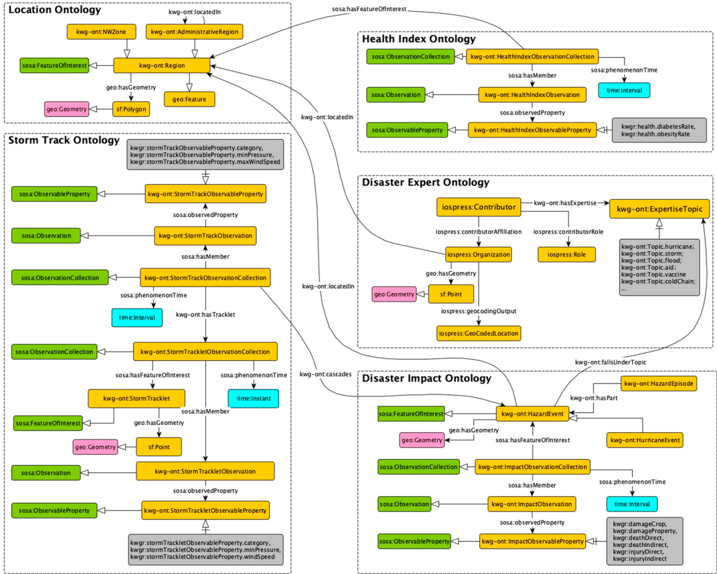
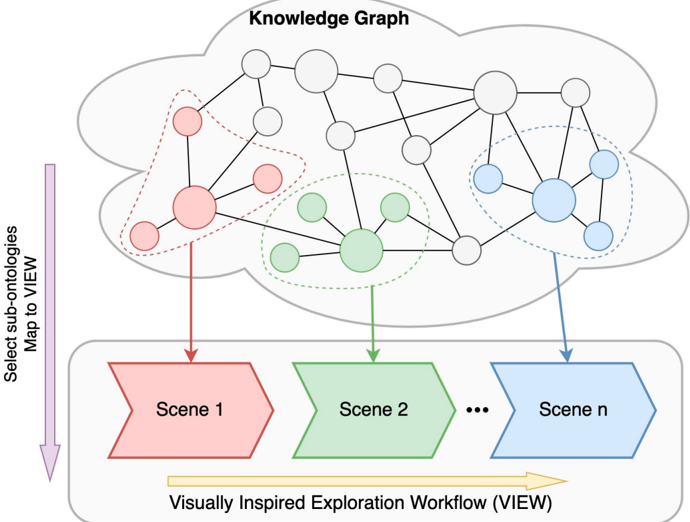
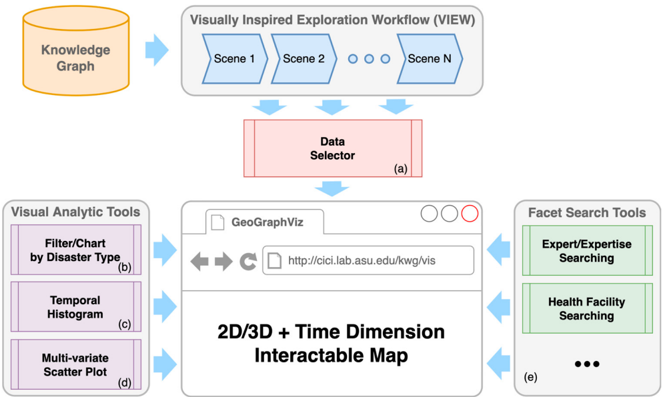
The past decade has witnessed an increasing frequency and intensity of disasters, from extreme weather, drought, and wildfires to hurricanes, floods, and wars. Providing timely disaster response and humanitarian aid to these events is a critical topic for decision makers and relief experts in order to mitigate impacts and save lives. When a disaster occurs, it is important to acquire first-hand, real-time information about the potentially affected area, its infrastructure, and its people in order to develop situational awareness and plan a response to address the health needs of the affected population. This requires rapid assembly of multi-source geospatial data that need to be organized and visualized in a way to support disaster-relief efforts. In this paper, we introduce a new cyberinfrastructure solution—GeoGraphVis—that is empowered by knowledge graph technology and advanced visualization to enable intelligent decision making and problem solving. There are three innovative features of this solution. First, a location-aware knowledge graph is created to link and integrate cross-domain data to make the graph analytics-ready. Second, expert-driven disaster response workflows are analyzed and modeled as machine-understandable decision paths to guide knowledge exploration via the graph. Third, a scene-based visualization strategy is developed to enable interactive and heuristic visual analytics to better comprehend disaster impact situations and develop action plans for humanitarian aid.
Overview
The claims and statistics of this paper haven’t been checked yet.
Free: it reads the open-access text and checks the first 5 claims that cite a source we can check. Create a free account to check every claim.
Integrity signals
Registry
Cites
Statistics
Figures
Verification
Claims the paper makes
The claims and statistics of this paper haven’t been checked yet.
Free: it reads the open-access text and checks the first 5 claims that cite a source we can check. Create a free account to check every claim.
Self-check
Percentages, sums and reported differences re-computed from the paper’s own numbers.
The self-check needs the paper’s full text.
Citations
Cites
Ontology-Based Integration of Information — A Survey of Existing Approaches
Wache, H., Vögele, T., Visser, U., Stuckenschmidt, H., Schuster, G., Neumann, H., & Hübner, S. (2001) · International Joint Conference on Artificial Intelligence · Cited by 1,387
Enabling technology for knowledge sharing
Neches, R. T., Fikes, R. E., Finin, T., Gruber, T., Patil, R. S., Senator, T. E., & Swartout, W. (1991) · AI Magazine · doi:10.1609/aimag.v12i3.902 · Cited by 1,330
Atlantic Hurricane Database Uncertainty and Presentation of a New Database Format
Landsea, C. W., & Franklin, J. L. (2013) · Monthly Weather Review · doi:10.1175/mwr-d-12-00254.1 · Cited by 1,164
Becker, R. A., & Cleveland, W. S. (1987) · Technometrics · doi:10.1080/00401706.1987.10488204 · Cited by 696
Atkins, D. E. (2003) · UA Campus Repository (The University of Arizona) · Cited by 658
SOSA: A lightweight ontology for sensors, observations, samples, and actuators
Janowicz, K., Haller, A., Cox, S. J. D., Le Phuoc, D., & Lefrançois, M. (2019) · Journal of Web Semantics · doi:10.1016/j.websem.2018.06.003 · Cited by 466
S2ORC: The Semantic Scholar Open Research Corpus
Lo, K., Wang, L. L., Neumann, M., Kinney, R., & Weld, D. (2020) · Proceedings of the 58th Annual Meeting of the Association for Computational Linguistics · doi:10.18653/v1/2020.acl-main.447 · Cited by 457
The iPlant Collaborative: Cyberinfrastructure for Plant Biology
Goff, S. A., Vaughn, M., McKay, S., Lyons, E., Stapleton, A. E., Gessler, D., Matasci, N., Wang, L., Hanlon, M., Lenards, A., et al. (2011) · Frontiers in Plant Science · doi:10.3389/fpls.2011.00034 · Cited by 442
The environment ontology: contextualising biological and biomedical entities
Buttigieg, P., Morrison, N., Smith, B., Mungall, C. J., Lewis, S. E., & the ENVO Consortium (2013) · Journal of Biomedical Semantics · doi:10.1186/2041-1480-4-43 · Cited by 358
Enabling the geospatial Semantic Web with Parliament and GeoSPARQL
Battle, R., & Kolas, D. (2012) · Semantic Web · doi:10.3233/sw-2012-0065 · Cited by 344
Research works printed but not linked: 8
- 1. NOAANational Centers for Environmental Information (NCEI) U.S. Billion-Dollar Weather and Climate Disasters. 2022. Available online: https://www.ncei.noaa.gov/access/billions/ (accessed on 1 March 2023). [CrossRef]
- 26. Xu, W.; Zlatanova, S. Ontologies for disaster management response. In Geomatics Solutions for Disaster Management ; Springer: Berlin/Heidelberg, Germany, 2007; pp. 185-200.
- 28. Murgante, B.; Scardaccione, G.; Casas, G.L. Building ontologies for disaster management: Seismic risk domain. In Urban and Regional Data Management ; CRC Press: Boca Raton, FL, USA, 2009; pp. 271-280.
- 46. Manola, F.; Miller, E.; McBride, B. RDF primer. W3C Recomm. 2004 , 10 , 6.
- 47. Antoniou, G.; Harmelen, F.V. Web ontology language: Owl. In Handbook on Ontologies ; Springer: Berlin/Heidelberg, Germany, 2004; pp. 67-92.
- 50. Hobbs, J.R.; Pan, F. Time ontology in OWL. W3C Work. Draft 2006 , 27 , 3-36.
- 53. Rigby, D.K.; Sutherland, J.; Noble, A. Agile at scale. Harv. Bus. Rev. 2018 , 96 , 88-96.
- 58. Van Cauter, L.; Crompvoets, J.; Voets, J. Improving intergovernmental information processes: In search of the appropriate management strategy. In Proceedings of the EGPA Annual Conference 2012, Bergen, Norway, 3-4 September 2012.
Cited by
Hsu, C.-Y., & Li, W. (2023) · International Journal of Geographical Information Science · doi:10.1080/13658816.2023.2191256 · Cited by 75
“We will compare the consistency be-tween human-understandable concepts defined in domain knowledge graphs ((Li et al. 2023, Janowicz et al. 2022, Li et al. 2012)) and the machine-learned features to further improve the explainability of the machine learning process.”
MethodSelf-citationAssessment of a new GeoAI foundation model for flood inundation mapping
Li, W., Lee, H., Wang, S., Hsu, C.-Y., & Arundel, S. T. (2023) · arXiv · doi:10.48550/arxiv.2309.14500 · Cited by 40
Self-citationAssessment of a new GeoAI foundation model for flood inundation mapping
Li, W., Lee, H., Wang, S., Hsu, C.-Y., & Arundel, S. T. (2023) · Proceedings of the 6th ACM SIGSPATIAL International Workshop on AI for Geographic Knowledge Discovery · doi:10.1145/3615886.3627747 · Cited by 39
Self-citationNursing roles in disaster zones: Experiences and lessons from Turkey's 2023 earthquakes
Segev, R., Suliman, M., Gorodetzer, R., Zukin, L., & Spitz, A. (2024) · International Nursing Review · doi:10.1111/inr.12964 · Cited by 31
Shimizu, C., Stephen, S., Barua, A., Cai, L., Christou, A., Currier, K., Dalal, A., Fisher, C. K., Hitzler, P., Janowicz, K., et al. (2024) · Journal of Web Semantics · doi:10.1016/j.websem.2024.100842 · Cited by 26
Self-citationFostering urban resilience and accessibility in cities: A dynamic knowledge graph approach
Phua, S. Z., Hofmeister, M., Tsai, Y., Peppard, O., Lee, K. F., Courtney, S., Mosbach, S., Akroyd, J., & Kraft, M. (2024) · Sustainable Cities and Society · doi:10.1016/j.scs.2024.105708 · Cited by 24
Risk Assessment of Typhoon Disaster Chain Based on Knowledge Graph and Bayesian Network
Lu, Y., Qiao, S., & Yao, Y. (2025) · Sustainability · doi:10.3390/su17010331 · Cited by 21
Bibliometric Analysis on the Research of Geoscience Knowledge Graph (GeoKG) from 2012 to 2023
Hou, Z., Liu, X., Zhou, S., Jing, W., & Yang, J. (2024) · ISPRS International Journal of Geo-Information · doi:10.3390/ijgi13070255 · Cited by 19
“It covers several research aspects such as knowledge representation models [29,38], knowledge management and visualization [45], knowledge-enhanced systems [46], and linked open data [47], as well as their applications in various areas such as COVID-19 [14], digital humanities [48], VGEs [44], and…”
BackgroundHu, L., Li, W., Xu, J., & Zhu, Y. (2024) · International Journal of Geographical Information Science · doi:10.1080/13658816.2024.2412731 · Cited by 21
Self-citationqian, J., Du, Y., Liang, F., Yi, J., Wang, N., Tu, W., Huang, S., Pei, T., & Ma, T. (2024) · ISPRS International Journal of Geo-Information · doi:10.3390/ijgi13030092 · Cited by 15
Artificial Intelligence in Earth Science: A GeoAI Perspective
Li, W. (2025) · Journal of Geophysical Research Machine Learning and Computation · doi:10.1029/2025jh000691 · Cited by 24
Self-citationAn event logic graph for geographic environment observation planning in disaster chain monitoring
Zhang, Y., Chen, W., Huang, B., Zhang, Z., Li, J., Gao, R., Wang, K., & Hu, C. (2024) · International Journal of Applied Earth Observation and Geoinformation · doi:10.1016/j.jag.2024.104220 · Cited by 17
Geometric Feature Enhanced Knowledge Graph Embedding and Spatial Reasoning
Hu, L., Li, W., & Zhu, Y. (2024) · ACM SIGSPATIAL International Workshop on AI for Geographic Knowledge Discovery (GeoAI) · doi:10.1145/3687123.3698285 · Cited by 14
Self-citationWang, Y., Li, C., Liu, X., Li, H., Yao, Z., & Zhao, Y. (2024) · International Journal of Digital Earth · doi:10.1080/17538947.2024.2347443 · Cited by 12
“Additionally, geographic knowledge graphs provide interpretable AI perspectives and formalizable descriptions of geographic knowledge, driving intelligence in remote sensing interpretation (Li et al. 2023; Liu et al. 2023).”
Su, Y., Xu, Q., Zhu, X., Zhang, F., & Liu, Y. (2024) · ISPRS International Journal of Geo-Information · doi:10.3390/ijgi13080285 · Cited by 7
Mao, W., Shen, J., Su, Q., Liu, S., Pirasteh, S., & Ishii, K. (2024) · ISPRS International Journal of Geo-Information · doi:10.3390/ijgi13100349 · Cited by 7
Zhu, R., Shimizu, C., Stephen, S., Fisher, C. K., Thelen, T., Currier, K., Janowicz, K., Hitzler, P., Schildhauer, M. P., Li, W., et al. (2026) · Transactions in GIS · doi:10.1111/tgis.70184 · Cited by 27
“GeoGraphVis is a visualization tool that supports disaster response and humanitarian aid through the integration of KnowWhereGraph (Li et al. 2023).”
Self-citationBig data fusion-driven geospatial knowledge graph construction method for sustainable smart cities
Duan, Y., Liang, M., Li, Y., Gao, R., Chen, J., Chen, Z. S., & Wang, H. (2025) · Sustainable Cities and Society · doi:10.1016/j.scs.2025.107027 · Cited by 6
Web Search Engine Results Page Viewing Formats for Different Search Tasks
Taieb‐Maimon, M., & Harush, H. (2024) · International Journal of Human-Computer Interaction · doi:10.1080/10447318.2024.2376358 · Cited by 6
“…have mainly focused on KG construction techniques and embedding approaches and applications (e.g., Akinnubi & Ajiboye, 2023; Li et al., 2019; Li et al., 2023; Liu et al., 2016; Luo et al., 2022; Wang et al., 2017); in contrast, little attention has been given to the end-user performance and…”
Demir, K. A., & Karataş, N. (2024) · Türk Deprem Araştırma Dergisi · doi:10.46464/tdad.1405733 · Cited by 4
Wang, Z., Liang, H., Yang, H., Li, M., & Cai, Y. (2024) · ISPRS International Journal of Geo-Information · doi:10.3390/ijgi14010012 · Cited by 4
Automatic Building Aggregation Supported by Knowledge Graph
Su, Y., Xu, Q., Zhu, X., Zhang, F., Chen, X., & Liu, Y. (2025) · Transactions in GIS · doi:10.1111/tgis.70007 · Cited by 5
Self-citationSun, Q., Ding, Y., Hou, J., Zhu, Q., Wu, Y., Wu, T., Wang, X., Zhao, X., & Shao, S. (2025) · International Journal of Digital Earth · doi:10.1080/17538947.2025.2577292 · Cited by 4
“In line with Li et al. (2023), the integration of geospatial information with domain-specific knowledge significantly improves the accuracy and timeliness of disaster response strategies.”
Robertson, H., Han, B. A., Castellanos, A. A., Rosado, D., Stott, G., Zimmerman, R., Drake, J. M., & Graeden, E. (2024) · Bioinformatics Advances · doi:10.1093/bioadv/vbaf016 · Cited by 3
“…multi-source spatiotemporal data for natural disaster early warning systems and risk classification (Ge et al. 2022, Yang et al. 2022), humanitarian response efforts (Li et al. 2023), life sciences (Callahan et al. 2024), and environmental research (Z � arate et al. 2019, Han et al. 2022).”
Knowledge Graphs in Smart Digital Libraries
Meesad, P., & Mingkhwan, A. (2024) · Studies in big data · doi:10.1007/978-3-031-69216-1_9 · Cited by 12
Gu, Z., Li, W., Zhou, B., Wang, Y., Chen, Y., Ye, S., Wang, K., Gu, H., & Kang, Y. (2024) · Transactions in GIS · doi:10.1111/tgis.13283 · Cited by 5
“GeoGraphVis platform, empowered by a knowledge graph (Li et al. 2023; Wang, Li, and Gu 2023), integrates cross-domain data, such as disaster impact, medical resources, and regional population, facilitating disaster relief and humanitarian aid.”
InfluentialSelf-citationLiu, Z.-G., & Li, X.-Y. (2025) · International Journal of Disaster Risk Reduction · doi:10.1016/j.ijdrr.2025.105847 · Cited by 1
Yang, W., & Wang, W. M. (2025) · Decision Making Applications in Management and Engineering · doi:10.31181/dmame8220251605 · Cited by 1
Fostering Urban Resilience and Accessibility in Cities: A Dynamic Knowledge Graph ApproachPreprint
Phua, S. Z., Hofmeister, M., Tsai, Y., Peppard, O., Lee, K. F., Courtney, S., Mosbach, S., Akroyd, J., & Kraft, M. (2024) · SSRN Electronic Journal · doi:10.2139/ssrn.4773881
Zhang, X., Wang, S., Cui, B., Zhi, P., & Xu, J. (2025) · Springer proceedings in physics · doi:10.1007/978-981-96-2490-4_7
Self-citationHallisey, N., Becker, A., Stempel, P., & Krum, O. (2025) · Journal of Disaster Science and Management · doi:10.1007/s44367-025-00022-2
“Researchers developing GeoGraph-VizSystem used a similar approach (Li et al., 2023).”
Qian, J., Wang, S., Ji, Y., Wang, Z., Dang, R., & Wu, Y. (2026) · Sustainability · doi:10.3390/su18063007
Self-citationLiu, Z.-G., Li, X.-Y., & Qiao, L. (2026) · Risk Analysis · doi:10.1111/risa.70289
“However, recent advances in knowledge graph (KG) techniques offer a promising solution by extracting and structuring domain knowledge that can be transferred to incomplete data contexts (Ge et al. 2022 ; Li et al. 2023 ).”
Li, J., Zhao, L., Jia, B., Ding, X., Jing, 吴. W., & Wang, K. (2026) · Sustainability · doi:10.3390/su18168601
“KnowWhereGraph and GeoGraphVis demonstrate how heterogeneous environmental, geographic, and disaster information can https://doi.org/10.3390/su18168601 be connected for knowledge discovery and decision support [41,42].”
InfluentialHassani, H., Mashhad, L. M., & Komendantova, N. (2026) · Data · doi:10.3390/data11090239
“Geospatial systems integrate volunteered geographic information, satellite imagery, knowledge graphs, or other spatial sources [4,5,22].”
Integrating AI and Knowledge Graphs for Advancing Georisk Assessment
Chambi, S. P. V., Osorio, E. E. C., Nzikou, M. M., & Otiniano-Zavala, A. (2026) · doi:10.59490/6ad293d76ee698573e4dd235
Metadata
- Authors
- Li, W., Wang, S., Chen, X., Tian, Y., Gu, Z., Lopez-Carr, A., Schroeder, A., Currier, K., Schildhauer, M., & Zhu, R.
- Affiliations
- Arizona State University (US)
- Direct Relief, Santa Barbara, CA 93117, USA
- Direct Relief (US)
- University of California, Santa Barbara (US)
- University of Bristol (GB)
- Corresponding author
- Li, Wenwen
- ORCID
- Venue
- ISPRS International Journal of Geo-Information
- Publisher
- MDPI AG
- Published
- 2023-03-07
- Volume
- 12
- Issue
- 3
- Pages
- 112
- ISSN
- 2220-9964 (ISSN-L)
- OpenAlex
- W4323361161
- Cited by
- 35
- References
- 52
- Citations by year
- 2026: 6 · 2025: 9 · 2024: 18 · 2023: 2
- FWCI
- 15.04
- Type
- journal article
- Language
- en
- Open access
- gold
- doi.org
- Licence
- Locations
- ISPRS International Journal of Geo-Information (publishedVersion, cc-by)
- Explore Bristol Research (publishedVersion, cc-by)
- DOAJ (DOAJ: Directory of Open Access Journals) (submittedVersion, cc-by-sa)
- Bristol Research (University of Bristol) (submittedVersion, cc-by)
- Funders
- National Science Foundation (2033521)
- Topics
- Social Sciences › Sociology and Political Science › Disaster Management and Resilience
- Social Sciences › Geography, Planning and Development › Geographic Information Systems Studies
- Physical Sciences › Computer Science › Computer Graphics and Computer-Aided Design › Data Visualization and Analytics
- Keywords
- knowledge graphs, spatial data visualization, disaster response, humanitarian aid, cyberinfrastructure, situational awareness, decision paths, visual analytics, disaster impact assessment
About these checks
Registry, retraction, Cites and statistics results are computed, not judged, with one exception: a printed reference that no index lists is read once by a model before it counts as a citation error. Claims are extracted by a model and kept only when their quote appears verbatim in the text; each cited source is then checked, with a model’s help, for whether it says what the claim relies on. Those verdicts can be wrong — read the claim’s quote and the cited source before relying on one.
Statistics and arithmetic are recomputed, not judged.
Confidence bands are shown only for fields calibrated on our annotated test set. None is calibrated yet, so no band is shown.
What counts as a claim ›How we measure confidence ›How we check this ›
Are you an author, or do you see a problem with this page? Request a review
Data sources
Bibliographic data: Semantic Scholar, OpenAlex, Crossref.
Contains information from the Semantic Scholar Academic Graph Datasets, made available under the ODC Attribution License (ODC-BY 1.0).
Semantic Scholar’s data is described in: Kinney, R., et al. (2023). The Semantic Scholar Open Data Platform. arXiv:2301.10140.
