

Physiologically Relevant Alternative Carbon Sources Modulate Biofilm Formation, Cell Wall Architecture, and the Stress and Antifungal Resistance of Candida glabrata
Open accessThe DOI matches its Crossref record; 53 of the 53 references it cites were found in a registry or an index.
Abstract
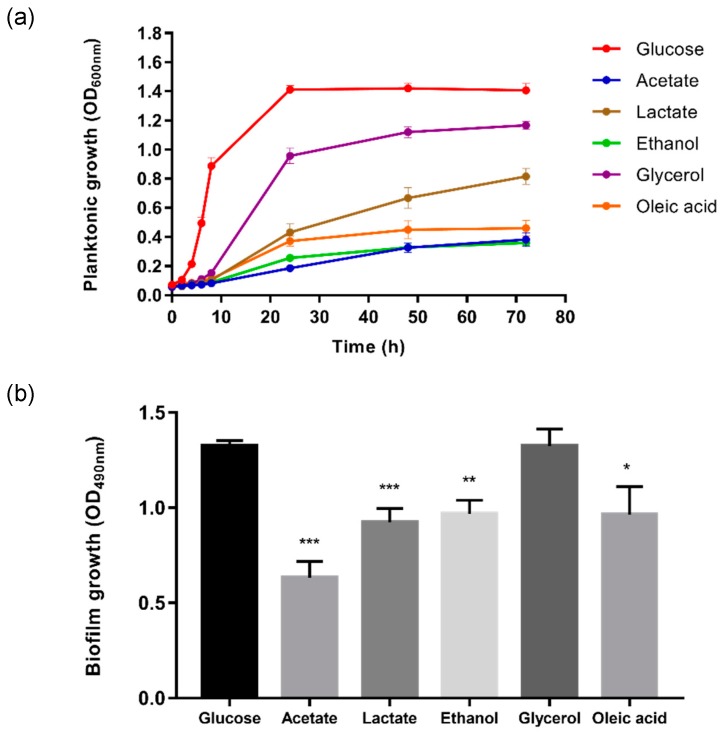
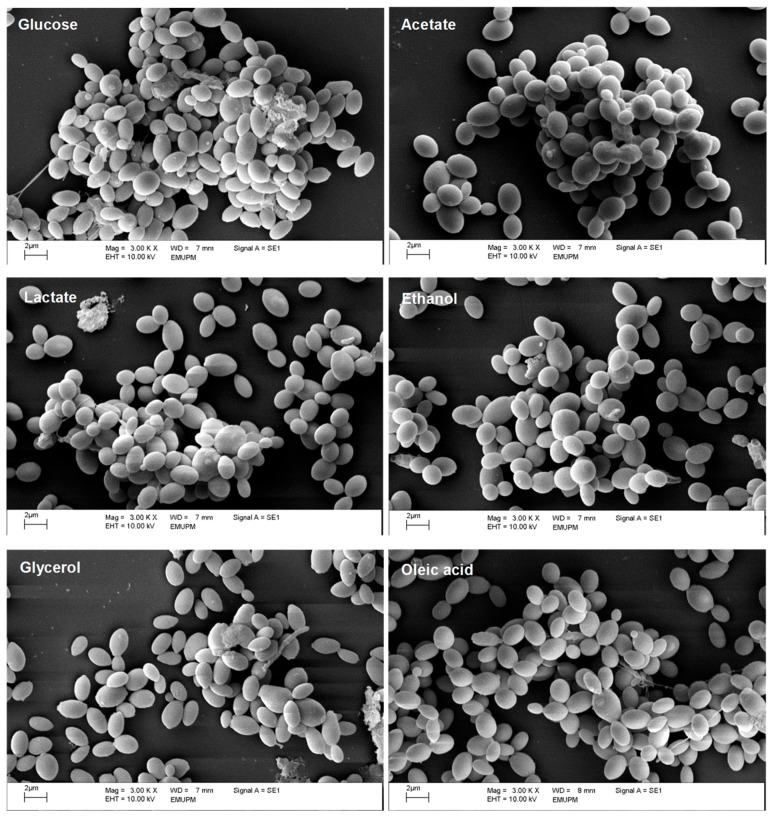
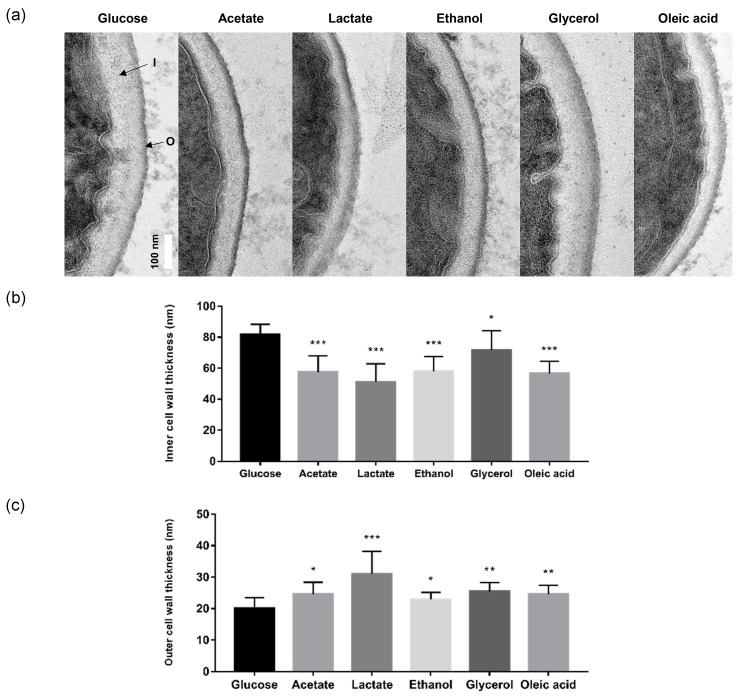
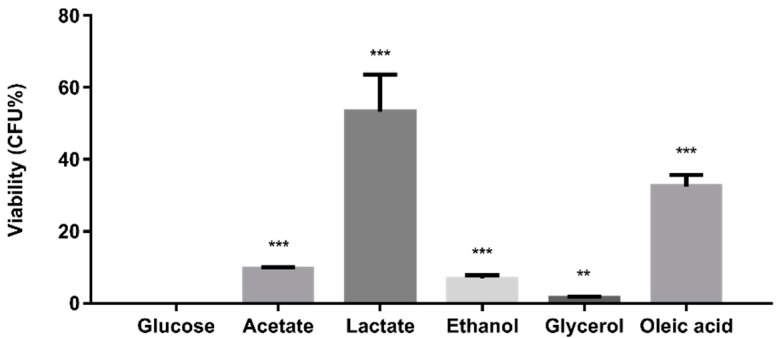
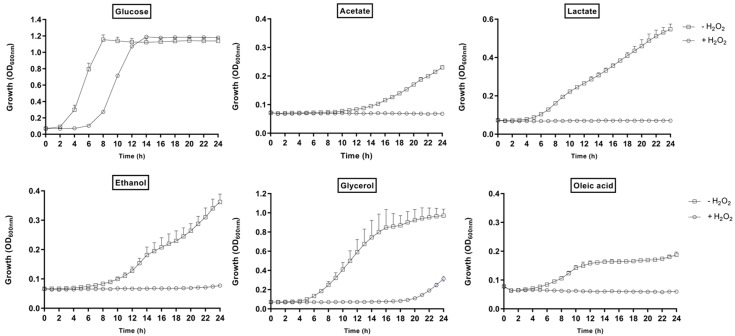
Flexibility in carbon metabolism is pivotal for the survival and propagation of many human fungal pathogens within host niches. Indeed, flexible carbon assimilation enhances pathogenicity and affects the immunogenicity of Candida albicans. Over the last decade, Candida glabrata has emerged as one of the most common and problematic causes of invasive candidiasis. Despite this, the links between carbon metabolism, fitness, and pathogenicity in C. glabrata are largely unexplored. Therefore, this study has investigated the impact of alternative carbon metabolism on the fitness and pathogenic attributes of C. glabrata. We confirm our previous observation that growth on carbon sources other than glucose, namely acetate, lactate, ethanol, or oleate, attenuates both the planktonic and biofilm growth of C. glabrata, but that biofilms are not significantly affected by growth on glycerol. We extend this by showing that C. glabrata cells grown on these alternative carbon sources undergo cell wall remodeling, which reduces the thickness of their β-glucan and chitin inner layer while increasing their outer mannan layer. Furthermore, alternative carbon sources modulated the oxidative stress resistance of C. glabrata as well as the resistance of C. glabrata to an antifungal drug. In short, key fitness and pathogenic attributes of C. glabrata are shown to be dependent on carbon source. This reaffirms the perspective that the nature of the carbon sources available within specific host niches is crucial for C. glabrata pathogenicity during infection.
Overview
The claims and statistics of this paper haven’t been checked yet.
Free: it reads the open-access text and checks the first 5 claims that cite a source we can check. Create a free account to check every claim.
Integrity signals
Registry
Cites
Statistics
Figures
Verification
Claims the paper makes
The claims and statistics of this paper haven’t been checked yet.
Free: it reads the open-access text and checks the first 5 claims that cite a source we can check. Create a free account to check every claim.
Claims other papers make about this one
Each is checked against this paper’s own text: does it say what the citing paper says it does?
The source backs part of the claim, not all of it — or backs it for a different population, condition or comparison.
In the citing paper
“Similar results were demonstrated for C. glabrata strains that grown under an alternative carbon microenvironment showed altered cell wall architecture with a lower content of chitin and β-glucan, and with an increased outer mannan layer (Chew et al., 2019).”
From Fungal Cell Wall: Emerging Antifungals and Drug Resistance. (2019) · cites this paper as Chew et al., 2019
Experimental — accuracy not yet measuredThe cited source says what the claim attributes to it.
In the citing paper
“These C. glabrata cells were also resistant to AMB when grown in lactate or oleate (Chew et al., 2019).”
From Fungal Cell Wall: Emerging Antifungals and Drug Resistance. (2019) · cites this paper as Chew et al., 2019
In the citing paper
“According to the findings of Chew et al. [63], the growth of C. glabrata in the presence of acetate, lactate, ethanol, or oleate reduces the growth in both the planktonic and biofilm states.”
From Candida glabrata: pathogenicity and resistance mechanisms for adaptation and survival (2021) · cites this paper as [63]
Self-check
Percentages, sums and reported differences re-computed from the paper’s own numbers.
The self-check needs the paper’s full text.
Citations
Cites
[1] Getting started with yeast
Sherman, F. (1991) · Methods in Enzymology · doi:10.1016/0076-6879(91)94004-v · Cited by 4,067 · cited 1×
“Louis, MO, USA) as the sole carbon source in SC media [2,51].”
BackgroundNutritional immunity: transition metals at the pathogen–host interface
Hood, M. I., & Skaar, E. P. (2012) · Nature Reviews Microbiology · doi:10.1038/nrmicro2836 · Cited by 1,535
Sardi, J. C. O., Scorzoni, L., Bernardi, T., Fusco-Almeida, A. M., & Mendes Giannini, M. J. S. (2013) · Journal of Medical Microbiology · doi:10.1099/jmm.0.045054-0 · Cited by 1,184 · cited 2×
“albicans Candida (NCAC) species [11] due in part to the intrinsic resistance of these species to azole antifungal drugs [12,13].”
BackgroundPierce, C. G., Uppuluri, P., Tristan, A. R., Wormley, F. L., Mowat, E., Ramage, G., & Lopez-Ribot, J. L. (2008) · Nature Protocols · doi:10.1038/nprot.2008.141 · Cited by 1,041 · cited 1×
“glabrata in glucose and alternative carbon sources was determined by using 2,3-bis-(2-methoxy-4-nitro-5-sulfophenyl)-2H-tetrazolium-5-carboxanilide (XTT) reduction assay as previously described [52].”
MethodGorner, W., Durchschlag, E., Martinez-Pastor, M. T., Estruch, F., Ammerer, G., Hamilton, B., Ruis, H., & Schuller, C. (1998) · Genes & Development · doi:10.1101/gad.12.4.586 · Cited by 758
Transcriptional Response of Candida albicans upon Internalization by Macrophages
Lorenz, M. C., Bender, J. A., & Fink, G. R. (2004) · Eukaryotic Cell · doi:10.1128/ec.3.5.1076-1087.2004 · Cited by 712 · cited 1×
“glabrata display nutrient starvation responses following phagocytosis by macrophages [3,7,9,14].”
BackgroundInfluentialArchitecture and Biosynthesis of the Saccharomyces cerevisiae Cell Wall
Orlean, P. (2012) · Genetics · doi:10.1534/genetics.112.144485 · Cited by 478 · cited 1×
“Glycerol is required for the synthesis of the glycosylphosphatidylinositol (GPI) anchor, which links adhesins and other mannoproteins to the cell wall and potentially assists in biofilm formation [31].”
BackgroundStimulation of Chitin Synthesis Rescues Candida albicans from Echinocandins
Walker, L. A., Munro, C. A., de Bruijn, I., Lenardon, M. D., McKinnon, A., & Gow, N. A. R. (2008) · PLoS Pathogens · doi:10.1371/journal.ppat.1000040 · Cited by 445
Pfaller, M. A., Andes, D. R., Diekema, D. J., Horn, D. L., Reboli, A. C., Rotstein, C., Franks, B., & Azie, N. E. (2014) · PLoS ONE · doi:10.1371/journal.pone.0101510 · Cited by 396 · cited 1×
“glabrata [11,21], relatively little is known about the physiological behaviour of C.”
BackgroundNiche-specific regulation of central metabolic pathways in a fungal pathogen
Barelle, C. J., Priest, C. L., MacCallum, D. M., Gow, N. A. R., Odds, F. C., & Brown, A. J. P. (2006) · Cellular Microbiology · doi:10.1111/j.1462-5822.2005.00676.x · Cited by 336 · cited 1×
“glabrata display nutrient starvation responses following phagocytosis by macrophages [3,7,9,14].”
BackgroundSelf-citation
Cited by
Fungal Cell Wall: Emerging Antifungals and Drug Resistance.
Lima, S. L., Colombo, A. L., & de Almeida Junior, J. N. (2019) · Frontiers in Microbiology · doi:10.3389/fmicb.2019.02573 · Cited by 223
Candida glabrata: pathogenicity and resistance mechanisms for adaptation and survival
Hassan, Y., Chew, S. Y., & Than, L. T. L. (2021) · Journal of Fungi · doi:10.3390/jof7080667 · Cited by 170
Self-citationWilliams, R. B., & Lorenz, M. C. (2020) · mBio · doi:10.1128/mbio.03070-19 · Cited by 87
Candida glabrata: A powerhouse of resistance
Duggan, S., & Usher, J. (2023) · PLoS Pathogens · doi:10.1371/journal.ppat.1011651 · Cited by 47
“The mode of action of polyenes is to permeabilise membranes, resulting in leakage from the cytoplasm (Fig 1) [19].”
BackgroundCandida Pathogenicity and Interplay with the Immune System
Valand, N., & Girija, U. V. (2021) · Advances in experimental medicine and biology · doi:10.1007/978-3-030-67452-6_11 · Cited by 43
Metadata
- Authors
- Chew, S. Y., Ho, K. L., Cheah, Y. K., Sandai, D., Brown, A. J. P., & Than, L. T. L.
- Affiliations
- Universiti Putra Malaysia (MY)
- Universiti Sains Malaysia (MY)
- University of Aberdeen (GB)
- Corresponding author
- Than, Leslie Thian Lung
- ORCID
- Venue
- International Journal of Molecular Sciences
- Publisher
- MDPI AG
- Published
- 2019-06-28
- Volume
- 20
- Issue
- 13
- Pages
- 3172
- ISSN
- 1422-0067 (ISSN-L)
- PMC
- PMC6651560
- OpenAlex
- W2954137037
- Cited by
- 40
- References
- 53
- Citations by year
- 2026: 2 · 2025: 3 · 2024: 7 · 2023: 7 · 2022: 7 · 2021: 7 · 2020: 6 · 2019: 1
- FWCI
- 4.00
- Type
- journal article
- Language
- en
- Open access
- gold
- dx.doi.org
- Licence
- Locations
- International Journal of Molecular Sciences (publishedVersion, cc-by)
- PubMed Central (publishedVersion, cc-by)
- PubMed (publishedVersion)
- Universiti Putra Malaysia Institutional Repository (Universiti Putra Malaysia) (acceptedVersion)
- Aberdeen University Research Archive (Aberdeen University) (submittedVersion, cc-by)
- DOAJ (DOAJ: Directory of Open Access Journals) (submittedVersion, cc-by-sa)
- Funders
- Ministry of Education, Malaysia (01-01-14-1456FR)
- Topics
- Health Sciences › Medicine › Infectious Diseases › Antifungal resistance and susceptibility
- Life Sciences › Biochemistry, Genetics and Molecular Biology › Molecular Biology › Fungal and yeast genetics research
- Health Sciences › Medicine › Infectious Diseases › Fungal Infections and Studies
- Keywords
- Candida glabrata, alternative carbon sources, carbon metabolism, biofilm formation, cell wall remodeling, β-glucan, chitin, mannan, oxidative stress resistance, antifungal resistance, invasive candidiasis, fungal pathogenicity, acetate, lactate, ethanol, oleate, glycerol
- MeSH terms
- Acetates, Ethanol, Cell Wall, Oleic Acids, Oxidative Stress, Biofilms, Lactic Acid, Drug Resistance, Fungal, Candida glabrata, Carbohydrate Metabolism
About these checks
Registry, retraction, Cites and statistics results are computed, not judged, with one exception: a printed reference that no index lists is read once by a model before it counts as a citation error. Claims are extracted by a model and kept only when their quote appears verbatim in the text; each cited source is then checked, with a model’s help, for whether it says what the claim relies on. Those verdicts can be wrong — read the claim’s quote and the cited source before relying on one.
Statistics and arithmetic are recomputed, not judged.
Confidence bands are shown only for fields calibrated on our annotated test set. None is calibrated yet, so no band is shown.
What counts as a claim ›How we measure confidence ›How we check this ›
Are you an author, or do you see a problem with this page? Request a review
How to cite
Cite CoChat for the checks on this page, and the paper for its own findings.
- This page
- CoChat. (2026). Citation check: Physiologically Relevant Alternative Carbon Sources Modulate Biofilm Formation, Cell Wall Architecture, and the Stress and Antifungal Resistance of Candida glabrata. https://app.cochat.ai/papers/10.3390/ijms20133172
- The paper
- Chew, S. Y., Ho, K. L., Cheah, Y. K., Sandai, D., Brown, A. J. P., & Than, L. T. L. (2019). Physiologically Relevant Alternative Carbon Sources Modulate Biofilm Formation, Cell Wall Architecture, and the Stress and Antifungal Resistance of Candida glabrata. International Journal of Molecular Sciences. https://doi.org/10.3390/ijms20133172
Data sources
Bibliographic data: Semantic Scholar, OpenAlex, Crossref.
Contains information from the Semantic Scholar Academic Graph Datasets, made available under the ODC Attribution License (ODC-BY 1.0).
Semantic Scholar’s data is described in: Kinney, R., et al. (2023). The Semantic Scholar Open Data Platform. arXiv:2301.10140.
