

The DOI matches its Crossref record; 110 of the 112 references it cites were found in a registry or an index.
Understanding the Biology of Human Interstitial Cells of Cajal in Gastrointestinal Motility
Open accessAbstract
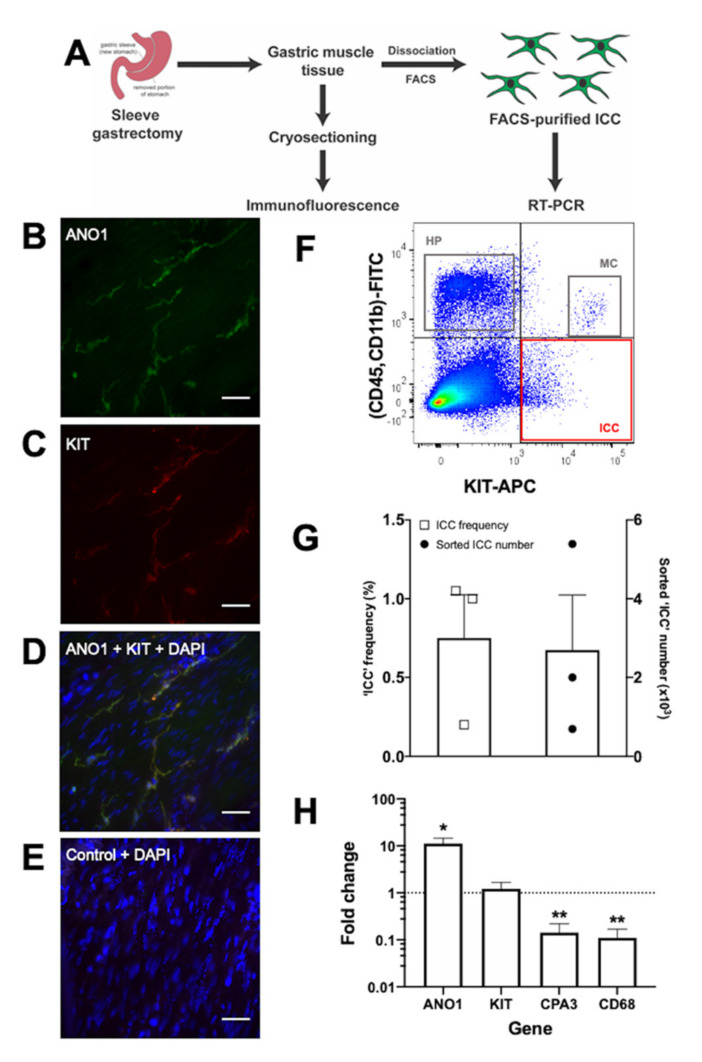
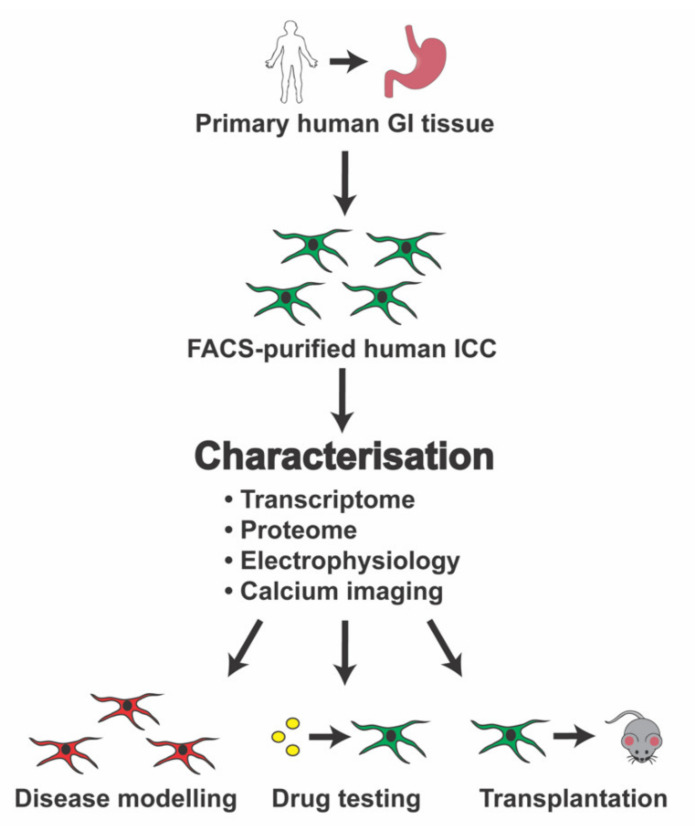
Millions of patients worldwide suffer from gastrointestinal (GI) motility disorders such as gastroparesis. These disorders typically include debilitating symptoms, such as chronic nausea and vomiting. As no cures are currently available, clinical care is limited to symptom management, while the underlying causes of impaired GI motility remain unaddressed. The efficient movement of contents through the GI tract is facilitated by peristalsis. These rhythmic slow waves of GI muscle contraction are mediated by several cell types, including smooth muscle cells, enteric neurons, telocytes, and specialised gut pacemaker cells called interstitial cells of Cajal (ICC). As ICC dysfunction or loss has been implicated in several GI motility disorders, ICC represent a potentially valuable therapeutic target. Due to their availability, murine ICC have been extensively studied at the molecular level using both normal and diseased GI tissue. In contrast, relatively little is known about the biology of human ICC or their involvement in GI disease pathogenesis. Here, we demonstrate human gastric tissue as a source of primary human cells with ICC phenotype. Further characterisation of these cells will provide new insights into human GI biology, with the potential for developing novel therapies to address the fundamental causes of GI dysmotility.
Overview
The claims and statistics of this paper haven’t been checked yet.
Run the check — free, no account needed. It reads the open-access text and checks the sources it cites.
Integrity signals
Registry
Cites
Statistics
Figures
Verification
Claims the paper makes
The claims and statistics of this paper haven’t been checked yet.
Run the check — free, no account needed. It reads the open-access text and checks the sources it cites.
Claims other papers make about this one
Each is checked against this paper’s own text: does it say what the citing paper says it does?
The cited source says what the claim attributes to it.
In the citing paper
“These cells act as gastrointestinal pacemakers, coordinating the rhythmic contractions necessary for the transit of gastric contents [50, 51].”
From Diabetic gastroparesis: pathophysiology and impact on insulin timing choices (2026) · cites this paper as [50]
Self-check
Percentages, sums and reported differences re-computed from the paper’s own numbers.
The self-check needs the paper’s full text.
Citations
Cites
1 retracted
RETRACTED ARTICLE: Pluripotency of mesenchymal stem cells derived from adult marrow
Jiang, Y., Jahagirdar, B., Reinhardt, R. L., Schwartz, R. E., Keene, C. D., Ortiz-Gonzalez, X. R., Reyes, M., Lenvik, T. R., Lund, T. C., Blackstad, M., et al. (2002) · Nature · doi:10.1038/nature00870 · Cited by 5,523
RetractedW/kit gene required for interstitial cells of Cajal and for intestinal pacemaker activity
Hulzinga, J. D., Thuneberg, L., Klüppel, M., Malysz, J., Mikkelsen, H., & Bernstein, A. (1995) · Nature · doi:10.1038/373347a0 · Cited by 1,432
Gastrointestinal stromal tumours: origin and molecular oncology
Corless, C. L., Barnett, C. M., & Heinrich, M. C. (2011) · Nature reviews. Cancer · doi:10.1038/nrc3143 · Cited by 891
Ward, S. M., Burns, A. J., Torihashi, S., & Sanders, K. M. (1994) · The Journal of Physiology · doi:10.1113/jphysiol.1994.sp020343 · Cited by 809
CD117: a sensitive marker for gastrointestinal stromal tumors that is more specific than CD34.
Sarlomo‐Rikala, M., Kovatich, A. J., Barusevicius, A., & Miettinen, M. (1998) · PubMed · Cited by 770
Workman, M. J., Mahé, M. M., Trisno, S. L., Poling, H. M., Watson, C. L., Sundaram, N., Chang, C., Schiesser, J. V., Aubert, P., Stanley, E. G., et al. (2016) · Nature Medicine · doi:10.1038/nm.4233 · Cited by 652
Popescu, L. M., & Faussone‐Pellegrini, M. S. (2010) · Journal of Cellular and Molecular Medicine · doi:10.1111/j.1582-4934.2010.01059.x · Cited by 573
Interstitial cells of Cajal mediate inhibitory neurotransmission in the stomach.
Burns, A., Lomax, A. E., Torihashi, S., Sanders, K., & Ward, S. M. (1996) · Proceedings of the National Academy of Sciences of the United States of America · doi:10.1073/pnas.93.21.12008 · Cited by 520
Interstitial Cells: Regulators of Smooth Muscle Function
Sanders, K. M., Ward, S. M., & Koh, S. D. (2014) · Physiological Reviews · doi:10.1152/physrev.00037.2013 · Cited by 502
Cellular Changes in Diabetic and Idiopathic Gastroparesis
Grover, M., Farrugia, G., Lurken, M. S., Bernard, C. E., Faussone‐Pellegrini, M. S., Smyrk, T. C., Parkman, H. P., Abell, T. L., Snape, W. J., Hasler, W. L., et al. (2011) · Gastroenterology · doi:10.1053/j.gastro.2011.01.046 · Cited by 458
Research works printed but not linked: 2
- Cajal, 1911, Histologie du syste me nerveux de I’Homme et des verte be s, Maloine (Paris), 2, 891
- Komuro, 1999, Comparative morphology of interstitial cells of Cajal: Ultrastructural characterization, Microsc. Res. Tech., 47, 267, 10.1002/(SICI)1097-0029(19991115)47:4<267::AID-JEMT5>3.0.CO;2-O · DOI
Cited by
Sorted by citations
Zhan, Z., Liu, W., Pan, L., Bao, Y., Yan, Z., & Li, H. (2022) · Cell Death Discovery · doi:10.1038/s41420-022-01015-3 · Cited by 111
“Interstitial cells of Cajal (ICCs) are pacemaker cells that promote intestinal motility [14].”
BackgroundSimulating human gastrointestinal motility in dynamic in vitro models
Li, Y. H., & Kong, F. (2022) · Comprehensive Reviews in Food Science and Food Safety · doi:10.1111/1541-4337.13007 · Cited by 78
Zamanian, M., Alsaab, H., Golmohammadi, M., Yumashev, A., Jabba, A. M., Abid, M. K., Joshi, A., Alawadi, A., Jafer, N. S., Kianifar, F., et al. (2024) · Cell Biochemistry and Function · doi:10.1002/cbf.4030 · Cited by 81
“202 They generate and propagate electrical slow waves, which are crucial for rhythmic contractions and the movement of food through the digestive tract.”
BackgroundYu, Z., Gao, R., Lv, C., Geng, X., Ren, Y., Zhang, J., Ren, J., Wang, H., Ai, F., Wang, Z.-Y., et al. (2024) · Acta Pharmacologica Sinica · doi:10.1038/s41401-024-01250-7 · Cited by 60
“However, disruptions in the process of ISC proliferation and differentiation can impede the coordinated restoration of damaged intestinal tissues, leading to signi fi cant barrier defects [10].”
BackgroundNitric Oxide: From Gastric Motility to Gastric Dysmotility
Idrizaj, E., Traini, C., Vannucchi, M. G., & Baccari, M. C. (2021) · International Journal of Molecular Sciences · doi:10.3390/ijms22189990 · Cited by 63
Campylobacter jejuni virulence factors: update on emerging issues and trends
Tikhomirova, A., McNabb, E. R., Petterlin, L., Bellamy, G. L., Lin, K. H., Santoso, C. A., Daye, E. S., Alhaddad, F. M., Lee, K. P., & Roujeinikova, A. (2024) · Journal of Biomedical Science · doi:10.1186/s12929-024-01033-6 · Cited by 54
“…and cleared of CdtB-positive C. jejuni , rats continued to show IBS-like symptoms, including chronic altered bowel pattern, rectal inflammation and reduced deep muscular plexus interstitial cells of Cajal (ICC-DMP) - “intestinal pacemakers” that are required for normal intestinal motility [163].”
BackgroundLiu, J., Dai, Q., Qu, T., Ma, J., Lv, C., Wang, H., & Yu, Y. (2024) · Neurobiology of Disease · doi:10.1016/j.nbd.2024.106440 · Cited by 53
“ICC dysfunction or loss has been implicated in several gastrointestinal (GI) motility disorders such as gastroparesis, intestinal obstruction, and constipation (Foong et al., 2020).”
BackgroundBroeders, B., Carbone, F., Balsiger, L. M., Schol, J., Raymenants, K., Huang, I., Verheyden, A., Vanuytsel, T., & Tack, J. F. (2023) · Alimentary Pharmacology & Therapeutics · doi:10.1111/apt.17414 · Cited by 38
The role of mechanosensitive ion channels in the gastrointestinal tract
Yang, H., Hou, C., Xiao, W., & Qiu, Y. (2022) · Frontiers in Physiology · doi:10.3389/fphys.2022.904203 · Cited by 36
“SpanishNobel Laureate physician Santiago Ramon y Cajal first described cells that are located between SMCs and the nerve endings in the GI tract (Foong et al., 2020).”
BackgroundZhou, Z., An, R., You, L., Liang, K., & Wang, X. (2023) · Medicine · doi:10.1097/md.0000000000034891 · Cited by 30
“[75] Furthermore, recent studies have shown that interstitial cells of Cajal (ICCs) are gastrointestinal pacing cells, and the changes in their structure and number may be an important cause of gastrointestinal motility disorders.[103] As a specific marker of ICCs, stem cell factor (SCF) plays a crucial role in the gr…”
ResultRecent advances in understanding the roles of the enteric nervous system
Chanpong, A., Borrelli, O., & Thapar, N. (2022) · Faculty Reviews · doi:10.12703/r/11-7 · Cited by 30
Tissue engineering of the gastrointestinal tract: the historic path to translation
Collier, C. A., Mendiondo, C., & Raghavan, S. A. (2022) · Journal of Biological Engineering · doi:10.1186/s13036-022-00289-6 · Cited by 27
“SMCs and enteric neurons are also in close proximity to interstitial cells of Cajal (ICCs), which act as the “pacemakers of the gut” [47].”
BackgroundNoor, H., Sabău, D., Coțe, A., Mihetiu, A. F., Pirvut, V., Mălinescu, B., & Bratu, D. G. (2024) · Journal of Medical Sciences and Interdisciplinary Research · doi:10.51847/ltuxazrl0m · Cited by 25
Gut dysmotility in children with neurological impairment: the nutritional management
Corsello, A., Scatigno, L., Govoni, A., Zuccotti, G., Gottrand, F., Romano, C., & Verduci, E. (2023) · Frontiers in Neurology · doi:10.3389/fneur.2023.1200101 · Cited by 26
“Abnormalities in ICC number and structure have also been associated with other GI motility disorders such as gastroparesis (91, 92).”
BackgroundLiu, T., Feng, P., Wang, C., Ojo, O., Wang, Y., & Wang, X. (2022) · Intensive and Critical Care Nursing · doi:10.1016/j.iccn.2022.103326 · Cited by 22
Jiang, Z. D., Zou, Q., Chen, Q., Zhang, J., Tang, H., Chen, J., Qin, Y., Yang, L., Chen, Z., & Cao, L. (2023) · Frontiers in Pharmacology · doi:10.3389/fphar.2023.1237686 · Cited by 20
“Especially for the majority of patients undergoing gastrointestinal surgery, GMD may directly lead to bowel failure (Foong et al., 2020).”
BackgroundZhou, Q., He, Z., Yan, S., Wang, X., & Wu, B. (2023) · Phytomedicine · doi:10.1016/j.phymed.2023.155203 · Cited by 19
Biomaterials for inflammatory bowel disease: treatment, diagnosis and organoids
Wang, J., Shi, Y., Mao, B., Zhang, B., Yang, J., Hu, Z., & Liao, W. (2024) · Applied Materials Today · doi:10.1016/j.apmt.2024.102078 · Cited by 22
Telocytes and Other Interstitial Cells: From Structure to Function
Creţoiu, S. M. (2021) · International Journal of Molecular Sciences · doi:10.3390/ijms22105271 · Cited by 18
“The importance of interstitial cells of Cajal is also debated in many gastrointestinal motility disorders, and the main issue is that most studies were carried out on animal models, and one needs to elucidate if the findings can be extended to humans [3].”
BackgroundInfluentialZhao, Z., Xue, Y., Zhang, G., Jia, J., Xiu, R., Jia, Y., Wang, Y., Wang, X.-C., Li, H., Chen, P., et al. (2021) · European Journal of Pharmacology · doi:10.1016/j.ejphar.2021.174340 · Cited by 17
Clayton, D. R., Ruiz, W. G., Dalghi, M. G., Montalbetti, N., Carattino, M. D., & Apodaca, G. L. (2022) · American Journal of Physiology-Renal Physiology · doi:10.1152/ajprenal.00135.2022 · Cited by 17
Fan, X., Liu, Y., Li, S., Yang, Y., Zhao, Y., Li, W., Hao, J., Xu, Z., Zhang, B., Liu, W., et al. (2024) · Heliyon · doi:10.1016/j.heliyon.2024.e26270 · Cited by 17
The importance of food quality, gut motility, and microbiome in SIBO development and treatment
Knez, E., Kadac-Czapska, K., & Grembecka, M. (2024) · Nutrition · doi:10.1016/j.nut.2024.112464 · Cited by 27
Banciu, D. D., Crețoiu, D., Creţoiu, S. M., Banciu, A., Popa, D., David, R., Berghea-Neamtu, C. S., Cipăian, C. R., Negrea, M. O., Gheonea, M., et al. (2022) · International Journal of Molecular Sciences · doi:10.3390/ijms23137017 · Cited by 16
Intestinal microbiota: a new perspective on delaying aging?
Zhang, Y., Wang, X., Li, W., Yang, Y., Wu, Z., Lyu, Y., & Yue, C. (2023) · Frontiers in Microbiology · doi:10.3389/fmicb.2023.1268142 · Cited by 20
Contribution of Interstitial Cells of Cajal to Gastrointestinal Stromal Tumor Risk
Wang, Q., Huang, Z., Zhu, Y., Fu, F., & Lin, T. (2021) · Medical Science Monitor · doi:10.12659/msm.929575 · Cited by 16
“Reduction, injury, or loss of function of gastrointestinal tract ICCs may be associated with impaired gastrointestinal motility [20].”
BackgroundYang, N., Xie, X., Yan, W., Liu, Y.-D., Wang, H.-X., Yang, L.-X., & Liu, C. (2025) · International Journal of Medical Sciences · doi:10.7150/ijms.107643 · Cited by 17
“Gastrointestinal dysmotility originate throughout the entire length of the gut, from the esophagus to the colon, and are characterized by symptoms such as early satiation, nausea, vomiting, abdominal pain, bloating, and other [11].”
The regulatory effects of fucoidan and laminarin on functional dyspepsia mice induced by loperamide
Liu, T., Zhang, M., Asif, I. M., Wu, Y., Li, B., & Wang, L. (2023) · Food & Function · doi:10.1039/d3fo00936j · Cited by 15
New Role of the Serotonin as a Biomarker of Gut–Brain Interaction
Liu, H. N., Nakamura, M., & Kawashima, H. (2024) · Life · doi:10.3390/life14101280 · Cited by 19
Guo, X., Xu, Y., Hua-liang, T., Wang, X.-J., & Xiao, L. (2021) · Mediators of Inflammation · doi:10.1155/2021/5265444 · Cited by 15
“Millions of patients worldwide su ff er from gastrointestinal motility disorders, which include debilitating symptoms such as chronic nausea and vomiting [3].”
Zhang, Y., Tang, Y.-W., Zhou, J., Wei, Y.-R., Peng, Y., Yan, Z., & Yue, Z.-H. (2025) · World Journal of Gastroenterology · doi:10.3748/wjg.v31.i21.107395 · Cited by 16
“Beyond nNOS, ICCs dysfunction has been shown to be strongly associated with DGP. ICCs are essential for generating gastric slow waves and setting smooth muscle membrane potentials[21].”
Self-citationLi, J., Bai, J., Tuerdi, N., & Liu, K. (2022) · Bioengineered · doi:10.1080/21655979.2022.2054501 · Cited by 14
Chang, X., Liu, Y., Hu, M., Liu, Y., Jiang, C., Wang, Q., Jin, Q., Zhang, D., Yin, Z., & Zhang, J. (2022) · Food & Function · doi:10.1039/d2fo01144a · Cited by 15
Zhang, J., Li, Q., Liu, S., Wang, N., Song, Y., Wu, T., & Zhang, M. (2025) · Foods · doi:10.3390/foods14132293 · Cited by 13
“The SCF/C-kit pathway imbalance impairs interstitial cells of Cajal (ICC), the intestinal “pacemakers”, slowing transit [6].”
Conceptualizing Epigenetics and the Environmental Landscape of Autism Spectrum Disorders
Torres, G., Mourad, M., Iqbal, S., Moses‐Fynn, E., Pandita, A., Siddhartha, S. S., Sood, R. A., Srinivasan, K., Subbaiah, R. T., Tiwari, A., et al. (2023) · Genes · doi:10.3390/genes14091734 · Cited by 18
Common Pathophysiological Mechanisms and Treatment of Diabetic Gastroparesis
Zhang, Y., Zhang, Y., Li, M., Tian, J., & Tong, X. (2024) · Journal of Neurogastroenterology and Motility · doi:10.5056/jnm23100 · Cited by 17
Zhang, Y.-X., Wang, H.-X., Li, Q.-X., Chen, A.-X., Wang, X., Zhou, S., Xie, S.-T., Li, H., Wang, J., Zhang, Q., et al. (2022) · Biomedicine & Pharmacotherapy · doi:10.1016/j.biopha.2022.113344 · Cited by 14
Zhang, X., Wang, S., Jin, Y., Wang, J., Wang, R., Yang, X., Zhang, S., Yan, T., & Jia, Y. (2023) · Journal of Ethnopharmacology · doi:10.1016/j.jep.2023.116253 · Cited by 13
Li, H., Lv, N., Li, D., Qian, Y., Si, X., Hua, Y., Wang, Y., Han, X., & Xu, T. (2024) · Frontiers in Microbiology · doi:10.3389/fmicb.2023.1296163 · Cited by 12
“…immune factors, endocrine factors, laxatives, psychological factors, diet, and exercise habits have been implicated in the onset and exacerbation of STC (He et al., 2000; Lyford et al., 2002; Wedel et al., 2002; Foong et al., 2020; Serra et al., 2020; Wang H. et al., 2022; Kaji and Hori, 2023).”
BackgroundZhu, S., Yu, Q., Xue, Y., Li, J., Huang, Y. C., Liu, W., Wang, G., Wang, L., Zhai, Q., Zhao, J., et al. (2025) · Food & Function · doi:10.1039/d4fo05835f · Cited by 14
Risk stratification of clinically relevant delayed gastric emptying after pancreaticoduodenectomy
Li, T., Qin, C., Zhao, B., Yang, X., Li, Z., Wang, Y., Guo, J., Han, X., Dai, M., & Wang, W. (2023) · BMC Surgery · doi:10.1186/s12893-023-02110-7 · Cited by 12
“…and hormonal disorders [2]; remnant stomach cannot generate effective basic electrical rhythm and contraction waves due to the lack of interstitial cells of Cajal (ICC) [10, 26, 27]; lack of migrating motor complexes (MMC) originating from the antrum and duodenum [28]; psychological factors [29].”
BackgroundKuang, H., Zhang, C.-S., Zhang, W., Cai, H., Yang, L., Yuan, N., Yuan, Y., Yang, Y., Zuo, C.-Y., & Zhong, F. (2022) · Evidence-based Complementary and Alternative Medicine · doi:10.1155/2022/8043841 · Cited by 10
“ICC is closely related to gastrointestinal motility and can emit pacemaker potential [8].”
BackgroundEffects of weaning on intestinal longitudinal muscle-myenteric plexus function in piglets
Li, J., Liu, F., Mo, K., Ni, H., & Yin, Y. (2023) · Science China Life Sciences · doi:10.1007/s11427-022-2391-x · Cited by 10
“Intestinal motility is regulated by the cooperation of different kinds of cells in the MP, such as enteric neurons, smooth muscle cells, enteric glial cells, and interstitial cells of Cajal (ICCs) (Foong et al., 2020).”
The traditional medicine bojungikki-tang increases intestinal motility
Kim, B., Kwon, H., Kim, J., Kwon, M., Lee, J. R., Kim, S. C., & Nam, J. (2021) · Pharmacognosy Magazine · doi:10.4103/pm.pm_507_20 · Cited by 10
Liu, J., Zheng, K., Dong, L., Lin, J., Zhang, C., Xie, Y., & Wang, Y. (2025) · International Journal of Surgery · doi:10.1097/js9.0000000000003160 · Cited by 11
“Cajal cells are key interstitial cells that regulate the electrophysiological activity of gastrointestinal smooth muscles [ 87 ] .”
Guo, S., Yu, B., Jia, Q., Yan, H.-Y., Wang, L., Sun, F., Ma, T., & Yang, H. Y. (2023) · Journal of Ethnopharmacology · doi:10.1016/j.jep.2023.117077 · Cited by 9
Wemelle, E., Carneiro, L., Abot, A., Lésage, J., Cani, P. D., & Knauf, C. (2022) · Nutrients · doi:10.3390/nu14102176 · Cited by 10
Yuan, Y., Lü, Y., Zhang, Z., Cheng, W., Yan, K., Zheng, Y., Jin, Y., & Liu, Z. (2023) · Microbial Pathogenesis · doi:10.1016/j.micpath.2023.106373 · Cited by 8
Sadaka, C., Xu, B., Benitez, A., Orians, C. M., Bowerman, C., Dourlain, J., Skaggs, B., Konka, K. G., Roshkovan, L., Humphrey, G., et al. (2025) · Neurogastroenterology & Motility · doi:10.1111/nmo.70087 · Cited by 8
“Gastric physiology depends on an intact gastric pacemaker, enteric nervous system (ENS), autonomic system, and bidirectional communication between the ENS and central nervous system (CNS), encompassed within the gut-brain axis [6, 7].”
Zeng, Y., Li, Z., Wan, Y., Fu, T., Xu, P.-D., Zhang, H., & Guan, Y. (2023) · Combinatorial Chemistry & High Throughput Screening · doi:10.2174/0113862073262404231004053116 · Cited by 8
“Drugs regulate gastrointestinal motility by altering the frequency and structure of slow waves [25, 26].”
BackgroundNeurogastroenterology: Current insights into gastrointestinal innervation in health and disease
Chmelir, T., Jarkovská, D., Pandey, S., & Dvorakova, M. C. (2025) · Autonomic Neuroscience · doi:10.1016/j.autneu.2025.103339 · Cited by 7
Foong, D., Liyanage, L. H., Zhou, J., Zarrouk, A., Ho, V., & O’Connor, M. D. (2021) · Neurogastroenterology & Motility · doi:10.1111/nmo.14303 · Cited by 7
Self-citationCui, L., Zhang, B., Zou, S., Liu, J., Wang, P., Li, H., & Zhang, Z. (2023) · Journal of Microbiology and Biotechnology · doi:10.4014/jmb.2308.08011 · Cited by 6
“Interstitial cells of Cajal (ICCs) are the main component of the GI tract and are closely correlated with bowel movements [15].”
BackgroundThe Enteric Neuronal Circuitry: A Key Ignored Player in Nutrient Sensing Along the Gut–Brain Axis
Nikolla, E., Grandberry, A., Jamerson, D., Flynn, C. R., & Sundaresan, S. (2025) · The FASEB Journal · doi:10.1096/fj.202500220rr · Cited by 6
Wang, Y., Wang, X.-P., Qian, Y.-F., Sun, M., Yang, H.-J., Su, L.-L., & Yan, S. (2025) · Frontiers in Pharmacology · doi:10.3389/fphar.2025.1550458 · Cited by 10
Bibliometric analysis of nutrition in gastric cancer from 2013 to 2023
Li, R., Zhao, Z., Huang, H., & Yu, J. (2024) · Frontiers in Nutrition · doi:10.3389/fnut.2024.1402307 · Cited by 5
Progresses in Questing for the Truth of Opioid‐Related Constipation in Cancer Patients
Liu, M., Sheng, Y., He, Y., Wu, S., Jin, C., & Shen, L. (2025) · Journal of Cellular and Molecular Medicine · doi:10.1111/jcmm.70553 · Cited by 5
“ICC is closely associated with intestinal motility [24].”
Meng, S., Fan, M., Qian, J., Zhang, J., Xu, H., Zheng, Y., Zhao, W., Shan, L., & Huang, J. (2023) · Orthopaedic Surgery · doi:10.1111/os.13599 · Cited by 5
“Gastrointestinal Dysfunction Modeling As the gastrointestinal tract is responsible for digesting food, absorbing nutrients, and releasing waste, its normal functioning is fundamental for maintaining a healthy body.(20,21) Patients with clinically relevant multiple injuries typically suffer gastrointestinal dysfunction…”
BackgroundLiu, L., Li, P., Chen, Y., Yang, G., Cheng, Y., Liu, S., Zhang, X., Wu, Y., Liu, Q., Zhao, P., et al. (2025) · Frontiers in Pharmacology · doi:10.3389/fphar.2025.1684442 · Cited by 4
Lv, F., Li, P., Wang, B., Zhao, M., Ji, P., & Dong, S. (2025) · Frontiers in Veterinary Science · doi:10.3389/fvets.2025.1628570 · Cited by 4
“The proliferation of interstitial cells of Cajal (ICC) is regulated by c-Kit and SCF, which are closely related to gastrointestinal motility (46, 47).”
Chueh, K., Juan, T.-J., Lu, J., Wu, B., Lin, R., Mao, J.-W., Lin, H., Chuang, S., Chang, C.-Y., Shen, M.-C., et al. (2024) · International Journal of Molecular Sciences · doi:10.3390/ijms25094927 · Cited by 4
“Sanders et al. described that ICs could be a pacemaker region in the gastrointestinal tract [97] located between nerve endings and smooth muscle cells [98].”
BackgroundLi, J., Fu, Y., Wang, Y., Zheng, Y., Zhang, K., & Li, Y. (2024) · Heliyon · doi:10.1016/j.heliyon.2024.e31860 · Cited by 4
“Rhythmic slow waves of gastrointestinal muscle contraction are mediated by a variety of cell types, including smooth muscle cells, enteric neurons, telocytes, and ICC [29].”
BackgroundIesalnieks, I., von Rebay, N., Patejdl, R., Tiller, M., Müller, T., Schertl, F., Seidl, H., Patejdl, S., Motschmann, M., Roggenbrod, S., et al. (2024) · Zeitschrift für Gastroenterologie - German Journal of Gastroenterology · doi:10.1055/a-2451-0116 · Cited by 4
Quantified motility in Crohn’s disease to evaluate stricture composition using cine-MRI
Beek, K. J., van Rijn, K. L., de Jonge, C. S., de Voogd, F. A. E., Buskens, C. J., van der Bilt, J. D. W., Bemelman, W. A., D’Haens, G., Mookhoek, A., Neefjes‐Borst, A., et al. (2025) · British Journal of Radiology · doi:10.1093/bjr/tqaf120 · Cited by 4
“A possible explanation for the lack of difference in stricture motility among different histopathological subtypes could be a decrease of as well interstitial cells of Cajal 22 as telocytes 23 (involved in gastrointestinal motility 24 ).”
Foong, D., Mikhael, M., Zhou, J., Zarrouk, A., Liu, X., Schröder, J., Polo, J. M., Ho, V., & O’Connor, M. D. (2023) · Journal of Neurogastroenterology and Motility · doi:10.5056/jnm22078 · Cited by 4
“2 April, 2023 (238-249) treatments for GI motility disorders, with the potential to improve the quality of life for millions of patients worldwide.(13) Here, primary human gastric muscle tissues––containing”
BackgroundMethodSelf-citationMatheus, G. T. F. U., Ribeiro, D. M., Menegat, A. L. R. S., Menegat, B. L. R. S., Aguiar, I. J. M., Wagner, P. H. D. S., Burbano, R. M. R., & de Moraes, F. C. A. (2025) · Journal of Gastrointestinal Cancer · doi:10.1007/s12029-025-01271-3 · Cited by 3
“These tumors originate from interstitial cells of Cajal (ICCs), which are present throughout the GI tract and play a crucial role in gastrointestinal motility by coordinating peristaltic movements, functioning as specialized pacemaker cells of the GI system [2, 4].”
Bai, X., Xu, L., Wang, K., Chen, L., Bai, T., Li, P., Chu, W., & Song, C. (2025) · Probiotics and Antimicrobial Proteins · doi:10.1007/s12602-025-10732-x · Cited by 3
Stoppa, E., Soares, G., Buranello, L. P., Portela, L. M. F., Justulin, L. A., Américo, M., Stasi, L. D. D., & Miranda, J. R. D. A. (2024) · Brazilian Journal of Pharmaceutical Sciences · doi:10.1590/s2175-97902024e23717 · Cited by 3
Qiu, W., Yin, J., Liang, H., Shi, Q., Liu, C., Zhang, L., Bai, G., Chen, G., & Xiong, L. (2024) · Frontiers in Oncology · doi:10.3389/fonc.2024.1296445 · Cited by 3
Zhang, S., Luo, S., Zhang, H., & Xiao, Q. (2025) · International Journal of Biological Macromolecules · doi:10.1016/j.ijbiomac.2025.143598 · Cited by 3
Yu, H., Liu, Y., Chu, M., Si, Y., Ye, Y., Ge, T., Zhao, H., & Zhang, H. (2020) · Microscopy and Microanalysis · doi:10.1017/s1431927620024861 · Cited by 3
“It has also been demonstrated that c-Kit/SCF signaling is necessary for the development, differentiation, and phenotype maintenance of ICC (Foong et al., 2020).”
BackgroundWu, Y., Tian, X., Gao, L., & Gao, L. (2022) · Medicine International · doi:10.3892/mi.2022.38 · Cited by 3
An, Y., Hu, S. S., Zhang, Y., Song, Z., Li, R., Li, Y., Li, Y., Ren, W., & Wan, P. (2023) · Brain and Behavior · doi:10.1002/brb3.3071 · Cited by 3
“…of gastrointestinal slow-wave potentials, and they are mainly involved in the regulation of basic gastrointestinal electrical rhythms and neurotransmitter signaling, regulating gastrointestinal motility patterns (Daniel, 2010; Foong et al., 2020; Singh et al., 2021; Yadak et al., 2019).”
BackgroundHernández, D. B. P., Ovalle, L. F. P., Valenzuela, L. M. M., & Mejía, A. C. (2023) · Revista Colombiana de Gastroenterología · doi:10.22516/25007440.997 · Cited by 3
Emodin repairs interstitial cells of Cajal damaged by cholelithiasis in the gallbladder
Huang, Z., & Qiu, H. (2024) · Frontiers in Pharmacology · doi:10.3389/fphar.2024.1424400 · Cited by 3
Advances in the study of polysaccharides from Anemarrhena asphodeloides Bge.: A review.
An, H., Lin, B.-F., Huang, F., & Wang, N.-N. (2024) · International Journal of Biological Macromolecules · doi:10.1016/j.ijbiomac.2024.136999 · Cited by 5
GIST and Ghrelin: To Be or Not to Be?
Spiridon, I. A., Ciobanu, D. G. A., Giuşcă, S. E., Ferariu, D., Pleşcă, I., & Căruntu, I.-D. (2021) · Diagnostics · doi:10.3390/diagnostics11081361 · Cited by 3
Opioid-Induced Constipation: Mechanistic Insights, Experimental Models, and Future Perspectives
Lin, Y., Lu, P., Ding, Q., Tao, X., Tan, Q., & Liu, M. H. (2026) · Biomedicines · doi:10.3390/biomedicines14050995 · Cited by 2
“Beyond peripheral intestinal mechanisms, both the central nervous system (CNS) and interstitial cells of Cajal (ICCs), which serve as the intestinal pacemakers, participate in opioid-mediated inhibition of gut function [11,12].”
Evolution of Esophageal Stricture Treatment by Use of Stents in Benign and Malignant Conditions
Noor, H., Sabău, D., Coțe, A., Mihetiu, A. F., Pirvut, V., Mălinescu, B., & Bratu, D. G. (2024) · Pharmacophore · doi:10.51847/ah7qo6lmzd · Cited by 2
Intracystic gastrointestinal stromal tumor developed in the round ligament of the liver
Kataoka, N., Oura, S., & Furuta, A. (2024) · Radiology Case Reports · doi:10.1016/j.radcr.2024.04.067 · Cited by 2
“ICCs are regarded as the pacemakers of the GI tract [6] , being consistent with the fact that GISTs often occur in organs with high https://doi.org/10.1016/j.radcr. motility in the gastrointestinal tract, e.g., stomach and duodenum.”
BackgroundInfluentialGastroparesis and Cancer-Related Gastroparesis in Palliative Care Patients
Davis, M. P., Soni, K., & Strobel, S. D. (2024) · Springer eBooks · doi:10.1007/978-3-319-31738-0_114-2 · Cited by 2
Perioperative Gastrointestinal Myoelectric Activity Measurement Using Wireless External Patches
Salimi‐Jazi, F., Thomas, A.-L. A., Wood, L. S. Y., Rafeeqi, T. A., Axelrod, S., Navalgund, A. R., Axelrod, L. A., & Dunn, J. (2024) · Journal of Surgical Research · doi:10.1016/j.jss.2024.07.037 · Cited by 2
Zikela, L., Li, X., Zhou, H., Xu, H., Zhu, H., Yu, Z., Wang, D., Gao, J., Ma, Z., Gao, Y., et al. (2025) · The Journal of Nutritional Biochemistry · doi:10.1016/j.jnutbio.2025.110045 · Cited by 2
Vomiting and Gastric Motility in Early Brain Damaged Children With Congenital Zika Syndrome
de Paula, G. L., da Silva, G. A. P., Silva, E. J. D. C. E., Lins, M. D. G. M., Martins, O. S. D. S., Oliveira, D. M. D. S., Ferreira, E. D. S., & Antunes, M. M. D. C. (2022) · Journal of Pediatric Gastroenterology and Nutrition · doi:10.1097/mpg.0000000000003504 · Cited by 2
“Thus, the absence, decrease, or dysfunction of ICCs can lead to dysrhythmias and gastroparesis (45,46).”
BackgroundMethodVarvoglis, D. N., & Farrell, T. M. (2022) · Journal of Laparoendoscopic & Advanced Surgical Techniques · doi:10.1089/lap.2022.0342 · Cited by 2
Wang, Y., Wang, X., Qian, Y., Sun, M., Yang, H., Su, L., & Yan, S. (2025) · The Journal of Nutritional Biochemistry · doi:10.1016/j.jnutbio.2025.110013 · Cited by 2
RetractedИНТЕРСТИЦИАЛЬНЫЕ КЛЕТКИ КАХАЛЯ: КАЛЬЦИЙ-ОПОСРЕДОВАННЫЕ МЕХАНИЗМЫ РЕГУЛЯЦИИ ФУНКЦИЙ
Енгенов, Н. М. (2021) · Университетская клиника · doi:10.26435/uc.v0i1(38).679 · Cited by 1
Fišere, I., Edelmers, E., Svirskis, Š., & Groma, V. (2025) · Cells · doi:10.3390/cells14070550
Zhang, L., Song, Z., Huang, X., Jiang, B., Shen, Y., Li, X., Jiang, X., Wan, J., Xu, Q., Liu, Q., et al. (2025) · Journal of Ethnopharmacology · doi:10.1016/j.jep.2025.120128 · Cited by 1
Xiao, J., Gao, B., Xiao, Y., & Liu, X. (2025) · Molecular and Cellular Biology · doi:10.1080/10985549.2025.2532581 · Cited by 1
“47 Additionally, it has been shown that hyperglycemia in DM patients leads to changes in the internal and external environments of the ICC, inducing cellular dysfunction and disrupting its function in relation to intestinal smooth muscle.”
SOP: Gastrale Elektrostimulation
Gundling, F., & Pehl, C. (2025) · Gastroenterologie up2date · doi:10.1055/a-2398-7095 · Cited by 1
Choi, N. R., Ko, S., Choi, W.-G., Jung, D.-H., Kim, S. C., Lim, D. W., Kim, Y. T., Woo, J., Park, J.-W., & Kim, B. J. (2025) · Frontiers in Pharmacology · doi:10.3389/fphar.2025.1639592 · Cited by 1
Ding, F., Guo, R., Chen, F., Liu, L., Cui, Z.-Y., Wang, Y., Zhao, G., & HU, H. X. (2023) · World Journal of Gastrointestinal Surgery · doi:10.4240/wjgs.v15.i6.1068 · Cited by 1
Pathogenetic Mechanisms of Peristalsis Disorders in Chronic Constipation
Шевченко, Т. І., Сергеевич, Ш. Д., Abramyan, A. A., & Grekov, I. S. (2024) · I P Pavlov Russian Medical Biological Herald · doi:10.17816/pavlovj321316 · Cited by 1
Zhu, Y., Zhang, R., Zhang, S., & Hu, H.-J. (2024) · Discover Oncology · doi:10.1007/s12672-024-01372-8 · Cited by 1
Liu, Y., Fu, B., He, Q., Bai, X., & Fan, Y. (2025) · Biochimica et Biophysica Acta (BBA) - Molecular Basis of Disease · doi:10.1016/j.bbadis.2025.167689 · Cited by 1
Huang, Z.-P., Wang, K., Qiu, H., He, J.-W., Kong, L.-W., Bai, M., & Cheng, Y.-X. (2022) · Journal of Molecular Histology · doi:10.1007/s10735-022-10074-w · Cited by 1
“ICCs generate and propagate low waves in the alimentary tract (Foong et al. 2020).”
BackgroundRelieving Effect of Naringenin on Constipation in Mice and Its Effect on Intestinal Flora in Mice
Zhu, X., Liu, X., & Liu, Z. (2023) · Indian Journal of Pharmaceutical Sciences · doi:10.36468/pharmaceutical-sciences.1066 · Cited by 1
“Tryptophan Hydroxylase 1 (TPH1) is a rate-limiting enzyme in 5-HT synthesis[13-15].”
BackgroundLi, J., Fu, Y., Wang, Y., Zheng, Y., & Li, Y. (2024) · Preprints.org · doi:10.20944/preprints202401.0014.v1 · Cited by 1
Diabetic gastroparesis: pathophysiology and impact on insulin timing choices
Galeano, F., Tumminia, A., Oteri, V., Le Moli, R., Piticchio, T., Scilletta, S., Di Marco, M., Di Pino, A., & Frasca, F. (2026) · Endocrine · doi:10.1007/s12020-026-04693-6
“These cells act as gastrointestinal pacemakers, coordinating the rhythmic contractions necessary for the transit of gastric contents [50, 51].”
Metadata
- Authors
- Foong, D., Zhou, J., Zarrouk, A., Ho, V., & O’Connor, M. D.
- Affiliations
- Western Sydney University (AU)
- Campbelltown Private Hospital, Campbelltown, NSW 2560, Australia
- Corresponding author
- O’Connor, Michael D.
- Venue
- International Journal of Molecular Sciences
- Publisher
- MDPI AG
- Published
- 2020-06-25
- Volume
- 21
- Issue
- 12
- Pages
- 4540
- ISSN
- 1422-0067 (ISSN-L)
- PMC
- PMC7352366
- OpenAlex
- W3037610538
- Cited by
- 127
- References
- 112
- Citations by year
- 2026: 14 · 2025: 30 · 2024: 30 · 2023: 22 · 2022: 20 · 2021: 10 · 2020: 1
- FWCI
- 2.30
- Type
- journal article
- Language
- en
- Open access
- gold
- dx.doi.org
- Licence
- Locations
- International Journal of Molecular Sciences (publishedVersion, cc-by)
- PubMed Central (publishedVersion, cc-by)
- PubMed (publishedVersion)
- DOAJ (DOAJ: Directory of Open Access Journals) (submittedVersion, cc-by-sa)
- Funders
- University of Western Sydney (N/A)
- Australian Rotary Health (N/A)
- Topics
- Health Sciences › Medicine › Gastroenterology › Gastrointestinal motility and disorders
- Health Sciences › Medicine › Surgery › Congenital gastrointestinal and neural anomalies
- Health Sciences › Medicine › Gastroenterology › Gastrointestinal Tumor Research and Treatment
- Keywords
- interstitial cells of Cajal, gastrointestinal motility, gastroparesis, peristalsis, slow waves, gastric smooth muscle, primary human cells, gastrointestinal motility disorders, therapeutic target
- MeSH terms
- Gastrointestinal Diseases, Gastrointestinal Motility, Humans, Intestine, Small, Peristalsis, Stomach, Myocytes, Smooth Muscle, Gastrointestinal Tract, Interstitial Cells of Cajal
About these checks
Registry, retraction, Cites and statistics results are computed, not judged, with one exception: a printed reference that no index lists is read once by a model before it counts as a citation error. Claims are extracted by a model and kept only when their quote appears verbatim in the text; each cited source is then checked, with a model’s help, for whether it says what the claim relies on. Those verdicts can be wrong — read the claim’s quote and the cited source before relying on one.
Statistics and arithmetic are recomputed, not judged.
Confidence bands are shown only for fields calibrated on our annotated test set. None is calibrated yet, so no band is shown.
What counts as a claim ›How we measure confidence ›How we check this ›
Are you an author, or do you see a problem with this page? Request a review
