

The DOI matches its Crossref record; 244 of the 249 references it cites were found in a registry or an index.
Symptomatic and Disease-Modifying Therapy Pipeline for Alzheimer’s Disease: Towards a Personalized Polypharmacology Patient-Centered Approach
Open accessAbstract
Since 1906, when Dr. Alois Alzheimer first described in a patient “a peculiar severe disease process of the cerebral cortex”, people suffering from this pathology have been waiting for a breakthrough therapy. Alzheimer’s disease (AD) is an irreversible, progressive neurodegenerative brain disorder and the most common form of dementia in the elderly with a long presymptomatic phase. Worldwide, approximately 50 million people are living with dementia, with AD comprising 60–70% of cases. Pathologically, AD is characterized by the deposition of amyloid β-peptide (Aβ) in the neuropil (neuritic plaques) and blood vessels (amyloid angiopathy), and by the accumulation of hyperphosphorylated tau in neurons (neurofibrillary tangles) in the brain, with associated loss of synapses and neurons, together with glial activation, and neuroinflammation, resulting in cognitive deficits and eventually dementia. The current competitive landscape in AD consists of symptomatic treatments, of which there are currently six approved medications: three AChEIs (donepezil, rivastigmine, and galantamine), one NMDA-R antagonist (memantine), one combination therapy (memantine/donepezil), and GV-971 (sodium oligomannate, a mixture of oligosaccharides derived from algae) only approved in China. Improvements to the approved therapies, such as easier routes of administration and reduced dosing frequencies, along with the developments of new strategies and combined treatments are expected to occur within the next decade and will positively impact the way the disease is managed. Recently, Aducanumab, the first disease-modifying therapy (DMT) has been approved for AD, and several DMTs are in advanced stages of clinical development or regulatory review. Small molecules, mAbs, or multimodal strategies showing promise in animal studies have not confirmed that promise in the clinic (where small to moderate changes in clinical efficacy have been observed), and therefore, there is a significant unmet need for a better understanding of the AD pathogenesis and the exploration of alternative etiologies and therapeutic effective disease-modifying therapies strategies for AD. Therefore, a critical review of the disease-modifying therapy pipeline for Alzheimer’s disease is needed.
Overview
The claims and statistics of this paper haven’t been checked yet.
Run the check — free, no account needed. It reads the open-access text and checks the sources it cites.
Integrity signals
Registry
Cites
Statistics
Figures
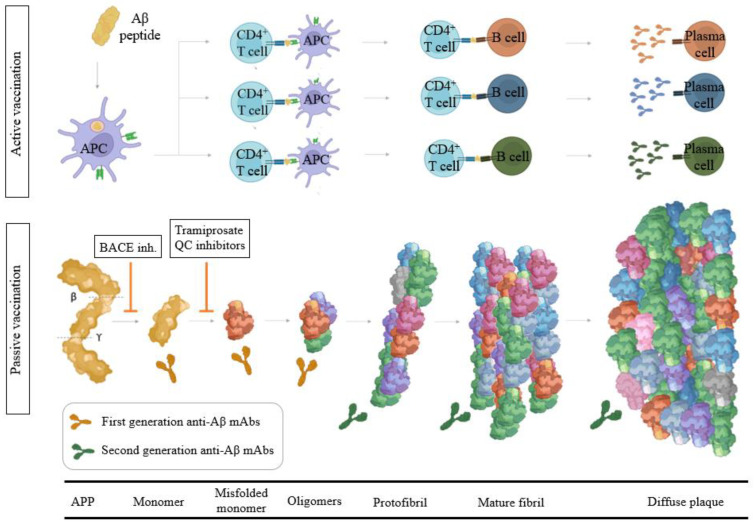
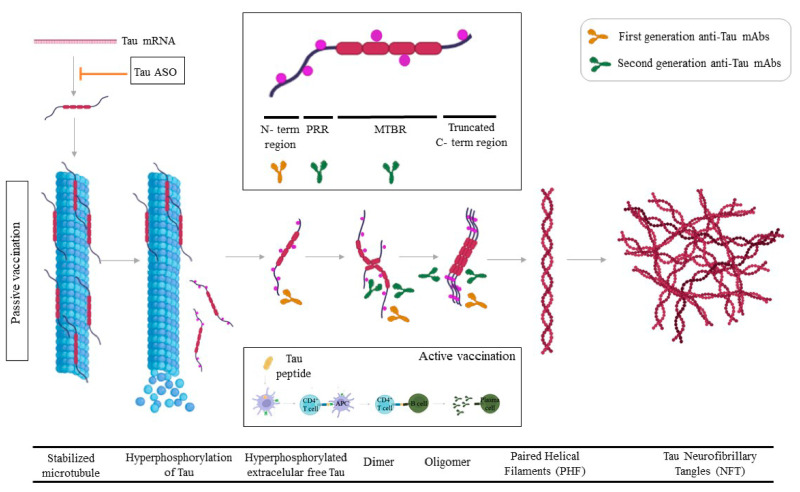
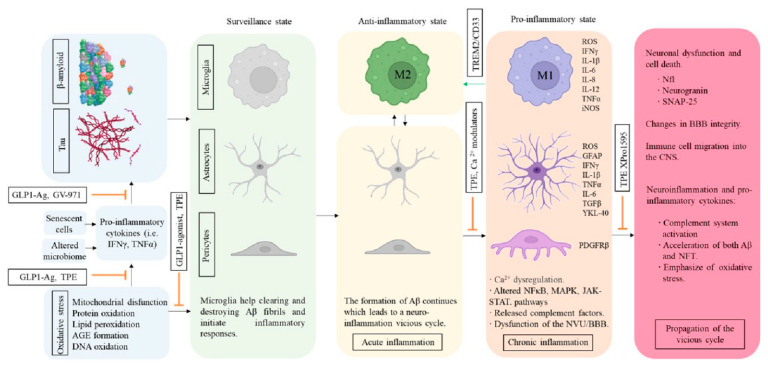
Verification
Claims the paper makes
The claims and statistics of this paper haven’t been checked yet.
Run the check — free, no account needed. It reads the open-access text and checks the sources it cites.
Claims other papers make about this one
Each is checked against this paper’s own text: does it say what the citing paper says it does?
In the citing paper
“DMTs are intended to delay the progression of long-term conditions such as AD and ultimately improve the patient’s quality of life [60].”
From Recent Advances in Therapeutics for the Treatment of Alzheimer’s Disease (2024) · cites this paper as [60]
In the citing paper
“DMTs are treatments that postpone, moderate, or even reverse the evolution of an illness by addressing its underlying cause.”
From Recent Advances in Therapeutics for the Treatment of Alzheimer’s Disease (2024) · cites this paper as [60]
Self-check
Percentages, sums and reported differences re-computed from the paper’s own numbers.
The self-check needs the paper’s full text.
Citations
Cites
NIA‐AA Research Framework: Toward a biological definition of Alzheimer's disease
Jack, C. R., Bennett, D. A., Blennow, K., Carrillo, M. C., Dunn, B., Haeberlein, S. B., Holtzman, D. M., Jagust, W., Jessen, F., Karlawish, J., et al. (2018) · Alzheimer's & Dementia · doi:10.1016/j.jalz.2018.02.018 · Cited by 10,537
Nichols, E., Steinmetz, J. D., Vollset, S. E., Fukutaki, K., Chalek, J., Abd-Allah, F., Abdoli, A., Abualhasan, A., Abu-Gharbieh, E., Akram, T. T., et al. (2022) · The Lancet Public Health · doi:10.1016/s2468-2667(21)00249-8 · Cited by 5,575
Scheltens, P., De Strooper, B., Kivipelto, M., Holstege, H., Chételat, G., Teunissen, C. E., Cummings, J., & van der Flier, W. M. (2021) · The Lancet · doi:10.1016/s0140-6736(20)32205-4 · Cited by 5,465
The neuropathological diagnosis of Alzheimer's disease
DeTure, M. A., & Dickson, D. W. (2019) · Molecular Neurodegeneration · doi:10.1186/s13024-019-0333-5 · Cited by 3,329
Immunization with amyloid-β attenuates Alzheimer-disease-like pathology in the PDAPP mouse
Schenk, D., Barbour, R., Dunn, W., Gordon, G., Grajeda, H., Guido, T., Hu, K., Huang, J., Johnson-Wood, K., Khan, K., et al. (1999) · Nature · doi:10.1038/22124 · Cited by 3,160
Alzheimer Disease Genetics Consortium (ADGC), Kunkle, B. W., The European Alzheimer’s Disease Initiative (EADI), Cohorts for Heart and Aging Research in Genomic Epidemiology Consortium (CHARGE), Genetic and Environmental Risk in AD/Defining Genetic, P. A. E. R. F. A. D. C. (., Grenier-Boley, B., Sims, R., Bis, J. C., Damotte, V., Naj, A. C., et al. (2019) · Nature Genetics · doi:10.1038/s41588-019-0358-2 · Cited by 2,946
Self-citation2020 Alzheimer's disease facts and figures
(2020) · Alzheimer's & Dementia · doi:10.1002/alz.12068 · Cited by 2,353
Drug Transport across the Blood–Brain Barrier
Pardridge, W. M. (2012) · Journal of Cerebral Blood Flow & Metabolism · doi:10.1038/jcbfm.2012.126 · Cited by 1,994
Elmore, M. R. P., Najafi, A. R., Koike, M. A., Dagher, N. N., Spangenberg, E. E., Rice, R. A., Kitazawa, M., Matusow, B., Nguyen, H., West, B. L., et al. (2014) · Neuron · doi:10.1016/j.neuron.2014.02.040 · Cited by 1,968
Two Phase 3 Trials of Bapineuzumab in Mild-to-Moderate Alzheimer's Disease
Salloway, S., Sperling, R., Fox, N. C., Blennow, K., Klunk, W., Raskind, M., Sabbagh, M., Honig, L. S., Porsteinsson, A. P., Ferris, S., et al. (2014) · New England Journal of Medicine · doi:10.1056/nejmoa1304839 · Cited by 1,960
Research works printed but not linked: 2
- Renee, 2015, CSF1 receptor signaling is necessary for microglia viability, which unmasks a cell that rapidly repopulates the microglia-depleted adult brain, Neuron, 82, 380
- Xiao, 2021, Group, phase 3 clinical trial of sodium oligomannate for mild-to-moderate, Alzheimer‘s Dement., 7, 1
Cited by
Sorted by citations
Zhang, J., Zhang, Y., Wang, J., Xia, Y., Zhang, J., & Chen, L. (2024) · Signal Transduction and Targeted Therapy · doi:10.1038/s41392-024-01911-3 · Cited by 1,138
Tang, B., Wang, Y., & Ren, J. (2023) · Ibrain · doi:10.1002/ibra.12098 · Cited by 129
Proteostasis and neurodegeneration: a closer look at autophagy in Alzheimer's disease
Barmaki, H., Nourazarian, A., & Khaki‐Khatibi, F. (2023) · Frontiers in Aging Neuroscience · doi:10.3389/fnagi.2023.1281338 · Cited by 97
Recent Advances in Therapeutics for the Treatment of Alzheimer’s Disease
Thawabteh, A. M., Ghanem, A. W., AbuMadi, S., Thaher, D., Jaghama, W., Karaman, D., & Karaman, R. (2024) · Molecules · doi:10.3390/molecules29215131 · Cited by 56
“DMTs are intended to delay the progression of long-term conditions such as AD and ultimately improve the patient’s quality of life [60].”
BackgroundHarnessing microalgae as sustainable cellular factories for biopharmaceutical production
Goshtasbi, H., Okolodkov, Y. B., Movafeghi, A., Awale, S., Safary, A., Barar, J., & Omidi, Y. (2023) · Algal Research · doi:10.1016/j.algal.2023.103237 · Cited by 47
Therapeutics of Alzheimer’s Disease: Recent Developments
Burns, S., Selman, A., Sehar, U., Rawat, P., Reddy, A. P., & Reddy, P. H. (2022) · Antioxidants · doi:10.3390/antiox11122402 · Cited by 36
Alfei, S., & Zuccari, G. (2025) · International Journal of Molecular Sciences · doi:10.3390/ijms26020844 · Cited by 28
Hadi, F., Mortaja, M., & Hadi, Z. (2024) · Cell Biochemistry and Function · doi:10.1002/cbf.4085 · Cited by 23
Morató, X., Tartari, J. P., Pytel, V., & Boada, M. (2024) · Journal of Alzheimer s Disease · doi:10.3233/jad-231372 · Cited by 24
Self-citationKelliny, S., Zhou, X., & Bobrovskaya, L. (2025) · Journal of Neuroscience Research · doi:10.1002/jnr.70046 · Cited by 27
Patricio-Martínez, A., Patricio, F., Macuil-Chapuli, E., Martínez-Juárez, E. Á., Flores-Díaz, S., Cedillo-Ramirez, M. L., & Limón, I. D. (2025) · Frontiers in Neuroscience · doi:10.3389/fnins.2025.1598011 · Cited by 23
Fei, X., Wang, S., Li, J., Zeng, Q., Gao, Y., & Hu, Y. (2022) · Frontiers in Aging Neuroscience · doi:10.3389/fnagi.2022.1037068 · Cited by 17
Pramoda, G., Verma, R. K., Kesharwani, P., & Shukla, R. (2025) · Journal of Molecular Liquids · doi:10.1016/j.molliq.2025.127938 · Cited by 15
Role of mitogen-activated protein kinase inhibitors in Alzheimer's disease: Rouge of brain kinases
Almasoudi, S. H., Al-Kuraishy, H. M., Al-Gareeb, A. I., Eliwa, D., Alexiou, A. T., Papadakis, M., & Batiha, G. E. (2025) · Brain Research Bulletin · doi:10.1016/j.brainresbull.2025.111296 · Cited by 16
Hajihosseini, S., Zakavi, S. A., Farrokhi, Z., Amanzadeh, M., Panahi, P., Mahram, M., Eftekhari, N., Noroozi, M., Ebrahimi, M. J., Alizadeh, A., et al. (2025) · IBRO Neuroscience Reports · doi:10.1016/j.ibneur.2025.05.016 · Cited by 14
Shastri, D., Raorane, C. J., Raj, V., & Lee, S.-K. (2025) · Journal of Controlled Release · doi:10.1016/j.jconrel.2025.01.019 · Cited by 12
A Model Predicting Healthcare Capacity Gaps For Alzheimer’s Disease-Modifying Treatment in Canada
Black, S. E., Budd, N., Nygaard, H. B., Verret, L., Virdi, S., Watts, L. T., & Wilson, M. (2023) · Canadian Journal of Neurological Sciences / Journal Canadien des Sciences Neurologiques · doi:10.1017/cjn.2023.270 · Cited by 11
Rathee, S., Sen, D., Pandey, V., & Jain, S. (2024) · Current Drug Targets · doi:10.2174/0113894501320096240627071400 · Cited by 16
Toward a new nosology of neurodegenerative diseases
Menéndez‐González, M. (2023) · Alzheimer s & Dementia · doi:10.1002/alz.13041 · Cited by 12
Advancing Early Detection of Alzheimer Disease in the Primary Care Setting in the United States
Mielke, M. M., Kurzman, H. R., Hu, Y. H., Cho, M., Liss, J., Burns, J. M., Obisesan, T. O., Hornbecker, M., Pallay, A., Smith, S. R., et al. (2025) · Neurology Clinical Practice · doi:10.1212/cpj.0000000000200568 · Cited by 10
Moadab, A., Khorramdelazad, H., Javar, M. T. A., Rostami‐Nejad, M., Mirzaie, S., Hatami, S., Mahdavi, N., Ghaffari, S., & Yazdian, F. A. (2025) · Journal of Neuroimmune Pharmacology · doi:10.1007/s11481-025-10206-5 · Cited by 8
Özge, A., Ghouri, R., Öksüz, N., & Taşdelen, B. (2023) · Frontiers in Neurology · doi:10.3389/fneur.2023.1240655 · Cited by 6
Jallow, A. W., Nguyen, D. P. Q., Sanotra, M. R., Hsu, C.-H., Lin, Y., & Lin, Y.-F. (2024) · Frontiers in Aging Neuroscience · doi:10.3389/fnagi.2024.1378260 · Cited by 7
IsHak, W. W., Meyer, A., Freire, L., Totlani, J., Murphy, N., Renteria, S., Salem, M., Chang, T., Abdelsalam, R., Khan, R., et al. (2024) · PubMed Central · Cited by 6
Liu, S., Song, X., Sun, Y., Sun, A., Li, Y., Li, Y., & Chen, J. (2025) · Frontiers in Pharmacology · doi:10.3389/fphar.2025.1528011 · Cited by 6
Synthesis and evaluation of 2-methylbenzothiazole derivatives as monoamine oxidase inhibitors
Shaw, M., Petzer, J. P., Cloete, T. T., & Petzer, A. (2024) · Medicinal Chemistry Research · doi:10.1007/s00044-024-03283-3 · Cited by 5
Ji, S., Wu, Y., Zhu, R., Guo, D., Jiang, Y., Huang, L., Ma, X., & Yu, L. (2023) · Gerontology · doi:10.1159/000531194 · Cited by 6
Chudhary, M. (2025) · Chemical Papers · doi:10.1007/s11696-025-04532-4 · Cited by 4
Khattab, N. A., El-Kadem, A. H., Goda, A. E., El‐Mahdy, N. A., & El‐Shitany, N. A. (2026) · Experimental Neurology · doi:10.1016/j.expneurol.2026.115814 · Cited by 4
Bridging the gap in the management of Alzheimer's disease using fecal microbiota transplantation
Bashir, B., Gulati, M., Vishwas, S., Hussain, M. S., Gupta, G., Kumar, P., Negi, P., Mittal, N., Dua, K., & Singh, S. K. (2025) · Molecular and Cellular Neuroscience · doi:10.1016/j.mcn.2025.104052 · Cited by 5
Diversity of amyloid beta peptide actions
Mardanyan, S. S., Sharoyan, S. G., & Antonyan, A. A. (2024) · Reviews in the Neurosciences · doi:10.1515/revneuro-2023-0100 · Cited by 5
Shi, Y., Zhang, H., Cong, S., Zhu, X., Liu, Y., Li, J., Tang, K., Xue, R., Liu, X., Tan, Z., et al. (2025) · European Journal of Medicinal Chemistry · doi:10.1016/j.ejmech.2025.118437 · Cited by 5
Huang, B., & Tang, G. (2026) · Pathology - Research and Practice · doi:10.1016/j.prp.2026.156564 · Cited by 3
Xu, B., Sun, G., & Zhang, Y. (2024) · Journal of Molecular Structure · doi:10.1016/j.molstruc.2024.138698 · Cited by 3
Wang, J., Zhou, H. H., Yang, L., Mu, Y., Li, J., Chen, H., & Luo, W. (2023) · Journal of Molecular Structure · doi:10.1016/j.molstruc.2023.135511 · Cited by 3
Neuroinflammation as a driver of Down syndrome-associated Alzheimer’s disease
Qu, H., Snorradóttir, Á. Ó., Gutierrez-Uzquiza, A., Kao, C., March, M., & Hakonarson, H. H. (2026) · Brain Behavior and Immunity · doi:10.1016/j.bbi.2026.106513 · Cited by 2
ALZHEIMER HASTALIĞI, RİSK FAKTÖRLERİ VE TEDAVİ
Yıldırım, N., & Eke, B. C. (2024) · Ankara Universitesi Eczacilik Fakultesi Dergisi · doi:10.33483/jfpau.1441827 · Cited by 4
Targeted Nano-based Drug Delivery in Alzheimer's Disease and Dementia
Mal, P., Rath, S. K., & Halder, T. (2024) · Smart nanomaterials technology · doi:10.1007/978-981-97-0308-1_12 · Cited by 2
“Current and emerging drug therapies in Alzheimer’s disease: A pathophysiological Perspective”
Aparajita, A., Jain, U., & Srivastava, P. (2024) · Neuroscience · doi:10.1016/j.neuroscience.2024.11.078 · Cited by 2
Liu, Z., Hu, B., Tang, J., Liu, X., Cheng, B., Jia, C., & Zhang, L. (2024) · Journal of Alzheimer s Disease · doi:10.1177/13872877241289381 · Cited by 2
Microalgae genetic engineering for enhanced high-value bioproducts for biomedical applications
Ahmad, A., Amin, K. A., & Ashraf, S. M. (2025) · Elsevier eBooks · doi:10.1016/b978-0-443-24006-5.00018-3 · Cited by 1
Recent Advances of the Role of Dl-3-n-Butylphthalide in the Treatment of Alzheimer’s Disease
Huang, H., Wu, J., Fang, Z., Wang, Y., Xie, J., & Guan, Y. (2026) · Molecular Neurobiology · doi:10.1007/s12035-025-05616-8 · Cited by 1
Therapeutic advances in Alzheimer’s disease: Current strategies and future possibilities
Varinthra, P., Ibiayo, A. G., Liu, C., Pakaprot, N., Paromi, I. N., Do, T. T. N., Raza, M., & Liu, I. Y. (2026) · Tzu Chi Medical Journal · doi:10.4103/tcmj.tcmj-d-25-00175 · Cited by 1
Mahoon, D. A., Hamad, O., & Butler, A. E. (2026) · International Journal of Molecular Sciences · doi:10.3390/ijms27093967 · Cited by 1
Hamdy, M. H., Khodeer, D. M., Elsakka, M. E. G., Alaseem, A. M., Mostafa, Y. M., Alharthi, A., El-Nablaway, M., & Tawfik, M. M. (2026) · Biomolecules · doi:10.3390/biom16060881 · Cited by 1
Hu, B., Tang, J., Cheng, B., & Zhang, L. (2023) · Research Square · doi:10.21203/rs.3.rs-3319490/v1
Shinagawa, H., Ohuchi, K., Yuya, G., Hashimoto, K., Kijima, H., Maekawa, S., Kurita, H., & Inden, M. (2023) · Journal of Alzheimer s Disease · doi:10.3233/jad-230686
Xu, B., Sun, G. W., & Zhang, Y. (2024) · SSRN Electronic Journal · doi:10.2139/ssrn.4702812
Nano lipid-drug conjugates for the treatment of Alzheimer’s disease
Mandal, S., & Das, M. K. (2025) · Elsevier eBooks · doi:10.1016/b978-0-443-33382-8.00010-8
Hypothesis-Driven Insights and Clinical Trial Updates in Alzheimer’s Disease Pathogenesis
Alhawarri, M. B. (2025) · CNS & Neurological Disorders - Drug Targets · doi:10.2174/0118715273387383250924031644
Advances in Tricyclic Compounds for the Treatment of Alzheimer's Disease
Shi, Y., 廖心丹, & Yu, G. (2026) · ChemMedChem · doi:10.1002/cmdc.70384 · Cited by 1
Miyahara, R., Miyajima, M., Nakajima, M., Ogino, I., Horikoshi, K., Sakamoto, K., Kawamura, K., Akiba, C., Yamada, S., Kostadin, K., et al. (2026) · Research Square · doi:10.21203/rs.3.rs-10596838/v1
Kjær, N. K., Lykkegaard, J., Ibsen, H., Llor, C., & Søndergaard, J. (2026) · Scandinavian Journal of Primary Health Care · doi:10.1080/02813432.2026.2752758
Metadata
- Authors
- Morató, X., Pytel, V., Jofresa, S., Ruiz, A., & Boada, M.
- Affiliations
- Universitat Internacional de Catalunya (ES)
- Research Center and Memory Clinic, Fundació ACE, Institut Català de Neurociències Aplicades, Universitat Internacional de Catalunya, 08017 Barcelona, Spain
- Corresponding author
- Morató, Xavier
- Venue
- International Journal of Molecular Sciences
- Publisher
- MDPI AG
- Published
- 2022-08-18
- Volume
- 23
- Issue
- 16
- Pages
- 9305
- ISSN
- 1422-0067 (ISSN-L)
- PMC
- PMC9409252
- OpenAlex
- W4292247066
- Cited by
- 53
- References
- 249
- Citations by year
- 2026: 10 · 2025: 16 · 2024: 15 · 2023: 10 · 2022: 2
- FWCI
- 1.48
- Type
- journal article
- Language
- en
- Open access
- gold
- doi.org
- Licence
- Locations
- International Journal of Molecular Sciences (publishedVersion, cc-by)
- PubMed Central (publishedVersion, cc-by)
- PubMed (publishedVersion)
- DOAJ (DOAJ: Directory of Open Access Journals) (submittedVersion, cc-by-sa)
- Topics
- Life Sciences › Neuroscience › Cellular and Molecular Neuroscience › Alzheimer's disease research and treatments
- Health Sciences › Medicine › Psychiatry and Mental health › Dementia and Cognitive Impairment Research
- Health Sciences › Medicine › Pharmacology (medical) › Cholinesterase and Neurodegenerative Diseases
- Keywords
- Alzheimer's disease, disease-modifying therapy, symptomatic treatment, drug development pipeline, polypharmacology, personalized medicine, amyloid-beta, tau hyperphosphorylation, cholinesterase inhibitors, memantine, aducanumab, anti-amyloid monoclonal antibodies, neuroinflammation
- MeSH terms
- Donepezil, Alzheimer Disease, Animals, Humans, Memantine, Amyloid beta-Peptides, Patient-Centered Care, Polypharmacology
About these checks
Registry, retraction, Cites and statistics results are computed, not judged, with one exception: a printed reference that no index lists is read once by a model before it counts as a citation error. Claims are extracted by a model and kept only when their quote appears verbatim in the text; each cited source is then checked, with a model’s help, for whether it says what the claim relies on. Those verdicts can be wrong — read the claim’s quote and the cited source before relying on one.
Statistics and arithmetic are recomputed, not judged.
Confidence bands are shown only for fields calibrated on our annotated test set. None is calibrated yet, so no band is shown.
What counts as a claim ›How we measure confidence ›How we check this ›
Are you an author, or do you see a problem with this page? Request a review
