

Variations in BDNF and Their Role in the Neurotrophic Antidepressant Mechanisms of Ketamine and Esketamine: A Review
Open accessThe DOI matches its Crossref record; 112 of the 113 references it cites were found in a registry or an index; 132 of the 168 sources its claims cite were checked for support.
Abstract
Brain-derived neurotrophic factor (BDNF) is critical for neuroplasticity, synaptic transmission, and neuronal survival. Studies have implicated it in the pathophysiology of depression, as its expression is significantly reduced in brain areas such as the prefrontal cortex and hippocampus in patients with depression. Our narrative review focuses on the relationship between BDNF, ketamine, and esketamine, specifically by summarizing human studies investigating BDNF variations in patients treated with these two drugs. BDNF plays a pivotal role in neuroplasticity and neurotrophic mechanisms that can be enhanced by traditional antidepressants, which have been shown to increase BDNF levels both peripherally and in targeted brain regions. Ketamine and its S-enantiomer, esketamine, exert both rapid and sustained antidepressant effects through activation of glutamate-related pathways, with neurotrophic effects involving BDNF, as demonstrated in experimental studies. However, clinical findings have shown mixed results, with most indicating an increase in plasma BDNF in patients treated with intravenous ketamine, although some studies contradict these findings. In addition to this, there are few studies of BDNF and esketamine. Currently, the limited number of studies suggests the need for further research, including larger sample sizes and investigations of BDNF and intranasal esketamine, which has been approved by several regulatory agencies for the treatment of treatment-resistant depression.
Overview
CoChat Summary
TL;DR
This narrative review summarizes evidence linking BDNF to the antidepressant mechanisms of ketamine and esketamine, emphasizing preclinical support for BDNF/TrkB-dependent neuroplasticity but mixed human clinical findings. It concludes that human data remain inconclusive, especially for esketamine and intranasal formulations, and calls for larger studies.
Key findings
- Preclinical studies indicate ketamine’s rapid and sustained antidepressant effects require BDNF signaling: effects are blocked by anti-BDNF neutralizing antibody in the mPFC, BDNF or TrkB knockout models, and a selective TrkB inhibitor.
- Human ketamine studies are mixed: some report increased plasma BDNF in responders, e.g., after 0.5 mg/kg IV ketamine at 240 min and at 230 min post-infusion, and in 53 healthy participants at 2 h and 24 h post-infusion; others report no increase in 23 TRD patients or in MDD patients at 230 min.
- Esketamine human data are limited and mostly from special populations: IV esketamine 0.25 mg/kg increased plasma BDNF in postpartum depression at three days; IV esketamine 0.5 mg/kg reduced anxiety/depression with increased serum BDNF in thoracic surgery patients; in 417 cervical cancer surgery patients, 0.5 mg/kg IV esketamine produced greater BDNF increases than placebo, ketamine, or 0.25 mg/kg esketamine.
- The review notes a 2021 analysis of 64 randomized controlled trials with 5299 participants found ketamine and esketamine may increase response and remission rates within 24 h versus placebo, but BDNF-specific human evidence remains limited.
Methods
- Narrative review using PubMed, Scopus, and Google Scholar with keywords including “ketamine,” “esketamine,” “BDNF,” “neurotrophism,” and “neuroplasticity”; articles published in English were examined.
- Preclinical studies were considered for molecular mechanisms linking ketamine/esketamine to BDNF, while human studies were reviewed for BDNF variations in patients treated with ketamine or esketamine.
- No systematic review protocol, meta-analysis, or formal risk-of-bias assessment is described.
Limitations
- The paper states that human studies are limited, often have small sample sizes, and show inconsistent results; the optimal timing for measuring BDNF remains unclear.
- The paper states that few studies examine BDNF and esketamine, especially intranasal esketamine approved for TRD, and that no clinical studies have addressed long-term ketamine/esketamine effects on BDNF.
- Evident from the text: as a narrative review, it does not systematically quantify study quality or pool effect sizes, and the included human studies are heterogeneous in populations, doses, routes, and BDNF measurement times.
Model-written summary. Check it against the paper before relying on it.
Integrity signals
Registry
Cites
Statistics
Figures
Verification
Claims the paper makes
86 Valid · 6 Not valid · 22 Not checked · 14 Own results and interpretations
The cited sources support only part of this claim — read each source’s verdict below.
In the paper
“Conventional antidepressants, including selective serotonin reuptake inhibitors (SSRIs), have been shown to gradually increase BDNF levels with chronic treatment, which correlates with their delayed therapeutic onset [2,7].”
§ Variations in BDNF and Their Role in the Neurotrophic Antidepressant Mechanisms of Ketamine and Esketamine: A Review > 1. Introduction
What the sources say
- Supportedcites [2] Duman R.S. Deyama S. Fogaça M.V. Role of BDNF in the Pathophysiology and Treatment of Depression: Activity-Dependent Effects Distinguish Rapid-Acting Antidepressants Eur. J. Neurosci. 2021 53 126 139 10.1111/ejn.14630 31811669 PMC7274898 source
The section “Role of BDNF in response to typical antidepressants” states that BDNF expression increases after chronic, but not acute, antidepressant administration, including serotonin-selective reuptake inhibitors. It says this timing is consistent with the delayed therapeutic actions of these drugs. No page number is provided in the supplied copy. (LLM, conf=0.94)
- Partly supportedcites [7] Mosiołek A. Mosiołek J. Jakima S. Pięta A. Szulc A. Effects of Antidepressant Treatment on Neurotrophic Factors (BDNF and IGF-1) in Patients with Major Depressive Disorder (MDD) J. Clin. Med. 2021 10 3377 10.3390/jcm10153377 34362162 PMC8346988 sourceExperimental — accuracy not yet measured
The Results (§3.1, page unavailable) report higher BDNF after antidepressant treatment, including with SSRIs, and describe rat studies in which BDNF expression changed on a timeframe similar to antidepressant-like response. They do not establish a gradual rise during chronic treatment or show that BDNF changes correlate with the delayed therapeutic onset in patients; the review also reports that BDNF increases were not uniform across drugs and studies. (LLM, conf=0.85)
plainstates a cause- Asserted: passes — The authors put it forward as true.
- Checkable: passes — It can be checked against evidence.
- Load-bearing: passes — The paper’s conclusions depend on it.
- Based: passes — The paper gives a reason why it holds.
- Supported
Every source the paper cites for this claim was checked and supports it.
In the paper
“A 2021 review analyzing 64 randomized controlled trials with 5299 participants showed that both ketamine and esketamine might increase response and remission rates within 24 h compared to placebo [15].”
§ Variations in BDNF and Their Role in the Neurotrophic Antidepressant Mechanisms of Ketamine and Esketamine: A Review > 1. Introduction
What the sources say
- Supportedcites [15] Dean R.L. Hurducas C. Hawton K. Spyridi S. Cowen P.J. Hollingsworth S. Marquardt T. Barnes A. Smith R. McShane R. Ketamine and Other Glutamate Receptor Modulators for Depression in Adults with Unipolar Major Depressive Disorder Cochrane Database Syst. Rev. 2021 9 CD011612 10.1002/14651858.CD011612.pub3 34510411 PMC8434915 source
The Results section reports 64 randomized controlled trials with 5,299 participants. The Background reports that ketamine may increase response and remission versus placebo at 24 hours, while esketamine increases remission and may increase response at that time point. The review qualifies the ketamine evidence as very low certainty and the esketamine response evidence as low certainty. (LLM, conf=0.93)
hedgedstates a possible causen = 5,299- Asserted: passes — The authors put it forward as true.
- Checkable: passes — It can be checked against evidence.
- Load-bearing: unclear — It is unclear whether the paper’s conclusions depend on it.
- Based: passes — The paper gives a reason why it holds.
- Supported
The cited sources support only part of this claim — read each source’s verdict below.
In the paper
“A key mechanism of ketamine and esketamine may be the upregulation of BDNF levels [18,19], which plays a critical role in synaptic resilience and neuroplasticity [20].”
§ Variations in BDNF and Their Role in the Neurotrophic Antidepressant Mechanisms of Ketamine and Esketamine: A Review > 1. Introduction
What the sources say
- Partly supportedcites [18] Yavi M. Lee H. Henter I.D. Park L.T. Zarate C.A. Ketamine Treatment for Depression: A Review Discov. Ment. Health 2022 2 9 10.1007/s44192-022-00012-3 35509843 PMC9010394 sourceExperimental — accuracy not yet measured
The mechanism-of-action section says AMPA receptor activation can enhance BDNF release as part of a proposed pathway for ketamine’s antidepressant effects. Its figure discusses proposed mechanisms for both ketamine and esketamine, but the copy does not specifically establish increased BDNF levels for both drugs; enhanced release is not necessarily an increase in levels. (LLM, conf=0.82)
- Partly supportedcites [19] Björkholm C. Monteggia L.M. BDNF—A Key Transducer of Antidepressant Effects Neuropharmacology 2016 102 72 79 10.1016/j.neuropharm.2015.10.034 26519901 PMC4763983 sourceExperimental — accuracy not yet measured
Section 3 says ketamine’s antidepressant effects require a rapid increase in BDNF protein, supporting the proposed mechanism for ketamine. The passages found for esketamine do not address that drug, so the claim’s extension to esketamine is not supported by our copy. Page numbers were unavailable. (LLM, conf=0.86)
hedgedstates a possible cause- Asserted: passes — The authors put it forward as true.
- Checkable: passes — It can be checked against evidence.
- Load-bearing: passes — The paper’s conclusions depend on it.
- Based: passes — The paper gives a reason why it holds.
- Rests on an assumption not shown here.
- Partly supported
The cited sources support only part of this claim — read each source’s verdict below.
In the paper
“Antidepressants, particularly selective serotonin reuptake inhibitors (SSRIs) and serotonin-norepinephrine reuptake inhibitors (SNRIs), have been shown to increase BDNF levels both in peripheral blood and in specific brain regions such as the hippocampus, which is critical for mood regulation and neurogenesis [3,41].”
§ Variations in BDNF and Their Role in the Neurotrophic Antidepressant Mechanisms of Ketamine and Esketamine: A Review > 3. BDNF, Depression, and Antidepressants
What the sources say
- Partly supportedcites [3] Cavaleri D. Moretti F. Bartoccetti A. Mauro S. Crocamo C. Carrà G. Bartoli F. The Role of BDNF in Major Depressive Disorder, Related Clinical Features, and Antidepressant Treatment: Insight from Meta-Analyses Neurosci. Biobehav. Rev. 2023 149 105159 10.1016/j.neubiorev.2023.105159 37019247 sourceExperimental — accuracy not yet measured
The Summary of findings (p. 4) reports increased blood BDNF after SSRI and SNRI treatment in people with major depressive disorder. The Interpretation of findings (p. 6) discusses possible BDNF-related antidepressant mechanisms in the hippocampus, but does not establish that these drugs increase hippocampal BDNF levels. (LLM, conf=0.88)
- Partly supportedcites [41] Cubillos S. Engmann O. Brancato A. BDNF as a Mediator of Antidepressant Response: Recent Advances and Lifestyle Interactions Int. J. Mol. Sci. 2022 23 14445 10.3390/ijms232214445 36430921 PMC9698349 sourceExperimental — accuracy not yet measured
Section 2.1 (page unavailable) reports increased hippocampal BDNF mRNA expression after chronic antidepressant treatment, including with the SSRI sertraline; section 2.2 also describes hippocampal BDNF upregulation with fluoxetine. The paper does not establish a general increase in peripheral-blood BDNF with SSRIs or SNRIs: section 2.1 instead reports decreased serum BDNF associated with escitalopram response in a rat model of treatment-resistant depression. (LLM, conf=0.88)
boostedstates a cause- Asserted: passes — The authors put it forward as true.
- Checkable: passes — It can be checked against evidence.
- Load-bearing: unclear — It is unclear whether the paper’s conclusions depend on it.
- Based: passes — The paper gives a reason why it holds.
- Rests on an assumption not shown here.
- Partly supported
The cited sources support only part of this claim — read each source’s verdict below.
In the paper
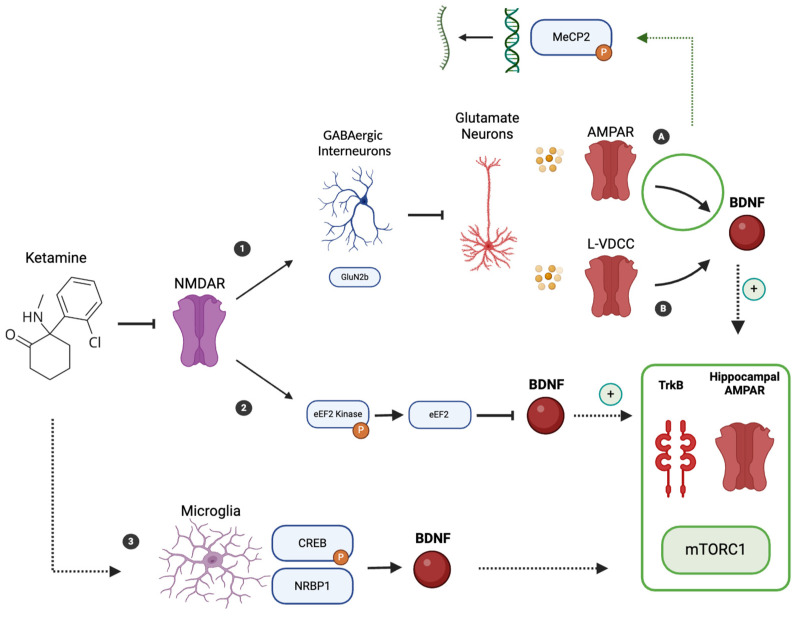
“In contrast, at sub-anesthetic doses used for depression, ketamine preferentially blocks NMDA receptors on GABAergic interneurons [44,58].”
§ Variations in BDNF and Their Role in the Neurotrophic Antidepressant Mechanisms of Ketamine and Esketamine: A Review > 4. Ketamine Mechanism of Action and BDNF Involvement
What the sources say
- Supportedcites [44] Deyama S. Duman R.S. Neurotrophic Mechanisms Underlying the Rapid and Sustained Antidepressant Actions of Ketamine Pharmacol. Biochem. Behav. 2020 188 172837 10.1016/j.pbb.2019.172837 31830487 PMC6997025 source
In the section on BDNF and ketamine’s antidepressant actions, the review says GABAergic interneurons are more sensitive to low-dose ketamine and describes blockade of their NMDA receptors as the proposed cause of a glutamate burst. The Introduction identifies subanesthetic ketamine doses as those used to treat depression. (LLM, conf=0.89)
- Partly supportedcites [58] Li N. Lee B. Liu R.-J. Banasr M. Dwyer J.M. Iwata M. Li X.-Y. Aghajanian G. Duman R.S. mTOR-Dependent Synapse Formation Underlies the Rapid Antidepressant Effects of NMDA Antagonists Science 2010 329 959 964 10.1126/science.1190287 20724638 PMC3116441 sourceExperimental — accuracy not yet measured
The paper describes ketamine as a nonselective NMDA receptor antagonist at low doses associated with antidepressant effects (Abstract; page unavailable). It suggests that receptors possibly on GABAergic interneurons could be involved in glutamate disinhibition, but calls this a hypothesis; it does not establish that ketamine preferentially blocks those receptors. (LLM, conf=0.87)
plainstates a cause- Asserted: passes — The authors put it forward as true.
- Checkable: passes — It can be checked against evidence.
- Load-bearing: passes — The paper’s conclusions depend on it.
- Based: passes — The paper gives a reason why it holds.
- Rests on an assumption not shown here.
- Supported
65 more claims · 47 with their cited sources checked
Create a free account to see all 128 claims and to verify the 1 reference still open.
- It may state two separate claims as one. 53
- Probably not a substantial claim. 5
- The quote only partly states this claim. 1
Self-check
Percentages, sums and reported differences re-computed from the paper’s own numbers.
Each contradiction between two passages listed here was confirmed by an independent check.
Rated minor: it would not touch a result — a value no result rests on, a p-value that stays on the same side of the significance level, or a conflict that is clerical, resolved elsewhere in the paper, or outside its own findings.
In the paper
§ Variations in BDNF and Their Role in the Neurotrophic Antidepressant Mechanisms of Ketamine and Esketamine: A Review > 4. Ketamine Mechanism of Action and BDNF Involvement
“Additionally, NMDA receptor activation inhibits Eukaryotic elongation factor 2 (eEF2) kinase (eEF2K), which normally phosphorylates eEF2, thereby inhibiting BDNF production.”
§ Variations in BDNF and Their Role in the Neurotrophic Antidepressant Mechanisms of Ketamine and Esketamine: A Review > 4. Ketamine Mechanism of Action and BDNF Involvement
“Ketamine’s effect on NMDA receptors disrupts the basal calcium signals maintained by tonically active NMDA receptors, leading to inhibition of eEF2K and subsequent dephosphorylation of eEF2 [62].”
Citations
Cites
mTOR-Dependent Synapse Formation Underlies the Rapid Antidepressant Effects of NMDA Antagonists
Li, N., Lee, B., Liu, R.-J., Banasr, M., Dwyer, J. M., Iwata, M., Li, X.-Y., Aghajanian, G., & Duman, R. S. (2010) · Science · doi:10.1126/science.1190287 · Cited by 2,881 · cited 5×
“…synaptic protein synthesis and new dendritic spine formation, processes that are fundamental to the sustained antidepressant effects of ketamine [58,60]. mTORC1 regulates the translation of synaptic proteins, such as synapsin-1 and PSD-95, which are essential for maintaining synaptic stability…”
InfluentialKrishnan, V., Han, M.-H., Graham, D. L., Berton, O., Renthal, W., Russo, S. J., LaPlant, Q., Graham, A., Lutter, M., Lagace, D. C., et al. (2007) · Cell · doi:10.1016/j.cell.2007.09.018 · Cited by 2,307 · cited 1×
“Elevated BDNF levels have been observed in the nucleus accumbens tissue of human patients with MDD [34], and neuroanatomical studies have also identified amygdala hypertrophy as another hallmark of MDD [35,36].”
Nibuya, M., Morinobu, S., & Duman, R. (1995) · The Journal of Neuroscience · doi:10.1523/jneurosci.15-11-07539.1995 · Cited by 2,109
NMDA receptor blockade at rest triggers rapid behavioural antidepressant responses
Autry, A. E., Adachi, M., Nosyreva, E., Na, E. S., Los, M. F., Cheng, P.-F., Kavalali, E. T., & Monteggia, L. M. (2011) · Nature · doi:10.1038/nature10130 · Cited by 1,926 · cited 6×
“…synaptic protein synthesis and new dendritic spine formation, processes that are fundamental to the sustained antidepressant effects of ketamine [58,60]. mTORC1 regulates the translation of synaptic proteins, such as synapsin-1 and PSD-95, which are essential for maintaining synaptic stability and…”
InfluentialMoghaddam, B., Adams, B., Verma, A., & Daly, D. (1997) · The Journal of Neuroscience · doi:10.1523/jneurosci.17-08-02921.1997 · Cited by 1,793 · cited 2×
“…subsequent activation of L-type voltage-dependent Ca2+ channels (L-VDCCs) [44,65–67]. to disinhibition of these neurons, which enhances activation of postsynaptic AMPA receptors, resulting in depolarization and subsequent activation of L-type voltage-dependent Ca2+ channels (L-VDCCs) [44,65–67].”
Synaptic plasticity and depression: new insights from stress and rapid-acting antidepressants
Duman, R. S., Aghajanian, G. K., Sanacora, G., & Krystal, J. H. (2016) · Nature Medicine · doi:10.1038/nm.4050 · Cited by 1,750 · cited 3×
“…subsequent activation of L-type voltage-dependent Ca2+ channels (L-VDCCs) [44,65–67]. to disinhibition of these neurons, which enhances activation of postsynaptic AMPA receptors, resulting in depolarization and subsequent activation of L-type voltage-dependent Ca2+ channels (L-VDCCs) [44,65–67].”
Hippocampal Volume Reduction in Major Depression
Bremner, J. D., Narayan, M., Anderson, E. R., Staib, L. H., Miller, H. L., & Charney, D. S. (2000) · American Journal of Psychiatry · doi:10.1176/ajp.157.1.115 · Cited by 1,670
Brain-derived neurotrophic factor produces antidepressant effects in behavioral models of depression
Shirayama, Y., Chen, A. C.-H., Nakagawa, S., Russell, D. S., & Duman, R. S. (2002) · The Journal of Neuroscience · doi:10.1523/jneurosci.22-08-03251.2002 · Cited by 1,654
Binder (2004) · doi:10.1080/08977190410001723308 · Cited by 1,481
Miranda, M., Morici, J. F., Zanoni, M. B., & Bekinschtein, P. (2019) · Frontiers in Cellular Neuroscience · doi:10.3389/fncel.2019.00363 · Cited by 1,416
Cited by
From Synaptic Plasticity to Neurodegeneration: BDNF as a Transformative Target in Medicine
Toader, C., Șerban, M., Munteanu, O., Covache-Busuioc, R.-A., Enyedi, M., Ciurea, A. V., & Tătaru, C. P. (2025) · International Journal of Molecular Sciences · doi:10.3390/ijms26094271 · Cited by 185
Zheng, Y., & Xu, L. (2025) · Frontiers in Immunology · doi:10.3389/fimmu.2025.1646740 · Cited by 35
d’Andrea, G., Cavallotto, C., Pettorruso, M., Lorenzo, G. D., Carullo, R., Berardis, D. D., Rosso, G., Barlati, S., Martiadis, V., Tamagnini, G., et al. (2025) · Psychiatry Research · doi:10.1016/j.psychres.2025.116655 · Cited by 27
Tang, L., Bi, G., Lin, K., Chen, Y., Xian, H., Li, Y., Xie, H., Zheng, G., Wang, P., Chen, Y., et al. (2025) · Psoriasis Targets and Therapy · doi:10.2147/ptt.s535900 · Cited by 17
Neurobiological Mechanisms of Electroconvulsive Therapy: Molecular Perspectives of Brain Stimulation
Fetahović, E., Janjic, V. S., Muric, M. D., Jovicic, N. U., Radmanović, B., Rosic, G. L., Selaković, D., Filipovic, M., & Muric, N. N. (2025) · International Journal of Molecular Sciences · doi:10.3390/ijms26125905 · Cited by 21
Brain aging: Unlocking personalized strategies for cognitive resilience
Saliev, T. M. (2025) · Brain Network Disorders · doi:10.1016/j.bnd.2025.09.002 · Cited by 11
Liu, T., Wu, J., Huang, P., Cheng, W.-L., & Lai, C. (2025) · European Neuropsychopharmacology · doi:10.1016/j.euroneuro.2025.07.006 · Cited by 10
Motamedi-Manesh, A., Asanjan, M. F., Fallah, H., Gharibian, S., Taghavi, A., Poode, Z. H., Akhondzadeh, S., & Vaseghi, S. (2025) · Naunyn-Schmiedeberg s Archives of Pharmacology · doi:10.1007/s00210-025-03912-7 · Cited by 8
Exploring Biological Risk Factors in Treatment-Resistant Depression
Lievanos-Ruiz, F. J., & Navarro, B. F. (2025) · Psychiatry International · doi:10.3390/psychiatryint6040134 · Cited by 9
AdipoRon as a Novel Therapeutic Agent for Depression: A Comprehensive Review of Preclinical Evidence
Laurindo, L. F., Rodrigues, V. D., Mellem, R. H., Haber, R. S. D. A., Valenti, V. E., Laurindo, L. F., Chagas, E. F. B., de Oliveira, C. M., Direito, R., Miglino, M. A., et al. (2025) · Biomedicines · doi:10.3390/biomedicines13081867 · Cited by 6
Management of depression utilizing Traditional Chinese Medicine
Ma, R., Ma, J., & Zhang, H. (2026) · Frontiers in Pharmacology · doi:10.3389/fphar.2026.1763214 · Cited by 7
Федотчева, Т. А., & Shimanovsky, N. L. (2025) · Medical Sciences · doi:10.3390/medsci14010015 · Cited by 6
Okur, S., Bayraktar, B., & Köse, F. T. (2025) · Brain and Behavior · doi:10.1002/brb3.71063 · Cited by 5
Ding, Y., Wang, Z., Huang, J., Yi, Y., & Wu, Z. (2025) · Neuropsychiatric Disease and Treatment · doi:10.2147/ndt.s530265 · Cited by 6
Rengasamy, M. L., Panny, B., Hutchinson, Z., Marsland, A. L., Kovats, T., Griffo, A., Spotts, C., Howland, R. H., Wallace, M. L., Mathew, S. J., et al. (2025) · Brain Behavior and Immunity · doi:10.1016/j.bbi.2025.04.006 · Cited by 6
Teng, Y., Tien-Wei, H., Peng, W.-H., Wu, C.-C., Chu, T., Lee, Y., Lee, M. T., & Ho, Y. (2026) · Antioxidants · doi:10.3390/antiox15010139 · Cited by 7
Xuesong, Xu, Y., Xiong, H.-P., Li-Tang, Liu, Q.-R., & Zhang, D. (2025) · Psychiatry Research · doi:10.1016/j.psychres.2025.116849 · Cited by 5
Ye, M., Huang, C., Gu, Y., Lu, X., Zhu, T., & Zhang, Y. (2026) · Brain Behavior and Immunity · doi:10.1016/j.bbi.2026.106529 · Cited by 3
Zhan, Y., Zhang, Y., Liu, Z., Yin, Z., Wang, D., Xie, X., & Wang, L. (2025) · Drug Design Development and Therapy · doi:10.2147/dddt.s567980 · Cited by 3
Ketamine Integration Chaplaincy: A Novel Spiritual Care Approach to Psychedelic Integration
Breau, J. A., Gillis‐Smith, P., & Deonauth, T. (2025) · Anthropology of Consciousness · doi:10.1111/anoc.70012 · Cited by 3
Uncontrolled husbandry variability biases behavioral, endocrine, and molecular outcomes in zebrafish
Al-Mohammad, H. M. K., Ahmad, H. S., Alshamarey, D. K., Obaid, A. J., Kamil, M. M., & Alibraheemi, A. A. S. G. (2026) · Applied Animal Behaviour Science · doi:10.1016/j.applanim.2026.107054 · Cited by 1
冯芳龄, Zhang, S., Lai, C., Chen, Z., Zhang, J., He, J., Zhang, M., Wang, P., & Gao, X. (2026) · Foods · doi:10.3390/foods15091535 · Cited by 2
Liu, T.-H., Shen, H.-S., Wu, J., Huang, P., Shih, Y.-J., & Lai, C.-C. (2026) · Translational Psychiatry · doi:10.1038/s41398-026-04032-3 · Cited by 2
Wang, L., Xiong, R., Liu, H., Zhang, S., Xu, L., & Lai, X. (2026) · Naunyn-Schmiedeberg s Archives of Pharmacology · doi:10.1007/s00210-026-05108-z · Cited by 1
Comparison of rTMS and esketamine for treatment-resistant depression: A target trial emulation
Chen, J. F., Hsu, C.-W., Chen, Y.-T., Fang, Y.-Y., Tseng, P., Chen, M.-H., Yu-Chen, K., Tien-Wei, H., & Liang, C.-S. (2026) · Journal of Affective Disorders · doi:10.1016/j.jad.2025.121132 · Cited by 3
Tapia‐González, S., Yagüe, J. G., & Barreto, G. E. (2026) · Computational and Structural Biotechnology Journal · doi:10.1016/j.csbj.2025.12.023 · Cited by 2
The epigenetic mechanisms of ketamine in the treatment of depression: a systematic review
Leccisotti, I., Moretti, M. C., Altamura, M., Bellomo, A., Laurello, R., Carapellese, M., Sborgia, G., Dibello, V., Robert, G. H., Panza, F., et al. (2025) · Epigenomics · doi:10.1080/17501911.2025.2583892 · Cited by 2
Concerto, C., Bella, F., Chiarenza, C., Rodolico, A., Francesco, A. D., Ciancio, A., Lanzafame, S., Spigarelli, R., Mineo, L., Petralia, A., et al. (2025) · Methods and Protocols · doi:10.3390/mps8050117 · Cited by 1
Luo, M., Tang, N., Guo, Y., Fan, D., & Wang, X. (2025) · Actas Españolas de Psiquiatría · doi:10.62641/aep.v53i4.1965 · Cited by 2
Constantino, J. L., Jager, J. E. D., Nuninga, J. O., Kamphuis, J., Schoevers, R. A., & van Dalfsen, J. H. (2026) · Psychiatry Research Neuroimaging · doi:10.1016/j.pscychresns.2026.112333
Chen, L., Chen, Y., Zhao, Y., Feng, T., Song, X., Xie, F., Shen, J., He, J., Guo, J., & Zhong, L. (2026) · Frontiers in Psychiatry · doi:10.3389/fpsyt.2026.1781915
Massetti, S., Smith-Apeldoorn, S. Y., Veraart, J. K. E., Kamphuis, J., Muller, K. A., Tzavara, E. T., Meerlo, P., Schoevers, R. A., & van Dalfsen, J. H. (2026) · Journal of Affective Disorders · doi:10.1016/j.jad.2026.122265
4-Acyl-5-aminoimidazole Alkaloids from a Marine-Derived Streptomyces sp. OUCMDZ-944
Liu, Y., Wen, B., Zhu, G., Jian, S., Gao, Y., Chen, L., Li, N., & Zhu, W. (2026) · Journal of Natural Products · doi:10.1021/acs.jnatprod.6c00591
Al‐kuraishy, H. M., Abass, S. A., Mahana, H. A. M., Elbanna, O. A., Shahin, I., Radwan, A. A., MohamedMohamed, O. E.-S., Baktoot, A. M. L., & Batiha, G. E. (2026) · Molecular Biology Reports · doi:10.1007/s11033-026-12110-4 · Cited by 1
Mrówczyńska, L., & Mrówczyński, W. (2026) · International Journal of Molecular Sciences · doi:10.3390/ijms27135881 · Cited by 1
Gu, J., Hong, J., Lu, X., Liu, N., Lu, H., Tong, L., Liu, H., Zhang, Y., & Huang, C. (2026) · Neurochemical Research · doi:10.1007/s11064-026-04813-8
Constantino, J. L., Freimann, T. S., van Dalfsen, J. H., van der Meij, A., Veraart, J. K. E., Smith-Apeldoorn, S. Y., Schoevers, R. A., & Kamphuis, J. (2026) · Journal of Psychiatric Research · doi:10.1016/j.jpsychires.2026.06.013
Acylcarnitines, neurocognitive disorders, and type 2 diabetes mellitus
Serhiyenko, A. A., Hotsko, M. E., Krasnyi, M. R., & Сергієнко, В. О. (2026) · INTERNATIONAL JOURNAL OF ENDOCRINOLOGY (Ukraine) · doi:10.22141/2224-0721.22.2.2026.1698
Nguyen, H. T., Ly, N. T. H., Liao, W.-C., & Huang, L. (2026) · Sleep Medicine · doi:10.1016/j.sleep.2026.108902
Shi, S., Wang, F., Luo, J., Yang, F., & Zou, X. (2026) · Frontiers in Psychiatry · doi:10.3389/fpsyt.2026.1721985 · Cited by 3
Alhassan, M. A. (2026) · Annals of General Psychiatry · doi:10.1186/s12991-025-00626-1
Kim, J.-M., Kang, H.-J., Kim, J.-W., Jhon, M., Lee, J.-Y., Kim, S.-W., & Shin, I.-S. (2026) · Frontiers in Psychiatry · doi:10.3389/fpsyt.2025.1662993 · Cited by 1
查, 冰. (2026) · Advances in Clinical Medicine · doi:10.12677/acm.2026.162575
Bennett, M. (2026) · Springer eBooks · doi:10.1007/978-981-95-9594-5_13
Wilkowska, A., Nizgorska-Ohler, J., & Cubała, W. J. (2026) · Molecular Neurobiology · doi:10.1007/s12035-026-06086-2
Farahmandpour, N., Wafy, F., & Feola, J. (2025) · Journal of Affective Disorders Reports · doi:10.1016/j.jadr.2025.100994
Research Progress on the Mechanism of Esketamine in Antidepressant Treatment
尹, 晓. (2025) · Advances in Clinical Medicine · doi:10.12677/acm.2025.15123667
Metadata
- Authors
- Pardossi, S., Fagiolini, A., & Cuomo, A.
- Affiliations
- University of Siena (IT)
- Corresponding author
- Fagiolini, Andrea
- Venue
- International Journal of Molecular Sciences
- Publisher
- MDPI AG
- Published
- 2024-12-05
- Volume
- 25
- Issue
- 23
- Pages
- 13098
- ISSN
- 1422-0067 (ISSN-L)
- PMC
- PMC11642200
- OpenAlex
- W4405031952
- Cited by
- 51
- References
- 113
- Citations by year
- 2026: 28 · 2025: 23
- FWCI
- 3.18
- Type
- journal article
- Language
- en
- Open access
- gold
- doi.org
- Licence
- Locations
- International Journal of Molecular Sciences (publishedVersion, cc-by)
- PubMed Central (publishedVersion, cc-by)
- PubMed (publishedVersion)
- Topics
- Health Sciences › Medicine › Pharmacology (medical) › Treatment of Major Depression
- Life Sciences › Neuroscience › Biological Psychiatry › Tryptophan and brain disorders
- Health Sciences › Medicine › Psychiatry and Mental health › Electroconvulsive Therapy Studies
- Keywords
- brain-derived neurotrophic factor, ketamine, esketamine, depression, antidepressant mechanism, neuroplasticity, glutamate pathway, treatment-resistant depression, plasma BDNF, intranasal esketamine, prefrontal cortex, hippocampus
- MeSH terms
- Animals, Antidepressive Agents, Depression, Humans, Ketamine, Brain-Derived Neurotrophic Factor
About these checks
Registry, retraction, Cites and statistics results are computed, not judged, with one exception: a printed reference that no index lists is read once by a model before it counts as a citation error. Claims are extracted by a model and kept only when their quote appears verbatim in the text; each cited source is then checked, with a model’s help, for whether it says what the claim relies on. Those verdicts can be wrong — read the claim’s quote and the cited source before relying on one.
The claim verdicts this report counts are experimental: their accuracy is not yet measured.
A language model drew the claims from the paper on 2026-10-10, under version 3 of the claim definition (model deepseek-v4.1-flash, prompt extract-v3).
A second model labelled each claim on 2026-10-10 (model jev-1.13-20260917, definition revision gold-guideline-v0.2).
Cited sources are checked with a language model’s help (gpt-6-sol).
Statistics and arithmetic are recomputed, not judged.
Confidence bands are shown only for fields calibrated on our annotated test set. None is calibrated yet, so no band is shown.
What counts as a claim ›How we measure confidence ›How we check this ›
Are you an author, or do you see a problem with this page? Request a review
Data sources
Bibliographic data: Semantic Scholar, OpenAlex, Crossref.
Contains information from the Semantic Scholar Academic Graph Datasets, made available under the ODC Attribution License (ODC-BY 1.0).
Semantic Scholar’s data is described in: Kinney, R., et al. (2023). The Semantic Scholar Open Data Platform. arXiv:2301.10140.
