

A Systematic Two-Sample Mendelian Randomization Analysis Identifies Shared Genetic Origin of Endometriosis and Associated Phenotypes
Open accessThe DOI matches its Crossref record; 38 of the 38 references it cites were found in a registry or an index.
Abstract
Endometriosis, one of the most common gynecological disorders, is a complex disease characterized by the growth of endometrial-like tissue in extra-uterine locations and is a cause of pelvic pain and infertility. Evidence from observational studies indicate that endometriosis usually appears together with several other phenotypes. These include a list of autoimmune diseases, most of them more prevalent in women, anthropometric traits associated with leanness in the adulthood, as well as female reproductive traits, including altered hormone levels and those associated with a prolonged exposure to menstruation. However, the biological mechanisms underlying their co-morbidity remains unknown. To explore whether those phenotypes and endometriosis share a common genetic origin, we performed a systematic Two-Sample Mendelian Randomization (2SMR) analysis using public GWAS data. Our results suggest potential common genetic roots between endometriosis and female anthropometric and reproductive traits. Particularly, our data suggests that reduced weight and BMI might be mediating the genetic susceptibility to suffer endometriosis. Furthermore, data on female reproductive traits strongly suggest that genetic variants that predispose to a more frequent exposure to menstruation, through earlier age at menarche and shorter menstrual cycles, might also increase the risk to suffer from endometriosis.
Overview
The claims and statistics of this paper haven’t been checked yet.
Free: it reads the open-access text and checks the first 5 claims that cite a source we can check. Create a free account to check every claim.
Integrity signals
Registry
Cites
Statistics
Figures
Verification
Claims the paper makes
The claims and statistics of this paper haven’t been checked yet.
Free: it reads the open-access text and checks the first 5 claims that cite a source we can check. Create a free account to check every claim.
Claims other papers make about this one
Each is checked against this paper’s own text: does it say what the citing paper says it does?
The source backs part of the claim, not all of it — or backs it for a different population, condition or comparison.
In the citing paper
“These analyses have shown that endometriosis shares causal genetic risk factors with early menarche, shorter menstrual cycles, lower WHR, lower BMI, and lower levels of AMH.38”
From Prenatal Origins of Endometriosis Pathology and Pain: Reviewing the Evidence of a Role for Low Testosterone (2023) · cites this paper as [38]
Experimental — accuracy not yet measured
Self-check
Percentages, sums and reported differences re-computed from the paper’s own numbers.
The self-check needs the paper’s full text.
Citations
Cites
The MR-Base platform supports systematic causal inference across the human phenome
Hemani, G., Zheng, J., Elsworth, B., Wade, K. H., Haberland, V., Baird, D., Laurin, C., Burgess, S., Bowden, J., Langdon, R., et al. (2018) · eLife · doi:10.7554/elife.34408 · Cited by 7,959 · cited 1×
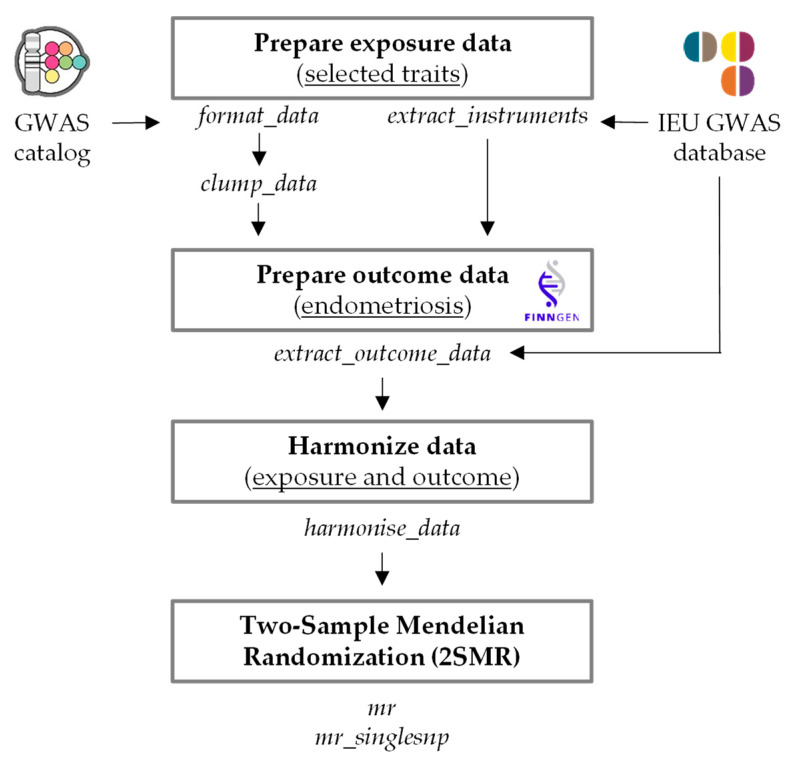
“The generated datasets were analyzed with the mr function in R using a range of methods available in the 2SMR package, including weighted median (WM), MR-Egger (MRE) and inverse variance weighted (IVW) estimates [30].”
MethodGenetic studies of body mass index yield new insights for obesity biology
Study, T. L. C., Locke, A. E., The ADIPOGen Consortium, The AGEN-BMI Working Group, The CARDIOGRAMplusC4D Consortium, The CKDGen Consortium, The, G. L. G. C., The, I. C. B. P., The MAGIC Investigators, The MuTHER Consortium, et al. (2015) · Nature · doi:10.1038/nature14177 · Cited by 4,534 · cited 1×
“Multiple sclerosis (MS) GCST005531 38,589 161,311 24076602 [24] No (14,498/24,091) Anthropometric traits Weight ieu-a-107 73,137 2,747,007 23754948 [25] Yes Height ieu-a-97 73,137 2,748,546 23754948 [25] Yes Body Mass Index (BMI) ieu-a-974 171,977 2,494,613 25673413 [26] Yes Waist-To-Hip ratio (WTH) ieu-a-75 118,003 2…”
Genetics of rheumatoid arthritis contributes to biology and drug discovery
the RACI consortium, Okada, Y., the GARNET consortium, Wu, D., Trynka, G., Raj, T., Terao, C., Ikari, K., Kochi, Y., Ohmura, K., et al. (2014) · Nature · doi:10.1038/nature12873 · Cited by 2,310
Zondervan, K. T., Becker, C. M., & Missmer, S. A. (2020) · New England Journal of Medicine · doi:10.1056/nejmra1810764 · Cited by 2,249
Nnoaham, K. E., Hummelshoj, L., Webster, P., d’Hooghe, T., de Cicco Nardone, F., de Cicco Nardone, C., Jenkinson, C., Kennedy, S. H., & Zondervan, K. T. (2011) · Fertility and Sterility · doi:10.1016/j.fertnstert.2011.05.090 · Cited by 1,584 · cited 1×
“Endometriosis-associated symptoms negatively impact the health and quality of life of affected women, which represent approximately 10% of reproductive-aged females, and up to 50% of women with fertility problems [2].”
BackgroundNew genetic loci link adipose and insulin biology to body fat distribution
The ADIPOGen Consortium, Shungin, D., The CARDIOGRAMplusC4D Consortium, The CKDGen Consortium, The GEFOS Consortium, The GENIE Consortium, The, G. L. G. C., The, I. C. B. P., The International Endogene Consortium, Study, T. L. C., et al. (2015) · Nature · doi:10.1038/nature14132 · Cited by 1,580 · cited 1×
“Multiple sclerosis (MS) GCST005531 38,589 161,311 24076602 [24] No (14,498/24,091) Anthropometric traits Weight ieu-a-107 73,137 2,747,007 23754948 [25] Yes Height ieu-a-97 73,137 2,748,546 23754948 [25] Yes Body Mass Index (BMI) ieu-a-974 171,977 2,494,613 25673413 [26] Yes Waist-To-Hip ratio (WTH) ieu-a-75 118,003 2…”
Analysis of immune-related loci identifies 48 new susceptibility variants for multiple sclerosis
International Multiple Sclerosis Genetics Consortium (IMSGC) (2013) · Nature Genetics · doi:10.1038/ng.2770 · Cited by 1,386
Zondervan, K. T., Becker, C. M., Koga, K., Missmer, S. A., Taylor, R. N., & Viganò, P. (2018) · Nature Reviews Disease Primers · doi:10.1038/s41572-018-0008-5 · Cited by 1,257
Multiple common variants for celiac disease influencing immune gene expression
Dubois, P. C. A., Trynka, G., Franke, L., Hunt, K. A., Romanos, J., Curtotti, A., Zhernakova, A., Heap, G. A. R., Ádány, R., Aromaa, A., et al. (2010) · Nature Genetics · doi:10.1038/ng.543 · Cited by 1,024 · cited 1×
“Celiac disease (CeD) GCST000612 15,283 292,387 20190752 [20] No (4533/10,750) Systemic lupus erythematosus (SLE) GCST007400 18,264 120,873 28714469 [21] No (6,748/11,516)”
Sinaii, N. (2002) · Human Reproduction · doi:10.1093/humrep/17.10.2715 · Cited by 620 · cited 1×
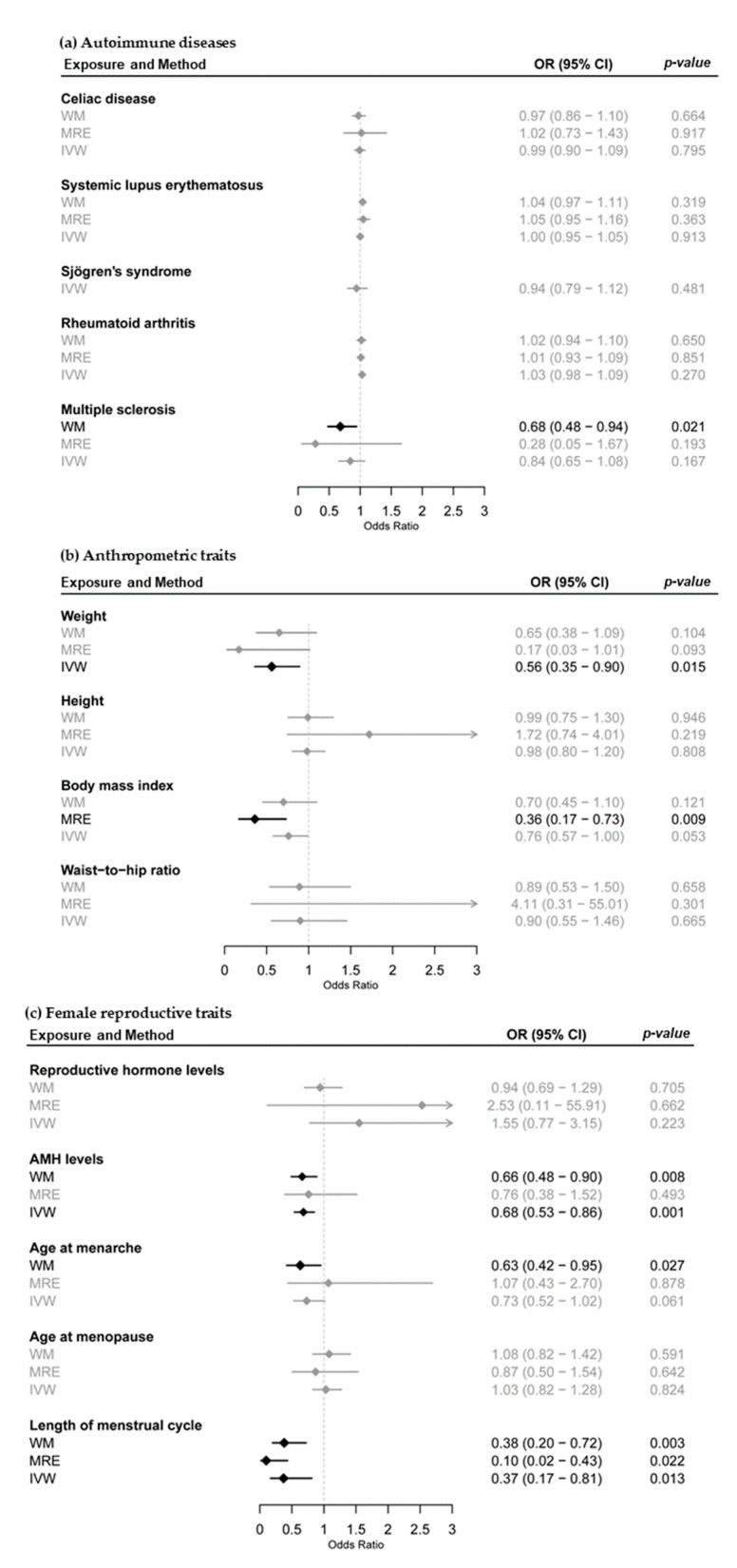
“In our study, we only found a significant association of endometriosis with MS, but our results went in the opposite direction compared to most of the published literature [6,7], as it seemed that genetic variants predisposing to one disease protect from the other.”
Result
Cited by
McGrath, I. M., Montgomery, G. W., & Mortlock, S. (2023) · Human Reproduction Update · doi:10.1093/humupd/dmad009 · Cited by 68
The evolutionary biology of endometriosis
Dinsdale, N., Nepomnaschy, P., & Crespi, B. (2021) · Evolution, Medicine, and Public Health · doi:10.1093/emph/eoab008 · Cited by 53
Genomics of Endometriosis: From Genome Wide Association Studies to Exome Sequencing
Lalami, I., Abo, C., Borghese, B., Chapron, C., & Vaiman, D. (2021) · International Journal of Molecular Sciences · doi:10.3390/ijms22147297 · Cited by 51
The Role of Dietary Fats in the Development and Treatment of Endometriosis
Marcinkowska, A., & Górnicka, M. (2023) · Life · doi:10.3390/life13030654 · Cited by 48
Sex Hormone Candidate Gene Polymorphisms Are Associated with Endometriosis
Олегович, Г. И., Айзикович, Б. И., Golovchenko, O., Reshetnikov, E., Churnosova, M., Aristova, I., Ponomarenko, I., & Churnosov, M. I. (2022) · International Journal of Molecular Sciences · doi:10.3390/ijms232213691 · Cited by 36
“Moreover, according to the study of Garitazelaia and co-authors, SNPs (rs11031005 and rs11031006) of the region near to FSHB (25–40 Kb upstream) in chromosome 11 showed significant pleiotropic associations mediating endometriosis and correlated traits (age at menopause and age at menarche, and length of menstrual cycl…”
BackgroundMethodResultInfluential
Metadata
- Authors
- Garitazelaia, A., Rueda-Martínez, A., Arauzo, R., de Miguel, J., Cilleros-Portet, A., Marí, S., Bilbao, J. R., Fernandez-Jimenez, N., & García-Santisteban, I.
- Affiliations
- University of the Basque Country (ES)
- Department of Genetics, Physical Anthropology and Animal Physiology, Faculty of Medicine and Nursing, University of the Basque Country (UPV/EHU) and Biocruces-Bizkaia Health Research Institute, 48940 Leioa, Basque Country, Spain
- Venue
- Life
- Publisher
- MDPI AG
- Published
- 2021-01-03
- Volume
- 11
- Issue
- 1
- Pages
- 24
- ISSN
- 2075-1729 (ISSN-L)
- PMC
- PMC7824623
- OpenAlex
- W3119022632
- Cited by
- 22
- References
- 38
- Citations by year
- 2026: 2 · 2025: 3 · 2024: 4 · 2023: 7 · 2022: 3 · 2021: 3
- FWCI
- 3.67
- Type
- journal article
- Language
- en
- Open access
- gold
- doi.org
- Licence
- Locations
- Life (publishedVersion, cc-by)
- Europe PMC (PubMed Central) (publishedVersion, other-oa)
- PubMed Central (publishedVersion, cc-by)
- PubMed (publishedVersion)
- Communities in ADDI (University of the Basque Country) (submittedVersion, other-oa)
- Communities in ADDI (Universidad del Pais Vasco) (submittedVersion, other-oa)
- LA Referencia (Red Federada de Repositorios Institucionales de Publicaciones Científicas) (submittedVersion, cc-by)
- DOAJ (DOAJ: Directory of Open Access Journals) (submittedVersion, cc-by-sa)
- TECNALIA Publications (Fundación TECNALIA Research & Innovation) (submittedVersion, public-domain)
- Hispana (submittedVersion, cc-by)
- Topics
- Health Sciences › Medicine › Reproductive Medicine › Endometriosis Research and Treatment
- Life Sciences › Biochemistry, Genetics and Molecular Biology › Genetics › Genetic Associations and Epidemiology
- Life Sciences › Agricultural and Biological Sciences › Ecology, Evolution, Behavior and Systematics › Plant and fungal interactions
- Keywords
- endometriosis, shared genetic risk, autoimmune disease, anthropometric traits, body mass index, weight, female reproductive traits, age at menarche, menstrual cycle length, genetic mediation, comorbidities
About these checks
Registry, retraction, Cites and statistics results are computed, not judged, with one exception: a printed reference that no index lists is read once by a model before it counts as a citation error. Claims are extracted by a model and kept only when their quote appears verbatim in the text; each cited source is then checked, with a model’s help, for whether it says what the claim relies on. Those verdicts can be wrong — read the claim’s quote and the cited source before relying on one.
Statistics and arithmetic are recomputed, not judged.
Confidence bands are shown only for fields calibrated on our annotated test set. None is calibrated yet, so no band is shown.
What counts as a claim ›How we measure confidence ›How we check this ›
Are you an author, or do you see a problem with this page? Request a review
How to cite
Cite CoChat for the checks on this page, and the paper for its own findings.
- This page
- CoChat. (2026). Citation check: A Systematic Two-Sample Mendelian Randomization Analysis Identifies Shared Genetic Origin of Endometriosis and Associated Phenotypes. https://app.cochat.ai/papers/10.3390/life11010024
- The paper
- Garitazelaia, A., Rueda-Martínez, A., Arauzo, R., de Miguel, J., Cilleros-Portet, A., Marí, S., Bilbao, J. R., Fernandez-Jimenez, N., & García-Santisteban, I. (2021). A Systematic Two-Sample Mendelian Randomization Analysis Identifies Shared Genetic Origin of Endometriosis and Associated Phenotypes. Life. https://doi.org/10.3390/life11010024
Data sources
Bibliographic data: Semantic Scholar, OpenAlex, Crossref.
Contains information from the Semantic Scholar Academic Graph Datasets, made available under the ODC Attribution License (ODC-BY 1.0).
Semantic Scholar’s data is described in: Kinney, R., et al. (2023). The Semantic Scholar Open Data Platform. arXiv:2301.10140.
