

Origins and Early Evolution of the tRNA Molecule
Open accessThe DOI matches its Crossref record; 90 of the 90 references it cites were found in a registry or an index.
Abstract
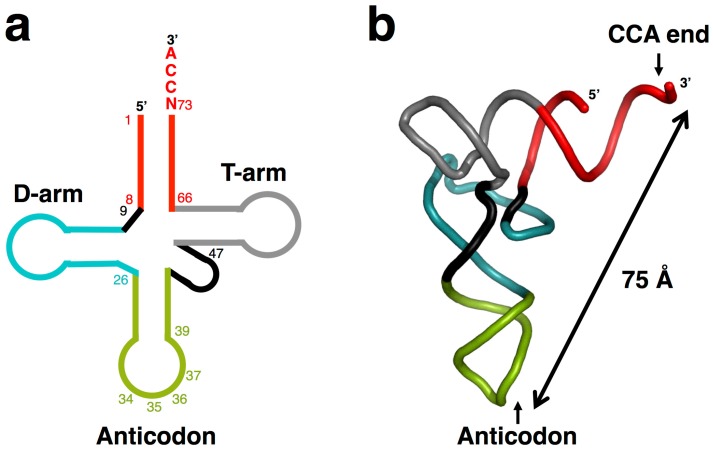
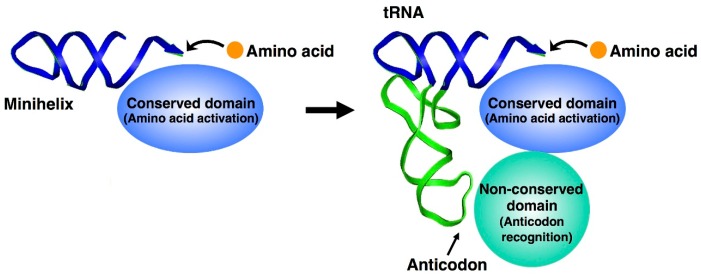
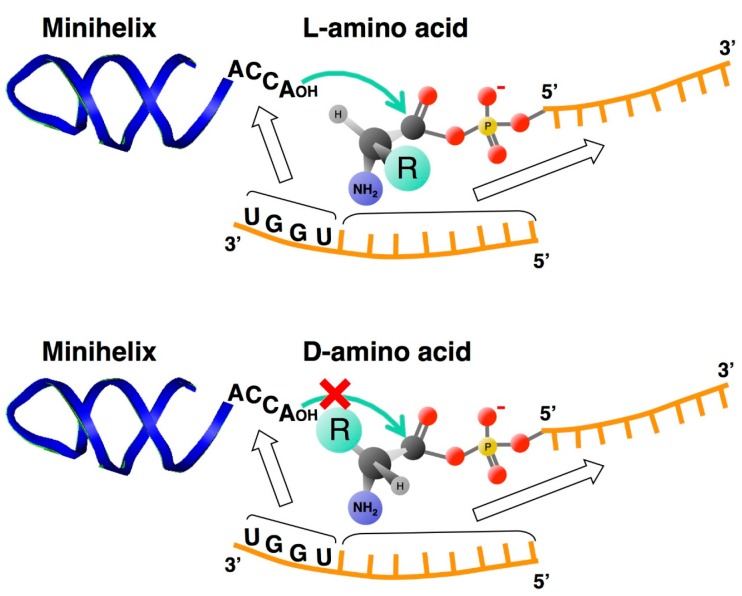
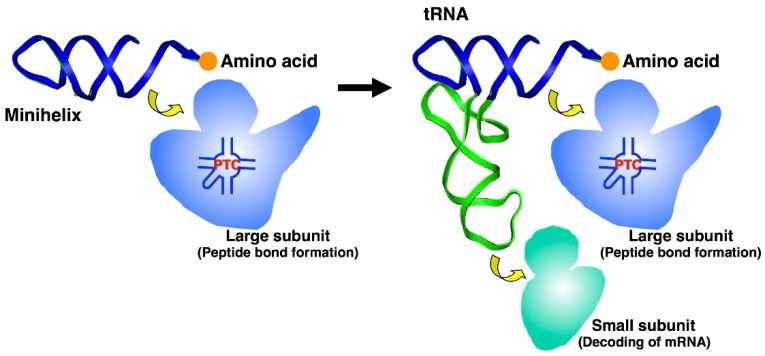
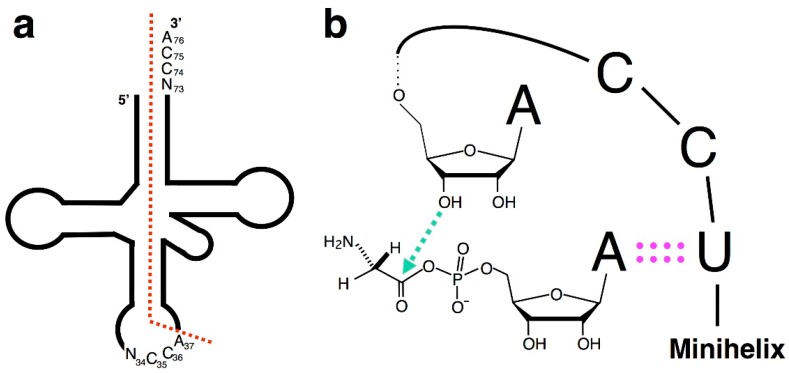
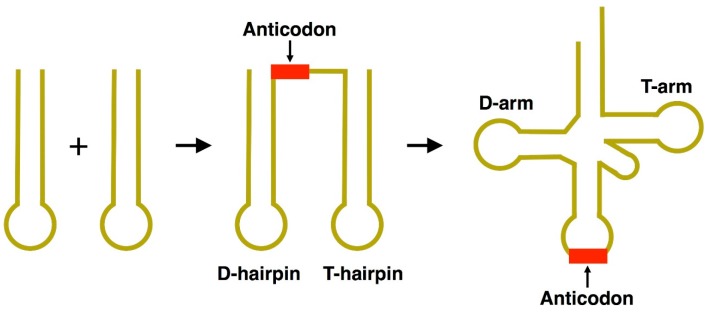
Modern transfer RNAs (tRNAs) are composed of ~76 nucleotides and play an important role as “adaptor” molecules that mediate the translation of information from messenger RNAs (mRNAs). Many studies suggest that the contemporary full-length tRNA was formed by the ligation of half-sized hairpin-like RNAs. A minihelix (a coaxial stack of the acceptor stem on the T-stem of tRNA) can function both in aminoacylation by aminoacyl tRNA synthetases and in peptide bond formation on the ribosome, indicating that it may be a vestige of the ancestral tRNA. The universal CCA-3′ terminus of tRNA is also a typical characteristic of the molecule. “Why CCA?” is the fundamental unanswered question, but several findings give a comprehensive picture of its origin. Here, the origins and early evolution of tRNA are discussed in terms of various perspectives, including nucleotide ligation, chiral selectivity of amino acids, genetic code evolution, and the organization of the ribosomal peptidyl transferase center (PTC). The proto-tRNA molecules may have evolved not only as adaptors but also as contributors to the composition of the ribosome.
Overview
The claims and statistics of this paper haven’t been checked yet.
Free: it reads the open-access text and checks the first 5 claims that cite a source we can check. Create a free account to check every claim.
Integrity signals
Registry
Cites
Statistics
Figures
Verification
Claims the paper makes
The claims and statistics of this paper haven’t been checked yet.
Free: it reads the open-access text and checks the first 5 claims that cite a source we can check. Create a free account to check every claim.
Claims other papers make about this one
Each is checked against this paper’s own text: does it say what the citing paper says it does?
The cited source says what the claim attributes to it.
In the citing paper
“The conclusion that the mRNA decoding in the early translation system was performed by RNA molecules, conceivably, evolutionary precursors of modern tRNAs (proto-tRNAs) [89], implies a stereochemical model of code origin and evolution”
From Frozen Accident Pushing 50: Stereochemistry, Expansion, and Chance in the Evolution of the Genetic Code (2017) · cites this paper as [89]
The check wasn’t confident either way, so it gives no verdict — never disputed.
In the citing paper
“GNC code evolved into the second generation of the genetic code, called an SNS type, where N arbitrarily denotes any four RNA bases and S denotes guanine (G) and cytosine (S) [80,108].”
From The Origin of Prebiotic Information System in the Peptide/RNA World: A Simulation Model of the Evolution of Translation and the Genetic Code (2019) · cites this paper as [80]
Experimental — accuracy not yet measuredThe check wasn’t confident either way, so it gives no verdict — never disputed.
In the citing paper
“The primitive GNC code expanded to an SNS code composed of 16 codons (GGC, GGG, GCC, GCG, GAC, GAG, GUC, GUG, CUC, GUG, CCC, CGC, CAC, CAG, CGC, and CGG) and 10 amino acids (glycine, alanine, aspartic acid, valine, glutamic acid, leucine, proline, histidine, glutamine, and arginine) [66,80].”
From The Origin of Prebiotic Information System in the Peptide/RNA World: A Simulation Model of the Evolution of Translation and the Genetic Code (2019) · cites this paper as [80]
Experimental — accuracy not yet measured
Self-check
Percentages, sums and reported differences re-computed from the paper’s own numbers.
The self-check needs the paper’s full text.
Citations
Cites
Selforganization of matter and the evolution of biological macromolecules
Eigen, M. (1971) · Die Naturwissenschaften · doi:10.1007/bf00623322 · Cited by 3,788 · cited 2×
“He studi d the relation between the replication fidelity a d genome sizes, and defined the breakdown of corre t replication as “ r or catastrophe” [11].”
BackgroundStructure and function of telomeres
Blackburn, E. H. (1991) · Nature · doi:10.1038/350569a0 · Cited by 3,596
A Production of Amino Acids Under Possible Primitive Earth Conditions
Miller, S. L. (1953) · Science · doi:10.1126/science.117.3046.528 · Cited by 3,522 · cited 1×
“First, in terms of prebiotic formation of aminoacyl adenylate, Gly is the most probable because it is not only the simplest and most abundant amino acid, but also has been shown to be formed in the conditions of the primitive Earth or even in space [53,54].”
BackgroundThe Complete Atomic Structure of the Large Ribosomal Subunit at 2.4 Å Resolution
Ban, N., Nissen, P., Hansen, J., Moore, P. B., & Steitz, T. A. (2000) · Science · doi:10.1126/science.289.5481.905 · Cited by 3,327 · cited 1×
“The PTC is composed of only RNA molecules with the closest proteins detected approximately 18 Å away [47,69], which clearly suggests that the ribosome is a ribozyme [70].”
BackgroundGilbert, W. (1986) · Nature · doi:10.1038/319618a0 · Cited by 2,721 · cited 1×
“The classic “chicken-or-egg” conundrum in molecular biology seemed to be solved by the RNA world hypothesis [8], which was postulated following the discovery of ribozymes [9,10].”
BackgroundThe RNA moiety of ribonuclease P is the catalytic subunit of the enzyme
Guerrier-Takada, C., Gardiner, K., Marsh, T., Pace, N., & Altman, S. (1983) · Cell · doi:10.1016/0092-8674(83)90117-4 · Cited by 2,684 · cited 1×
“The classic “chicken-or-egg” conundrum in molecular biology seemed to be solved by the RNA world hypothesis [8], which was postulated following the discovery of ribozymes [9,10].”
BackgroundKruger, K., Grabowski, P. J., Zaug, A. J., Sands, J., Gottschling, D. E., & Cech, T. R. (1982) · Cell · doi:10.1016/0092-8674(82)90414-7 · Cited by 2,331 · cited 1×
“The classic “chicken-or-egg” conundrum in molecular biology seemed to be solved by the RNA world hypothesis [8], which was postulated following the discovery of ribozymes [9,10].”
BackgroundThe origin of the genetic code
Crick, F. H. C. (1968) · Journal of Molecular Biology · doi:10.1016/0022-2836(68)90392-6 · Cited by 2,320
The Structural Basis of Ribosome Activity in Peptide Bond Synthesis
Nissen, P., Hansen, J., Ban, N., Moore, P. B., & Steitz, T. A. (2000) · Science · doi:10.1126/science.289.5481.920 · Cited by 2,269 · cited 4×
“The CCA sequence of tRNA is known to be important in the reaction with the ribosome [46]; in particular, the specific base-pairing of C74 and C75 with G2252 and G2251 in 23S rRNA (Escherichia coli numbering), respectively, are essential for peptidyl transferase activity [47].”
BackgroundInfluentialHyperthermophilic Enzymes: Sources, Uses, and Molecular Mechanisms for Thermostability
Vieille, C., & Zeikus, G. J. (2001) · Microbiology and Molecular Biology Reviews · doi:10.1128/mmbr.65.1.1-43.2001 · Cited by 2,123
Research works printed but not linked: 2
- Tanaka T. Kikuchi Y. Origin of the cloverleaf shape of transfer RNA-the double-hairpin model: Implication for the role of tRNA intro and the long extra loop Viva Orig. 2001 29 134 142
- Orgel L.E. β-Turns and the evolution of protein synthesis The organization and Expression of the Eukaryotic Genome, Proceedings of the International Symposium Teheran, Iran 3–6 May 1976 Bradbury E.M. Javaherian K. Academic Press London, UK 1997 499 504
Cited by
Translational fidelity and mistranslation in the cellular response to stress
Mohler, K., & Ibba, M. (2017) · Nature Microbiology · doi:10.1038/nmicrobiol.2017.117 · Cited by 206
Coevolution Theory of the Genetic Code at Age Forty: Pathway to Translation and Synthetic Life
Wong, J., Ng, S.-K., Mat, W.-K., Hu, T., & Xue, H. (2016) · Life · doi:10.3390/life6010012 · Cited by 93
“Other tRNA partial structures that might serve in this capacity include half-tRNA molecules [62,63] and anticodon-containing coding coenzyme handles [64].”
BackgroundKoonin, E. (2017) · Life · doi:10.3390/life7020022 · Cited by 85
“The conclusion that the mRNA decoding in the early translation system was performed by RNA molecules, conceivably, evolutionary precursors of modern tRNAs (proto-tRNAs) [89], implies a stereochemical model of code origin and evolution, but one that differs from the traditional models of this type in an important way (…”
BackgroundChatterjee, S., & Yadav, S. (2019) · Life · doi:10.3390/life9010025 · Cited by 80
“16 codons (GGC, GGG, GCC, GCG, GAC, GAG, GUC, GUG, CUC, GUG, CCC, CGC, CAC, CAG, CGC, and CGG) and 10 amino acids (glycine, alanine, aspartic acid, valine, glutamic acid, leucine, proline, histidine, glutamine, and arginine) [66,80].”
BackgroundInfluentialtRNA structure and evolution and standardization to the three nucleotide genetic code
Pak, D., Root-Bernstein, R. S., & Burton, Z. F. (2017) · Transcription · doi:10.1080/21541264.2017.1318811 · Cited by 49
Hartman, H., & Smith, T. F. (2019) · Life · doi:10.3390/life9030069 · Cited by 38
Understanding the Genetic Code
Saier, M. H. (2019) · Journal of Bacteriology · doi:10.1128/jb.00091-19 · Cited by 52
The Evolution of tRNA Copy Number and Repertoire in Cellular Life
Santos, F. B., & Del‐Bem, L. (2022) · Genes · doi:10.3390/genes14010027 · Cited by 39
Self-Referential Encoding on Modules of Anticodon Pairs—Roots of the Biological Flow System
Guimarães, R. C. (2017) · Life · doi:10.3390/life7020016 · Cited by 29
Type-II tRNAs and Evolution of Translation Systems and the Genetic Code
Kim, Y., Kowiatek, B. K., Opron, K., & Burton, Z. F. (2018) · International Journal of Molecular Sciences · doi:10.3390/ijms19103275 · Cited by 27
Perspectives on the Origin of Biological Homochirality on Earth
Tamura, K. (2019) · Journal of Molecular Evolution · doi:10.1007/s00239-019-09897-1 · Cited by 31
“Furthermore, a spatially extended high circular polarization region was discovered around the massive star-forming region, the BN/KL nebula; subsequently, the possibility of meteorites delivering l-amino acids on the early Earth and leading to the initial bias in the ratio has been discussed (Fukue et al.”
BackgroundInfluentialSelf-citationChatterjee, S., & Yadav, S. B. (2022) · Life · doi:10.3390/life12060834 · Cited by 29
“The anticodon and the acceptor stem sequence correlate with amino acids’ role in folded proteins [47,48].”
BackgroundOnodera, K., Suganuma, N., Takano, H., Sugita, Y., Shoji, T., Minobe, A., Yamaki, N., Otsuka, R., Mutsuro‐Aoki, H., Umehara, T., et al. (2021) · Biosystems · doi:10.1016/j.biosystems.2021.104481 · Cited by 26
Self-citationKawabata, M., Kawashima, K., Mutsuro‐Aoki, H., Ando, T., Umehara, T., & Tamura, K. (2022) · Life · doi:10.3390/life12040573 · Cited by 25
“The CCA sequence of tRNA is important for the peptidyl transfer reaction within the ribosome [3,8].”
BackgroundInfluentialSelf-citationDemongeot, J., & Seligmann, H. (2020) · Journal of Molecular Evolution · doi:10.1007/s00239-020-09929-1 · Cited by 23
“Some hypotheses used observations on symmetries in tRNA cloverleaf structures to reconstruct plausible scenarios on tRNA evolution, by assembly of two (Di Giulio 1992, 1995, 1999; Tanaka and Kikuchi 2001; Widmann et al. 2005; Branciamore and Di Giulio 2011; Di Giulio 2012, 2013; Tamura 2015) or three hairpin-like stru…”
BackgroundSocial Networking of Quasi-Species Consortia drive Virolution via Persistence
Villarreal, L. P., Witzany, G., & Telos-Philosophische Praxis, B. (2021) · AIMS Microbiology · doi:10.3934/microbiol.2021010 · Cited by 27
Emergence of a “Cyclosome” in a Primitive Network Capable of Building “Infinite” Proteins
Jacques Demongeot, A., & Norris, V. (2019) · Life · doi:10.3390/life9020051 · Cited by 21
Kondratyeva, L. G., Dyachkova, M. S., & Galchenko, A. V. (2022) · Biochemistry (Moscow) · doi:10.1134/s0006297922020079 · Cited by 21
“However, the required mass for a half tRNA (∼35 nucleotides) should be no more than 100 g, which implies a high probability of the modern tRNA for mation with the involvement of hairpin structures [82].”
BackgroundInfluentialArutaki, M., Kurihara, R., Matsuoka, T., Inami, A., Tokunaga, K., Ohno, T., Takahashi, H., Takano, H., Ando, T., Mutsuro‐Aoki, H., et al. (2020) · Journal of Molecular Evolution · doi:10.1007/s00239-020-09945-1 · Cited by 17
“1993; Schimmel and Ribas de Pouplana 1995; Tamura 2015).”
BackgroundSelf-citationChiral proofreading during protein biosynthesis and its evolutionary implications
Kumar, P., Bhatnagar, A., & Sankaranarayanan, R. (2022) · FEBS Letters · doi:10.1002/1873-3468.14419 · Cited by 16
Identity Elements of tRNA as Derived from Information Analysis
Zamudio, G. S., & José, M. V. (2017) · Origins of Life and Evolution of Biospheres · doi:10.1007/s11084-017-9541-6 · Cited by 13
RNA‐Templated Peptide Bond Formation Promotes L‐Homochirality
Węgrzyn, E., Mejdrová, I., Müller, F., Nainytė, M., Escobar, L., & Carell, T. (2024) · Angewandte Chemie International Edition · doi:10.1002/anie.202319235 · Cited by 15
The Genetic Code: Francis Crick’s Legacy and Beyond
Tamura, K. (2016) · Life · doi:10.3390/life6030036 · Cited by 12
“Therefore, several sets of amino acids with similar side chains might have been coded non-selectively in the primitive stage [20].”
BackgroundSelf-citationAn RNA Ring was Not the Progenitor of the tRNA Molecule
Giulio, M. D. (2020) · Journal of Molecular Evolution · doi:10.1007/s00239-020-09927-3 · Cited by 12
The Origin of tRNA Deduced from Pseudomonas aeruginosa 5′ Anticodon-Stem Sequence
Ikehara, K. (2019) · Origins of Life and Evolution of Biospheres · doi:10.1007/s11084-019-09573-w · Cited by 12
“…facts that two helices of the T- and acceptor stems are co-axial and that the minihelix can be aminoacylated by aminoacyl tRNA synthetase and the aminoacylated minihelix can participate in peptide bond formation in the ribosome (Schimmel and de Pouplana 1995; Tamura and Schimmel 2006; Tamura 2015).”
BackgroundIdentification and Analysis of Putative tRNA Genes in Baculovirus Genomes
Oliveira, H. D. P., dos Santos, E. R., Harrison, R. L., Ribeiro, B. M., & Ardisson-Araújo, D. M. P. (2022) · Virus Research · doi:10.1016/j.virusres.2022.198949 · Cited by 10
Suzuki, H., Kaneko, A., Yamamoto, T., Nambo, M., Hirasawa, I., Umehara, T., Yoshida, H., Park, S., & Tamura, K. (2017) · Journal of Molecular Evolution · doi:10.1007/s00239-017-9796-6 · Cited by 9
Self-citationEvolution of small and large ribosomal RNAs from accretion of tRNA subelements
Demongeot, J., & Seligmann, H. (2022) · Biosystems · doi:10.1016/j.biosystems.2022.104796 · Cited by 11
Long noncoding RNAs in ubiquitination, protein degradation, and human diseases
Guha, P., Chini, A., Rishi, A., & Mandal, S. S. (2024) · Biochimica et Biophysica Acta (BBA) - Gene Regulatory Mechanisms · doi:10.1016/j.bbagrm.2024.195061 · Cited by 11
Information theory unveils the evolution of tRNA identity elements in the three domains of life
Zamudio, G. S., Palacios-Pérez, M., & José, M. V. (2019) · Theory in Biosciences · doi:10.1007/s12064-019-00301-6 · Cited by 8
“2018) since the early emergence of the mini-helix structure of the tRNA 3.5 billion years ago (Tamura 2015).”
BackgroundInfluentialChiral discrimination in a mutated IDH enzymatic reaction in cancer: a computational perspective
Thamim, M., & Thirumoorthy, K. (2020) · European Biophysics Journal · doi:10.1007/s00249-020-01460-x · Cited by 8
“…Dubois et al. 2011; Gal 2013), nucleic acid recognition (Hein et al. 2011; D’Alonzo et al. 2011; Cor-radini et al. 2007; Urata 1999; Tamura 2008a, b 2015), and interactions of metabolites with cell signaling receptors (Dong et al. 2019; Wei et al. 2019; Fan et al. 2018; Dennis 2016; Ahmad et al.…”
BackgroundAhmad, S. M. S., Ahmadi, F. A. M., Giordo, R., Casu, G., Nasrallah, G. K., Zayed, H., & Pintus, G. (2025) · Mutation Research/Reviews in Mutation Research · doi:10.1016/j.mrrev.2025.108551 · Cited by 8
The Kiss Switch Brings Inactive R3C Ligase Ribozyme Back to Life
Tanizawa, K., Uchida, S., Kurihara, E., Umehara, T., & Tamura, K. (2018) · Biology · doi:10.3390/biology7010007 · Cited by 6
Self-citationMutsuro‐Aoki, H., Hamachi, K., Kurihara, R., & Tamura, K. (2020) · Biosystems · doi:10.1016/j.biosystems.2020.104206 · Cited by 7
Self-citationMutsuro‐Aoki, H., & Tamura, K. (2022) · Life · doi:10.3390/life12101561 · Cited by 5
“reason for such speculation is that RNA can be a potential form of self-replication, although the perfect self-replication of RNAs has not yet been attained [21].”
BackgroundInfluentialSelf-citationAndo, T., & Tamura, K. (2023) · Life · doi:10.3390/life13030722 · Cited by 6
“On the contrary, the duplication of minihelix-like RNA molecules could have evolved to the peptidyl transferase center on the ribosome [14,15].”
Self-citationFujisawa, A., Toki, R., Miyake, H., Shoji, T., Doi, H., Hayashi, H., Hanabusa, R., Mutsuro‐Aoki, H., Umehara, T., Ando, T., et al. (2019) · Biochemical and Biophysical Research Communications · doi:10.1016/j.bbrc.2019.01.142 · Cited by 5
Self-citationChen, Y., Wang, W., Zhang, S., Zhao, Y., Feng, L., & Zhu, C. (2024) · Scientific Reports · doi:10.1038/s41598-024-75324-1 · Cited by 4
Ohmori, S., Wani, M. Y., Kitabatake, S., Nakatsugawa, Y., Ando, T., Umehara, T., & Tamura, K. (2020) · Life · doi:10.3390/life10020011 · Cited by 4
Self-citationJosé, M. V., & Zamudio, G. S. (2020) · Symmetry · doi:10.3390/sym12060997 · Cited by 4
“Protein synthesis is the outcome of a complex translation system that involves ribozymes, ribosomal proteins, aminoacyl-tRNA synthetases (aaRSs), elongation and termination factors, and three kinds of RNA molecules, to wit, messenger RNA (mRNA), ribosomal RNA (rRNA), and transfer RNA (tRNA) [9,10].”
BackgroundMolecular Anatomy of the Class I Ligase Ribozyme for Elucidation of the Activity-Generating Unit
Kasuga, M., Mutsuro‐Aoki, H., Ando, T., & Tamura, K. (2023) · Biology · doi:10.3390/biology12071012 · Cited by 3
“for both the retention of genetic information and enzyme activity on primitive Earth and that RNA alone may have established a self-replicating system [5,6].”
BackgroundSelf-citationDevelopment of Allosteric Ribozymes for ATP and l-Histidine Based on the R3C Ligase Ribozyme
Akatsu, Y., Mutsuro‐Aoki, H., & Tamura, K. (2024) · Life · doi:10.3390/life14040520 · Cited by 3
“Then, the other tRNA half would have added later, by interacting with the non-conserved domain of aaRSs for specific recognition of an anticodon [14,49–51].”
BackgroundSelf-citationAndo, T., & Tamura, K. (2024) · Computation · doi:10.3390/computation12120238 · Cited by 3
Self-citationStructural reduction of amino acid activating ribozyme KK13
Aizawa, K., Saga, Y., Waida, M., Mutsuro‐Aoki, H., Umehara, T., & Tamura, K. (2025) · Biosystems · doi:10.1016/j.biosystems.2025.105530 · Cited by 2
Self-citationStructure-Based Simulations for Folding of a tRNA Isodecoder
Levintov, L., Orellana, E. A., & Vashisth, H. (2026) · Molecules · doi:10.3390/molecules31101555 · Cited by 2
“Transfer RNA (tRNA) is a short non-coding RNA responsible for decoding codon triplets in messenger RNA (mRNA), delivering the correct amino acids to the ribosome, thus playing a central role in protein synthesis [1–3].”
Elucidation of productive alanine recognition mechanism by Escherichia coli alanyl-tRNA synthetase
Onoguchi, M., Otsuka, R., Koyama, M., Ando, T., Mutsuro‐Aoki, H., Umehara, T., & Tamura, K. (2024) · Biosystems · doi:10.1016/j.biosystems.2024.105152 · Cited by 2
Self-citationYang, Z.-C., Zhao, L.-X., Sang, Y.-Q., Huang, X. C., Lin, X.-C., & Yu, Z. (2024) · Plants · doi:10.3390/plants13050743 · Cited by 3
The Evolutionary Transition of the RNA World to Obcells to Cellular-Based Life
O’Connor, P. B. F. (2024) · Journal of Molecular Evolution · doi:10.1007/s00239-024-10171-2 · Cited by 3
“Whilst a ~ 76-nucleotide long tRNA might seem an unlikely candidate to be an RNA primer, it has previously been proposed the tRNA evolved from a simpler stem-loop structure approximately half the size of a full tRNA (Di Giulio 1992; Tamura 2015; Burton 2020).”
The Origin and Early Evolution of Life: Prebiotic Chemistry of Biomolecules
Fiore, M. (2019) · MDPI eBooks · doi:10.3390/books978-3-03921-607-9 · Cited by 2
Information–energy equivalence and the emergence of self-replicating biological systems
Paradis, E. (2023) · Biosystems · doi:10.1016/j.biosystems.2023.104885 · Cited by 1
Sequence patterns in RNA replication via the virtual circular genome mechanism
Higgs, P. G. (2026) · Nucleic Acids Research · doi:10.1093/nar/gkag346 · Cited by 1
“We added a CCA tail because modern tRNAs have this tail and it has also been argued that the cloverleaf structure evolved from a proto-tRNA with this structure [ 42 ].”
On the Origin of Genetically Coded Protein Synthesis
Коваленко, С. П. (2021) · Russian Journal of Bioorganic Chemistry · doi:10.1134/s1068162021060121 · Cited by 1
Prakash, R., Pande, K., & Kannan, A. (2021) · Handbook of Oxidative Stress in Cancer: Therapeutic Aspects · doi:10.1007/978-981-16-1247-3_74-1 · Cited by 2
Prakash, R., Pande, K., & Kannan, A. (2022) · Handbook of Oxidative Stress in Cancer: Therapeutic Aspects · doi:10.1007/978-981-16-5422-0_74 · Cited by 1
When Paul Berg meets Donald Crothers: an achiral connection through protein biosynthesis
Kumar, P., & Sankaranarayanan, R. (2024) · Nucleic Acids Research · doi:10.1093/nar/gkae117 · Cited by 1
“Once emerged, RNA-based chemistry might have ruled the early translation apparatus ( 87–89 ) where tRNA is thought to be evolved in a step wise manner from single nucleotide to tetranucleotide to microhelix to mini helix to fully functional tRNA ( 90 ,91 ).”
BackgroundOn the Re-Creation of Protoribosome Analogues in the Lab
Agmon, I. (2024) · International Journal of Molecular Sciences · doi:10.3390/ijms25094960 · Cited by 2
“The DPR structure is assembled via the association of two symmetric L-shaped RNA monomers, designated as the A-DPR and P-DPR, comparable in size and shape to the tRNA [8,17].”
BackgroundChatterjee, S., & Yadav, S. B. (2018) · Preprints.org · doi:10.20944/preprints201810.0127.v1
Ikehara, K. (2021) · Springer eBooks · doi:10.1007/978-3-030-71087-3_6
Modern Fundamental Life System
Ikehara, K. (2021) · Springer eBooks · doi:10.1007/978-3-030-71087-3_2
Rawlings, B. (2004) · UTAS Research Repository · doi:10.25959/23245829
Происхождение генетического кода и трансляции в рамках современных концепций происхождения жизни
Кондратьева, Л. Г., Дьячкова, М. С., & Galchenko, A. V. (2022) · Biochemistry (Moscow) · doi:10.31857/s0320972522010043
Noncoding RNAs: The Hybrid Information System
Chatterjee, S. (2023) · Springer eBooks · doi:10.1007/978-3-031-23397-5_11
RNA‐Vermittelte Peptidbindungen Fördern die L‐Homochiralität
Węgrzyn, E., Mejdrová, I., Müller, F., Nainytė, M., Escobar, L., & Carell, T. (2024) · Angewandte Chemie · doi:10.1002/ange.202319235
LUCA and the Origins of Cellular Life
Mrnjavac, N., Schwander, L., & Martin, W. F. (2024) · Elsevier eBooks · doi:10.1016/b978-0-443-15750-9.00050-1
Novel amino acid activating ribozyme KK33-1 with clues to its functional architecture
Waida, M., Tokunaga, M., Asahi, R., Saga, Y., Aizawa, K., Mutsuro‐Aoki, H., Umehara, T., & Tamura, K. (2026) · Biosystems · doi:10.1016/j.biosystems.2026.105769
Self-citationBénitière, F. (2024) · theses.fr (ABES) · doi:10.70675/a3e412c0z2333z4c62zb12ezf5e361ef1275
Mandal, U. R., Maity, K., & DAS, S. (2026) · Research Square · doi:10.21203/rs.3.rs-9880424/v1
YAMANOUCHI, K., Moriya, H., & Yokobori, S. (2026) · Journal of Molecular Evolution · doi:10.1007/s00239-026-10332-5 · Cited by 1
“Ancestral proteins from LACA, LBCA, and LUCA have been reconstructed and their properties inferred to evaluate the thermal condition of their host’s growth environment by several groups, including ours (Akanuma et al. 2013, 2015; Garcia et al. 2017; Harada et al. 2019).”
Protein Synthesis, Folding, and Turnover
Minden, A. (2026) · Springer eBooks · doi:10.1007/978-3-032-20529-2_8
From water to land: evolution of tRNA gene repertoires in photosynthetic organisms
Hummel, G., Pflieger, D., Berr, A., & Maréchal‐Drouard, L. (2026) · The EMBO Journal · doi:10.1038/s44318-026-00904-y
“Their origin remains debated, but their conserved sequence and structure across all domains of life point to an ancient evolutionary origin, likely predating the last universal common ancestor (Lei and Burton, 2020; Mace and Gillet, 2016; Balke et al, 2015; Tamura, 2015).”
How Strong Is the Case for the RNA World?
Higgs, P. G. (2026) · Life · doi:10.3390/life16101633
“There are also suggestions that early tRNAs could have been minihelices with single hairpin loops [174,175].”
Nitta, Y., Kato, M., Takagi, Y., Saga, Y., Ando, T., Mutsuro‐Aoki, H., & Tamura, K. (2026) · International Journal of Molecular Sciences · doi:10.3390/ijms27209107
Self-citation
Metadata
- Authors
- Tamura, K.
- Affiliations
- Tokyo University of Science (JP)
- Corresponding author
- Tamura, Koji
- ORCID
- Tamura, Koji
- Venue
- Life
- Publisher
- MDPI AG
- Published
- 2015-12-03
- Volume
- 5
- Issue
- 4
- Pages
- 1687-1699
- ISSN
- 2075-1729 (ISSN-L)
- PMC
- PMC4695843
- OpenAlex
- W2186970459
- Cited by
- 71
- References
- 90
- Citations by year
- 2026: 9 · 2025: 2 · 2024: 12 · 2023: 4 · 2022: 10 · 2021: 6 · 2020: 7 · 2019: 9 · 2018: 3 · 2017: 6 · 2016: 2
- FWCI
- 0.36
- Type
- journal article
- Language
- en
- Open access
- gold
- dx.doi.org
- Licence
- Locations
- Life (publishedVersion, cc-by)
- PubMed Central (publishedVersion, cc-by)
- PubMed (publishedVersion)
- DOAJ (DOAJ: Directory of Open Access Journals) (submittedVersion, cc-by-sa)
- Funders
- Ministry of Education, Culture, Sports, Science and Technology (25291082)
- Japan Society for the Promotion of Science (25291082)
- Topics
- Life Sciences › Biochemistry, Genetics and Molecular Biology › Molecular Biology › RNA and protein synthesis mechanisms
- Physical Sciences › Physics and Astronomy › Astronomy and Astrophysics › Origins and Evolution of Life
- Life Sciences › Biochemistry, Genetics and Molecular Biology › Molecular Biology › RNA modifications and cancer
- Keywords
- tRNA, tRNA evolution, aminoacylation, aminoacyl-tRNA synthetase, genetic code evolution, ribosome evolution, adaptor molecules
About these checks
Registry, retraction, Cites and statistics results are computed, not judged, with one exception: a printed reference that no index lists is read once by a model before it counts as a citation error. Claims are extracted by a model and kept only when their quote appears verbatim in the text; each cited source is then checked, with a model’s help, for whether it says what the claim relies on. Those verdicts can be wrong — read the claim’s quote and the cited source before relying on one.
Statistics and arithmetic are recomputed, not judged.
Confidence bands are shown only for fields calibrated on our annotated test set. None is calibrated yet, so no band is shown.
What counts as a claim ›How we measure confidence ›How we check this ›
Are you an author, or do you see a problem with this page? Request a review
Data sources
Bibliographic data: Semantic Scholar, OpenAlex, Crossref.
Contains information from the Semantic Scholar Academic Graph Datasets, made available under the ODC Attribution License (ODC-BY 1.0).
Semantic Scholar’s data is described in: Kinney, R., et al. (2023). The Semantic Scholar Open Data Platform. arXiv:2301.10140.
