

Optimization and Modeling of Process Parameters in Multi-Hole Simultaneous Drilling Using Taguchi Method and Fuzzy Logic Approach
Open accessThe DOI matches its Crossref record; 34 of the 34 references it cites were found in a registry or an index; 2 of the 16 sources its claims cite were checked for support.
Abstract
In industries such as aerospace and automotive, drilling many holes is commonly required to assemble different structures where machined holes need to comply with tight geometric tolerances. Multi-spindle drilling using a poly-drill head is an industrial hole-making approach that allows drilling several holes simultaneously. Optimizing process parameters also improves machining processes. This work focuses on the optimization of drilling parameters and two drilling processes-namely, one-shot drilling and multi-hole drilling-using the Taguchi method. Analysis of variance and regression analysis was implemented to indicate the significance of drilling parameters and their impact on the measured responses i.e., surface roughness and hole size. From the Taguchi optimization, optimal drilling parameters were found to occur at a low cutting speed and feed rate using a poly-drill head. Furthermore, a fuzzy logic approach was employed to predict the surface roughness and hole size. It was found that the fuzzy measured values were in good agreement with the experimental values; therefore, the developed models can be effectively used to predict the surface roughness and hole size in multi-hole drilling. Moreover, confirmation tests were performed to validate that the Taguchi optimized levels and fuzzy developed models effectively represent the surface roughness and hole size.
Overview
CoChat Summary
TL;DR
This paper compares one-shot drilling with multi-hole simultaneous drilling using a poly-drill head for Al5083, optimizing cutting speed, feed rate, and drilling type with Taguchi analysis. It also builds regression and fuzzy logic models to predict surface roughness and hole size, finding that lower cutting speed and feed rate give better hole quality.
Key findings
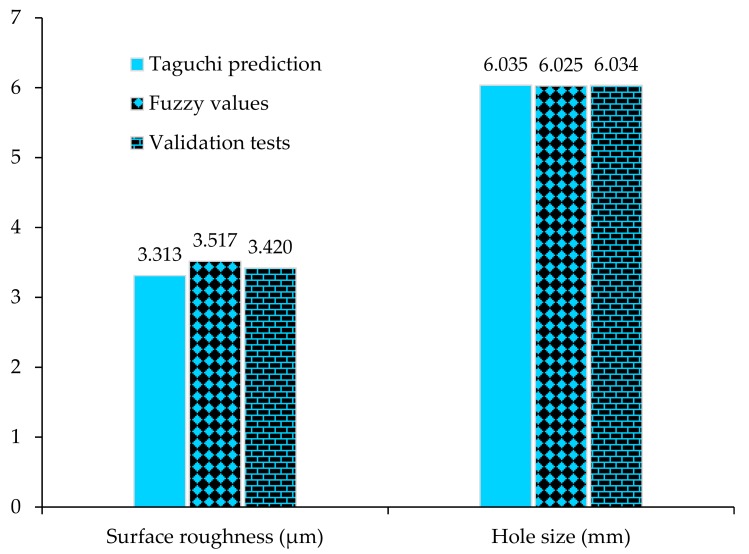
- Taguchi optimization found the best settings for both surface roughness (SR) and hole size (HS) at drilling type level 2, cutting speed level 1, and feed rate level 1; the paper reports predicted values of SR = 3.313 and HS = 6.035, with predicted S/N ratios of −10.688 and −15.614, respectively.
- ANOVA showed that for SR, cutting speed contributed 40.16% and feed rate 25.02%; for HS, feed rate contributed 61.31% and cutting speed 28.72%.
- Regression models had R² = 83.89% for SR and R² = 95.09% for HS, which the authors interpret as effective prediction.
- The fuzzy model’s predicted values were reported to be in good agreement with experiments, with validation errors within 10%.
Methods
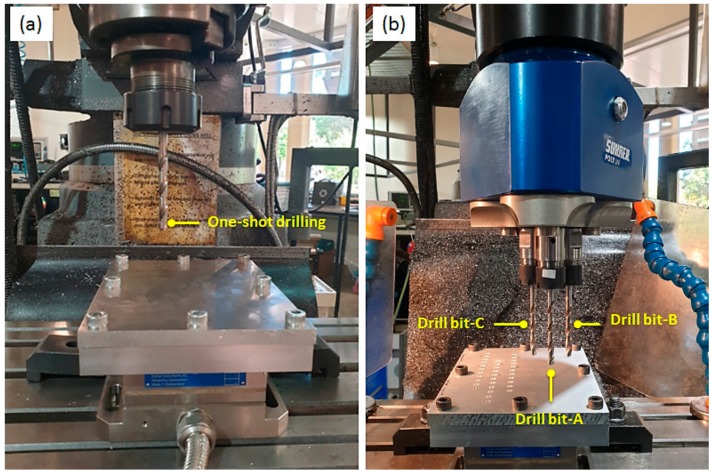
- Experimental drilling study on Aluminium 5083 plate of 10 mm thickness and 150 mm × 200 mm size, using 6 mm uncoated HSS twist drills; experiments were run under dry drilling on a vertical turret milling machine with a poly-drill head (SUNHER MH 30/13) for multi-hole drilling.
- Design of experiments used a full factorial DoE and L18 mixed orthogonal array with three control factors: cutting speed (3 levels), feed rate (3 levels), and drilling type (2 levels).
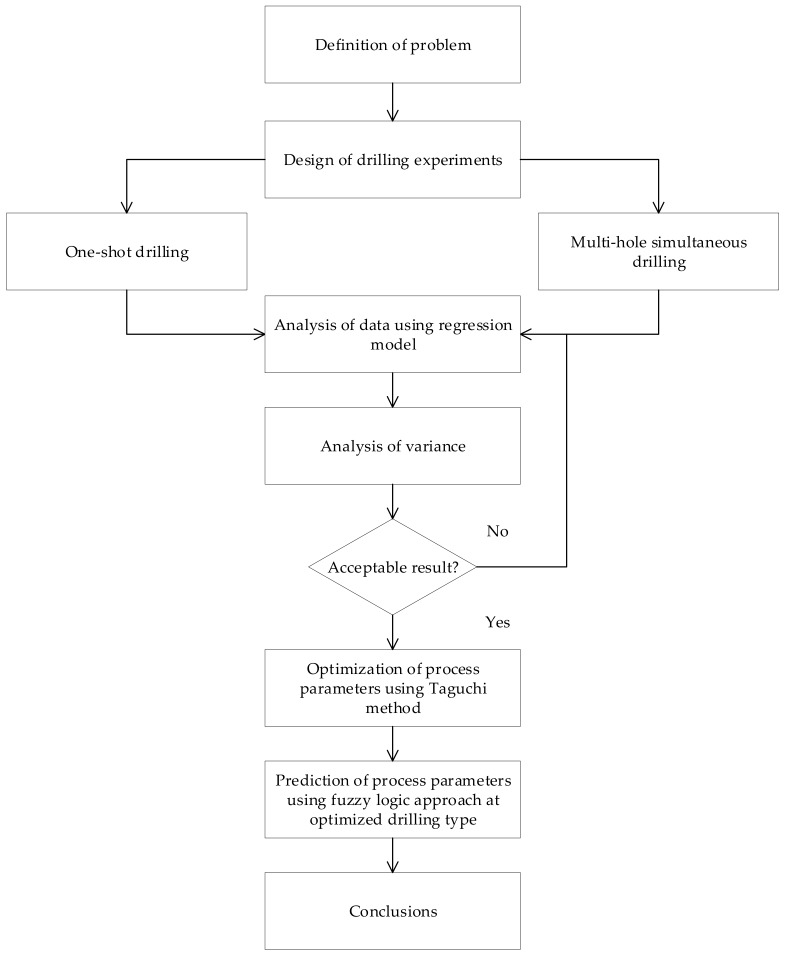
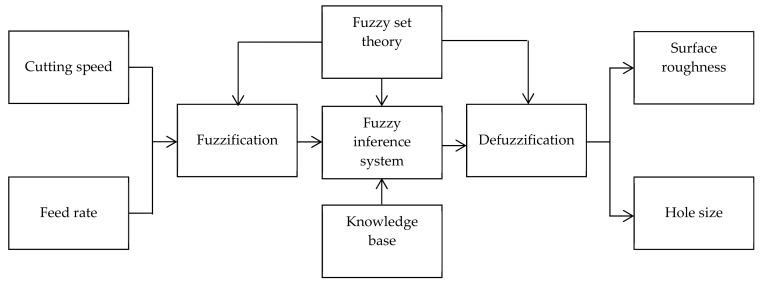
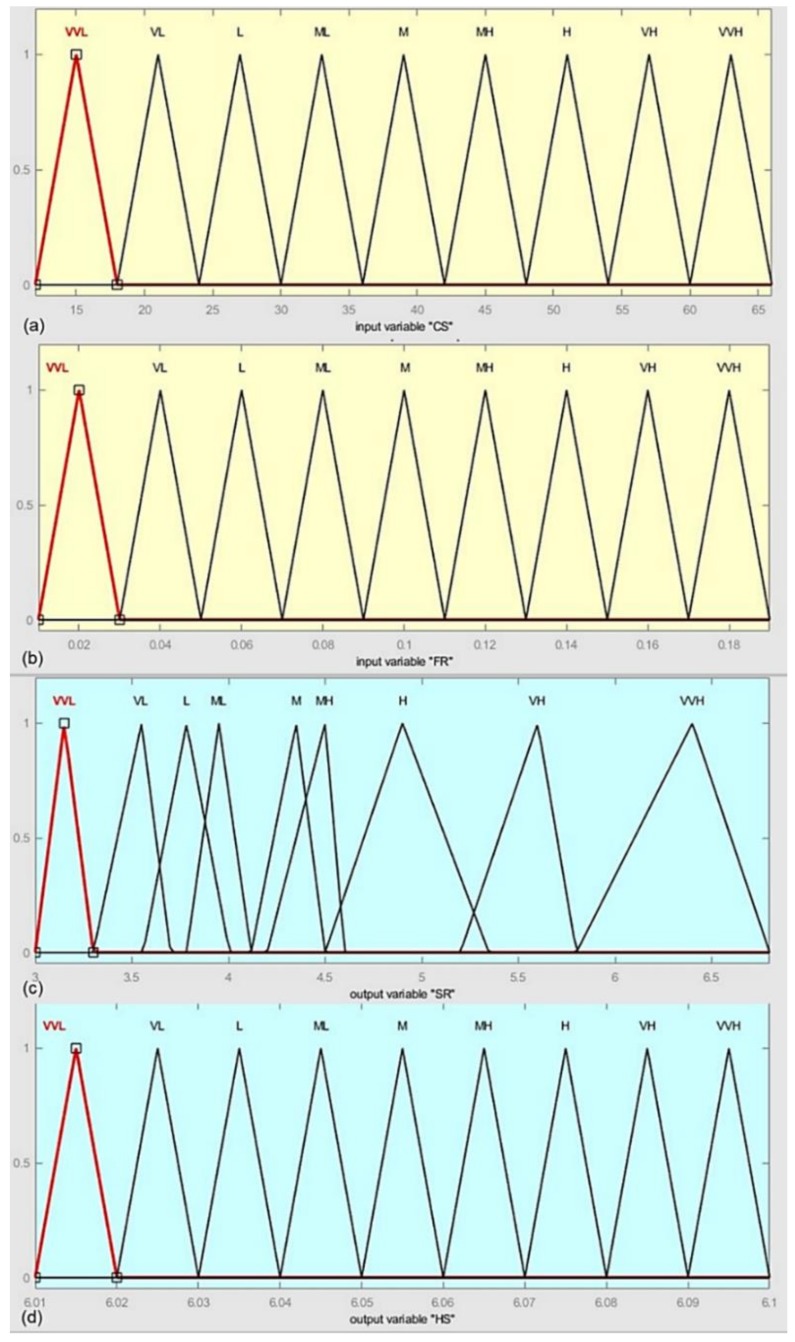
- Analysis included Taguchi S/N ratios (smaller-the-better), regression analysis, ANOVA, and a Mamdani fuzzy inference system in MATLAB (R2018b) to predict SR and HS; validation tests were then performed at the optimized settings.
Limitations
- The paper does not report a detailed limitation section or explicitly state study limitations.
- Evident from the text: the study is limited to Al5083, one tool type/diameter, dry drilling, and the specific experimental setup used, so generalization beyond these conditions is not demonstrated.
Model-written summary. Check it against the paper before relying on it.
Integrity signals
Registry
Cites
Statistics
Figures
Verification
Claims the paper makes
2 Valid · 0 Not valid · 12 Not checked · 32 Own results and interpretations
A result the paper reports from its own data — it cites no other source for it, so there is none to check. The quote shows it is in the paper.
In the paper
“The percentage contribution of FR is 61.31%, which is more than the contribution of CS with a statistical significance of 28.72%.”
§ Optimization and Modeling of Process Parameters in Multi-Hole Simultaneous Drilling Using Taguchi Method and Fuzzy Logic Approach > 3. Results and Discussion > 3.4. Analysis of Variance
plainstates a cause- Asserted: passes — The authors put it forward as true.
- Checkable: passes — It can be checked against evidence.
- Load-bearing: passes — The paper’s conclusions depend on it.
- Based: passes — The paper gives a reason why it holds.
- Rests on an assumption not shown here.
A result the paper reports from its own data — it cites no other source for it, so there is none to check. The quote shows it is in the paper.
In the paper
“SR = 2.728 − 0.401 DT + 0.675 CS + 0.541 FR + ε R2 = 83.89%”
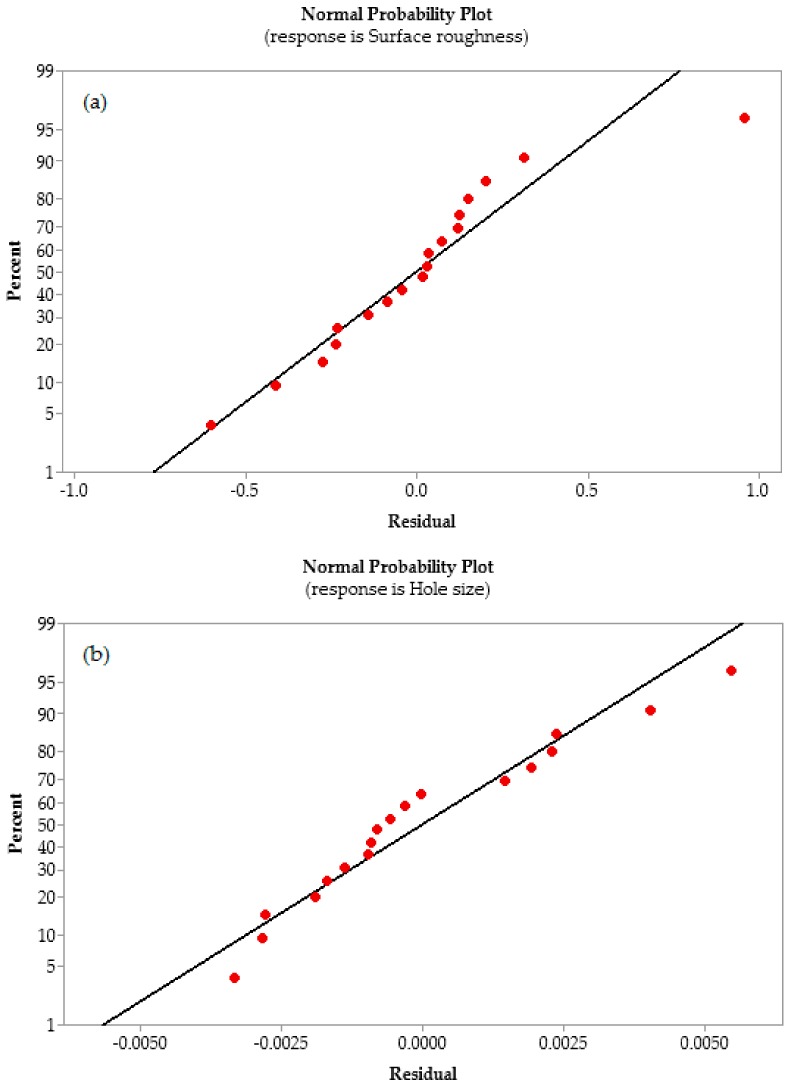
§ Optimization and Modeling of Process Parameters in Multi-Hole Simultaneous Drilling Using Taguchi Method and Fuzzy Logic Approach > 3. Results and Discussion > 3.1. Regression Analysis In machining processes, regression analysis used to analyze and formulate the correlation between the process parameters and the responses [24]. In this study, the process parameters are the cutting speed (CS), feed rate (FR), and drilling type (DT), where the responses are the surface roughness (SR) and hole size (HS). Therefore, a linear regression model is used to check if the data of SR and HS signify a fitness characteristic. The regression model obtained in this work is given below: SR = β0 + β1(DT) + β2 (CS) + β3 (FR) + ε SR = 2.728 − 0.401 DT + 0.675 CS + 0.541 FR + ε R2 = 83.89% HS = β0 + β1(DT) + β2 (CS) + β3 (FR) + ε HS = 6.01961 − 0.00167 DT + 0.007083 CS + 0.010593 FR + ε R2 = 95.09% where β0 is the constant value when the predictor variables i.e., DT, CS, and FR are zero, β1 + β2 + β3 + β4 +…. + βn are the coefficients or estimates of the process parameters, and ε is the error. R2 indicates the effectiveness of the developed model. The value equal to 1 shows that the model is 100% effective [25]. Therefore, the larger values of R2 are always desirable [26]. In the current study, the values of R2 are more than 80%, which indicates that the models are effective in predicting the responses with respect to the machining variables. Figure 3 shows the normal probability plots of the residuals for a predicted response for SR and HS, respectively. Figure 3 also shows that the proposed models are satisfactory as all the residuals follow almost the same pattern of the straight line, which has also been reported by Davidson et al. [27] and Vankanti and Ganta [8]. Therefore, for the selection of process parameters in drilling aluminum, this work will be useful for reducing SR and the deviation of HS from its nominal value.
plainstates an association- Asserted: passes — The authors put it forward as true.
- Checkable: passes — It can be checked against evidence.
- Load-bearing: passes — The paper’s conclusions depend on it.
- Based: passes — The paper gives a reason why it holds.
- Rests on an assumption not shown here.
A result the paper reports from its own data — it cites no other source for it, so there is none to check. The quote shows it is in the paper.
In the paper
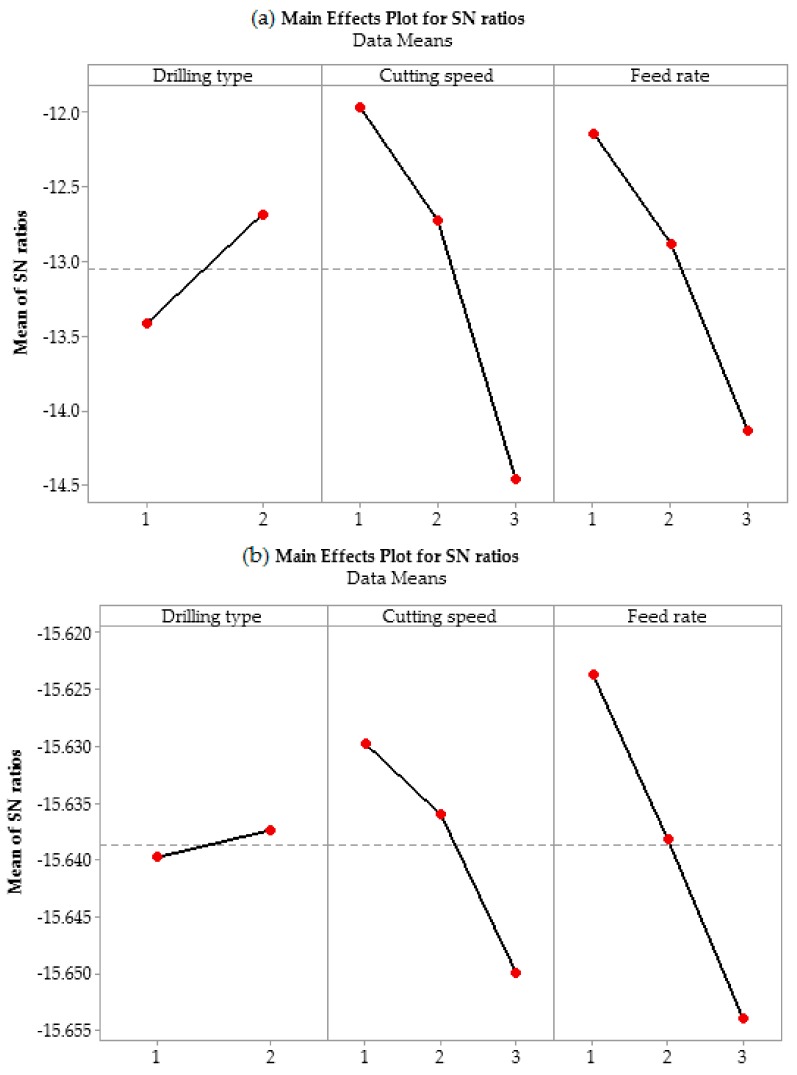
“From Table 6 and Figure 4, the optimum conditions for HS can be selected. The analysis of S/N ratio shows that the poly-drill head also performs better than one-shot drilling, as the best combination of parameters can be obtained at DT level 2, CS level 1, and FR level 1.”
§ Optimization and Modeling of Process Parameters in Multi-Hole Simultaneous Drilling Using Taguchi Method and Fuzzy Logic Approach > 3. Results and Discussion > 3.2. Optimization of Drilling Conditions Using Taguchi Analysis
plainstates a cause- Asserted: passes — The authors put it forward as true.
- Checkable: passes — It can be checked against evidence.
- Load-bearing: passes — The paper’s conclusions depend on it.
- Based: passes — The paper gives a reason why it holds.
- Rests on an assumption not shown here.
A result the paper reports from its own data — it cites no other source for it, so there is none to check. The quote shows it is in the paper.
In the paper
“Figure 7 shows that there is a small difference among all the values, and the response optimization predicts the optimum conditions comparatively well.”
§ Optimization and Modeling of Process Parameters in Multi-Hole Simultaneous Drilling Using Taguchi Method and Fuzzy Logic Approach > 3. Results and Discussion > 3.6. Validations of Results
plain- Asserted: passes — The authors put it forward as true.
- Checkable: passes — It can be checked against evidence.
- Load-bearing: passes — The paper’s conclusions depend on it.
- Based: passes — The paper gives a reason why it holds.
- Rests on an assumption not shown here.
A result the paper reports from its own data — it cites no other source for it, so there is none to check. The quote shows it is in the paper.
In the paper
“The analysis of S/N ratio shows that the poly-drill head also performs better than one-shot drilling, as the best combination of parameters can be obtained at DT level 2, CS level 1, and FR level 1.”
§ Optimization and Modeling of Process Parameters in Multi-Hole Simultaneous Drilling Using Taguchi Method and Fuzzy Logic Approach > 3. Results and Discussion > 3.2. Optimization of Drilling Conditions Using Taguchi Analysis
plainstates a cause- Asserted: passes — The authors put it forward as true.
- Checkable: passes — It can be checked against evidence.
- Load-bearing: passes — The paper’s conclusions depend on it.
- Based: passes — The paper gives a reason why it holds.
- Rests on an assumption not shown here.
19 more claims
Create a free account to see all 46 claims and to verify the 3 references still open.
- Probably not a substantial claim. 13
- It may state two separate claims as one. 11
- The quote only partly states this claim. 3
Citations
Cites
Design optimization of cutting parameters for turning operations based on the Taguchi method
Yang, W. H., & Tarng, Y. S. (1998) · Journal of Materials Processing Technology · doi:10.1016/s0924-0136(98)00079-x · Cited by 1,302 · cited 2×
“In the Taguchi method, an orthogonal array is designed that studies the entire parameter space with a small number of experiments [7].”
BackgroundMethodRecent advances in drilling of carbon fiber–reinforced polymers for aerospace applications: a review
Aamir, M., Tolouei-Rad, M., Giasin, K., & Nosrati, A. (2019) · The International Journal of Advanced Manufacturing Technology · doi:10.1007/s00170-019-04348-z · Cited by 329
Self-citationMohan, N. S., Ramachandra, A., & Kulkarni, S. M. (2005) · Composite Structures · doi:10.1016/j.compstruct.2005.09.039 · Cited by 201 · cited 1×
“In addition, the drilling process is normally amongst the last steps of final assembly of fabricating parts, where poor hole quality might lead to part rejection, which can become costly if optimum process parameters, tools, or drilling operations are not taken into consideration [4].”
BackgroundKurt, M., Bagci, E., & Kaynak, Y. (2009) · The International Journal of Advanced Manufacturing Technology · doi:10.1007/s00170-007-1368-2 · Cited by 198 · cited 13×
“Then, regression analysis and ANOVA were applied to confirm the accuracy of the model and the significance of process parameters.”
BackgroundMethodInfluentialOptimization of process parameters in drilling of GFRP composite using Taguchi method
Vankanti, V. K., & Ganta, V. (2014) · Journal of Materials Research and Technology · doi:10.1016/j.jmrt.2013.10.007 · Cited by 192 · cited 10×
“Then, regression analysis and ANOVA were applied to confirm the accuracy of the model and the significance of process parameters.”
BackgroundMethodInfluentialKılıçkap, E. (2010) · The International Journal of Advanced Manufacturing Technology · doi:10.1007/s00170-009-2469-x · Cited by 153 · cited 4×
“This shows that the CS has more impact on hole roughness than the FR. Similar findings were also reported by Kilickap [23] when drilling aluminium alloys.”
BackgroundMethodResultInfluentialGiasin, K., Hodzic, A., Phadnis, V. A., & Ayvar-Soberanis, S. (2016) · The International Journal of Advanced Manufacturing Technology · doi:10.1007/s00170-016-8563-y · Cited by 125 · cited 1×
“SR shows irregularities in the surface of any workpiece due to machining operations [28].”
BackgroundSelf-citationAn experimental study on drilling of unidirectional GLARE fibre metal laminates
Giasin, K., Ayvar-Soberanis, S., & Hodzic, A. (2015) · Composite Structures · doi:10.1016/j.compstruct.2015.08.007 · Cited by 112 · cited 1×
“Therefore, measuring SR is important for determining the quality of holes [30].”
BackgroundSelf-citationEvaluating Hole Quality in Drilling of Al 6061 Alloys
Uddin, M., Basak, A., Pramanik, A., Singh, S., Krolczyk, G. M., & Prakash, C. (2018) · Materials · doi:10.3390/ma11122443 · Cited by 109 · cited 1×
“Lower FR facilitated the slower insertion of the tool, which allowed a stable and jerk-free performance as the cutting edges of the tool removed the material with smaller chip thickness; consequently, the HS shows less dimensional error [34].”
MethodEvaluation of drilled hole quality in Al 2024 alloy
Kurt, M., Kaynak, Y., & Bagci, E. (2008) · The International Journal of Advanced Manufacturing Technology · doi:10.1007/s00170-007-1049-1 · Cited by 102 · cited 4×
“[29] reported in their studies that HS is also influenced by drilling parameters, where the hole diameter may increase from the nominal size.”
BackgroundInfluential
Research works printed but not linked: 3
- Saravanakumar A. Sasikumar P. Nilavusri N. Optimization of Machining Parameters using Taguchi Method for Surface Roughness J. Mater. Environ. Sci 2016 7 1556 1561
- C. Douglas M. Design and Analysis of Experiments 7th ed. Wiley New Delhi, India 2011
- Ross P.J. Taguchi techniques for quality engineering: loss function, orthogonal experiments, parameter and tolerance design McGraw-Hill New York, NY, USA 1988
Cited by
A review: drilling performance and hole quality of aluminium alloys for aerospace applications
Aamir, M., Giasin, K., Tolouei-Rad, M., & Vafadar, A. (2020) · Journal of Materials Research and Technology · doi:10.1016/j.jmrt.2020.09.003 · Cited by 286
“[26] Aamir M, Tu S, Tolouei-Rad M, Giasin K, Vafadar A.”
BackgroundSelf-citationAdvanced Computational Methods for Modeling, Prediction and Optimization—A Review
Krzywański, J., Sosnowski, M., Grabowska, K., Żyłka, A., Lasek, L., & Kijo–Kleczkowska, A. (2024) · Materials · doi:10.3390/ma17143521 · Cited by 189
“Since this approach allows for the formalization of an empirical problem using experience rather than strict knowledge of the process, the methods run intuitively and have the potential to overcome the shortcomings of traditional approaches [89–91].”
MethodA Critical Review on Control Strategies for Structural Vibration Control
Wani, Z. R., Tantray, M., Farsangi, E. N., Nikitas, N., Noori, M. N., Samali, B., & Yang, T. Y. (2022) · Annual Reviews in Control · doi:10.1016/j.arcontrol.2022.09.002 · Cited by 113
Mohamadi, S., Sammen, S. S., Panahi, F., Ehteram, M., Kişi, Ö., Mosavi, A. H., Ahmed, A. N., El‐Shafie, A., & Al-Ansari, N. A. (2020) · Natural Hazards · doi:10.1007/s11069-020-04180-9 · Cited by 84
Recent Progress Trend on Abrasive Waterjet Cutting of Metallic Materials: A Review
Llanto, J. M., Tolouei‐Rad, M., Vafadar, A., & Aamir, M. (2021) · Applied Sciences · doi:10.3390/app11083344 · Cited by 86
Self-citationAl-Tameemi, H. A., Al-Dulaimi, T., Awe, M. O., Sharma, S. K., Pimenov, D. Y., Köklü, U., & Giasin, K. (2021) · Materials · doi:10.3390/ma14071783 · Cited by 71
Self-citationMachinability of Al2024, Al6061, and Al5083 alloys using multi-hole simultaneous drilling approach
Aamir, M., Tolouei‐Rad, M., Giasin, K., & Vafadar, A. (2020) · Journal of Materials Research and Technology · doi:10.1016/j.jmrt.2020.07.078 · Cited by 76
Self-citationAnalysis of AM Parameters on Surface Roughness Obtained in PLA Parts Printed with FFF Technology
Buj-Corral, I., Sánchez-Casas, X., & Pérez, C. J. L. (2021) · Polymers · doi:10.3390/polym13142384 · Cited by 63
“[20], which used a Mamdani FIS in order to predict the surface roughness and hole size as a function of feed rate and cutting speed in multi-hole drilling; that of Pandiyan et al.”
MethodAkkoyun, F., Erçetin, A., Aslantaş, K., Pimenov, D. Y., Giasin, K., Lakshmikanthan, A., & Aamir, M. (2021) · Sensors · doi:10.3390/s21134432 · Cited by 54
Self-citationKuntoğlu, M., & Sağlam, H. (2021) · CIRP journal of manufacturing science and technology · doi:10.1016/j.cirpj.2021.07.011 · Cited by 49
Analysis of Hole Quality and Chips Formation in the Dry Drilling Process of Al7075-T6
Habib, N., Sharif, A., Hussain, A., Aamir, M., Giasin, K., Pimenov, D. Y., & Ali, U. (2021) · Metals · doi:10.3390/met11060891 · Cited by 53
“Surface Roughness, Hole Size, and Circularity Surface roughness (Ra) is critical in assessing workpiece machining performance [20,21].”
BackgroundSelf-citationUsca, Ü. A., Uzun, M., Kuntoğlu, M., et al. (2021) · The International Journal of Advanced Manufacturing Technology · doi:10.1007/s00170-021-07670-7 · Cited by 39
Bhowmick, S., Mondal, R., Sarkar, S., et al. (2022) · CIRP journal of manufacturing science and technology · doi:10.1016/j.cirpj.2022.11.002 · Cited by 37
Aamir, M., Tolouei‐Rad, M., Giasin, K., & Vafadar, A. (2020) · The International Journal of Advanced Manufacturing Technology · doi:10.1007/s00170-020-06151-7 · Cited by 37
“In another study [22], the Taguchimethod and fuzzy logic approach were used for the optimization and prediction of drilling parameters inmulti-hole drilling process.”
MethodSelf-citationAamir, M., Giasin, K., Tolouei‐Rad, M., Din, I. U., Hanif, M. I., Kuklu, U., Pimenov, D. Y., & İkhlaq, M. (2021) · Metals · doi:10.3390/met11060854 · Cited by 35
Self-citationHassan, M. H., Abdullah, J., Franz, G., Shen, C. Y., & Mahmoodian, R. (2021) · Journal of Composites Science · doi:10.3390/jcs5070189 · Cited by 33
“The Al7075-T6 aluminum alloy, with zinc as the main alloying element, is commonly used in aircraft construction due to its strong and high strength advantage compared to many steels; it possesses good fatigue strength and average machinability [19,20].”
BackgroundAnalysis and Optimization of Process Parameters in Abrasive Waterjet Contour Cutting of AISI 304L
Llanto, J. M., Vafadar, A., Aamir, M., et al. (2021) · Metals · doi:10.3390/met11091362 · Cited by 30
“In the Taguchi method, selection of suitable orthogonal array relies on aspects such as the number of input and response parameters along with correlations that are of key significance, figures of levels of data for input parameters; required objectives of the experiment; and constraints cited in the value and its per…”
MethodSelf-citationLee, M. R. (2023) · Processes · doi:10.3390/pr11113171 · Cited by 47
Juliyana, S. J., Prakash, J. U., Čep, R., & Karthik, K. (2023) · Materials · doi:10.3390/ma16103615 · Cited by 30
“This is due to a lower TF resulting from a decrease in the amount of friction between the drill bit and the specimen [31,32].”
BackgroundAamir, M., Tolouei‐Rad, M., Vafadar, A., Raja, M. N. A., & Giasin, K. (2020) · Applied Sciences · doi:10.3390/app10238633 · Cited by 31
“In another study [17], apart from the surface, the deviation of hole from the nominal size was investigated.”
BackgroundSelf-citationAamir, M., Tu, S., Giasin, K., & Tolouei‐Rad, M. (2020) · Journal of Materials Research and Technology · doi:10.1016/j.jmrt.2020.02.026 · Cited by 26
Self-citationGhazali, M. F., Abdullah, M. M. A. B., Rahim, S. Z. A., GONDRO, J., Pietrusiewicz, P., Garus, S., Stachowiak, T., Sandu, A. V., Tahir, M. F. M., Korkmaz, M. E., et al. (2021) · Materials · doi:10.3390/ma14071628 · Cited by 28
“This re ult is in line with the previous studies th t showed the increasing value of tool wear as spindle peed i creases [22,26,28,29].”
ResultAamir, M., Tolouei‐Rad, M., Giasin, K., Vafadar, A., Köklü, U., & Keeble, W. (2021) · Applied Sciences · doi:10.3390/app11094285 · Cited by 29
“14 mm/rev were selected based on the limitations of the available manual milling machine and previous literature on drilling aluminium alloys in the multi-spindle drilling process [16-20].”
MethodSelf-citationLlanto, J. M., Tolouei‐Rad, M., Vafadar, A., et al. (2021) · Applied Sciences · doi:10.3390/app11114925 · Cited by 22
“05 or 5%, are considered insignificant [37].”
Self-citationMuhammad, R. (2021) · Materials · doi:10.3390/ma14216572 · Cited by 21
“Recently, a fuzzy-logic technique based on the combination of multivalued logic and the theory of probability to model complex engineering problems is gaining popularity in the research community [20].”
BackgroundLiu, Y., Ouyang, P., Zhang, Z., et al. (2024) · Nanoscale · doi:10.1039/d4nr02910k · Cited by 19
Saurabh, A., Joshi, K., Manoj, A., et al. (2022) · Lubricants · doi:10.3390/lubricants10070161 · Cited by 18
Drilling process improvement by Taguchi method
Suthar, J., Teli, S. N., & Murumkar, A. (2021) · Materials Today Proceedings · doi:10.1016/j.matpr.2021.03.533 · Cited by 18
Optimizing foam quality characteristics of model food using Taguchi‐based fuzzy logic method
Güldane, M. (2023) · Journal of Food Process Engineering · doi:10.1111/jfpe.14384 · Cited by 17
Pérez, C. J. L. (2020) · Mathematics · doi:10.3390/math8091390 · Cited by 17
“[7] used a Mamdani FIS to predict the surface roughness and hole size as a function of feed rate and cutting speed in multi-hole drilling.”
MethodDang, M. P., Le, H. G., Chau, N. L., et al. (2021) · Mathematical Problems in Engineering · doi:10.1155/2021/6622655 · Cited by 17
Analysis of the Performance of Drilling Operations for Improving Productivity
Tolouei‐Rad, M., & Aamir, M. (2021) · IntechOpen eBooks · doi:10.5772/intechopen.96497 · Cited by 21
Self-citationAamir, M., Davis, A., Keeble, W., Köklü, U., Giasin, K., Vafadar, A., & Tolouei‐Rad, M. (2021) · Metals · doi:10.3390/met11071103 · Cited by 17
“Therefore, to produce high accuracy machine parts and higher productivity, multi-tasking machine tools need to be used to drill multi-holes simultaneously [18].”
BackgroundSelf-citationKhare, S., Singhal, A., Rai, S., & Rallapalli, S. (2023) · Environmental Science and Pollution Research · doi:10.1007/s11356-023-26970-x · Cited by 12
“The framework considers a fixed number of input parameters varied across a given number of values defined by the user (Googerdchian et al. 2018; Aamir et al. 2020).”
BackgroundJha, S. K., Chishti, Z., Ahmad, Z., & Arshad, K. R. (2022) · Computers and Electronics in Agriculture · doi:10.1016/j.compag.2021.106680 · Cited by 13
Shambayati, H., Nikabadi, M. S., Saberi, S., & Mardani, A. (2024) · Annals of Operations Research · doi:10.1007/s10479-023-05791-8 · Cited by 12
“Among several experimental design techniques, Taguchi’s method has been used as a systematic method to optimize the parameters of algorithms (Aamir et al., 2020).”
Shareef, I. R., Hussein, H. K., & Mahdi, B. L. (2023) · Advances in Science and Technology – Research Journal · doi:10.12913/22998624/174515 · Cited by 9
“The predicted mean under ideal process conditions [18]: where: (X1)1,(X2)1, and (X3)1 are the optimal level quantity of T and Ra that found in Table 5 − 2(−50.861) = −45.448 where: (S/N1), (S/N2), and (S/N3) are the maximal Signal to noise ratios of RA &T obtained from Tables 5 and Table 6,…”
BackgroundMethodInfluentialRiaz, A. A., Muhammad, R., Ullah, N., Hussain, G., Alkahtani, M. S., & Akram, W. (2021) · Metals · doi:10.3390/met11020277 · Cited by 9
“a, m, and b represent the triangular membership function and details can be found elsewhere [8].”
BackgroundMethodTanash, M., Athamneh, R. A., Hani, D. B., et al. (2022) · Processes · doi:10.3390/pr10091894 · Cited by 8
Samsingh, V., Ramachandran, A., Selvam, A., & Karthick, S. (2021) · IOP Conference Series Materials Science and Engineering · doi:10.1088/1757-899x/1012/1/012037 · Cited by 9
“Usage of fuzzy logic modelling to predict process parameters has been widely studied, with algorithms largely being implemented in MATLAB, using the Fuzzy Logic toolbox [12, 13].”
MethodChibueze, I. G., Okiy, S., Nwobi-Okoye, C. C., et al. (2024) · Discover Chemical Engineering · doi:10.1007/s43938-024-00071-8 · Cited by 6
Pérez, C. J. L. (2020) · Mathematics · doi:10.3390/math8060922 · Cited by 6
“They found that the FIS was able to predict hole quality at different levels of process parameters [10].”
BackgroundMethodModeling of Surface Roughness in Honing Processes by Using Fuzzy Artificial Neural Networks
Buj-Corral, I., Sender, P., & Pérez, C. J. L. (2023) · Journal of Manufacturing and Materials Processing · doi:10.3390/jmmp7010023 · Cited by 6
“In a study from Aamir et al. [21] Taguchi design of experiments and fuzzy logic were employed to predict surface roughness and hole size in multi-hole drilling.”
Influence of Tool Shape on Surface Quality of Monocrystalline Nickel Nanofabrication
Ren, J., Yue, H., Liang, G., et al. (2022) · Molecules · doi:10.3390/molecules27030603 · Cited by 5
Investigation of surface roughness and delamination damage of HFRP composite during drilling
Karim, M. R., Kabir, S., Nipu, S. M. A., Protyai, M. I. H., Raihan, F., & Hossain, I. (2025) · Advances in Mechanical Engineering · doi:10.1177/16878132251358905 · Cited by 5
“34 Also in 2021 Sharma et al., and Rajamurugan et al. conducted a review on various optimizing methods and found that Taguchi and grey relational analysis (GRA) is the frequently used method followed by genetic algorithm (GA) for the optimization of cutting parameter during drilling operation.”
Agrawal, P. S., Kenche, S., & Kumar, T. S. (2024) · Proceedings of the Institution of Mechanical Engineers Part E Journal of Process Mechanical Engineering · doi:10.1177/09544089241270849 · Cited by 4
“48 – 51”
Madhesan, P., Venkatesan, R., & Manickam, M. (2022) · Acta Innovations · doi:10.32933/actainnovations.43.5 · Cited by 4
Optimization of Drilling Process Using Non-Conventional Method
Abdullah, H., Zakaria, M. S., Talib, N., et al. (2020) · International Journal of Mechanical Engineering and Robotics Research · doi:10.18178/ijmerr.9.9.1233-1239 · Cited by 4
Rusatm, M. J., Hasan, A. F., Khadom, A. A., et al. (2023) · Diyala Journal of Engineering Sciences · doi:10.24237/djes.2023.16309 · Cited by 3
“After transforming experimental values into a signal-to-noise ratio (S/N), Taguchi analysis uses the signal to represent desired output characteristics (mean) and noise to represent undesired output characteristics (standard deviation) [20].”
MethodA Study on Multivariable Optimization in Precision Manufacturing Using MOPSONNS
He, Z., Shi, T., Xuan, J., et al. (2020) · International Journal of Precision Engineering and Manufacturing · doi:10.1007/s12541-020-00402-z · Cited by 3
Prediction of weldment mechanical properties in GMAW with robot-assisted using fuzzy logic systems
P.Devendran, P. A. V., & Varthanan, P. A. (2021) · Materials Research Express · doi:10.1088/2053-1591/ac432a · Cited by 4
Multi-objective Optimisation in Abrasive Waterjet Contour Cutting of AISI 304L
Llanto, J. M., Vafadar, A., & Tolouei‐Rad, M. (2022) · IntechOpen eBooks · doi:10.5772/intechopen.106817 · Cited by 3
Self-citationComputational intelligence in rock engineering management systems
Lenji, A. R., Mehmandari, T. A., Ranjbar, S., Tee, K. F., & Fahimifar, A. (2025) · Elsevier eBooks · doi:10.1016/b978-0-443-23663-1.00001-x · Cited by 3
Kanthamraj, V., Dutt, H., Siddhartha, N. S., et al. (2025) · Journal of Reinforced Plastics and Composites · doi:10.1177/07316844251368459 · Cited by 2
Saxena, A., Dubey, Y. M., & Kumar, M. (2023) · Journal of Intelligent & Fuzzy Systems · doi:10.3233/jifs-222768 · Cited by 2
Introductory Chapter: Drilling Technology
Tolouei‐Rad, M., & Aamir, M. (2021) · IntechOpen eBooks · doi:10.5772/intechopen.97648 · Cited by 2
Self-citationSong, X., & Zhang, H. (2021) · Materials · doi:10.3390/ma14237306 · Cited by 2
Yadav, R. N., & Yadava, V. (2021) · International Journal for Computational Methods in Engineering Science and Mechanics · doi:10.1080/15502287.2021.1887401 · Cited by 2
Optimization of drilling process variables using taguchi technique for LM6 aluminium alloy
Rubi, C. S., Jayavelu, U. P., Chinnaraj, R., & Salunkhe, S. S. (2022) · International Journal for Simulation and Multidisciplinary Design Optimization · doi:10.1051/smdo/2022008 · Cited by 2
Chakravarty, S., Haldar, P., Nandi, T., et al. (2023) · Springer Proceedings in Materials · doi:10.1007/978-981-99-3844-5_19 · Cited by 2
Saxena, A., Saxena, A., Dubey, Y., et al. (2021) · International Journal of Electrical Engineering Education · doi:10.1177/0020720920988487 · Cited by 2
“n 1⁄4 10log10 mean of the sum of squares of measured data 1⁄2 (1)”
BackgroundRetractedKumar, K., & Verma, R. K. (2023) · Surface Review and Letters · doi:10.1142/s0218625x23500749 · Cited by 1
Energy efficiency and consumption in drilling: a review
Alves, G. A., Rebeyka, C. J., & da Costa, D. D. (2025) · The International Journal of Advanced Manufacturing Technology · doi:10.1007/s00170-025-16877-x · Cited by 2
“Nevertheless, it is worth highlighting the work of Tolouei-Rad and collaborators [40, 47, 81, 82], who investigated the thrust force and hole quality in multi-spindle drilling of aluminum alloys.”
Smart optimization in 802.11p media access control protocol for vehicular ad hoc network
Hatim, S. M., Haron, H., Elias, S. J., & Bashah, N. S. K. (2022) · International Journal of Power Electronics and Drive Systems/International Journal of Electrical and Computer Engineering · doi:10.11591/ijece.v13i2.pp2206-2213 · Cited by 3
“The goal is to manufacture high-quality goods at cheaper prices while minimizing process variance and planning a strong experimental design [17], [18].”
BackgroundMethodA RETROSPECTIVE ANALYSIS ON DRILLING OPERATION AND ITS PARAMETERS: A CRITICAL REVIEW
Varatharajulu, M., Duraiselvam, M., Jayaprakash, G., Baskar, N., Vijayaraj, S., & Babu, K. A. (2023) · Surface Review and Letters · doi:10.1142/s0218625x23300101 · Cited by 1
Optimize The Turning Parameter Using Taguchi Methodology
Mehdi, A. (2022) · International Journal of Scientific Research in Science and Technology · doi:10.32628/ijsrst218553 · Cited by 1
Yeom, C.-U., & Kwak, K.-C. (2022) · Applied Sciences · doi:10.3390/app12147226 · Cited by 1
Sreenivasulu, R. (2022) · Sigma Journal of Engineering and Natural Sciences – Sigma Mühendislik ve Fen Bilimleri Dergisi · doi:10.14744/sigma.2022.00101 · Cited by 1
Balaji, S., Maniarasan, P., & Alagarsamy, S. V. (2020) · Materials Today Proceedings · doi:10.1016/j.matpr.2020.10.759
RetractedChibueze, I. G., Obele, C. M., Nwobi-Okoye, C. C., et al. (2021) · Research Square · doi:10.21203/rs.3.rs-678034/v1
“[22] used Taguchi Method and Fuzzy Logic to model and optimize the Process Parameters in Multi-Hole Simultaneous Drilling.”
MethodParametric Study on Turning of AISI 1040 Steel
Mehdi, A., & Aamir (2021) · International Journal of Scientific Research in Science and Technology · doi:10.32628/ijsrst218436
Optimization of Drilling Process Parameters for Aluminum ALLOY AA8011
Jaiswal, S., Tiger, C., Shrivas, S. P., Vaidya, S. K., & Shrivas, A. (2021) · CSVTU Research Journal on Engineering and Technology · doi:10.30732/csvturj.20211002006
Introductory Chapter: Production Engineering
Tolouei‐Rad, M. (2022) · IntechOpen eBooks · doi:10.5772/intechopen.108307
Self-citationA Comparative Approach on Successive vs Simultaneous Drilling
Drăgoi, M. V., Pârv, L., Nasulea, M. D., et al. (2023) · Atlantis highlights in engineering/Atlantis Highlights in Engineering · doi:10.2991/978-94-6463-152-4_52
Balaji, R., & Sheriff, F. M. A. (2023) · AIP conference proceedings · doi:10.1063/5.0173325
Saputro, E. D., Martowibowo, S. Y., & Tabah, G. G. (2024) · Jurnal Teknik Media Pengembangan Ilmu dan Aplikasi Teknik · doi:10.55893/jt.vol23no1.620
Multi-hole Making on Composite Panel—A Preliminary Study
Tarmizi, A. A., & Abdullah, A. B. (2024) · Lecture notes in mechanical engineering · doi:10.1007/978-981-97-0169-8_23
Somaiah, A., Prasad, B. A., & Nath, N. K. (2025) · Materials Circular Economy · doi:10.1007/s42824-025-00159-8
“By precisely forecasting hole quality across a range of process factors, this dependable approach can save time and money (Aamir et al. 2020).”
Kakati, A., & Chen, J. C. (2025) · The International Journal of Advanced Manufacturing Technology · doi:10.1007/s00170-025-16758-3
Residual Stress and Distortion from Machining
Styger, G., & Laubscher, R. F. (2025) · ASM International eBooks · doi:10.31399/asm.hb.v25a.a0007153
Optimization of drilling performance parameters using an experimental design approach
Khettabi, R. (2025) · International Conference on Applied Automation and Industrial Diagnostics (ICAAID) · doi:10.1109/icaaid68975.2025.11358287
“Using analysis of variance (ANOVA) and regression analysis, he evaluated the significance of the drilling parameters and their influence on the measured outcomes [3].”
Raza, S. F., Khan, S. A., Ehsan, S., et al. (2026) · Progress in Additive Manufacturing · doi:10.1007/s40964-026-01552-8
Wang, H., Zhu, G., Le, Y., Chu, Y., Sun, S., Zhang, B., Zhang, S., & Zhu, X. (2026) · Optics & Laser Technology · doi:10.1016/j.optlastec.2026.114993
Novel beam analogy model for force distribution analysis in abrasive water jet machining
Harničárová, M., Dütsch, L., Valíček, J., et al. (2026) · Frontiers in Mechanical Engineering · doi:10.3389/fmech.2026.1815704
Metadata
- Authors
- Aamir, M., Tu, S., Tolouei-Rad, M., Giasin, K., & Vafadar, A.
- Affiliations
- Edith Cowan University (AU)
- Beijing University of Technology (CN)
- School of Engineering, Edith Cowan University, Joondalup, WA 6027, Australia
- University of Portsmouth (GB)
- Corresponding author
- Tu, Shanshan
- Venue
- Materials
- Publisher
- MDPI AG
- Published
- 2020-02-03
- Volume
- 13
- Issue
- 3
- Pages
- 680
- ISSN
- 1996-1944 (ISSN-L)
- PMC
- PMC7040725
- OpenAlex
- W3003210699
- Cited by
- 86
- References
- 34
- Citations by year
- 2026: 5 · 2025: 8 · 2024: 7 · 2023: 13 · 2022: 14 · 2021: 28 · 2020: 11
- FWCI
- 8.12
- Type
- journal article
- Language
- en
- Open access
- gold
- dx.doi.org
- Licence
- Locations
- Materials (publishedVersion, cc-by)
- PubMed Central (publishedVersion, cc-by)
- PubMed (publishedVersion)
- Australasian Journal of Paramedicine (submittedVersion, cc-by)
- DOAJ (DOAJ: Directory of Open Access Journals) (submittedVersion, cc-by-sa)
- Funders
- National Natural Science Foundation of China (No. 61801008), National Key R&D Program of China (No. 2018YFB0803600), Beijing Natural Science Foundation National (No. L172049), Scientific Research Common Program of Beijing Municipal Commission of Education (61801008)
- Topics
- Physical Sciences › Engineering › Mechanical Engineering › Advanced machining processes and optimization
- Physical Sciences › Engineering › Industrial and Manufacturing Engineering › Advanced Machining and Optimization Techniques
- Social Sciences › Decision Sciences › Management Science and Operations Research › Optimal Experimental Design Methods
- Keywords
- process parameter optimization, Taguchi method, fuzzy logic, surface roughness prediction, cutting speed, feed rate
About these checks
Registry, retraction, Cites and statistics results are computed, not judged, with one exception: a printed reference that no index lists is read once by a model before it counts as a citation error. Claims are extracted by a model and kept only when their quote appears verbatim in the text; each cited source is then checked, with a model’s help, for whether it says what the claim relies on. Those verdicts can be wrong — read the claim’s quote and the cited source before relying on one.
A language model drew the claims from the paper on 2026-10-10, under version 3 of the claim definition (model deepseek-v4.1-flash, prompt extract-v3).
A second model labelled each claim on 2026-10-10 (model jev-1.13-20260917, definition revision gold-guideline-v0.2).
Statistics and arithmetic are recomputed, not judged.
Confidence bands are shown only for fields calibrated on our annotated test set. None is calibrated yet, so no band is shown.
What counts as a claim ›How we measure confidence ›How we check this ›
Are you an author, or do you see a problem with this page? Request a review
Data sources
Bibliographic data: Semantic Scholar, OpenAlex, Crossref.
Contains information from the Semantic Scholar Academic Graph Datasets, made available under the ODC Attribution License (ODC-BY 1.0).
Semantic Scholar’s data is described in: Kinney, R., et al. (2023). The Semantic Scholar Open Data Platform. arXiv:2301.10140.
