

The DOI matches its Crossref record.
Formation of Geopolymers Using Sodium Silicate Solution and Aluminum Orthophosphate
Open accessAbstract
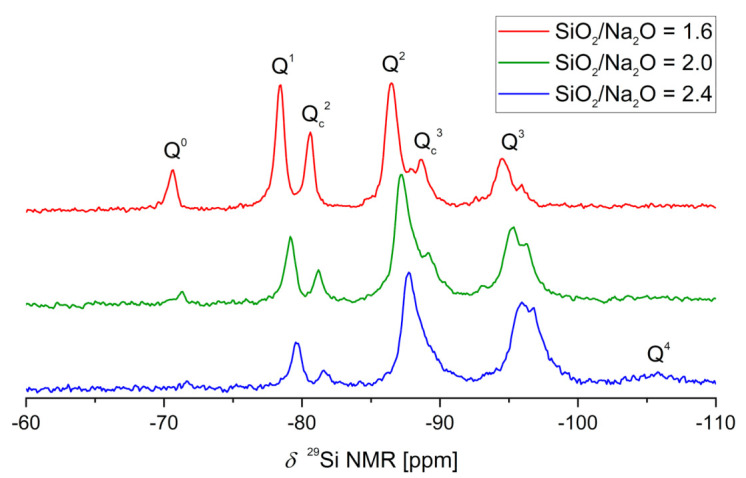
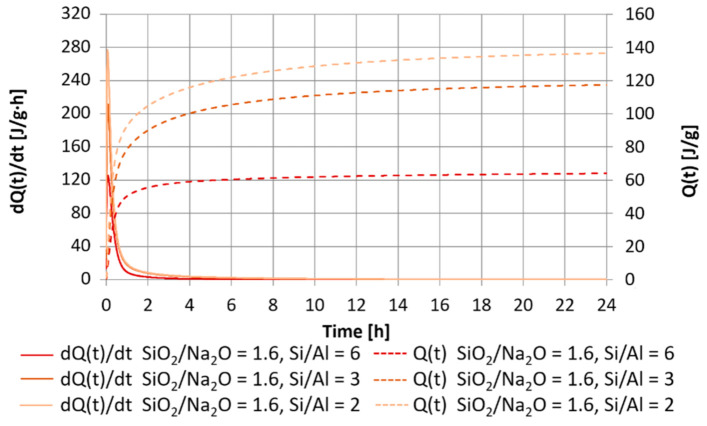
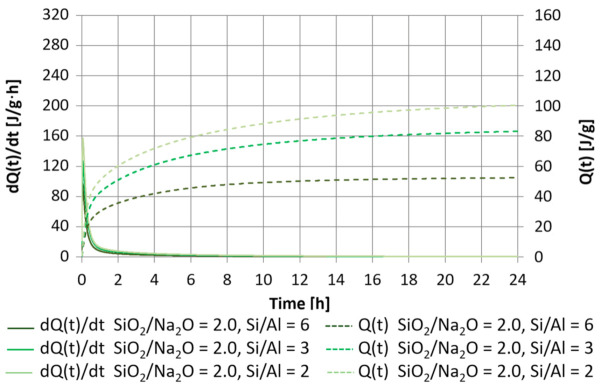
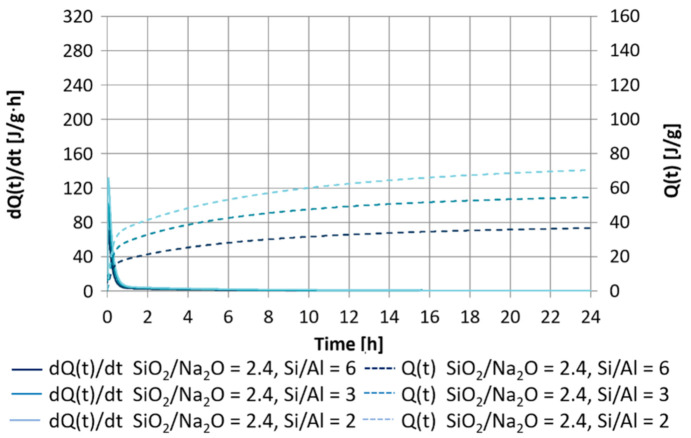
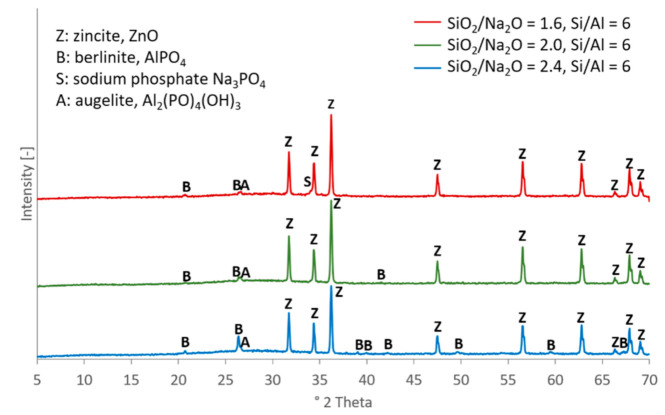
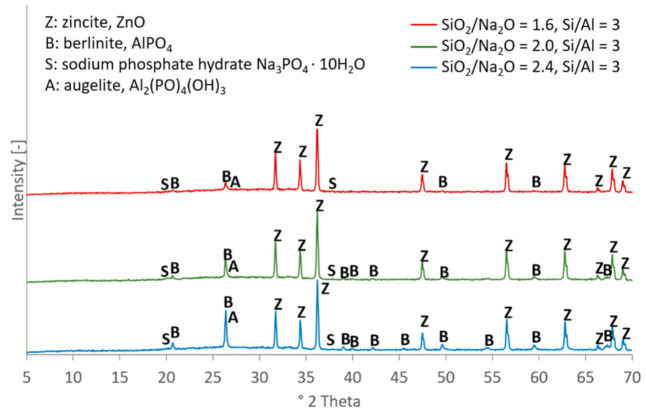
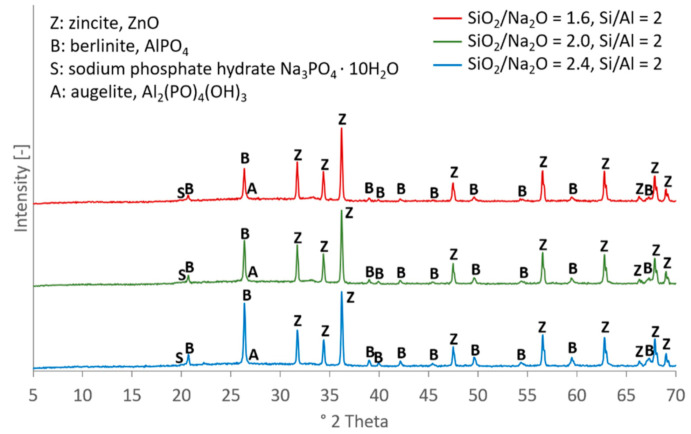
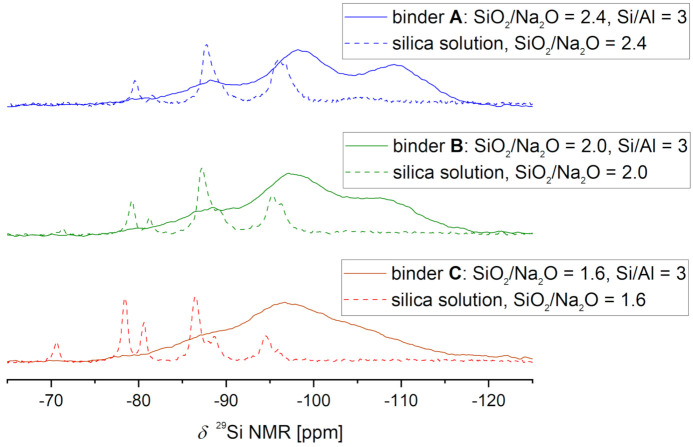
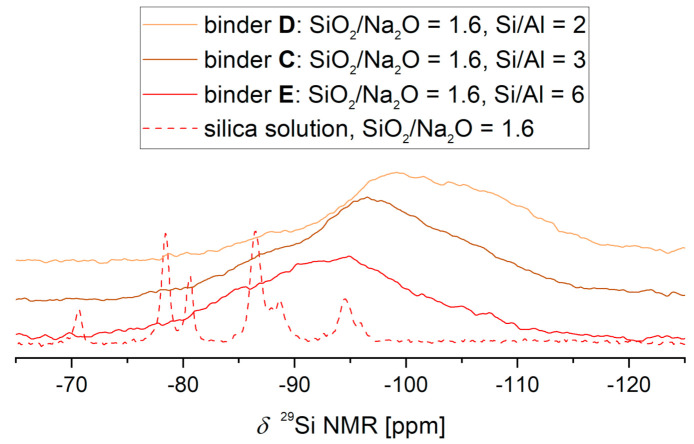
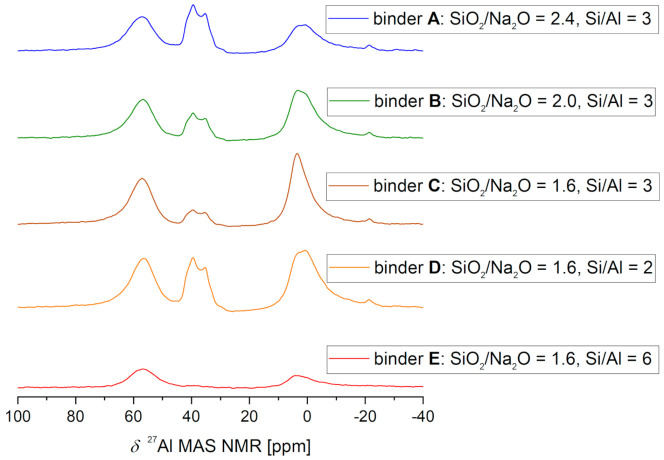
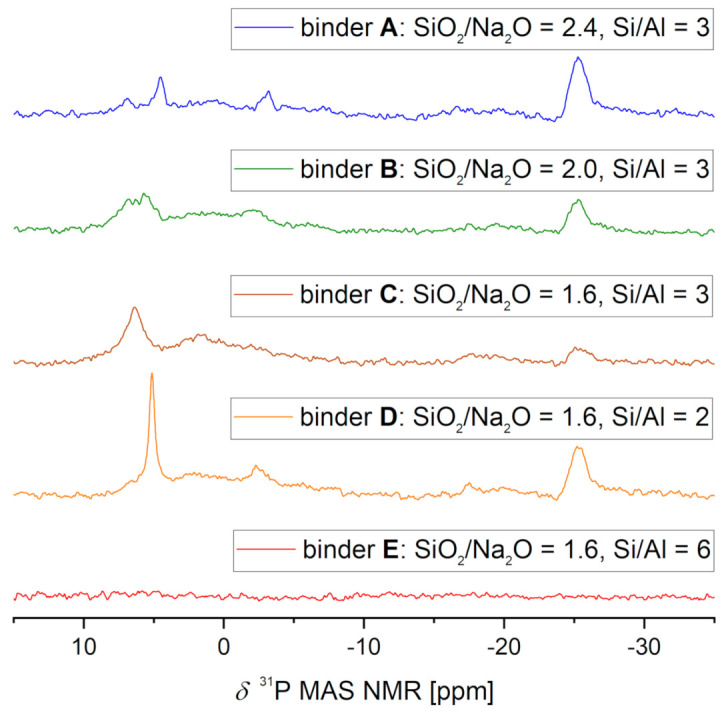
This paper reports the formation and structure of fast setting geopolymers activated by using three sodium silicate solutions with different modules (1.6, 2.0 and 2.4) and a berlinite-type aluminum orthophosphate. By varying the concentration of the aluminum orthophosphate, different Si/Al-ratios were established (6, 3 and 2). Reaction kinetics of binders were determined by isothermal calorimetric measurements at 20 °C. X-ray diffraction analysis as well as nuclear magnetic resonance (NMR) measurements were performed on binders to determine differences in structure by varying the alkalinity of the sodium silicate solutions and the Si/Al-ratio. The calorimetric results indicated that the higher the alkalinity of the sodium silicate solution, the higher the solubility and degree of conversion of the aluminum orthophosphate. The results of X-ray diffraction and Rietveldt analysis, as well as the NMR measurements, confirmed the assumption of the calorimetric experiments that first the aluminum orthophosphate was dissolved and then a polycondensation to an amorphous aluminosilicate network occurred. The different amounts of amorphous phases formed as a function of the alkalinity of the sodium silicate solution, indicate that tetrahydroxoaluminate species were formed during the dissolution of the aluminum orthophosphate, which reduce the pH value. This led to no further dissolution of the aluminum orthophosphate, which remained unreacted.
Overview
The claims and statistics of this paper haven’t been checked yet.
Run the check — free, no account needed. It reads the open-access text and checks the sources it cites.
Integrity signals
Registry
Cites
Statistics
Figures

Verification
Claims the paper makes
The claims and statistics of this paper haven’t been checked yet.
Run the check — free, no account needed. It reads the open-access text and checks the sources it cites.
Self-check
Percentages, sums and reported differences re-computed from the paper’s own numbers.
The self-check needs the paper’s full text.
Citations
Cites
No references could be resolved yet.
Research works printed but not linked: 26
- Scrivener, 2018, Eco-efficient cements: Potential economically viable solutions for a low-CO2 cement-based materials industry, Cem. Concr. Res., 114, 2, 10.1016/j.cemconres.2018.03.015 · DOI · Paper page
- Davidovits, 1991, Geopolymers, J. Therm. Anal., 37, 1633, 10.1007/BF01912193 · DOI
- Singh, N.B., and Middendorf, B. (2020). Geopolymers as an alternative to Portland cement: An Overview. Constr. Build. Mater., 237. · DOI
- Gharzouni, 2015, Effect of reactivity of alkaline solution and metakaolin on the geopolymer formation, J. Non-Cryst. Solids, 410, 127, 10.1016/j.jnoncrysol.2014.12.021 · DOI
- Cao, 2005, Synthesis and structure characterization of geopolymeric material based on metakaolinite and phosphoric acid, Kuei Suan Jen Hsueh Pao/J. Chin. Ceram. Soc., 33, 1385
- Celerier, 2018, Composition and properties of phosphoric acid-based geopolymers, J. Non-Cryst. Solids, 493, 94, 10.1016/j.jnoncrysol.2018.04.044 · DOI
- Kamseu, 2017, Influence of the molar concentration of phosphoric acid solution on the properties of metakaolin-phosphate-based geopolymer cements, Appl. Clay Sci., 147, 184, 10.1016/j.clay.2017.07.036 · DOI
- 2017, Mechanical and microstructural properties of metakaolin-based geopolymer cements from sodium waterglass and phosphoric acid solution as hardeners: A comparative study, Appl. Clay Sci., 140, 81, 10.1016/j.clay.2017.02.002 · DOI
- Douiri, 2014, Structural, thermal and dielectric properties of phosphoric acid-based geopolymers with different amounts of H3PO4, Mater. Lett., 116, 9, 10.1016/j.matlet.2013.10.075 · DOI
- Douiri, 2016, Enhanced dielectric performance of metakaolin–H3PO4 geopolymers, Mater. Lett., 164, 299, 10.1016/j.matlet.2015.10.172 · DOI
- Liu, 2012, The phase evolution of phosphoric acid-based geopolymers at elevated temperatures, Mater. Lett., 66, 10, 10.1016/j.matlet.2011.08.043 · DOI
- Louati, 2016, Acid based geopolymerization kinetics: Effect of clay particle size, Appl. Clay Sci., 132–133, 571, 10.1016/j.clay.2016.08.007 · DOI
- Wang, 2017, Phosphate-based geopolymer: Formation mechanism and thermal stability, Mater. Lett., 190, 209, 10.1016/j.matlet.2017.01.022 · DOI
- Zribi, 2019, Effect of curing temperature on the synthesis, structure and mechanical properties of phosphate-based geopolymers, J. Non-Cryst. Solids, 511, 62, 10.1016/j.jnoncrysol.2019.01.032 · DOI
- Bothe, 1993, Low-Temperature Formation of Aluminum Orthophosphate, J. Am. Ceram. Soc., 76, 362, 10.1111/j.1151-2916.1993.tb03793.x · DOI
- Perera, 2008, Relative strengths of phosphoric acid-reacted and alkali-reacted metakaolin materials, J. Mater. Sci., 43, 6562, 10.1007/s10853-008-2913-6 · DOI
- Engelhardt, 1975, 29Si-NMR-Spektroskopie an Silicatlösungen. II. Zur Abhängigkeit der Struktur der Silicatanionen in wäßrigen Natriumsilicatlösungen vom Na: Si-Verhältnis, Z. Anorg. Allg. Chem., 418, 17, 10.1002/zaac.19754180103 · DOI
- Favier, 2015, A multinuclear static NMR study of geopolymerisation, Cem. Concr. Res., 75, 104, 10.1016/j.cemconres.2015.03.003 · DOI
- Grunze, 1983, Hochfeld-27Al-NMR-Untersuchungen zur Aluminiumkoordination in kristallinen Aluminiumphosphaten, Z. Anorg. Allg. Chem., 500, 80, 10.1002/zaac.19835000511 · DOI
- Jahn, 1984, High-resolution solid-state 27Al and 31P NMR: Correlation between chemical shift and mean Al-O-P angle in AlPO4 polymorphs, Chem. Phys. Lett., 109, 332, 10.1016/0009-2614(84)85596-7 · DOI
- Turner, 1986, Structure and cation effects on phosphorus-31 NMR chemical shifts and chemical-shift anisotropies of orthophosphates, J. Magn. Reason., 70, 408
- Lippmaa, 1980, Structural studies of silicates by solid-state high-resolution silicon-29 NMR, J. Am. Chem. Soc., 102, 4889, 10.1021/ja00535a008 · DOI
- Engelhardt, 1982, Si-29 Nmr Investigations on the Anion Structure of Crystalline Tetramethylammonium-Aluminosilicates and Aluminosilicate Solutions, Z. Anorg. Allg. Chem., 484, 22, 10.1002/zaac.19824840103 · DOI
- MacKenzie, 2010, A new hydroxide-based synthesis method for inorganic polymers, J. Mater. Sci., 45, 3284, 10.1007/s10853-010-4340-8 · DOI
- Barbosa, 2000, Synthesis and characterisation of materials based on inorganic polymers of alumina and silica: Sodium polysialate polymers, Int. J. Inorg. Mater., 2, 309, 10.1016/S1466-6049(00)00041-6 · DOI
- Shigenobu, 1989, High-Resolution Solid-State 31P NMR of Alkali Phosphates, Bull. Chem. Soc. Jpn., 62, 3061, 10.1246/bcsj.62.3061 · DOI
Cited by
Sorted by citations
Ganesan, Y., & Panruti Thangaraj, R. (2026) · Periodica Polytechnica Civil Engineering · doi:10.3311/ppci.41876 · Cited by 2
“Na 2 SiO 3 solution was added to improve the dissolution of the aluminosilicate source materials and to facilitate the formation of a stable geopolymer matrix [24].”
Metadata
- Authors
- Partschefeld, S., Wiegand, T., Bellmann, F., & Osburg, A.
- Affiliations
- Bauhaus-Universität Weimar (DE)
- Corresponding author
- Partschefeld, Stephan
- Venue
- Materials
- Publisher
- MDPI AG
- Published
- 2020-09-21
- Volume
- 13
- Issue
- 18
- Pages
- 4202
- ISSN
- 1996-1944 (ISSN-L)
- PMC
- PMC7560488
- OpenAlex
- W3087219239
- Cited by
- 12
- References
- 0
- Citations by year
- 2026: 2 · 2025: 1 · 2024: 4 · 2023: 2 · 2022: 2 · 2021: 1
- FWCI
- 0.73
- Type
- journal article
- Language
- en
- Open access
- gold
- doi.org
- Licence
- Locations
- Materials (publishedVersion, cc-by)
- PubMed Central (publishedVersion, cc-by)
- PubMed (publishedVersion)
- DOAJ (DOAJ: Directory of Open Access Journals) (submittedVersion, cc-by-sa)
- Publication Server of Weimar Bauhaus-University (Weimar Bauhaus-University) (submittedVersion, cc-by)
- Common Library Network (Der Gemeinsame Bibliotheksverbund) (submittedVersion, cc-by)
- Topics
- Physical Sciences › Engineering › Civil and Structural Engineering › Concrete and Cement Materials Research
- Physical Sciences › Chemistry › Inorganic Chemistry › Zeolite Catalysis and Synthesis
- Physical Sciences › Materials Science › Materials Chemistry › Magnesium Oxide Properties and Applications
- Keywords
- geopolymer, sodium silicate solution, berlinite, Si/Al ratio, alkalinity, reaction kinetics, calorimetry, polycondensation, binder structure
About these checks
Registry, retraction, Cites and statistics results are computed, not judged, with one exception: a printed reference that no index lists is read once by a model before it counts as a citation error. Claims are extracted by a model and kept only when their quote appears verbatim in the text; each cited source is then checked, with a model’s help, for whether it says what the claim relies on. Those verdicts can be wrong — read the claim’s quote and the cited source before relying on one.
Statistics and arithmetic are recomputed, not judged.
Confidence bands are shown only for fields calibrated on our annotated test set. None is calibrated yet, so no band is shown.
What counts as a claim ›How we measure confidence ›How we check this ›
Are you an author, or do you see a problem with this page? Request a review
