

The DOI matches its Crossref record; 1 of the 1 references it cites were found in a registry or an index.
Life-Cycle Assessment of Alkali-Activated Materials Incorporating Industrial Byproducts
Open accessAbstract
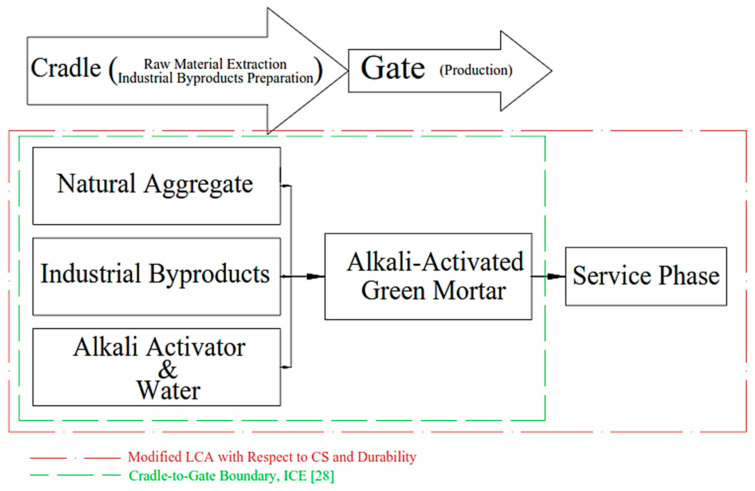
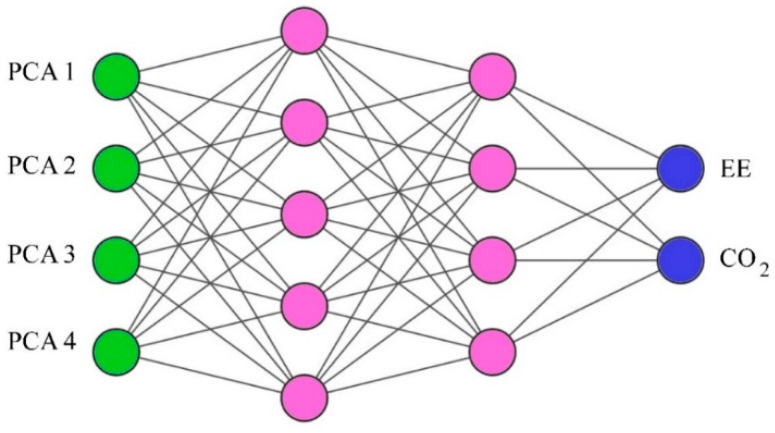
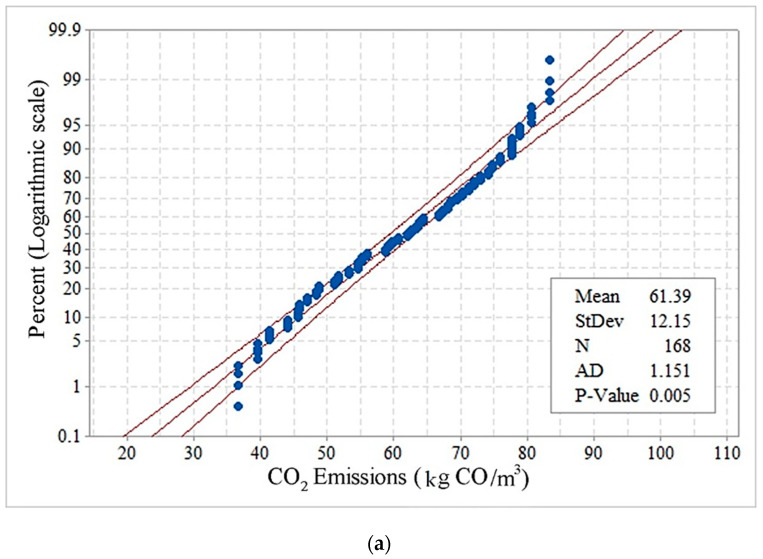
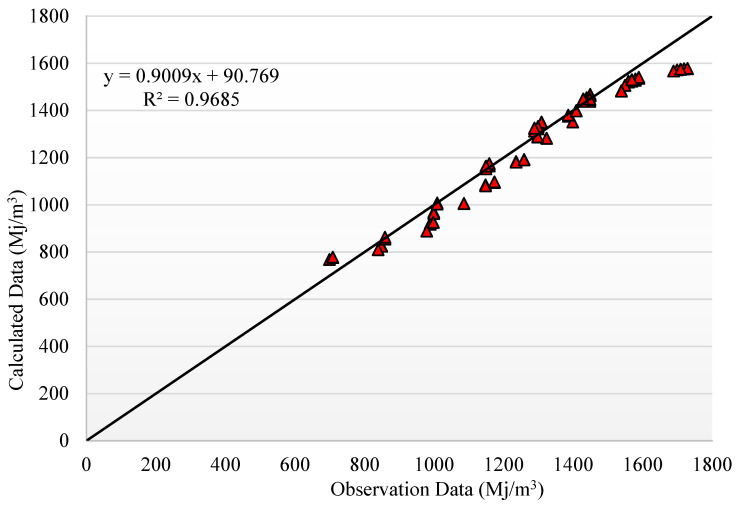
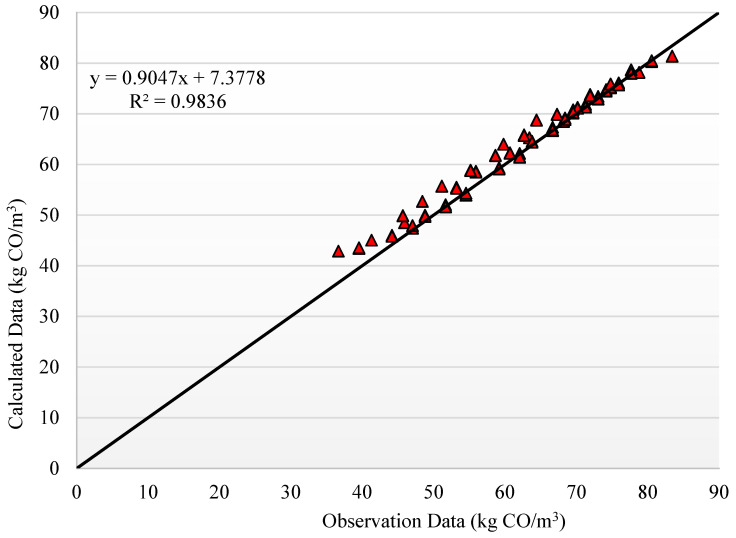
Eco-friendly and sustainable materials that are cost-effective, while having a reduced carbon footprint and energy consumption, are in great demand by the construction industry worldwide. Accordingly, alkali-activated materials (AAM) composed primarily of industrial byproducts have emerged as more desirable alternatives to ordinary Portland cement (OPC)-based concrete. Hence, this study investigates the cradle-to-gate life-cycle assessment (LCA) of ternary blended alkali-activated mortars made with industrial byproducts. Moreover, the embodied energy (EE), which represents an important parameter in cradle-to-gate life-cycle analysis, was investigated for 42 AAM mixtures. The boundary of the cradle-to-gate system was extended to include the mechanical and durability properties of AAMs on the basis of performance criteria. Using the experimental test database thus developed, an optimized artificial neural network (ANN) combined with the cuckoo optimization algorithm (COA) was developed to estimate the CO2 emissions and EE of AAMs. Considering the lack of systematic research on the cradle-to-gate LCA of AAMs in the literature, the results of this research provide new insights into the assessment of the environmental impact of AAM made with industrial byproducts. The final weight and bias values of the AAN model can be used to design AAM mixtures with targeted mechanical properties and CO2 emission considering desired amounts of industrial byproduct utilization in the mixture.
Overview
The claims and statistics of this paper haven’t been checked yet.
Run the check — free, no account needed. It reads the open-access text and checks the sources it cites.
Integrity signals
Registry
Cites
Statistics
Figures
Verification
Claims the paper makes
The claims and statistics of this paper haven’t been checked yet.
Run the check — free, no account needed. It reads the open-access text and checks the sources it cites.
Self-check
Percentages, sums and reported differences re-computed from the paper’s own numbers.
The self-check needs the paper’s full text.
Citations
Cites
Global Sensitivity Analysis. The Primer
Saltelli, A., Ratto, M., Andres, T., Campolongo, F., Cariboni, J., Gatelli, D., Saisana, M., & Tarantola, S. (2007) · doi:10.1002/9780470725184 · Cited by 6,430
Research works printed but not linked: 50
- Youn, 2019, Carbon dioxide sequestration process for the cement industry, J. CO2 Util., 34, 325, 10.1016/j.jcou.2019.07.023 · DOI
- Gupta, N., Siddique, R., and Belarbi, R. (2021). Sustainable and Greener Self-Compacting Concrete incorporating Industrial By-Products: A Review. J. Clean. Prod., 284. · DOI
- Hwang, 2020, Physical–microstructural evaluation and sulfate resistance of no-cement mortar developed from a ternary binder of industrial by-products, Environ. Prog. Sustain. Energy, 39, e13421, 10.1002/ep.13421 · DOI
- Hossain, M.U., Wang, L., Chen, L., Tsang, D.C.W., Ng, S.T., Poon, C.S., and Mechtcherine, V. (2020). Evaluating the environmental impacts of stabilization and solidification technologies for managing hazardous wastes through life cycle assessment: A case study of Hong Kong. Environ. Int., 145. · DOI
- Wi, S., Yang, S., Berardi, U., and Kim, S. (2019). Assessment of recycled ceramic-based inorganic insulation for improving energy efficiency and flame retardancy of buildings. Environ. Int., 130. · DOI
- Tucker, 2018, Economic and life cycle assessment of recycling municipal glass as a pozzolan in portland cement concrete production, Resour. Conserv. Recycl., 129, 240, 10.1016/j.resconrec.2017.10.025 · DOI
- Sinka, 2018, Comparative life cycle assessment of magnesium binders as an alternative for hemp concrete, Resour. Conserv. Recycl., 133, 288, 10.1016/j.resconrec.2018.02.024 · DOI
- Yasin, S., Behary, N., Curti, M., and Rovero, G. (2016). Global Consumption of Flame Retardants and Related Environmental Concerns: A Study on Possible Mechanical Recycling of Flame Retardant Textiles. Fibers, 4. · DOI
- Thomas, 2015, Alkali-activated concrete: Engineering properties and stress–strain behavior, Constr. Build. Mater., 93, 49, 10.1016/j.conbuildmat.2015.04.039 · DOI
- Ding, 2016, Mechanical properties of alkali-activated concrete: A state-of-the-art review, Constr. Build. Mater., 127, 68, 10.1016/j.conbuildmat.2016.09.121 · DOI
- Thomas, 2018, Comparison of chloride permeability methods for Alkali-Activated concrete, Constr. Build. Mater., 165, 104, 10.1016/j.conbuildmat.2018.01.016 · DOI
- Huseien, G.F., and Shah, K.W. (2020). Durability and life cycle evaluation of self-compacting concrete containing fly ash as GBFS replacement with alkali activation. Constr. Build. Mater., 235. · DOI
- Hanjitsuwan, 2016, Flexural strength of notched concrete beam filled with alkali-activated binders under different types of alkali solutions, Constr. Build. Mater., 127, 673, 10.1016/j.conbuildmat.2016.10.053 · DOI
- Paris, 2018, Alkali-activated grouts with incorporated fly ash: From NMR analysis to mechanical properties, Mater. Today Commun., 14, 225, 10.1016/j.mtcomm.2018.01.012 · DOI
- 2018, Life cycle assessment (LCA) of an alkali-activated binary concrete based on natural volcanic pozzolan: A comparative analysis to OPC concrete, Constr. Build. Mater., 176, 103, 10.1016/j.conbuildmat.2018.05.017 · DOI
- Bajpai, R., Choudhary, K., Srivastava, A., Sangwan, K.S., and Singh, M. (2020). Environmental impact assessment of fly ash and silica fume based geopolymer concrete. J. Clean. Prod., 254. · DOI
- Abdulkareem, M., Havukainen, J., and Horttanainen, M. (2019). How environmentally sustainable are fibre reinforced alkali-activated concretes?. J. Clean. Prod., 236. · DOI
- Nazer, 2016, Use of ancient copper slags in Portland cement and alkali activated cement matrices, J. Environ. Manag., 167, 115, 10.1016/j.jenvman.2015.11.024 · DOI
- Hou, P., Jolliet, O., Zhu, J., and Xu, M. (2020). Estimate ecotoxicity characterization factors for chemicals in life cycle assessment using machine learning models. Environ. Int., 135. · DOI
- Anastasiou, 2015, Comparative life cycle assessment of concrete road pavements using industrial by-products as alternative materials, Resour. Conserv. Recycl., 101, 1, 10.1016/j.resconrec.2015.05.009 · DOI
- Oyebisi, S., Ede, A., Olutoge, F., and Ngene, B. (2020). Assessment of activity indexes on the splitting tensile strengthening of geopolymer concrete incorporating supplementary cementitious materials. Mater. Today Commun., 24. · DOI
- Dhandapani, 2018, Mechanical properties and durability performance of concretes with Limestone Calcined Clay Cement (LC3), Cem. Concr. Res., 107, 136, 10.1016/j.cemconres.2018.02.005 · DOI
- Wang, 2019, Utilizing coral waste and metakaolin to produce eco-friendly marine mortar: Hydration, mechanical properties and durability, J. Clean. Prod., 219, 763, 10.1016/j.jclepro.2019.02.147 · DOI
- Li, 2016, Drying shrinkage prediction of paste containing meta-kaolin and ultrafine fly ash for developing ultra-high performance concrete, Mater. Today Commun., 6, 74, 10.1016/j.mtcomm.2016.01.001 · DOI
- Zhang, P., Dai, Y., Wang, W., Yang, J., Mo, L., Guo, W., and Bao, J. (2020). Effects of magnesia expansive agents on the self-healing performance of microcracks in strain-hardening cement-based composites (SHCC). Mater. Today Commun., 25. · DOI
- Ison, 2000, The use of lca to introduce life-cycle thinking into decision-making for the purchase of medical devices in the nhs, J. Environ. Assess. Policy Manag., 2, 453, 10.1142/S1464333200000497 · DOI · Paper page
- Hermann, 2007, Assessing environmental performance by combining life cycle assessment, multi-criteria analysis and environmental performance indicators, J. Clean Prod., 15, 1787, 10.1016/j.jclepro.2006.04.004 · DOI
- Yasin, 2018, Life cycle assessment of flame retardant cotton textiles with optimized end-of-life phase, J. Clean. Prod., 172, 1080, 10.1016/j.jclepro.2017.10.198 · DOI
- Yasin, 2019, Propelling textile waste to ascend the ladder of sustainability: EOL study on probing environmental parity in technical textiles, J. Clean. Prod., 233, 1451, 10.1016/j.jclepro.2019.06.009 · DOI
- (2021, March 20). Book review: Embodied Carbon: The Inventory of Carbon and Energy (ICE). A BSRIA Guide. Available online: https://www.icevirtuallibrary.com/doi/pdf/10.1680/ener.2011.164.4.206. · DOI
- Hammond, 2008, Embodied energy and carbon in construction materials, Proc. Inst. Civ. Eng. Energy, 161, 87
- Knoeri, 2013, Comparative LCA of recycled and conventional concrete for structural applications, Int. J. Life Cycle Assess., 18, 909, 10.1007/s11367-012-0544-2 · DOI
- Teixeira, 2019, Quality and durability properties and life-cycle assessment of high volume biomass fly ash mortar, Constr. Build. Mater., 197, 195, 10.1016/j.conbuildmat.2018.11.173 · DOI
- Li, J., Zhang, W., Li, C., and Monteiro, P.J. (2020). Eco-friendly mortar with high-volume diatomite and fly ash: Performance and life-cycle assessment with regional variability. J. Clean. Prod., 261. · DOI
- AzariJafari, 2019, Ternary blended cement: An eco-friendly alternative to improve resistivity of high-performance self-consolidating concrete against elevated temperature, J. Clean. Prod., 223, 575, 10.1016/j.jclepro.2019.03.054 · DOI
- Gursel, 2016, A life-cycle approach to environmental, mechanical, and durability properties of “green” concrete mixes with rice husk ash, J. Clean. Prod., 112, 823, 10.1016/j.jclepro.2015.06.029 · DOI
- Lee, 2013, Setting and mechanical properties of alkali-activated fly ash/slag concrete manufactured at room temperature, Constr. Build. Mater., 47, 1201, 10.1016/j.conbuildmat.2013.05.107 · DOI
- Puertas, 2017, Alkali-activated Portland blast-furnace slag cement: Mechanical properties and hydration, Constr. Build. Mater., 140, 119, 10.1016/j.conbuildmat.2017.02.092 · DOI
- Song, X.J., Marosszeky, M., Brungs, M., and Mun, R. (2005, January 17–20). Durability of Fly Ash based Geopolymer Concrete against Sulphuric Acid Attack. Proceedings of the 10DBMC International Conference On Durability of Building Materials and Components, Lyon, France.
- Trtnik, 2009, Prediction of concrete strength using ultrasonic pulse velocity and artificial neural networks, Ultrason., 49, 53, 10.1016/j.ultras.2008.05.001 · DOI
- Jeon, 2020, Investigation of sulfuric acid attack upon cement mortars containing silicon carbide powder, Powder Technol., 359, 181, 10.1016/j.powtec.2019.10.026 · DOI
- García-Vera, V.E., Tenza-Abril, A.J., Saval, J.M., and Lanzón, M. (2018). Influence of Crystalline Admixtures on the Short-Term Behaviour of Mortars Exposed to Sulphuric Acid. Materials, 12. · DOI
- Nikoo, 2018, Determining the natural frequency of cantilever beams using ANN and heuristic search, Appl. Artif. Intell., 32, 309, 10.1080/08839514.2018.1448003 · DOI
- Bishop, C.M. (2006). Pattern Recognition and Machine Learning, Springer.
- Rajabioun, 2011, Cuckoo Optimization Algorithm, Appl. Soft Comput., 11, 5508, 10.1016/j.asoc.2011.05.008 · DOI
- Jolliffe, I.T., and Jolliffe, I.T. (1986). Graphical Representation of Data Using Principal Components. Linear Gener. Linear Mixed Models Appl., 64–91. · DOI
- Hubbard, 1987, An empirical comparison of alternative methods for principal component extraction, J. Bus. Res., 15, 173, 10.1016/0148-2963(84)90047-X · DOI
- Plevris, 2014, Modeling of masonry failure surface under biaxial compressive stress using Neural Networks, Constr. Build. Mater., 55, 447, 10.1016/j.conbuildmat.2014.01.041 · DOI
- Bowden, 2005, Input determination for neural network models in water resources applications. Part 1—background and methodology, J. Hydrol., 301, 75, 10.1016/j.jhydrol.2004.06.021 · DOI
- Li, J., and Heap, A.D. (2008). A Review of Spatial Interpolation Methods for Environmental Scientists, Geoscience Australia.
Metadata
- Authors
- Faridmehr, I., Nehdi, M. L., Nikoo, M., Huseien, G. F., & Ozbakkaloglu, T.
- Affiliations
- South Ural State University (RU)
- Western University (CA)
- Islamic Azad University, Ahvaz Branch (IR)
- National University of Singapore (SG)
- Texas State University (US)
- Corresponding author
- Nehdi, Moncef L.
- Venue
- Materials
- Publisher
- MDPI AG
- Published
- 2021-05-05
- Volume
- 14
- Issue
- 9
- Pages
- 2401
- ISSN
- 1996-1944 (ISSN-L)
- PMC
- PMC8125601
- OpenAlex
- W3157695626
- Cited by
- 73
- References
- 1
- Citations by year
- 2026: 16 · 2025: 17 · 2024: 16 · 2023: 7 · 2022: 9 · 2021: 8
- FWCI
- 5.17
- Type
- journal article
- Language
- en
- Open access
- gold
- doi.org
- Licence
- Locations
- Materials (publishedVersion, cc-by)
- PubMed Central (publishedVersion, cc-by)
- PubMed (publishedVersion)
- National University of Singapore (submittedVersion, cc-by)
- DOAJ (DOAJ: Directory of Open Access Journals) (submittedVersion, cc-by-sa)
- Topics
- Physical Sciences › Engineering › Civil and Structural Engineering › Concrete and Cement Materials Research
- Physical Sciences › Environmental Science › Environmental Engineering › Environmental Impact and Sustainability
- Physical Sciences › Engineering › Building and Construction › Materials Engineering and Processing
- Keywords
- alkali-activated materials, industrial by-products, alkali-activated mortar, embodied energy, CO2 emissions, cradle-to-gate life cycle assessment, artificial neural networks, cuckoo optimization algorithm, mix proportion optimization, mechanical properties, durability properties, carbon footprint reduction
About these checks
Registry, retraction, Cites and statistics results are computed, not judged, with one exception: a printed reference that no index lists is read once by a model before it counts as a citation error. Claims are extracted by a model and kept only when their quote appears verbatim in the text; each cited source is then checked, with a model’s help, for whether it says what the claim relies on. Those verdicts can be wrong — read the claim’s quote and the cited source before relying on one.
Statistics and arithmetic are recomputed, not judged.
Confidence bands are shown only for fields calibrated on our annotated test set. None is calibrated yet, so no band is shown.
What counts as a claim ›How we measure confidence ›How we check this ›
Are you an author, or do you see a problem with this page? Request a review
