

The DOI matches its Crossref record; 16 of the 16 references it cites were found in a registry or an index.
Weathering of a Nonwoven Polypropylene Geotextile: Field vs. Laboratory Exposure
Open accessAbstract
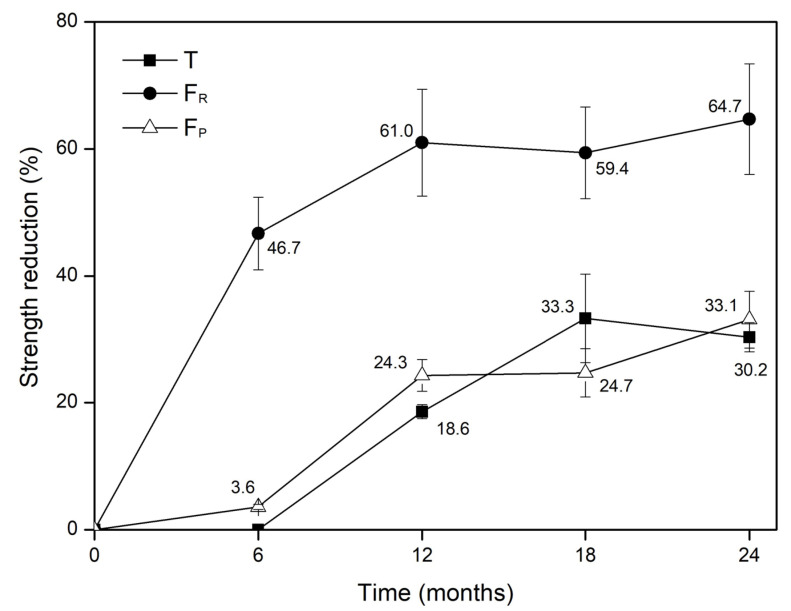
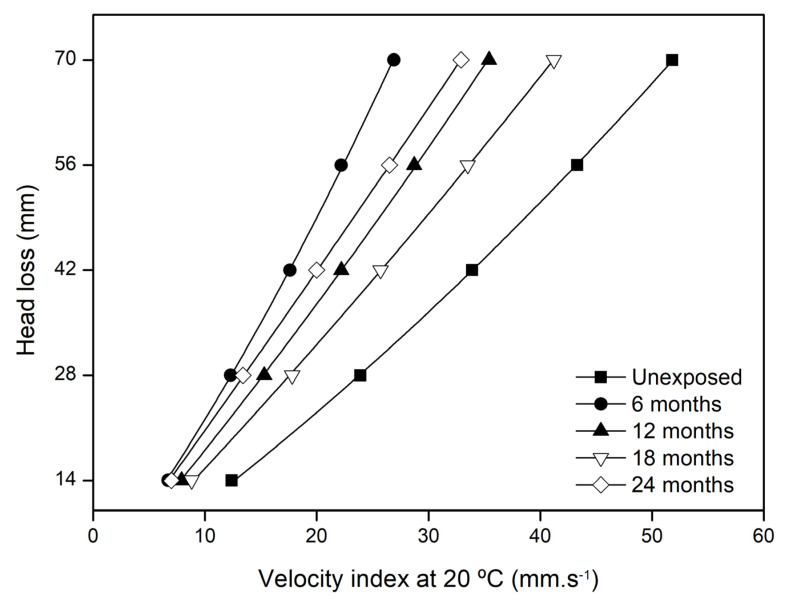
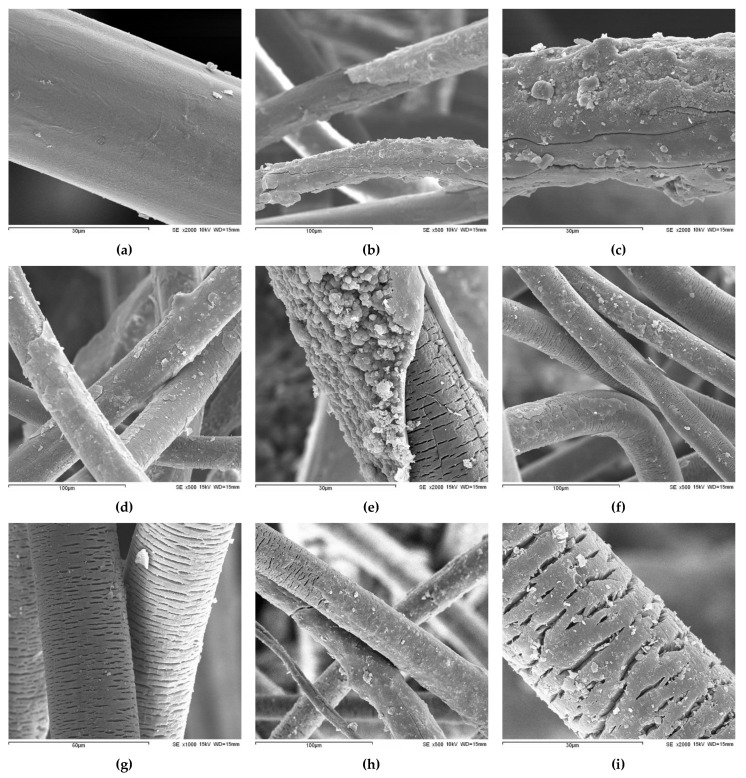
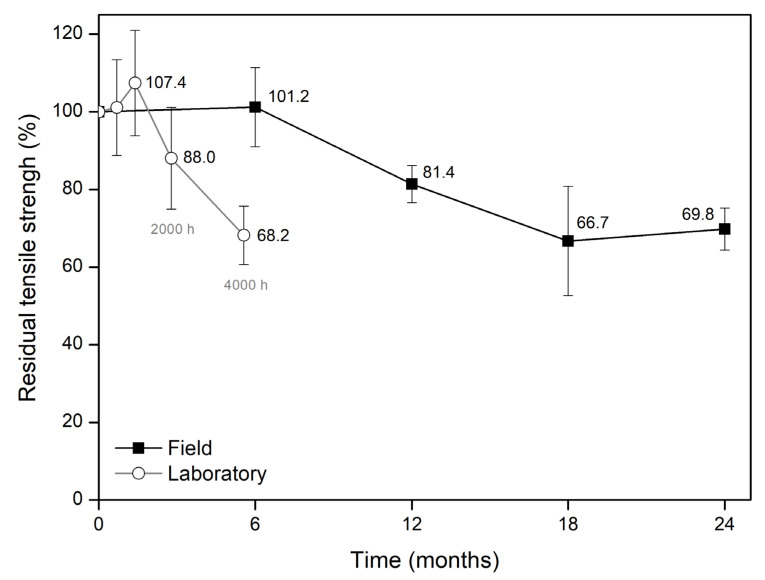
Like other plastic materials, geosynthetics can undergo changes in their properties due to weathering. These changes must be known and, if necessary, duly accounted for in the design phase. This work evaluates the resistance of a nonwoven polypropylene geotextile to weathering, both in the field (under natural degradation conditions) and in the laboratory (under accelerated degradation conditions). The damage experienced by the geotextile in the field weathering tests was evaluated by monitoring changes in its physical (mass per unit area and thickness), mechanical (tensile, tearing and puncture behaviour) and hydraulic (water permeability normal to the plane) properties. Microscopic damage was assessed by scanning electron microscopy. In the laboratory weathering tests, only the tensile behaviour of the geotextile was monitored. The results showed that all geotextile properties were affected by weathering. The mechanical strength of the geotextile decreased in the field weathering tests. Microscopic transverse cracks were found in the weathered polypropylene fibres, which may explain the reduction in mechanical strength. The accumulation of dirt on the nonwoven structure altered the physical and hydraulic properties of the geotextile. Comparing the field and laboratory weathering tests, the reduction in tensile strength found after 24 months outdoors (roughly 30%) was very similar to that observed after 4000 h in the laboratory. This relationship may not be valid for other geotextiles or other exposure locations.
Overview
The claims and statistics of this paper haven’t been checked yet.
Run the check — free, no account needed. It reads the open-access text and checks the sources it cites.
Integrity signals
Registry
Cites
Statistics
Figures
Verification
Claims the paper makes
The claims and statistics of this paper haven’t been checked yet.
Run the check — free, no account needed. It reads the open-access text and checks the sources it cites.
Claims other papers make about this one
Each is checked against this paper’s own text: does it say what the citing paper says it does?
The cited source says what the claim attributes to it.
In the citing paper
“The tensile strength of polypropylene geotextil dropped by ca 30% after 5 months and 24 months in natural outdoor weathering studies conducted in Malaysia [164] and Portugal [169], respectively.”
Self-check
Percentages, sums and reported differences re-computed from the paper’s own numbers.
The self-check needs the paper’s full text.
Citations
Cites
Polymer Weathering: Photo-Oxidation
Feldman, D. (2002) · Journal of Polymers and the Environment · doi:10.1023/a:1021148205366 · Cited by 383
Assessing the photo-degradation of geosynthetics by outdoor exposure and laboratory weatherometer
Suits, L., & Hsuan, Y. (2003) · Geotextiles and Geomembranes · doi:10.1016/s0266-1144(02)00068-7 · Cited by 84
Lifetime predictions of exposed geotextiles and geomembranes
Koerner, R. M., Hsuan, Y. G., & Koerner, G. R. (2016) · Geosynthetics International · doi:10.1680/jgein.16.00026 · Cited by 66
Carneiro, J. R., Morais, M., & Lopes, M. D. L. (2018) · Construction and Building Materials · doi:10.1016/j.conbuildmat.2018.01.067 · Cited by 53
Self-citationDegradation of polypropylene woven geotextile: tensile creep and weathering
Guimarães, M. G. A., Vidal, D. D. M., Urashima, D. D. C., & Castro, C. A. C. (2016) · Geosynthetics International · doi:10.1680/jgein.16.00029 · Cited by 32
Evaluation of the Resistance of a Polypropylene Geotextile Against Ultraviolet Radiation
Carneiro, J. R., Almeida, P. J., & Lopes, M. D. L. (2018) · Microscopy and Microanalysis · doi:10.1017/s1431927618000430 · Cited by 32
Self-citationStudy of the Ultraviolet Effect and Thermal Analysis on Polypropylene Nonwoven Geotextile
Valentin, C. A., Kobelnik, M., Franco, Y. B., Lavoie, F. L., da Silva, J. L., & da Luz, M. P. (2021) · Materials · doi:10.3390/ma14051080 · Cited by 30
Natural weathering of polypropylene geotextiles treated with different chemical stabilisers
Carneiro, J. R., & Lopes, M. D. L. (2017) · Geosynthetics International · doi:10.1680/jgein.17.00020 · Cited by 27
Self-citationAccelerated Aging Ultraviolet of a PET Nonwoven Geotextile and Thermoanalytical Evaluation
Franco, Y. B., Valentin, C. A., Kobelnik, M., da Silva, J. L., Ribeiro, C. A., & da Luz, M. P. (2022) · Materials · doi:10.3390/ma15124157 · Cited by 24
Weathering properties of geotextiles in ocean environments
Hsieh, C., Wang, J.-B., & Chiu, Y.-F. (2006) · Geosynthetics International · doi:10.1680/gein.2006.13.5.210 · Cited by 23
Research works printed but not linked: 3
- Greenwood, J.H., Schroeder, H.F., and Voskamp, V. (2016). Durability of Geosynthetics, CRC Press. [2nd ed.].
- Valente, I.M., Carneiro, J.R., Almeida, P.J., and Lopes, M.L. (2010, January 23–27). Chemical studies about the durability of polypropylene geotextiles. Proceedings of the 9th International Conference on Geosynthetics, Guarujá, Brazil.
- Cazzuffi, D., Venesia, S., Rinaldi, M., and Zocca, A. (1986, January 7–11). The mechanical properties of geotextiles: Italian standards and interlaboratory test comparison. Proceedings of the 3rd International Conference on Geotextiles, Vienna, Austria.
Cited by
Sorted by citations
Neale, P. J., Hylander, S., Banaszak, A. T., Häder, D.-P., Rose, K. C., Vione, D., Wängberg, S.-Å., Jansen, M. A. K., Busquets, R., Andersen, M. P. S., et al. (2025) · Photochemical & Photobiological Sciences · doi:10.1007/s43630-025-00687-x · Cited by 32
“The tensile strength of polypropylene geotextil dropped by ca 30% after 5 months and 24 months in natural outdoor weathering studies conducted in Malaysia [164] and Portugal [169], respectively.”
Szlachetka, O., Witkowska‐Dobrev, J., Baryła, A., & Dohojda, M. (2025) · Sustainability · doi:10.3390/su17146242 · Cited by 6
Natural weathering effects of nonwoven geotextile exposed to different climate conditions
Filho, J. L. E. D., da Silva, J. L., Valentin, C. A., Fleury, M. P., Aparício-Ardila, M. A., Vidal, D. D. M., & Costa, C. M. L. (2024) · Geosynthetics International · doi:10.1680/jgein.23.00156 · Cited by 5
Effect of UV radiation on shear behaviour between geotextile and geomembrane interface
Xu, G., & Shi, J. (2024) · Geosynthetics International · doi:10.1680/jgein.24.00059 · Cited by 5
Ultraviolet aging behavior of polypropylene sacks by outdoor weathering
Özcanhan, M. H., Kutlu, B., & Özdemir, H. (2024) · Iranian Polymer Journal · doi:10.1007/s13726-024-01411-9 · Cited by 3
Degradation pathways and microplastic pollution of polypropylene geotextiles in soil systems
Bagheri, M., & Tshireletso, T. (2025) · Environmental Geochemistry and Health · doi:10.1007/s10653-025-02859-1 · Cited by 1
Penggunaan Geotextile Non Woven Pada Perencanaan Teknis dan Peningkatan Jalan Penumangan – Unit VI
Murdoko, B., Kustiani, I., & Waluyo, S. (2023) · Seminar Nasional Insinyur Profesional (SNIP) · doi:10.23960/snip.v3i2.438
Assessing the Impact of Non-Woven Geotextiles on Strengthening Expansive SoilPreprint
Lemma, A. B. (2024) · SSRN Electronic Journal · doi:10.2139/ssrn.4830796
Muniyappa, M., Hanumesh, M., & Thyagaraj, V. (2026) · Innovative Infrastructure Solutions · doi:10.1007/s41062-026-02657-3
Toshikj, E. (2026) · Tekstilna industrija · doi:10.5937/tekstind2602032t
Carneiro, J. R., & Lopes, M. D. L. (2026) · E3S Web of Conferences · doi:10.1051/e3sconf/202674017003
Self-citationPaula, A. M., Carneiro, J. R., & Pinho-Lopes, M. (2026) · E3S Web of Conferences · doi:10.1051/e3sconf/202674017004
Self-citation
Metadata
- Authors
- Carneiro, J. R., & Lopes, M. D. L.
- Affiliations
- Universidade do Porto (PT)
- Corresponding author
- Carneiro, José Ricardo
- Venue
- Materials
- Publisher
- MDPI AG
- Published
- 2022-11-18
- Volume
- 15
- Issue
- 22
- Pages
- 8216
- ISSN
- 1996-1944 (ISSN-L)
- PMC
- PMC9696573
- OpenAlex
- W4309701538
- Cited by
- 12
- References
- 15
- Citations by year
- 2026: 4 · 2025: 3 · 2024: 4 · 2023: 1
- FWCI
- 0.90
- Type
- journal article
- Language
- en
- Open access
- gold
- doi.org
- Licence
- Locations
- Materials (publishedVersion, cc-by)
- PubMed Central (publishedVersion, cc-by)
- PubMed (publishedVersion)
- DOAJ (DOAJ: Directory of Open Access Journals) (submittedVersion, cc-by-sa)
- Portuguese National Funding Agency for Science, Research and Technology (RCAAP Project by FCT) (submittedVersion, other-oa)
- Funders
- FCT/MCTES (PIDDAC) (UIDB/04708/2020)
- Topics
- Physical Sciences › Engineering › Civil and Structural Engineering › Geotechnical Engineering and Soil Stabilization
- Physical Sciences › Environmental Science › Waste Management and Disposal › Landfill Environmental Impact Studies
- Physical Sciences › Engineering › Civil and Structural Engineering › Geotechnical and construction materials studies
- Keywords
- weathering, accelerated degradation, tensile strength, water permeability, dirt accumulation, mechanical properties, hydraulic properties, scanning electron microscopy
About these checks
Registry, retraction, Cites and statistics results are computed, not judged, with one exception: a printed reference that no index lists is read once by a model before it counts as a citation error. Claims are extracted by a model and kept only when their quote appears verbatim in the text; each cited source is then checked, with a model’s help, for whether it says what the claim relies on. Those verdicts can be wrong — read the claim’s quote and the cited source before relying on one.
Statistics and arithmetic are recomputed, not judged.
Confidence bands are shown only for fields calibrated on our annotated test set. None is calibrated yet, so no band is shown.
What counts as a claim ›How we measure confidence ›How we check this ›
Are you an author, or do you see a problem with this page? Request a review
