

The DOI matches its Crossref record; 39 of the 39 references it cites were found in a registry or an index.
Chloride Diffusion in Concrete Made with Coal Fly Ash Ternary and Ground Granulated Blast-Furnace Slag Portland Cements
Open accessAbstract
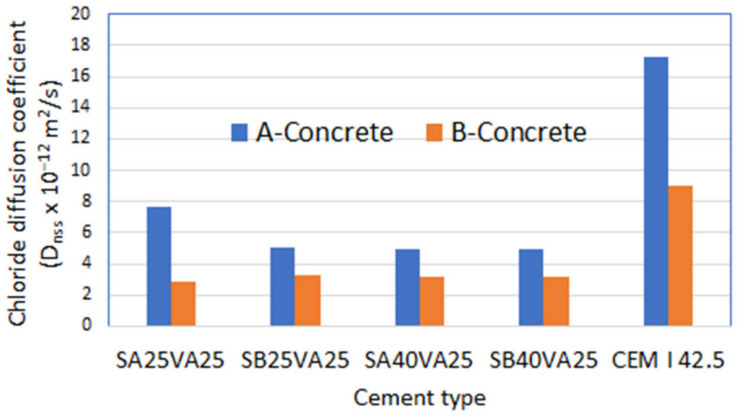
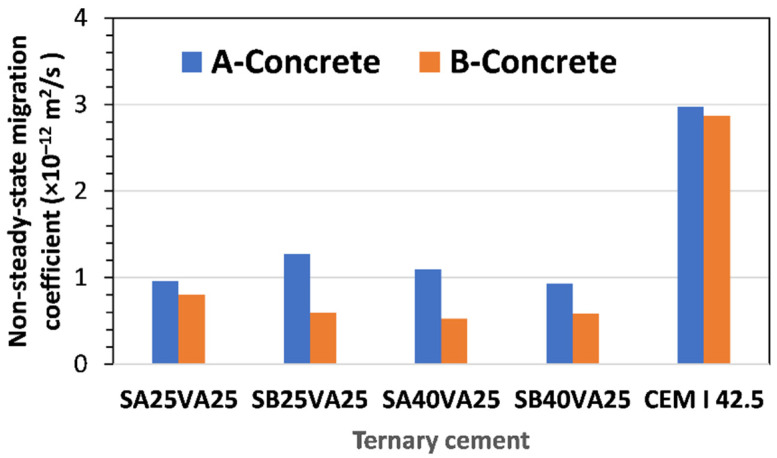
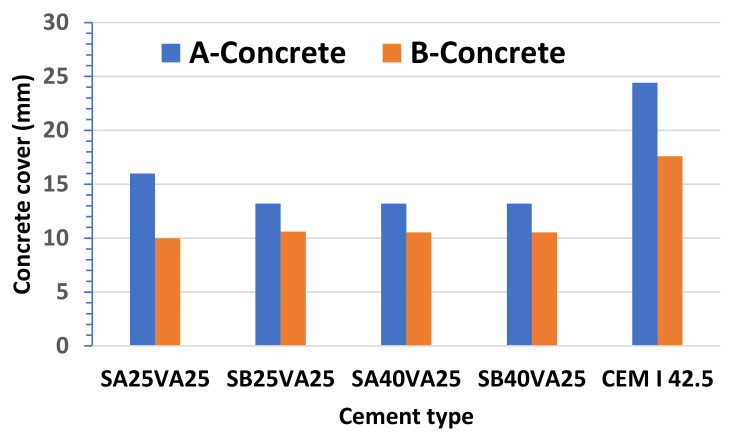
Ternary Portland cement usage with a high amount of cement constituents different from clinker can afford great climate change advantages by lowering the Portland cement clinker content in the final product. This will contribute to cutting greenhouse gas emissions to close to zero by 2050. Such ternary Portland cements can be composed of different amounts of ground granulated blast-furnace slag (GBFS), coal fly ash (CFA), and clinker (K). Cements made with GGBFS, or CFA boast pozzolanic characteristics. Therefore, they would improve both the concrete compressive strength at later ages and durability. The 28- and 90-days mechanical strength test, non-steady state chloride migration test, described in NT BUILD 492, and natural chloride diffusion test (NT BUILD 443) were performed in concrete. Ternary cements made with GBFS and/or CFA presented better chloride diffusion resistance than concrete made with plain Portland cements. Furthermore, the development of compressive strength was delayed. The service life study was developed for concretes made with ternary cements with regard to the chloride penetration case.
Overview
The claims and statistics of this paper haven’t been checked yet.
Run the check — free, no account needed. It reads the open-access text and checks the sources it cites.
Integrity signals
Registry
Cites
Statistics
Figures
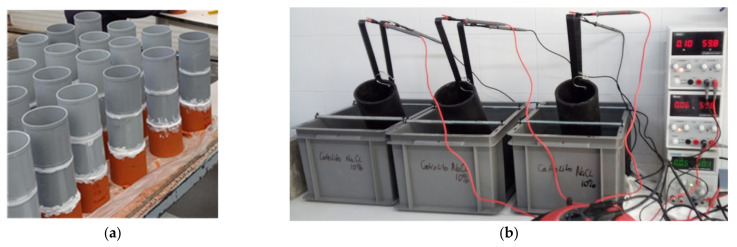
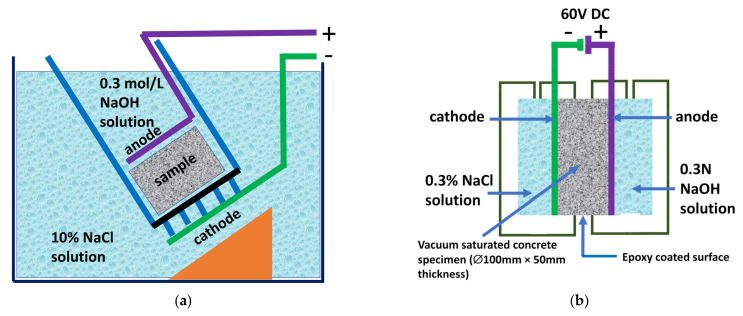
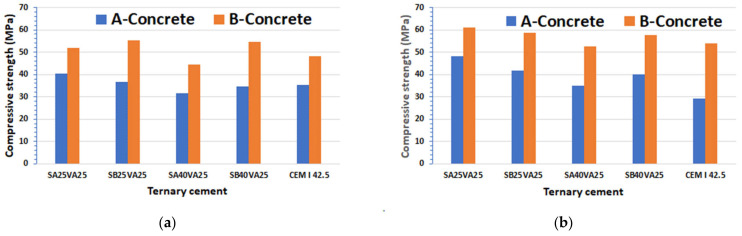
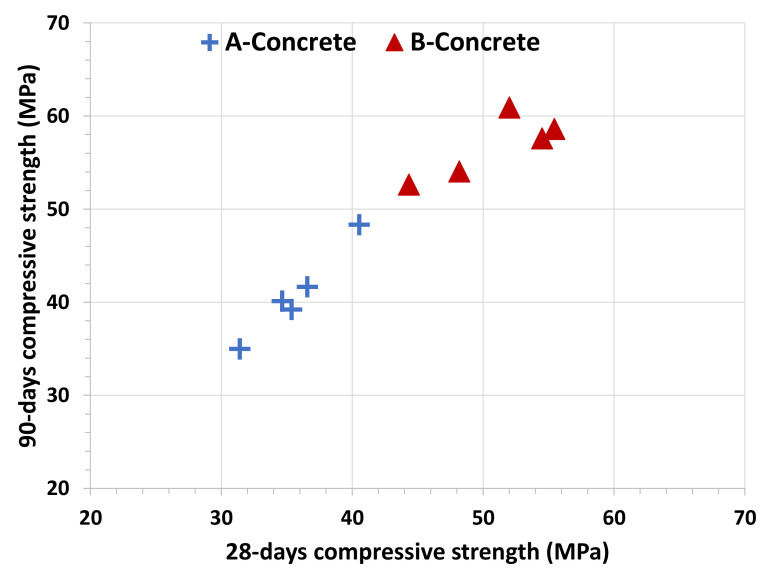
Verification
Claims the paper makes
The claims and statistics of this paper haven’t been checked yet.
Run the check — free, no account needed. It reads the open-access text and checks the sources it cites.
Claims other papers make about this one
Each is checked against this paper’s own text: does it say what the citing paper says it does?
The cited source says what the claim attributes to it.
In the citing paper
“Therefore, it is preferable to improve salt resistance by reducing chloride ingress through modification of the concrete material itself [5, 6, 10, 11].”
From Mechanical Properties and Chloride Penetration Resistance of Low-Carbon Concrete with Blended Binder Systems (2026) · cites this paper as [10]
Self-check
Percentages, sums and reported differences re-computed from the paper’s own numbers.
The self-check needs the paper’s full text.
Citations
Cites
Calculation of chloride diffusion coefficients in concrete from ionic migration measurements
Andrade, C. (1993) · Cement and Concrete Research · doi:10.1016/0008-8846(93)90023-3 · Cited by 647
Elahi, A., Basheer, M., Nanukuttan, S. V., & Khan, Q. U. Z. (2009) · Construction and Building Materials · doi:10.1016/j.conbuildmat.2009.08.045 · Cited by 303
The impact of sulphate and magnesium on chloride binding in Portland cement paste
WEERDT, K. D., Orsáková, D., & Geiker, M. R. (2014) · Cement and Concrete Research · doi:10.1016/j.cemconres.2014.07.007 · Cited by 234
Mechanical and thermal properties of fly ash based geopolymers
Fan, F., Liu, Z., Xu, G., Peng, H., & Cai, C. S. S. (2017) · Construction and Building Materials · doi:10.1016/j.conbuildmat.2017.11.023 · Cited by 225
An experimental study on corrosion resistance of concrete with ground granulate blast-furnace slag
Yeau, K. Y., & Kim, E. K. (2005) · Cement and Concrete Research · doi:10.1016/j.cemconres.2004.11.010 · Cited by 214
Güneyisi, E., & Gesoğlu, M. (2007) · Materials and Structures · doi:10.1617/s11527-007-9260-y · Cited by 179
Performance of high-volume fly ash concrete in marine environment
Moffatt, E. G., Thomas, M. D., & Fahim, A. (2017) · Cement and Concrete Research · doi:10.1016/j.cemconres.2017.09.008 · Cited by 178
Castellote, M., Andrade, C., & Alonso, C. (2001) · Cement and Concrete Research · doi:10.1016/s0008-8846(01)00562-2 · Cited by 174
Carbon Dioxide Uptake by Cement-Based Materials: A Spanish Case Study
Sanjuán, M. Á., Andrade, C., Mora, P., & Zaragoza, A. (2020) · Applied Sciences · doi:10.3390/app10010339 · Cited by 170
Self-citationfib Bulletin 34. Model Code for Service Life Design
Schießl, P., Bamforth, P. B., Baroghel-Bouny, V., Corley, G., Faber, M. H., Forbes, J., Gehlen, C., Helène, P., Helland, S., Ishida, T., et al. (2006) · Bulletin - FIB · doi:10.35789/fib.bull.0034 · Cited by 159
Use of ground coal bottom ash as cement constituent in concretes exposed to chloride environments
Argiz, C., Moragues, A., & Menéndez, E. (2017) · Journal of Cleaner Production · doi:10.1016/j.jclepro.2017.09.117 · Cited by 139
Corrosion and Corrosion Inhibition of Reinforcing Steel: II. Embedded In Concrete
Gouda, V. K., & Halaka, W. Y. (1970) · British Corrosion Journal · doi:10.1179/000705970798324478 · Cited by 119
Dousti, A., Rashetnia, R., Ahmadi, B., & Shekarchi, M. (2013) · Construction and Building Materials · doi:10.1016/j.conbuildmat.2013.08.086 · Cited by 117
Fernández, Á., Calvo, J. L. G., & Alonso, C. (2018) · Cement and Concrete Composites · doi:10.1016/j.cemconcomp.2017.12.016 · Cited by 115
van Noort, R., Hunger, M., & Spiesz, P. P. (2016) · Construction and Building Materials · doi:10.1016/j.conbuildmat.2016.04.054 · Cited by 109
On the time dependency of the chloride migration coefficient in concrete
Audenaert, K., Yuan, Q., & Schutter, G. D. (2009) · Construction and Building Materials · doi:10.1016/j.conbuildmat.2009.07.003 · Cited by 108
Andrade, C., Sanjuán, M. Á., Recuero, A., & Río, O. (1994) · Cement and Concrete Research · doi:10.1016/0008-8846(94)90106-6 · Cited by 106
Self-citationJeong, Y., Park, H., Jun, Y., Jeong, J.-H., & Oh, J. E. (2015) · Construction and Building Materials · doi:10.1016/j.conbuildmat.2015.07.158 · Cited by 100
(1994) · Materials and Structures · doi:10.1007/bf02473446 · Cited by 100
Chloride ion penetration into fly ash modified concrete during wetting–drying cycles
Simčič, T., Pejovnik, S., Schutter, G. D., & Bosiljkov, V. B. (2015) · Construction and Building Materials · doi:10.1016/j.conbuildmat.2015.04.033 · Cited by 97
Bogas, J. A., & Gomes, A. M. (2015) · Cement and Concrete Composites · doi:10.1016/j.cemconcomp.2015.04.001 · Cited by 94
Strengthening effects of finely ground fly ash, granulated blast furnace slag, and their combination
Tan, K., & Xin-cheng, P. (1998) · Cement and Concrete Research · doi:10.1016/s0008-8846(98)00158-6 · Cited by 89
Carbon Dioxide Uptake in the Roadmap 2050 of the Spanish Cement Industry
Sanjuán, M. Á., Argiz, C., Mora, P., & Zaragoza, A. (2020) · Energies · doi:10.3390/en13133452 · Cited by 78
Self-citationThe new european standard on common cements specifications EN 197-1:2011
Sanjuán, M. Á., & Argiz, C. (2012) · Materiales de Construcción · doi:10.3989/mc.2012.07711 · Cited by 69
Self-citationService life and global warming potential of chloride exposed concrete with high volumes of fly ash
den Heede, P. V., Keersmaecker, M. D., Elia, A., Adriaens, A. G., & Belie, N. D. (2017) · Cement and Concrete Composites · doi:10.1016/j.cemconcomp.2017.03.020 · Cited by 64
Andrade, C., & Sanjuán, M. Á. (1994) · Advances in Cement Research · doi:10.1680/adcr.1994.6.23.127 · Cited by 58
Self-citationMcNally, C., & Sheils, E. (2011) · Construction and Building Materials · doi:10.1016/j.conbuildmat.2011.11.029 · Cited by 57
Pontes, J., Bogas, J. A., Real, S., & Silva, A. (2021) · Applied Sciences · doi:10.3390/app11167251 · Cited by 51
Granulated Blast-Furnace Slag and Coal Fly Ash Ternary Portland Cements Optimization
Rivera, R. A., Sanjuán, M. Á., & Martín, D. A. (2020) · Sustainability · doi:10.3390/su12145783 · Cited by 40
Self-citationYu, B., Ma, Q., Huang, H.-C., & Chen, Z. (2019) · Construction and Building Materials · doi:10.1016/j.conbuildmat.2019.04.147 · Cited by 37
Menéndez, E., Sanjuán, M. Á., García-Rovés, R., Argiz, C., & Recino, H. (2020) · Applied Sciences · doi:10.3390/app10249042 · Cited by 34
Self-citationSell, F. K., Wally, G. B., Teixeira, F. R., & Magalhães, F. C. (2021) · Revista IBRACON de Estruturas e Materiais · doi:10.1590/s1983-41952021000400007 · Cited by 23
Comparison of procedures for the evaluation of time dependent concrete diffusion coefficient model
Konečný, P., Lehner, P., Ghosh, P., Morávková, Z., & Tran, Q. (2020) · Construction and Building Materials · doi:10.1016/j.conbuildmat.2020.119535 · Cited by 21
Rivera, R. A., Sanjuán, M. Á., Martín, D. A., & Costafreda, J. L. (2021) · Materials · doi:10.3390/ma14123239 · Cited by 20
Self-citationAl-Sodani, K. A. A., Al-Zahrani, M. M., Maslehuddin, M., Al‐Amoudi, O. S. B., & Al-Dulaijan, S. U. (2022) · Journal of Materials Research and Technology · doi:10.1016/j.jmrt.2021.12.136 · Cited by 19
Sanjuán, M. Á., Menéndez, E., & Recino, H. (2022) · Materials · doi:10.3390/ma15082933 · Cited by 13
Self-citationDuży, P., Choińska, M., Hager, I., Amiri, O., & Claverie, J. (2022) · Materials · doi:10.3390/ma15134475 · Cited by 12
Kępniak, M., Woyciechowski, P., & Franus, W. (2021) · Materials · doi:10.3390/ma14237254 · Cited by 11
Performance of Fibre Reinforced Self Compacting Concrete against Chloride Attack
Hassan, M., Elahi, A., & Asad, M. (2022) · doi:10.3390/engproc2022022005 · Cited by 5
Research works printed but not linked: 1
- Page, 1996, Local repair measures at concrete structures damaged by reinforcement corrosion—Aspects of durability, Corrosion of Reinforcement in Concrete Construction, Proceedings of the 4th International Symposium, Cambridge, UK, 1–4 July 1996, Volume 1, 448
Cited by
Sorted by citations
Mokal, M. P., Mandal, R., Nayak, S., & Panda, S. K. (2023) · Journal of Building Engineering · doi:10.1016/j.jobe.2023.107295 · Cited by 31
Jin, H., Cheng, L., Liu, J., & Zhong, S. (2024) · Journal of Materials Research and Technology · doi:10.1016/j.jmrt.2024.01.206 · Cited by 25
Szweda, Z., Gołaszewski, J., Ghosh, P., Lehner, P., & Konečný, P. (2023) · Materials · doi:10.3390/ma16020637 · Cited by 25
Ren, C., Li, K., Wang, Y., Li, Y., Tong, J., & Cai, J. (2023) · Materials · doi:10.3390/ma16062385 · Cited by 15
Nasiri, S., Madandoust, R., & Ranjbar, M. M. (2023) · Infrastructures · doi:10.3390/infrastructures8100139 · Cited by 15
Metadata
- Authors
- Sanjuán, M. Á., Rivera, R. A., Martín, D. A., & Estévez, E.
- Affiliations
- Universidad Politécnica de Madrid (ES)
- Corresponding author
- Sanjuán, Miguel Ángel
- Venue
- Materials
- Publisher
- MDPI AG
- Published
- 2022-12-13
- Volume
- 15
- Issue
- 24
- Pages
- 8914
- ISSN
- 1996-1944 (ISSN-L)
- PMC
- PMC9783838
- OpenAlex
- W4311379024
- Cited by
- 22
- References
- 39
- Citations by year
- 2026: 8 · 2025: 3 · 2024: 4 · 2023: 7
- FWCI
- 1.57
- Type
- journal article
- Language
- en
- Open access
- gold
- doi.org
- Licence
- Locations
- Materials (publishedVersion, cc-by)
- PubMed Central (publishedVersion, cc-by)
- PubMed (publishedVersion)
- DOAJ (DOAJ: Directory of Open Access Journals) (submittedVersion, cc-by-sa)
- Funders
- Fundación Gómez Pardo
- LOEMCO, a Research Centre of the Technical University of Madrid
- Topics
- Physical Sciences › Engineering › Civil and Structural Engineering › Concrete and Cement Materials Research
- Physical Sciences › Engineering › Civil and Structural Engineering › Concrete Corrosion and Durability
- Physical Sciences › Engineering › Civil and Structural Engineering › Concrete Properties and Behavior
- Keywords
- chloride diffusion, concrete durability, coal fly ash, ground granulated blast furnace slag, clinker reduction, compressive strength development, chloride migration, service life prediction, pozzolanic cement, greenhouse gas emissions reduction
About these checks
Registry, retraction, Cites and statistics results are computed, not judged, with one exception: a printed reference that no index lists is read once by a model before it counts as a citation error. Claims are extracted by a model and kept only when their quote appears verbatim in the text; each cited source is then checked, with a model’s help, for whether it says what the claim relies on. Those verdicts can be wrong — read the claim’s quote and the cited source before relying on one.
Statistics and arithmetic are recomputed, not judged.
Confidence bands are shown only for fields calibrated on our annotated test set. None is calibrated yet, so no band is shown.
What counts as a claim ›How we measure confidence ›How we check this ›
Are you an author, or do you see a problem with this page? Request a review
