

The DOI matches its Crossref record.
Utilization of a PFA-GGBS-Based Precursor in Geopolymer Concrete Production as a Sustainable Substitute for Conventional Concrete
Open accessAbstract
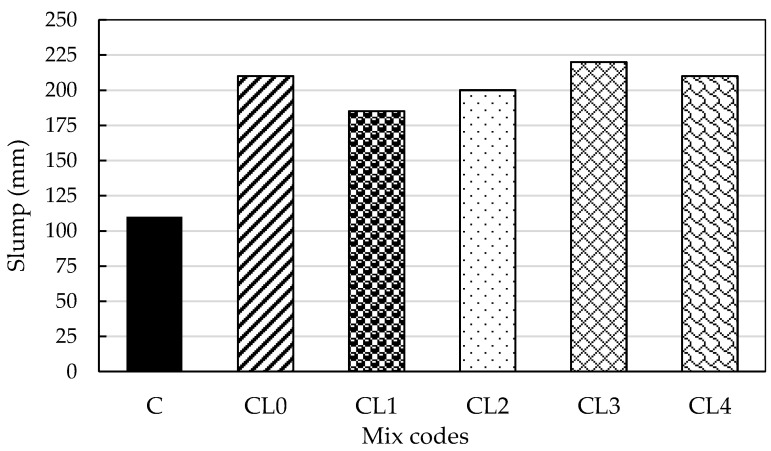
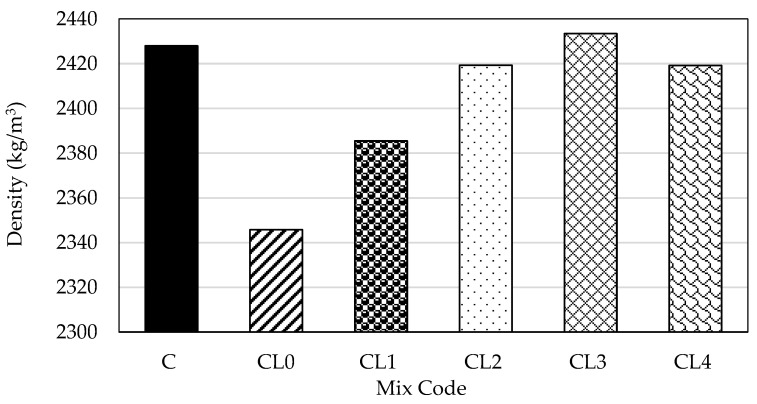
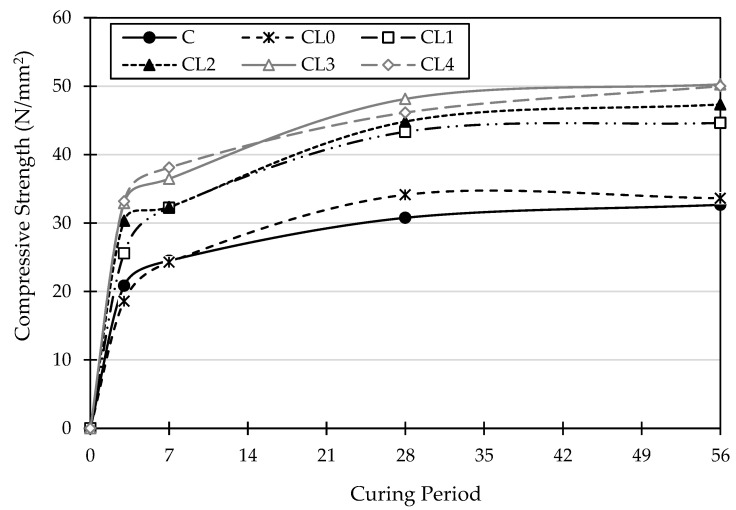
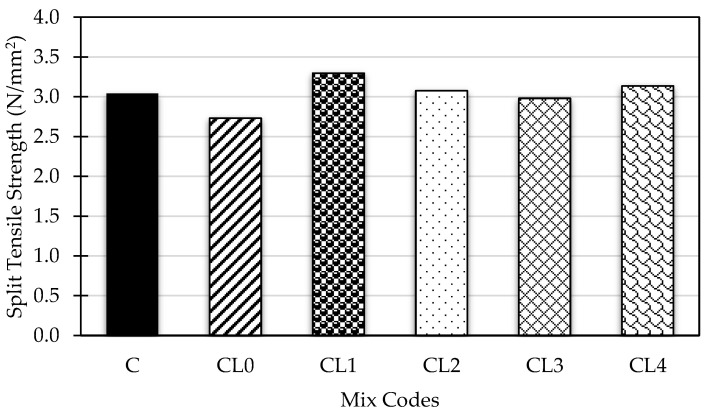
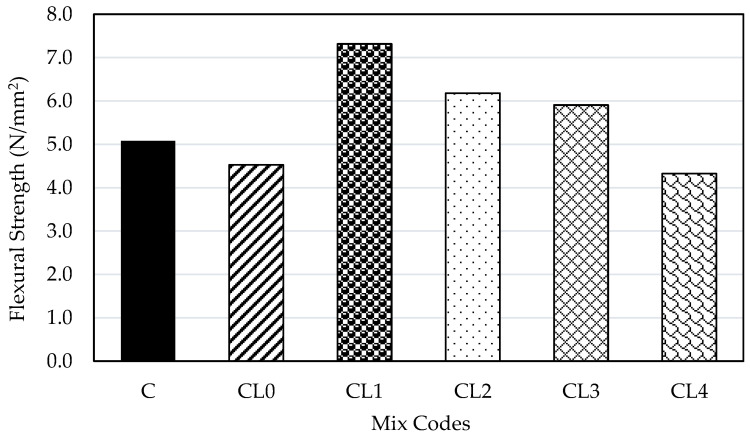
Awareness of environmental sustainability is driving the shift from conventional Portland cement, a major contributor to carbon dioxide emissions, to more sustainable alternatives. This study focuses on developing a geopolymer concrete by optimizing geopolymer concrete mixtures with various ratios of Ground Granulated Blast Furnace Slag (GGBS) and pulverized fly ash (PFA) as precursors, aiming to find a mix that maximizes strength while minimizing environmental impacts. The precursor was activated using a laboratory-synthesized silica fume (SF)-derived sodium silicate solution in combination with NaOH at a molarity of 10M. This study aims to find the optimal geopolymer concrete mix with a 0.55 water-to-binder ratio, a 0.40 alkali-to-precursor ratio, and a 1:1 sodium silicate to sodium hydroxide ratio. Ordinary Portland cement was used as the control mix binder (C), while the geopolymer mixes included varying GGBS-PFA compositions [CL0 (50% GGBS—50% PFA), CL1 (60% GGBS—40% PFA), CL2 (70% GGBS—30% PFA), CL3 (80% GGBS—20% PFA), and CL4 (90% GGBS—10% PFA)]. The engineering performance of the mixtures was assessed using slump, unconfined compressive strength, split tensile, and flexural strength tests in accordance with their relevant standards. Observations showed that GPC specimens exhibited similar or slightly higher strength values than conventional concrete using PC. In addition to strength, geopolymers have a smaller environmental footprint, consuming less energy and reducing greenhouse gas emissions. These qualities make geopolymer concrete a sustainable construction option that aligns with global efforts to reduce carbon emissions and conserve resources.
Overview
The claims and statistics of this paper haven’t been checked yet.
Run the check — free, no account needed. It reads the open-access text and checks the sources it cites.
Integrity signals
Registry
Cites
Statistics
Figures
Verification
Claims the paper makes
The claims and statistics of this paper haven’t been checked yet.
Run the check — free, no account needed. It reads the open-access text and checks the sources it cites.
Self-check
Percentages, sums and reported differences re-computed from the paper’s own numbers.
The self-check needs the paper’s full text.
Citations
Cites
No references could be resolved yet.
Research works printed but not linked: 30
- Younes, 2023, Incorporating coarse and fine recycled aggregates into concrete mixes: Mechanical characterization and environmental impact, J. Mater. Cycles Waste Manag., 26, 654, 10.1007/s10163-023-01834-1 · DOI
- Tam, 2018, A review of recycled aggregate in concrete applications (2000–2017), Constr. Build. Mater., 172, 272, 10.1016/j.conbuildmat.2018.03.240 · DOI
- Baltazar, L.G. (2022). Performance of Silica Fume-Based Geopolymer Grouts for Heritage Masonry Consolidation. Crystals, 12. · DOI
- Fernandes, 2021, Controlling efflorescence in geopolymers: A new approach, Case Stud. Constr. Mater., 15, e00740
- Altameemi, S., Adeleke, B.O., Kinuthia, J.M., and Oti, J. (2025). Understanding the Effect of Waiting for the Dissolution of Sodium Hydroxide in Geopolymer Concrete Mixes. Materials, 18. · DOI
- Farhan, 2020, Assessment of important parameters involved in the synthesis of geopolymer composites: A review, Constr. Build. Mater., 264, 120276, 10.1016/j.conbuildmat.2020.120276 · DOI
- Kong, 2008, Damage behavior of geopolymer composites exposed to elevated temperatures, Cem. Concr. Compos., 30, 986, 10.1016/j.cemconcomp.2008.08.001 · DOI
- Davidovits, J. (1994). Properties of Geopolymer cements. First International Conference on Alkaline Cements and Concretes, Scientific Research Institute on Binders and Materials.
- Palomo, 1999, Alkali-activated fly ashes: A cement for the future, Cem. Concr. Res., 29, 1323, 10.1016/S0008-8846(98)00243-9 · DOI
- Lee, 2004, The interface between natural siliceous aggregates and geopolymers, Cem. Concr. Res., 34, 195, 10.1016/S0008-8846(03)00250-3 · DOI
- Herbert, 2011, Life cycle assessment (LCA) of alkali-activated cements and concretes, Cem. Concr. Res., 41, 442
- Reddy, 2018, Mix design development of fly ash and ground granulated blast furnace slag based geopolymer concrete, J. Build. Eng., 20, 712, 10.1016/j.jobe.2018.09.010 · DOI
- Hadi, 2019, Optimum mix design of geopolymer pastes and concretes cured in ambient condition based on compressive strength, setting time and workability, J. Build. Eng., 23, 301, 10.1016/j.jobe.2019.02.006 · DOI
- Rafeet, 2017, Guidelines for mix proportioning of fly ash/GGBS based alkali activated concretes, Constr. Build. Mater., 147, 130, 10.1016/j.conbuildmat.2017.04.036 · DOI
- Li, 2018, A mixture proportioning method for the development of performance-based alkali-activated slag-based concrete, Cem. Concr. Compos., 93, 163, 10.1016/j.cemconcomp.2018.07.009 · DOI
- Oti, J., Adeleke, B.O., Mudiyanselage, P.R., and Kinuthia, J. (2024). A Comprehensive Performance Evaluation of GGBS-Based Geopolymer Concrete Activated by a Rice Husk Ash-Synthesised Sodium Silicate Solution and Sodium Hydroxide. Recycling, 9. · DOI
- Nath, 2014, Effect of GGBFS on setting, workability and early strength properties of fly ash geopolymer concrete cured in ambient condition, Constr. Build. Mater., 66, 163, 10.1016/j.conbuildmat.2014.05.080 · DOI
- Hadi, 2017, Design of geopolymer concrete with GGBFS at ambient curing condition using Taguchi method, Constr. Build. Mater., 140, 424, 10.1016/j.conbuildmat.2017.02.131 · DOI
- Billong, 2021, Using silica fume based activator in sustainable geopolymer binder for building application, Constr. Build. Mater., 275, 122177, 10.1016/j.conbuildmat.2020.122177 · DOI
- Adeleke, B.O., Kinuthia, J.M., Oti, J., and Ebailila, M. (2023). Physico-Mechanical Evaluation of Geopolymer Concrete Activated by Sodium Hydroxide and Silica Fume-Synthesised Sodium Silicate Solution. Materials, 16. · DOI · Paper page
- Xu, 2000, The geopolymerisation of alumino-silicate minerals, Int. J. Miner. Process., 59, 247, 10.1016/S0301-7516(99)00074-5 · DOI
- 2018, A quantitative method of approach in designing the mix proportions of fly ash and GGBS-based geopolymer concrete, Aust. J. Civ. Eng., 16, 53, 10.1080/14488353.2018.1450716 · DOI
- Rangan, B.V. (2008). Fly Ash-Based Geopolymer Concrete, Faculty of Engineering, Curtin University of Technology. Research Report GC4. · DOI
- Provis, 2014, Geopolymers and Related Alkali-Activated Materials, Annu. Rev. Mater. Res., 44, 299, 10.1146/annurev-matsci-070813-113515 · DOI
- Adam, 2019, The Effects of Water to Solid Ratio, Activator to Binder Ratio, and Lime Proportion on the Compressive Strength of Ambient-Cured Geopolymer Concrete, J. Civ. Eng. Forum, 5, 161, 10.22146/jcef.43878 · DOI
- Kamarudin, 2012, Correlation between Na2SiO3/NaOH ratio and fly ash/alkaline activator ratio to the strength of geopolymer, Mater. Manuf. Technol. II, 341–342, 189
- Liyana, 2014, Effect of fly ash/alkaline activator ratio and sodium silicate/NaOH ratio on fly ash geopolymer coating strength, Key Eng. Mater., 594–595, 146
- Smith, 2020, The impact of fly ash and silica fume on the compressive strength of concrete, J. Mater. Civ. Eng., 32, 6
- Choudhary, 2020, Impact on fresh, mechanical, and microstructural properties of high strength self-compacting concrete by marble cutting slurry waste, fly ash, and silica fume, Constr. Build. Mater., 239, 117888, 10.1016/j.conbuildmat.2019.117888 · DOI
- Rao, 2017, Flexural & Tensile Strength Properties of GGBS and Phosphogypsum Blended Geopolymer Concrete, Int. J. ChemTech Res., 10, 661
Cited by
Sorted by citations
Ganesan, Y., & Panruti Thangaraj, R. (2026) · Periodica Polytechnica Civil Engineering · doi:10.3311/ppci.41876 · Cited by 2
“Over 28 days, the compressive strengths of 45.8 MPa in FA-based mixtures that were ambient-cured by utiliz - ing sodium hydroxide–sodium silicate (NaOH–Na 2 SiO 3 ) were attained [3].”
Influential
Metadata
- Authors
- Oti, J., Adeleke, B. O., Casabuena, L. R., Kinuthia, J. M., & Sule, S.
- Affiliations
- University of South Wales (GB)
- University of Port Harcourt (NG)
- Corresponding author
- Adeleke, Blessing O.
- Venue
- Materials
- Publisher
- MDPI AG
- Published
- 2025-03-16
- Volume
- 18
- Issue
- 6
- Pages
- 1309
- ISSN
- 1996-1944 (ISSN-L)
- PMC
- PMC11943638
- OpenAlex
- W4408533860
- Cited by
- 19
- References
- 0
- Citations by year
- 2026: 11 · 2025: 8
- FWCI
- 6.89
- Type
- journal article
- Language
- en
- Open access
- gold
- doi.org
- Licence
- Locations
- Materials (publishedVersion, cc-by)
- PubMed Central (publishedVersion, cc-by)
- PubMed (publishedVersion)
- Topics
- Physical Sciences › Engineering › Civil and Structural Engineering › Concrete and Cement Materials Research
- Physical Sciences › Environmental Science › Environmental Engineering › Microbial Applications in Construction Materials
- Physical Sciences › Engineering › Building and Construction › Materials Engineering and Processing
- Keywords
- geopolymer concrete, ground granulated blast furnace slag, pulverized fly ash, sodium silicate activation, sodium hydroxide, cement replacement, compressive strength, splitting tensile strength, flexural strength, slump, water-to-binder ratio, CO2 emission reduction, sustainable construction materials
About these checks
Registry, retraction, Cites and statistics results are computed, not judged, with one exception: a printed reference that no index lists is read once by a model before it counts as a citation error. Claims are extracted by a model and kept only when their quote appears verbatim in the text; each cited source is then checked, with a model’s help, for whether it says what the claim relies on. Those verdicts can be wrong — read the claim’s quote and the cited source before relying on one.
Statistics and arithmetic are recomputed, not judged.
Confidence bands are shown only for fields calibrated on our annotated test set. None is calibrated yet, so no band is shown.
What counts as a claim ›How we measure confidence ›How we check this ›
Are you an author, or do you see a problem with this page? Request a review
