

Viral Infections Confined to Tattoos—A Narrative Review
Open accessThe DOI matches its Crossref record; 104 of the 106 references it cites were found in a registry or an index.
Abstract
Since ancient times, people have tattooed their skin for various reasons. In the past, tattoos were associated with low social status; nowadays, tattoos are very popular and are considered a form of art. However, tattoos are associated with various clinical problems, including immune reactions, inflammatory disorders, infections, and even skin cancer. Epidemiological and clinical data of infections on tattoos are scarce. Tattoo-related infections are mostly bacterial; only a few localized viral infections have been reported so far and are caused by molluscum contagiosum virus (MCV), human papillomavirus (HPV), and herpes simplex virus (HSV). In most cases, the lesions were strictly confined to the area of the tattoo. In this review, we have analysed reported cases of viral infections localized on tattoos and discussed the possible mechanisms involved in the occurrence of these infections.
Overview
The claims and statistics of this paper haven’t been checked yet.
Free: it reads the open-access text and checks the first 5 claims that cite a source we can check. Create a free account to check every claim.
Integrity signals
Registry
Cites
Statistics
Figures
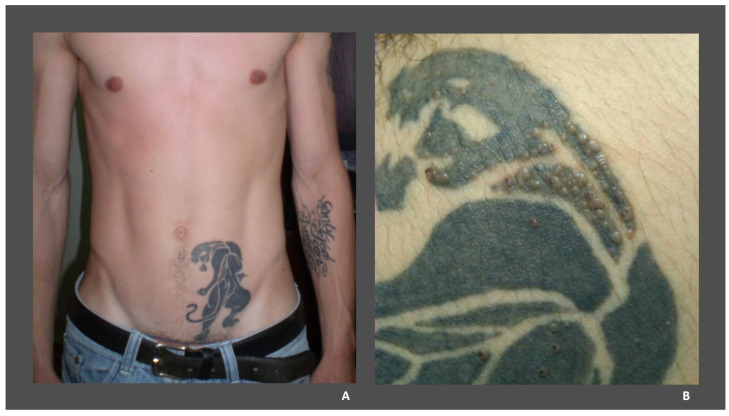
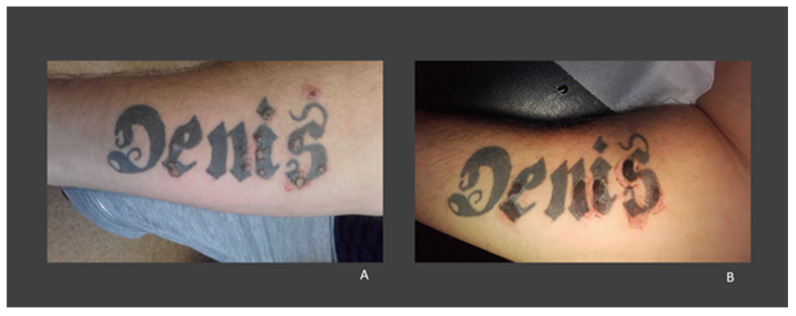
Verification
Claims the paper makes
The claims and statistics of this paper haven’t been checked yet.
Free: it reads the open-access text and checks the first 5 claims that cite a source we can check. Create a free account to check every claim.
Claims other papers make about this one
Each is checked against this paper’s own text: does it say what the citing paper says it does?
The source backs part of the claim, not all of it — or backs it for a different population, condition or comparison.
In the citing paper
“They are usually performed without anaesthesia, increase the likelihood of infections [267], and can cause hypersensitivities [268] and self-mutilation through excessive licking.”
From Ethical Concerns about Fashionable Dog Breeding (2024) · cites this paper as [267]
Experimental — accuracy not yet measured
Self-check
Percentages, sums and reported differences re-computed from the paper’s own numbers.
The self-check needs the paper’s full text.
Citations
Cites
Human papillomavirus and cervical cancer
Okunade, K. S. (2020) · Journal of Obstetrics and Gynaecology · doi:10.1080/01443615.2019.1634030 · Cited by 809
(2014) · Handbook of Clinical Neurology · doi:10.1016/b978-0-444-53488-0.00011-0 · Cited by 474
Air Pollution, Ultrafine and Nanoparticle Toxicology: Cellular and Molecular Interactions
Stone, V., Johnston, H., & Clift, M. J. D. (2007) · IEEE Transactions on NanoBioscience · doi:10.1109/tnb.2007.909005 · Cited by 364 · cited 1×
“In addition, black ink contains nanoparticles, unlike coloured ink, which contains larger particles, and the nanoparticles stimulate the production of ROS to a greater extent [103,106].”
BackgroundEgawa, N., & Doorbar, J. (2017) · Virus Research · doi:10.1016/j.virusres.2016.12.017 · Cited by 330
Tattooed: The Sociogenesis of a Body Art
Atkinson, M. M. (2003) · University of Toronto Press eBooks · doi:10.3138/9781442680364 · Cited by 291
A medical-toxicological view of tattooing
Laux, P., Tralau, T., Tentschert, J., Blume, A., Dahouk, S. A., Bäumler, W., Bernstein, E., Bocca, B., Alimonti, A., Colebrook, H., et al. (2016) · The Lancet · doi:10.1016/s0140-6736(15)60215-x · Cited by 274
Diagnosis of Herpes Simplex Virus: Laboratory and Point-of-Care Techniques
Nath, P., Kabir, M. A., Khoubafarin, S., & Ray, A. (2021) · Infectious Disease Reports · doi:10.3390/idr13020049 · Cited by 271 · cited 1×
“In many cases, the infection is asymptomatic and manifests, depending on the affected area, as oral ulcerations, vesicles, or genital lesions [87].”
BackgroundMolluscum contagiosum virus infection
Chen, X., Anstey, A. V., & Bugert, J. J. (2013) · The Lancet Infectious Diseases · doi:10.1016/s1473-3099(13)70109-9 · Cited by 248 · cited 2×
“MCV infects the epidermis and replicates in the cytoplasm of cells, but does not exceed the basement membrane [35,38].”
BackgroundWrapping in Images: Tattooing in Polynesia
Gell, A. (1993) · doi:10.1093/oso/9780198278696.001.0001 · Cited by 239
Ruocco, V, Brunetti, G., Puca, R., & Ruocco, E. (2009) · Journal of the European Academy of Dermatology and Venereology · doi:10.1111/j.1468-3083.2009.03345.x · Cited by 219 · cited 2×
“, areas likely to develop subsequent skin diseases [94].”
BackgroundMeza-Romero, R., Navarrete-Dechent, C., & Downey, C. (2019) · Clinical, Cosmetic and Investigational Dermatology · doi:10.2147/ccid.s187224 · Cited by 212 · cited 2×
“Molluscum contagiosum (MC) is a self-limited cutaneous viral infection that affects mainly children, sexually active adults, and immunosuppressed individuals [35,36].”
BackgroundMedical Complications of Tattoos: A Comprehensive Review
Islam, P. S., Chang, C., Selmi, C., Generali, E., Huntley, A., Teuber, S. S., & Gershwin, M. E. (2016) · Clinical Reviews in Allergy & Immunology · doi:10.1007/s12016-016-8532-0 · Cited by 187 · cited 2×
“Tattoos represent the introduction of exogenous pigments into the skin to obtain a permanent design [1].”
BackgroundClinical management of herpes simplex virus infections: past, present, and future
Whitley, R., & Baines, J. (2018) · F1000Research · doi:10.12688/f1000research.16157.1 · Cited by 187 · cited 1×
“However, today it is known that there is significant overlap between the sites of HSV infection [85].”
BackgroundReactive Oxygen Species, Lipid Peroxidation and Antioxidative Defense Mechanism
EL-BELTAGI, H. S., & MOHAMED, H. I. (2013) · Notulae Botanicae Horti Agrobotanici Cluj-Napoca · doi:10.15835/nbha4118929 · Cited by 182
Bodies of Inscription: A Cultural History of the Modern Tattoo Community
DeMello, M., & Rubin, G. S. (2000) · Duke University Press eBooks · doi:10.1215/9780822396147 · Cited by 181
Unveiling skin macrophage dynamics explains both tattoo persistence and strenuous removal
Baranska, A., Shawket, A., Jouve, M., Baratin, M., Malosse, C., Voluzan, O., Vu Manh, T.-P., Fiore, F., Bajénoff, M., Benaroch, P., et al. (2018) · Journal of Experimental Medicine · doi:10.1084/jem.20171608 · Cited by 175 · cited 2×
“Recently, a pigment capture–release–recapture model was described in mice [12].”
BackgroundGeorgescu, S. R., Mitran, C. I., Mitran, M. I., Caruntu, C., Sarbu, M. I., Matei, C., Nicolae, I., Tocut, S. M., Popa, M. I., & Tampa, M. (2018) · Journal of Immunology Research · doi:10.1155/2018/5315816 · Cited by 174
Self-citationTattoo Complaints and Complications: Diagnosis and Clinical Spectrum
Serup, J. V., Carlsen, K. H., & Sepehri, M. (2015) · Current problems in dermatology · doi:10.1159/000369645 · Cited by 144
Regensburger, J., Lehner, K., Maisch, T., Vasold, R., Santarelli, F., Engel, E., Gollmer, A., König, B., Landthaler, M., & Bäumler, W. (2010) · Experimental Dermatology · doi:10.1111/j.1600-0625.2010.01068.x · Cited by 135 · cited 1×
“PAHs are also transported to other organs [107].”
BackgroundMolluscum Contagiosum: An Update
Leung, A. K. C., Barankin, B., & Hon, K. E. (2017) · Recent Patents on Inflammation & Allergy Drug Discovery · doi:10.2174/1872213x11666170518114456 · Cited by 132 · cited 1×
“The replication of the virus in keratinocytes promotes the formation of characteristic eosinophilic cytoplasmic inclusions (Henderson–Paterson bodies) [37].”
BackgroundManagement of cutaneous viral warts
Lynch, M., Cliffe, J., & Morris‐Jones, R. (2014) · BMJ · doi:10.1136/bmj.g3339 · Cited by 107 · cited 1×
“Common warts, also known as verruca vulgaris, are the most frequently seen and classically appear as hyperkeratotic papules [59].”
BackgroundEncyclopedia of Body Adornment
DeMello, M. (2007) · Greenwood Publishing Group Inc. eBooks · doi:10.5040/9798400620287 · Cited by 101
Herpes Simplex Virus Latency Is Noisier the Closer We Look
Singh, N., & Tscharke, D. C. (2019) · Journal of Virology · doi:10.1128/jvi.01701-19 · Cited by 95 · cited 3×
“HSV-1 infections are more common; over 60% of individuals have antibodies against HSV-1, but only 10% of individuals against HSV-2 [86].”
BackgroundThe Artification of Tattoo: Transformations within a Cultural Field
Kosut, M. (2013) · Cultural Sociology · doi:10.1177/1749975513494877 · Cited by 89 · cited 1×
“The late 19th century captivated cultural elites into pursuing tattoos as an endeavour to signal exoticism or distinction, a short-lived frivolity [22] that ended with the”
Background(2013) · Routledge eBooks · doi:10.4324/9781315800363 · Cited by 87
Tampa, M. Ş., Mitran, C. I., Mitran, M. I., Nicolae, I., Dumitru, A. V., Matei, C., Manolescu, L. S. C., Popa, G. L., Căruntu, C., & Georgescu, S. R. (2020) · Journal of Immunology Research · doi:10.1155/2020/5701639 · Cited by 73
Self-citationAkg�l, B., Lemme, W., García‐Escudero, R., Storey, A., & Pfister, H. (2004) · Archives of Virology · doi:10.1007/s00705-004-0398-4 · Cited by 72 · cited 1×
“UVB radiation promotes HPV activity in keratinocytes, which could also explain the variation in the latency period [110].”
BackgroundLehner, K., Santarelli, F., Vasold, R., Penning, R., Sidoroff, A., König, B., Landthaler, M., & Bäumler, W. (2014) · PLoS ONE · doi:10.1371/journal.pone.0092787 · Cited by 72 · cited 1×
“Black inks are produced by imperfect combustion and contain high amounts of polycyclic aromatic hydrocarbons (PAHs) [100,101].”
BackgroundBlack tattoo inks are a source of problematic substances such as dibutyl phthalate
Lehner, K., Santarelli, F., Vasold, R., König, B., Landthaler, M., & Bäumler, W. (2011) · Contact Dermatitis · doi:10.1111/j.1600-0536.2011.01947.x · Cited by 70
Chemical hazard of tattoo colorants
Bäumler, W. (2020) · La Presse Médicale · doi:10.1016/j.lpm.2020.104046 · Cited by 59 · cited 1×
“Macrophages loaded with pigment die after a variable period, the pigment is released, and neighbouring macrophages take it up; in this way, the longterm persistence of tattoos is possible [12,13].”
BackgroundAmella, C. A., Löfgren, L., Ronn, A. M., Nouri, M., Shikowitz, M. J., & Steinberg, B. M. (1994) · PubMed · Cited by 56
VERRUCA VULGARIS INOCULATED DURING TATTOO PLACEMENT
Ragland, H. P., Hubbell, C. R., STEWART, K. R., & Nesbitt, L. T. (1994) · International Journal of Dermatology · doi:10.1111/j.1365-4362.1994.tb00998.x · Cited by 54
Verruca Restricted to the Areas of Black Dye Within a Tattoo
Miller, D. M., & Brodell, R. T. (1994) · Archives of Dermatology · doi:10.1001/archderm.1994.01690110123029 · Cited by 53 · cited 2×
“Since 1994, it has been suggested that black dye induces a local immunosuppressive effect [66].”
BackgroundAn update on cutaneous complications of permanent tattooing
Kluger, N. (2019) · Expert Review of Clinical Immunology · doi:10.1080/1744666x.2020.1676732 · Cited by 52
Tattoos: forensic considerations
Byard, R. W. (2013) · Forensic Science Medicine and Pathology · doi:10.1007/s12024-013-9476-9 · Cited by 50 · cited 1×
“Throughout history, tattoos have been performed for various purposes, representing simple decorative elements, a marker of social rank, or the sign of belonging to a certain group [5].”
BackgroundTattoo-Associated Complications
Juhas, E., & English, J. C. (2012) · Journal of Pediatric and Adolescent Gynecology · doi:10.1016/j.jpag.2012.08.005 · Cited by 48
Ultraviolet Photobiology in Dermatology
Christensen, L., Suggs, A. K., & Baron, E. D. (2017) · Advances in experimental medicine and biology · doi:10.1007/978-3-319-56017-5_8 · Cited by 48 · cited 1×
“Ultraviolets are involved in the pathogenesis of many skin diseases [108,109].”
BackgroundVerruca restricted to the areas of black dye within a tattoo.
Dm, M., & Rt, B. (1994) · PubMed · Cited by 47
Dermatologic Complications with Body Art
Cuyper, C. D., & Pérez-Cotapos, M. L. (2009) · Springer eBooks · doi:10.1007/978-3-642-03292-9 · Cited by 47
Tattoos – more than just colored skin? Searching for tattoo allergens
Weiß, K. T., Schreiver, I., Siewert, K., Luch, A., Haslböck, B., Berneburg, M., & Bäumler, W. (2021) · JDDG Journal der Deutschen Dermatologischen Gesellschaft · doi:10.1111/ddg.14436 · Cited by 46 · cited 2×
“skin revealed the presence of pigment particles in the cytoplasm of various cells, such as fibroblasts and macrophages [11].”
BackgroundTrauma-Localized Fixed Drug Eruption: Involvement of Burn Scars, Insect Bites and Venipuncture Sites
Mizukawa, Y., & Shiohara, T. (2002) · Dermatology · doi:10.1159/000063892 · Cited by 45 · cited 1×
“This theory is supported by the appearance of several infectious dermatological diseases [95] and non-infectious dermatological diseases (pemphigus [96], basal cell carcinoma [97], fixed post drug rash [98]) on damaged skin.”
BackgroundMolluscum contagiosum: an unusual complication of tattooing.
Foulds, I. S. (1982) · BMJ · doi:10.1136/bmj.285.6342.607 · Cited by 42 · cited 2×
“male 20 left arm polychrome-carbon pigment * 3 months Foulds (1982) [40]”
BackgroundNew Tattoo Approaches in Dermatology
Luebberding, S., & Alexiades, M. R. (2013) · Dermatologic Clinics · doi:10.1016/j.det.2013.09.002 · Cited by 41 · cited 1×
“In the last two decades, the prevalence of tattoos has increased significantly [2], ranging from 5 to 40% in adults [3].”
BackgroundWomen and Tattoos: Fashion, Meaning, and Implications for Health
Farley, C. L., Hoover, C. V., & Rademeyer, C. (2019) · Journal of Midwifery & Women s Health · doi:10.1111/jmwh.12932 · Cited by 41
Molluscum contagiosum on a multicoloured tattoo
Perez‐Gala, S., Pérez, A. A., Buceta, L. R., Montañés, M. A., & Díez, A. G. (2005) · Journal of the European Academy of Dermatology and Venereology · doi:10.1111/j.1468-3083.2005.01363.x · Cited by 39
Delayed onset of warts over tattoo mark provoked by sunburn
Brajac, I., Lončarek, K., Stojnić-Sosa, L., & Gruber, F. (2005) · Journal of the European Academy of Dermatology and Venereology · doi:10.1111/j.1468-3083.2004.01121.x · Cited by 37 · cited 1×
“The warts appeared two weeks after an acute sunburn involving tattooed and normal skin, but the warts were confined to the tattooed area, suggesting that the virus was probably inoculated at the time of tattooing and remained latent, and the UV light acted as a trigger inducing its activation [68].”
BackgroundVerrucae in a multicolored decorative tattoo
Trefzer, U., Schmollack, K.-P., Stockfleth, E., Sterry, W., & Kolde, G. (2004) · Journal of the American Academy of Dermatology · doi:10.1016/s0190-9622(03)02096-6 · Cited by 34
Tattoo-acquired verruca plana.
Sy, B., & Dh, D. (1993) · PubMed · Cited by 34
Molluscum Contagiosum on a Tattoo
Salmaso, F. (2001) · Acta Dermato Venereologica · doi:10.1080/00015550152384362 · Cited by 32
Basal Cell Carcinoma Arising in a Chickenpox Scar
Hendricks, W. M. (1980) · Archives of Dermatology · doi:10.1001/archderm.1980.01640350094025 · Cited by 32 · cited 1×
“This theory is supported by the appearance of several infectious dermatological diseases [95] and non-infectious dermatological diseases (pemphigus [96], basal cell carcinoma [97], fixed post drug rash [98]) on damaged skin.”
BackgroundTattoo-Associated Viral Infections: A Review
Cohen, P. R. (2021) · Clinical Cosmetic and Investigational Dermatology · doi:10.2147/ccid.s284796 · Cited by 32
Jacobsen, N. R., & Clausen, P. A. (2015) · Current problems in dermatology · doi:10.1159/000369319 · Cited by 31 · cited 1×
“In addition, black ink contains nanoparticles, unlike coloured ink, which contains larger particles, and the nanoparticles stimulate the production of ROS to a greater extent [103,106].”
BackgroundHuynh, T. N., Jackson, J. D., & Brodell, R. T. (2014) · Clinics in Dermatology · doi:10.1016/j.clindermatol.2014.04.016 · Cited by 31 · cited 1×
“The long periods between the time of tattoo placement and the development of the infection suggest that microorganisms contracted incidentally, replicated preferentially within the immunocompromised area where the local immune response was altered by ink [99].”
BackgroundMolusco contagioso em tatuagem
Molina, L., & Romiti, R. (2011) · Anais Brasileiros de Dermatologia · doi:10.1590/s0365-05962011000200022 · Cited by 31
Viral Disease in Tattoos: Verruca Vulgaris
Watkins, D. B. (1961) · Archives of Dermatology · doi:10.1001/archderm.1961.01580140132017 · Cited by 30 · cited 1×
“male 21 left arm black soon after tattooing Watkins (1961) [62]”
Linear Pemphigus vulgaris along a Surgical Scar
Hasson, A., Requena, L., Arias, D., Martin, L. K., & Castro, A. D. M. (2009) · Dermatologica · doi:10.1159/000247781 · Cited by 30 · cited 1×
“This theory is supported by the appearance of several infectious dermatological diseases [95] and non-infectious dermatological diseases (pemphigus [96], basal cell carcinoma [97], fixed post drug rash [98]) on damaged skin.”
BackgroundInfections from Body Piercing and Tattoos
Patel, M., & Cobbs, C. G. (2015) · Microbiology Spectrum · doi:10.1128/microbiolspec.iol5-0016-2015 · Cited by 26 · cited 1×
“, microorganisms that are part of the normal flora, as a result of altered skin barrier or exogenous microorganisms that enter the skin by inoculation during tattooing [14].”
BackgroundMultiple verrucae vulgaris in a young woman's tattoo
Sáez, M., Rodríguez‐Martín, M., Sidro, M., de Paz, R. C., Rodríguez‐García, F., Fagundo‐González, E., Carnerero, A., Guimerá, F., García-Bustínduy, M., Sánchez, R., et al. (2006) · Journal of the European Academy of Dermatology and Venereology · doi:10.1111/j.1468-3083.2006.01438.x · Cited by 24
Verruca localization predominately in black tattoo ink: a retrospective case series
Ramey, K., Ibrahim, J., & Brodell, R. T. (2015) · Journal of the European Academy of Dermatology and Venereology · doi:10.1111/jdv.13283 · Cited by 24
Kosut, M. (2015) · Elsevier eBooks · doi:10.1016/b978-0-08-097086-8.64027-8 · Cited by 22 · cited 1×
“While the temptation of valuing the act of tattooing has been displayed since archaic epochs (Herodotus documents Thracians and Scythians distinguishing tattoos as emblems of nobility, while Greeks and Romans are reported to equate them with stigmata, slavery, and punitive measures) [8], the scientific evidence suppor…”
BackgroundHerpes compunctorum: cutaneous herpes simplex virus infection complicating tattooing
Marshall, C., Murphy, F., McCarthy, S. E., & Cheng, A. C. (2007) · The Medical Journal of Australia · doi:10.5694/j.1326-5377.2007.tb01435.x · Cited by 22 · cited 1×
“proposed the term herpes compuctorum to describe cutaneous HSV infection that complicates tattoos [88].”
BackgroundTattoo-associated complications and related topics: A comprehensive review
Stawicki, S. P., Petrochko, J., Krakowski, A. C., Donnelly, C., Wilson, J., & Irick, J. C. B. (2019) · International Journal of Academic Medicine · doi:10.4103/ijam.ijam_13_19 · Cited by 21
Robinson, G., Townsend, S. M., & Jahnke, M. (2020) · Current Dermatology Reports · doi:10.1007/s13671-020-00289-z · Cited by 20 · cited 2×
“Molluscum contagiosum (MC) is a self-limited cutaneous viral infection that affects mainly children, sexually active adults, and immunosuppressed individuals [35,36].”
BackgroundMolluscum contagiosum sur tatouage
Kluger, N., Comte, C., & Guillot, B. (2007) · Annales de Dermatologie et de Vénéréologie · doi:10.1016/s0151-9638(07)89231-3 · Cited by 19 · cited 1×
“The localization of the viral infections predominantly within black tattoo areas can be explained by the fact that the black ink causes the alteration of local humoral and cellular immunity [43].”
BackgroundManufacturing of Tattoo Ink Products Today and in Future: Europe
Michel, R. (2015) · Current problems in dermatology · doi:10.1159/000370012 · Cited by 19
Wanat, K. A., Tyring, S. K., Rady, P. L., & Kovarik, C. (2014) · International Journal of Dermatology · doi:10.1111/j.1365-4632.2012.05644.x · Cited by 18
Viral warts and seborrhoeic keratoses on tattoos: a review of nine cases
Kluger, N. (2017) · Journal of the European Academy of Dermatology and Venereology · doi:10.1111/jdv.14134 · Cited by 18
Survey of Studies on Microbial Contamination of Marketed Tattoo Inks
Bonadonna, L. (2015) · Current problems in dermatology · doi:10.1159/000369226 · Cited by 17 · cited 4×
“Nonetheless, recent scrutiny of primary sources indicates the dissemination value of these voyages, rather than the acquisition of novel cultural contacts, in an attempt to demystify the absence of recorded European tattoo practices before the adventures of Captain Cook [21].”
BackgroundInfluentialMolluscum contagiosum on region of burned skin: Wolf"s isotopic response
Karakaß, M., Durdu, M., & Özbilen, A. (2006) · Journal of the European Academy of Dermatology and Venereology · doi:10.1111/j.1468-3083.2006.01608.x · Cited by 16 · cited 1×
“This theory is supported by the appearance of several infectious dermatological diseases [95] and non-infectious dermatological diseases (pemphigus [96], basal cell carcinoma [97], fixed post drug rash [98]) on damaged skin.”
BackgroundFacial Verruca Plana That Developed after Semipermanent Tattooing
Jung, J. Y., Shin, H., Won, C. H., & Cho, S. (2009) · Annals of Dermatology · doi:10.5021/ad.2009.21.1.92 · Cited by 16 · cited 1×
“, warts initially appeared on the tattooed skin (eyebrow), but later spread to her face [70].”
BackgroundActivation of Herpes Simplex Infection after Tattoo.
Gerqari, A. B., Ferizi, M., Kotori, M., Daka, A., Hapçiu, S. R., Begolli, I., Begolli, M., & Gerqari, I. (2018) · PubMed · Cited by 16
HPV-47-Induced and Tattoo-associated Verrucae Planae: Report of a Case and Review of the Literature
Krecké, N., Smola, S., VOGT, T. M., & Müller, F. M. (2017) · Dermatology and Therapy · doi:10.1007/s13555-017-0197-y · Cited by 15 · cited 2×
“It should be noted that the act of tattooing could promote the release of the virus [74].”
BackgroundTattoo: Ancient art and current problems
Gualdi, G., Fabiano, A., Moro, R., Venturuzzo, A., Monari, P., Calzavara‐Pinton, P., & Amerio, P. (2020) · Journal of Cosmetic Dermatology · doi:10.1111/jocd.13548 · Cited by 15
McLaughlin, J. S., & Shafritz, A. B. (2011) · The Journal Of Hand Surgery · doi:10.1016/j.jhsa.2010.11.036 · Cited by 15 · cited 1×
“Generally, the incubation period of warts varies between 1 and 6 months [60].”
BackgroundA three-dimensional tattoo: molluscum contagiosum
GIORGI, V. D., Grazzini, M., & Lotti, T. (2010) · Canadian Medical Association Journal · doi:10.1503/cmaj.091480 · Cited by 14
Notes of Cases on an Outbreak of Syphilis Following on Tattooing
Barker, F. (1889) · BMJ · doi:10.1136/bmj.1.1479.985 · Cited by 12
Molluscum Contagiosum Over Tattooed Skin
Blasco‐Morente, G., Naranjo-Díaz, M. J., Pérez‐López, I., Martínez‐López, A., & Garrido‐Colmenero, C. (2016) · Sultan Qaboos University medical journal · doi:10.18295/squmj.2016.16.02.022 · Cited by 11
Mitran, C. I., Nicolae, I., Tampa, M. Ş., Mitran, M. I., Căruntu, C., Sârbu, M. I., Ene, C. D., Matei, C., Ionescu, A. C., Georgescu, S. R., et al. (2019) · Medicina · doi:10.3390/medicina55100706 · Cited by 11
Self-citationSteward, P. (2013) · Routledge eBooks · doi:10.4324/9780203708163 · Cited by 11
Cosmetic lip tattoo sequelae: A case report and review of literature
Alquorain, N., Yousef, H. A., Aljabre, S. H. M., Alakloby, O. M., & Al-Natour, S. H. (2017) · Journal of Dermatology & Dermatologic Surgery · doi:10.1016/j.jdds.2017.03.001 · Cited by 10
YOUNG, D. F., & Cole, G. W. (1979) · International Journal of Dermatology · doi:10.1111/j.1365-4362.1979.tb04472.x · Cited by 9
Molluscum contagiosum on a tattoo: usefulness of dermoscopy
Panasiti, V., Devirgiliis, V., Roberti, V., Curzio, M., & Calvieri, S. (2008) · International Journal of Dermatology · doi:10.1111/j.1365-4632.2008.03747.x · Cited by 9
Molusco contagioso sobre tatuaje
Pérez‐Barrio, S., Hermosa, M. R. G., Ratón, J. A., & Díaz-Pérez, J. L. (2009) · Actas Dermo-Sifiliográficas · doi:10.1016/s0001-7310(09)70237-6 · Cited by 9
Herpes simplex infection on a recent tattoo. A new case of “herpes compuctorum”
Kluger, N., & Armingaud, P. (2016) · International Journal of Dermatology · doi:10.1111/ijd.13388 · Cited by 9
Pearled papules over tattoo: Molluscum cotagiosum
Ruíz‐Villaverde, R., & Sánchez‐Cano, D. (2013) · Pan African Medical Journal · doi:10.11604/pamj.2013.16.49.3442 · Cited by 8 · cited 1×
“have reported the case of a 23-year-old immunocompetent male, who presented with MC lesions both on his black tattoo and on the adjacent skin [50].”
BackgroundTattoos and human papilloma virus: A case report of tattoo-associated flat warts (verrucae planae)
Kirchhof, M. G., & Wong, S. M. (2019) · SAGE Open Medical Case Reports · doi:10.1177/2050313x19857416 · Cited by 8
Lesions on tattooed skin--a case study.
Grillo, E., Urech, M., Vañó-Galván, S., & Jaén, P. (2012) · PubMed · Cited by 7
Molluscum Contagiosum Over a Tattoo
Pérez‐Barrio, S., Hermosa, M. R. G., Nieto, J. A. R., & Díaz-Pérez, J. L. (2009) · Actas Dermo-Sifiliográficas · doi:10.1016/s1578-2190(09)70035-6 · Cited by 7
Tattoo and warts: efficacy of topical immunotherapy
Fania, L., Sordi, D., Pagnanelli, G., Cavani, A., & Mazzanti, C. (2017) · European Journal of Dermatology · doi:10.1684/ejd.2017.2995 · Cited by 6
Cohen, P. R. (2021) · Cureus · doi:10.7759/cureus.17575 · Cited by 6 · cited 1×
“female 44 left lower leg polychrome-black *, red 26 years Cohen(2021) [81]”
BackgroundExpanding the Morphologic Heterogeneity of Stromal Changes in Molluscum Contagiosum Infection
Ruby, K. N., Perry, A. E., & Linos, K. D. (2018) · American Journal of Dermatopathology · doi:10.1097/dad.0000000000001015 · Cited by 5 · cited 1×
“The incubation period varies between 2 weeks and 6 months [39].”
BackgroundVeasey, J. V., Erthal, A. L. N., & Lellis, R. F. (2019) · Anais Brasileiros de Dermatologia · doi:10.1016/j.abd.2019.02.008 · Cited by 5
Infections from Body Piercing and Tattoos
Patel, M., & Cobbs, C. G. (2016) · ASM Press eBooks · doi:10.1128/9781555819231.ch15 · Cited by 5
‘An Extremely Useful Invention’: Edison’s electric pen and the unravelling of old and new media
Unwin, P. (2019) · Convergence The International Journal of Research into New Media Technologies · doi:10.1177/1354856519846790 · Cited by 4
Expression of HLA class I and class II genes in patients with multiple skin warts
Gülseren, D., Tan, Ç., Yaz, İ., Özbek, B., Cağdaş, D. N., & Tezcan, İ. (2021) · Experimental Dermatology · doi:10.1111/exd.14362 · Cited by 4 · cited 1×
“For example, a recent study showed that the HLA-A * 02, HLA-DQA1 * 03:01, and DQA1 * 05:01 genes are more prevalent in patients with warts than in healthy subjects [93].”
ResultMolusco contagioso como complicação de tatuagem: um relato de caso e revisão da literatura
Marcelino, F. F. N., de Oliveira-Filho, J., Junqueira, G. M. D., Nogueira, M. F., & Michalany, A. O. (2021) · Surgical & Cosmetic Dermatology · doi:10.5935/scd1984-8773.2021130008 · Cited by 4
Verrugas vulgares sobre un tatuaje
Vidal, B. N., González-Olivares, M., Lobo, M. A., & Borbujo, J. M. (2015) · Medicina Clínica · doi:10.1016/j.medcli.2015.04.010 · Cited by 3
Vidal, B. N., González-Olivares, M., Lobo, M. A., & Borbujo, J. M. (2015) · Medicina Clínica (English Edition) · doi:10.1016/j.medcle.2016.04.006 · Cited by 3
Nemer, K. M., & Hurst, E. A. (2018) · Dermatologic Surgery · doi:10.1097/dss.0000000000001540 · Cited by 3
Verruca plana on a tattoo: A case report
Chen, Y. J., Nabi, O., Diao, P., Wan, R. Y., & Li, L. I. (2020) · Medicine · doi:10.1097/md.0000000000019744 · Cited by 3
AE Ink: Investigating the Mechanics and Meanings of Ancient Egyptian Tattoos
Paszik, J. (2017) · doi:10.13140/rg.2.2.31223.27042 · Cited by 2
Activation of Flat Warts (Verrucae Planae) on the Q-Switched Laser-Assisted Tattoo Removal Site
Rho, N. (2014) · Medical Lasers · doi:10.25289/ml.2014.3.2.84 · Cited by 1
Multiple Verrucae Vulgaris in a Young Man's Tattoo: A Case Report
Yuan, T. (2019) · International Journal of Dermatology and Venereology · doi:10.1097/01.jd9.0000559514.78062.30 · Cited by 1 · cited 1×
“male 25 right upper arm dark blue 3 months Yuan (2019) [78]”
BackgroundMolusco contagioso sobre tatuaje: reporte de caso
Olvera-Cortés, V., Alcudia, A. A. G., Díaz, N. P., Arauco, Á. R. O., & Ramírez, M. D. J. Q. (2018) · Dermatología Cosmética, Médica y Quirúrgica · Cited by 1
Research works printed but not linked: 11
- 9. Sanders, C.; Vail, D.A. Customizing the Body: The Art and Culture of Tattooing; Temple University Press: Philadelphia, PA, USA, 2009.
- 15. Lane, E.W. An Account of the Manners and Customs of the Modern Egyptians; American University in Cairo Press: Cairo, Egypt, 2014.
- 17. Deter-Wolf, A.; Robitaille, B.; Krutak, L.; Galliot, S. The World's Oldest Tattoos. J. Archaeol. Sci. Rep. 2016, 5, 19-24. [CrossRef]
- 21. Lodder, M. Too Many Cooks. The origins of Western Tattooing: Exploding a Popular Myth. Total Tattoo Magazine, 23 September 2015; pp. 70-71.
- 29. Serup, J., Kluger, N., Baumler, W., Eds.; S. Karger AG: Basel, Switzerland, 2015; Volume 48, pp. 190-195. [CrossRef]
- 50. Tampa, M.; Sarbu, I.; Neamtu, V.; Anghel, A.; Mihele, D.; Benea, V.; Georgescu, S. O complicatie rara a tatuarii: Infectia cutanata cu virusul molluscum contagiosum. Rev. Med. Mod. 2012, 19, 129-132.
- 55. Bergh, R. Über Eigentümliche Geschwulstbildung in Einer Tätowierungsmarke. Mschr. Dermat. 1903, 37, 49-52.
- 62. Fox, T. Warts Occurring on Tattooed Lines. J. Cutan. Vener. Dis. 1884, 2, 216.
- 77. Georgescu, S.R.; Musa, E.; Limbau, A.; Benea, V.; Tampa, M. A rare complication of tattooing: Verruca restricted to the black pigment in a tattoo. In Proceedings of the 14th EADV Spring Symposium, Brussels, Belgium, 25-28 May 2017.
- Georgescu, 2016, Oxidative Stress-Related Markers and Alopecia Areata through Latex Turbidimetric Immunoassay Method, Mater. Plast., 53, 522
- Nicolae, 2014, Effects of UV Radiation and Oxidative DNA Adduct 8-Hydroxy-2′-deoxiguanosine on the Skin Diseases, Rev. Chim., 65, 1036
Cited by
Ethical Concerns about Fashionable Dog Breeding
Menor-Campos, D. J. (2024) · Animals · doi:10.3390/ani14050756 · Cited by 20
“They are usually performed without anaesthesia, increase the likelihood of infections [267], and can cause hypersensitivities [268] and self-mutilation through excessive licking.”
BackgroundPossible tattoo-transmitted monkeypox viral infection
Tascini, C., Geminiani, M., Sbrana, F., Pagotto, A., & Martini, L. (2022) · Internal and Emergency Medicine · doi:10.1007/s11739-022-03090-x · Cited by 13
Bakova, D. R., Yaneva, A., Harizanova, S. N., Shopova, D., Mihaylova, A., Kasnakova, P. S., Parahuleva, N., Semerdjieva, M. A., Bakov, K., & Iliev, I. N. (2025) · Cosmetics · doi:10.3390/cosmetics12010008 · Cited by 14
“Epidemiological studies estimate that infectious complications—including bacterial, viral, and fungal infections—occur in 0.5% to 6% of tattooed individuals, with this percentage steadily rising [57,81,82].”
InfluentialKerna, N. A., Carsrud, N. D. V., Azi, C. I., Jeremiah, S. M., Anderson, J., Ngwu, D. C., Holets, H. M., Flores, J. V., Pruitt, K. D., Alozie, U. G., et al. (2024) · European Journal of Arts Humanities and Social Sciences · doi:10.59324/ejahss.2024.1(3).04 · Cited by 3
“Tampa et al. (2022) found that bacterial infections were the most common complication of tattoos and were often associated with exposure to contaminated ink.”
BackgroundCompliance of blood donors in Germany with non‐sexual deferral criteria
Preußel, K., Albrecht, S., & Offergeld, R. (2024) · Vox Sanguinis · doi:10.1111/vox.13586 · Cited by 3
“On the other hand, infection risks by tattooing still exists [26, 27].”
Background
Metadata
- Authors
- Tampa, M., Mitran, M. I., Mitran, C. I., Matei, C., Amuzescu, A., Buzatu, A. A., & Georgescu, S. R.
- Affiliations
- Carol Davila University of Medicine and Pharmacy (RO)
- Department of Microbiology, ‘Carol Davila’ University of Medicine and Pharmacy, 020021 Bucharest, Romania
- Department of Dermatology, ‘Victor Babes’ Clinical Hospital for Infectious Diseases, 030303 Bucharest, Romania
- University of Bucharest (RO)
- Corresponding author
- Mitran, Cristina Iulia
- Buzatu, Alina Andreea
- Venue
- Medicina
- Publisher
- MDPI AG
- Published
- 2022-02-23
- Volume
- 58
- Issue
- 3
- Pages
- 342
- ISSN
- 1010-660X (ISSN-L)
- 1648-9144
- PMC
- PMC8955137
- OpenAlex
- W4213422436
- Cited by
- 12
- References
- 106
- Citations by year
- 2026: 1 · 2025: 4 · 2024: 4 · 2023: 2 · 2022: 1
- FWCI
- 1.58
- Type
- journal article
- Language
- en
- Open access
- gold
- doi.org
- Licence
- Locations
- Medicina (publishedVersion, cc-by)
- PubMed Central (publishedVersion, cc-by)
- PubMed (publishedVersion)
- DOAJ (DOAJ: Directory of Open Access Journals) (submittedVersion)
- Funders
- Carol Davila University of Medicine and Pharmacy (Publish not perish)
- Topics
- Social Sciences › Cultural Studies › Tattoo and Body Piercing Complications
- Health Sciences › Medicine › Infectious Diseases › Herpesvirus Infections and Treatments
- Life Sciences › Immunology and Microbiology › Virology › Poxvirus research and outbreaks
- Keywords
- viral skin infections, molluscum contagiosum virus, human papillomavirus, herpes simplex virus, tattoo complications, skin cancer
- MeSH terms
- Humans, Skin, Tattooing, Virus Diseases, Simplexvirus
About these checks
Registry, retraction, Cites and statistics results are computed, not judged, with one exception: a printed reference that no index lists is read once by a model before it counts as a citation error. Claims are extracted by a model and kept only when their quote appears verbatim in the text; each cited source is then checked, with a model’s help, for whether it says what the claim relies on. Those verdicts can be wrong — read the claim’s quote and the cited source before relying on one.
Statistics and arithmetic are recomputed, not judged.
Confidence bands are shown only for fields calibrated on our annotated test set. None is calibrated yet, so no band is shown.
What counts as a claim ›How we measure confidence ›How we check this ›
Are you an author, or do you see a problem with this page? Request a review
Data sources
Bibliographic data: Semantic Scholar, OpenAlex, Crossref.
Contains information from the Semantic Scholar Academic Graph Datasets, made available under the ODC Attribution License (ODC-BY 1.0).
Semantic Scholar’s data is described in: Kinney, R., et al. (2023). The Semantic Scholar Open Data Platform. arXiv:2301.10140.
