

The DOI matches its Crossref record; 148 of the 154 references it cites were found in a registry or an index.
Coated Metal Powders for Laser Powder Bed Fusion (L-PBF) Processing: A Review
Open accessAbstract
In the last years, functionalized powders are becoming of increasing interest in additive manufacturing (particularly in laser powder bed fusion processing, L-PBF), due to their improved flowability and enhanced processability, particularly in terms of laser absorbance. Functionalized powders may also provide higher final mechanical or physical properties in the manufactured parts, like an increased hardness, a higher tensile strength, and density levels close to theoretical. Coatings represent a possible interesting approach for powders’ functionalizing. Different coating methods have been studied in the past years, either mechanical or non-mechanical. This work aims to present an overview of the currently obtained coated powders, analyzing in detail the processes adopted for their production, the processability of the coated systems, and the mechanical and physical properties of the final parts obtained by using L-PBF for the powders processing.
Overview
The claims and statistics of this paper haven’t been checked yet.
Run the check — free, no account needed. It reads the open-access text and checks the sources it cites.
Integrity signals
Registry
Cites
Statistics
Figures
Verification
Claims the paper makes
The claims and statistics of this paper haven’t been checked yet.
Run the check — free, no account needed. It reads the open-access text and checks the sources it cites.
Claims other papers make about this one
Each is checked against this paper’s own text: does it say what the citing paper says it does?
The cited source says what the claim attributes to it.
In the citing paper
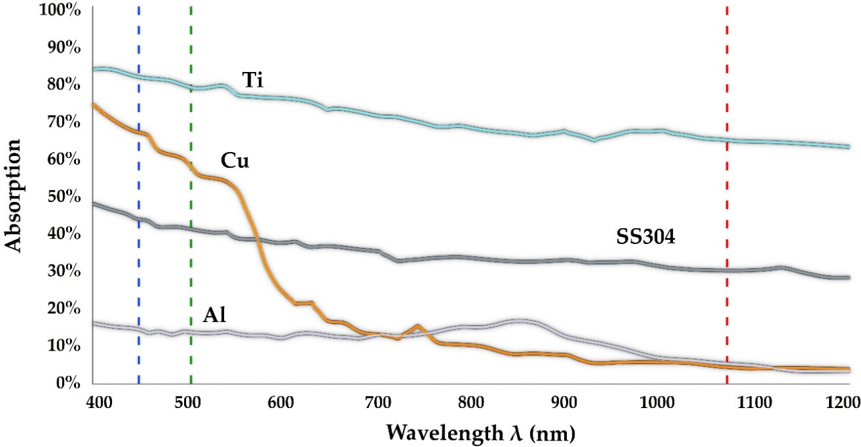
“A coating can also be applied to the powder before laser processing to reduce optical reflectivity [379].”
From A comprehensive review of lunar-based manufacturing and construction (2024) · cites this paper as [379]
Self-check
Percentages, sums and reported differences re-computed from the paper’s own numbers.
The self-check needs the paper’s full text.
Citations
Cites
Additive manufacturing of metallic components – Process, structure and properties
DebRoy, T., Wei, H. L., Zuback, J. S., Mukherjee, T., Elmer, J. W., Milewski, J. O., Beese, A. M., Wilson-Heid, A., De, A., & Zhang, W. (2018) · Progress in Materials Science · doi:10.1016/j.pmatsci.2017.10.001 · Cited by 8,805
Mechanical alloying and milling
Suryanarayana, C. (2001) · Progress in Materials Science · doi:10.1016/s0079-6425(99)00010-9 · Cited by 8,269
A study of the microstructural evolution during selective laser melting of Ti–6Al–4V
Thijs, L., Verhaeghe, F., Craeghs, T., Humbeeck, J. V., & Kruth, J. (2010) · Acta Materialia · doi:10.1016/j.actamat.2010.02.004 · Cited by 2,935
Consolidation phenomena in laser and powder-bed based layered manufacturing
Kruth, J.-P., Levy, G. N., Klocke, F., & Childs, T. H. C. (2007) · CIRP Annals · doi:10.1016/j.cirp.2007.10.004 · Cited by 1,445
Optical Properties of Ag and Cu
Ehrenreich, H., & Philipp, H. R. (1962) · Physical Review · doi:10.1103/physrev.128.1622 · Cited by 1,284
Electroless nickel, alloy, composite and nano coatings – A critical review
Sudagar, J., Lian, J., & Sha, W. (2013) · Journal of Alloys and Compounds · doi:10.1016/j.jallcom.2013.03.107 · Cited by 934
Prashanth, K. G., Kolla, S. S. V. K., & Eckert, J. (2017) · Materials · doi:10.3390/ma10060672 · Cited by 856
Mechanical Properties of AlSi10Mg Produced by Selective Laser Melting
Kempen, K., Thijs, L., Humbeeck, J. V., & Kruth, J. (2012) · Physics Procedia · doi:10.1016/j.phpro.2012.10.059 · Cited by 853
Recent development in aluminium for automotive applications
Hirsch, J. (2014) · Transactions of Nonferrous Metals Society of China · doi:10.1016/s1003-6326(14)63305-7 · Cited by 845
Vafadar, A., Guzzomi, F. G., Rassau, A., & Hayward, K. J. (2021) · Applied Sciences · doi:10.3390/app11031213 · Cited by 829
Research works printed but not linked: 1
- Tiberto, D., Klotz, U.E., and Held, F. (2021, September 14). Processability of Cu and Cu-Alloys with Laser Beam Melting: Influence of Powder Coating and Alloying Elements. Available online: https://www.fem-online.de/sites/default/files/pdf/Workshop%208.05.%20-%20fem%20presentation.pdf.
Cited by
Sorted by citations
Wilms, M. B., Rittinghaus, S., Goßling, M., & Gökce, B. (2022) · Progress in Materials Science · doi:10.1016/j.pmatsci.2022.101049 · Cited by 185
Recent advances in inoculation treatment for powder-based additive manufacturing of aluminium alloys
Tan, Q., & Zhang, M. (2024) · Materials Science and Engineering R Reports · doi:10.1016/j.mser.2024.100773 · Cited by 106
Sarkar, D., Kapil, A., & Sharma, A. (2024) · Additive manufacturing · doi:10.1016/j.addma.2024.104157 · Cited by 90
Capozzi, L. C., Sivo, A., & Bassini, E. (2022) · Journal of Materials Processing Technology · doi:10.1016/j.jmatprotec.2022.117706 · Cited by 59
A comprehensive review of lunar-based manufacturing and construction
Azami, M., Kazemi, Z., Moazen, S., Dubé, M., Potvin, M.-J., & Skonieczny, K. (2024) · Progress in Aerospace Sciences · doi:10.1016/j.paerosci.2024.101045 · Cited by 57
Song, K., Lin, Z., Fa, Y., Zhao, X., Zhu, Z., Wei, Y. S., Sun, Z., & Yu, X. (2023) · Metals · doi:10.3390/met13040764 · Cited by 39
Investigation of the Properties of 316L Stainless Steel after AM and Heat Treatment
Petroušek, P., Kvačkaj, T., Bidulská, J., Bidulský, R., Grande, M., Manfredi, D., Weiss, K., Kočiško, R., Lupták, M., & Pokorný, I. (2023) · Materials · doi:10.3390/ma16113935 · Cited by 30
Self-citationHan, G., Lee, H., Kang, J. M., Park, J., Lee, E. S., Lee, E. S., Park, S., Na, Y., Bang, S., Kim, N., et al. (2023) · Chemical Engineering Journal · doi:10.1016/j.cej.2023.147083 · Cited by 35
Zhang, P., Bi, Z., Yu, H., Wang, R., Sun, G., & Zhang, S. (2023) · Journal of Materials Research and Technology · doi:10.1016/j.jmrt.2023.08.173 · Cited by 30
Nabavi, S. F., & Garmestani, H. (2025) · Journal of Manufacturing Processes · doi:10.1016/j.jmapro.2025.06.078 · Cited by 19
Powder Bed Fusion of highly filigree copper features using a green laser
Horn, M., Schmitt, M., Schafnitzel, M., van Husen, A., Wagenblast, P., Auernhammer, S., Heyder, J., Hauck, C., Barz, J., Ott, M., et al. (2022) · Procedia CIRP · doi:10.1016/j.procir.2022.08.135 · Cited by 16
SIMULATION TOOL FOR MATERIAL BEHAVIOUR PREDICTION IN ADDITIVE MANUFACTURING
Kaščák, Ľ., Varga, J., Bidulská, J., Bidulský, R., & Grande, M. A. (2023) · Acta Metallurgica Slovaca · doi:10.36547/ams.29.2.1846 · Cited by 16
Self-citationTrinh, T. V., Nguyen, A. S., Pham, G. K., Seidel, C., Pham, A. H., & Phung, C. N. (2023) · Acta Metallurgica Slovaca · doi:10.36547/ams.29.2.1790 · Cited by 15
Simulation of 316L Stainless Steel Produced the Laser Powder Bed Fusion Process
Kaščák, Ľ., Varga, J., Bidulská, J., & Bidulský, R. (2023) · Materials · doi:10.3390/ma16247653 · Cited by 15
Molecular Dynamics Simulation of Fe-Based Metal Powder Oxidation during Laser Powder Bed Fusion
Wang, Y., & Zhou, X. (2022) · Materials · doi:10.3390/ma15186394 · Cited by 14
Aarab, M., Dorussen, B. J. A., Poelsma, S. S., & Remmers, J. J. C. (2024) · Granular Matter · doi:10.1007/s10035-024-01432-4 · Cited by 12
Baldi, N., Giorgetti, A., Palladino, M., Giovannetti, I., Arcidiacono, G., & Citti, P. (2023) · Metals · doi:10.3390/met13101792 · Cited by 11
Wadge, M. D., Lowther, M., Cooper, T. P., Reynolds, W. J., Speidel, A., Carter, L. N., Rabbitt, D., Kudrynskyi, Z. R., Felfel, R. M., Ahmed, I., et al. (2023) · Journal of Materials Processing Technology · doi:10.1016/j.jmatprotec.2023.117985 · Cited by 11
Brytan, Z., Dagnaw, M. J., Bidulská, J., Bidulský, R., & Muhamad, M. R. (2024) · Materials · doi:10.3390/ma17122807 · Cited by 10
Thangamani, G., Felicioni, S., Padovano, E., Biamino, S., Lombardi, M., Ugues, D., Fino, P., & Bondioli, F. (2024) · Metals · doi:10.3390/met14080897 · Cited by 10
ADDITIVE MANUFACTURING: A NEW CONCEPT FOR END USERS. THE CASE OF MAGNETIC MATERIALS
Schino, A. D., & Stornelli, G. (2022) · Acta Metallurgica Slovaca · doi:10.36547/ams.28.4.1648 · Cited by 10
Li, S., Pang, J., Han, W., Luo, L., Cheng, X., Zhao, Z., Lv, C., & Liu, J. (2024) · Materials · doi:10.3390/ma17071613 · Cited by 9
Achieving strong and ductile as-printed Ti-Cu alloys via tailoring eutectoid morphology
Wang, S. X., Li, S., Misra, R. D. K., Kondoh, K., Kariya, S., & Yang, Y. (2025) · Materials Research Letters · doi:10.1080/21663831.2025.2480728 · Cited by 9
Li, B., Zhang, S., Wang, S., Wang, L., He, Y., Cui, Y., Liu, D., & Wang, M. (2023) · Materials · doi:10.3390/ma16134827 · Cited by 9
Sharma, S., Thanumoorthy, R. S., Bontha, S., & Balan, A. S. S. (2024) · Journal of Manufacturing Processes · doi:10.1016/j.jmapro.2024.09.069 · Cited by 10
Lüddecke, A., Hantke, N., Zetzener, H., Sehrt, J. T., & Kwade, A. (2025) · Advanced Engineering Materials · doi:10.1002/adem.202402297 · Cited by 8
Lee, H.-J., Lordejani, A. A., van Goor, L., Jurov, A., Koutsioukis, A., Ruan, S., Santhosh, N. M., Zarei, F., Barreneche, C., Cvelbar, U., et al. (2025) · Renewable and Sustainable Energy Reviews · doi:10.1016/j.rser.2025.115700 · Cited by 9
Smart‐Alloying – Liquid in-situ re-alloying in additive manufacturing
Hesselmann, M., Fechte‐Heinen, R., Mädler, L., Steinbacher, M., & Toenjes, A. (2024) · Additive manufacturing · doi:10.1016/j.addma.2024.103988 · Cited by 7
Kim, H. C., Kim, J., Jeong, H.-I., Cho, Y. T., Salem, O., Jung, D. W., & Lee, C.-M. (2024) · Micromachines · doi:10.3390/mi15101196 · Cited by 7
Lupi, G., Mariotti, L., Mistrini, A., Larsson, J., Patriarca, L., & Casati, R. (2025) · Materials Characterization · doi:10.1016/j.matchar.2025.115372 · Cited by 6
Emerging Functional Metals in Additive Manufacturing
Moghimian, P., Poirié, T., Kroeger, J. H., Marion, F., & Larouche, F. (2023) · Advanced Engineering Materials · doi:10.1002/adem.202201800 · Cited by 6
EFFECT OF ULTRAFAST HEATING ON AISI 441 FERRITIC STAINLESS STEEL
Stornelli, G., Albini, L., Nunzio, P. E. D., Tiracorrendo, G., Rodríguez-Vargas, B. R., & Schino, A. D. (2023) · Acta Metallurgica Slovaca · doi:10.36547/ams.29.1.1713 · Cited by 6
Effect of Cu Content on the PBF-LB/M Processing of the Promising Al-Si-Cu-Mg Composition
Martucci, A., Bassini, E., & Lombardi, M. (2023) · Metals · doi:10.3390/met13071315 · Cited by 6
Luo, W., Fang, Z., Ma, C., Wu, M., & Zhuo, Z. (2023) · Advanced Engineering Materials · doi:10.1002/adem.202200846 · Cited by 5
EFFECT OF ULTRAFAST HEATING ON AISI 304 AUSTENITIC STAINLESS STEEL
Rodríguez-Vargas, B. R., Albini, L., Tiracorrendo, G., Massi, R., Stornelli, G., & Schino, A. D. (2023) · Acta Metallurgica Slovaca · doi:10.36547/ams.29.2.1833 · Cited by 5
Evaluation of Non-Planar Tool Interaction in Milling of Shaped Surfaces Using a Copy Milling Cutter
Varga, J., Kender, Š., Kaščák, Ľ., Rohaľ, V., & Spišák, E. (2023) · Applied Sciences · doi:10.3390/app14010285 · Cited by 5
Salvan, C., Vito, É. D., Briottet, L., & Baffie, T. (2022) · Powder Technology · doi:10.1016/j.powtec.2022.117931 · Cited by 5
Chakraborty, A., Martin, É., & Habibnejad-Korayem, M. (2024) · Powder Technology · doi:10.1016/j.powtec.2024.120559 · Cited by 4
Preparation and application of ultrafine-bubble water for metal matrix composite powders
Murata, N., Dong, M., Zhou, W., & Nomura, N. (2025) · Powder Technology · doi:10.1016/j.powtec.2025.120617 · Cited by 4
Case study of advanced processed OFHC copper by dry sliding wear test
Bidulský, R., Bidulská, J., Kvačkaj, T., & Grande, M. A. (2023) · Acta Metallurgica Slovaca · doi:10.36547/ams.29.1.1734 · Cited by 4
Self-citationAli, M., Tan, Y., Lin, F., Su, Z., Liao, W., & Wong, H. (2023) · The International Journal of Advanced Manufacturing Technology · doi:10.1007/s00170-023-12788-x · Cited by 4
Powder Bed Fusion Process – State of Art
Kannan, G. R., Sivakumar, M., Jagadeesh, B., & Balaji, N. S. (2024) · doi:10.1002/9781394238316.ch5 · Cited by 4
Li, M., Yang, D., Sun, J., Lv, K., Zhang, Y., Shen, H., Wang, Q., & Liu, C. (2025) · ACS Omega · doi:10.1021/acsomega.5c02959 · Cited by 3
Mariotti, L., Lupi, G., Pozzoli, A., Beretta, S., Madejski, B., Girolamo, D., Casati, R., & Patriarca, L. (2026) · International Journal of Fatigue · doi:10.1016/j.ijfatigue.2026.109566 · Cited by 3
Wang, Y., Han, C., Wang, M., Trofimov, V., Lin, D., Yang, Y., Chen, L., Chen, W., & Wang, D. (2026) · Virtual and Physical Prototyping · doi:10.1080/17452759.2026.2658944 · Cited by 3
Zhang, Y., Liu, Z., Jiang, D., Ye, S., Liu, T., & Zhou, R. (2024) · Journal of Materials Research and Technology · doi:10.1016/j.jmrt.2024.11.192 · Cited by 3
POTENTIAL OF GEOPOLYMER COATING FOR LIGHTWEIGHT AGGREGATE VIA MILLING AND DIPPING METHOD: A REVIEW
Shahedan, N. F., Abdullah, M. M. A. B., Aziz, I. H., Razak, R. A., Junaidi, S., Umniati, S., YAAKOB, M. A., & RUSLI, N. S. (2022) · European Journal of Materials Science and Engineering · doi:10.36868/ejmse.2022.07.02.094 · Cited by 3
Core–Shell Coating Applications: Current Status and Challenges in Mechanical Coating Efficiency
Omar, H. I., Krishnan, M. R., Alqahtani, B. H., Asthana, P., Bukhamseen, A. Y., & Alsharaeh, E. H. (2026) · Coatings · doi:10.3390/coatings16020174 · Cited by 2
Bakoutas, D. D. L., Zhang, K., Liu, T., Li, S., Xiong, Z., & Liao, W. (2024) · Ceramics International · doi:10.1016/j.ceramint.2024.04.219 · Cited by 2
3D Printed Drug-Eluting Bullets for Image-Guided Local Chemo-Photothermal TherapyPreprint
Han, G., Lee, H., Park, S., Kang, J. M., Park, J., Lee, E., Lee, E. S., Na, K., Park, W., & Jung, H. (2022) · SSRN Electronic Journal · doi:10.2139/ssrn.4171677 · Cited by 2
Lee, J., Kang, T., Gim, U., Kim, S., Jung, S., Han, J., & Lee, B. (2025) · Powder Metallurgy · doi:10.1177/00325899251345247 · Cited by 1
Kim, S., Park, S., Kim, Y., Kim, H. S., & Lee, K. (2025) · Intermetallics · doi:10.1016/j.intermet.2025.109083 · Cited by 1
Lupi, G., Mariotti, L., Lu, S., Xu, W., Patriarca, L., & Casati, R. (2025) · Materials Science and Engineering A · doi:10.1016/j.msea.2025.149500 · Cited by 1
Oyedeji, A. N. (2026) · Canadian Metallurgical Quarterly · doi:10.1080/00084433.2026.2646371 · Cited by 1
Abdullah, F. R., Mafri, T. A., & Shen, Y. (2026) · Metals · doi:10.3390/met16040415 · Cited by 1
Tripathy, D. B., Gupta, A., Pradhan, S., & Agarwal, P. (2026) · Inorganic Chemistry Communications · doi:10.1016/j.inoche.2026.116829 · Cited by 1
Zhetessova, G. S., Nikonova, T., Gierz, Ł. A., Zhunuspekov, D., Yurchenko, V., & Zharkevich, O. (2022) · Coatings · doi:10.3390/coatings12101514 · Cited by 1
Boillat-Newport, R., Isanaka, S. P., & Liou, F. (2023) · ASM International eBooks · doi:10.31399/asm.hb.v24a.a0006973 · Cited by 1
Rosito, M., Padovano, E., Felicioni, S., Vanzetti, M., Casati, R., Larsson, J., & Bondioli, F. (2025) · Journal of Materials Research and Technology · doi:10.1016/j.jmrt.2025.02.167 · Cited by 1
Stornelli, G., Gambelli, A. M., Schino, A. D., Zucca, G., & Rossi, F. (2022) · Acta Metallurgica Slovaca · doi:10.36547/ams.28.4.1632
Gandomdoust, A., Khorrami, M. S., Kashani-Bozorg, S. F., & Ghorbani, H. (2023) · Journal of Welding Science and Technology of Iran · doi:10.47176/jwsti.2023.04
Hu, Y., Li, H., Chen, H., Zhang, S., Wang, Z., & Lei, J. (2024) · Journal of Materials Research and Technology · doi:10.1016/j.jmrt.2024.09.116
Dobson, S., y Puente, A. E. P., & Steiner, M. A. (2026) · Rapid Prototyping Journal · doi:10.1108/rpj-07-2025-0349
Wang, Y., Deng, F., Yang, T., Hu, Y., Tian, Y., Tan, N., Lin, L., Li, Y., Tang, Y., Cheng, H., et al. (2026) · Journal of Materials Research and Technology · doi:10.1016/j.jmrt.2026.06.159
Hosseini, F., Asad, A., Li, H., & Yakout, M. (2026) · The International Journal of Advanced Manufacturing Technology · doi:10.1007/s00170-026-18539-y
Huo, P., Chen, D., Gao, J., & Li, Z. (2026) · Advanced Engineering Materials · doi:10.1002/adem.71293
The laser powder bed fusion of particle-reinforced aluminum alloy matrix composites
Zhang, Y., Li, X., & Wang, X. (2026) · International Materials Reviews · doi:10.1177/09506608261502610
Metadata
- Authors
- Bidulsky, R., Gobber, F. S., Bidulska, J., Ceroni, M., Kvackaj, T., & Grande, M. A.
- Affiliations
- Asian Innovation Hub, Budulov 174, 04501 Moldava nad Bodvou, Slovakia
- Politecnico di Torino (IT)
- EPMA PM R&D Centre, Faculty of Materials, Metallurgy and Recycling, Technical University of Kosice, Park Komenskeho 10, 04001 Kosice, Slovakia
- Venue
- Metals
- Publisher
- MDPI AG
- Published
- 2021-11-14
- Volume
- 11
- Issue
- 11
- Pages
- 1831
- ISSN
- 2075-4701 (ISSN-L)
- OpenAlex
- W3213282380
- Cited by
- 68
- References
- 154
- Citations by year
- 2026: 11 · 2025: 11 · 2024: 15 · 2023: 21 · 2022: 10
- FWCI
- 4.91
- Type
- journal article
- Language
- en
- Open access
- gold
- doi.org
- Licence
- Locations
- Metals (publishedVersion, cc-by)
- PORTO@Iris (submittedVersion, cc-by)
- DOAJ (DOAJ: Directory of Open Access Journals) (submittedVersion, cc-by-sa)
- Funders
- Vedecká Grantová Agentúra MŠVVaŠ SR a SAV (1/0599/18)
- Topics
- Physical Sciences › Engineering › Mechanical Engineering › Additive Manufacturing Materials and Processes
- Physical Sciences › Engineering › Mechanical Engineering › Powder Metallurgy Techniques and Materials
- Physical Sciences › Engineering › Mechanical Engineering › Surface Treatment and Coatings
- Keywords
- laser powder bed fusion, powder flowability, coating methods, density, additive manufacturing
About these checks
Registry, retraction, Cites and statistics results are computed, not judged, with one exception: a printed reference that no index lists is read once by a model before it counts as a citation error. Claims are extracted by a model and kept only when their quote appears verbatim in the text; each cited source is then checked, with a model’s help, for whether it says what the claim relies on. Those verdicts can be wrong — read the claim’s quote and the cited source before relying on one.
Statistics and arithmetic are recomputed, not judged.
Confidence bands are shown only for fields calibrated on our annotated test set. None is calibrated yet, so no band is shown.
What counts as a claim ›How we measure confidence ›How we check this ›
Are you an author, or do you see a problem with this page? Request a review
