

The DOI matches its Crossref record.
An Overview of Synthesis and Structural Regulation of Magnetic Nanomaterials Prepared by Chemical Coprecipitation
Abstract
Magnetic nanomaterials are widely used in biosynthesis, catalysis, as electronic and microwave-absorbing materials, and in environmental treatment because of their high specific surface area, strong magnetism, chemical stability, and good biocompatibility. The chemical coprecipitation method is widely used for the preparation of magnetic nanomaterials due to its simplicity, low cost, and easily-controlled operating conditions. The magnetic nanomaterials prepared by the chemical coprecipitation method are summarized according to the different compositions, including the basic preparation principles, and the factors affecting their morphology, size, and microstructure. The mechanisms of preparing magnetic nanomaterials by chemical precipitation and the process control factors are emphasized. Finally, the preparation of magnetic nanomaterials by chemical coprecipitation is summarized and prospected.
Overview
The claims and statistics of this paper haven’t been checked yet.
Run the check — free, no account needed. It reads the open-access text and checks the sources it cites.
Integrity signals
Registry
Cites
Statistics
Figures
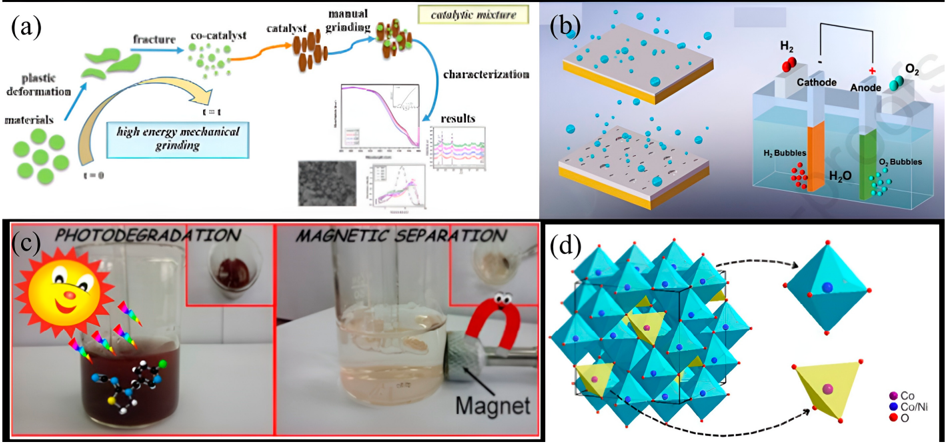
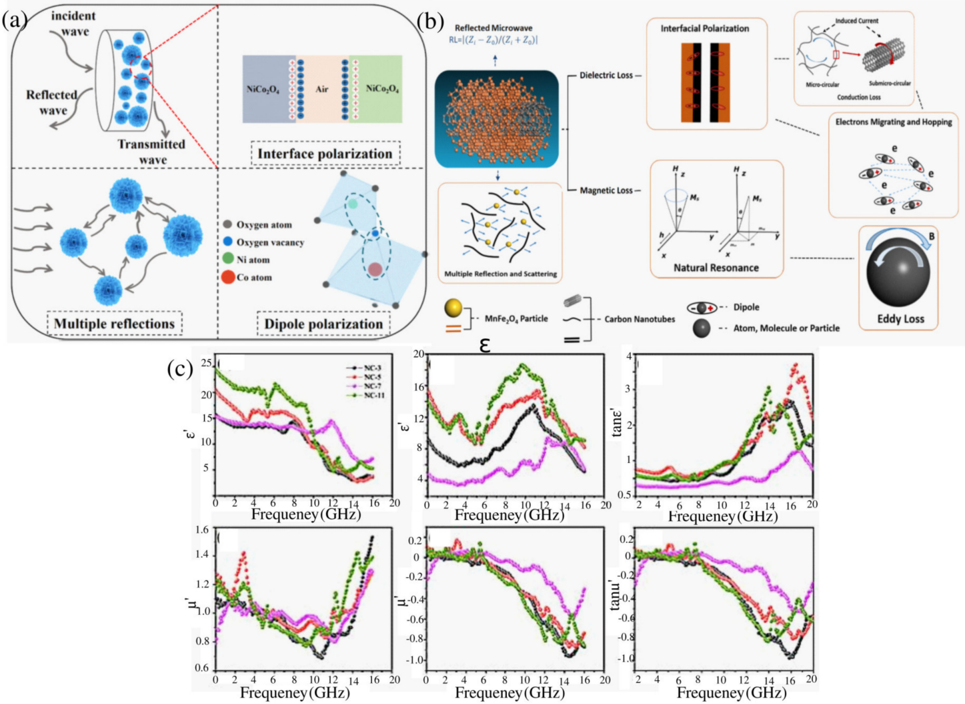
![Figure 6 The preparation process and mechanism of magnetic absorbing materials [82 Reprinted from Journal of Alloys and Compounds, 5416500493658 [78], Copyright (2022), mission from Elsevier. ( c ) Reprinted from Chemical Engineering Journal, 5416510964395 yright (2022), with permission from Elsevier. Figure 6. The preparation process and mechanism of magnetic absorbing materials [82,83]. ( a , b ) Reprinted from Journal of Alloys and Compounds, 5416500493658 [78], Copyright (2022), with permission from Elsevier. ( c ) Reprinted from Chemical Engineering Journal, 5416510964395 [77], Copyright (2022), with permission from Elsevier.](/paper-figures/493e32b3dd43472b841674dd67dbbd32/an-overview-of-synthesis-and-structural-regulation-of-magnetic-nanomaterials-figure-6.png)
Verification
Claims the paper makes
The claims and statistics of this paper haven’t been checked yet.
Run the check — free, no account needed. It reads the open-access text and checks the sources it cites.
Claims other papers make about this one
Each is checked against this paper’s own text: does it say what the citing paper says it does?
In the citing paper
“When it comes to synthesis, parameters, such as temperature, pH, precursor initial concentration, and response time, can be good for controlling these structural properties. Techniques, such as coprecipitation, thermal decomposition, and hydrothermal synthesis, are widely used to achieve the desired structural and magnetic features [67].”
From Advances in green-synthesized magnetic nanoparticles for targeted cancer therapy: mechanisms, applications, and future perspectives (2026) · cites this paper as [67]
Self-check
Percentages, sums and reported differences re-computed from the paper’s own numbers.
The self-check needs the paper’s full text.
Citations
Cites
No references could be resolved yet.
Research works printed but not linked: 100
- Medina, 2017, Preparation and Characterization of a Tumor-Targeting Dual-Image System Based on Iron Oxide Nanoparticles Functionalized with Folic Acid and Rhodamine, J. Nanomater., 2017, 5184167
- Kooti, 2019, Synthesis of a novel magnetic nanocatalyst based on rhodium complex for transfer hydrogenation of ketone, Appl. Organomet. Chem., 33, e4886, 10.1002/aoc.4886 · DOI
- Zhao, 2018, Core-shell structure of Fe3O4@MTX-LDH/Au NPs for cancer therapy, Mater Sci. Eng. C Mater. Biol. Appl., 89, 422, 10.1016/j.msec.2018.04.024 · DOI
- Jesus, 2020, Synthesis and magnetic interaction on concentrated Fe3O4 nanoparticles obtained by the co-precipitation and hydrothermal chemical methods, Ceram. Int., 46, 11149, 10.1016/j.ceramint.2020.01.135 · DOI
- Jiang, 2018, Preparation of novel magnetic nano-composite microgel adsorbent and its application, Ind. Water Treat., 38, 04422
- Lei, 2018, A robust, magnetic, and self-accelerated electrochemiluminescent nanosensor for ultrasensitive detection of copper ion, Biosens. Bioelectron., 109, 109, 10.1016/j.bios.2018.03.013 · DOI
- Dehkordi, 2021, Catalytic study of the copper-based magnetic nanocatalyst on the aerobic oxidation of alcohols in water, Res. Chem. Intermed., 47, 2527, 10.1007/s11164-021-04422-w · DOI
- Najafinejad, 2019, Biosynthesis of Au nanoparticles supported on Fe3O4@polyaniline as a heterogeneous and reusable magnetic nanocatalyst for reduction of the azo dyes at ambient temperature, Mater. Sci. Eng. C Mater. Biol. Appl., 98, 19, 10.1016/j.msec.2018.12.098 · DOI
- Amir, 2015, Synthesis and application of magnetically recyclable nanocatalyst Fe3O4@NiCo@Cu in the reduction of azo dyes, Chin. J. Catal., 36, 1280, 10.1016/S1872-2067(15)60879-8 · DOI
- Gil, 2015, Magnetically labeled cells with surface-modified Fe3O4 spherical and rod-shaped magnetic nanoparticles for tissue engineering applications, Adv. Healthc. Mater., 4, 883, 10.1002/adhm.201400611 · DOI
- Zhang, 2015, Novel monolayer pyrite FeS2 with atomic-thickness for magnetic devices, Comput. Mater. Sci., 101, 255, 10.1016/j.commatsci.2015.01.035 · DOI
- Li, 2020, Controllable synthesis and magnetic regulation of two-dimensional magnetic nanomaterials, Prog. Chem., 32, 1437
- Ye, 2014, Preparation and Application of Fe3O4 Nanomaterials, Chin. Ceram., 50, 12
- Shan, 2016, Progress of the Research on Controllable Synthesis and Mesoscopic Properties for Magnetic Nanomaterials, Mater. China, 35, 292
- Kilanski, 2021, The influence of the starch coating on the magnetic properties of nanosized cobalt ferrites obtained by different synthetic methods, Mater. Res. Bull., 134, 111117, 10.1016/j.materresbull.2020.111117 · DOI
- Shao, 2019, Effect of protamine on Fe3O4@CS@GFTN composite magnetic nanoparticles, Funct. Mater. Lett., 13, 2050001, 10.1142/S1793604720500010 · DOI
- Kahya, 2021, Dielectric and magnetic properties of CuFe2O4/CuO nanocomposites, Ferroelectrics, 571, 183, 10.1080/00150193.2020.1853752 · DOI
- Zhang, Y.L. (2009). Porous Fibrous Fe-Ni Alloy Powders Were Prepared by Coordination Coprecipitation Thermal Decomposition Reduction Method. [Ph.D. Thesis, Central South University].
- Hashimoto, 2022, Effect of heating conditions on the magnetic properties of micron-sized carboxyl modified-magnetite particles synthesized by a spray pyrolysis and heating process, Adv. Powder Technol., 33, 103412, 10.1016/j.apt.2021.103412 · DOI
- Sidhureddy, 2019, Synthesis and Electrochemical Study of Mesoporous Nickel-Cobalt Oxides for Efficient Oxygen Reduction, ACS Appl. Mater. Interfaces, 11, 18295, 10.1021/acsami.8b22351 · DOI
- Liu, 2012, Research Progress of Long Chain Conjugated Schiff Base Absorbing Materials, Mater. Guide A Over-View, 26, 7
- Tyagi, 2018, Synthesis and characterization of RADAR absorbing BaFe12O19/NiFe2O4 magnetic nano-composite, Integr. Ferroelectr., 186, 25, 10.1080/10584587.2017.1369319 · DOI
- Hu, 2019, Preparation of Fe3O4 nanoparticles by chemical coprecipitation method and its application in magnetic particle detection, Spec. Equip. Saf. Technol., 3, 2
- Li, 2017, Fe3O4@PSC nanoparticle clusters with enhanced magnetic properties prepared by alternating-current magnetic field assisted co-precipitation, Colloids Surf. A Physicochem. Eng. Asp., 520, 348, 10.1016/j.colsurfa.2017.01.073 · DOI
- Zhan, H., Bian, Y.H., and Yuan, Q. (2018). Preparation and Potential Applications of Super Paramagnetic Nano-Fe3O4. Processes, 6. · DOI
- Ignatovich, Z., Novik, K., Abakshonok, A., Koroleva, E., Beklemisheva, A., Panina, L., Kaniukov, E., Anisovich, M., and Shumskaya, A. (2021). One-Step Synthesis of Magnetic Nanocomposite with Embedded Biologically Active Substance. Molecules, 26. · DOI
- Egizbek, 2020, Stability and cytotoxicity study of NiFe2O4 nanocomposites synthesized by co-precipitation and subsequent thermal annealing, Ceram. Int., 46, 16548, 10.1016/j.ceramint.2020.03.222 · DOI
- Xiao, 2020, Iron oxide magnetic nanoparticles exhibiting zymolyase-like lytic activity, Chem. Eng. J. C, 394, 125000
- Funnell, 2019, Magnetic Composite Biomaterials for Neural Regeneration, Front. Bioeng. Biotechnol., 7, 179, 10.3389/fbioe.2019.00179 · DOI
- Mohapatra, 2018, Carboxymethyl Assam Bora rice starch coated SPIONs: Synthesis, characterization and in vitro localization in a micro capillary for simulating a targeted drug delivery system, Int. J. Biomacromol., 115, 920, 10.1016/j.ijbiomac.2018.04.152 · DOI
- Forouzandehdel, 2020, Synthesis of a novel magnetic starch-alginic acid-based biomaterial for drug delivery, Carbohydr. Res., 487, 107889, 10.1016/j.carres.2019.107889 · DOI
- Zheng, 2022, A TMPS-designed personalized mandibular scaffolds with optimized SLA parameters and mechanical properties, Front. Mater., 9, 966031, 10.3389/fmats.2022.966031 · DOI
- Chen, 2019, Modified core-shell magnetic mesoporous zirconia nanoparticles formed through a facile “outside-to-inside” way for CT/MRI dual-modal imaging and magnetic targeting cancer chemotherapy, RSC Adv., 9, 13220, 10.1039/C9RA01063G · DOI
- Zhou, 2008, Preparation and characterization of interfer-on-loaded magnetic biodegradable microspheres, J. Biomed. Mater. Res. B Appl. Biomater., 87, 189, 10.1002/jbm.b.31091 · DOI
- Mabrouk, 2020, Multifunctional magnetite nanoparticles for drug delivery: Preparation, characterization, antibacterial properties and drug release kinetics, Int. J. Pharm., 587, 119658, 10.1016/j.ijpharm.2020.119658 · DOI
- Schwaminger, 2017, Peptide binding to metal oxide nanoparticles, Faraday Discuss, 204, 233, 10.1039/C7FD00105C · DOI
- Xiao, 2019, beta-Agarase immobilized on tannic acid-modified Fe3O4 nanoparticles for efficient preparation of bioactive neoagaro-oligosaccharide, Food Chem., 272, 586, 10.1016/j.foodchem.2018.08.017 · DOI
- Huynh, 2020, Synthetic natural gas production from CO2 and renewable H2: Towards large-scale production of Ni–Fe alloy catalysts for commercialization, J. Clean. Prod., 264, 121720, 10.1016/j.jclepro.2020.121720 · DOI
- Azancot, 2019, Influence of the preparation method in the met-al-support interaction and reducibility of Ni-Mg-Al based catalysts for methane steam reforming, Int. J. Hydrogen Energy, 44, 19827, 10.1016/j.ijhydene.2019.05.167 · DOI
- Zheng, 2019, A charcoal-shaped catalyst NiFe2O4/Fe2O3 in electro-Fenton: High activity, wide pH range and catalytic mechanism, Environ. Technol., 2456, 1
- Cui, 2019, Effect of preparation method on the catalytic performance of formaldehyde oxidation over octahedral Fe3O4 microcrystals supported Pt catalysts, J. Dispers. Sci. Technol., 41, 1831, 10.1080/01932691.2019.1637752 · DOI
- 2019, Novel WO3/Fe3O4 magnetic photocatalysts: Preparation, characterization and thiacloprid photodegradation, J. Ind. Eng. Chem., 70, 264, 10.1016/j.jiec.2018.10.025 · DOI
- Zheng, 2021, Anchoring Active Sites by Pt2FeNi Alloy Nanoparticles on NiFe Layered Double Hydroxides for Efficient Electrocatalytic Oxygen Evolution Reaction, Energy Environ. Mater., 5, 270, 10.1002/eem2.12164 · DOI
- Wu, 2020, A Flower-cluster Heterogenous Structure Assembled by Ultrathin NiCo/NiCoOx-SiO2 Nanobelts with Stable Catalytic Performance, Colloids Surf. A Physicochem. Eng. Asp., 610, 125590, 10.1016/j.colsurfa.2020.125590 · DOI
- Horoz, 2017, Photocatalytic degradation of methylene blue with Co alloyed CdZnS nanoparticles, J. Mater. Sci. Mater. Electron., 29, 1004, 10.1007/s10854-017-7999-7 · DOI
- Wang, 2018, Growth process and enhanced photocatalytic performance of CuBi2O4 hierarchical microcuboids decorated with Au-Ag alloy nanoparticles, J. Mater. Sci. Mater. Electron., 29, 1304, 10.1007/s10854-017-8036-6 · DOI
- Wang, 2021, Fabrication of porous Ni-Co catalytic electrode with high performance in hydrogen evolution reaction, Appl. Surf. Sci., 539, 148045, 10.1016/j.apsusc.2020.148045 · DOI
- Wen, Y., Wei, Z., Ma, C., Xing, X., Li, Z., and Luo, D. (2019). MXene Boosted CoNi-ZIF-67 as Highly Efficient Electrocatalysts for Oxygen Evolution. Nanomaterials, 9. · DOI
- Zheng, 2017, Seawater splitting for high-efficiency hydrogen evolution by alloyed PtNix electrocatalysts, Appl. Surf. Sci., 413, 360, 10.1016/j.apsusc.2017.03.285 · DOI
- Atacan, 2018, Role of Ag3PO4 and Fe3O4 on the photocatalytic performance of magnetic Ag3PO4/ZnO/Fe3O4 nanocomposite under visible light irradiation, Sol. Energy, 166, 308, 10.1016/j.solener.2018.03.045 · DOI
- Mousavi, 2020, Dry reforming of methane by La0.5Sr0.5NiO3 perovskite oxides: Influence of preparation method on performance and structural features of the catalysts, J. Chem. Technol. Biotechnol., 95, 2911, 10.1002/jctb.6451 · DOI
- 2020, Synthesis and characterization of BaFe12O19-WC catalysts prepared by mechanical milling, Fuel, 280, 118608, 10.1016/j.fuel.2020.118608 · DOI
- Marsooli, M.A., Fasihi-Ramandi, M., Adib, K., Pourmasoud, S., Ahmadi, F., Ganjali, M.R., Sobhani Nasab, A., Nasrabadi, M.R., and Plonska-Brzezinska, M.E. (2019). Preparation and Characterization of Magnetic Fe3O4/CdWO4 and Fe3O4/CdWO4/PrVO4 Nanoparticles and Investigation of Their Photocatalytic and Anticancer Properties on PANC1 Cells. Materials, 12. · DOI
- Fang, 2020, NiCo2O4 nanoparticles: An efficient and magnetic catalyst for Knoevenagel condensation, J. Zhejiang Univ.-Sci. A, 21, 74, 10.1631/jzus.A1900535 · DOI
- Wang, 2020, NiCo2O4@Ni2P nanorods grown on nickel nanorod arrays as a bifunctional catalyst for efficient overall water splitting, Mater. Today Energy, 17, 100490, 10.1016/j.mtener.2020.100490 · DOI
- Yuan, 2020, Fe/Co-based Bimetallic MOF-derived Co3Fe7@NCNTFs Bifunctional Electrocatalyst for High-Efficiency Overall Water Splitting, Chem. Asian J., 15, 1728, 10.1002/asia.202000321 · DOI
- Ahmadian, 2020, NiCoO2-carbon composite as an efficient bifunctional catalyst for electrochemical water splitting, Ionics, 26, 3959, 10.1007/s11581-020-03568-8 · DOI
- Yadav, 2021, Highly efficient porous morphology of cobalt molybdenum sulfide for overall water splitting reaction, Surf. Interfaces, 23, 101020, 10.1016/j.surfin.2021.101020 · DOI
- Zhang, 2019, Spherical cactus-like composite based on transition metals Ni, Co and Mn with 1D/2D bonding heterostructure for electrocatalytic overall water splitting, Electrochim. Acta, 323, 134845, 10.1016/j.electacta.2019.134845 · DOI
- Meng, 2019, A facile coprecipitation method to synthesize FexOy/Fe decorated graphite sheets with enhanced microwave absorption properties, Nanotechnology, 30, 185704, 10.1088/1361-6528/aaff07 · DOI
- Pang, 2019, MnFe2O4-coated carbon nanotubes with enhanced microwave absorption: Effect of CNT content and hydrothermal reaction time, Diam. Relat. Mater., 96, 31, 10.1016/j.diamond.2019.04.027 · DOI
- Zhao, 2018, Coaxial double-layer-coated multiwalled carbon nanotubes toward microwave absorption, Mater. Lett., 233, 203, 10.1016/j.matlet.2018.09.010 · DOI
- Chen, 2015, Research progress on microwave absorbing mechanism and improving microwave absorbing properties of ferrite magnetic materials, Prog. Chem. Eng., 34, 3965
- Ji, 2021, Research Progress of Two Dimensional Carbide Ti3C2Tx/Magnetic Composite Wave Absorbing Materials, Silk, 58, 33
- Cui, 2005, Research Development of Electromagnetic Interference Shielding and Wave-Absorbing Materials, Electron. Compon. Mater., 1, 57
- Ye, 2022, Preparation and characterization of ferrite/carbon aerogel composites for electromagnetic wave absorbing materials, J. Alloys Compd., 893, 162396, 10.1016/j.jallcom.2021.162396 · DOI
- Mu, 2021, Regulating pH value synthesis of NiCo2O4 with excellent electromagnetic wave absorbing performance, J. Mater. Sci. Mater. Electron., 32, 26059, 10.1007/s10854-021-06055-6 · DOI
- Zhao, 2020, Optimization of electromagnetic wave absorbing properties for Ni-Co-P/GNs by controlling the content ratio of Ni to Co, J. Magn. Magn. Mater., 495, 165753, 10.1016/j.jmmm.2019.165753 · DOI
- Luo, 2018, Graphene Shield by SiBCN Ceramic: A Promising High-Temperature Electromagnetic Wave-Absorbing Material with Oxidation Resistance, ACS Appl. Mater. Interfaces, 10, 39307, 10.1021/acsami.8b15365 · DOI
- Yan, 2014, Influence of Ni/Co molar ratio on electromagnetic properties and microwave absorption performances for Ni/Co paraffin composites, J. Magn. Magn. Mater., 358–359, 170, 10.1016/j.jmmm.2014.01.058 · DOI
- Chen, H.Q. (2015). Design and Synthesis of Nano-Metal Cobalt-Based/Carbon Composite Absorbing Materials. [Master’s Thesis, Harbin Institute of Technology].
- Feng, 2020, Dielectric Properties and Electromagnetic Wave Absorbing Performance of Single-Source-Precursor Synthesized Mo4.8Si3C0.6/SiC/C free Nanocomposites with an In Situ Formed Nowotny Phase, ACS Appl. Mater. Interfaces, 12, 16912, 10.1021/acsami.0c01277 · DOI
- Ding, 2016, Electromagnetic wave absorbing property of two-layer composite material, Ordnance Mater. Sci. Eng., 39, 88
- Wang, 2020, Multilayer-structured Ni-Co-Fe-P/polyaniline/polyimide composite fabric for robust electromagnetic shielding with low reflection characteristic, Chem. Eng. J., 380, 122553, 10.1016/j.cej.2019.122553 · DOI
- Zhang, 2019, Lightweight and flexible Ni-Co alloy nanoparticle-coated electrospun polymer nanofiber hybrid membranes for high-performance electromagnetic interference shielding, J. Alloys Compd., 784, 244, 10.1016/j.jallcom.2018.12.341 · DOI
- Gurevich, 2016, Laser generation and electromagnetic detection of normal acoustic waves in ferromagnetic metals, Tech. Phys., 61, 432, 10.1134/S1063784216030099 · DOI
- Huang, 2015, Preparation and Study of Electromagnetic Interference Shielding Materials Comprised of Ni-Co Coated on Web-Like Biocarbon Nanofibers via Electroless Deposition, J. Nanomater., 2015, 320306, 10.1155/2015/320306 · DOI
- Ding, 2018, Facile hydrothermal synthesis of ternary Ni-Co-Se/carbon nanotube nanocomposites as advanced electrodes for lithium storage, RSC Adv., 8, 28710, 10.1039/C8RA05142A · DOI
- Suslonov, 2017, Synthesis of bimetallic nanoparticles based on cobalt and nickel. Effects of their composition and structure on catalytic and magnetic properties, Russ. J. Gen. Chem., 87, 1093, 10.1134/S1070363217050334 · DOI
- Guo, 2019, Preparation and Electrical Properties of Antimony-Doped Tin Oxide Nanoparticles by Two Various Modified Coprecipitation Methods, Surf. Rev. Lett., 27, 1950176, 10.1142/S0218625X19501762 · DOI
- Li, 2019, MOF-derived hollow cage Ni-Co mixed oxide/CNTs nanocomposites with enhanced electrochemical performance for lithium-sulfur batteries, Ionics, 25, 4037, 10.1007/s11581-019-02989-4 · DOI
- Dong, 2019, Apparent activation energy of multicomponent transition metal oxalates to probe synthesis of battery precursor materials, Powder Technol., 354, 158, 10.1016/j.powtec.2019.05.082 · DOI
- Zhao, 2012, Co-based anode materials for alkaline rechargeable Ni/Co batteries: A review, Mater. J. Chem., 22, 277, 10.1039/C1JM13424H · DOI
- Couto, 2007, Nickel nanoparticles obtained by a modified polyol process: Synthesis, characterization, and magnetic properties, J. Colloid Interface Sci., 311, 461, 10.1016/j.jcis.2007.03.045 · DOI
- Hu, 2017, Magnetic properties of the nanoscale coral-shaped Ni-Co alloy powder with different Co contents, J. Alloys Compd., 727, 332, 10.1016/j.jallcom.2017.08.134 · DOI
- Shao, 2018, Enhanced electromechanical response and piezoelectric properties in lead-free erbium-modified Ba(Zr,Ti)O3 piezoceramics, Ceram. Int., 44, 9915, 10.1016/j.ceramint.2018.03.015 · DOI
- Ren, 2017, Progress in preparation and application of common magnetic nano-adsorbent materials, Shandong Jianzhu Univ., 32, 7
- Ma, 2016, Research progress of nano-adsorption materials in the treatment of emerging pollutants, Ind. Water Wastewater, 47, 7
- Nithya, 2021, Magnetic materials and magnetic separation of dyes from aqueous solutions: A review, Environ. Chem. Lett., 19, 1275, 10.1007/s10311-020-01149-9 · DOI
- Govan, J. (2020). Recent Advances in Magnetic Nanoparticles and Nanocomposites for the Remediation of Water Resources. Magn. Chem., 6. · DOI
- Wang, 2017, Core-shell amorphous metal oxides/metallic glassy particles for absorbing application of toxic heavy metal and electromagnetic wave, Scr. Mater., 132, 30, 10.1016/j.scriptamat.2017.01.027 · DOI
- Mendil, 2021, Zn-Fe Layered Double Hydroxides Synthesized by Three (03) Methods of Coprecipitation: Application to the Removal of Cochineal Red Dye from Aqueous Solution, Fibers Polym., 22, 3358, 10.1007/s12221-021-0988-8 · DOI
- Zhang, 2019, Sorptive removal of phenanthrene from water by magnetic carbon nanomaterials, J. Mol. Liq., 293, 111540, 10.1016/j.molliq.2019.111540 · DOI
- Wang, 2020, Insight into the effect of structural characteristics of magnetic ZrO2/Fe3O4 nano-composites on phosphate removal in water, Mater. Chem. Phys., 249, 123024, 10.1016/j.matchemphys.2020.123024 · DOI
- Guan, 2019, Silica Removal Using Magnetic Iron-Aluminum Hybrid Nanomaterials: Measurements, Adsorption Mechanisms, and Implications for Silica Scaling in Reverse Osmosis, Environ. Sci. Technol., 53, 13302, 10.1021/acs.est.9b02883 · DOI
- Ananya, R., Balakrishna, J., and Richard, D. (2021). Design of soft magnetic Materials. arXiv.
- Liu, W.K. (2018). Preparation of Nano-Adsorption Materials and Study on the Removal Mechanism of Hexavalent Chromium Ion in Water. [Master’s Thesis, Anhui University of Science and Technology].
- He, J.Y. (2018). Design, Preparation and Removal Mechanism of Hydroxylapatite Nanomaterials. [Ph.D. Thesis, University of Science and Technology of China].
- Wen, T. (2016). Study on the Removal of Pollutants in Water by Nano-Adsorption Materials and Its Mechanism. [Ph.D. Thesis, University of the Chinese Academy of Sciences].
- Plastiras, O.E., Deliyanni, E., and Samanidou, V. (2021). Applications of Graphene-Based Nanomaterials in Environmental Analysis. Appl. Sci., 11. · DOI
Cited by
Sorted by citations
El-khawaga, A. M., Youssef, O. I., El-dydamoni, O. A., Ragab, W. M., & Mohammed, R. A. E. (2026) · European Journal of Medical Research · doi:10.1186/s40001-025-03804-9 · Cited by 14
Metadata
- Authors
- Li, Z., Sun, Y., Ge, S., Zhu, F., Yin, F., Gu, L., Yang, F., Hu, P., Chen, G., Wang, K., & Volinsky, A. A.
- Venue
- Metals
- Publisher
- MDPI AG
- Published
- 2023-01-11
- Volume
- 13
- Issue
- 1
- Pages
- 152
- ISSN
- 2075-4701
- Cited by
- 60
- References
- 0
- Language
- en
- Funders
- State Key Laboratory of Nickel and Cobalt Resources Comprehensive Utilization (GZSYS-KY-2020-017, 2022TD-30, 171101)
- Scientific and Technological Innovation Team Project of Shaanxi Innovation Capability Support Plan, China (GZSYS-KY-2020-017, 2022TD-30, 171101)
- Fok Ying Tung Education Foundation (GZSYS-KY-2020-017, 2022TD-30, 171101)
- Youth Innovation Team of Shaanxi Universities (GZSYS-KY-2020-017, 2022TD-30, 171101)
- Top young talents project of “Special support program for high-level talents” in the Shaanxi Province (GZSYS-KY-2020-017, 2022TD-30, 171101)
About these checks
Registry, retraction, Cites and statistics results are computed, not judged, with one exception: a printed reference that no index lists is read once by a model before it counts as a citation error. Claims are extracted by a model and kept only when their quote appears verbatim in the text; each cited source is then checked, with a model’s help, for whether it says what the claim relies on. Those verdicts can be wrong — read the claim’s quote and the cited source before relying on one.
Statistics and arithmetic are recomputed, not judged.
Confidence bands are shown only for fields calibrated on our annotated test set. None is calibrated yet, so no band is shown.
What counts as a claim ›How we measure confidence ›How we check this ›
Are you an author, or do you see a problem with this page? Request a review
