

The DOI matches its Crossref record.
Identification and Characterization of Marine Microorganisms by Tandem Mass Spectrometry Proteotyping
Abstract
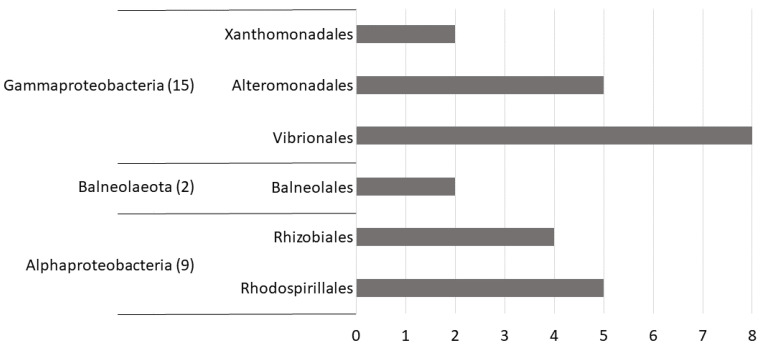
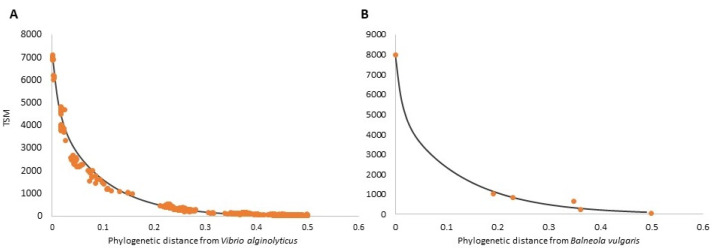
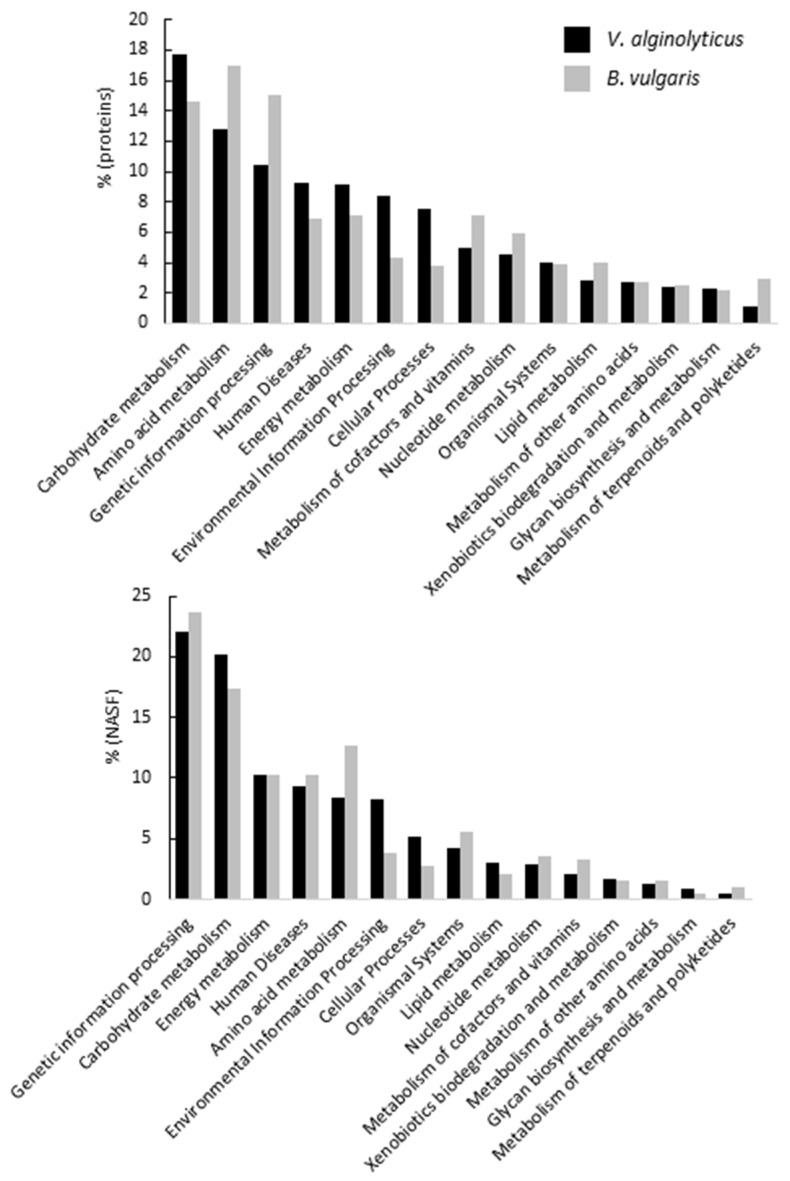
The vast majority of marine microorganisms and their functions are yet to be explored. The considerable diversity they encompass is an endless source of knowledge and wealth that can be valued on an industrial scale, emphasizing the need to develop rapid and efficient identification and characterization techniques. In this study, we identified 26 microbial isolates from coastal water of the NW Mediterranean Sea, using phylopeptidomics, a cutting-edge tandem mass spectrometry proteotyping technique. Taxonomical identification at the species level was successfully conducted for all isolates. The presence of strains belonging to the newly described Balneolaeota phylum, yet uncharacterized at the proteomics scale, was noted. The very first proteomics-based investigation of a representative of the Balneolaeota phylum, Balneola vulgaris, is proposed, demonstrating the use of our proteotyping workflow for the rapid identification and in-depth molecular characterization, in a single MS/MS analytical run. Tandem mass spectrometry proteotyping is a valuable asset for culturomic programs as the methodology is able to quickly classify the most atypical isolates.
Overview
The claims and statistics of this paper haven’t been checked yet.
Run the check — free, no account needed. It reads the open-access text and checks the sources it cites.
Integrity signals
Registry
Cites
Statistics
Figures
Verification
Claims the paper makes
The claims and statistics of this paper haven’t been checked yet.
Run the check — free, no account needed. It reads the open-access text and checks the sources it cites.
Claims other papers make about this one
Each is checked against this paper’s own text: does it say what the citing paper says it does?
The source backs part of the claim, not all of it — or backs it for a different population, condition or comparison.
In the citing paper
“Proteotyping of organisms based on tandem mass spectrometry data has been successfully used to identify bacteria [6, 7], and more complex medical microbiota [8, 9] or environmental microbiota [10].”
From Metaproteomic analysis of King Ghezo tomb wall (Abomey, Benin) confirms 19th century voodoo sacrifices (2024) · cites this paper as [7]
Experimental — accuracy not yet measured
Self-check
Percentages, sums and reported differences re-computed from the paper’s own numbers.
The self-check needs the paper’s full text.
Citations
Cites
No references could be resolved yet.
Research works printed but not linked: 39
- Cotner, 2002, Small players, large role: Microbial influence on biogeochemical processes in pelagic aquatic ecosystems, Ecosystems, 5, 105, 10.1007/s10021-001-0059-3 · DOI
- Sousoni, 2017, Nutrient recycling facilitates long-term stability of marine microbial phototroph-heterotroph interactions, Nat. Microbiol., 2, 17100, 10.1038/nmicrobiol.2017.100 · DOI
- De, 2008, Detoxification of toxic heavy metals by marine bacteria highly resistant to mercury, Mar. Biotechnol., 10, 471, 10.1007/s10126-008-9083-z · DOI
- Fernandez, 2011, Proteomic insights into the lifestyle of an environmentally relevant marine bacterium, ISME J., 6, 124
- Lozano, 2021, Unraveling the molecular effects of oxybenzone on the proteome of an environmentally relevant marine bacterium, Sci. Total Environ., 793, 148431, 10.1016/j.scitotenv.2021.148431 · DOI
- Hashemi, 2019, Proteomic analysis of resistance of gram-negative bacteria to chlorhexidine and impacts on susceptibility to colistin, antimicrobial peptides, and ceragenins, Front. Microbiol., 10, 210, 10.3389/fmicb.2019.00210 · DOI
- Arntzen, 2021, The Metaproteomics Initiative: A coordinated approach for propelling the functional characterization of microbiomes, Microbiome, 9, 243, 10.1186/s40168-021-01176-w · DOI · Paper page
- Gouveia, 2020, Quick microbial molecular phenotyping by differential shotgun proteomics, Environ. Microbiol., 22, 2996, 10.1111/1462-2920.14975 · DOI
- Hartmann, 2014, Proteomics meets blue biotechnology: A wealth of novelties and opportunities, Mar. Genom., 17, 35, 10.1016/j.margen.2014.04.003 · DOI
- Kuhring, 2020, TaxIt: An Iterative Computational Pipeline for Untargeted Strain-Level Identification Using MS/MS Spectra from Pathogenic Single-Organism Samples, J. Proteome Res., 19, 2501, 10.1021/acs.jproteome.9b00714 · DOI
- Boulund, 2017, Typing and characterization of bacteria using bottom-up tandem mass spectrometry proteomics, Mol. Cell. Proteom., 16, 1052, 10.1074/mcp.M116.061721 · DOI
- Alves, 2018, Rapid Classification and Identification of Multiple Microorganisms with Accurate Statistical Significance via High-Resolution Tandem Mass Spectrometry, J. Am. Soc. Mass Spectrom., 29, 1721, 10.1007/s13361-018-1986-y · DOI
- Hayoun, 2020, High-throughput proteotyping of bacterial isolates by double barrel chromatography-tandem mass spectrometry based on microplate paramagnetic beads and phylopeptidomics, J. Proteom., 226, 103887, 10.1016/j.jprot.2020.103887 · DOI · Paper page
- Pible, 2020, Estimating relative biomasses of organisms in microbiota using “phylopeptidomics”, Microbiome, 8, 30, 10.1186/s40168-020-00797-x · DOI
- Hayoun, K., Pible, O., Petit, P., Allain, F., Jouffret, V., Culotta, K., Rivasseau, C., Armengaud, J., and Alpha-Bazin, B. (2020). Proteotyping environmental microorganisms by phylopeptidomics: Case study screening water from a radioactive material storage pool. Microorganisms, 8. · DOI
- Hayoun, 2019, Evaluation of Sample Preparation Methods for Fast Proteotyping of Microorganisms by Tandem Mass Spectrometry, Front. Microbiol., 10, 1985, 10.3389/fmicb.2019.01985 · DOI
- Hughes, 2019, Single-pot, solid-phase-enhanced sample preparation for proteomics experiments, Nat. Protoc., 14, 68, 10.1038/s41596-018-0082-x · DOI
- Broadbent, 2016, Pan-proteomics, a concept for unifying quantitative proteome measurements when comparing closely-related bacterial strains, Expert Rev. Proteom., 13, 355, 10.1586/14789450.2016.1155986 · DOI
- Kanehisa, 2016, BlastKOALA and GhostKOALA: KEGG Tools for Functional Characterization of Genome and Metagenome Sequences, J. Mol. Biol., 428, 726, 10.1016/j.jmb.2015.11.006 · DOI
- Mestre, 2020, Seasonal Variation of Bacterial Diversity Along the Marine Particulate Matter Continuum, Front. Microbiol., 11, 1590, 10.3389/fmicb.2020.01590 · DOI
- Hahnke, 2016, Genome-based taxonomic classification of Bacteroidetes, Front. Microbiol., 7, 2003, 10.3389/fmicb.2016.02003 · DOI
- Machado, 2019, On the impact of the pangenome and annotation discrepancies while building protein sequence databases for bacteria proteogenomics, Front. Microbiol., 10, 1410, 10.3389/fmicb.2019.01410 · DOI
- Pible, 2015, Improving the quality of genome, protein sequence, and taxonomy databases: A prerequisite for microbiome meta-omics 2.0, Proteomics, 15, 3418, 10.1002/pmic.201500104 · DOI
- Urios, 2006, Balneola vulgaris gen. nov., sp. nov., a member of the phylum Bacteroidetes from the north-western Mediterranean Sea, Int. J. Syst. Evol. Microbiol., 56, 1883, 10.1099/ijs.0.64285-0 · DOI
- Surget, 2018, Proteogenomic analysis of Epibacterium mobile BBCC367, a relevant marine bacterium isolated from the South Pacific Ocean, Front. Microbiol., 9, 1222
- Pearson, 2015, Protein Function Prediction: Problems and Pitfalls, Curr. Protoc. Bioinform., 51, 4.12.1, 10.1002/0471250953.bi0412s51 · DOI
- McIlwain, S., Mathews, M., Bereman, M.S., Rubel, E.W., MacCoss, M.J., and Noble, W.S. (2012). Estimating relative abundances of proteins from shotgun proteomics data. BMC Bioinform., 13. · DOI
- Blanchet, 2017, Quorum sensing and quorum quenching in the Mediterranean Seagrass Posidonia Oceanica microbiota, Front. Mar. Sci., 4, 218, 10.3389/fmars.2017.00218 · DOI
- Urvoy, 2021, Quorum sensing disruption regulates hydrolytic enzyme and biofilm production in estuarine bacteria, Environ. Microbiol., 23, 7183, 10.1111/1462-2920.15775 · DOI
- Grenga, 2019, Pathogen proteotyping: A rapidly developing application of mass spectrometry to address clinical concerns, Clin. Mass Spectrom., 14 Pt A, 9, 10.1016/j.clinms.2019.04.004 · DOI
- Xia, 2016, Aliifodinibius halophilus sp. nov., a moderately halophilic member of the genus Aliifodinibius, and proposal of Balneolaceae fam. nov, Int. J. Syst. Evol. Microbiol., 66, 2225, 10.1099/ijsem.0.001012 · DOI
- Joung, 2018, A report of 22 unrecorded bacterial species in Korea, isolated from the North Han River basin in 2017, J. Species Res., 7, 193
- Ye, 2008, Regulation of Vibrio alginolyticus virulence by the LuxS quorum-sensing system, J. Fish Dis., 31, 161, 10.1111/j.1365-2761.2007.00882.x · DOI
- Snoussi, 2008, Adhesive properties of environmental Vibrio alginolyticus strains to biotic and abiotic surfaces, New Microbiol., 31, 489
- Gu, 2016, Chromatin immunoprecipitation sequencing technology reveals global regulatory roles of low-cell-density quorum-sensing regulator AphA in the pathogen Vibrio alginolyticus, J. Bacteriol., 198, 2985, 10.1128/JB.00520-16 · DOI
- Hamilton, 2006, Penicillin-binding protein 1a promotes resistance of group B streptococcus to antimicrobial peptides, Infect. Immun., 74, 6179, 10.1128/IAI.00895-06 · DOI
- Anes, 2015, The ins and outs of RND efflux pumps in Escherichia coli, Front. Microbiol., 6, 587, 10.3389/fmicb.2015.00587 · DOI
- Zgurskaya, 2011, Mechanism and function of the outer membrane channel TolC in multidrug resistance and physiology of enterobacteria, Front. Microbiol., 2, 189, 10.3389/fmicb.2011.00189 · DOI
- Murray, 2020, Roadmap for naming uncultivated Archaea and Bacteria, Nat. Microbiol., 5, 987, 10.1038/s41564-020-0733-x · DOI
Cited by
Sorted by citations
Charlier, P., Bourdin, V., N'Dah, D., Kielbasa, M., Pible, O., & Armengaud, J. (2024) · PROTEOMICS · doi:10.1002/pmic.202400048 · Cited by 8
Self-citation
Metadata
- Authors
- Lozano, C., Kielbasa, M., Gaillard, J.-C., Miotello, G., Pible, O., & Armengaud, J.
- Affiliations
- Département Médicaments et Technologies pour la Santé (DMTS), Université Paris-Saclay, CEA, INRAE, SPI, F-30200 Bagnols-sur-Cèze, France
- ORCID
- Armengaud, Jean
- Venue
- Microorganisms
- Publisher
- MDPI AG
- Published
- 2022-03-26
- Volume
- 10
- Issue
- 4
- Pages
- 719
- ISSN
- 2076-2607
- PMC
- PMC9027524
- Cited by
- 23
- References
- 0
- Language
- en
About these checks
Registry, retraction, Cites and statistics results are computed, not judged, with one exception: a printed reference that no index lists is read once by a model before it counts as a citation error. Claims are extracted by a model and kept only when their quote appears verbatim in the text; each cited source is then checked, with a model’s help, for whether it says what the claim relies on. Those verdicts can be wrong — read the claim’s quote and the cited source before relying on one.
Statistics and arithmetic are recomputed, not judged.
Confidence bands are shown only for fields calibrated on our annotated test set. None is calibrated yet, so no band is shown.
What counts as a claim ›How we measure confidence ›How we check this ›
Are you an author, or do you see a problem with this page? Request a review
How to cite
Cite CoChat for the checks on this page, and the paper for its own findings.
- This page
- CoChat. (2026). Citation check: Identification and Characterization of Marine Microorganisms by Tandem Mass Spectrometry Proteotyping. https://app.cochat.ai/papers/10.3390/microorganisms10040719
- The paper
- Lozano, C., Kielbasa, M., Gaillard, J.-C., Miotello, G., Pible, O., & Armengaud, J. (2022). Identification and Characterization of Marine Microorganisms by Tandem Mass Spectrometry Proteotyping. Microorganisms. https://doi.org/10.3390/microorganisms10040719
