

Tuning of Essential Oil Properties by Enzymatic Treatment: Towards Sustainable Processes for the Generation of New Fragrance Ingredients
Open accessThe DOI matches its Crossref record; 35 of the 36 references it cites were found in a registry or an index.
Abstract
In this review, several strategies of modification of essential oils by enzymatic treatment are presented. Being either applied before or after the production of the essential oil, enzymatic methods are shown to be particularly adapted to attain the required selectivity, specificity and efficiency in sustainable processes delivering products eligible for the natural grade. Examples dealing with the optimization of the properties of essential oils in terms of biological activity, odor and safety are provided, and it is likely that these strategies will address other type of properties in the future, such as the physico-chemical properties, for example.
Overview
The claims and statistics of this paper haven’t been checked yet.
Free: it reads the open-access text and checks the first 5 claims that cite a source we can check. Create a free account to check every claim.
Integrity signals
Registry
Cites
Statistics
Figures

Verification
Claims the paper makes
The claims and statistics of this paper haven’t been checked yet.
Free: it reads the open-access text and checks the first 5 claims that cite a source we can check. Create a free account to check every claim.
Claims other papers make about this one
Each is checked against this paper’s own text: does it say what the citing paper says it does?
The cited source says what the claim attributes to it.
In the citing paper
“These are used as cosmetic ingredients because of their pleasant odor; however, their antifungal and antimicrobial properties are emphasized, allowing their use as preservatives [33].”
From Innovative Approaches to an Eco-Friendly Cosmetic Industry: A Review of Sustainable Ingredients (2024) · cites this paper as [33]
Self-check
Percentages, sums and reported differences re-computed from the paper’s own numbers.
The self-check needs the paper’s full text.
Citations
Cites
Essential oils: Their antibacterial properties and potential applications in foods—A review
Burt, S. (2004) · International Journal of Food Microbiology · doi:10.1016/j.ijfoodmicro.2004.03.022 · Cited by 10,488 · cited 1×
“Other beneficial effects such as antimicrobial and antifungal have been demonstrated for essential oils of lavender, thyme, rosemary, grapefruit, and many others sources and allowed their use as natural preservatives in cosmetic products [2–4] or in food [5].”
BackgroundOlive oil volatile compounds, flavour development and quality: A critical review
Kalua, C. M., Allen, M. S., Bedgood, D. R., Bishop, A. G., Prenzler, P. D., & Robards, K. (2007) · Food Chemistry · doi:10.1016/j.foodchem.2005.09.059 · Cited by 677
Biotransformations in Organic Chemistry
Faber, K. (2004) · Springer eBooks · doi:10.1007/978-3-642-18537-3 · Cited by 584
Enhancing the functionality of food proteins by enzymatic modification
Panyam, D., & Kilara, A. (1996) · Trends in Food Science & Technology · doi:10.1016/0924-2244(96)10012-1 · Cited by 528
Lang, G., & Buchbauer, G. (2012) · Flavour and Fragrance Journal · doi:10.1002/ffj.2082 · Cited by 397 · cited 1×
“Other beneficial effects such as antimicrobial and antifungal have been demonstrated for essential oils of lavender, thyme, rosemary, grapefruit, and many others sources and allowed their use as natural preservatives in cosmetic products [2–4] or in food [5].”
BackgroundBiocatalytic preparation of natural flavours and fragrances
Serra, S., Fuganti, C., & Brenna, E. (2005) · Trends in Biotechnology · doi:10.1016/j.tibtech.2005.02.003 · Cited by 354 · cited 1×
“Enzymes being involved in the metabolism of secondary metabolites, they could somehow be seen as the ideal reagent to modify natural products [11], and are being used to produce natural flavors and fragrances [12,13].”
BackgroundSmith, R. L., Adams, T. B., Doull, J., Feron, V. J., Goodman, J. I., Marnett, L. J., Portoghese, P. S., Waddell, W. J., Wagner, B. M., Rogers, A. E., et al. (2002) · Food and Chemical Toxicology · doi:10.1016/s0278-6915(02)00012-1 · Cited by 255 · cited 2×
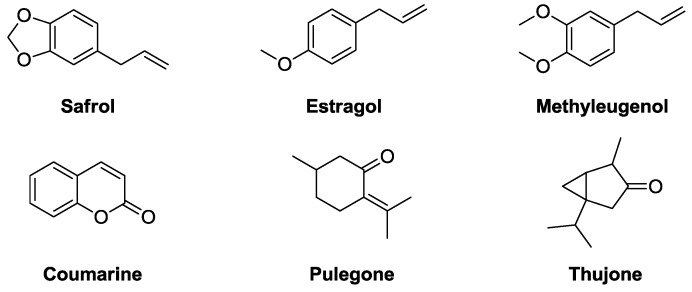
“In addition to the European Registration, Evaluation, Authorisation and Restriction of Chemical substances (REACH) regulation, a large number of chemicals found in natural extracts are under surveillance because of suspected or demonstrated toxicity such as carcinogen methyleugenol [6] and safrole [7], skin sensitiser…”
BackgroundSchrader, J., Etschmann, M. M. W., Sell, D., Hilmer, J.-M., & Rabenhorst, J. (2004) · Biotechnology Letters · doi:10.1023/b:bile.0000019576.80594.0e · Cited by 229 · cited 1×
“Enzymes being involved in the metabolism of secondary metabolites, they could somehow be seen as the ideal reagent to modify natural products [11], and are being used to produce natural flavors and fragrances [12,13].”
BackgroundKasper, S., Gastpar, M., Müller, W. E., Volz, H.-P., Möller, H.-J., Dienel, A., & Schläfke, S. (2010) · International Clinical Psychopharmacology · doi:10.1097/yic.0b013e32833b3242 · Cited by 174 · cited 1×
“treatment of anxiety disorder [1].”
Babu, K. G. D., Singh, B., Joshi, V. P., & Singh, V. K. (2002) · Flavour and Fragrance Journal · doi:10.1002/ffj.1052 · Cited by 133 · cited 1×
“For example, rose essential oil contains pleasant odorant molecules such as phenylethanol, citronellol, geraniol, β-damascone, β-damascenone and rose oxides, inert hydrocarbons such as 9-eicosene, nonadecane and others, non-terpenic hydrocarbons from the stearoptene, and the suspected human carcinogen methyleugenol [1…”
BackgroundHosni, K., Hassen, I. E., Chaabane, H., Jemli, M., Dallali, S., Sebei, H., & Casabianca, H. (2013) · Industrial Crops and Products · doi:10.1016/j.indcrop.2013.03.023 · Cited by 130 · cited 3×
“Cellulase, β-glucanase, pectinase, xylanase Thymus (Thymus capitatus) Yield improved, carvacrol content increased Anti-microbial [23]”
BackgroundResultInfluentialPhytochemistry of the heartwood from fragrant Santalum species: a review
Baldovini, N., Delasalle, C., & Joulain, D. (2010) · Flavour and Fragrance Journal · doi:10.1002/ffj.2025 · Cited by 122
Santamaría, R. I., Reyes‐Duarte, D., Bárzana, E., Fernando, D., Gama, M., Mota, M., & López-Munguía, A. (2000) · Journal of Agricultural and Food Chemistry · doi:10.1021/jf991242p · Cited by 112 · cited 2×
“) flour after enzymatic treatment with enzyme preparations exhibiting pectolytic, cellulolytic, and carbohydrase activities allowed for increasing yields of the contents by up to 60% [19].”
BackgroundEffect of enzymes on extraction of volatiles from celery seeds
Sowbhagya, H. B., Srinivas, P., & Krishnamurthy, N. (2009) · Food Chemistry · doi:10.1016/j.foodchem.2009.10.013 · Cited by 108 · cited 1×
“25% improvement of the yield, while the sensory properties were unchanged [21].”
BackgroundKunicka-Styczyńska, A., Sikora, M., & Kalemba, D. (2009) · Journal of Applied Microbiology · doi:10.1111/j.1365-2672.2009.04372.x · Cited by 83 · cited 1×
“Other beneficial effects such as antimicrobial and antifungal have been demonstrated for essential oils of lavender, thyme, rosemary, grapefruit, and many others sources and allowed their use as natural preservatives in cosmetic products [2–4] or in food [5].”
BackgroundEnzyme-assisted extraction of volatiles from cumin (Cuminum cyminum L.) seeds
Sowbhagya, H. B., Srinivas, P., Purnima, K. T., & Krishnamurthy, N. (2011) · Food Chemistry · doi:10.1016/j.foodchem.2011.02.001 · Cited by 81
New enzymes for biotransformations
Faber, K., & Kroutil, W. (2005) · Current Opinion in Chemical Biology · doi:10.1016/j.cbpa.2005.01.001 · Cited by 81 · cited 1×
“Enzymatic processes seem indeed ideal to offer highly selective and substrate specific processes with a very good sustainability profile and low energy consumption [9,10].”
BackgroundMandalari, G., Bennett, R. N., Kirby, A. R., Curto, R. B. L., Bisignano, G., Waldron, K. W., & Faulds, C. B. (2006) · Journal of Agricultural and Food Chemistry · doi:10.1021/jf0615799 · Cited by 79 · cited 1×
“Extracts (β-glucosidase, α-rhamnosidase) Bergamot (Citrus bergamia Risso) Flavonoids content increased Anti-oxidant [24]”
BackgroundSalgado-Roman, M., Botello-Álvarez, E., Rico-Martínez, R., Jiménez‐Islas, H., Cárdenas-Manríquez, M., & Navarrete-Bolaños, J. L. (2008) · Journal of Agricultural and Food Chemistry · doi:10.1021/jf801823m · Cited by 68 · cited 2×
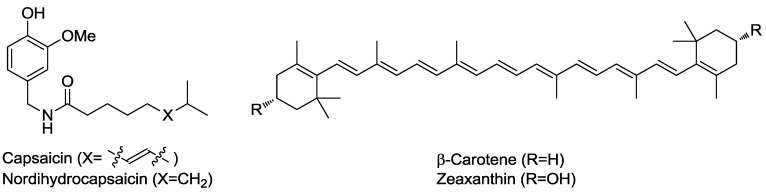
“The methodology could be improved with the use of enzymatic extracts from Rhizopus nigricans allowing the recovery of 85% and 96% of the carotenoid and capsaicinoid contents, respectively (Figure 1) [20].”
MethodChandran, J., Padmakumari, K. P., Menon, N., Jayamurthy, P., & Nisha, P. (2012) · Food Science and Biotechnology · doi:10.1007/s10068-012-0214-y · Cited by 66 · cited 3×
“Cellulase, β-glucanase, pectinase, xylanase Cardamom Yield improved, α-terpenyl acetate content increased Organoleptic [22]”
BackgroundInfluentialEnzymatic modification of evening primrose oil: Incorporation of n−3 polyunsaturated fatty acids
Akoh, C. C., Jennings, B. H., & Lillard, D. A. (1996) · Journal of the American Oil Chemists Society · doi:10.1007/bf02523416 · Cited by 58
Groussin, A.-L., & Antoniotti, S. (2011) · Bioresource Technology · doi:10.1016/j.biortech.2011.10.050 · Cited by 49 · cited 1×
“Enzymes being involved in the metabolism of secondary metabolites, they could somehow be seen as the ideal reagent to modify natural products [11], and are being used to produce natural flavors and fragrances [12,13].”
BackgroundSelf-citationLipase-Catalyzed Modification of Rice Bran Oil To Incorporate Capric Acid
Jennings, B. H., & Akoh, C. C. (2000) · Journal of Agricultural and Food Chemistry · doi:10.1021/jf000372r · Cited by 46 · cited 1×
“Out of the scope of this review is the enzymatic modification of vegetal oils for fatty acids incorporation [14,15] or the modification of functional properties of food proteins [16].”
BackgroundSchulz, G., & Stahl‐Biskup, E. (1991) · Flavour and Fragrance Journal · doi:10.1002/ffj.2730060109 · Cited by 43 · cited 1×
“) Terpenyl alcohols, and phenolics contents increased Organoleptic [29]”
BackgroundComparison of elicitation potential of chloroatranol and atranol – 2 allergens in oak moss absolute
Johansen, J. D., Bernard, G., Giménez‐Arnau, E., Lepoittevin, J., Bruze, M., & Andersen, K. E. (2006) · Contact Dermatitis · doi:10.1111/j.0105-1873.2006.00814.x · Cited by 42 · cited 1×
“In addition to the European Registration, Evaluation, Authorisation and Restriction of Chemical substances (REACH) regulation, a large number of chemicals found in natural extracts are under surveillance because of suspected or demonstrated toxicity such as carcinogen methyleugenol [6] and safrole [7], skin sensitiser…”
BackgroundPrediction of carcinogenic potential by a toxicogenomic approach using rat hepatoma cells
Tsujimura, K., Asamoto, M., Suzuki, S., Hokaiwado, N., Ogawa, K., & Shirai, T. (2006) · Cancer Science · doi:10.1111/j.1349-7006.2006.00280.x · Cited by 40 · cited 2×
“In addition to the European Registration, Evaluation, Authorisation and Restriction of Chemical substances (REACH) regulation, a large number of chemicals found in natural extracts are under surveillance because of suspected or demonstrated toxicity such as carcinogen methyleugenol [6] and safrole [7], skin sensitiser…”
BackgroundVolatile constituents of different organs of Psoralea bituminosa L.
Bertoli, A., Menichini, F., Noccioli, C., Morelli, I., & Pistelli, L. (2004) · Flavour and Fragrance Journal · doi:10.1002/ffj.1315 · Cited by 33
Bouhlel, C., Dolhem, G., Fernàndez, X., & Antoniotti, S. (2011) · Journal of Agricultural and Food Chemistry · doi:10.1021/jf205194v · Cited by 29 · cited 2×
“) Eugenol content decreased Toxicity/allergenicity [34]”
BackgroundSelf-citationReaction design for evaluation of the substrate range of hydrolases
Antoniotti, S., Fernàndez, X., & Duñach, É. (2008) · Biocatalysis and Biotransformation · doi:10.1080/10242420701668938 · Cited by 16 · cited 2×
“Alep rose essential oil could be similarly modified by lipases, resulting in modified olfactory properties [36].”
BackgroundSelf-citationStudies on vapor phase extraction of rose oil enhanced by β‐glucosidase
Zhiping, Y., Weirong, Y., & Qian, H. (2006) · Flavour and Fragrance Journal · doi:10.1002/ffj.1710 · Cited by 14
Ramilijaona, J., Raynaud, E., Bouhlel, C., Sarrazin, E., Fernàndez, X., & Antoniotti, S. (2013) · Chemistry & Biodiversity · doi:10.1002/cbdv.201300241 · Cited by 13 · cited 2×
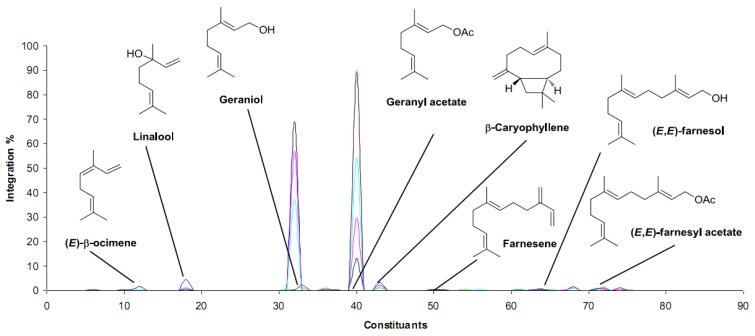
“Palmarosa (Cymbopogon martinii) essential oil, a cheap and abundant material with a rather limited interest as perfuming ingredient, could be modified by enzymatic treatment in a controlled manner resulting in improved olfactory properties [35].”
BackgroundSelf-citationAroma Enhancement and Characterization of the AbsoluteOsmanthus fragransLour.
Yao, W., Zhang, Y., Chen, Y., & Yang, Z. (2010) · Journal of Essential Oil Research · doi:10.1080/10412905.2010.9700272 · Cited by 9 · cited 1×
“flowers was realised by β-glucosidase-assisted hydrolysis [25].”
Glycosidically bound volatiles of clove Syzygium aromaticum (L.) merr. et perry (Myrtaceae)
Menon, A. N., & Narayanan, C. (1992) · Flavour and Fragrance Journal · doi:10.1002/ffj.2730070311 · Cited by 9
Selective laser photolysis of organic molecules in complex matrices
Moulin, C., Petit, A., & Baccou, J. C. (1995) · Journal of Photochemistry and Photobiology A Chemistry · doi:10.1016/1010-6030(94)03897-4 · Cited by 4
Methyleugenol in the Diet: Toxic and Pathological Aspects
Abdo, K. M. (2005) · doi:10.1201/9781420037531-1 · Cited by 4 · cited 2×
“In addition to the European Registration, Evaluation, Authorisation and Restriction of Chemical substances (REACH) regulation, a large number of chemicals found in natural extracts are under surveillance because of suspected or demonstrated toxicity such as carcinogen methyleugenol [6] and safrole [7], skin sensitiser…”
Background
Cited by
Enzyme assisted extraction of biomolecules as an approach to novel extraction technology: A review
Nadar, S. S., Rao, P., & Rathod, V. K. (2018) · Food Research International · doi:10.1016/j.foodres.2018.03.006 · Cited by 696
Innovative Approaches to an Eco-Friendly Cosmetic Industry: A Review of Sustainable Ingredients
Sasounian, R., Martinez, R. M., Lopes, A. M., Giarolla, J., Rosado, C., Magalhães, W. V., Velasco, M. V. R., & Baby, A. R. (2024) · Clean Technologies · doi:10.3390/cleantechnol6010011 · Cited by 96
Forti, L., Mauro, S. D., Cramarossa, M. R., Filippucci, S., Turchetti, B., & Buzzini, P. (2015) · Molecules · doi:10.3390/molecules200610377 · Cited by 52
Flash-metathesis for the coupling of sustainable (poly)hydroxyl β-methylstyrenes from essential oils
Hitce, J., Crutizat, M., Bourdon, C., Vivès, A., Marat, X., & Dalko‐Csiba, M. (2015) · Green Chemistry · doi:10.1039/c5gc00759c · Cited by 36
Chemistry, Sustainability and Naturality of Perfumery Biotech Ingredients
Lecourt, M., & Antoniotti, S. (2020) · ChemSusChem · doi:10.1002/cssc.202001661 · Cited by 29
Self-citation
Metadata
- Authors
- Antoniotti, S.
- Affiliations
- Centre National de la Recherche Scientifique (FR)
- Corresponding author
- Antoniotti, Sylvain
- ORCID
- Antoniotti, Sylvain
- Venue
- Molecules
- Publisher
- MDPI AG
- Published
- 2014-07-01
- Volume
- 19
- Issue
- 7
- Pages
- 9203-9214
- ISSN
- 1420-3049 (ISSN-L)
- PMC
- PMC6271872
- OpenAlex
- W1978728622
- Cited by
- 25
- References
- 36
- Citations by year
- 2025: 2 · 2024: 2 · 2023: 5 · 2022: 1 · 2021: 1 · 2020: 2 · 2018: 4 · 2017: 5 · 2016: 1 · 2015: 2
- FWCI
- 0.25
- Type
- journal article
- Language
- en
- Open access
- gold
- doi.org
- Licence
- Locations
- Molecules (publishedVersion, cc-by)
- Europe PMC (PubMed Central) (publishedVersion, cc-by)
- PubMed Central (publishedVersion, cc-by)
- PubMed (publishedVersion)
- DOAJ (DOAJ: Directory of Open Access Journals) (submittedVersion, cc-by-sa)
- Funders
- Centre National de la Recherche Scientifique
- Topics
- Life Sciences › Biochemistry, Genetics and Molecular Biology › Molecular Biology › Enzyme Catalysis and Immobilization
- Life Sciences › Biochemistry, Genetics and Molecular Biology › Biotechnology › Biochemical and biochemical processes
- Life Sciences › Agricultural and Biological Sciences › Food Science › Essential Oils and Antimicrobial Activity
- Keywords
- essential oils, enzymatic treatment, fragrance ingredients, natural fragrances, biological activity, essential oil safety, sustainable processes
- MeSH terms
- Horseradish Peroxidase, Humans, Lipase, Odorants, Oils, Volatile, Perfume, Polygalacturonase
About these checks
Registry, retraction, Cites and statistics results are computed, not judged, with one exception: a printed reference that no index lists is read once by a model before it counts as a citation error. Claims are extracted by a model and kept only when their quote appears verbatim in the text; each cited source is then checked, with a model’s help, for whether it says what the claim relies on. Those verdicts can be wrong — read the claim’s quote and the cited source before relying on one.
Statistics and arithmetic are recomputed, not judged.
Confidence bands are shown only for fields calibrated on our annotated test set. None is calibrated yet, so no band is shown.
What counts as a claim ›How we measure confidence ›How we check this ›
Are you an author, or do you see a problem with this page? Request a review
Data sources
Bibliographic data: Semantic Scholar, OpenAlex, Crossref.
Contains information from the Semantic Scholar Academic Graph Datasets, made available under the ODC Attribution License (ODC-BY 1.0).
Semantic Scholar’s data is described in: Kinney, R., et al. (2023). The Semantic Scholar Open Data Platform. arXiv:2301.10140.
