

The DOI matches its Crossref record; 8 of the 8 references it cites were found in a registry or an index.
Resazurin Reduction-Based Assays Revisited: Guidelines for Accurate Reporting of Relative Differences on Metabolic Status
Open accessAbstract
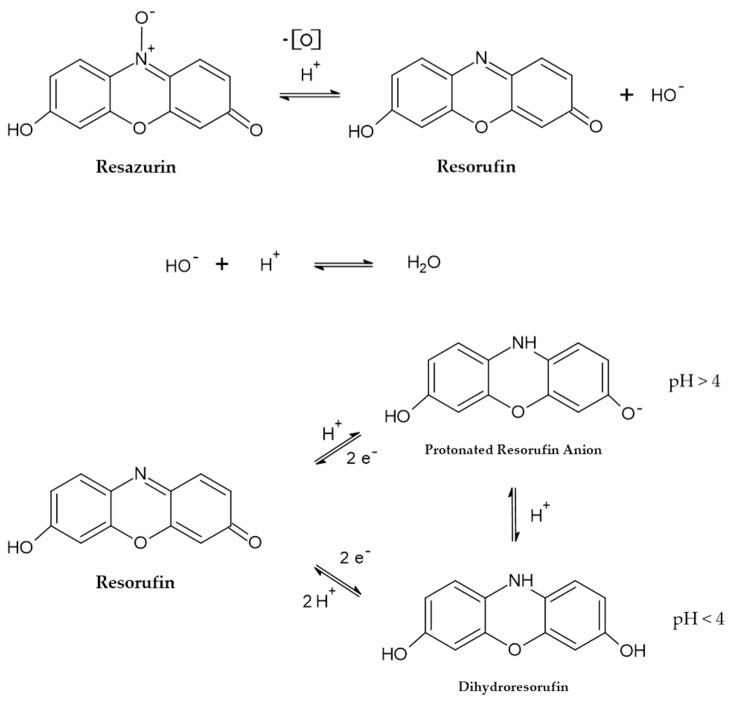
Cell viability and metabolic activity are ubiquitous parameters used in biochemistry, molecular biology, and biotechnological studies. Virtually all toxicology and pharmacological projects include at some point the evaluation of cell viability and/or metabolic activity. Among the methods used to address cell metabolic activity, resazurin reduction is probably the most common. At variance with resazurin, resorufin is intrinsically fluorescent, which simplifies its detection. Resazurin conversion to resorufin in the presence of cells is used as a reporter of metabolic activity of cells and can be detected by a simple fluorometric assay. UV–Vis absorbance is an alternative technique but is not as sensitive. In contrast to its wide empirical “black box” use, the chemical and cell biology fundamentals of the resazurin assay are underexplored. Resorufin is further converted to other species, which jeopardizes the linearity of the assays, and the interference of extracellular processes has to be accounted for when quantitative bioassays are aimed at. In this work, we revisit the fundamentals of metabolic activity assays based on the reduction of resazurin. Deviation to linearity both in calibration and kinetics, as well as the existence of competing reactions for resazurin and resorufin and their impact on the outcome of the assay, are addressed. In brief, fluorometric ratio assays using low resazurin concentrations obtained from data collected at short time intervals are proposed to ensure reliable conclusions.
Overview
The claims and statistics of this paper haven’t been checked yet.
Run the check — free, no account needed. It reads the open-access text and checks the sources it cites.
Integrity signals
Registry
Cites
Statistics
Figures
 was set equal for the three cell lines. Aditional data can be found in reference [7].](/paper-figures/1537ac7d59a543f5a904aa42eba3072d/resazurin-reduction-based-assays-revisited-guidelines-for-accurate-reporting-of-figure-1.jpg)
 was set equal in both conditions.](/paper-figures/cf69fcab79844a64b7591b1e0265a129/resazurin-reduction-based-assays-revisited-guidelines-for-accurate-reporting-of-figure-2.jpg)
Verification
Claims the paper makes
The claims and statistics of this paper haven’t been checked yet.
Run the check — free, no account needed. It reads the open-access text and checks the sources it cites.
Claims other papers make about this one
Each is checked against this paper’s own text: does it say what the citing paper says it does?
The cited source says what the claim attributes to it.
In the citing paper
“Many commonly used in vitro viability assays, including tetrazolium-and resazurinbased assays, rely on cellular metabolic or redox activity as indirect indicators of viability instead of directly quantifying viable cell number or cell death (Ghasemi et al. 2023;Vieira-da-Silva and Castanho 2023).”
From Primary cell cultures versus immortalized cell lines: critical comparative insights into biological fidelity and translational applications (2026) · cites this paper as Vieira-da-Silva and Castanho 2023
Self-check
Percentages, sums and reported differences re-computed from the paper’s own numbers.
The self-check needs the paper’s full text.
Citations
Cites
Principles of Fluorescence Spectroscopy
Lakowicz, J. R. (2006) · Springer eBooks · doi:10.1007/978-0-387-46312-4 · Cited by 19,795
Coutinho, A., & PRIETO, M. J. E. (1993) · Journal of Chemical Education · doi:10.1021/ed070p425 · Cited by 128
Revisiting the Resazurin-Based Sensing of Cellular Viability: Widening the Application Horizon
Lavõgina, D., Lust, H., Tahk, M., Laasfeld, T., Vellama, H., Nasirova, N., Vardja, M., Eskla, K., Salumets, A., Rinken, A., et al. (2022) · Biosensors · doi:10.3390/bios12040196 · Cited by 127
Uzarski, J. S., DiVito, M. D., Wertheim, J. A., & Miller, W. M. (2017) · Biomaterials · doi:10.1016/j.biomaterials.2017.02.015 · Cited by 106
Metabolic reduction of resazurin; location within the cell for cytotoxicity assays
Chen, J. L., Steele, T. W. J., & Stuckey, D. C. (2017) · Biotechnology and Bioengineering · doi:10.1002/bit.26475 · Cited by 98
Small Molecule Interferences in Resazurin and MTT-Based Metabolic Assays in the Absence of Cells
Neufeld, B. H., Tapia, J. B., Lutzke, A., & Reynolds, M. M. (2018) · Analytical Chemistry · doi:10.1021/acs.analchem.8b01043 · Cited by 52
Voltammetry of resazurin at a mercury electrode
Çakır, S., & Arslan, E. Y. (2010) · Chemical Papers · doi:10.2478/s11696-010-0007-9 · Cited by 20
Integrative Human Biochemistry
Poian, A. T. D., & Castanho, M. A. R. B. (2021) · Springer eBooks · doi:10.1007/978-3-030-48740-9 · Cited by 4
Self-citation
Research works printed but not linked: 2
- Aslantürk, Ö.S. (2018). Genotoxicity—A Predictable Risk to Our Actual World, InTechOpen. Chapter 1.
- Markossian, S., Grossman, A., Brimacombe, K., Arkin, M., Auld, D., Austin, C., Baell, J., Chung, T.D.Y., Coussens, N.P., and Dahlin, J.L. (2022, December 15). Cell Viability Assays, Available online: https://pubmed.ncbi.nlm.nih.gov/23805433/.
Cited by
Sorted by citations
Effect of micro- and nanoplastic particles on human macrophages
Adler, M. Y., Issoual, I., Rückert, M., Deloch, L., Meier, C., Tschernig, T., Alexiou, C., Pfister, F., Ramsperger, A. F. R. M., Laforsch, C., et al. (2024) · Journal of Hazardous Materials · doi:10.1016/j.jhazmat.2024.134253 · Cited by 75
Njoku, D. I., Guo, Q., Dai, W., Chen, J. L., Mao, G., Sun, Q., Sun, H., & Peng, Y. (2023) · TrAC Trends in Analytical Chemistry · doi:10.1016/j.trac.2023.117288 · Cited by 35
Petiti, J., Caria, S., Revel, L., Pegoraro, M., & Divieto, C. (2024) · Cells · doi:10.3390/cells13231959 · Cited by 30
Audebert, M., Aßmann, A.-S., Azqueta, A., Babica, P., Benfenati, E., Bortoli, S., Bouwman, P., Braeuning, A., Burgdorf, T., Coumoul, X., et al. (2023) · Frontiers in Toxicology · doi:10.3389/ftox.2023.1220998 · Cited by 27
da Silva, P. B., Oliveira, R. J. A., Araújo, M., Caires, H. R., Bidarra, S. J., & Barrias, C. C. (2024) · Carbohydrate Polymers · doi:10.1016/j.carbpol.2024.122363 · Cited by 17
A polysaccharide-based hydrogel platform for tumor spheroid production and anticancer drug screening
Lopez-Vince, E., Simón‐Yarza, T., & Wilhelm, C. (2025) · Scientific Reports · doi:10.1038/s41598-025-87896-7 · Cited by 13
Almeida, G. H. D. R., da Silva, R. S., Gibin, M. S., Gonzaga, V. H. D. S., dos Santos, H., Iglesia, R. P., Fernandes, L. A., Fernandes, I. C., Nesiyama, T. N. G., Sato, F., et al. (2024) · Biomimetics · doi:10.3390/biomimetics9070382 · Cited by 11
Temel, N. K. (2023) · Journal of Food Composition and Analysis · doi:10.1016/j.jfca.2023.105919 · Cited by 8
do Amaral, S. R., Fernandes, M. A., Haddad, F. F., Gini, A. L. R., Scarim, C. B., & Primo, F. L. (2025) · Molecules · doi:10.3390/molecules30030544 · Cited by 8
Skóra, B., & Szychowski, K. A. (2025) · Archives of Toxicology · doi:10.1007/s00204-025-04183-0 · Cited by 9
Sychev, A. V., Lavrova, A. I., Догонадзе, М. З., & Postnikov, E. B. (2023) · Bioengineering · doi:10.3390/bioengineering10080962 · Cited by 8
Radiomic analysis of 3D spheroids using 2D brightfield images
Stellato, M., Rydzyk, M. M., Pannella, M., Rossi, F., Cappadone, C., Remondini, D., Pyun, J., Normanno, N., Ibrahim, T., Castellani, G., et al. (2024) · Biomedical Signal Processing and Control · doi:10.1016/j.bspc.2024.107366 · Cited by 7
Lapointe, M., Laframboise, T., Pirkkanen, J., Tai, T. C., Lees, S. J., Maria, S. R. S., Tharmalingam, S., Boreham, D. R., & Thome, C. (2024) · Health Physics · doi:10.1097/hp.0000000000001804 · Cited by 6
Gautam, N., Sharma, P. K., Chaudhary, A., Sahu, S., Vohora, D., Mishra, M., Dutta, D., Singh, M. K., & Talegaonkar, S. (2025) · Journal of drug targeting · doi:10.1080/1061186x.2025.2503499 · Cited by 6
Świerczyńska, M., Mrozińska, Z., Juszczak, M., Woźniak, K., & Kudzin, M. H. (2024) · Marine Drugs · doi:10.3390/md22100436 · Cited by 7
Calvo, L. G., Orbe, S. C., Villarino, R.-A., Sánchez, S., & de Miguel, T. (2026) · Pharmaceuticals · doi:10.3390/ph19030505 · Cited by 5
dos Santos, G. P., Coelho, A. C., & Reimão, J. Q. (2025) · Expert Opinion on Drug Discovery · doi:10.1080/17460441.2025.2450787 · Cited by 5
In silico, in vitro and in vivo toxicity assessment of the antitumoral peptide GK-1
Sifontes, S., Hernández-Aceves, J. A., Garrido, C. G. S., Rocha, D. M., Pérez‐Osorio, I. N., Villalobos, N., Sciutto, E., & Fragoso, G. (2025) · Toxicology Reports · doi:10.1016/j.toxrep.2025.101962 · Cited by 5
Babu, A. R. S., Rani, S., Singh, S. P., Khera, A., Alajangi, H. K., Parandaman, S., Raj, A. R. N., Gavaskar, D., Gartia, J., Pandey, A., et al. (2025) · Journal of Molecular Structure · doi:10.1016/j.molstruc.2025.142373 · Cited by 5
Smart Polymeric 3D Microscaffolds Hosting Spheroids for Neuronal Research via Quantum Metrology
Costa, B. N. L., Marote, A., Barbosa, C. S., Campos, J., Salgado, A. J., & Nieder, J. B. (2025) · Advanced Healthcare Materials · doi:10.1002/adhm.202403875 · Cited by 8
Bradford, J. C., & Robinson, J. L. (2026) · Biology of Sex Differences · doi:10.1186/s13293-026-00921-w · Cited by 4
Wang, D., Li, X., Wang, B., Zhang, J., Ding, P., & Kai, T. (2025) · Sensors and Actuators B Chemical · doi:10.1016/j.snb.2025.138155 · Cited by 4
Lamela-Gómez, I., Gonçalves, L., Almeida, A. J., & Álvarez, A. L. (2023) · Drug Delivery and Translational Research · doi:10.1007/s13346-023-01372-1 · Cited by 4
Kaya, H. O., Tekintaş, Y., Karadeniz, H., İşbilir, H., Temel, A., & Topkaya, S. N. (2025) · Journal of Pharmaceutical and Biomedical Analysis · doi:10.1016/j.jpba.2025.117011 · Cited by 4
A synthetic bacterium that degrades and assimilates poly(ethylene terephthalate)Preprint
Freund, D., Cherukuri, K. P., Mireles, R., Kippen, J., Shossel, M., & Noda‐García, L. (2025) · bioRxiv (Cold Spring Harbor Laboratory) · doi:10.1101/2025.09.28.673679 · Cited by 4
Cherene, M. B., Cavaco, M. C., Neves, V., Castanho, M. A. R. B., Taveira, G. B., Guimarães, T. Z. A., Carvalho, A. D. O., Mello, É. D. O., dos Santos, L. D. A., & Gomes, V. M. (2024) · International Journal of Peptide Research and Therapeutics · doi:10.1007/s10989-024-10607-9 · Cited by 3
Self-citationNjoku, D. I., Dai, W., Chen, J., Gao, Y., Sun, H., Mao, G., Peng, Y., & Chen, J. L. (2025) · Journal of environmental chemical engineering · doi:10.1016/j.jece.2025.116784 · Cited by 3
Aqueous Radical Photopolymerization Catalyzed by Resorufin
Zhou, W., & Liu, C. (2026) · Organics · doi:10.3390/org7010005 · Cited by 3
Mezcord, V., Luu, I., Akhtar, U., Traglia, G. M., Rodriguez, C., Moheb, S., Sanchez, S. D., Soto, M. T., Clave, M. J. C., Sieira, R., et al. (2026) · mBio · doi:10.1128/mbio.03760-25 · Cited by 3
de Villiers, M., Kotzé, A. F., & Plessis, D. (2024) · Bioprinting · doi:10.1016/j.bprint.2024.e00380 · Cited by 3
Mustafa, M. A., Fahad, M., Mughal, M., Rasheed, N., Alqahtani, S. S., & Iqbal, M. Z. (2025) · Gels · doi:10.3390/gels11100774 · Cited by 3
Andraos, C., Wepener, V., & Gulumian, M. (2026) · Frontiers in Toxicology · doi:10.3389/ftox.2026.1818582 · Cited by 3
Metabolism‐Based Biomarkers for Rapid Phenotypic Antibiotic Susceptibility Testing
Yu, S., Bayinqiaoge, Lu, X., Wang, X., Wang, R., Li, Y., Tang, S., & Zhang, C. (2026) · Advanced Science · doi:10.1002/advs.75553 · Cited by 2
Белых, А. Е., Hawro, I., Kolczyńska, K., Loza‐Valdes, A., Mieczkowski, A., & Sumara, G. (2023) · Archives of Biochemistry and Biophysics · doi:10.1016/j.abb.2023.109825 · Cited by 2
Ribeiro, M. A., Campos, J., Pinho, T. S., Sampaio‐Marques, B., Barata‐Antunes, S., Cibrão, J. R., Araújo, R., Duarte‐Silva, S., Moreira, E., Sousa, R. A., et al. (2024) · Biotechnology Journal · doi:10.1002/biot.202400068 · Cited by 2
Modification of Cotton with Chitosan: Deposition of Copper(II) Sulfate by Complexation Copper Ions
Świerczyńska, M., Mrozińska, Z., Juszczak, M., Woźniak, K., & Kudzin, M. H. (2024) · Processes · doi:10.3390/pr12122772 · Cited by 2
Mrozińska, Z., Świerczyńska, M., Juszczak, M., Woźniak, K., & Kudzin, M. H. (2025) · Journal of Composites Science · doi:10.3390/jcs9010030 · Cited by 2
Suali, L., Chia, Y., Rustin, C., Lem, F. F., Ching, X. J., Mansur, M. A. B., Henry, Z. A., Chan, M. K. S., Wong, M. B. F., & Pan, S. Y. (2026) · Biotechnic & Histochemistry · doi:10.1080/10520295.2026.2714776 · Cited by 2
“Many commonly used in vitro viability assays, including tetrazolium-and resazurin-based assays, rely on cellular metabolic or redox activity as indirect indicators of viability instead of directly quantifying viable cell number or cell death (Ghasemi et al. 2023; Vieira-da-Silva and Castanho 2023).”
Gonçalves, C., Castanho, M. A. R. B., Cavaco, M. C., & Neves, V. (2025) · Journal of Peptide Science · doi:10.1002/psc.70035 · Cited by 1
Self-citationCarbone, D., Terrana, F., Sciuto, L., Pecoraro, C., Xu, G., Cascioferro, S., Cirrincione, G., Peters, G. J., Giovannetti, E., Parrino, B., et al. (2025) · ChemMedChem · doi:10.1002/cmdc.202500448 · Cited by 1
Design of Hybrid Bioactive Peptides Derived From Cecropin and Cathepsin for Therapeutic Application
Cepinho, G. S., Scavassa, B. V., de Cena, G. L., de Andrade, V. M., Lima, L. R. F., Zelanis, A., Heras, M., Castanho, M. A. R. B., & Conceição, K. (2025) · Chemical Biology & Drug Design · doi:10.1111/cbdd.70193 · Cited by 1
Self-citationFrom Isolation to Application: Designing a Multi-Target Phage Cocktail for Bivalve Safety
Costa, P., Pereira, C., Romalde, J. L., & Almeida, A. (2025) · Microorganisms · doi:10.3390/microorganisms13122708 · Cited by 1
Rabanal-Sanchez, J., & Santiago, J. (2025) · Monatshefte für Chemie - Chemical Monthly · doi:10.1007/s00706-025-03418-1 · Cited by 1
AI-Assisted Impedance Biosensing of Yeast Cell Concentration
Almarzooqi, A., Ahmad, M. A., Chalissery, J., & Hassan, A. H. (2025) · Biosensors · doi:10.3390/bios16010018 · Cited by 1
Andreani, E., Peroutka, V., Košťáková, E. K., CHUDOBOVÁ, E., Kejzlar, P., HAUZEROVÁ, Š., Havlíčková, K., Štindlová, M., Jirešová, J., Lukáš, D., et al. (2026) · Journal of Agricultural and Food Chemistry · doi:10.1021/acs.jafc.5c16509 · Cited by 1
la Vega-Camarillo, E. D., Arreola‐Vargas, J., Mathur, S. K., Singla, R., Shankar, S., Klemashevich, C. L., Santos, J. A., Antony‐Babu, S., & Shim, W. B. (2026) · Bioresource Technology · doi:10.1016/j.biortech.2026.134924 · Cited by 1
Ottová, M., Zvonařová, K., Otta, J., Knížková, K., Cihlářová, P., Michailidu, J., Maťátková, O., & Kolouchová, I. (2026) · Applied Food Research · doi:10.1016/j.afres.2026.102363 · Cited by 1
Calvillo‐Páez, V., Terán, A. O., Galvez-Ruiz, J. C., Hernández‐Zazueta, M. S., Del‐Toro‐Sánchez, C. L., Rascón-Valenzuela, L. A., Juárez-Sánchez, O., Gómez-Vega, J., Plascencia‐Jatomea, M., & Lara, K. O. (2026) · ACS Omega · doi:10.1021/acsomega.6c05294 · Cited by 1
Sha, M. S., Faisal, F. B., Ottakath, T. K., Poovadichalil, N. M., & Sadasivuni, K. K. (2025) · Journal of Food Measurement & Characterization · doi:10.1007/s11694-025-03226-5 · Cited by 1
Kubheka, M. X. (2024) · ResearchSpace (University of KwaZulu-Natal) · doi:10.29086/10413/22998
Samhan-Arias, A. K., López‐Sánchez, C., & Aureliano, M. (2025) · Molecules · doi:10.3390/molecules30081710
Dhillon, I. U. S., Cavalieri, R. M., Ghadim, E. E., Huband, S., Liu, J., Sadler, P. J., Collingwood, J. F., Bakker, S. E., & Brooks, J. (2025) · bioRxiv (Cold Spring Harbor Laboratory) · doi:10.1101/2025.10.24.684369
Sudeep, K. S., Unger, B. S., Kodihally, A. K. V., Manoj, A. D., Shamnewadi, A., & Mallapur, S. P. (2025) · ChemistrySelect · doi:10.1002/slct.202503359
Ulfah, M., Efriani, L., Tonasih, T., Hadi, I., Irawan, A., Putra, T. A., & Anggriawan, I. M. B. (2026) · Research Journal of Pharmacy and Technology · doi:10.52711/0974-360x.2026.00053
Al-Ani, A. W., Tawfeeq, H. K., Saad‐allah, N. Q., & Lafta, F. M. (2026) · ChemistrySelect · doi:10.1002/slct.202506175
Henriquez, A., Godbout-Cheliak, M., Filiatreault, A., Breznan, D., & Thomson, E. M. (2026) · Toxicology in Vitro · doi:10.1016/j.tiv.2026.106218
A novel redox-based colorimetric method for the selective detection of Fe (II)
Rabanal-Sanchez, J. (2026) · Journal of the Indian Chemical Society · doi:10.1016/j.jics.2026.102552
Lai, Y.-T., & Cheng, J. (2026) · Sensors and Actuators Reports · doi:10.1016/j.snr.2026.100476
Cervantes-Rivera, R., Rosas, A. Z. R., Ortíz, S. J. F., Gonzalez-Fernandez, L. N., Ochoa‐Zarzosa, A., & López-Meza, J. E. (2026) · BIO-PROTOCOL · doi:10.21769/bioprotoc.5763
Auliya, D. G., Septiani, M., & Risdiana, R. (2026) · Polymers · doi:10.3390/polym18131597
Havelkova, J., Petrenko, Y., Stehlíková, A., Mareková, D., Peskova, K., Pechar, M., Studenovský, M., Etrych, T., Pola, R., & Jendelová, P. (2026) · Frontiers in Toxicology · doi:10.3389/ftox.2026.1783704
Comprehensive Overview of In Vitro Cell Viability Assays in Cancer Research
Korimelli, S., Kommineni, H., & Vennela, G. N. (2026) · Biosciences Biotechnology Research Asia · doi:10.13005/bbra/3530
Volkevičiūtė, A., Puzinovė, D., Balion, Z., Žumbakis, N., Lapinskaitė, P., Tunaitytė, A., Kutakh, O., Stankevıčıus, E., Pinilla, E., & Simonsen, U. (2026) · Life · doi:10.3390/life16081214
Sugiharto, Zubaidah, U., Az-Zahra, A. E., Cahyono, P. A., Rohima, N. A., Latifa, A. S., Abidin, A. S. A., Soepriandono, H., Manuhara, Y. S. W., & Khan, M. H. (2026) · World Journal of Traditional Chinese Medicine · doi:10.4103/wjtcm.wjtcm_80_26
Liesenfeld, E., Schindler, J., Weis, D., Horsinka, S., Stegmüller, S., Waldvogel, S. R., & Richling, E. (2026) · Ecotoxicology and Environmental Safety · doi:10.1016/j.ecoenv.2026.120542
Rodrigues, M. A., Barbolini, G., Ferraz, M. P., Borges, J. P., Santos, J. D., & Lopes, M. A. (2026) · Biomedical Materials · doi:10.1088/1748-605x/ae934c
Single‐Cell Metabolic Activity Monitoring With Microcavity Laser Emitting Cytometry
Zhu, H., Fang, G., Jiang, Y., Tseng, P., Zhou, T., Nie, N., Fu, B., & Chen, Y. (2026) · Advanced Materials · doi:10.1002/adma.74541
Stucki, A., Sharma, M., Murray, J. R., Verstraelen, S., Frijns, E., Hollanders, K., Jacobs, A., Luz, A., Rémy, S., Roldán, N., et al. (2026) · Toxicological Sciences · doi:10.1093/toxsci/kfag118
A new resazurin-based method to determine dehydrogenase activity in soil
Winssy, T. D., Anandham, R., Maragatham, S., Uma, D., Karthikeyan, S., & Balachandar, D. (2026) · Biology and Fertility of Soils · doi:10.1007/s00374-026-02052-1
Loya-Hernández, L. P., Román-Aguirre, M., Montes-Fonseca, S. L., Arreguín-Cano, J. A., Romo-Sáenz, C. I., Arzate-Quintana, C., Muela‐Campos, D., Amaya-Olivas, N. I., Martínez‐Mata, G., Ayala-Soto, J. G., et al. (2026) · Polymers · doi:10.3390/polym18182231
Granados, N. A. B., Rueda-Forero, N. J., Visser, L., & Suárez-Barrera, M. O. (2026) · Cancers · doi:10.3390/cancers18182980
Collagen targeted self-anchoring antimicrobial molecular agents
Selcuk, N. C., Demirel, E., Waller, S. C., Snead, M. L., Spencer, P., & Tamerler, C. (2026) · Frontiers in Bioengineering and Biotechnology · doi:10.3389/fbioe.2026.1914224
Disruption of endosomal transport in cyclodextrin-mediated cytotoxicity
Pereira, D. D. C., & Poole, D. A. (2026) · Biomedicine & Pharmacotherapy · doi:10.1016/j.biopha.2026.119973
Jeschke, A., Musa, J., Cidre‐Aranaz, F., Ohmura, S., & Gul, S. (2026) · Methods in molecular biology · doi:10.1007/978-1-0716-5587-0_12
Medeiros, C. C. B., Sorrechia, R., Donadon, M. L. B., Rodrigues, W. D., dos Santos, A. G., Duarte, J. L., Chorilli, M., Gini, A. L. R., da Cunha, P. S. T., Scarim, C. B., et al. (2026) · Cosmetics · doi:10.3390/cosmetics13050278
Bui-Marinos, M. P., & Corcoran, J. A. (2026) · bioRxiv (Cold Spring Harbor Laboratory) · doi:10.64898/2026.10.26.762023
Metadata
- Authors
- Vieira-da-Silva, B., & Castanho, M. A. R. B.
- Affiliations
- Instituto de Medicina Molecular, Faculdade de Medicina, Universidade de Lisboa, 1649-028 Lisboa, Portugal
- University of Lisbon (PT)
- Corresponding author
- Castanho, Miguel A. R. B.
- Venue
- Molecules
- Publisher
- MDPI AG
- Published
- 2023-03-01
- Volume
- 28
- Issue
- 5
- Pages
- 2283
- ISSN
- 1420-3049 (ISSN-L)
- PMC
- PMC10005198
- OpenAlex
- W4322743436
- Cited by
- 76
- References
- 8
- Citations by year
- 2026: 34 · 2025: 24 · 2024: 12 · 2023: 6
- FWCI
- 6.77
- Type
- journal article
- Language
- en
- Open access
- gold
- doi.org
- Licence
- Locations
- Molecules (publishedVersion, cc-by)
- PubMed Central (publishedVersion, cc-by)
- PubMed (publishedVersion)
- Portuguese National Funding Agency for Science, Research and Technology (RCAAP Project by FCT) (submittedVersion, other-oa)
- DOAJ (DOAJ: Directory of Open Access Journals) (submittedVersion, cc-by-sa)
- Funders
- “la Caixa” Foundation and FCT (LCF/PR/HR21/00605)
- Topics
- Life Sciences › Biochemistry, Genetics and Molecular Biology › Molecular Biology › bioluminescence and chemiluminescence research
- Health Sciences › Veterinary › Small Animals › Animal testing and alternatives
- Life Sciences › Biochemistry, Genetics and Molecular Biology › Molecular Biology › Cancer and biochemical research
- Keywords
- resazurin reduction, resorufin, cell metabolic activity, cell viability, fluorometric assay, assay linearity, calibration, kinetic analysis, competitive reactions, assay interference
- MeSH terms
- Fluorometry, Indicators and Reagents, Oxazines, Xanthenes
About these checks
Registry, retraction, Cites and statistics results are computed, not judged, with one exception: a printed reference that no index lists is read once by a model before it counts as a citation error. Claims are extracted by a model and kept only when their quote appears verbatim in the text; each cited source is then checked, with a model’s help, for whether it says what the claim relies on. Those verdicts can be wrong — read the claim’s quote and the cited source before relying on one.
Statistics and arithmetic are recomputed, not judged.
Confidence bands are shown only for fields calibrated on our annotated test set. None is calibrated yet, so no band is shown.
What counts as a claim ›How we measure confidence ›How we check this ›
Are you an author, or do you see a problem with this page? Request a review
