

The DOI matches its Crossref record; 2 of the 2 references it cites were found in a registry or an index.
The Development of a Melt-Extruded Shellac Carrier for the Targeted Delivery of Probiotics to the Colon
Abstract
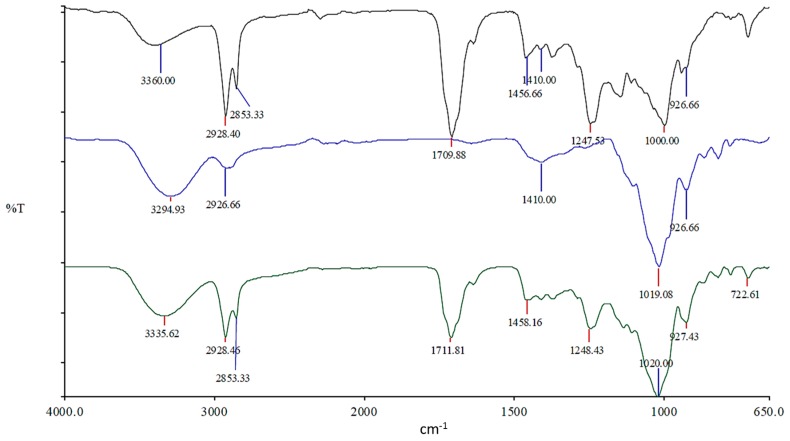
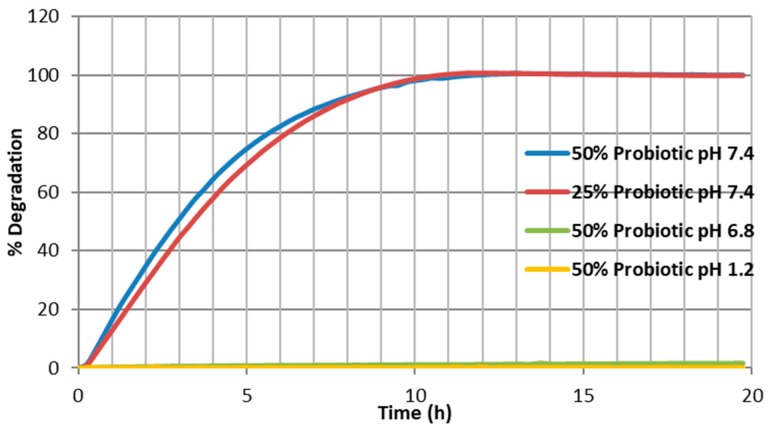
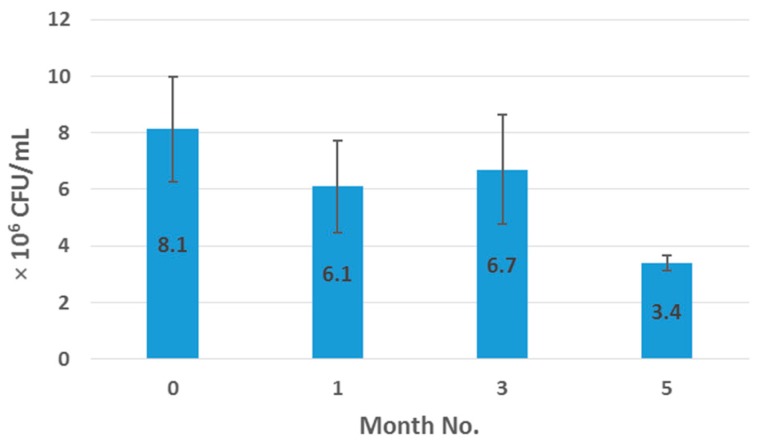
Hot melt extrusion (HME) is considered an efficient technique in developing solid molecular dispersions, and has been demonstrated to provide sustained, modified and targeted drug delivery resulting in improved bioavailability. However, most commercial enteric or pH-responsive polymers are relatively difficult to process or have high Glass Transition Temperature (Tg) values, making their use with temperature-sensitive drugs, probiotics or biologics not viable. Shellac is a natural thermoplastic, and after a review of current literature on the pharmaceutical HME process, a possible gap in the knowledge of the use of shellac to produce dosage forms by means of HME was identified. This work explores the possibility of SSB® 55 pharmaceutical-grade shellac as a melt-extrudable encapsulation polymer to entrap freeze-dried probiotic powder and to determine bacterial cell viability post-processing. Well-defined strands were produced from the physical mixture of shellac and Biocare® Bifidobacterium Probiotic. FTIR clarified that there are no significant interactions between the probiotic and polymer. All of the samples demonstrated less than 5% degradation over 24 h at pH of both 1.2 and 6.8. At pH 7.4, both loaded samples gave a similar dissolution trend with complete degradation achieved after 10–11 h. Following five-month storage, 57.8% reduction in viability was observed.
Overview
The claims and statistics of this paper haven’t been checked yet.
Run the check — free, no account needed. It reads the open-access text and checks the sources it cites.
Integrity signals
Registry
Cites
Statistics
Figures
Verification
Claims the paper makes
The claims and statistics of this paper haven’t been checked yet.
Run the check — free, no account needed. It reads the open-access text and checks the sources it cites.
Claims other papers make about this one
Each is checked against this paper’s own text: does it say what the citing paper says it does?
In the citing paper
“These bacteria secrete many enzymes such as azoreductase, α-arabinosidase, β-galactosidase, β-glucuronidase, β-xylosidase, deaminase, nitroreductase, urea hydroxylase.85”
From Current Advances in Chitosan Nanoparticles Based Oral Drug Delivery for Colorectal Cancer Treatment (2022) · cites this paper as [85]
Self-check
Percentages, sums and reported differences re-computed from the paper’s own numbers.
The self-check needs the paper’s full text.
Citations
Cites
The efficacy of probiotics in the treatment of irritable bowel syndrome: a systematic review
Moayyedi, P., Ford, A. C., Talley, N. J., Cremonini, F., Foxx-Orenstein, A. E., Brandt, L. J., & Quigley, E. M. M. (2010) · Gut · doi:10.1136/gut.2008.167270 · Cited by 728
Quigley, E. M. M. (2011) · Gastroenterology Clinics of North America · doi:10.1016/j.gtc.2010.12.009 · Cited by 67 · cited 2×
“5, and actively ferment carbohydrates, producing mainly acetic acid and lactic acid in a volume ratio of 3:2 (v/v), but not carbon dioxide, butyric acid or propionic acid [1].”
Background
Research works printed but not linked: 22
- Quigley, 2008, Probiotics in functional gastrointestinal disorders: What are the facts?, Curr. Opin. Pharmacol., 8, 704, 10.1016/j.coph.2008.08.007 · DOI
- Laskaratos, 2015, Irritable bowel syndrome, Medicine, 43, 266, 10.1016/j.mpmed.2015.02.010 · DOI
- Wu, 2010, Complementary and alternative medicine modalities for the treatment of irritable bowel syndrome: Facts or myths?, Gastroenterol. Hepatol., 6, 705
- Lee, 2015, New perspectives on probiotics in health and disease, Food Sci. Hum. Wellness, 4, 56, 10.1016/j.fshw.2015.06.002 · DOI
- Shen, 2009, Complementary and alternative medicine for treatment of irritable bowel syndrome, Can. Fam. Phys., 55, 143
- Zaki, 2014, Progress and problems in nutraceuticals delivery, J. Bioequiv. Availab., 6, 75, 10.4172/jbb.10000183 · DOI
- Chen, 2012, Development of a novel probiotic delivery system based on microencapsulation with protectants, Appl. Microbiol. Biotechnol., 93, 1447, 10.1007/s00253-011-3609-4 · DOI
- Anal, 2007, Recent advances in microencapsulation of probiotics for industrial applications and targeted delivery, Trends Food Sci. Technol., 18, 240, 10.1016/j.tifs.2007.01.004 · DOI
- Stummer, 2010, Application of shellac for the development of probiotic formulations, Food Res. Int., 43, 1312, 10.1016/j.foodres.2010.03.017 · DOI
- Lu, 2016, Nanoparticle-based oral delivery systems for colon targeting: Principles and design strategies, Sci. Bull., 61, 670, 10.1007/s11434-016-1056-4 · DOI
- Asghar, 2006, Multiparticulate formulation approach to colon specific drug delivery: Current perspectives, J. Pharm. Pharm. Sci., 9, 327
- Limmatvapirat, 2007, Enhanced enteric properties and stability of shellac films through composite salts formation, Eur. J. Pharm. Biopharm., 67, 690, 10.1016/j.ejpb.2007.04.008 · DOI
- Ravi, 2008, Influence of natural polymer coating on novel colon targeting drug delivery system, J. Mater. Sci. Mater. Med., 19, 2131, 10.1007/s10856-007-3155-x · DOI
- Ibekwe, 2006, A comparative in vitro assessment of the drug release performance of pH-responsive polymers for ileo-colonic delivery, Int. J. Pharm., 308, 52, 10.1016/j.ijpharm.2005.10.038 · DOI
- Pearnchob, 2003, Pharmaceutical applications of shellac: Moisture-protective and taste-masking coatings and extended-release matrix tablets, Drug Dev. Ind. Pharm., 29, 925, 10.1081/DDC-120024188 · DOI
- Ghosh, 2014, Effect of probiotics addition and shellac coating on in vitro release of fluorouracil from guar gum matrix tablets for colon specific delivery, World J. Pharm. Pharm. Sci., 3, 1149
- Vodnar, 2010, HPLC characterization of lactic acid formation and FTIR fingerprint of probiotic bacteria during fermentation processes, Not. Bot. Horti Agrobot. Cluj-Napoca, 38, 109
- Mendiola, 2014, Prebiotic potential of agave angustifolia haw fructans with different degrees of polymerization, Molecules, 19, 12660, 10.3390/molecules190812660 · DOI
- Buch, 2009, Investigation of various shellac grades: Additional analysis for identity, Drug Dev. Ind. Pharm., 35, 694, 10.1080/03639040802563253 · DOI
- Mansouripour, 2013, The effect of heat process on the survival and increased viability of probiotic by microencapsulation: A review, Ann. Biol. Res., 4, 83
- Nighswonger, 1996, Viability of Lactobacillus acidophilus and Lactobacillus casei in fermented milk products during refrigerated storage, J. Dairy Sci., 79, 212, 10.3168/jds.S0022-0302(96)76353-1 · DOI
- Gbassi, 2012, Probiotic encapsulation technology: From microencapsulation to release into the gut, Pharmaceutics, 4, 149, 10.3390/pharmaceutics4010149 · DOI
Cited by
Sorted by citations
Current Advances in Chitosan Nanoparticles Based Oral Drug Delivery for Colorectal Cancer Treatment
Choukaife, H., Seyam, S., Alallam, B., Doolaanea, A. A., & Alfatama, M. (2022) · International Journal of Nanomedicine · doi:10.2147/ijn.s375229 · Cited by 127
Metadata
- Authors
- Gately, N., & Kennedy, J.
- Venue
- Pharmaceutics
- Publisher
- MDPI AG
- Published
- 2017-09-22
- Volume
- 9
- Issue
- 4
- Pages
- 38
- ISSN
- 1999-4923
- PMC
- PMC5750644
- Cited by
- 33
- References
- 2
- Language
- en
- Funders
- Science Foundation Ireland Research Frontiers programme (RFP.1_MTR_3347)
About these checks
Registry, retraction, Cites and statistics results are computed, not judged, with one exception: a printed reference that no index lists is read once by a model before it counts as a citation error. Claims are extracted by a model and kept only when their quote appears verbatim in the text; each cited source is then checked, with a model’s help, for whether it says what the claim relies on. Those verdicts can be wrong — read the claim’s quote and the cited source before relying on one.
Statistics and arithmetic are recomputed, not judged.
Confidence bands are shown only for fields calibrated on our annotated test set. None is calibrated yet, so no band is shown.
What counts as a claim ›How we measure confidence ›How we check this ›
Are you an author, or do you see a problem with this page? Request a review
