

The Impact of Glucagon-like Peptide 1 Receptor Agonists on Obstructive Sleep Apnoea: A Scoping Review
Open accessThe DOI matches its Crossref record; 14 of the 15 references it cites were found in a registry or an index.
Abstract
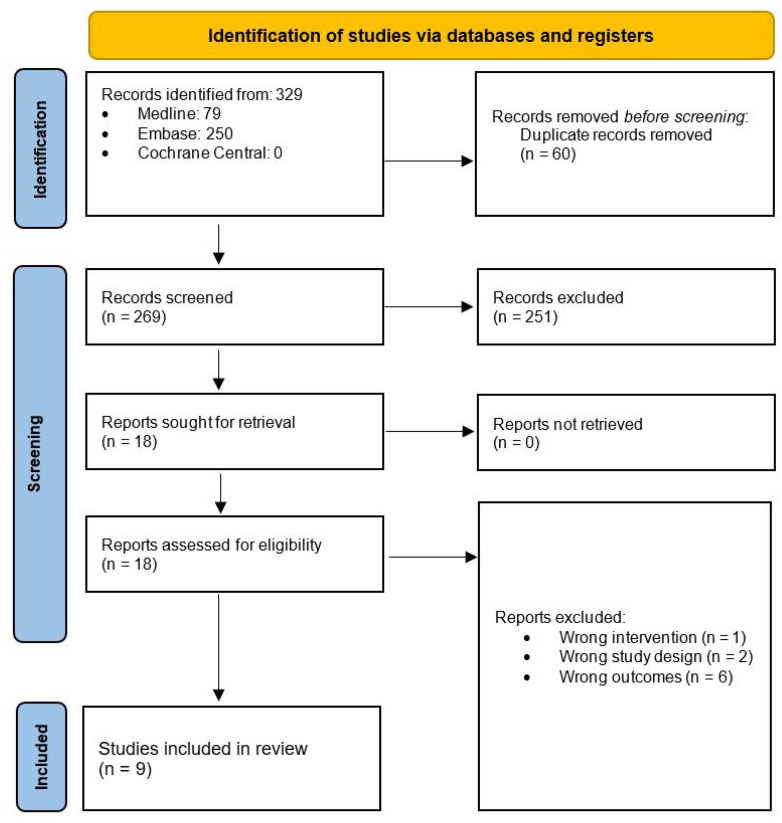
Background: Obstructive sleep apnoea (OSA) and associated hypopnoea syndromes are chronic conditions of sleep-disordered breathing with significant sequelae if poorly managed, including hypertension, cardiovascular disease, metabolic syndrome and increased mortality. Glucagon-like peptide 1 receptor agonists (GLP-1RA) have recently garnered significant interest as a potential therapeutic, attributed to their durable effects in weight loss and glycaemic control in metabolic syndromes, such as obesity and type 2 diabetes mellitus. This has led to significant investment into companies that produce these medications and divestment from traditional gold standard methods of OSA management such as continuous positive airway pressure machines. Despite these sentiments, the impacts of these medications on OSA outcomes are poorly characterised, with no high-quality evidence at this stage to support this hypothesis. This scoping review therefore aims to address the research question of whether GLP-1RAs lead to a direct improvement in OSA and associated hypopnoea syndromes. Methods: A scoping review was performed following a computer-assisted search of Medline, Embase and Cochrane Central databases. Papers that evaluated the use of GLP-1RA medications related to sleep-disordered breathing, OSA or other sleep-related apnoeic or hypopnoeic syndromes were included. Results: Literature search and evaluation identified 9 articles that were eligible for inclusion. Of these, 1 was a study protocol, 1 was a case report, 1 was an abstract of a randomised controlled trial (RCT), 1 was a non-randomised clinical trial and the remaining 5 were randomised clinical trials of variable rigour. All studies evaluated the outcomes of GLP-1RAs in patients with diagnosed OSA or symptoms suggestive of this condition. Conclusion: This scoping review identified early evidence to suggest that GLP-1RAs may improve OSA as defined by reduction in apnoea-hypopnoea index (AHI). This evidence is however conflicting due to contradicting results demonstrated from other studies. Overall, these medications were tolerated well, with minor gastrointestinal side-effects reported in some cases. Of all included studies, the quality of evidence was low, with short lengths of follow-up to identify durable effects of these medications on OSA outcomes and identify adverse events. More rigorous, RCTs with sufficient length of follow-up are required before consideration of formalising these medications into OSA treatment guidelines, frameworks and policies are warranted.
Overview
The claims and statistics of this paper haven’t been checked yet.
Free: it reads the open-access text and checks the first 5 claims that cite a source we can check. Create a free account to check every claim.
Integrity signals
Registry
Cites
Statistics
Figures
Verification
Claims the paper makes
The claims and statistics of this paper haven’t been checked yet.
Free: it reads the open-access text and checks the first 5 claims that cite a source we can check. Create a free account to check every claim.
Claims other papers make about this one
Each is checked against this paper’s own text: does it say what the citing paper says it does?
The source backs part of the claim, not all of it — or backs it for a different population, condition or comparison.
In the citing paper
“Beyond their primary indication in treating T2DM and high BMI, these medications have demonstrated potential benefits in addressing many of the conditions associated with NAION including hypertension, hyperlipidemia, and obstructive sleep apnea.33–35”
From The Effect of Semaglutide and GLP-1 RAs on Risk of Nonarteritic Anterior Ischemic Optic Neuropathy (2025) · cites this paper as [35]
Experimental — accuracy not yet measuredThe source backs part of the claim, not all of it — or backs it for a different population, condition or comparison.
In the citing paper
“From a pathophysiologic standpoint, GLP-1RAs target many of the systemic risk factors of NAION.”
From The Effect of Semaglutide and GLP-1 RAs on Risk of Nonarteritic Anterior Ischemic Optic Neuropathy (2025) · cites this paper as [35]
Experimental — accuracy not yet measured
Self-check
Percentages, sums and reported differences re-computed from the paper’s own numbers.
The self-check needs the paper’s full text.
Citations
Cites
Once-Weekly Semaglutide in Adults with Overweight or Obesity
Wilding, J. P. H., Batterham, R. L., Calanna, S., Davies, M., Van Gaal, L. F., Lingvay, I., McGowan, B. M., Rosenstock, J., Tran, M. T. D., Wadden, T. A., et al. (2021) · New England Journal of Medicine · doi:10.1056/nejmoa2032183 · Cited by 5,205 · cited 1×
“These medications, initially developed to assist in the glycaemic control of type 2 diabetes mellitus, have shown durable results with respect to weight loss in non-diabetic patients [3].”
BackgroundObstructive Sleep Apnea in Adults
Veasey, S. C., & Rosen, I. M. (2019) · New England Journal of Medicine · doi:10.1056/nejmcp1816152 · Cited by 615 · cited 1×
“OSA is characterised by evidence of complete or partial upper airway closure associated with temporarily reduced or complete cessation of breathing; termed hypopnoea or apnoea respectively [2].”
Backgroundon behalf of the SCALE study group, Blackman, A., Foster, G. D., Zammit, G., Rosenberg, R., Aronne, L., Wadden, T., Claudius, B., Jensen, C. B., & Mignot, E. (2016) · International Journal of Obesity · doi:10.1038/ijo.2016.52 · Cited by 583 · cited 2×
“Blackman et al. conducted a 32-week randomised, double-blinded clinical trial investigating the effects of liraglutide in non-diabetic patients ( n = 276) with obesity and either moderate (AHI = 15–29.9/h) or severe (AHI ≥ 30/h) OSA [5].”
BackgroundInfluentialJiang, W., Li, W., Cheng, J., Li, W., & Cheng, F. (2022) · Sleep And Breathing · doi:10.1007/s11325-022-02768-y · Cited by 101
O’Donnell, C., Crilly, S., O'Mahony, A. M., O’Riordan, B., Traynor, M., Gitau, R., McDonald, K., Ledwidge, M. T., O'Shea, D. B., Murphy, D. J., et al. (2024) · Annals of the American Thoracic Society · doi:10.1513/annalsats.202309-821oc · Cited by 77
Sprung, V. S., Kemp, G. J., Wilding, J. P. H., Adams, V. L., Murphy, K., Burgess, M. I., Emegbo, S., Thomas, M., Needham, A. J., Weimken, A., et al. (2020) · BMJ Open · doi:10.1136/bmjopen-2020-038856 · Cited by 43
Papaetis, G. S. (2023) · Archives of Medical Science - Atherosclerotic Diseases · doi:10.5114/amsad/161170 · Cited by 42
Peralta, F. G., Abreu, C., Castro, J. C., Alcarria, E., Cruz-Bravo, M., Garcia-Llorente, M. J., Albornos, C., Moreno, C., Cepeda, M., & Almodóvar, F. (2015) · BMC Endocrine Disorders · doi:10.1186/s12902-015-0074-6 · Cited by 37
Sultana, R., Sissoho, F., Kaushik, V. P., & Raji, M. A. (2022) · Life · doi:10.3390/life12081222 · Cited by 35
Mechanism of glucagon-like peptide 1 improvements in type 2 diabetes mellitus and obesity.
Nolen-Doerr, E., Stockman, M.-C., & Rizo, I. (2019) · Current Obesity Reports · doi:10.1007/s13679-019-00350-4 · Cited by 32 · cited 2×
“Specifically, GLP-1RAs have been shown to exhibit multi-systemic effects on energy utilisation including insulin synthesis and secretion, delayed gastric emptying and attenuation of hypothalamic orexigenic pathways [13].”
BackgroundIDRIS, I. R., Abdulla, H., Tilbrook, S., Dean, R. J., & Ali, N. J. (2012) · Journal of Sleep Research · doi:10.1111/j.1365-2869.2012.01030.x · Cited by 24
Liu, K., Yuan, H., Wang, D., Yuan, Q., & Shi, X. (2020) · Chin J Diabetes Mellitus · doi:10.3760/cma.j.issn.1674-5809.2020.02.006 · Cited by 16
Liraglutide treatment in a patient with HIV, type 2 diabetes and sleep apnoea–hypopnoea syndrome
de Lucas, M. D. G., Olalla, J., & Fernández, J. P. (2014) · Diabetes & Metabolism · doi:10.1016/j.diabet.2014.10.005 · Cited by 13
O’Donnell, C., Crilly, S., O'Mahony, A. M., O'Riordan, B. C., Traynor, M., Gitau, R., McDonald, K., Ledwidge, M. T., O'Shea, D. B., Murphy, D. J., et al. (2023) · medRxiv · doi:10.1101/2023.05.23.23290424 · Cited by 3
Cited by
Moiz, A., Filion, K. B., Tsoukas, M. A., Yu, O. H. Y., Peters, T. M., & Eisenberg, M. J. (2025) · EClinicalMedicine · doi:10.1016/j.eclinm.2025.103363 · Cited by 157
The Effect of Semaglutide and GLP-1 RAs on Risk of Nonarteritic Anterior Ischemic Optic Neuropathy
Abbass, N. J., Nahlawi, R., Shaia, J. K., Allan, K. C., Kaelber, D. C., Talcott, K. E., & Singh, R. P. (2025) · American Journal of Ophthalmology · doi:10.1016/j.ajo.2025.02.025 · Cited by 78
Carbone, F., Després, J., Ioannidis, J. P. A., Neeland, I. J., Garruti, G., Busetto, L., Liberale, L., Ministrini, S., Vilahur, G., Schindler, T. H., et al. (2025) · European Journal of Clinical Investigation · doi:10.1111/eci.70059 · Cited by 57
Emerging Frontiers in GLP-1 Therapeutics: A Comprehensive Evidence Base (2025)
Patel, S., & Niazi, S. K. (2025) · Pharmaceutics · doi:10.3390/pharmaceutics17081036 · Cited by 54
Theodorakis, N., & Nikolaou, M. (2025) · Biomedicines · doi:10.3390/biomedicines13010135 · Cited by 50
Metadata
- Authors
- Le, K. D. R., Le, K., & Foo, F.
- Affiliations
- The Royal Melbourne Hospital (AU)
- Corresponding author
- Le, Khang Duy Ricky
- ORCID
- Le, Khang Duy Ricky
- Venue
- Pharmacy
- Publisher
- MDPI AG
- Published
- 2024-01-08
- Volume
- 12
- Issue
- 1
- Pages
- 11
- ISSN
- 2226-4787 (ISSN-L)
- PMC
- PMC10801460
- OpenAlex
- W4391109152
- Cited by
- 43
- References
- 15
- Citations by year
- 2026: 8 · 2025: 29 · 2024: 5
- FWCI
- 11.88
- Type
- journal article
- Language
- en
- Open access
- gold
- doi.org
- Licence
- Locations
- Pharmacy (publishedVersion, cc-by)
- PubMed Central (publishedVersion, cc-by)
- PubMed (publishedVersion)
- DOAJ (DOAJ: Directory of Open Access Journals) (submittedVersion, cc-by-sa)
- Topics
- Health Sciences › Medicine › Physiology (medical) › Obstructive Sleep Apnea Research
- Health Sciences › Medicine › Endocrinology, Diabetes and Metabolism › Diabetes Treatment and Management
- Social Sciences › Psychology › Experimental and Cognitive Psychology › Sleep and related disorders
- Keywords
- GLP-1 receptor agonists, obstructive sleep apnea, sleep-disordered breathing, apnea-hypopnea index, weight loss, metabolic syndrome, obesity, type 2 diabetes, gastrointestinal adverse effects, continuous positive airway pressure
About these checks
Registry, retraction, Cites and statistics results are computed, not judged, with one exception: a printed reference that no index lists is read once by a model before it counts as a citation error. Claims are extracted by a model and kept only when their quote appears verbatim in the text; each cited source is then checked, with a model’s help, for whether it says what the claim relies on. Those verdicts can be wrong — read the claim’s quote and the cited source before relying on one.
Statistics and arithmetic are recomputed, not judged.
Confidence bands are shown only for fields calibrated on our annotated test set. None is calibrated yet, so no band is shown.
What counts as a claim ›How we measure confidence ›How we check this ›
Are you an author, or do you see a problem with this page? Request a review
Data sources
Bibliographic data: Semantic Scholar, OpenAlex, Crossref.
Contains information from the Semantic Scholar Academic Graph Datasets, made available under the ODC Attribution License (ODC-BY 1.0).
Semantic Scholar’s data is described in: Kinney, R., et al. (2023). The Semantic Scholar Open Data Platform. arXiv:2301.10140.
