

The DOI matches its Crossref record; 20 of the 22 references it cites were found in a registry or an index.
A Comparison of Parametric and Non-Parametric Methods Applied to a Likert Scale
Open accessAbstract
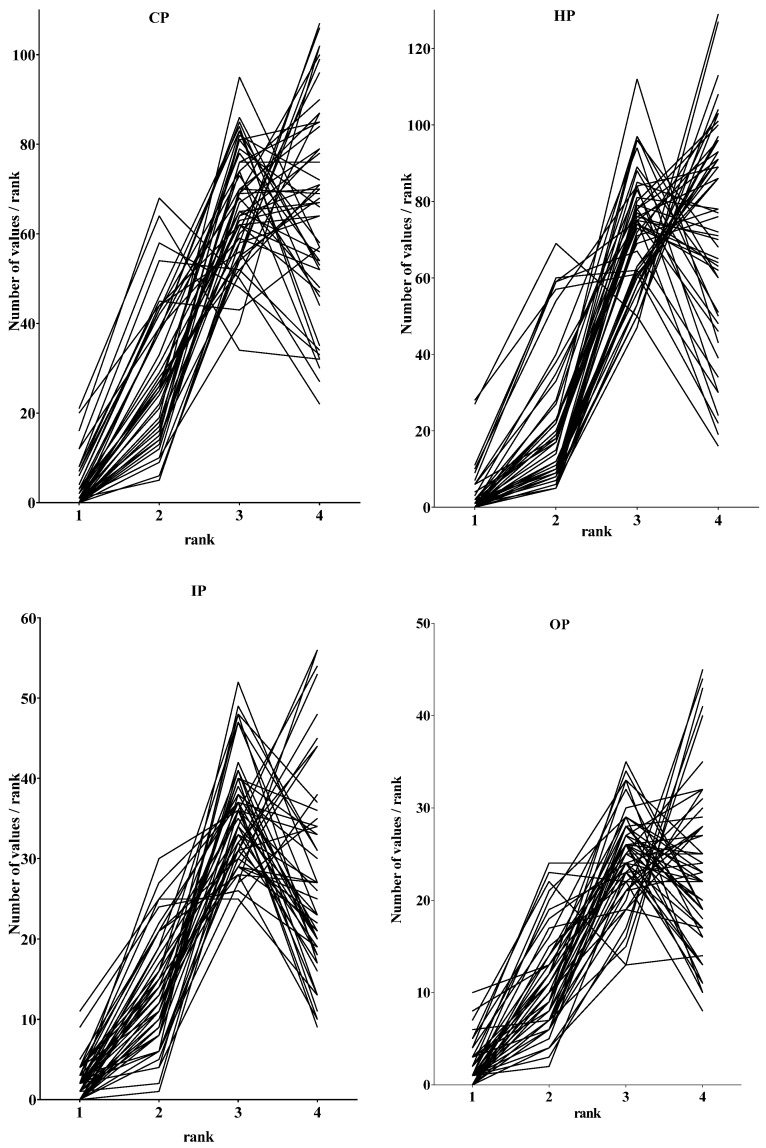
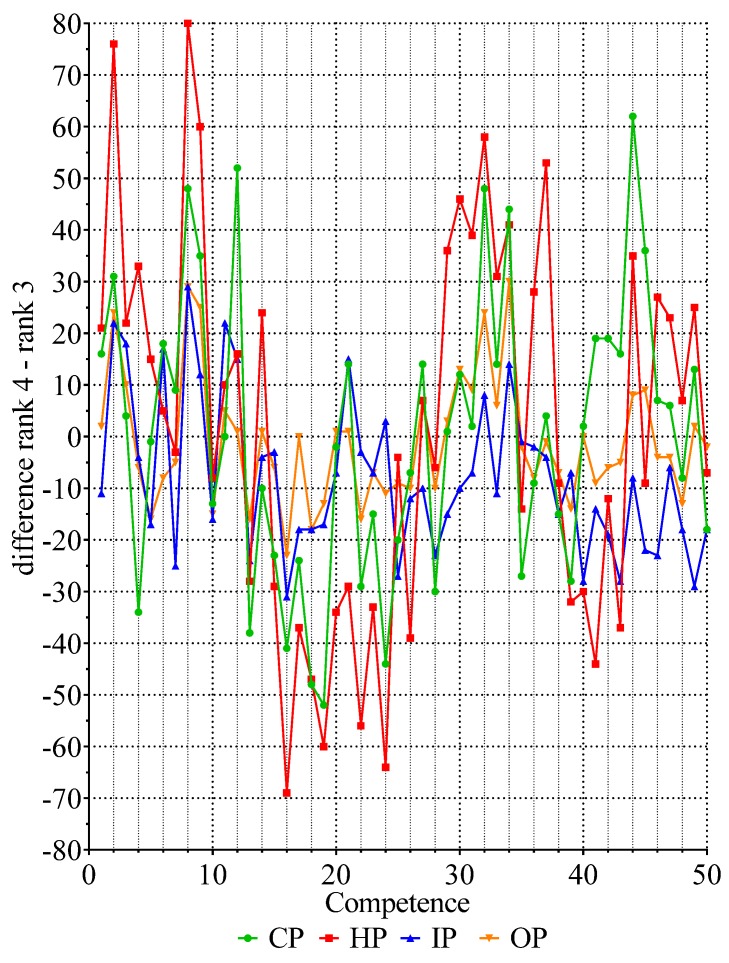
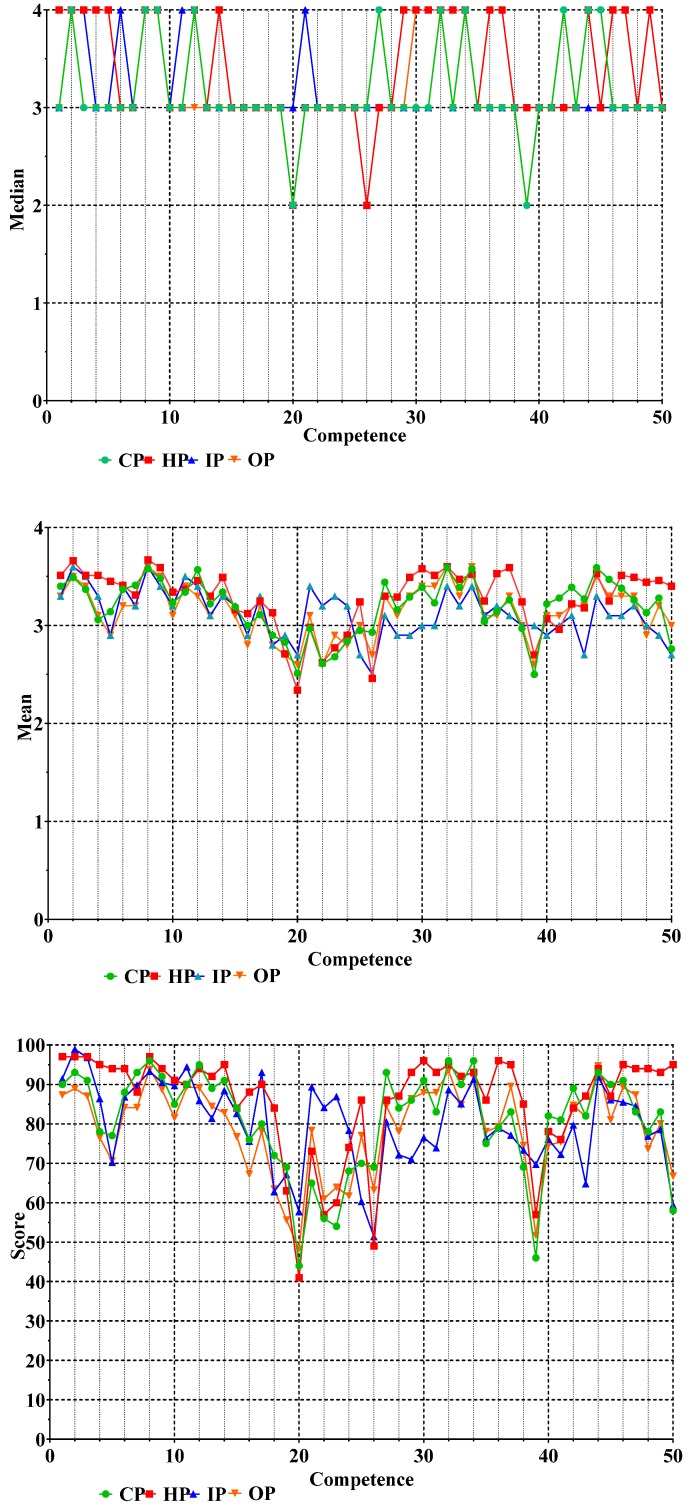
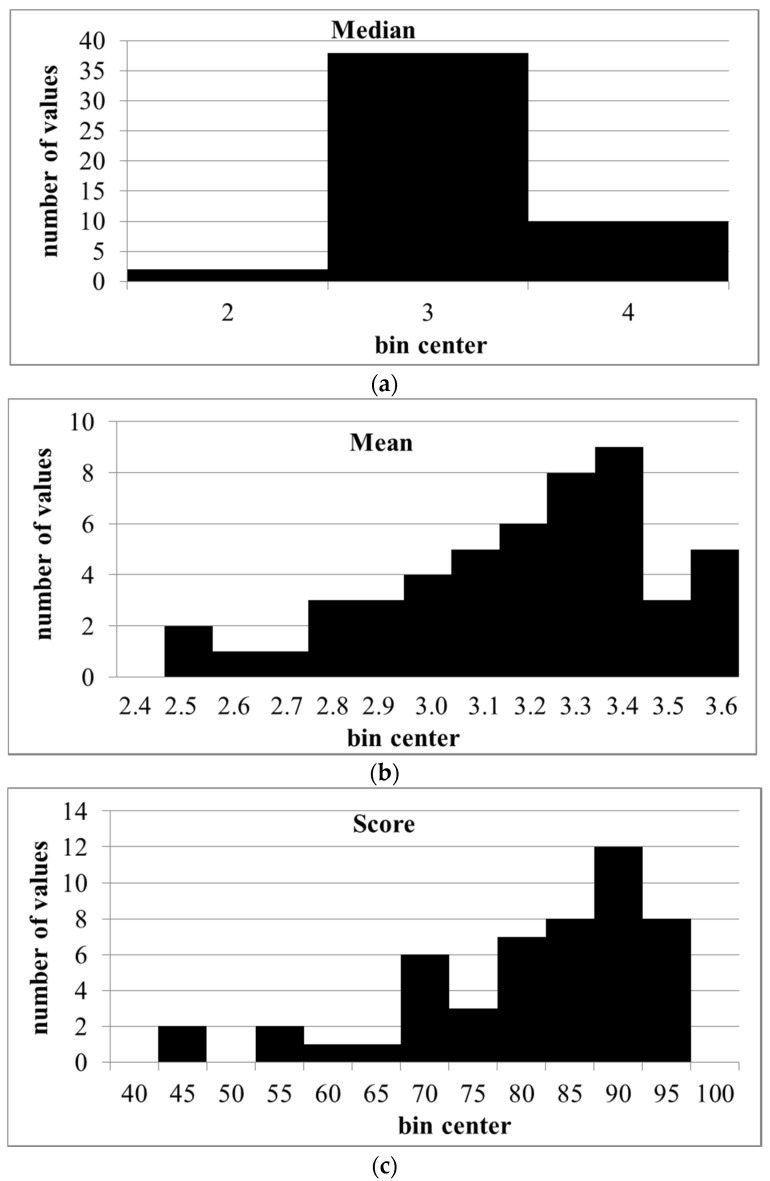
A trenchant and passionate dispute over the use of parametric versus non-parametric methods for the analysis of Likert scale ordinal data has raged for the past eight decades. The answer is not a simple “yes” or “no” but is related to hypotheses, objectives, risks, and paradigms. In this paper, we took a pragmatic approach. We applied both types of methods to the analysis of actual Likert data on responses from different professional subgroups of European pharmacists regarding competencies for practice. Results obtained show that with “large” (>15) numbers of responses and similar (but clearly not normal) distributions from different subgroups, parametric and non-parametric analyses give in almost all cases the same significant or non-significant results for inter-subgroup comparisons. Parametric methods were more discriminant in the cases of non-similar conclusions. Considering that the largest differences in opinions occurred in the upper part of the 4-point Likert scale (ranks 3 “very important” and 4 “essential”), a “score analysis” based on this part of the data was undertaken. This transformation of the ordinal Likert data into binary scores produced a graphical representation that was visually easier to understand as differences were accentuated. In conclusion, in this case of Likert ordinal data with high response rates, restraining the analysis to non-parametric methods leads to a loss of information. The addition of parametric methods, graphical analysis, analysis of subsets, and transformation of data leads to more in-depth analyses.
Overview
The claims and statistics of this paper haven’t been checked yet.
Run the check — free, no account needed. It reads the open-access text and checks the sources it cites.
Integrity signals
Registry
Cites
Statistics
Figures
Verification
Claims the paper makes
The claims and statistics of this paper haven’t been checked yet.
Run the check — free, no account needed. It reads the open-access text and checks the sources it cites.
Self-check
Percentages, sums and reported differences re-computed from the paper’s own numbers.
The self-check needs the paper’s full text.
Citations
Cites
The Measurement of Observer Agreement for Categorical Data
Landis, J. R., & Koch, G. G. (1977) · Biometrics · doi:10.2307/2529310 · Cited by 81,148
(1932) · Medical Entomology and Zoology · Cited by 9,568
Likert scales, levels of measurement, and the “laws” of statistics
Norman, G. (2010) · Advances in Health Sciences Education · doi:10.1007/s10459-010-9222-y · Cited by 4,850
On the Theory of Scales of Measurement
Stevens, S. S. (1946) · Science · doi:10.1126/science.103.2684.677 · Cited by 4,761 · cited 1×
“Non-parametric methods are applied to ordinal data, such as Likert scale data [1] involving the determination of “larger” or “smaller,” i.e., the ranking of data [2].”
MethodLikert scales: how to (ab)use them
Jamieson, S. (2004) · Medical Education · doi:10.1111/j.1365-2929.2004.02012.x · Cited by 2,423
Glass, G. V., Peckham, P. D., & Sanders, J. R. (1972) · Review of Educational Research · doi:10.3102/00346543042003237 · Cited by 1,826 · cited 2×
“[16] concluded that “the flight to non‐ parametrics was unnecessary principally because researchers asked ‘are normal theory ANOVA assumptions met?’ instead of ‘how important are the inevitable violations of normal theory ANOVA assumptions?’” In this paper, we have attempted to follow the same pragmatic approach.”
BackgroundNON-NORMALITY AND TESTS ON VARIANCES
BOX, G. E. P. (1953) · Biometrika · doi:10.1093/biomet/40.3-4.318 · Cited by 1,302
Carifio, J., & Perla, R. J. (2007) · Journal of Social Sciences · doi:10.3844/jssp.2007.106.116 · Cited by 1,061
Experimental design and analysis and their reporting: new guidance for publication in BJP
Curtis, M. J., Bond, R. A., Spina, D., Ahluwalia, A., Alexander, S. P. H., Giembycz, M. A., Gilchrist, A., Hoyer, D., Insel, P. A., Izzo, A. A., et al. (2015) · British Journal of Pharmacology · doi:10.1111/bph.12856 · Cited by 1,057
The effects of violations of assumptions underlying the t test.
Boneau, C. A. (1960) · Psychological Bulletin · doi:10.1037/h0041412 · Cited by 791
Feinstein, A. R. (1977) · Clinical Pharmacology & Therapeutics · doi:10.1002/cpt1977224485 · Cited by 436
Treating ordinal scales as interval scales: an attempt to resolve the controversy.
Knapp, T. R. (1990) · PubMed · Cited by 375
Treating Ordinal Scales as Interval Scales: An Attempt To Resolve the Controversy
KNAPP, T. R. (1990) · Nursing Research · doi:10.1097/00006199-199003000-00019 · Cited by 271
The Seven Deadly Sins of Statistical Analysis
Kuzon, W. M., Urbanchek, M. G., & Mccabe, S. J. (1996) · Annals of Plastic Surgery · doi:10.1097/00000637-199609000-00006 · Cited by 217
Re: The Seven Deadly Sins of Statistical Analysis
Kuzon, W. M., Urbanchek, M. G., & Mccabe, S. J. (1997) · Annals of Plastic Surgery · doi:10.1097/00000637-199701000-00026 · Cited by 181
Gardner, P. L. (1975) · Review of Educational Research · doi:10.3102/00346543045001043 · Cited by 147
NON-PARAMETRIC METHODS IN PSYCHOLOGICAL RESEARCH
Gaito, J. M. (1959) · Psychological Reports · doi:10.2466/pr0.1959.5.g.115 · Cited by 66
März, R., Dekker, F. W., Schravendijk, C. V., Flynn, S. O., & Ross, M. (2013) · Perspectives on Medical Education · doi:10.1007/s40037-013-0066-z · Cited by 41
XII. On exorcising the ghost of Gauss and the curse of Kelvin
Feinstein, A. R. (1971) · Clinical Pharmacology & Therapeutics · doi:10.1002/cpt19711261003 · Cited by 26
Atkinson, J., Paépe, K. D., Sánchez–Pozo, A., Rekkas, D. M., Volmer, D., Hirvonen, J. J., Božič, B., Skowron, A., Mircioiu, C., Marcincal, A., et al. (2015) · Pharmacy · doi:10.3390/pharmacy3040307 · Cited by 25
Self-citation
Cited by
Sorted by citations
Kusmaryono, I., Wijayanti, D., & Maharani, H. R. (2022) · International Journal of Educational Methodology · doi:10.12973/ijem.8.4.625 · Cited by 418
Kernecker, M. L., Knierim, A., Wurbs, A., Kraus, T., & Borges, F. (2019) · Precision Agriculture · doi:10.1007/s11119-019-09651-z · Cited by 282
Barrett, A. J., Pack, A., & Quaid, E. D. (2021) · Computers & Education · doi:10.1016/j.compedu.2021.104214 · Cited by 179
Dey, D., Habibovic, A., Pfleging, B., Martens, M., & Terken, J. M. B. (2020) · CHI Conference on Human Factors in Computing Systems · doi:10.1145/3313831.3376325 · Cited by 166
Madinei, S., Alemi, M. M., Kim, S., Srinivasan, D., & Nussbaum, M. A. (2020) · Applied Ergonomics · doi:10.1016/j.apergo.2020.103156 · Cited by 122
Metadata
- Authors
- Mircioiu, C., & Atkinson, J.
- Affiliations
- Carol Davila University of Medicine and Pharmacy (RO)
- Pharmacolor Consultants Nancy, 12 rue de Versigny, Villers 54600, France
- Corresponding author
- Atkinson, Jeffrey
- ORCID
- Atkinson, Jeffrey
- Venue
- Pharmacy
- Publisher
- MDPI AG
- Published
- 2017-05-10
- Volume
- 5
- Issue
- 2
- Pages
- 26
- ISSN
- 2226-4787 (ISSN-L)
- PMC
- PMC5597151
- OpenAlex
- W2612879771
- Cited by
- 286
- References
- 22
- Citations by year
- 2026: 28 · 2025: 34 · 2024: 37 · 2023: 44 · 2022: 51 · 2021: 48 · 2020: 24 · 2019: 11 · 2018: 6 · 2017: 2
- FWCI
- 10.42
- Type
- journal article
- Language
- en
- Open access
- gold
- doi.org
- Licence
- Locations
- Pharmacy (publishedVersion, cc-by)
- PubMed Central (publishedVersion, cc-by)
- PubMed (publishedVersion)
- Funders
- European Commission
- Topics
- Social Sciences › Decision Sciences › Management Science and Operations Research › Psychometric Methodologies and Testing
- Social Sciences › Decision Sciences › Statistics, Probability and Uncertainty › Reliability and Agreement in Measurement
- Physical Sciences › Mathematics › Statistics and Probability › Statistical Methods and Applications
- Keywords
- Likert scale, ordinal data, pharmacists, professional competence, score analysis, subgroup comparison, data transformation
About these checks
Registry, retraction, Cites and statistics results are computed, not judged, with one exception: a printed reference that no index lists is read once by a model before it counts as a citation error. Claims are extracted by a model and kept only when their quote appears verbatim in the text; each cited source is then checked, with a model’s help, for whether it says what the claim relies on. Those verdicts can be wrong — read the claim’s quote and the cited source before relying on one.
Statistics and arithmetic are recomputed, not judged.
Confidence bands are shown only for fields calibrated on our annotated test set. None is calibrated yet, so no band is shown.
What counts as a claim ›How we measure confidence ›How we check this ›
Are you an author, or do you see a problem with this page? Request a review
