

The DOI matches its Crossref record; 65 of the 67 references it cites were found in a registry or an index, and 1 are not checked yet.
Differential Mechanisms of Photosynthetic Acclimation to Light and Low Temperature in Arabidopsis and the Extremophile Eutrema salsugineum
Open accessAbstract
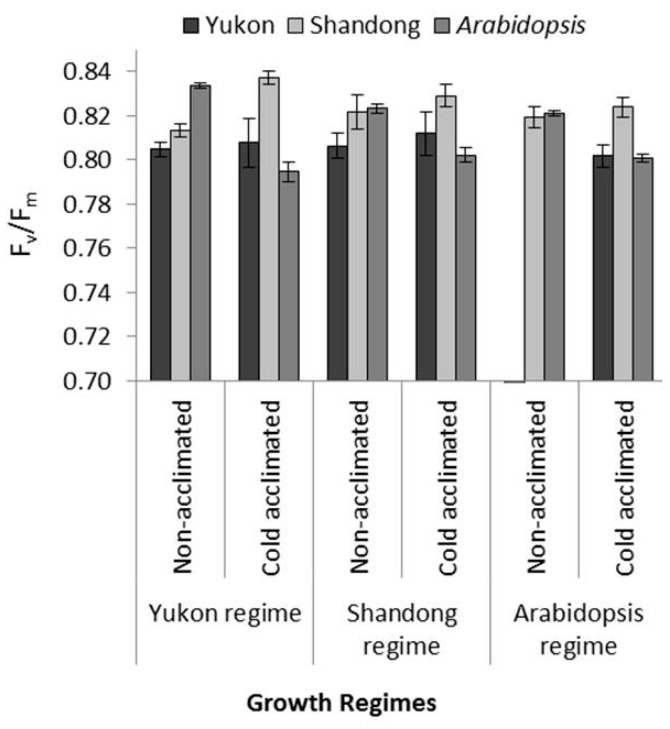
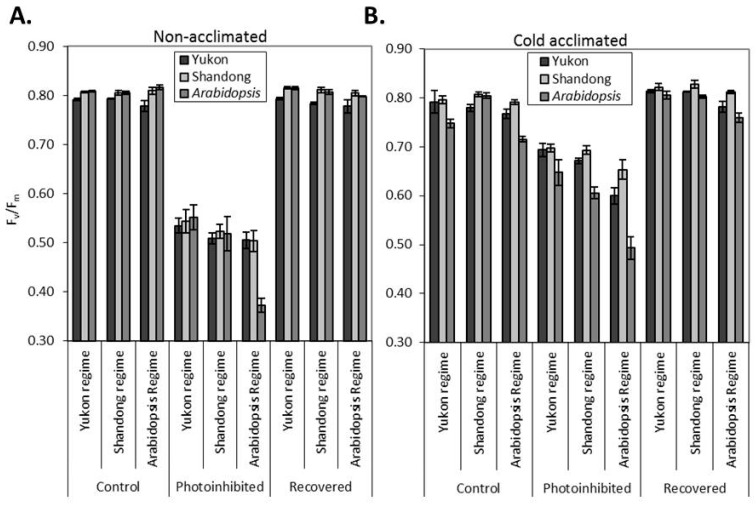
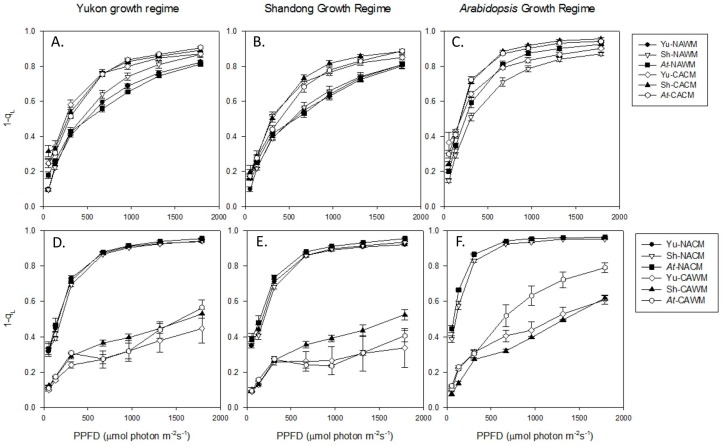
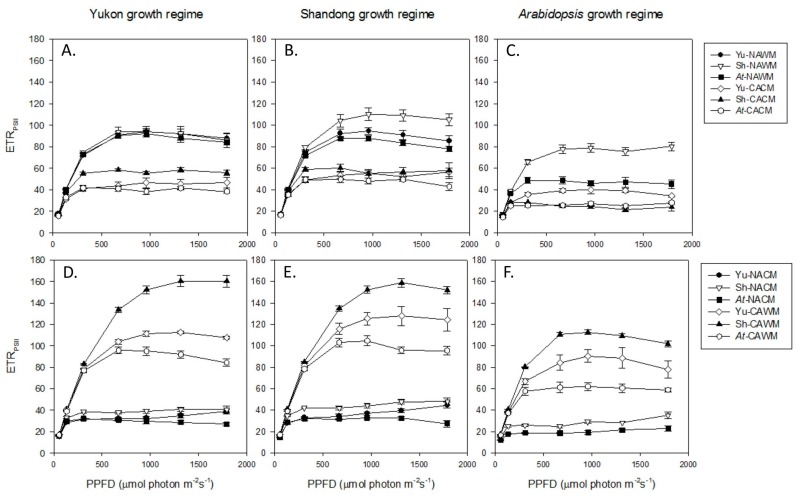
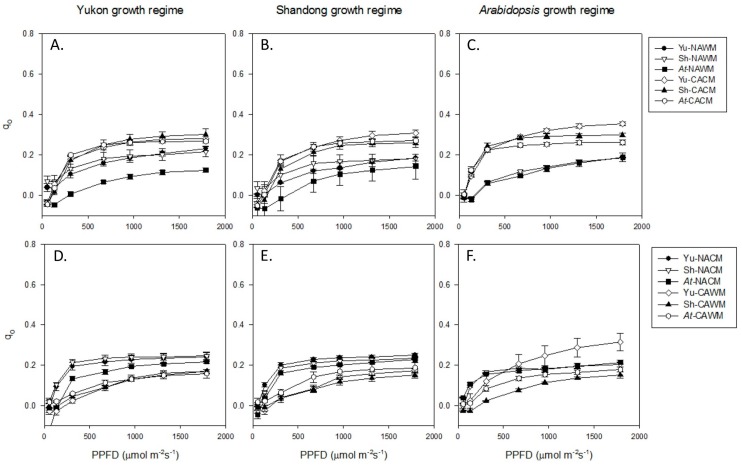
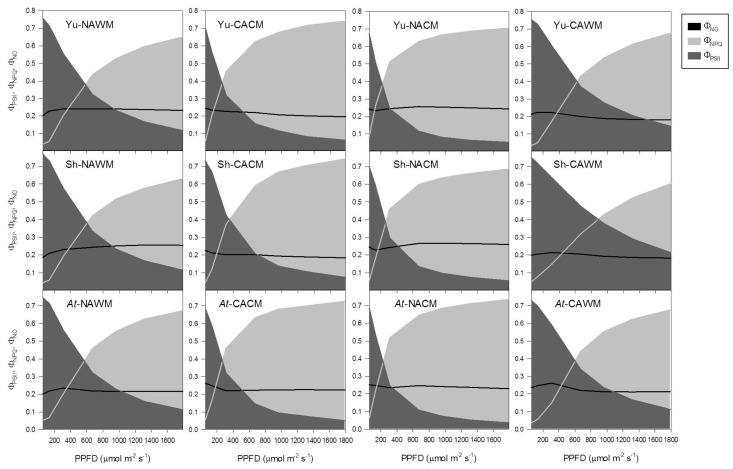
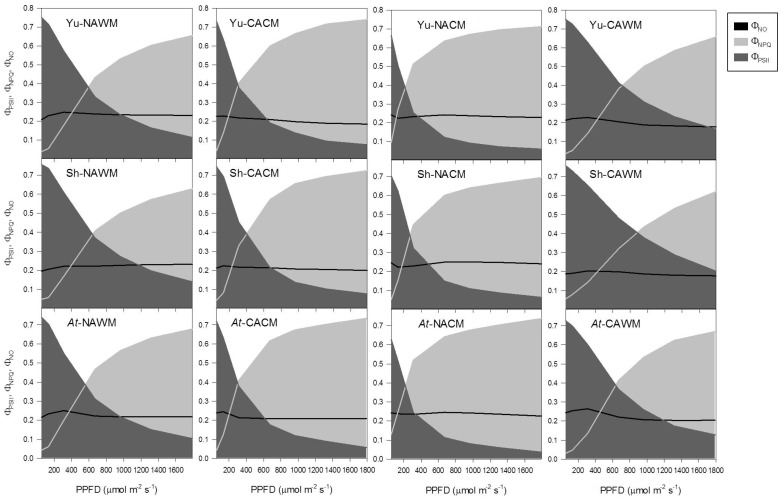
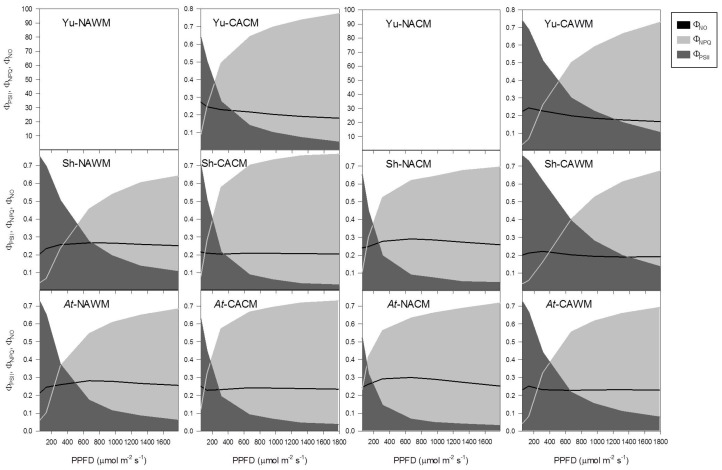
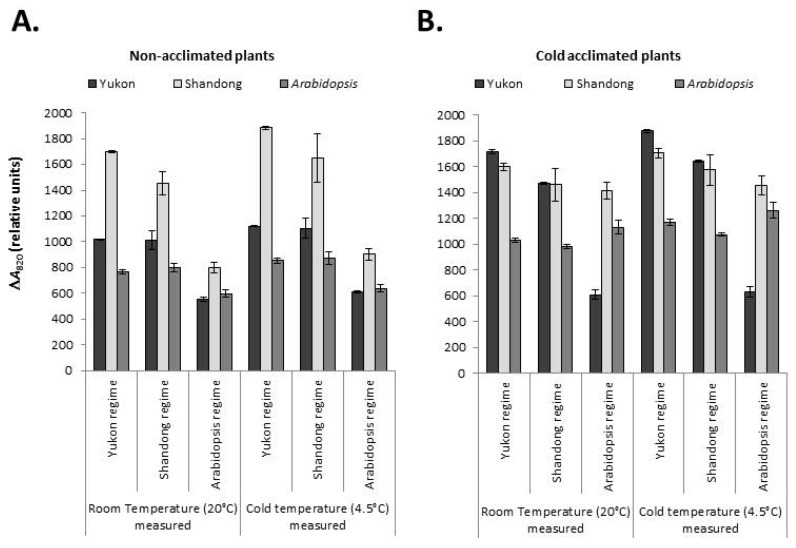
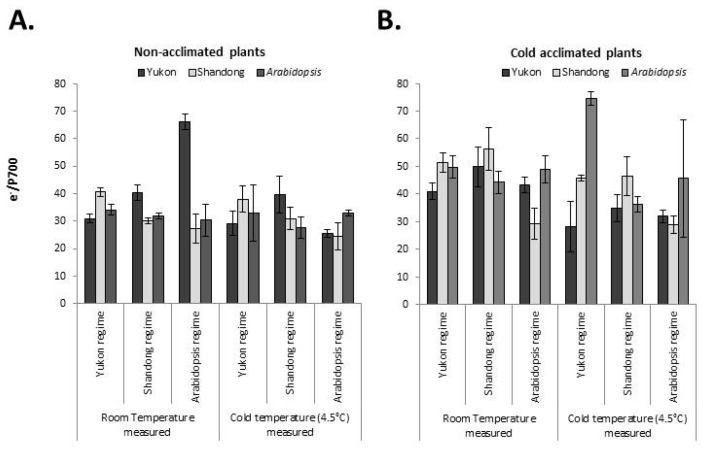
Photosynthetic organisms are able to sense energy imbalances brought about by the overexcitation of photosystem II (PSII) through the redox state of the photosynthetic electron transport chain, estimated as the chlorophyll fluorescence parameter 1-qL, also known as PSII excitation pressure. Plants employ a wide array of photoprotective processes that modulate photosynthesis to correct these energy imbalances. Low temperature and light are well established in their ability to modulate PSII excitation pressure. The acquisition of freezing tolerance requires growth and development a low temperature (cold acclimation) which predisposes the plant to photoinhibition. Thus, photosynthetic acclimation is essential for proper energy balancing during the cold acclimation process. Eutrema salsugineum (Thellungiella salsuginea) is an extremophile, a close relative of Arabidopsis thaliana, but possessing much higher constitutive levels of tolerance to abiotic stress. This comparative study aimed to characterize the photosynthetic properties of Arabidopsis (Columbia accession) and two accessions of Eutrema (Yukon and Shandong) isolated from contrasting geographical locations at cold acclimating and non-acclimating conditions. In addition, three different growth regimes were utilized that varied in temperature, photoperiod and irradiance which resulted in different levels of PSII excitation pressure. This study has shown that these accessions interact differentially to instantaneous (measuring) and long-term (acclimation) changes in PSII excitation pressure with regard to their photosynthetic behaviour. Eutrema accessions contained a higher amount of photosynthetic pigments, showed higher oxidation of P700 and possessed more resilient photoprotective mechanisms than that of Arabidopsis, perhaps through the prevention of PSI acceptor-limitation. Upon comparison of the two Eutrema accessions, Shandong demonstrated the greatest PSII operating efficiency (ΦPSII) and P700 oxidizing capacity, while Yukon showed greater growth plasticity to irradiance. Both of these Eutrema accessions are able to photosynthetically acclimate but do so by different mechanisms. The Shandong accessions demonstrate a stable response, favouring energy partitioning to photochemistry while the Yukon accession shows a more rapid response with partitioning to other (non-photochemical) strategies.
Overview
The claims and statistics of this paper haven’t been checked yet.
Run the check — free, no account needed. It reads the open-access text and checks the sources it cites.
Integrity signals
Registry
Cites
Statistics
Figures
Verification
Claims the paper makes
The claims and statistics of this paper haven’t been checked yet.
Run the check — free, no account needed. It reads the open-access text and checks the sources it cites.
Claims other papers make about this one
Each is checked against this paper’s own text: does it say what the citing paper says it does?
The source backs part of the claim, not all of it — or backs it for a different population, condition or comparison.
In the citing paper
“in real leaves, much of the incident light is dissipated before it reaches the photosystems by NPQ, as is apparent from experimental measurements in a range of plants (Demmig-Adams et al., 2008; Khanal et al., 2017).”
From Leaf Energy Balance Requires Mitochondrial Respiration and Export of Chloroplast NADPH in the Light (2019) · cites this paper as Khanal et al., 2017
Experimental — accuracy not yet measuredThe cited source says what the claim attributes to it.
In the citing paper
“These predictions are broadly in line with experimental measurements for Arabidopsis (Kalituho et al., 2006; Khanal et al., 2017).”
From Leaf Energy Balance Requires Mitochondrial Respiration and Export of Chloroplast NADPH in the Light (2019) · cites this paper as Khanal et al., 2017
Self-check
Percentages, sums and reported differences re-computed from the paper’s own numbers.
The self-check needs the paper’s full text.
Citations
Cites
Genty, B., Briantais, J., & Baker, N. R. (1989) · Biochimica et Biophysica Acta (BBA) - General Subjects · doi:10.1016/s0304-4165(89)80016-9 · Cited by 8,741
Determinations of total carotenoids and chlorophylls a and b of leaf extracts in different solvents
Lichtenthaler, H. K., & Wellburn, A. R. (1983) · Biochemical Society Transactions · doi:10.1042/bst0110591 · Cited by 6,921
Chlorophyll Fluorescence: A Probe of Photosynthesis In Vivo
Baker, N. R. (2008) · Annual Review of Plant Biology · doi:10.1146/annurev.arplant.59.032607.092759 · Cited by 4,672
Photoprotection and Other Responses of Plants to High Light Stress
Demmig‐Adams, B., & Adams, W. W. (1992) · Annual Review of Plant Physiology and Plant Molecular Biology · doi:10.1146/annurev.pp.43.060192.003123 · Cited by 2,484
Photoinhibition of Photosystem II. Inactivation, protein damage and turnover
Aro, E., Virgin, I., & Andersson, B. (1993) · Biochimica et Biophysica Acta (BBA) - Bioenergetics · doi:10.1016/0005-2728(93)90134-2 · Cited by 2,387
Photoinhibition of Photosynthesis Induced by Visible Light
Powles, S. B. (1984) · Annual Review of Plant Physiology and Plant Molecular Biology · doi:10.1146/annurev.pp.35.060184.000311 · Cited by 1,876
New Fluorescence Parameters for the Determination of QA Redox State and Excitation Energy Fluxes
Kramer, D., Johnson, G. N., Kiirats, O., & Edwards, G. E. (2004) · Photosynthesis Research · doi:10.1023/b:pres.0000015391.99477.0d · Cited by 1,798
REGULATION OF LIGHT HARVESTING IN GREEN PLANTS
Horton, P., Ruban, A. V., & Walters, R. G. (1996) · Annual Review of Plant Physiology and Plant Molecular Biology · doi:10.1146/annurev.arplant.47.1.655 · Cited by 1,790
Chlorophyll Fluorescence as a Nonintrusive Indicator for Rapid Assessment of In Vivo Photosynthesis
Schreiber, U., Bilger, W., & Neubauer, C. (1995) · Springer eBooks · doi:10.1007/978-3-642-79354-7_3 · Cited by 1,694
Cold Acclimation And Freezing Stress Tolerance: Role Of Protein Metabolism
Guy, C. L. (1990) · Annual Review of Plant Physiology and Plant Molecular Biology · doi:10.1146/annurev.pp.41.060190.001155 · Cited by 1,355
Cited by
Leaf Energy Balance Requires Mitochondrial Respiration and Export of Chloroplast NADPH in the Light
Shameer, S., Ratcliffe, R. G., & Sweetlove, L. J. (2019) · Plant Physiology · doi:10.1104/pp.19.00624 · Cited by 118
Wei, Y., Chen, H., Wang, L., Zhao, Q., Wang, D., & Zhang, T. (2021) · Plant Signaling & Behavior · doi:10.1080/15592324.2021.2013638 · Cited by 99
Zhao, X., Ma, R., Liu, X., Ho, S., Xie, Y., & Chen, J. (2018) · Bioprocess and Biosystems Engineering · doi:10.1007/s00449-018-2047-4 · Cited by 54
Identification of Chloroplast Envelope Proteins with Critical Importance for Cold Acclimation
Trentmann, O., Mühlhaus, T., Zimmer, D. M., Sommer, F., Schroda, M., Haferkamp, I., Keller, I., Pommerrenig, B., & Neuhaus, H. E. (2020) · PLANT PHYSIOLOGY · doi:10.1104/pp.19.00947 · Cited by 53
Photosynthetic acclimation to changing environments
Gjindali, A., & Johnson, G. N. (2023) · Biochemical Society Transactions · doi:10.1042/bst20211245 · Cited by 52
Mishra, K. B., Mishra, A., Kubásek, J., Urban, O., Heyer, A. G., & Jee, G. (2018) · Photosynthesis Research · doi:10.1007/s11120-018-0588-7 · Cited by 41
Kitashova, A., Schneider, K., Fürtauer, L., Schröder, L., Scheibenbogen, T., Fürtauer, S., & Nägele, T. (2020) · Photosynthesis Research · doi:10.1007/s11120-020-00795-y · Cited by 35
Jiao, X., Yu, X., Ding, J., Du, Q., Zhang, J., Song, X., Bai, P., & Li, J. (2022) · Scientia Horticulturae · doi:10.1016/j.scienta.2022.111335 · Cited by 33
Tian, T., Qiao, G., Wen, Z., Deng, B., Qiu, Z., Hong, Y. G., & Wen, X. (2020) · BMC Plant Biology · doi:10.1186/s12870-019-2224-x · Cited by 31
Low temperature and high light dependent dynamic photoprotective strategies in Arabidopsis thaliana
Velitchkova, M. Y., Popova, A. V., Faik, A., Gerganova, M., & Ivanov, A. G. (2020) · Physiologia Plantarum · doi:10.1111/ppl.13111 · Cited by 29
Mihailova, G., Solti, Á., Sárvári, É., Keresztes, Á., Rapparini, F., Velitchkova, M. Y., Simova‐Stoilova, L., Александров, В. А., & Georgieva, K. (2020) · Environmental and Experimental Botany · doi:10.1016/j.envexpbot.2020.104157 · Cited by 26
A guide to understanding and measuring photosynthetic induction: considerations and recommendations
Acevedo‐Siaca, L. G., & McAusland, L. (2025) · New Phytologist · doi:10.1111/nph.70218 · Cited by 26
Chen, E., Blaze, J. A., Smith, R. S., Peng, S., & Byers, J. E. (2020) · Journal of Ecology · doi:10.1111/1365-2745.13350 · Cited by 24
Sirgedaitė‐Šėžienė, V., Mildažienė, V., Žemaitis, P., Ivankov, A., Koga, K., Shiratani, M., & Baliuckas, V. (2020) · Plasma Processes and Polymers · doi:10.1002/ppap.202000159 · Cited by 20
Comparative Transcriptomics for Pepper (Capsicum annuum L.) under Cold Stress and after Rewarming
Wu, M., Song, J., Huang, Y., Liu, R., Zou, G., Ou, L., & Liu, Z. (2021) · Applied Sciences · doi:10.3390/app112110204 · Cited by 18
Guo, M., Li, Z., Wang, L., Xu, T., Huang, H., Kanwar, M. K., Yang, P., & Zhou, J. (2023) · Plant Physiology and Biochemistry · doi:10.1016/j.plaphy.2023.108267 · Cited by 17
Chen, W.-L., & Ko, Y.-T. (2021) · Scientia Horticulturae · doi:10.1016/j.scienta.2021.110421 · Cited by 17
FERONIA Confers Resistance to Photooxidative Stress in Arabidopsis
Shin, S. Y., Park, J.-S., Park, H.-B., Moon, K.-B., Kim, H., Jeon, J.-H., Cho, H. S., & Lee, H. (2021) · Frontiers in Plant Science · doi:10.3389/fpls.2021.714938 · Cited by 17
Goussi, R., Manfredi, M., Marengo, E., Derbali, W., Cantamessa, S., Barbato, R., & Manaa, A. (2021) · Biochimica et Biophysica Acta (BBA) - Bioenergetics · doi:10.1016/j.bbabio.2021.148482 · Cited by 16
Kania, K., Drožak, A., Borkowski, A., Działak, P., Majcher, K., Sawicka, P. D., & Zienkiewicz, M. (2023) · Physiologia Plantarum · doi:10.1111/ppl.14034 · Cited by 15
Pashkovskiy, P., Ryazansky, S. S., Kartashov, A. V., Voloshin, R. A., Khudyakova, A., Kosobryukhov, A. A., Kreslavski, V. D., Кузнецов, В. В., & Allakhverdiev, S. I. (2020) · Journal of Biotechnology · doi:10.1016/j.jbiotec.2020.11.018 · Cited by 15
Ecophysiology and Uses of Halophytes in Diverse Habitats
Bueno, M., & Cordovilla, M. D. P. (2020) · Springer eBooks · doi:10.1007/978-3-030-17854-3_57-1 · Cited by 14
Simopoulos, C. M. A., MacLeod, M. J. R., Irani, S., Sung, W. W. L., Champigny, M. J., Summers, P. S., Golding, G. B., & Weretilnyk, E. A. (2020) · BMC Genomics · doi:10.1186/s12864-020-06793-7 · Cited by 14
Chen, W., & Shen, C.-J. (2022) · HortScience · doi:10.21273/hortsci16271-21 · Cited by 11
Amaral, G. C., Pezzopane, J. E. M., Júnior, R. D. S. N., Fonseca, M. D. S., Toledo, J. V., Xavier, T. M. T., Oliveira, B. D. S., Martínez, M. F., Júnior, R. A. D. C. J., & Gonçalves, E. D. O. (2020) · Trees · doi:10.1007/s00468-020-02055-x · Cited by 9
Non-photochemical quenching in natural accessions of Arabidopsis thaliana during cold acclimation
Mishra, A., Mishra, K. B., Surá, K., Veselá, B., Klem, K., & Urban, O. (2023) · Environmental and Experimental Botany · doi:10.1016/j.envexpbot.2023.105372 · Cited by 8
Ecophysiology and Uses of Halophytes in Diverse Habitats
Bueno, M., & Cordovilla, M. D. P. (2021) · Springer eBooks · doi:10.1007/978-3-030-57635-6_57 · Cited by 7
Sirgedaitė‐Šėžienė, V., Laužikė, K., Uselis, N., & Samuolienė, G. (2022) · Horticulturae · doi:10.3390/horticulturae8040300 · Cited by 4
Chen, W.-L., Shen, C.-J., Hsu, H.-S., & Chien, C.-S. (2022) · Acta Horticulturae · doi:10.17660/actahortic.2022.1353.35 · Cited by 1
Nepal, M., & Berg, V. S. (2019) · bioRxiv (Cold Spring Harbor Laboratory) · doi:10.1101/685727
Борисович, Б. Г., Леонидовна, Г. Е., Katyshev, A. I., Коротаева, Н. Е., Permyakov, A. V., Polyakova, E. A., Pyatrikas, D. V., Stepanov, A. V., Fedoseeva, I. V., & Shigarova, A. M. (2025) · Russian Journal of Plant Physiology · doi:10.1134/s102144372560391x
Popova, A. V., Stefanov, M. A., Tsonev, T. D., Velikova, V., & Velitchkova, M. Y. (2025) · Crops · doi:10.3390/crops5060077
MacLean, M. (2024) · MacSphere (McMaster University) · doi:10.71548/3767
Metadata
- Authors
- Khanal, N., Bray, G., Grisnich, A., Moffatt, B., & Gray, G.
- Affiliations
- University of Saskatchewan (CA)
- University of Waterloo (CA)
- Corresponding author
- Gray, Gordon
- ORCID
- Khanal, Nityananda
- Venue
- Plants
- Publisher
- MDPI AG
- Published
- 2017-08-09
- Volume
- 6
- Issue
- 3
- Pages
- 32
- ISSN
- 2223-7747 (ISSN-L)
- PMC
- PMC5620588
- OpenAlex
- W2742831901
- Cited by
- 32
- References
- 67
- Citations by year
- 2025: 3 · 2023: 4 · 2022: 4 · 2021: 6 · 2020: 11 · 2019: 2 · 2018: 2
- FWCI
- 1.68
- Type
- journal article
- Language
- en
- Open access
- gold
- doi.org
- Licence
- Locations
- Plants (publishedVersion, cc-by)
- PubMed Central (publishedVersion, cc-by)
- PubMed (publishedVersion)
- Federal Open Science Repository of Canada / Le Dépôt fédéral de science ouverte du Canada (submittedVersion, cc-by)
- DOAJ (DOAJ: Directory of Open Access Journals) (submittedVersion, cc-by-sa)
- Funders
- Natural Sciences and Engineering Research Council of Canada
- Agriculture and Agri-Food Canada
- Topics
- Life Sciences › Biochemistry, Genetics and Molecular Biology › Molecular Biology › Photosynthetic Processes and Mechanisms
- Life Sciences › Agricultural and Biological Sciences › Plant Science › Plant Stress Responses and Tolerance
- Life Sciences › Agricultural and Biological Sciences › Plant Science › Light effects on plants
- Keywords
- photosynthetic acclimation, cold acclimation, photoprotection, Eutrema salsugineum, Thellungiella salsuginea, Arabidopsis thaliana, freezing tolerance, photoinhibition, P700 oxidation, photosynthetic pigments, non-photochemical quenching, energy allocation, photoperiod, irradiance, extremophile plants
About these checks
Registry, retraction, Cites and statistics results are computed, not judged, with one exception: a printed reference that no index lists is read once by a model before it counts as a citation error. Claims are extracted by a model and kept only when their quote appears verbatim in the text; each cited source is then checked, with a model’s help, for whether it says what the claim relies on. Those verdicts can be wrong — read the claim’s quote and the cited source before relying on one.
Statistics and arithmetic are recomputed, not judged.
Confidence bands are shown only for fields calibrated on our annotated test set. None is calibrated yet, so no band is shown.
What counts as a claim ›How we measure confidence ›How we check this ›
Are you an author, or do you see a problem with this page? Request a review
